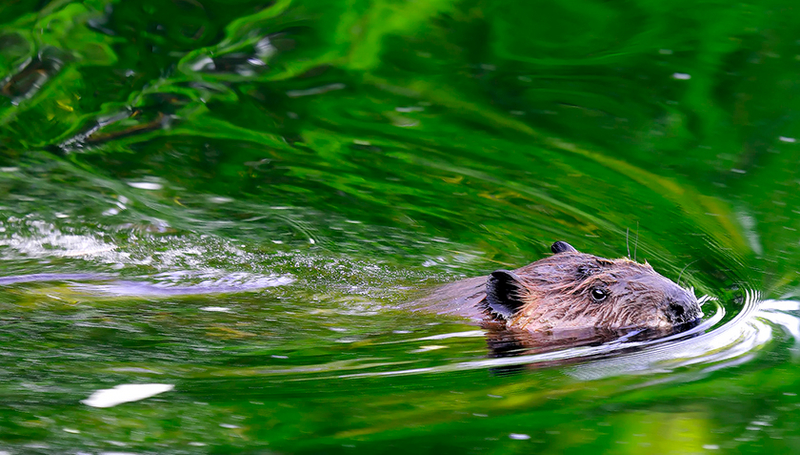
Archive detail

Streams in agricultural areas benefit from beavers

February 9, 2021 | Felicitas Erzinger, Andri Bryner

Beavers are master builders that reshape aquatic landscapes with their dams and lodges. The environments they inhabit experience an increase in the biodiversity of aquatic organisms, for example. Now, for the first time, an Eawag study from the wine-growing region known as “Zürcher Weinland” has shown that this is also true for streams in areas given over largely to agriculture. The rodents could therefore be interesting partners when it comes to enhancing bodies of water.

Eradicated at the start of the 19th century, beavers can now be found once again almost anywhere across the length and breadth of the country. Particularly on the Swiss Plateau and in the last ten years, they have become so widespread that five to six thousand individuals are currently estimated to live in Swiss bodies of water.

True master builders

The rodents are known for making significant changes not only to the morphology but also the hydrology and ecology of natural watercourses, making them more dynamic and biodiverse. Until now, however, it was unclear whether this was also true of urban and agricultural streams – in other words, precisely those streams that the beavers predominantly inhabit today. Researchers from Eawag and the University of Lausanne have now shown that this is indeed the case: beaver ponds not only increased the biodiversity of two streams in agricultural areas, but also altered the food supply available to aquatic animals. However, the extent of the beavers’ influence depended strongly on the topography.
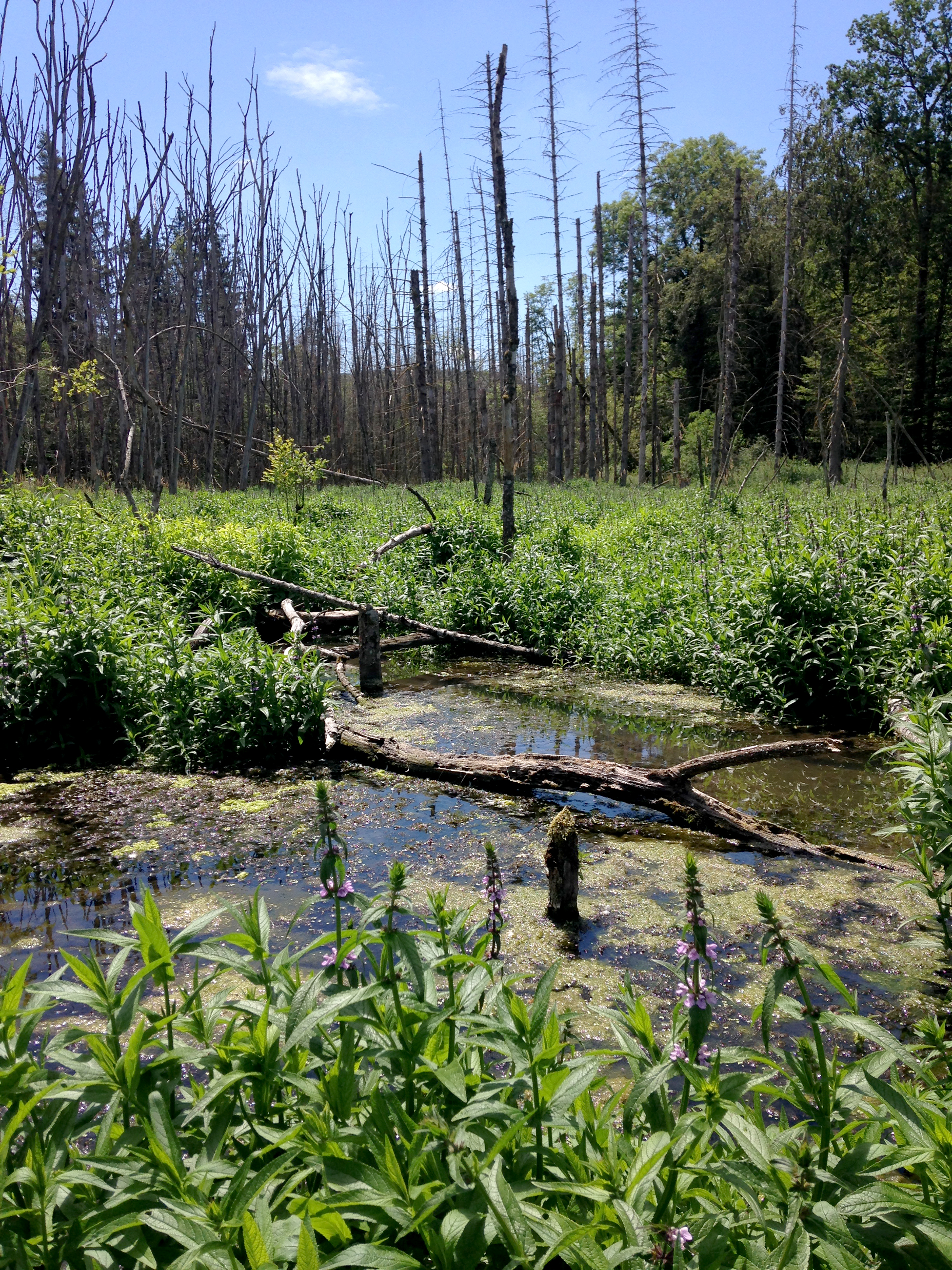
 

At the Mederbach in the municipality of Marthalen, the beaver dams have created a swamp-like wetland area.
(Photo: Christopher Robinson)

Effect depends strongly on topography

For their study, the researchers examined two streams in the Zürcher Weinland region in which beavers first began to construct several dams more than ten years ago: the Mederbach in the municipality of Marthalen and the Langwisenbach in the municipality of Flaach. As the results show, the beavers have had a positive impact on the streams in many respects. For example, the resulting ponds retain sediments and nutrients that would be carried away immediately in an undammed stream. The ponds also mean that more terrestrial food sources are available to aquatic organisms. Last but not least, the ponds have created new habitats, allowing animals to establish themselves that are otherwise found in calm bodies of water rather than fast-flowing ones. This has increased the aquatic biodiversity of the overall system. Although all of these effects were observed in both streams, they were more pronounced in the Mederbach than in the Langwisenbach. This can be explained by differences in topology: as the Mederbach has a shallower gradient than the Langwisenbach and is not restricted at the sides by a ravine-like basin, it has a greater amount of space in which to change. Overall, the beaver ponds on the Mederbach were also much wider and less deep.
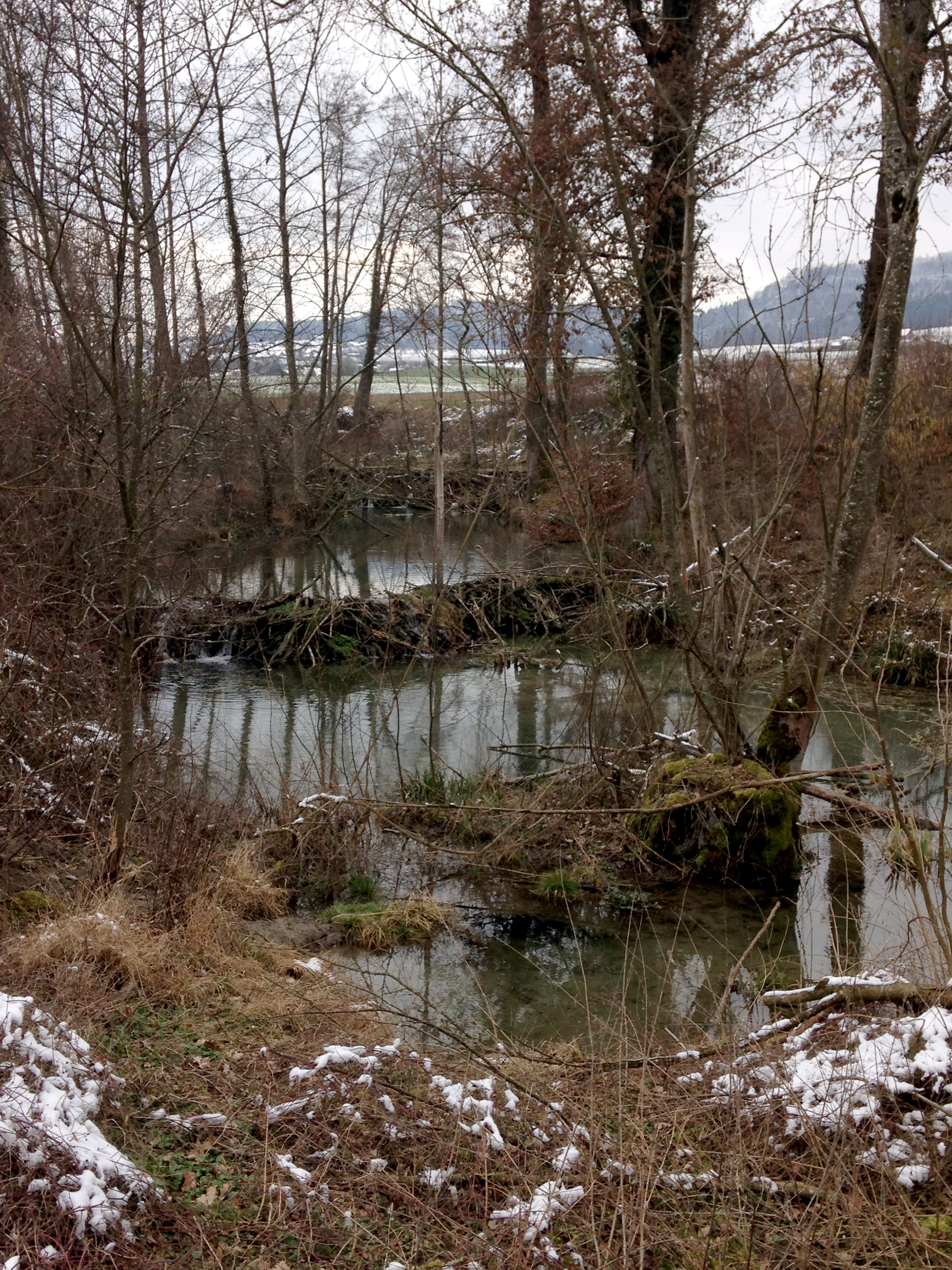
 

The extent to which beavers can alter their habitat depends on the topography of the stream. In the Langwisenbach, the width of the beaver ponds was restricted by the banks on both sides.
(Photo: Christopher Robinson)

Noticeable results in a short time

“Our results show that beavers can also enhance agricultural streams from an ecological perspective”, says Christopher Robinson, an aquatic ecologist and lead author of the study. Robinson adds that, as revitalisers, beavers represent a simple and sustainable solution that is already being pursued in Switzerland. Moreover, many of the positive effects are apparent within the first year, such as the colonisation of the new habitats. In the studied streams in Marthalen and Flaach, this even included endangered species such as dragonfly larvae. From the scientist’s point of view, the return of the beaver is therefore a win-win situation. “However, if the populations continue to expand so successfully, there will inevitably be some conflicts”, Robinson points out.
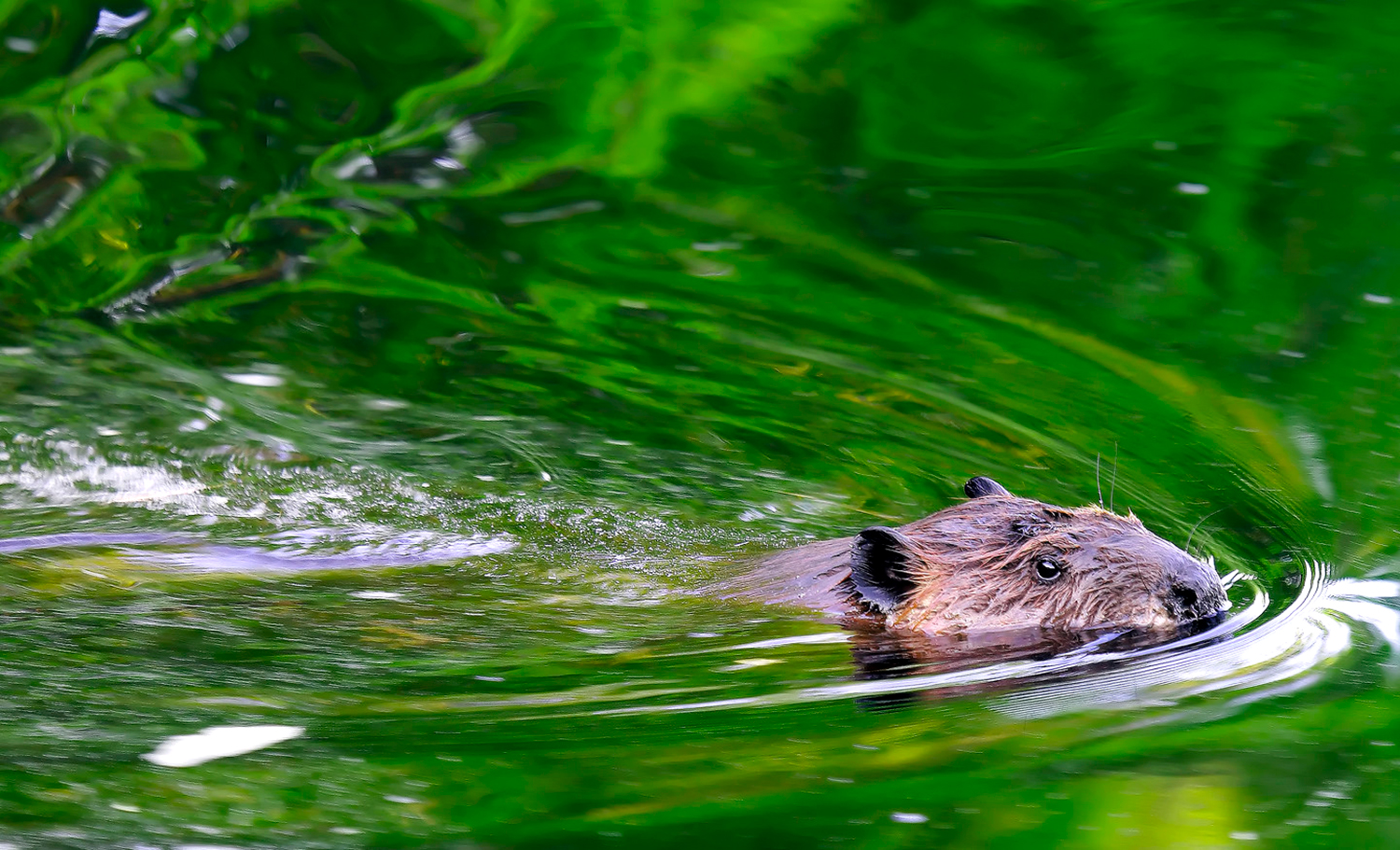
 

Beavers make streams more dynamic and biodiverse.
(Photo: Mark Giuliucci, Flickr, CC BY-NC 2.0)

Cover picture: Mark Giuliucci, Flickr, CC BY-NC 2.0

Original article

Extbase Variable Dump
array(2 items)
   publications => '20532' (5 chars)
   libraryUrl => '' (0 chars)
Extbase Variable Dump
array(1 item)
   0 => Snowflake\Publications\Domain\Model\Publicationprototypepersistent entity (uid=20532, pid=124)
      originalId => protected20532 (integer)
      authors => protected'Robinson, C. T.; Schweizer, P.; Larsen, A.; Schubert,&nb
         sp;C. J.; Siebers, A. R.
' (115 chars) title => protected'Beaver effects on macroinvertebrate assemblages in two streams with contrast
         ing morphology
' (90 chars) journal => protected'Science of the Total Environment' (32 chars) year => protected2020 (integer) volume => protected722 (integer) issue => protected'' (0 chars) startpage => protected'137899 (9 pp.)' (14 chars) otherpage => protected'' (0 chars) categories => protected'aquatic invertebrates; geochemistry; seasonality; ecohydrology; stable isoto
         pes; Castor fiber
' (93 chars) description => protected'Beaver populations are increasing throughout Europe and especially in Switze
         rland. Beaver are major ecological engineers of fluvial systems, dramaticall
         y influencing river morphology, ecohydrology and, consequently, aquatic and
         terrestrial biota. This study compared macroinvertebrate assemblages and tro
         phic structure at two beaver complexes with contrasting topography in Switze
         rland over an annual cycle. One complex (Marthalen) was in a low gradient op
         en basin, whereas the other complex (Flaach) flowed through a higher gradien
         t ravine-like basin. Both complexes were embedded in an overall agricultural
          landscape matrix. Water physico-chemistry differed between the two complexe
         s with nitrogen, phosphorus, and DOC being higher at Marthalen than at Flaac
         h. Both complexes showed strong seasonality in physico-chemistry, but retent
         ion of nutrients (N, P) was highest in summer and only at Marthalen. Both co
         mplexes also showed strong seasonality in macroinvertebrate assemblages, alt
         hough assemblages differed substantially between complexes. At Marthalen, ma
         croinvertebrate assemblages were predominantly lentic in character at 'pool'
          sites within the complex. At Flaach, lotic macroinvertebrate assemblages we
         re common at most sites with some lentic taxa also being present. Dietary sh
         ifts based on carbon/nitrogen stable isotopes occurred in spring and summer
         among sites at both complexes (autochthonous resource use increasing over al
         lochthonous resource use downstream), although being most pronounced at Mart
         halen. In contrast, similar resource use across sites occurred in winter wit
         hin both complexes. Although beaver significantly influenced fluvial dynamic
         s and macroinvertebrate assemblage structure at both complexes, this influen
         ce was most pronounced at Marthalen where beaver caused the system to become
          more wetland in character, e.g., via higher hydraulic residence time, than
         at Flaach. We conclude that topography can shape beaver effects on fluvial s
         ystems and resident biot...
' (2002 chars) serialnumber => protected'0048-9697' (9 chars) doi => protected'10.1016/j.scitotenv.2020.137899' (31 chars) uid => protected20532 (integer) _localizedUid => protected20532 (integer)modified _languageUid => protectedNULL _versionedUid => protected20532 (integer)modified pid => protected124 (integer)
Robinson, C. T.; Schweizer, P.; Larsen, A.; Schubert, C. J.; Siebers, A. R. (2020) Beaver effects on macroinvertebrate assemblages in two streams with contrasting morphology, Science of the Total Environment, 722, 137899 (9 pp.), doi:10.1016/j.scitotenv.2020.137899, Institutional Repository