News Detail
Rare earths pollute Zurich's waters
February 10, 2026 |
Rare earth elements (see box) are omnipresent in our everyday lives, as they are an essential component of many modern technologies – for example in smartphones and LED lights, in electric motors and medical contrast agents. Besides the often problematic conditions under which rare earths are extracted, focus is increasingly turning to their release into the environment and the potential negative effects of their release. The aquatic research institute Eawag, together with the Ecotox Centre, has therefore carried out a study in the canton of Zurich over the last two years on behalf of the Canton of Zurich and the VSA Platform for Micropollutants Process Engineering. This study involved measuring the levels of rare earth elements in the effluents of 60 wastewater treatment plants and at 41 measuring points in watercourses and assessing the environmental risks. The results have just been published in the journal Aqua & Gas.
As rare earths also occur in the earth's crust, the expected natural background values were compared with the values actually measured. Three elements were found to have excessive levels. Gadolinium was mainly measured in treated wastewater, but also in watercourses in greatly elevated concentrations. Lanthanum and cerium showed unusually high values in the effluent of individual wastewater treatment plants.
Gadolinium: from urine to water
In the case of gadolinium, contrast agents used in healthcare facilities for magnetic resonance imaging (MRI) are primarily responsible for the contamination. They enter the wastewater via the patients' urine – a link that is already known from previous studies. The current study now shows the ubiquitous extent of the contamination. Gadolinium is present in contrast agents in the form of stable organic complexes. These complexes cannot be adequately retained in wastewater treatment plants and thus enter bodies of water at this point. The risk they pose to aquatic organisms was determined on the basis of ecotoxicological data. According to this assessment, the measured concentrations can have a long-term negative impact on aquatic life. The authors therefore recommend measures at the source to reduce inputs. For instance, patients' urine can be collected in special bags immediately after MRI examinations and disposed of as waste. According to the authors, the effectiveness of this measure should be investigated in more detail as part of a pilot project.
Use of phosphorus precipitants with lanthanum and cerium not recommended
In the case of lanthanum and cerium, precipitants for removing phosphorus from wastewater were identified as the cause in the wastewater treatment plant with the highest values in the effluent. Since there were supply bottlenecks with the conventional precipitants based on iron or aluminium a few years ago, individual WWTP operators also used lanthanum and cerium-based precipitants. The risk assessment has now shown that the very high concentrations in local areas are very likely to have negative effects on aquatic organisms. However, not enough ecotoxicological data was available for a definitive assessment. Until this data is available, the use of precipitants based on lanthanum and cerium is not recommended in accordance with the precautionary principle, the authors write.
Rare earths
The term "rare earths" or "rare earth elements" refers to a group of 17 metals with similar chemical properties. They occur almost everywhere in the earth's crust, but only in a few places in quantities that make mining economically viable. China in particular dominates the market for rare earths and their extraction is often associated with severe environmental pollution. However, rare earth elements are indispensable for many modern technologies such as screens, electric motors, LED lights and wind turbines. Their great economic importance combined with uncertain supply make them a critical resource.
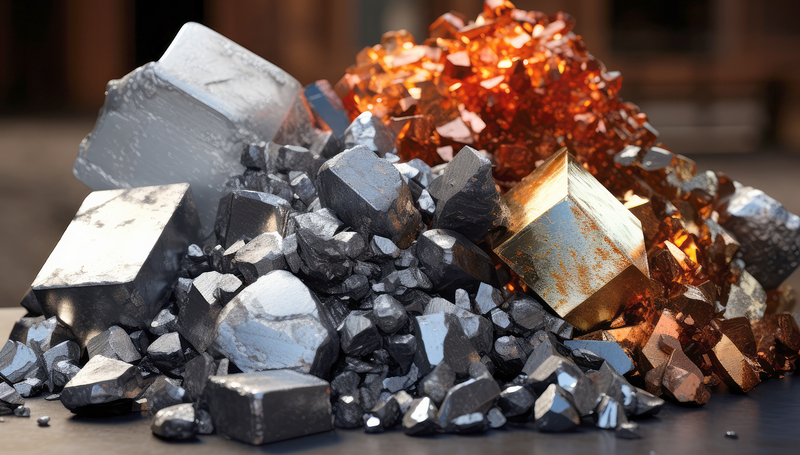
Cover picture: Rare earths are indispensable for many technical applications, but they also find their way into bodies of water and can have a negative impact on the organisms living there. (Photo: Adobe Stock)
Original publication
Funding / Collaborations
- Eawag
- Oekotoxzentrum
- VSA-Plattform Verfahrenstechnik Mikroverunreinigungen
- AWEL, Abteilung Gewässerschutz