
News Detail
World Water Day: "Where water flows, equality grows"
March 19, 2026 |
Jess MacArthur, you have spent many years researching WASH – water, sanitation and hygiene – and gender. What does "water and gender" mean to you?
When we think of water, we usually think of it as a natural resource. But water is also socially conditioned – it is "gendered". By this I mean that the way we deal with water is closely linked to social perceptions of female and male roles. In almost all cultures worldwide, tasks related to water are considered the responsibility of women and girls.
What does that mean in everyday life?
Around the world, even today, it is often women and girls who fetch water – often over long distances – and who need it in the household for cooking, cleaning, washing and childcare. Caring for a baby means washing, cleaning and ensuring hygiene. Clean water is also essential for pregnancy and childbirth. Added to this is personal hygiene, for example during menstruation. Safe access to water and toilets is therefore closely linked to privacy and dignity.
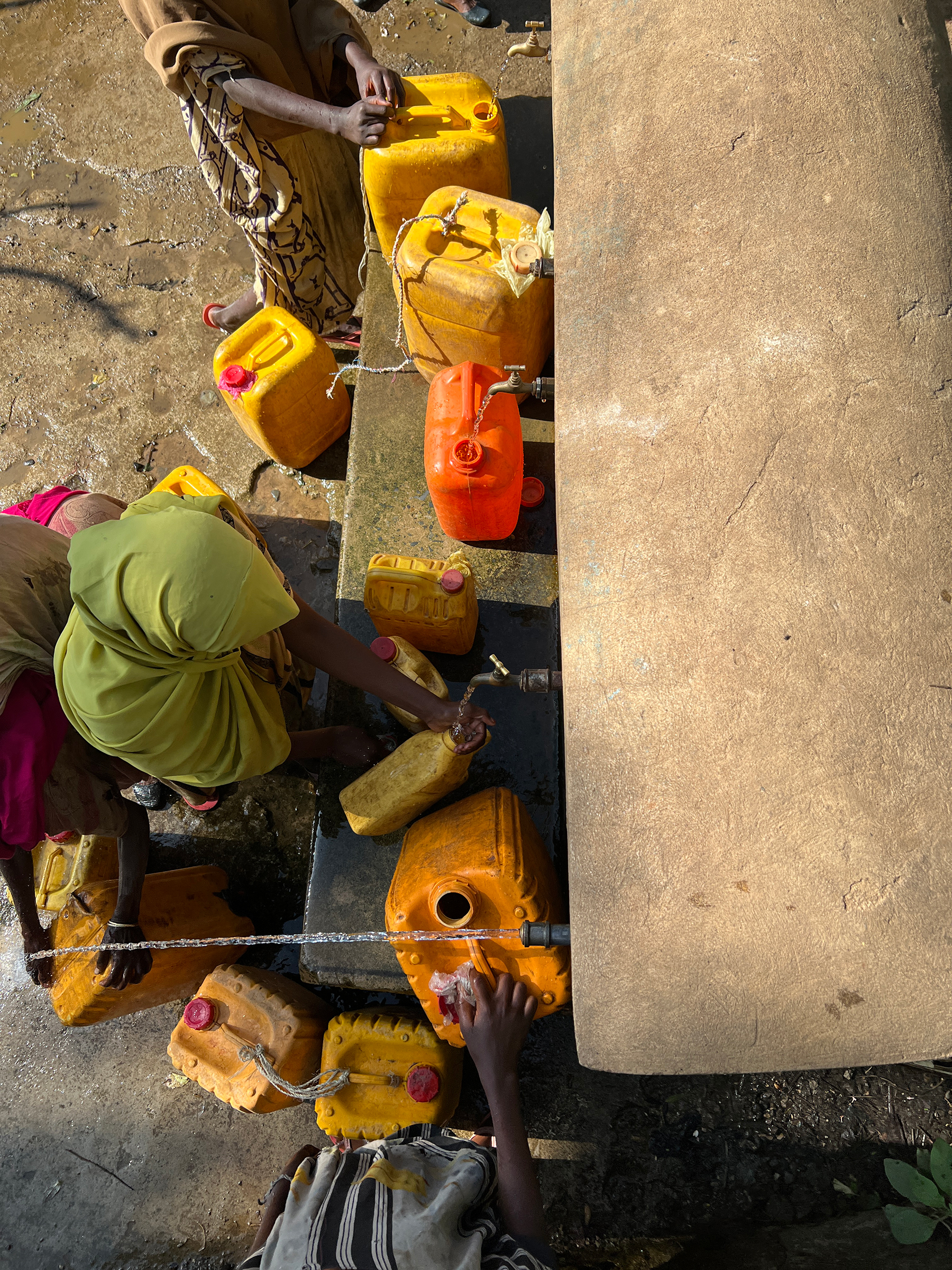 | Examples from everyday life Women at a tapped spring in rural Ethiopia (Photo: Jess MacArthur, 2023) “Several case reports from the Indian subcontinent state that men have objected to reduction in water collection time and effort for their wives and children, because this is their traditional role. It was feared that less work would make them idle and provide opportunities for undesirable behaviour. In villages in Guinea Bissau and Tanzania, on the other hand, men have welcomed a closer water supply not because it has reduced the workload for their wives, but because they could see what their wives were doing, and thus keep them under control.” |
| Text source: van Wijk-Sijbesma 1985*
| |
What does the lack of access to water mean for the privacy and dignity of girls and women?
The lack of safe washing and toilet facilities makes girls and women vulnerable. Having to use outdoor toilets or share them with men means an increased risk of humiliation, assault and abuse. Protected places for bathing or using the toilet are therefore central to safety and human dignity. One of the United Nations' sustainable development goals is therefore safe access to clean water and sanitation for all.
What are the consequences for gender equality when women and girls are primarily responsible for water in the household?
Time is a decisive factor. In many regions, women and girls spend hours every day fetching water – even in 2026. This time is lost for school, training or employment. Especially in areas with water shortages, girls are often taken out of school first because they have to help fetch water. What's more, if there is no water in schools, girls stay away from class during their periods because they have no way of washing. Access to water is therefore directly linked to educational justice and equality.
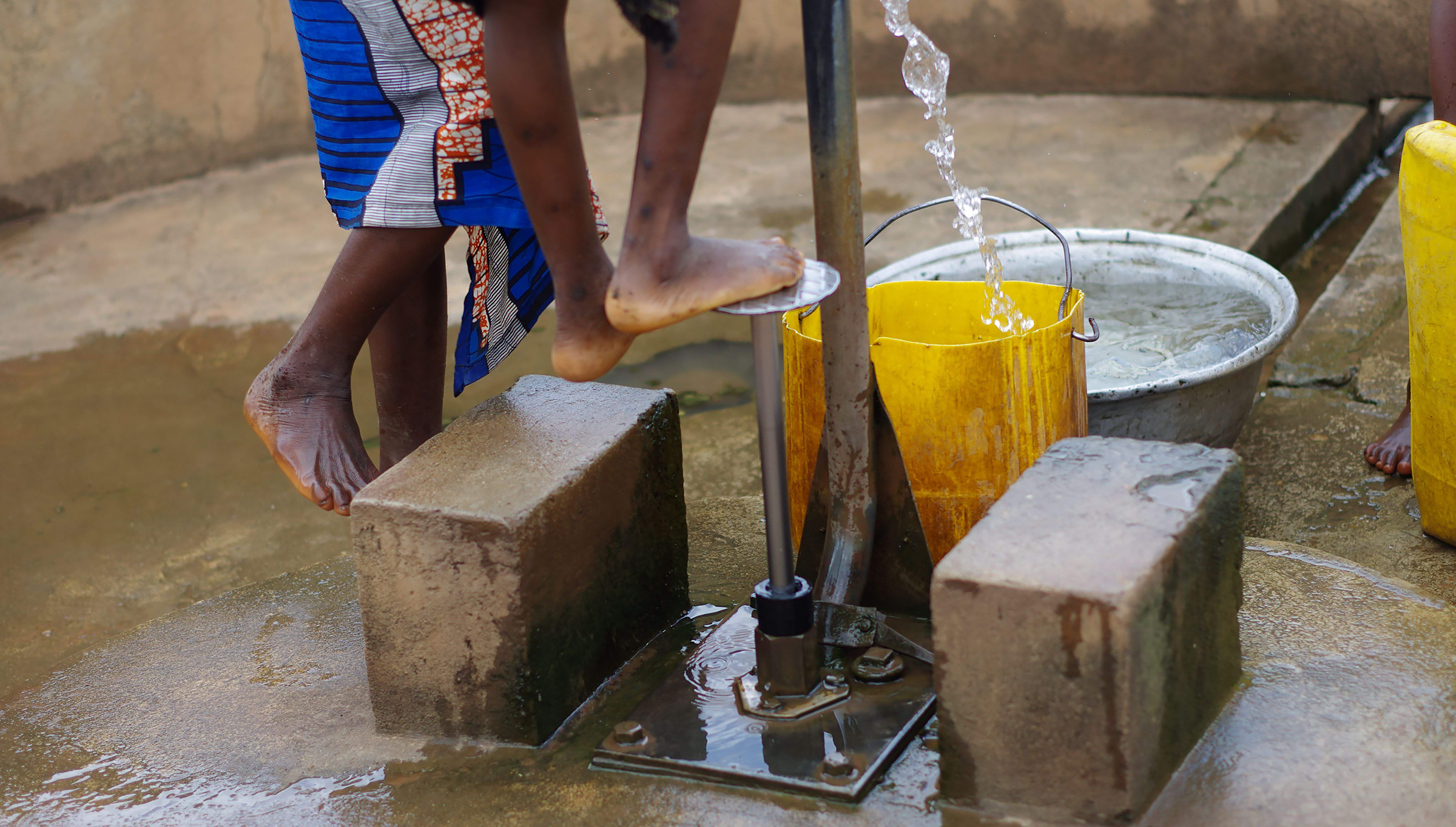
Examples from everyday life
Children fetching water at foot pump in rural Togo
(Photo: Jess MacArthur, 2013)
“Studies in rural communities in Burkina Faso and Indonesia show that girls between the ages of 11 and 17 years work on average five to eight hours per day… including two to three hours hauling water and grinding grain. Boys of the same age work at most three to five hours per day.
In the total package of daily activities, water collection may well be one of the most time-consuming domestic chores… women have to spend a substantial part of their working day collecting water for their families.”
Text source: van Wijk-Sijbesma 1985*
"Where water flows, equality grows," is how the United Nations sums it up on World Water Day.
Yes, I completely agree. In many parts of the world, water does not flow from the tap at all times as it does here in Switzerland or Europe. An effective step towards strengthening equality is therefore targeted investment in water infrastructure so that water flows to all people.
But you could also turn the sentence around: "Where equality grows, water flows." There is evidence that water systems function more sustainably when women are involved in planning and management. They know exactly what it means when a system fails. Their perspective is close to everyday life: Where is the well? Is it safely accessible? Are there separate toilets? Which pump is practical? Men also tend to think of water in terms of irrigating fields, while women tend to think of it in terms of supplying water to the family in the household. Both perspectives are important for a life of security and dignity.
At the same time, the involvement of women strengthens their role in society. Water can be a starting point for involving women more strongly in decision-making processes in general and promoting gender equality.
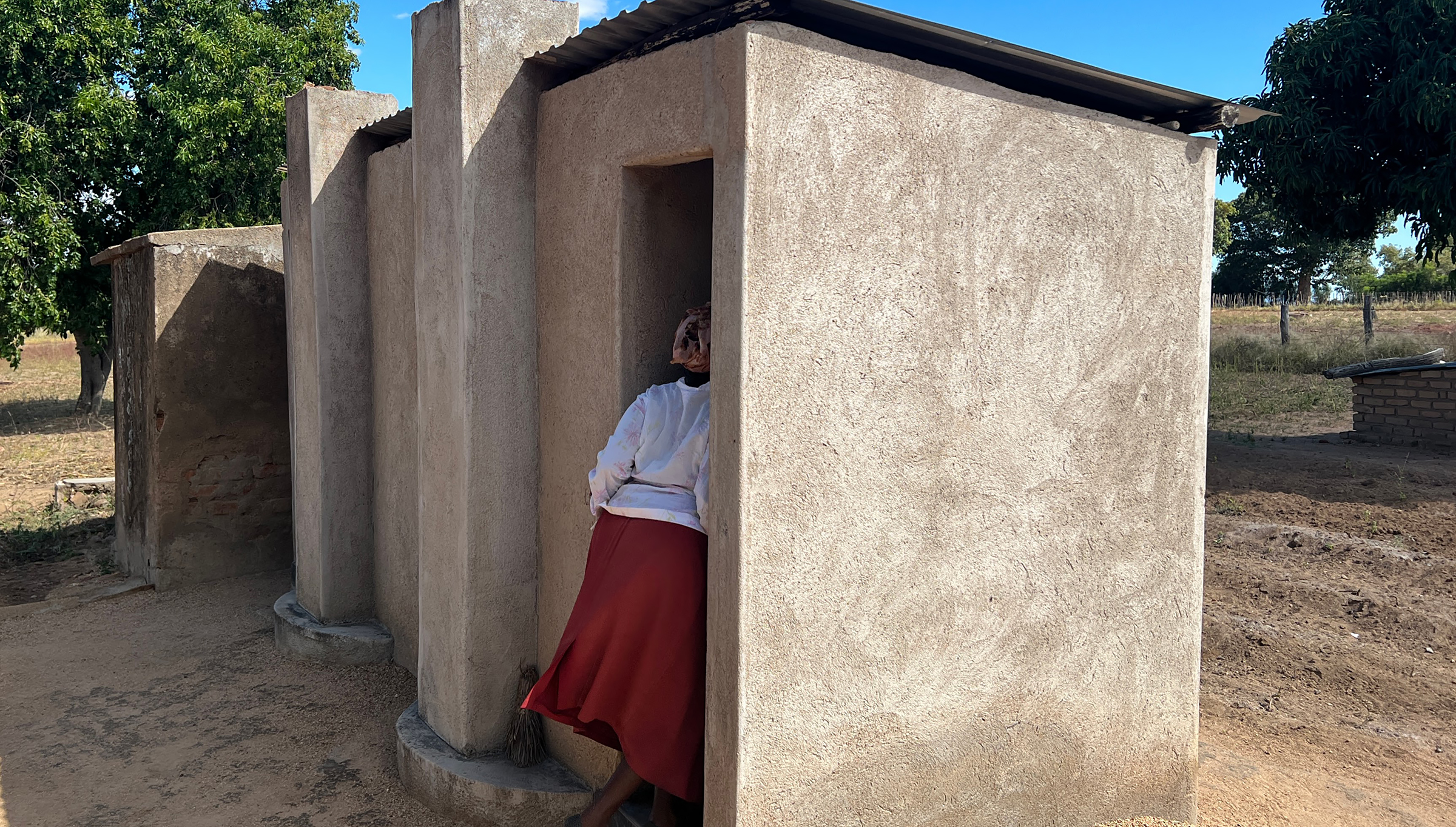 Examples from everyday life
A women entering a latrine in rural Zimbabwe
(Photo: Jess MacArthur 2022)
“In sanitation, demand for privacy of women is a determining factor in latrine acceptance by men and women alike, especially in densely settled communities. Women also maintain latrines or supervise maintenance by children, provide handwashing facilities, take care of excreta disposal and hygiene of young children, and assist and educate them in correct latrine use.”
Text source: van Wijk-Sijbesma 1985*
Is "water and gender" primarily an issue in the Global South?
No. In Europe and Switzerland, too, water companies are predominantly male-dominated. Yet water is pumped into households – where, in many families, it is still mainly used and organised by women. The participation of women in water management is also important here in Switzerland and in Europe, because different perspectives can lead to more robust, sustainable solutions.
Your conclusion on World Water Day 2026?
Water is never "just" water. It is labour, safety, dignity, and power. This World Water Day, let's build water systems that transform inequalities. Because where water flows, equality can truly grow.
Water facts according to the Joint Monitoring Programme (JMP) for Water Supply, Sanitation and Hygiene by WHO and UNICEF
• 1 in 4 people around the world lack safely managed drinking water.
• Over 285 million people rely on water that is over a 30 minutes’ walk away.
• 2 out of 5 people still lack safely managed sanitation.
Data source
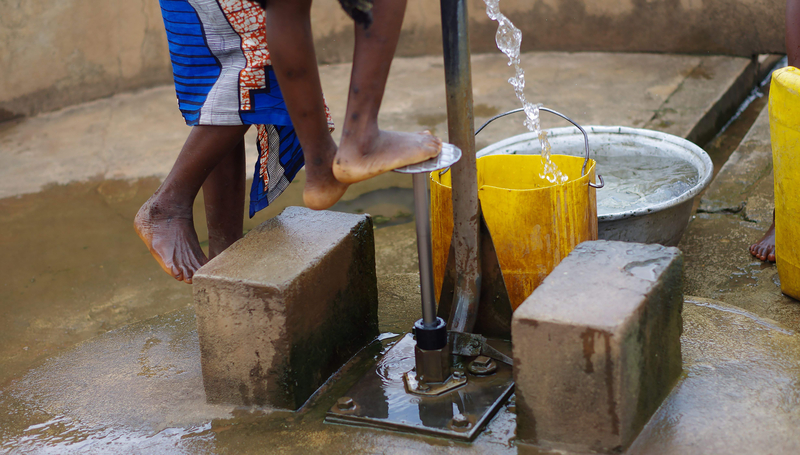
Cover picture: Children fetching water at foot pump in rural Togo (Photo: Jess MacArthur, 2013)