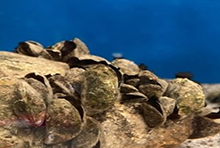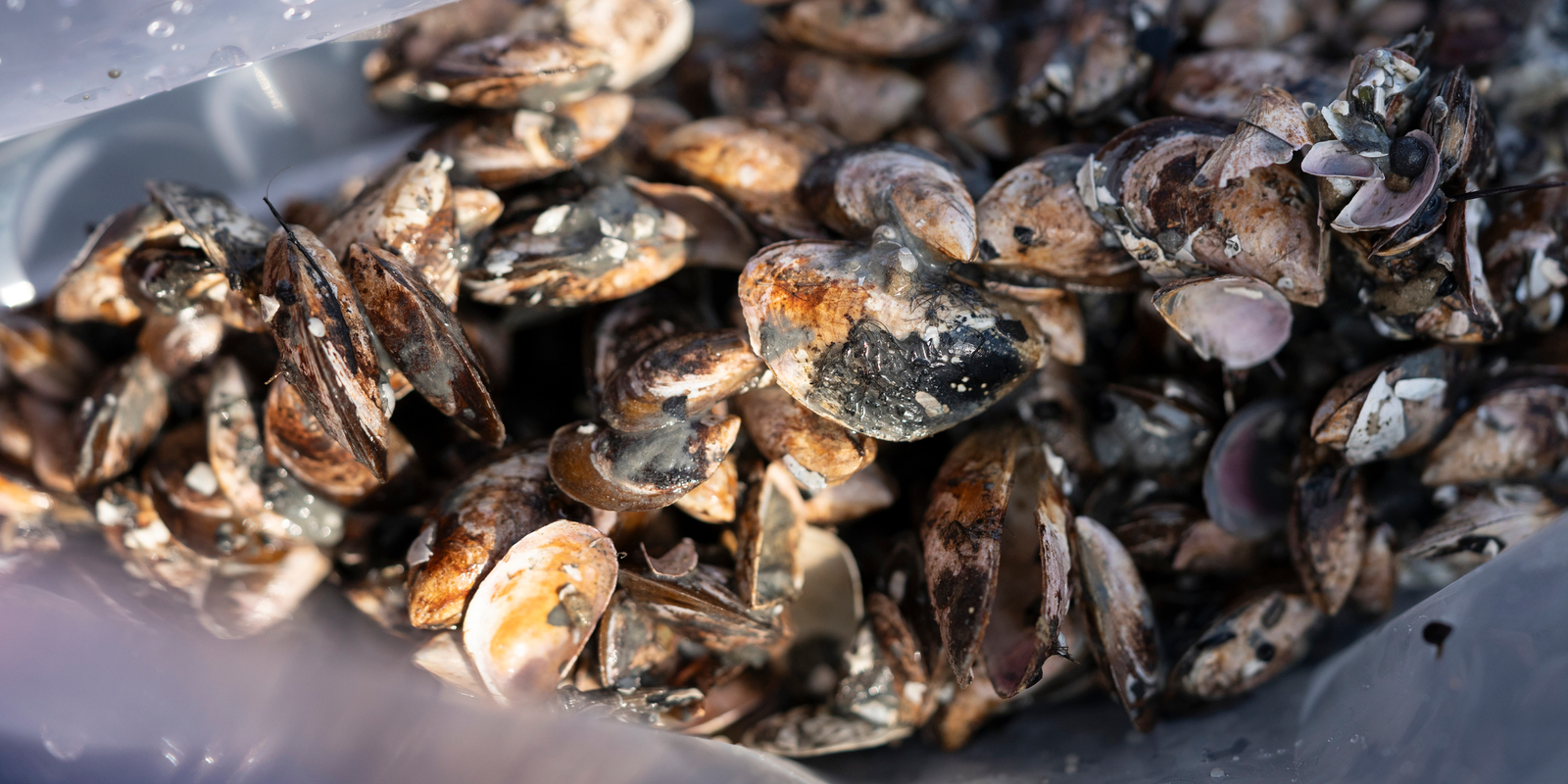
The invasive quagga mussel

The quagga mussel is an invasive species in Switzerland. It spreads rapidly in affected waters and has a profound impact. It changes ecosystems, affects infrastructure and causes costs in the hundreds of millions of francs. Eawag researchers are therefore working to understand and predict the impact as accurately as possible.
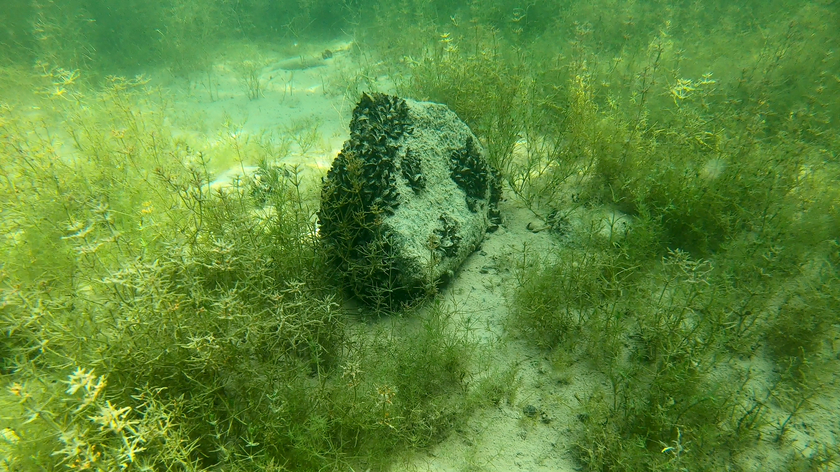

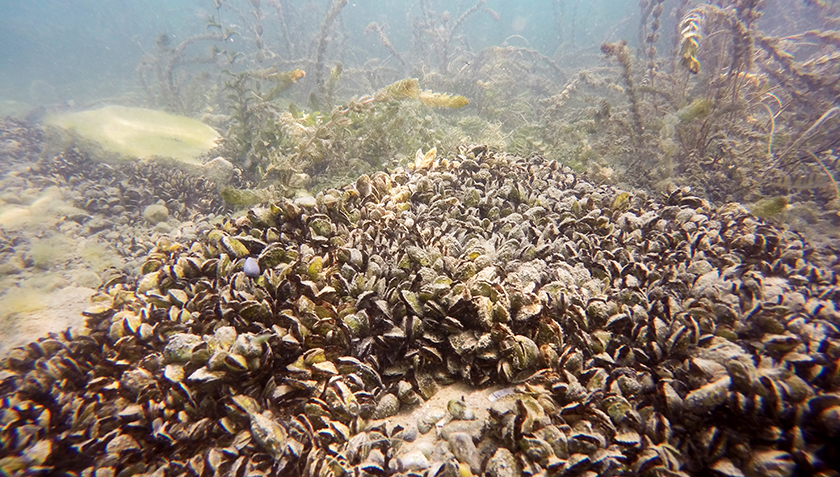
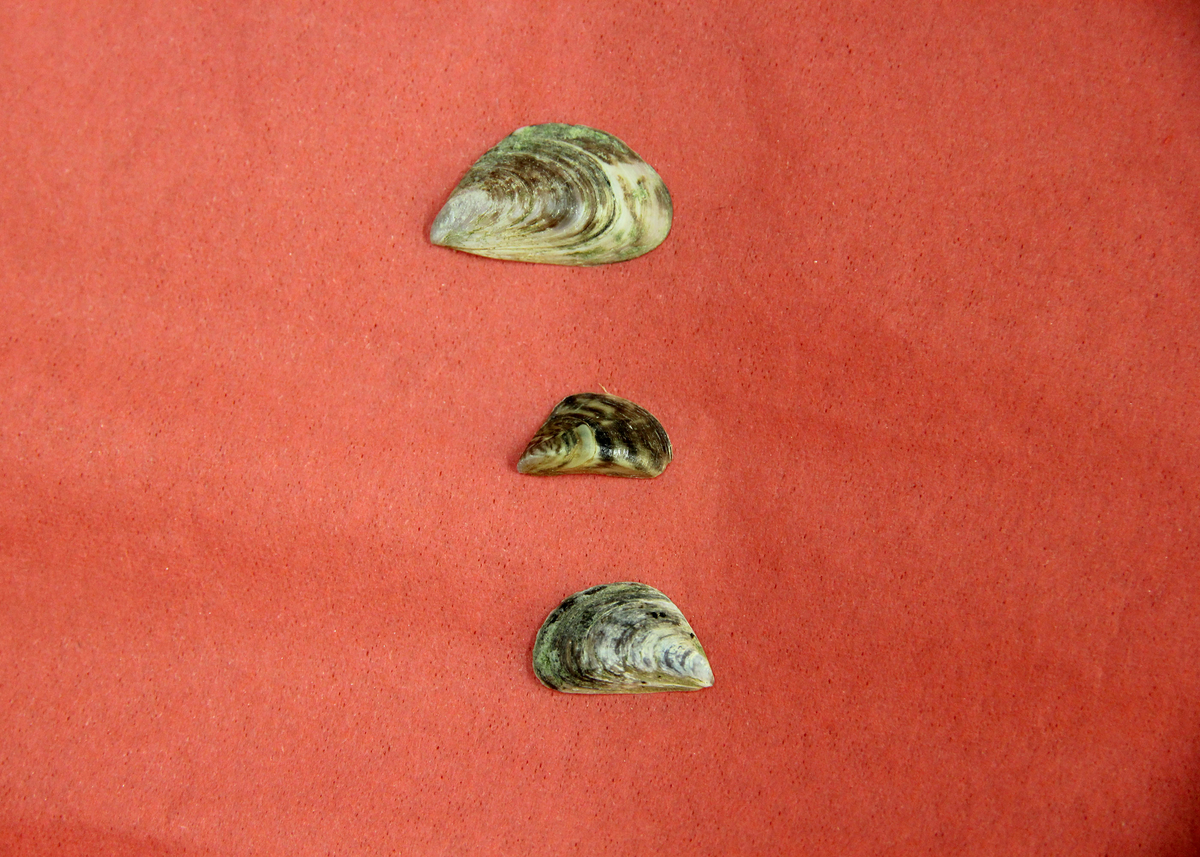
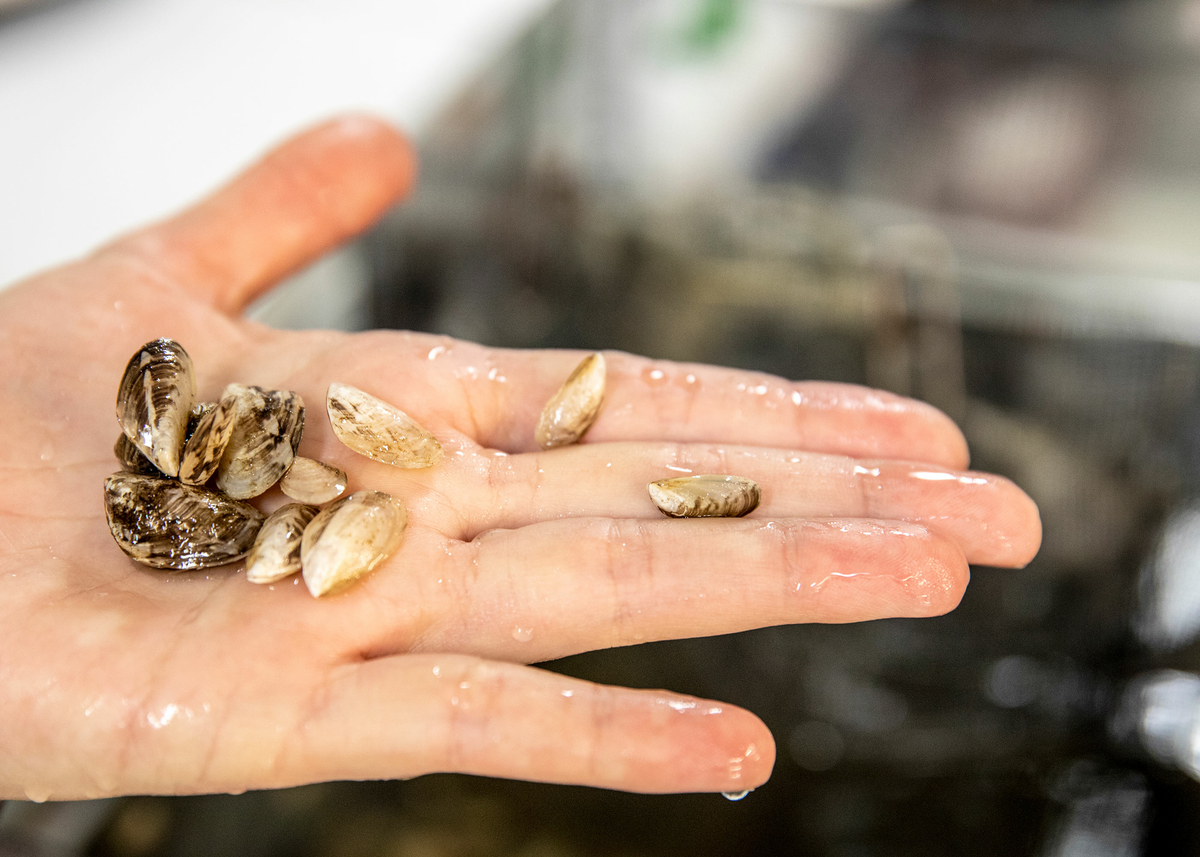
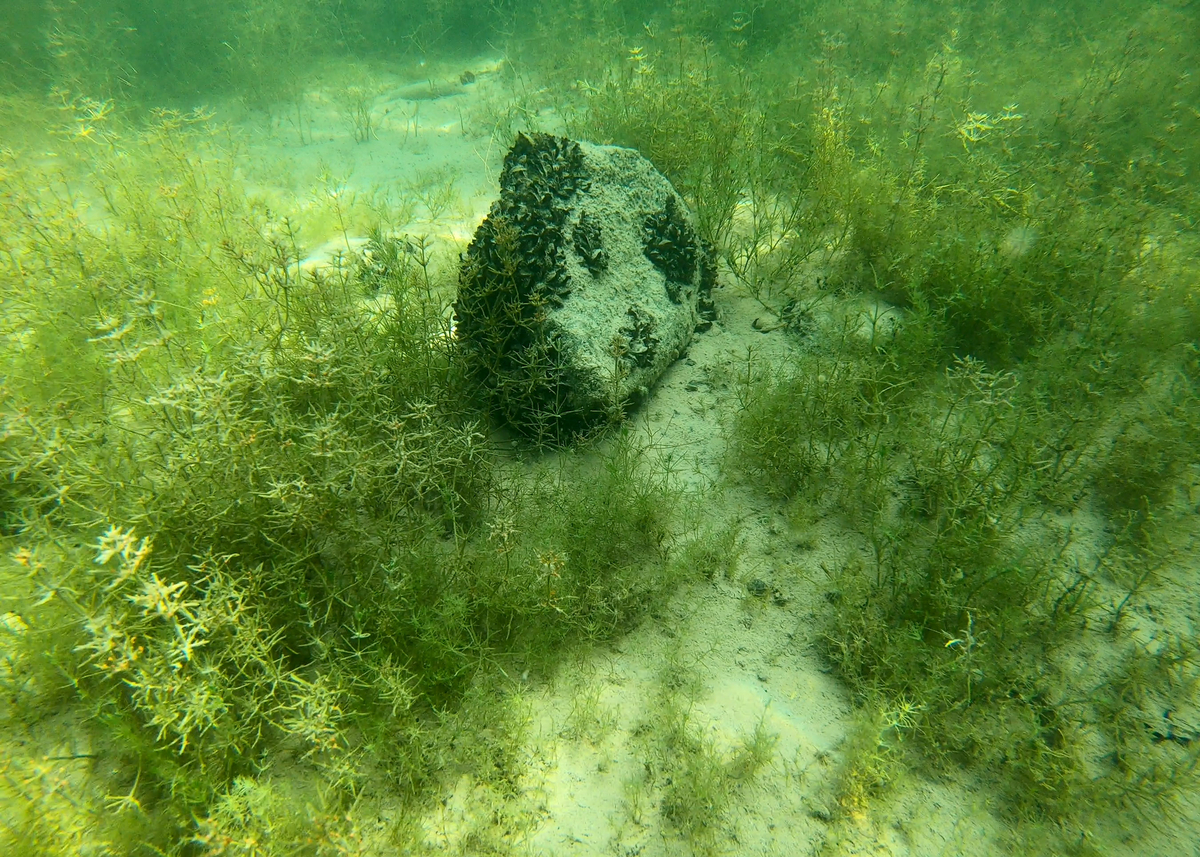
The quagga mussel (Dreissena rostriformis bugensis) is an invasive species: it originally comes from the Black Sea region, but is now widespread in parts of Europe and North America. It is found in lakes, slow-flowing rivers and estuaries.

The invasive mussel is a problem mainly in the deep lakes of the Alpine foothills, because here, unlike along the shallow water zones in its original habitat, it is only eaten by a small number of birds and fish.

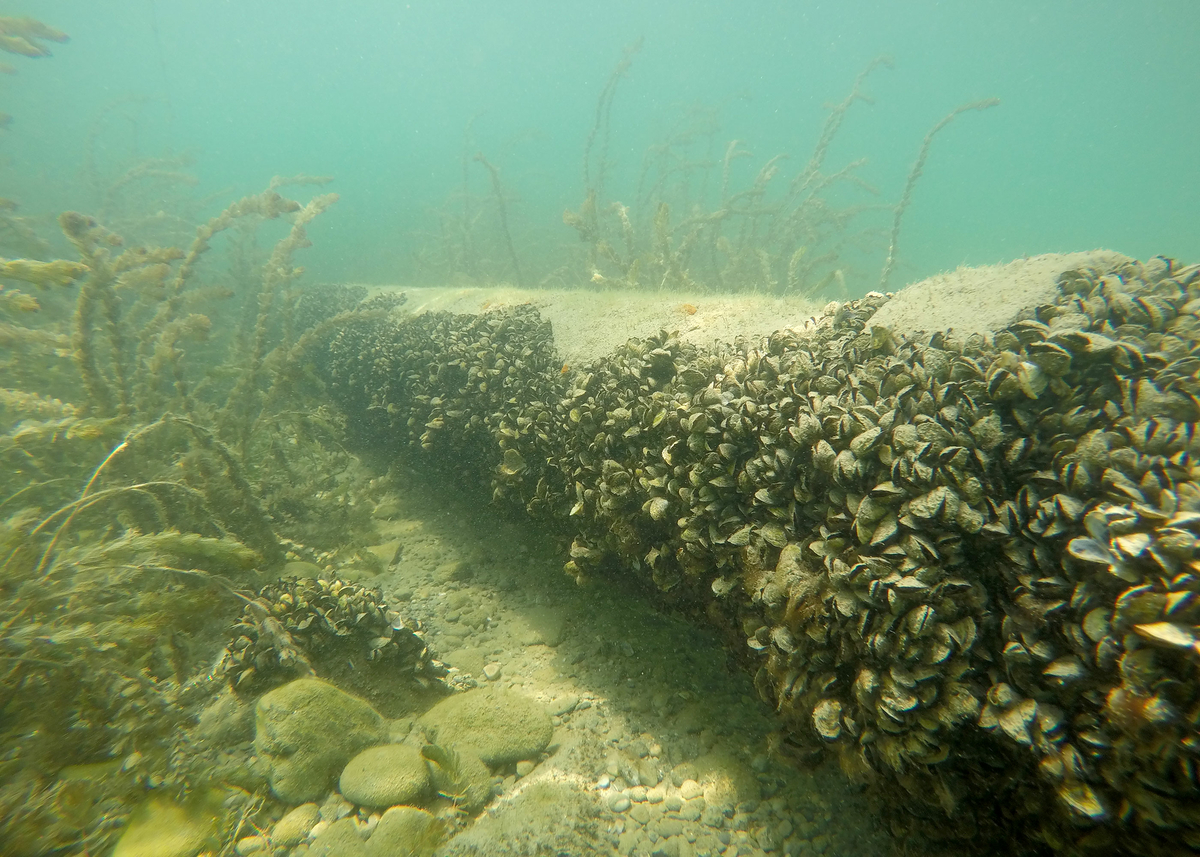
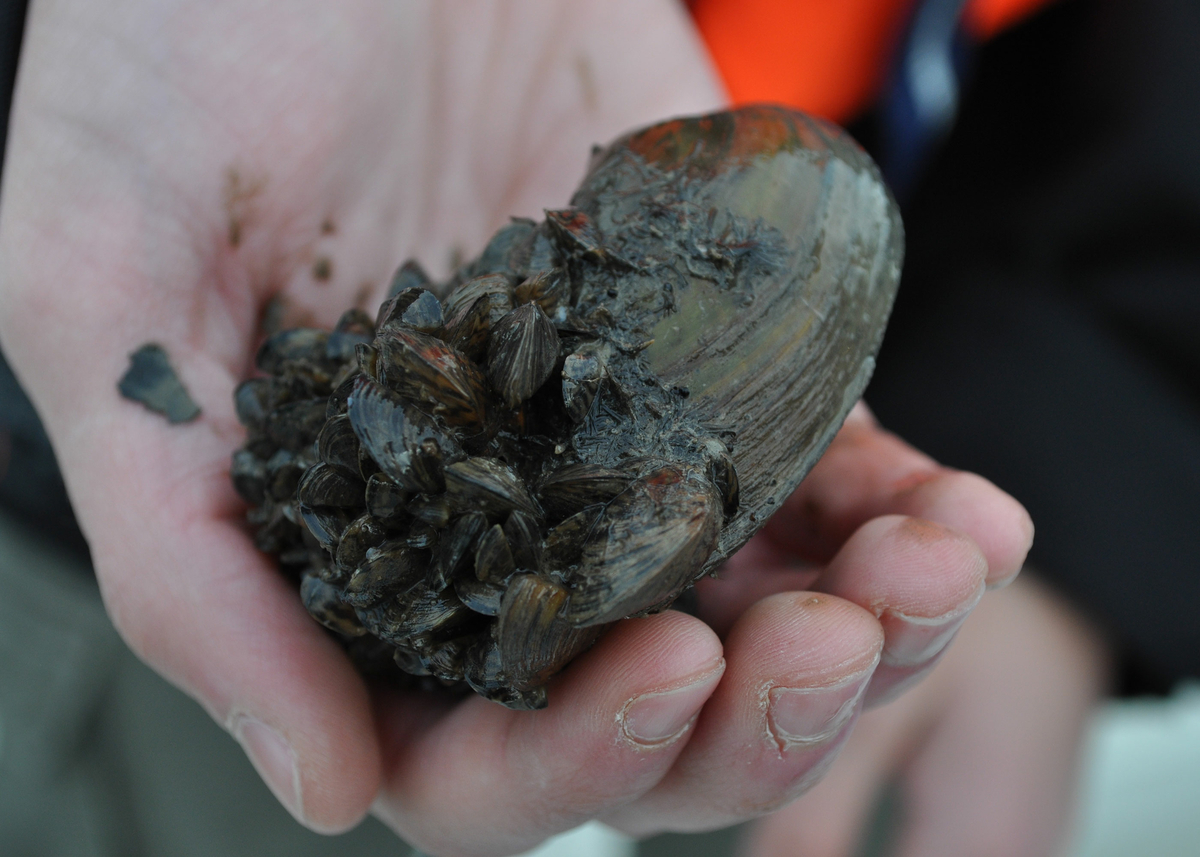
The larvae can spread naturally by floating in the current and thus being carried downstream. The larvae are also unintentionally spread by humans in the bilge, engine cooling or ballast waters of boats that are used in different bodies of water. The adult mussels also stick to boats and other objects. In addition to spreading via boats, it can also be carried from one body of water to the next via water sports or fishing equipment.
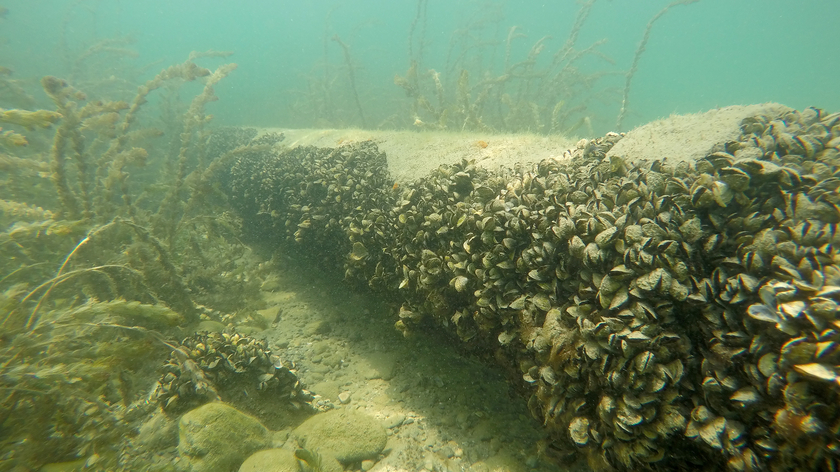
Far-reaching impact on nature and infrastructure

The speed at which the quagga mussel spreads and the high level of damage it can cause are posing challenges for authorities and operators of energy and water utilisation facilities on water bodies.

The presence of the mussel significantly changes ecosystems. Due to the high filtration rate, phytoplankton, for example, is greatly reduced, which deprives other organisms, such as water fleas (zooplankton), of a food source. These creatures are, in turn, food for fish, whose food supply is also reduced. A reduction in phytoplankton also makes the water clearer, allowing light to penetrate deeper into the lake, enabling aquatic plants to grow more prolifically. This, in turn, results in changes in ecosystem structure and food webs. Eawag researchers are working to understand and predict the impact on ecosystems as accurately as possible. However, interactions with other invasive species, possible pollution and even climate change make predictions unique and complex for each water body. In addition, the quagga mussel interferes with human water use.

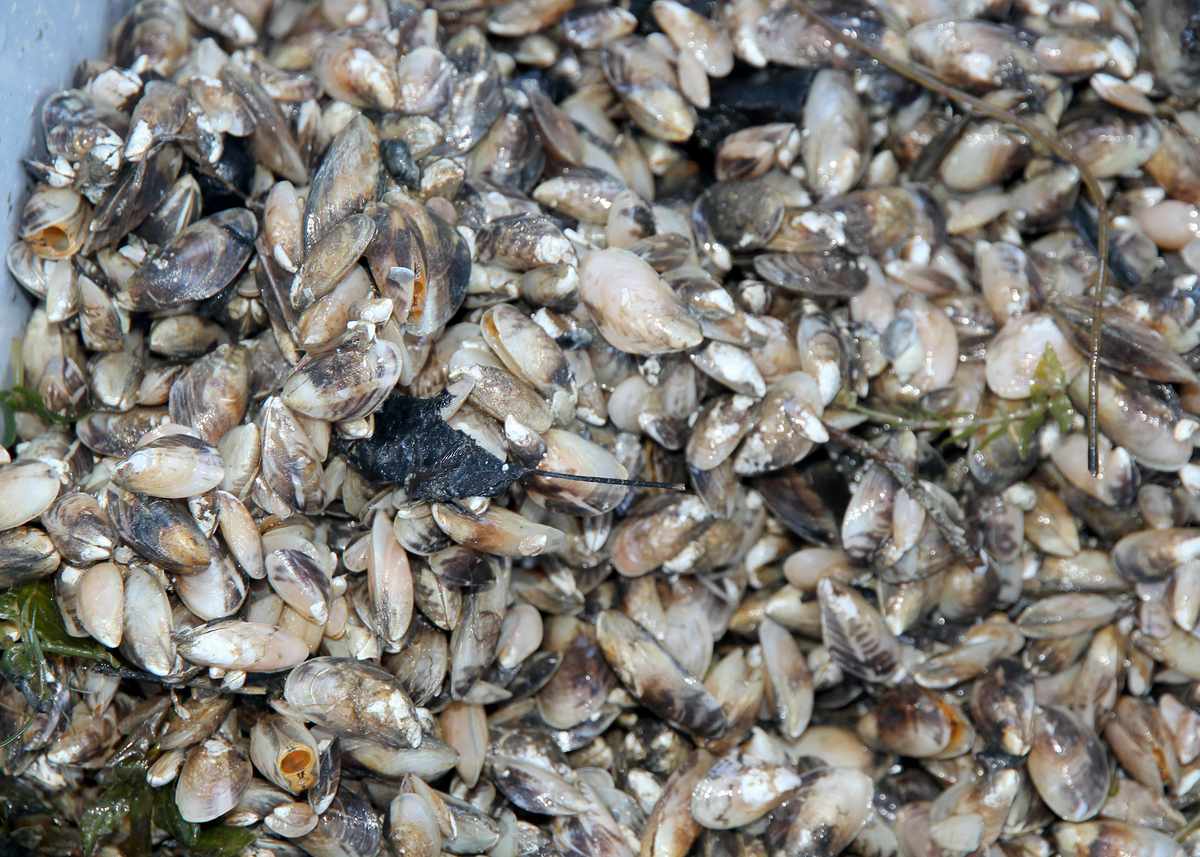
The biggest problem is pipe blockage in water supply or cooling water systems. Maintenance and renewal costs are rising sharply. But fishers who catch more mussels than fish with their bottom-set nets also have a considerable amount of extra work cleaning their nets.

The current situation in Switzerland

Once the quagga mussel has established itself in a body of water, it is impossible to get rid of it. This applies to Lake Constance, Lake Geneva, Lake Neuchâtel, Lake Biel, Lake Murten and Lac de l'Hongrin, as well as the Rhine and Aare rivers. Lake Constance, Lake Geneva and Lake Neuchâtel are particularly badly affected. The quagga mussel has also recently been discovered in Lake Zurich, Lake Zug and Lake Lucerne.

The quagga mussel has already reached high densities in some parts of these lakes and is increasingly penetrating deeper areas. A comparison with North American lakes, where the mussel has been widespread for some time, indicates a further sharp increase in biomass. These predictions are being revised and updated with newly obtained monitoring data. The figure on the right is based on outdated data and should no longer be used in this form.
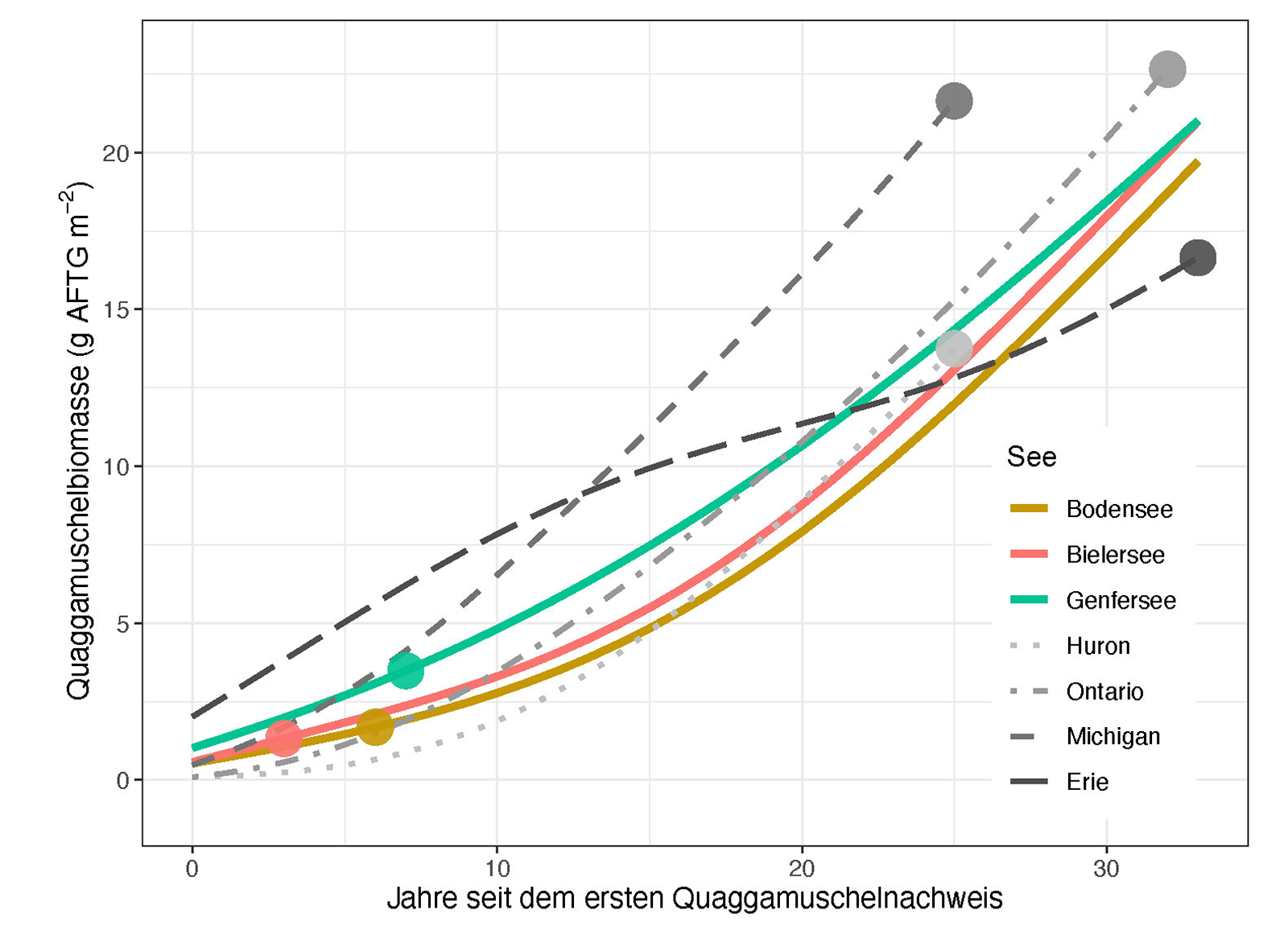
Calculated biomass of quagga mussels per square metre over a period of 33 years since first detection. The points represent the status in 2022. The forecasts are currently being revised with additional data. For this reason, this graph should no longer be used. (Graphic: Kraemer et al., 2023, revised)

Joint action is necessary

Eawag recommends that water bodies that are not yet affected be protected as best as possible. This can be achieved by inspecting, cleaning and drying boats, equipment for water sports and fishing when moving from one body of water to the next. In affected bodies of water, the consequences can be mitigated by designing the infrastructure in such a way that the mussels and their larvae cannot enter.

Together with the federal government and cantonal authorities, Eawag is working on a standardised concept for the early detection and monitoring of the quagga mussel. They also advise cantonal alien species agencies, water and heating suppliers and other stakeholders on the continued development and harmonisation of preventive and protective measures.
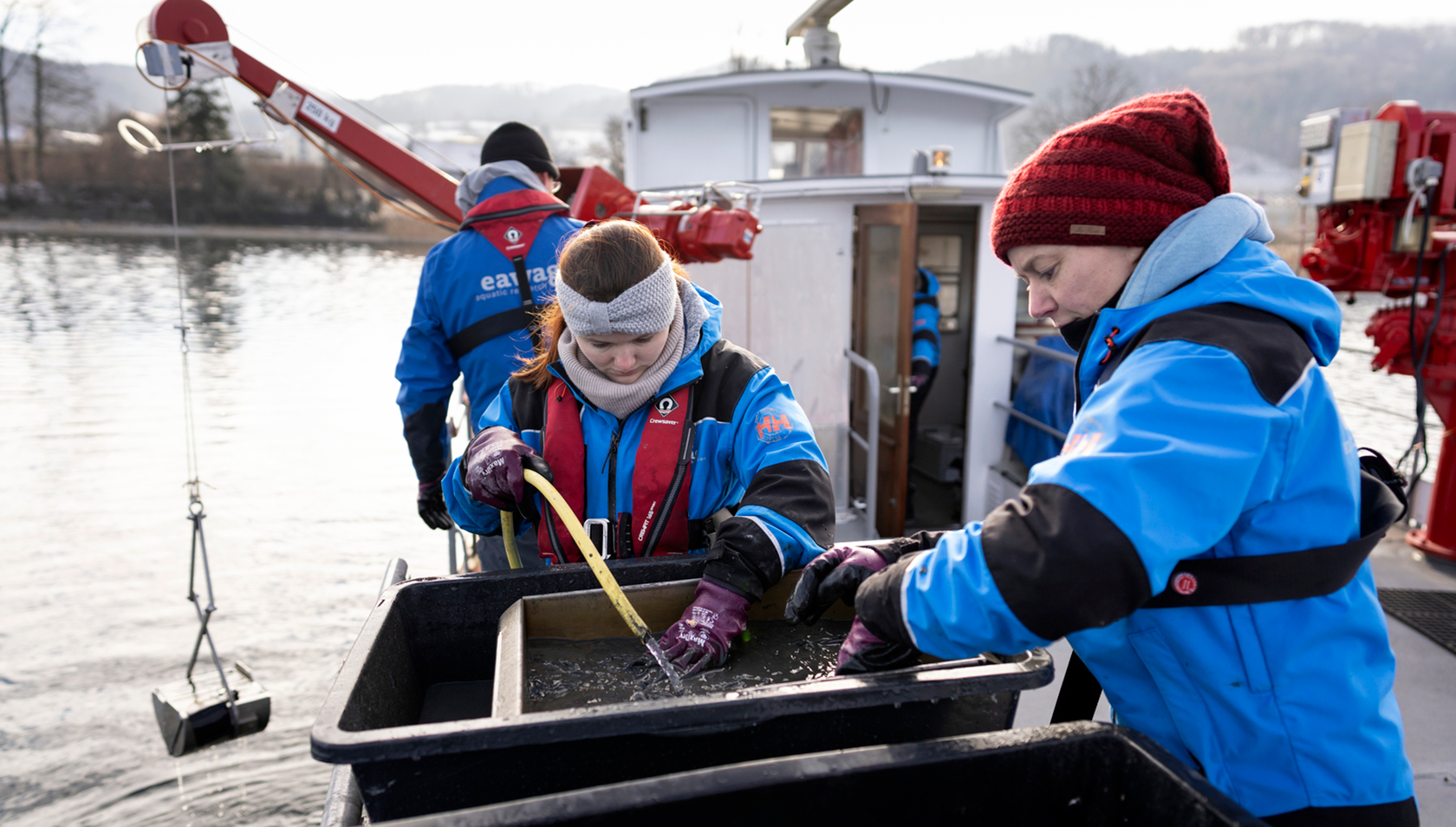
Eawag Quagga Competence Center

Tasks

  • Standardisation of monitoring of affected lakes and support for monitoring by the cantons
  • Support and standardisation of early detection in lakes not yet affected through regular eDNA monitoring
  • Cooperation with international commissions for the protection of Lake Geneva, Lake Constance, Lake Lugano and Lake Maggiore
  • Central point of contact for citizen science (mussel finds and mussel reports)
  • Point of contact for prevention and protection measures, including the evaluation of measures

For further information and questions regarding the spread and monitoring of the quagga mussel, please contact the Eawag Quagga Task Force. We will be happy to provide you with further information:

Eawag Quagga Competence Center
Thomas Müller
Aquatic Ecology
Überlandstrasse 133
8600 Dübendorf
Switzerland
quagga@eawag.ch

The centre is funded by the Federal Office for the Environment (FOEN) and Eawag.

History of the quagga mussel in Switzerland

Current distribution of the quagga mussel in Swiss water bodies (red dots). The first finding was in 2014 in an environmental DNA sample from the River Rhine in Basel. The years next to the dots indicate the year of the first discovery. Lakes in which no quagga mussels have yet been found are indicated by empty squares. The remaining lakes have not been investigated.
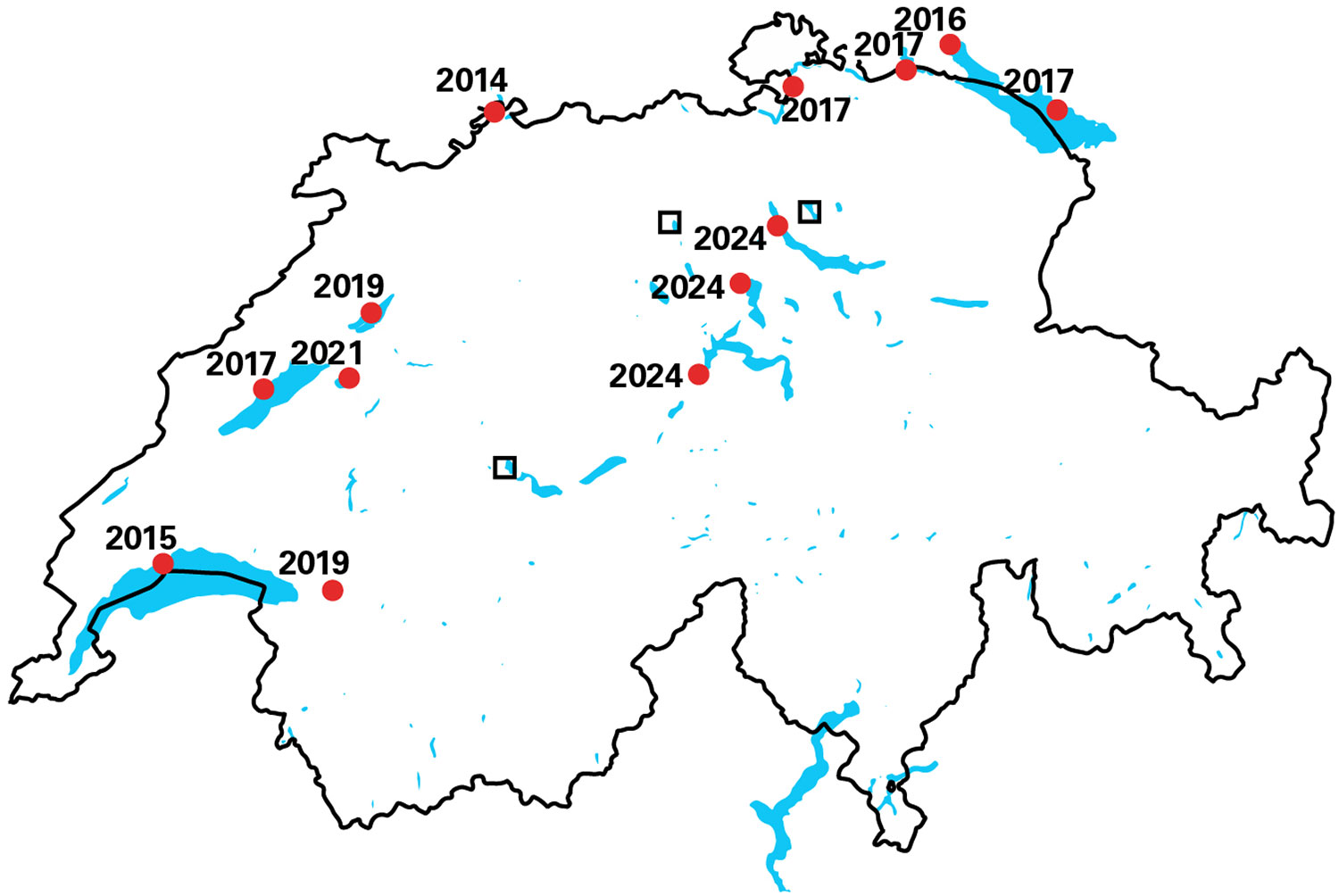
Graphic: Haltiner et al. 2022, (revised)

Video: Collapsing lakes and millions of francs in damage

In December 2024, Swiss television reported on Eawag’s research into quagga mussels in the Einstein programme (in German).

Picture gallery

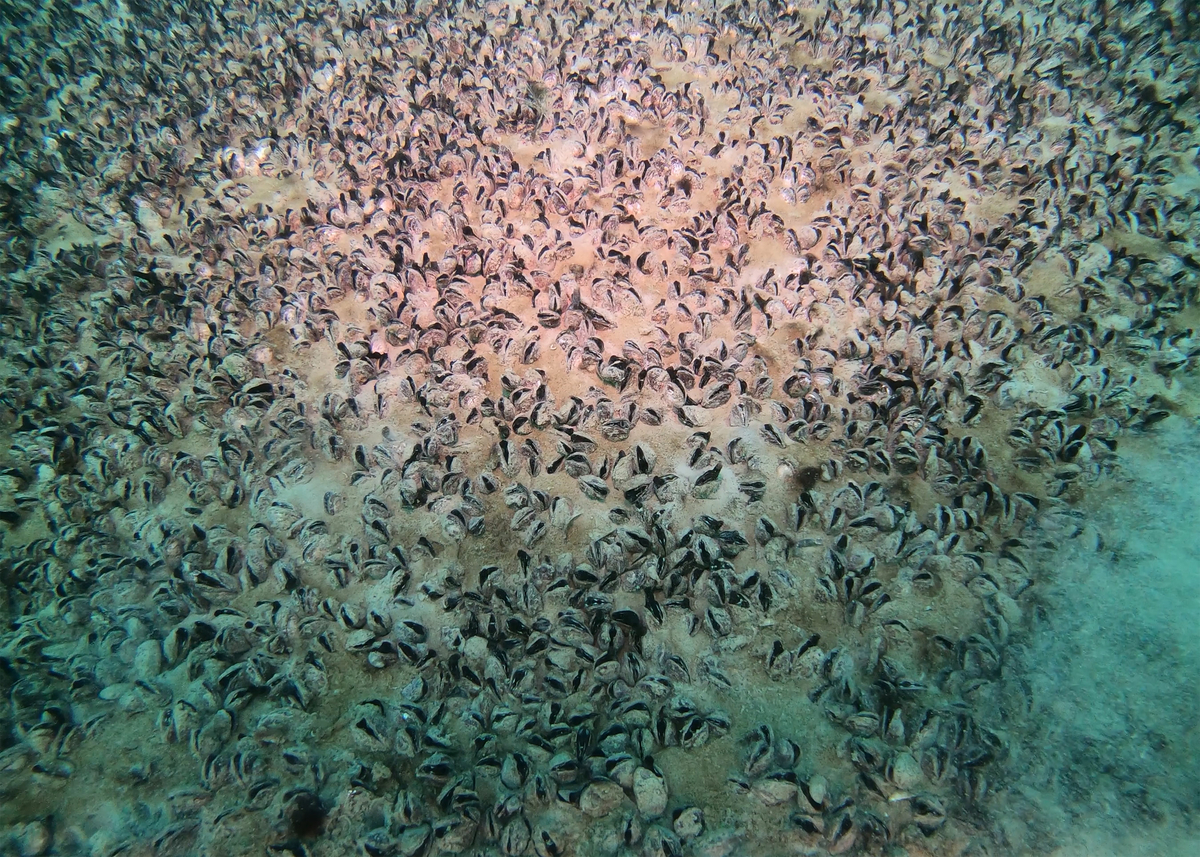
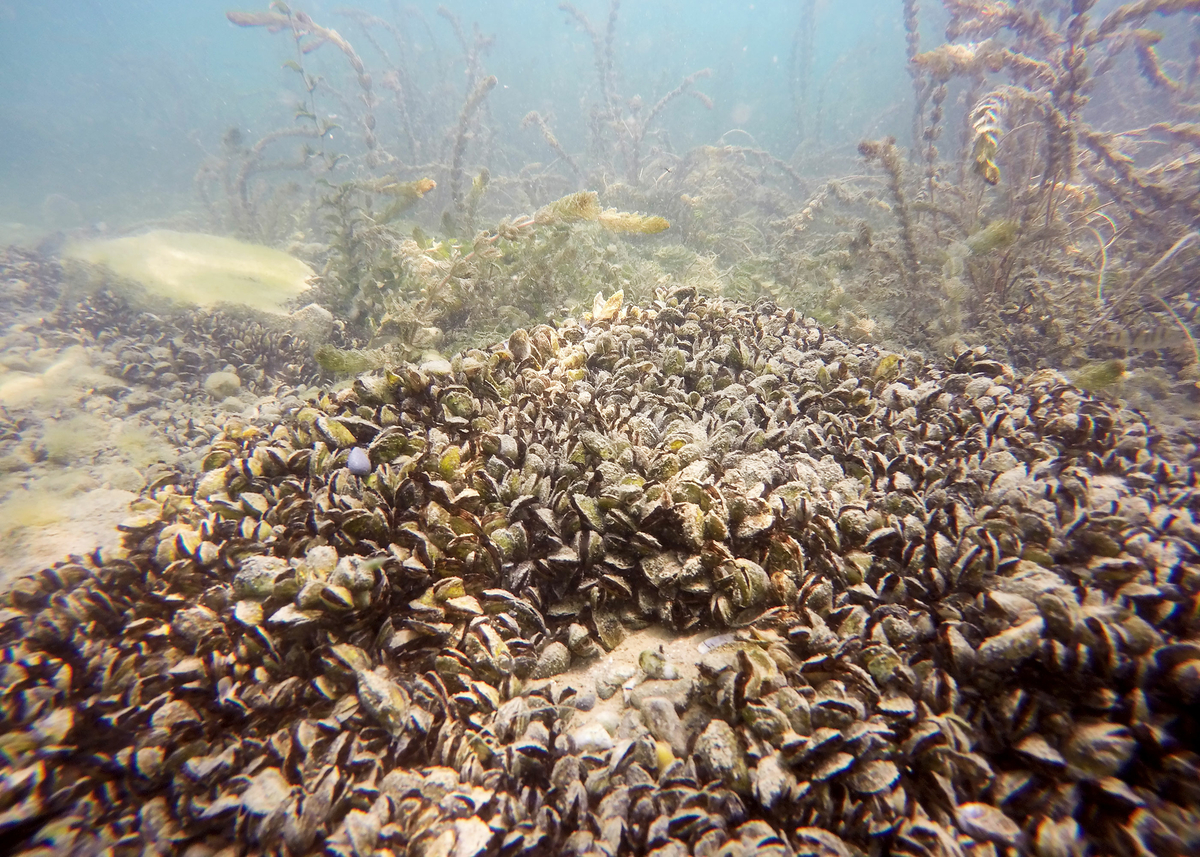
We have made the following images of quagga mussels available under the Creative Common Licence CC BY-NC-SA 4.0..
Network

We work together with a wide variety of partners.

The working group of the Conference of Environmental Agencies assists the cantons with invasive alien species (website in German, French, Italian).

Cercle Exotique

The federal government coordinates the management of invasive alien species (website in German, French, Italian).

Federal Office for the Environment (FOEN)

The EFBS advises the authorities on the protection of people, animals and the environment and issues recommendations for safety measures.

Swiss Expert Committee for Biosafety SECB

The IGKB wants to protect Lake Constance as a unique habitat (website in German).

International Commission for the Protection of Lake Constance (IGKB)

Experts

PD Dr. Piet Spaak
  • plankton
  • sediments
Dr. Alexandra Anh-Thu Weber
  • evolution
  • genetics
  • ecology
  • Environmental change
  • comparative genomics

Scientific publications

Extbase Variable Dump
array(3 items)
   publications => '32289,32167,24600' (17 chars)
   libraryUrl => '' (0 chars)
   layout => '1' (1 chars)
Extbase Variable Dump
array(3 items)
   0 => Snowflake\Publications\Domain\Model\Publicationprototypepersistent entity (uid=32289, pid=124)
      originalId => protected32289 (integer)
      authors => protected'Haltiner, L.; Spaak, P.; Dennis, S. R.; Feulner, P.
          G. D.
' (92 chars) title => protected'Population genetic insights into establishment, adaptation, and dispersal of
          the invasive quagga mussel across perialpine lakes
' (127 chars) journal => protected'Evolutionary Applications' (25 chars) year => protected2024 (integer) volume => protected17 (integer) issue => protected'1' (1 chars) startpage => protected'e13620 (16 pp.)' (15 chars) otherpage => protected'' (0 chars) categories => protected'ddRADseq; dispersal; Dreissena; phenotypic plasticity; population genetics' (74 chars) description => protected'Human activities have facilitated the invasion of freshwater ecosystems by v
         arious organisms. Especially, invasive bivalves such as the quagga mussels,
         <em>Dreissena bugensis</em>, have the potential to alter ecosystem function
         as they heavily affect the food web. Quagga mussels occur in high abundance,
          have a high filtration rate, quickly spread within and between waterbodies
         via pelagic larvae, and colonize various substrates. They have invaded vario
         us waterbodies across the Northern Hemisphere. In Central Europe, they have
         invaded multiple large and deep perialpine lakes with first recordings in La
         ke Geneva in 2015 and 2016 in Lake Constance. In the deep perialpine lakes,
         quagga mussels quickly colonized the littoral zone but are also abundant dee
         per (&gt;80 m), where they are often thinner and brighter shelled. We anal
         ysed 675 quagga mussels using ddRAD sequencing to gain in-depth insights int
         o the genetic population structure of quagga mussels across Central European
          lakes and across various sites and depth habitats in Lake Constance. We rev
         ealed substantial genetic differentiation amongst quagga mussel populations
         from three unconnected lakes, and all populations showed high genetic divers
         ity and effective population size. In Lake Constance, we detected no genetic
          differentiation amongst quagga mussels sampled across different sites and d
         epth habitats. We also did not identify any convincing candidate loci eviden
         tial for adaptation along a depth gradient and a transplant experiment showe
         d no indications of local adaptation to living in the deep based on investig
         ating growth and survival. Hence, the shallow-water and the deep-water morph
         otypes seem to be a result of phenotypic plasticity rather than local adapta
         tion to depth. In conclusion, our ddRAD approach revealed insight into the e
         stablishment of genetically distinct quagga mussel populations in three peri
         alpine lakes and suggests that phenotypic plasticity and life history traits
          (broadcast spawner with...
' (2138 chars) serialnumber => protected'1752-4571' (9 chars) doi => protected'10.1111/eva.13620' (17 chars) uid => protected32289 (integer) _localizedUid => protected32289 (integer)modified _languageUid => protectedNULL _versionedUid => protected32289 (integer)modified pid => protected124 (integer)
1 => Snowflake\Publications\Domain\Model\Publicationprototypepersistent entity (uid=32167, pid=124) originalId => protected32167 (integer) authors => protected'Kraemer,&nbsp;B.&nbsp;M.; Boudet,&nbsp;S.; Burlakova,&nbsp;L.&nbsp;E.; Halti
         ner,&nbsp;L.; Ibelings,&nbsp;B.&nbsp;W.; Karatayev,&nbsp;A.&nbsp;Y.; Karatay
         ev,&nbsp;V.&nbsp;A.; Rossbacher,&nbsp;S.; Stöckli,&nbsp;R.; Straile,&nbsp;D
         .; Spaak,&nbsp;P.
' (245 chars) title => protected'An abundant future for quagga mussels in deep European lakes' (60 chars) journal => protected'Environmental Research Letters' (30 chars) year => protected2023 (integer) volume => protected18 (integer) issue => protected'12' (2 chars) startpage => protected'124008 (11 pp.)' (15 chars) otherpage => protected'' (0 chars) categories => protected'quagga; mussels; lakes; future; nebiota; freshwater' (51 chars) description => protected'Quagga mussels have expanded their range across the northern hemisphere in r
         ecent decades owing to their dispersal abilities, prolific reproduction rate
         s, and broad ecological tolerances. Their remarkable capacity to filter part
         iculates from the water column has had profound effects on inland aquatic ec
         osystems. In the North American Great Lakes, quagga mussel populations have
         increased inexorably since the late 1980's, but it remains unclear whether q
         uagga mussels will follow a similar trajectory in Europe where they have app
         eared more recently. Here we apply knowledge from a long-term quagga populat
         ion monitoring effort in the North American lakes to predict future quagga p
         opulations in deep European lakes, where quaggas are quickly becoming a cons
         picuous part of the underwater landscape. We predict that quagga mussel biom
         ass in Lakes Biel, Constance, and Geneva may increase by a factor of 9-20 by
          2045. Like in North America, this increase may be characterized by a shift
         to larger individuals and deeper depths as the population matures. If realiz
         ed, this rapid expansion of quagga mussels would likely drive the largest aq
         uatic ecosystem change in deep European lakes since the eutrophication perio
         d of the mid-20th century.
' (1242 chars) serialnumber => protected'1748-9326' (9 chars) doi => protected'10.1088/1748-9326/ad059f' (24 chars) uid => protected32167 (integer) _localizedUid => protected32167 (integer)modified _languageUid => protectedNULL _versionedUid => protected32167 (integer)modified pid => protected124 (integer)
2 => Snowflake\Publications\Domain\Model\Publicationprototypepersistent entity (uid=24600, pid=124) originalId => protected24600 (integer) authors => protected'Haltiner,&nbsp;L.; Zhang,&nbsp;H.; Anneville,&nbsp;O.; De Ventura,&nbsp;L.;
         DeWeber,&nbsp;J.&nbsp;T.; Hesselschwerdt,&nbsp;J.; Koss,&nbsp;M.; Rasconi,&n
         bsp;S.; Rothhaupt,&nbsp;K.-O.; Schick,&nbsp;R.; Schmidt,&nbsp;B.; Spaak,&nbs
         p;P.; Teiber-Siessegger,&nbsp;P.; Wessels,&nbsp;M.; Zeh,&nbsp;M.; Dennis,&nb
         sp;S.&nbsp;R.
' (317 chars) title => protected'The distribution and spread of quagga mussels in perialpine lakes north of t
         he Alps
' (83 chars) journal => protected'Aquatic Invasions' (17 chars) year => protected2022 (integer) volume => protected17 (integer) issue => protected'2' (1 chars) startpage => protected'153' (3 chars) otherpage => protected'173' (3 chars) categories => protected'Dreissena density; Dreissena bugensis; veliger phenology; monitoring; Lake C
         onstance; invasive species
' (102 chars) description => protected'The dreissenids, quagga mussel <em>Dreissena bugensis</em> and zebra mussel
         <em>D. polymorpha</em>, are invasive freshwater mussels in Europe and North
         America. These species strongly impact aquatic ecosystems, such as the food
         web through their high abundance and filtration rate. They spread quickly wi
         thin and between waterbodies, and have the ability to colonize various subst
         rates and depths. The zebra mussel invaded and established in Swiss lakes in
          the 1960s, whereas the quagga mussel was not detected until 2014. We collec
         ted all available data from cantonal as well as local authorities and other
         institutions to describe the colonization pattern of quagga mussels in peria
         lpine lakes north of the Alps. We also collected data regarding the distribu
         tion of larval stages of the mussels, the so-called veliger larvae. We obser
         ved that in lakes colonized by the quagga mussel, veligers are present the w
         hole year round, whereas they are absent in winter in lakes with only zebra
         mussels. Additionally, we present detailed information about the invasion an
         d colonization pattern of quagga mussels in Lake Constance. Quagga mussels c
         olonized the lakeshore within a few years (~ 2016-2018), outcompeted zebra m
         ussels, and have reached densities &gt; 5000 ind. m<sup>-2</sup> in the litt
         oral zone, even at 80 m densities above 1000 ind. m<sup>-2</sup> were found
         at some locations. At the end of the article, we discussed possibilities on
         how the spread of quagga mussels within and among northern perialpine lakes
         should be monitored and prevented in the future.
' (1568 chars) serialnumber => protected'1798-6540' (9 chars) doi => protected'10.3391/ai.2022.17.2.02' (23 chars) uid => protected24600 (integer) _localizedUid => protected24600 (integer)modified _languageUid => protectedNULL _versionedUid => protected24600 (integer)modified pid => protected124 (integer)
Haltiner, L.; Spaak, P.; Dennis, S. R.; Feulner, P. G. D. (2024) Population genetic insights into establishment, adaptation, and dispersal of the invasive quagga mussel across perialpine lakes, Evolutionary Applications, 17(1), e13620 (16 pp.), doi:10.1111/eva.13620, Institutional Repository
Kraemer, B. M.; Boudet, S.; Burlakova, L. E.; Haltiner, L.; Ibelings, B. W.; Karatayev, A. Y.; Karatayev, V. A.; Rossbacher, S.; Stöckli, R.; Straile, D.; Spaak, P. (2023) An abundant future for quagga mussels in deep European lakes, Environmental Research Letters, 18(12), 124008 (11 pp.), doi:10.1088/1748-9326/ad059f, Institutional Repository
Haltiner, L.; Zhang, H.; Anneville, O.; De Ventura, L.; DeWeber, J. T.; Hesselschwerdt, J.; Koss, M.; Rasconi, S.; Rothhaupt, K.-O.; Schick, R.; Schmidt, B.; Spaak, P.; Teiber-Siessegger, P.; Wessels, M.; Zeh, M.; Dennis, S. R. (2022) The distribution and spread of quagga mussels in perialpine lakes north of the Alps, Aquatic Invasions, 17(2), 153-173, doi:10.3391/ai.2022.17.2.02, Institutional Repository

Cover picture: Quagga mussels from Lake Constance (photo: Keystone, Gaetan Bally, photo montage: Eawag).