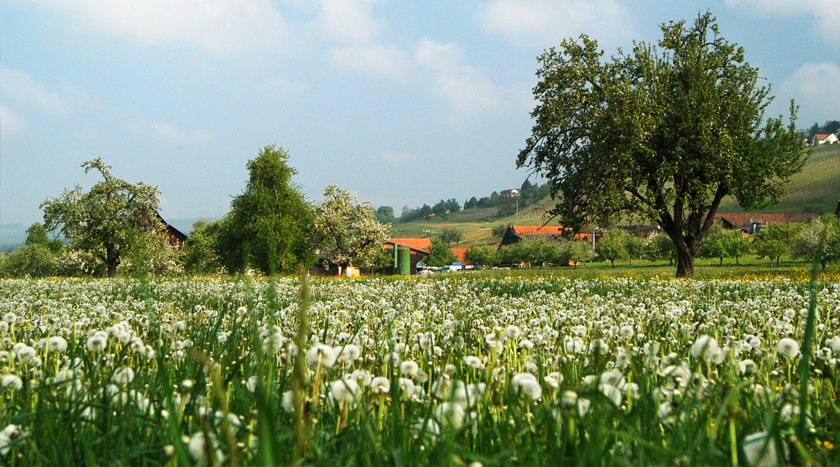
Dies ist ein vom SNF finanziertes Sinergia-Projekt. Es befasst sich mit der nachhaltigen Transformation der Schweizer Landwirtschaft mit dem Ziel, die negativen externen Effekte des Pestizideinsatzes zu internalisieren. Das Projekt ist ein inter- und transdisziplinäres Vorhaben, an dem Forschende aus den Gesundheitswissenschaften, der Politikwissenschaft, der Agrarwissenschaft, den Umweltwissenschaften, der Entscheidungsanalyse, der Medienanalyse sowie der inter- und transdisziplinären Forschung beteiligt sind. Um gleichzeitig die Sustainable Development Goals (SDGs) der Agenda 2030 der Vereinten Nationen in Bereichen wie Biodiversitätsschutz, Nahrungsmittelproduktion und -konsum zu erreichen, scheint eine grundlegende Transformation der Landnutzung und der landwirtschaftlichen Produktion unabdingbar. Unterschiedliche Interessen, Bedürfnisse und Prioritäten machen diese Aufgabe zu einer besonderen Herausforderung. Daher stellt sich die allgemeine Frage: Wie können wir in Bereichen, in denen gesellschaftliche, wirtschaftliche und ökologische Zielkonflikte bestehen, eine erfolgreiche nachhaltige Transformation erreichen? Um diese Frage zu beantworten, konzentrieren wir uns auf den Einsatz von Pestiziden in der Landwirtschaft in der Schweiz; ein Querschnittsthema, bei dem Interessen im Zusammenhang mit der landwirtschaftlichen Produktion durch Bedenken hinsichtlich der menschlichen und ökologischen Gesundheit herausgefordert werden.
Weitere Informationen finden Sie auf der (Projekt-Website von TRAPEGO).
array(3 items)0 => Snowflake\Publications\Domain\Model\Publicationprototypepersistent entity (uid=33186, pid=124)originalId => protected33186 (integer)
authors => protected'Wiget, M.' (14 chars)
title => protected'Does (dis)agreement reflect beliefs? An analysis of advocacy coalitions in S wiss pesticide policy' (97 chars)
journal => protected'European Policy Analysis' (24 chars)
year => protected2024 (integer)
volume => protected10 (integer)
issue => protected'4' (1 chars)
startpage => protected'488' (3 chars)
otherpage => protected'514' (3 chars)
categories => protected'advocacy coalition framework (ACF); beliefs; (dis)agreement; multi-attribute value theory (MAVT); pesticide policy' (114 chars)
description => protected'Agricultural pesticide use is a wicked sustainability challenge: Trade-offs exist between health, environmental, agro-economic, and socio-political obje ctives. Various actors involved have diverse beliefs regarding these trade-o ffs and policies to address the challenge. But to what extent does the agree ment or disagreement between actors reflect belief similarities or differenc es, and thus, the formation of advocacy coalitions? To answer this question, the study draws on the advocacy coalition framework and investigates data f rom 54 key actors in the case of Swiss pesticide policy. The study explores the relationship between the actors' (dis)agreement relations and their beli efs using Random Forests. Coalitions are identified through block modeling a nd beliefs based on multi-attribute value theory. The study shows that the t wo relations are a good proxy for identifying coalitions with conflict lines concerning beliefs and presents an approach to exploring ideological reason s behind (dis)agreement relations that supports identifying conflicting beli efs relevant to future policy solutions.' (1104 chars)
serialnumber => protected'2380-6567' (9 chars)
doi => protected'10.1002/epa2.1219' (17 chars)
uid => protected33186 (integer)
_localizedUid => protected33186 (integer)modified_languageUid => protectedNULL
_versionedUid => protected33186 (integer)modifiedpid => protected124 (integer)1 => Snowflake\Publications\Domain\Model\Publicationprototypepersistent entity (uid=26046, pid=124)originalId => protected26046 (integer)
authors => protected'Hofmann, B.; Ingold, K.; Stamm, C.; Ammann, P.; Eggen,&n bsp;R. I. L.; Finger, R.; Fuhrimann, S.; Lienert, J .; Mark, J.; McCallum, C.; Probst-Hensch, N.; Reber, U.; Tamm, L.; Wiget, M.; Winkler, M. S.; Zachmann, L.; Hoffmann, S.' (322 chars)
title => protected'Barriers to evidence use for sustainability: insights from pesticide policy and practice' (88 chars)
journal => protected'Ambio' (5 chars)
year => protected2023 (integer)
volume => protected52 (integer)
issue => protected'2' (1 chars)
startpage => protected'425' (3 chars)
otherpage => protected'439' (3 chars)
categories => protected'agriculture; evidence; pesticides; policy and practice; sustainability; tran sformation' (86 chars)
description => protected'Calls for supporting sustainability through more and better research rest on an incomplete understanding of scientific evidence use. We argue that a var iety of barriers to a transformative impact of evidence arises from diverse actor motivations within different stages of evidence use. We abductively sp ecify this variety in policy and practice arenas for three actor motivations (truth-seeking, sense-making, and utility-maximizing) and five stages (evid ence production, uptake, influence on decisions, effects on sustainability o utcomes, and feedback from outcome evaluations). Our interdisciplinary synth esis focuses on the sustainability challenge of reducing environmental and h uman health risks of agricultural pesticides. It identifies barriers resulti ng from (1) truth-seekers’ desire to reduce uncertainty that is complicate d by evidence gaps, (2) sense-makers’ evidence needs that differ from the type of evidence available, and (3) utility-maximizers’ interests that gui de strategic evidence use. We outline context-specific research–policy–p ractice measures to increase evidence use for sustainable transformation in pesticides and beyond.' (1162 chars)
serialnumber => protected'0044-7447' (9 chars)
doi => protected'10.1007/s13280-022-01790-4' (26 chars)
uid => protected26046 (integer)
_localizedUid => protected26046 (integer)modified_languageUid => protectedNULL
_versionedUid => protected26046 (integer)modifiedpid => protected124 (integer)2 => Snowflake\Publications\Domain\Model\Publicationprototypepersistent entity (uid=21403, pid=124)originalId => protected21403 (integer)
authors => protected'Möhring, N.; Ingold, K.; Kudsk, P.; Martin-Laurent, F.; Niggli, U.; Siegrist, M.; Studer, B.; Walter, A.; Finge r, R.' (162 chars)
title => protected'Pathways for advancing pesticide policies' (41 chars)
journal => protected'Nature Food' (11 chars)
year => protected2020 (integer)
volume => protected1 (integer)
issue => protected'' (0 chars)
startpage => protected'535' (3 chars)
otherpage => protected'540' (3 chars)
categories => protected'' (0 chars)
description => protected'Numerous pesticide policies have been introduced to mitigate the risks of pe sticide use, but most have not been successful in reaching usage reduction g oals. Here, we name key challenges for the reduction of environmental and he alth risks from agricultural pesticide use and develop a framework for impro ving current policies. We demonstrate the need for policies to encompass all actors in the food value chain. By adopting a multi-disciplinary approach, we suggest ten key steps to achieve a reduction in pesticide risks. We highl ight how new technologies and regulatory frameworks can be implemented and a ligned with all actors in food value chains. Finally, we discuss major trade -offs and areas of tension with other agricultural policy goals and propose a holistic approach to advancing pesticide policies.' (812 chars)
serialnumber => protected'' (0 chars)
doi => protected'10.1038/s43016-020-00141-4' (26 chars)
uid => protected21403 (integer)
_localizedUid => protected21403 (integer)modified_languageUid => protectedNULL
_versionedUid => protected21403 (integer)modifiedpid => protected124 (integer)
Does (dis)agreement reflect beliefs? An analysis of advocacy coalitions in Swiss pesticide policy
Agricultural pesticide use is a wicked sustainability challenge: Trade-offs exist between health, environmental, agro-economic, and socio-political objectives. Various actors involved have diverse beliefs regarding these trade-offs and policies to address the challenge. But to what extent does the agreement or disagreement between actors reflect belief similarities or differences, and thus, the formation of advocacy coalitions? To answer this question, the study draws on the advocacy coalition framework and investigates data from 54 key actors in the case of Swiss pesticide policy. The study explores the relationship between the actors' (dis)agreement relations and their beliefs using Random Forests. Coalitions are identified through block modeling and beliefs based on multi-attribute value theory. The study shows that the two relations are a good proxy for identifying coalitions with conflict lines concerning beliefs and presents an approach to exploring ideological reasons behind (dis)agreement relations that supports identifying conflicting beliefs relevant to future policy solutions.
Wiget, M. (2024) Does (dis)agreement reflect beliefs? An analysis of advocacy coalitions in Swiss pesticide policy, European Policy Analysis, 10(4), 488-514, doi:10.1002/epa2.1219, Institutional Repository
Barriers to evidence use for sustainability: insights from pesticide policy and practice
Calls for supporting sustainability through more and better research rest on an incomplete understanding of scientific evidence use. We argue that a variety of barriers to a transformative impact of evidence arises from diverse actor motivations within different stages of evidence use. We abductively specify this variety in policy and practice arenas for three actor motivations (truth-seeking, sense-making, and utility-maximizing) and five stages (evidence production, uptake, influence on decisions, effects on sustainability outcomes, and feedback from outcome evaluations). Our interdisciplinary synthesis focuses on the sustainability challenge of reducing environmental and human health risks of agricultural pesticides. It identifies barriers resulting from (1) truth-seekers’ desire to reduce uncertainty that is complicated by evidence gaps, (2) sense-makers’ evidence needs that differ from the type of evidence available, and (3) utility-maximizers’ interests that guide strategic evidence use. We outline context-specific research–policy–practice measures to increase evidence use for sustainable transformation in pesticides and beyond.
Hofmann, B.; Ingold, K.; Stamm, C.; Ammann, P.; Eggen, R. I. L.; Finger, R.; Fuhrimann, S.; Lienert, J.; Mark, J.; McCallum, C.; Probst-Hensch, N.; Reber, U.; Tamm, L.; Wiget, M.; Winkler, M. S.; Zachmann, L.; Hoffmann, S. (2023) Barriers to evidence use for sustainability: insights from pesticide policy and practice, Ambio, 52(2), 425-439, doi:10.1007/s13280-022-01790-4, Institutional Repository
Pathways for advancing pesticide policies
Numerous pesticide policies have been introduced to mitigate the risks of pesticide use, but most have not been successful in reaching usage reduction goals. Here, we name key challenges for the reduction of environmental and health risks from agricultural pesticide use and develop a framework for improving current policies. We demonstrate the need for policies to encompass all actors in the food value chain. By adopting a multi-disciplinary approach, we suggest ten key steps to achieve a reduction in pesticide risks. We highlight how new technologies and regulatory frameworks can be implemented and aligned with all actors in food value chains. Finally, we discuss major trade-offs and areas of tension with other agricultural policy goals and propose a holistic approach to advancing pesticide policies.