Mieux comprendre et protéger les écosystèmes aquatiques
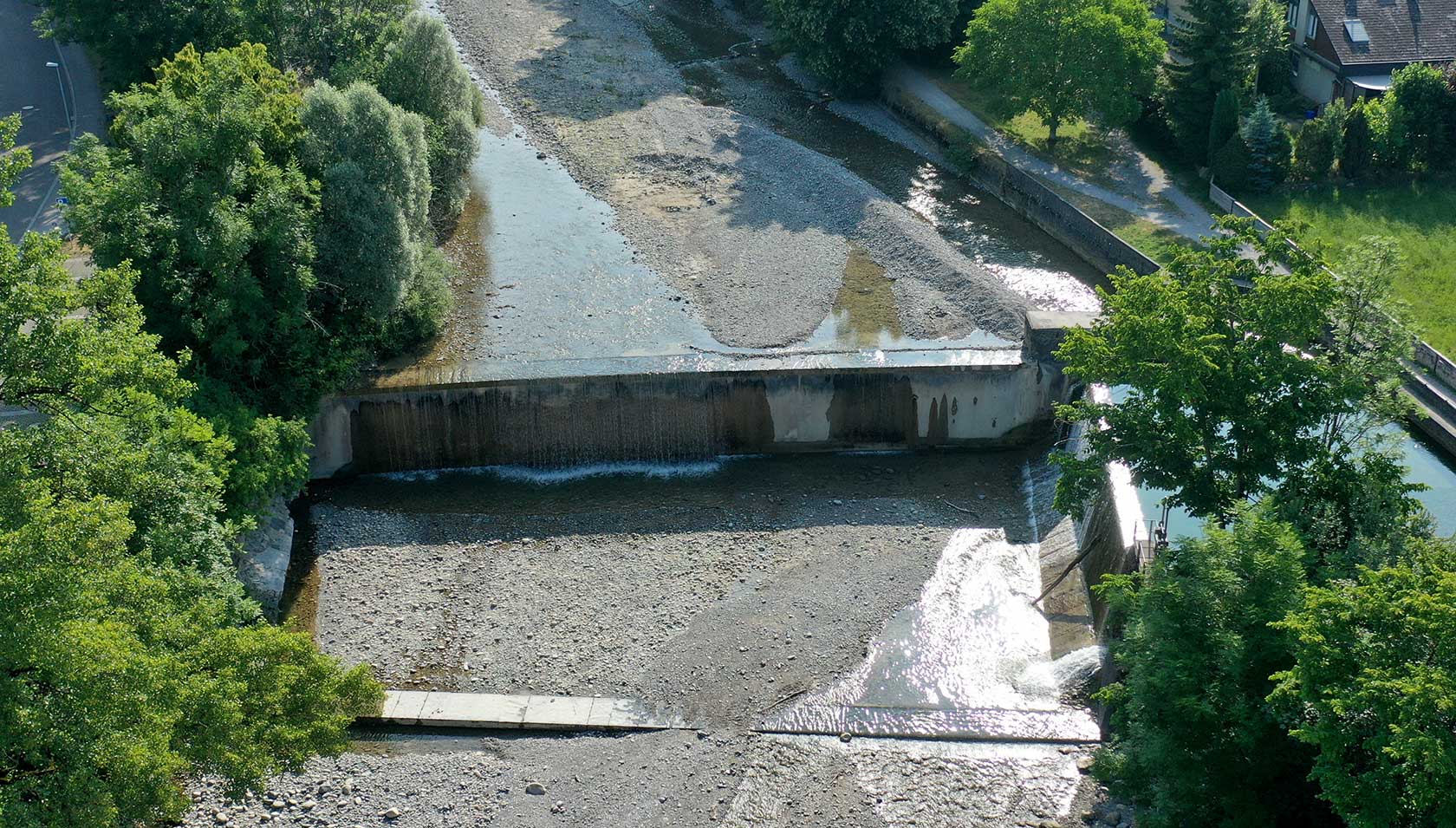
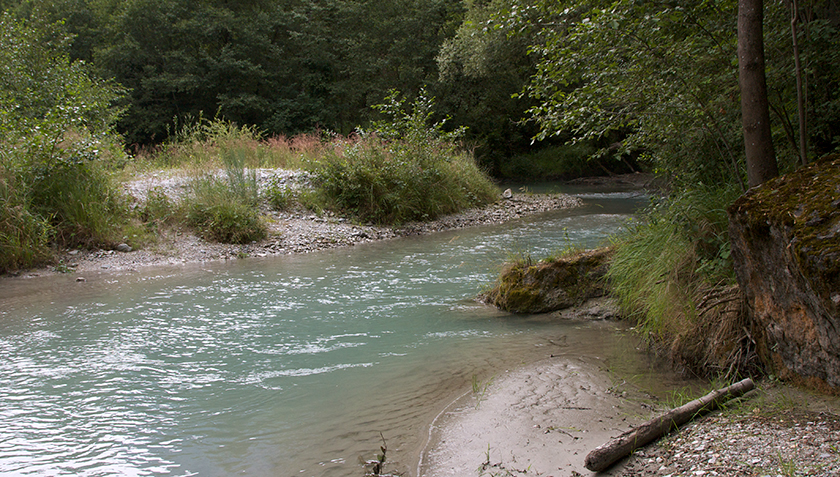
Pour les êtres humains, les cours d’eau sont bien plus que des fournisseurs d’eau potable. Ils rafraîchissent nos villes et protègent des inondations, ils servent à produire de l’énergie, à pêcher et à naviguer et représentent pour nous de précieux espaces récréatifs. Leur importance est tout aussi significative pour la nature. Toutefois, nos activités mettent les fleuves, les lacs et les eaux souterraines sous pression. Les recherches que poursuit l’Eawag contribuent à une meilleure compréhension, à une gestion durable et à une meilleure protection des écosystèmes aquatiques.
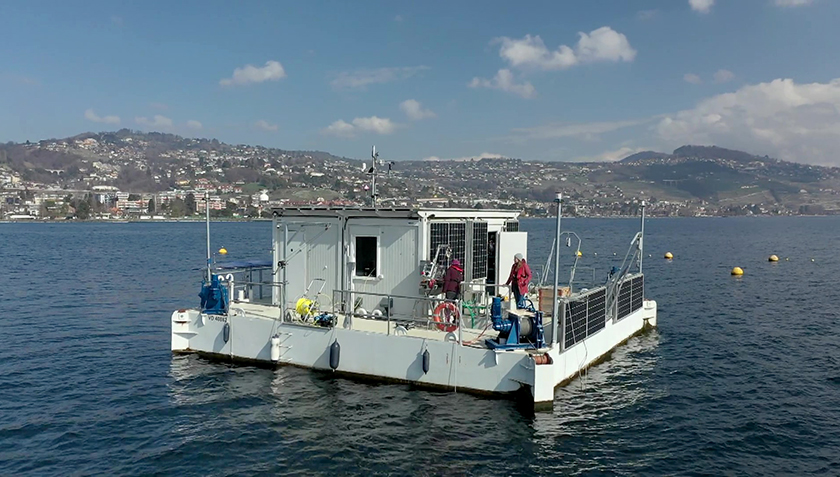
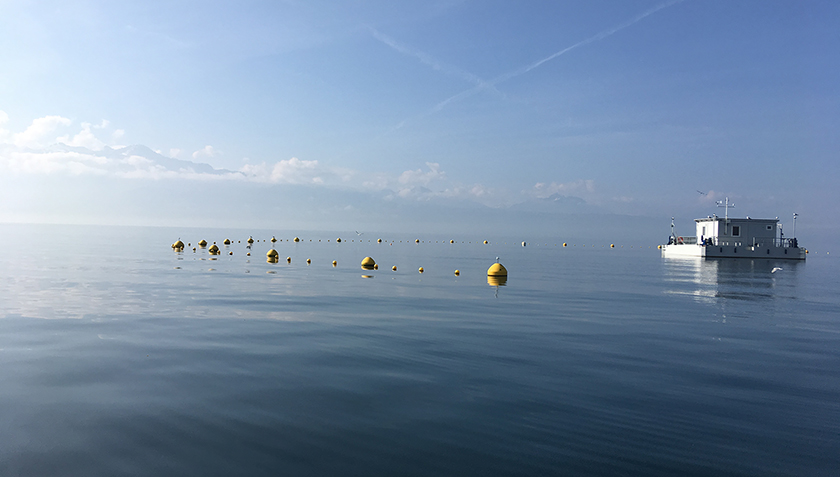
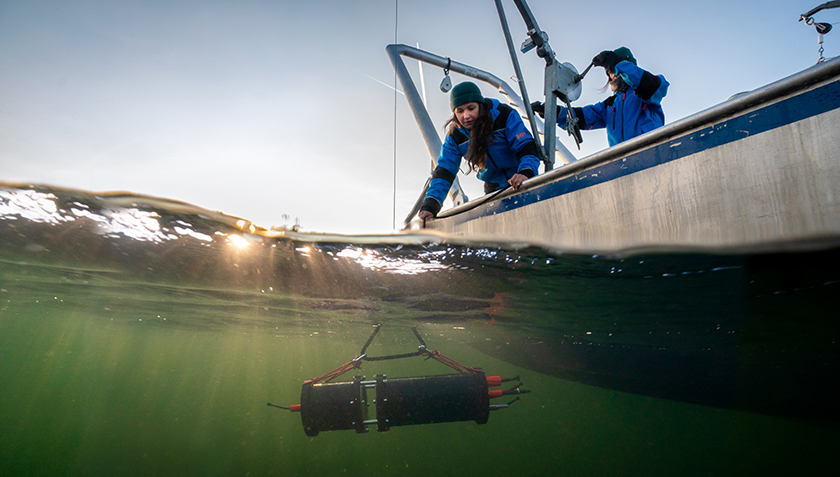
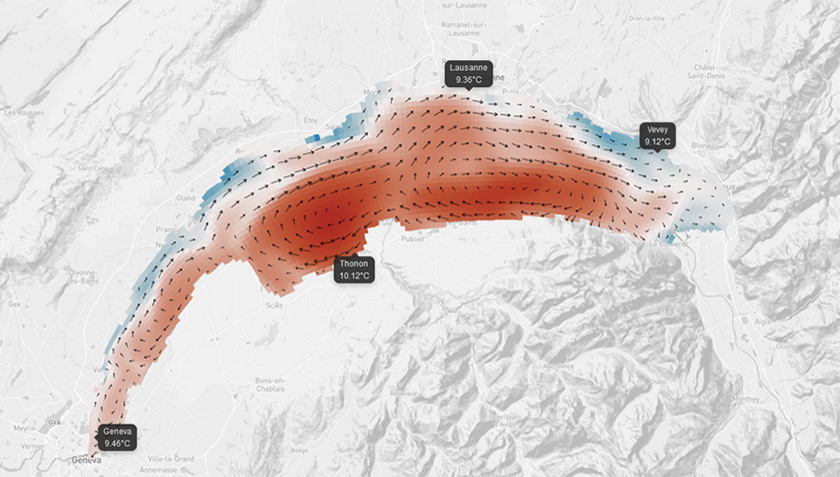
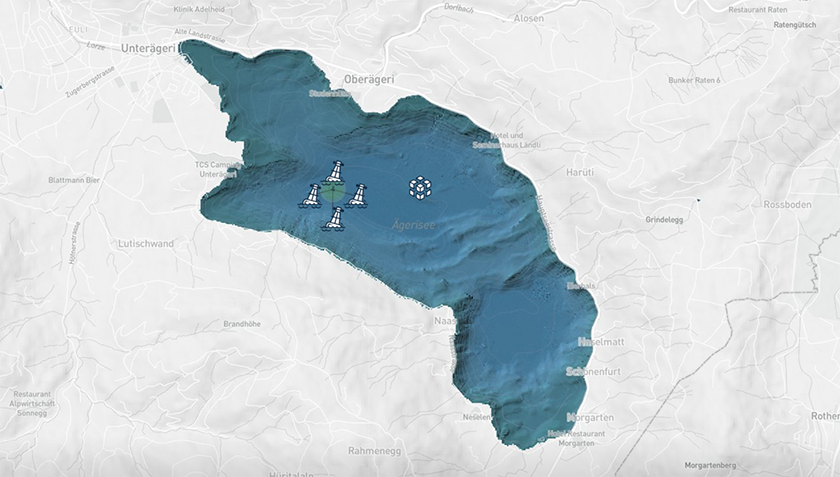
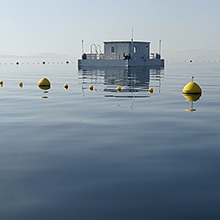
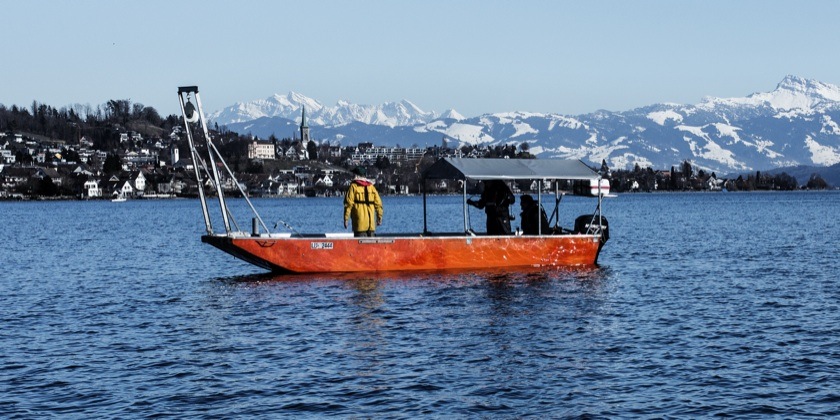
Le laboratoire flottant LéXPLORE du lac Léman améliore notre compréhension des écosystèmes lacustres (Photo: Natacha Tofield-Pasche, EPFL).
Un biotope complexe
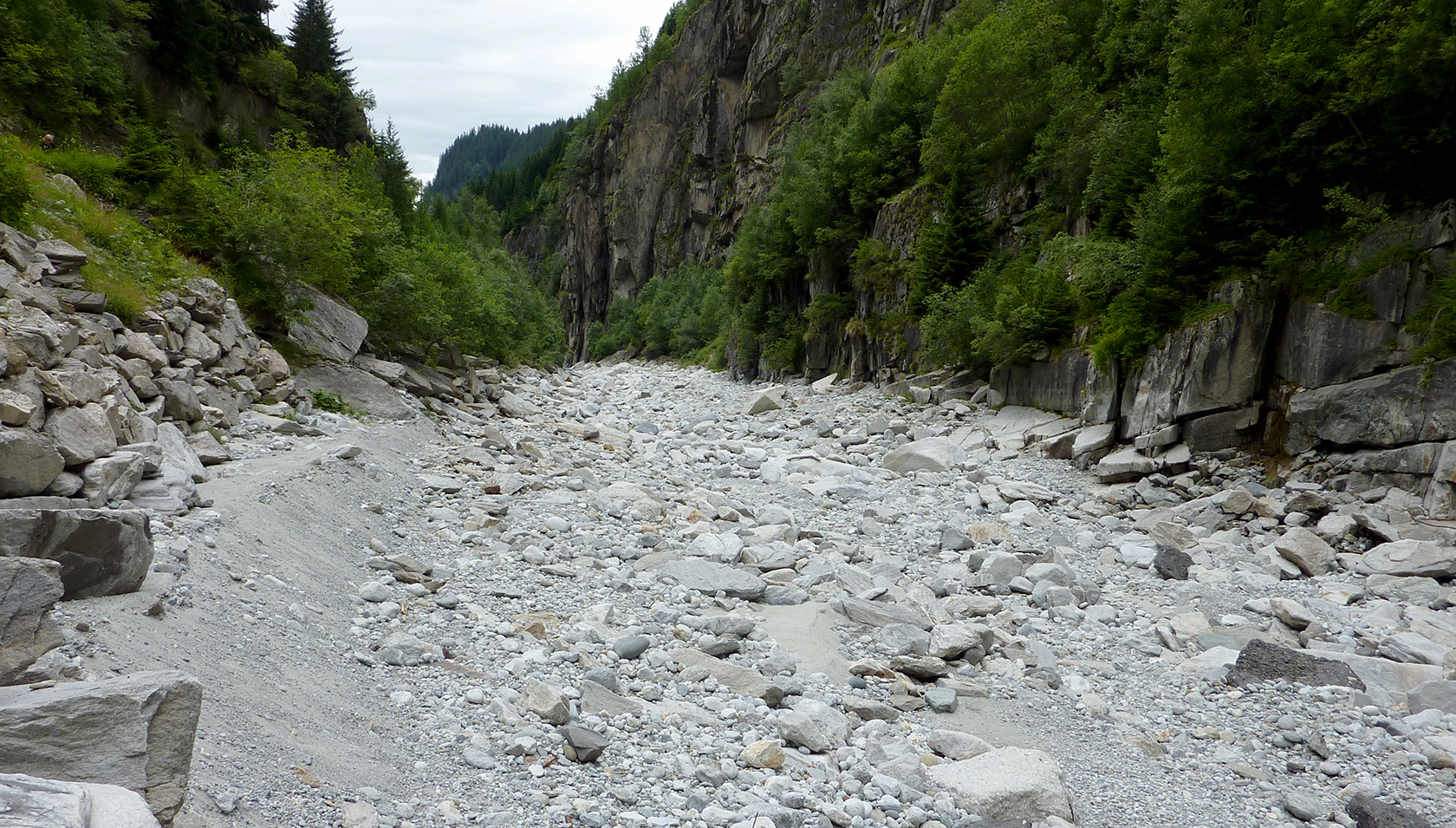
Les écosystèmes aquatiques sont tributaires de certaines propriétés chimiques et physiques. Une interaction complexe de différents facteurs tels que la température de l’eau, les courants, la teneur en oxygène et en nutriments ou le pH influencent les processus et la vie dans les cours d’eau. L’Eawag étudie l’impact des apports de polluants, de l’utilisation intensive de l’énergie hydraulique, des constructions et du changement climatique provoqué par l’homme sur les conditions naturelles et les cycles au sein des écosystèmes aquatiques.
Comprendre comment réagissent les biocénoses
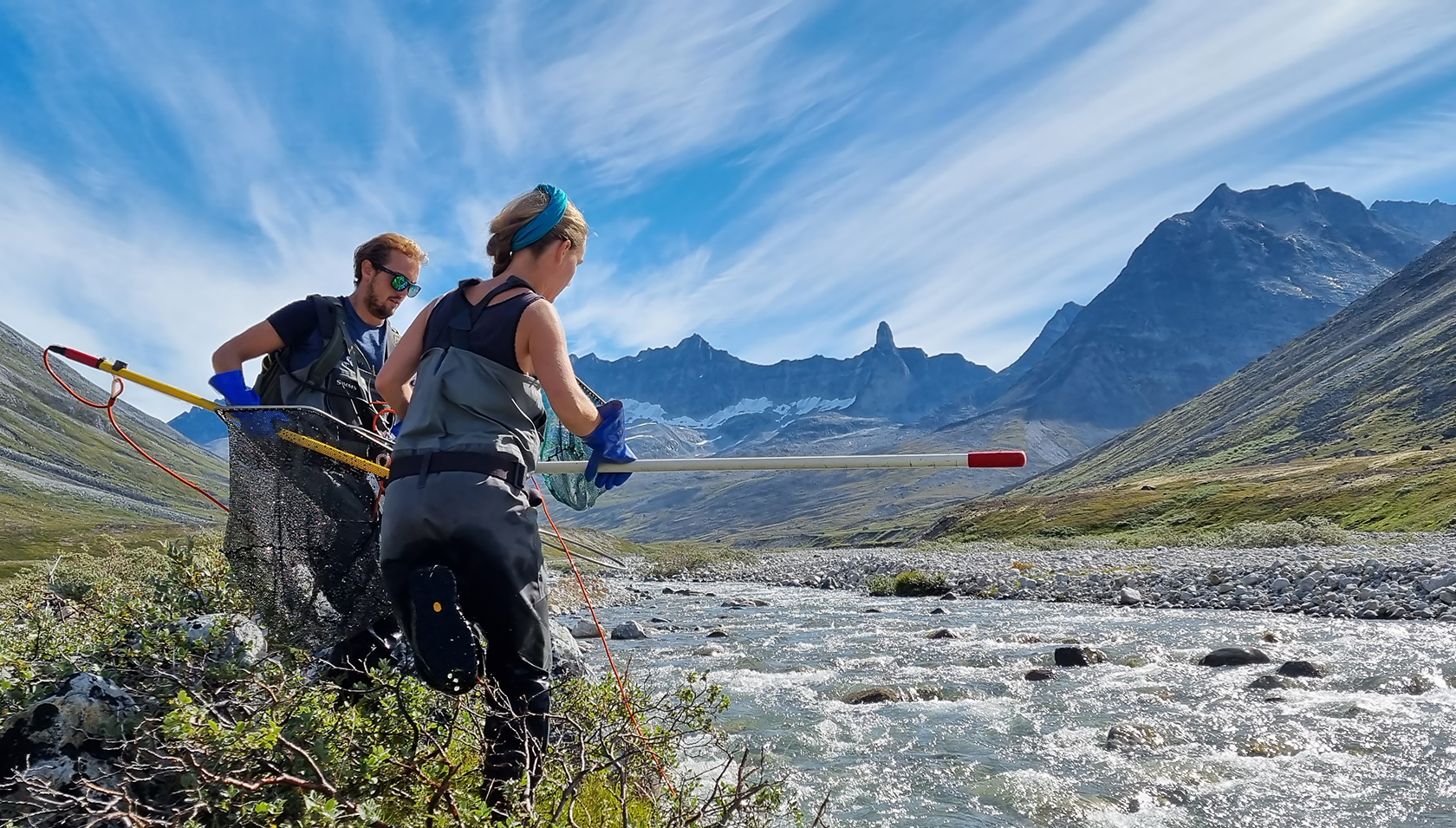
Les cours d’eau ne sont pas l’habitat exclusif des poissons, des crabes et des coquillages. De nombreux oiseaux, quelques mammifères et une foule d’insectes, qui passent leur stade larvaire dans l’eau, peuplent ce biotope. Ils font partie intégrante d’un réseau trophique qui s’étend bien au-delà du cours d’eau. C’est pourquoi la biodiversité des écosystèmes aquatiques est si importante – et elle est menacée. L’Eawag étudie l'influence sur les biocénoses au bord et dans l’eau des espèces envahissantes comme la moule quagga, des polluants comme les pesticides ou les médicaments et d’autres facteurs de stress environnemental.
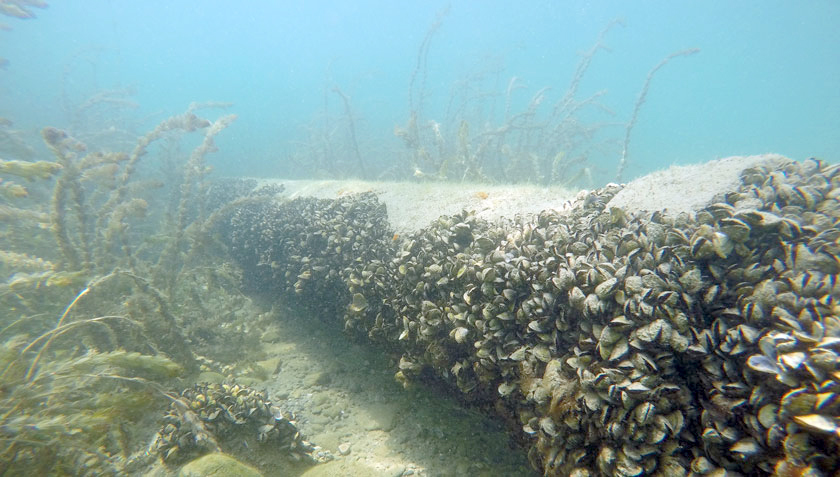
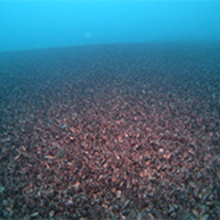
La moule quagga exotique prolifère en Suisse et impacte les écosystèmes lacustres (Photo: Eawag, Linda Haltiner).
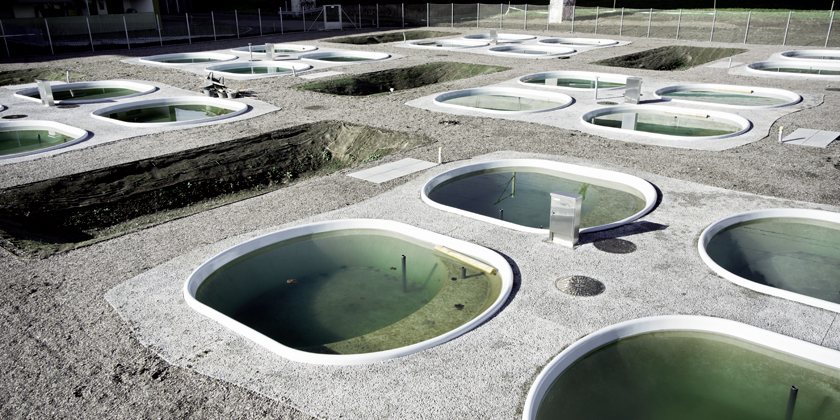
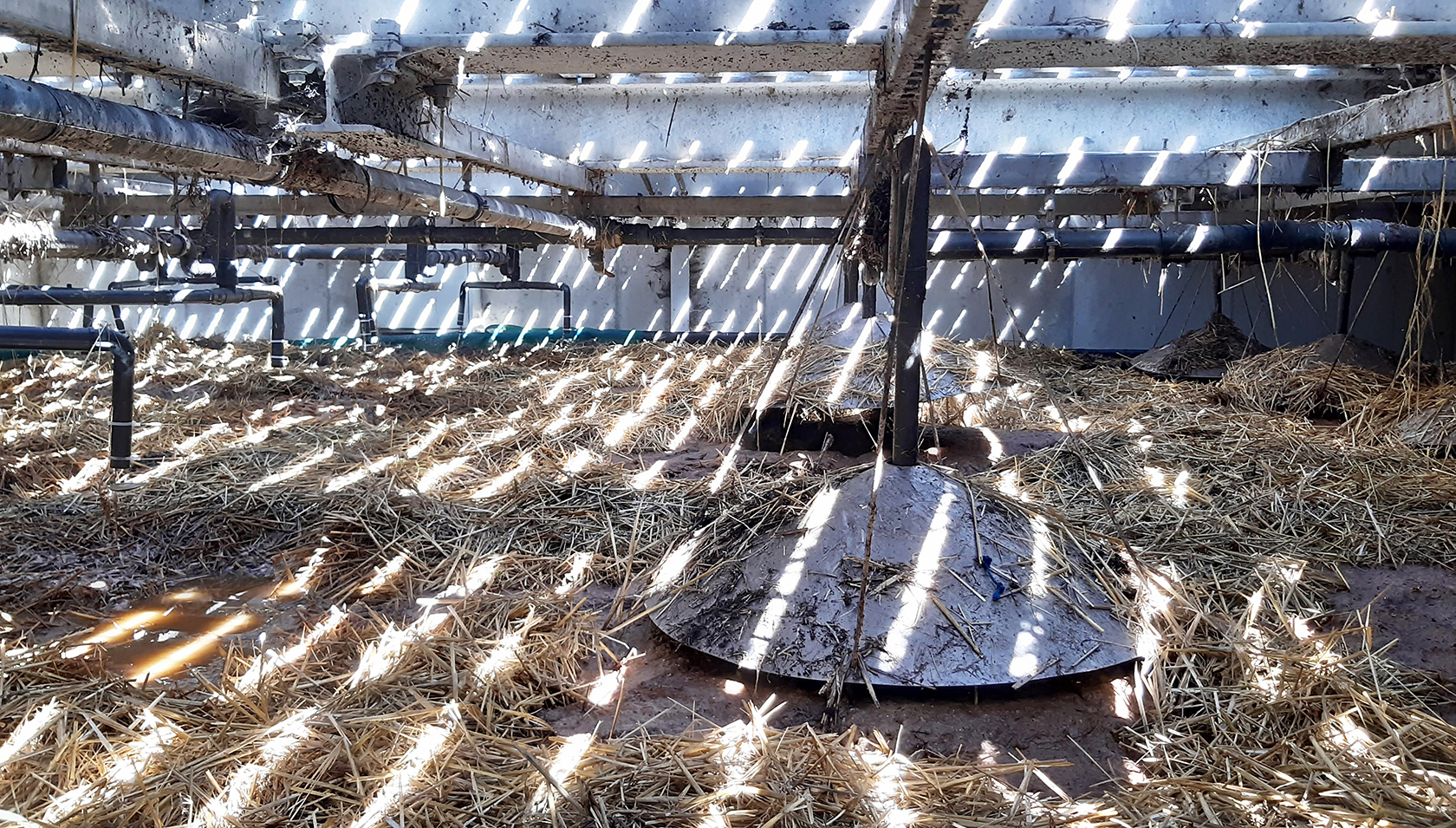
Dans les étangs expérimentaux, les chercheuses et chercheurs peuvent étudier de petits écosystèmes dans des conditions météorologiques naturelles (Photo: Eawag).
De la mesure au contrôle d'effets
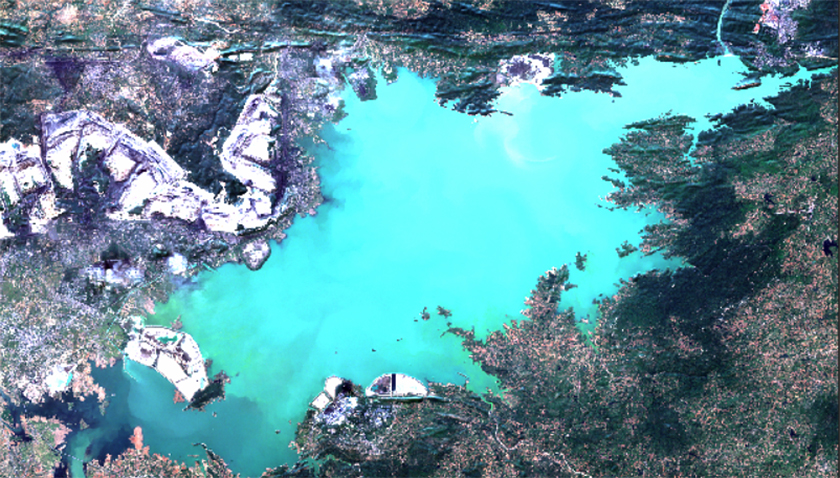
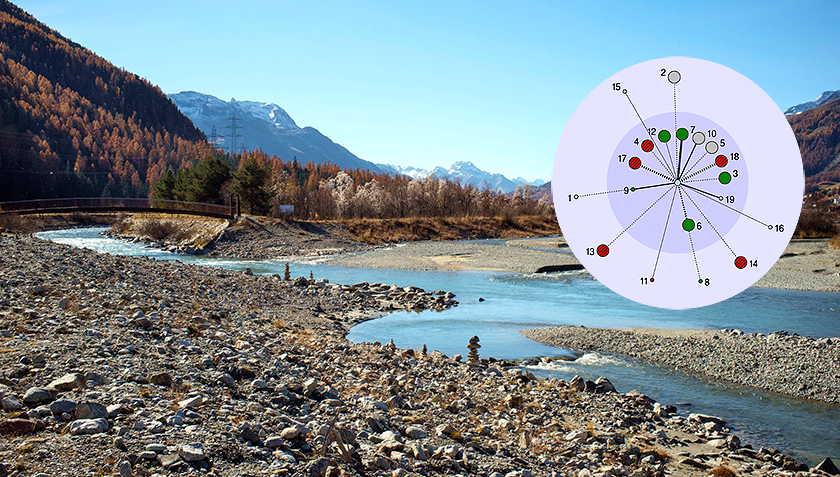
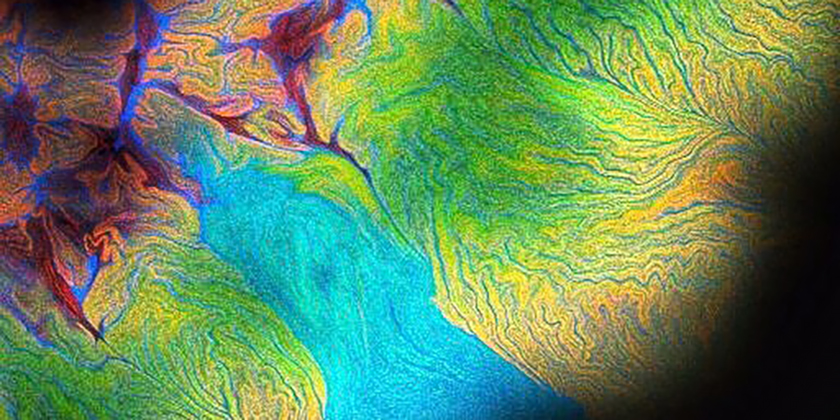
Pour mieux les protéger, il faut en premier lieu disposer de données fiables sur les écosystèmes aquatiques. L’Eawag développe et teste diverses méthodes de relevé sur l’état des cours d’eau et de la vie qu’ils abritent. À cette fin, des données satellite, l’ADN environnemental, des étangs expérimentaux et divers instruments de mesure sont notamment utilisés. Les données de mesure servent de base pour des modèles destinés à anticiper le futur développement d’écosystèmes aquatiques. Les résultats sont intégrés dans des concepts de gestion durable des cours d’eau ou de revitalisations des cours d’eau, qui servent par ailleurs à contrôler les effets des mesures en cours.
Monitoring-Studien mit aquatischen Invertebraten zeigen, dass die Gewebekonzentrationen vieler Schadstoffe wesentlich höher sind als anhand von Modellen...
Es ist ein grosses Ziel, besser zu verstehen, wie mikrobielle Gemeinschaften funktionieren, wie Mikroben miteinander interagieren und wie diese Interaktionen die Funktionen der Gemeinschaft bestimmen.
Axé sur la gestion des bassins versants dans des régions montagneuses suisses, le projet vise à accroître la résilience des écosystèmes de montagne, et de répondre aux besoins sociétaux de ressources naturelles.
Un projet de surveillance de la propagation de la moule quagga dans les lacs suisses et de soutien aux mesures de prévention et de protection en Suisse
array(3 items)0 => Snowflake\Publications\Domain\Model\Publicationprototypepersistent entity (uid=34793, pid=124)originalId => protected34793 (integer)
authors => protected'Stubbusch, A. K. M.; Peaudecerf, F. J.; Lee, K . S.; Paoli, L.; Schwartzman, J.; Stocker, R.; Basler,&n bsp;M.; Schubert, O. T.; Ackermann, M.; Magnabosco, C.; D’Souza, G. G.' (254 chars)
title => protected'Antagonism as a foraging strategy in microbial communities' (58 chars)
journal => protected'Science' (7 chars)
year => protected2025 (integer)
volume => protected388 (integer)
issue => protected'6752' (4 chars)
startpage => protected'1214' (4 chars)
otherpage => protected'1217' (4 chars)
categories => protected'' (0 chars)
description => protected'In natural habitats, nutrient availability limits bacterial growth. We disco vered that bacteria can overcome this limitation by acquiring nutrients by l ysing neighboring cells through contact-dependent antagonism. Using single-c ell live imaging and isotopic markers, we found that during starvation, the type VI secretion system (T6SS) lysed neighboring cells and thus provided nu trients from lysing cells for growth. Genomic adaptations in antagonists, ch aracterized by a reduced metabolic gene repertoire, and the previously unexp lored distribution of the T6SS across bacterial taxa in natural environments suggest that bacterial antagonism may contribute to nutrient transfer withi n microbial communities in many ecosystems.' (727 chars)
serialnumber => protected'0036-8075' (9 chars)
doi => protected'10.1126/science.adr8286' (23 chars)
uid => protected34793 (integer)
_localizedUid => protected34793 (integer)modified_languageUid => protectedNULL
_versionedUid => protected34793 (integer)modifiedpid => protected124 (integer)1 => Snowflake\Publications\Domain\Model\Publicationprototypepersistent entity (uid=35074, pid=124)originalId => protected35074 (integer)
authors => protected'Baeyens, W.; Gao, Y.; Janssen, D. J.; Bowie, A.&nbs p;R.; Zhou, C.; Fan, G.' (109 chars)
title => protected'Prevalence of multi-micronutrient limitation of phytoplankton growth in the Southern Ocean' (90 chars)
journal => protected'One Earth' (9 chars)
year => protected2025 (integer)
volume => protected8 (integer)
issue => protected'9' (1 chars)
startpage => protected'101354 (10 pp.)' (15 chars)
otherpage => protected'' (0 chars)
categories => protected'' (0 chars)
description => protected'Ongoing global warming caused by a steady increase in carbon dioxide in the atmosphere urgently needs to be mitigated. This is possible if phytoplankton biomass is increased in the ocean, as this will remove additional atmospher ic CO<sub>2</sub>. In the Southern Ocean, Fe is a well-known growth-limiting element, but the role of the other micronutrients remains very unclear. Our aim is to describe the evolution of each nutrient in the Southern Ocean thr oughout the year and to identify nutrients that limit phytoplankton growth. Therefore, we created a model that calculates nutrient consumption rates and available nutrient pools, fueled by deep winter mixing and diapycnal supply . Annual consumed nutrient amounts are smaller than their labile dissolved p ools, but this is not true for limiting elements Fe and Co (from the sub-Ant arctic zone [SAZ] to the Antarctic zone [AZ]) and Zn and Si (only in the SAZ ). Since we found several limiting elements, fertilization with multiple nut rients would be required to promote large-scale carbon capture.' (1051 chars)
serialnumber => protected'2590-3330' (9 chars)
doi => protected'10.1016/j.oneear.2025.101354' (28 chars)
uid => protected35074 (integer)
_localizedUid => protected35074 (integer)modified_languageUid => protectedNULL
_versionedUid => protected35074 (integer)modifiedpid => protected124 (integer)2 => Snowflake\Publications\Domain\Model\Publicationprototypepersistent entity (uid=35142, pid=124)originalId => protected35142 (integer)
authors => protected'Oester, R.; Keck, F.; Moretti, M. S.; Altermatt, F. ; Bruder, A.; Ferreira, V.' (112 chars)
title => protected'A global synthesis on land-cover changes in watersheds shaping freshwater de trital food webs' (92 chars)
journal => protected'Global Change Biology' (21 chars)
year => protected2025 (integer)
volume => protected31 (integer)
issue => protected'8' (1 chars)
startpage => protected'e70380 (21 pp.)' (15 chars)
otherpage => protected'' (0 chars)
categories => protected'allochthonous matter processing; aquatic-terrestrial linkages; decomposers; decomposition; deforestation; detritivores; detritus; meta-analysis; shredde rs; stream biodiversity' (175 chars)
description => protected'Anthropogenic land-cover changes are among the most pressing global threats to both aquatic and terrestrial ecosystems, jeopardizing biodiversity and th e critical connections between these systems. Resource flows and trophic int eractions intricately link aquatic and terrestrial ecosystems, with terrestr ial-derived detritus playing a fundamental role in supporting aquatic food w ebs. These detrital inputs form essential cross-ecosystem linkages, underpin ning key ecological processes and providing vital resources for aquatic comm unities. Yet, little research has focused on how land-cover changes cascade across this linkage. To better understand how land-cover changes in the wate rshed influence freshwater detrital food webs, we conducted a meta-analysis of field studies reporting the effects of vegetation changes on freshwater d etrital consumers and organic matter decomposition. The results from 144 stu dies, reporting 1235 comparisons, showed that, overall, land-cover changes i n the watershed vegetation, especially through harvest and land-use conversi on, have negative effects on aquatic biodiversity and ecosystem processes. T hese vegetation changes reduced diversity, abundance, and biomass across mul tiple trophic levels in freshwater detrital food webs. Studies examining mul tiple organism groups most often observed negative responses across multiple trophic levels, suggesting that these land-cover changes negatively affecte d multiple detrital food-web components simultaneously. Our results also sho w that outcomes of restoration of watershed vegetation were context-dependen t, and no clear trend of improvement was visible. Therefore, conservation of natural riparian and catchment vegetation is key to maintaining freshwater ecosystem processes and aquatic biodiversity worldwide, and more efficient a nd evidence-based restoration measures are urgently needed. As our global sy nthesis shows that direct human-induced alterations of vegetation in watersh eds have significant neg...' (2177 chars)
serialnumber => protected'1354-1013' (9 chars)
doi => protected'10.1111/gcb.70380' (17 chars)
uid => protected35142 (integer)
_localizedUid => protected35142 (integer)modified_languageUid => protectedNULL
_versionedUid => protected35142 (integer)modifiedpid => protected124 (integer)
Antagonism as a foraging strategy in microbial communities
In natural habitats, nutrient availability limits bacterial growth. We discovered that bacteria can overcome this limitation by acquiring nutrients by lysing neighboring cells through contact-dependent antagonism. Using single-cell live imaging and isotopic markers, we found that during starvation, the type VI secretion system (T6SS) lysed neighboring cells and thus provided nutrients from lysing cells for growth. Genomic adaptations in antagonists, characterized by a reduced metabolic gene repertoire, and the previously unexplored distribution of the T6SS across bacterial taxa in natural environments suggest that bacterial antagonism may contribute to nutrient transfer within microbial communities in many ecosystems.
Stubbusch, A. K. M.; Peaudecerf, F. J.; Lee, K. S.; Paoli, L.; Schwartzman, J.; Stocker, R.; Basler, M.; Schubert, O. T.; Ackermann, M.; Magnabosco, C.; D’Souza, G. G. (2025) Antagonism as a foraging strategy in microbial communities, Science, 388(6752), 1214-1217, doi:10.1126/science.adr8286, Institutional Repository
Prevalence of multi-micronutrient limitation of phytoplankton growth in the Southern Ocean
Ongoing global warming caused by a steady increase in carbon dioxide in the atmosphere urgently needs to be mitigated. This is possible if phytoplankton biomass is increased in the ocean, as this will remove additional atmospheric CO2. In the Southern Ocean, Fe is a well-known growth-limiting element, but the role of the other micronutrients remains very unclear. Our aim is to describe the evolution of each nutrient in the Southern Ocean throughout the year and to identify nutrients that limit phytoplankton growth. Therefore, we created a model that calculates nutrient consumption rates and available nutrient pools, fueled by deep winter mixing and diapycnal supply. Annual consumed nutrient amounts are smaller than their labile dissolved pools, but this is not true for limiting elements Fe and Co (from the sub-Antarctic zone [SAZ] to the Antarctic zone [AZ]) and Zn and Si (only in the SAZ). Since we found several limiting elements, fertilization with multiple nutrients would be required to promote large-scale carbon capture.
Baeyens, W.; Gao, Y.; Janssen, D. J.; Bowie, A. R.; Zhou, C.; Fan, G. (2025) Prevalence of multi-micronutrient limitation of phytoplankton growth in the Southern Ocean, One Earth, 8(9), 101354 (10 pp.), doi:10.1016/j.oneear.2025.101354, Institutional Repository
A global synthesis on land-cover changes in watersheds shaping freshwater detrital food webs
Anthropogenic land-cover changes are among the most pressing global threats to both aquatic and terrestrial ecosystems, jeopardizing biodiversity and the critical connections between these systems. Resource flows and trophic interactions intricately link aquatic and terrestrial ecosystems, with terrestrial-derived detritus playing a fundamental role in supporting aquatic food webs. These detrital inputs form essential cross-ecosystem linkages, underpinning key ecological processes and providing vital resources for aquatic communities. Yet, little research has focused on how land-cover changes cascade across this linkage. To better understand how land-cover changes in the watershed influence freshwater detrital food webs, we conducted a meta-analysis of field studies reporting the effects of vegetation changes on freshwater detrital consumers and organic matter decomposition. The results from 144 studies, reporting 1235 comparisons, showed that, overall, land-cover changes in the watershed vegetation, especially through harvest and land-use conversion, have negative effects on aquatic biodiversity and ecosystem processes. These vegetation changes reduced diversity, abundance, and biomass across multiple trophic levels in freshwater detrital food webs. Studies examining multiple organism groups most often observed negative responses across multiple trophic levels, suggesting that these land-cover changes negatively affected multiple detrital food-web components simultaneously. Our results also show that outcomes of restoration of watershed vegetation were context-dependent, and no clear trend of improvement was visible. Therefore, conservation of natural riparian and catchment vegetation is key to maintaining freshwater ecosystem processes and aquatic biodiversity worldwide, and more efficient and evidence-based restoration measures are urgently needed. As our global synthesis shows that direct human-induced alterations of vegetation in watersheds have significant negative effects on freshwater detrital food webs, there is a pressing need to consider cross-ecosystem consequences of land-cover changes in conservation and ecosystem management.
Oester, R.; Keck, F.; Moretti, M. S.; Altermatt, F.; Bruder, A.; Ferreira, V. (2025) A global synthesis on land-cover changes in watersheds shaping freshwater detrital food webs, Global Change Biology, 31(8), e70380 (21 pp.), doi:10.1111/gcb.70380, Institutional Repository
Photo de couverture: Les chercheuses de l'Eawag, Anita Narwani, Marta Reyes et Joey Bernhardt prélèvent des échantillons d'eau dans l'un des étangs de l'installation expérimentale de l'Eawag (Photo: Thomas Klaper).