Anonyme abwasserbasierte Konsumtrends auf Bevölkerungsebene
Abwasser enthält eine Vielzahl epidemiologischer Marker. Dazu gehören chemische Marker, wie Suchtmittel, Pharmaka und tabakbezogene Verbindungen, die im DroMedArio‑Projekt analysiert werden, um anonyme Einblicke in Konsumtrends auf Bevölkerungsebene zu ermöglichen.
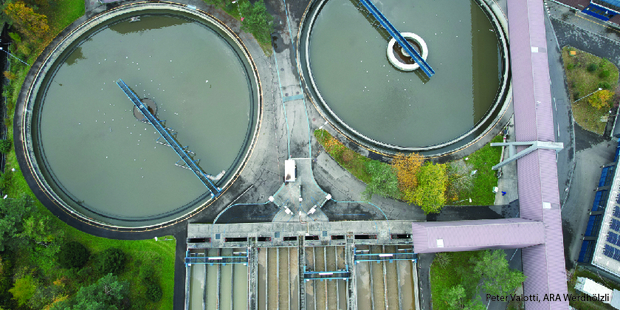
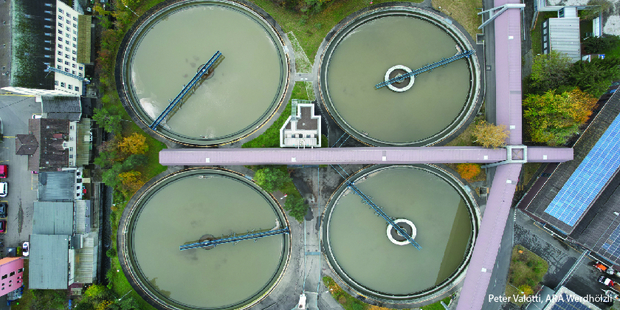
Seit 2021 werden alle 13 Tage 24‑Stunden‑Mischproben aus zehn Abwasserreinigungsanlagen (ARA) in der Schweiz gesammelt und an der Eawag analysiert. Im Jahr 2025 wurden diese zehn DroMedArio‑Probenahmestellen mit jenen des schweizerischen Abwassermonitoringprogramms für Infektionskrankheiten harmonisiert. Diese Integration erlsabt es die logistischen Ressourcen zu optimieren und ermöglicht es, chemische Marker mit biologischen Monitoringdaten zu ergänzen. Gemeinsam behandeln die zehn teilnehmenden Kläranlagen das Abwasser von nahezu 2 Millionen Menschen, was etwa 21 % der Schweizer Bevölkerung entspricht.
Das Monitoring dieser Marker im Abwasser ermöglicht die Abschätzung zeitlicher Trends und räumlicher Unterschiede im Konsum in der Schweiz.
Anonyme abwasserbasierte Konsumtrends auf Bevölkerungsebene
Methoden zur chemischen Abwasseranalyse
Die chemische Abwasseranalytik erfolgt mittels Flüssigchromatographie gekoppelt mit Massenspektrometrie (LC-MS). Die routinemässige Quantifizierung der Zielsubstanzen wird mit Triple-Quadrupol-Massenspektrometrie (TQ) durchgeführt, die die erforderliche Sensitivität für gezielte Messungen bei niedrigen Konzentrationen bietet. Zusätzlich wird für Forschungsprojekte Orbitrap-basierte hochauflösende Massenspektrometrie eingesetzt, um eine breite, ungezielte Erfassung von Chemikalien im Abwasser zu ermöglichen. Dadurch entsteht ein digitales Archiv der Proben, das retrospektive Analysen und auch die Identifikation neuer Substanzen erlaubt.
Methoden zur chemischen Abwasseranalyse
Die DroMedArio-Abwasserdaten sind öffentlich über das Dromedario.ch Dashboard zugänglich. Die Daten ausgewählter Zielsubstanzen des ersten Quartals eines Jahres werden zudem an das europäische abwasserbasierte Monitoringprogramm für Suchtmittel SCORE (Sewage Analysis CORe group Europe) / EUDA (European Union Drugs Agency) weitergegeben. Dies ermöglicht es, die Daten im internationalen Vergleich einzuordnen.
array(3 items)0 => Snowflake\Publications\Domain\Model\Publicationprototypepersistent entity (uid=34703, pid=124)originalId => protected34703 (integer)
authors => protected'Baumgartner, S.; Salvisberg, M.; Schmidhalter, P.; Julian,&nb sp;T. R.; Ort, C.; Singer, H.' (120 chars)
title => protected'Insights into respiratory illness at the population level through parallel a nalysis of pharmaceutical and viral markers in wastewater' (133 chars)
journal => protected'Nature Water' (12 chars)
year => protected2025 (integer)
volume => protected3 (integer)
issue => protected'' (0 chars)
startpage => protected'580' (3 chars)
otherpage => protected'589' (3 chars)
categories => protected'' (0 chars)
description => protected'Wastewater as a medium contains information on both circulating pathogens an d drug consumption at the population level. This study combines tracking of respiratory viruses and quantification of pharmaceuticals as untargeted indi cators of symptoms related to acute respiratory infections and influenza-lik e illnesses such as coughing, fever and pain. From January 2021 to June 2024 , raw wastewater samples from ten locations covering 23% of the Swiss popula tion were analysed. This encompassed 15 pharmaceuticals and four priority re spiratory viruses including severe acute respiratory syndrome coronavirus vi rus-2 (SARS-CoV-2), respiratory syncytial virus (RSV), influenza A and influ enza B viruses. The pharmaceutical compounds dextromethorphan, pheniramine, clarithromycin, acetaminophen and codeine showed a strong correlation with r espiratory virus loads in wastewater. This enabled the estimation of pathoge n-specific and cumulative symptom treatment in the population. In 2021 and 2 024, notable increases in pharmaceutical loads without corresponding increas es in viral loads signalled high community symptoms linked to unsurveilled p athogens. This study demonstrates that pharmaceutical surveillance can infor m respiratory disease burden and highlights the value of integrated surveill ance for assessing emerging public health threats beyond those routinely mon itored.' (1375 chars)
serialnumber => protected'' (0 chars)
doi => protected'10.1038/s44221-025-00437-4' (26 chars)
uid => protected34703 (integer)
_localizedUid => protected34703 (integer)modified_languageUid => protectedNULL
_versionedUid => protected34703 (integer)modifiedpid => protected124 (integer)1 => Snowflake\Publications\Domain\Model\Publicationprototypepersistent entity (uid=35242, pid=124)originalId => protected35242 (integer)
authors => protected'Baumgartner, S.; Ceppi, E.; Longrée, P.; Salvisberg, M. ; Singer, H.; Ort, C.' (107 chars)
title => protected'Intraday trends of chemical biomarkers in wastewater monitored through autom ated real-time surveillance' (103 chars)
journal => protected'Water Research' (14 chars)
year => protected2025 (integer)
volume => protected287 (integer)
issue => protected'' (0 chars)
startpage => protected'124337 (12 pp.)' (15 chars)
otherpage => protected'' (0 chars)
categories => protected'illicit drugs; online monitoring; population markers; signaling data; wastew ater-based surveillance' (99 chars)
description => protected'Wastewater-based epidemiology is an established approach for monitoring popu lation-level illicit drug use. Standard methods rely on 24-hour composite sa mples collected from treatment plant influent. While suitable for assessing long-term consumption patterns, composite samples obscure diurnal informatio n on daily load dynamics - valuable for understanding substance sources and normalization strategies. Currently, the required, high manual effort limits the feasibility of diurnal monitoring applications.<br />In this study, we deployed a transportable, automated liquid chromatography-mass spectrometry system (MS<sup>2</sup>Field) at the influent of the wastewater treatment pla nt in Zurich, Switzerland (serving 471,000 people). Over an eight-week perio d from July to September 2023 - including school holidays and two major publ ic events - samples were analyzed every 36 min (1909 total). Loads of five e xogenous population biomarkers, six common illicit drug markers, and the coc aine adulterant levamisole were quantified. In parallel, hourly mobile phone data were used to estimate <em>de facto</em> population size and demographi c composition in the catchment.<br />Automated analysis enabled the detectio n of consistent, weekday-specific intraday patterns for individual substance s. Population biomarkers exhibited distinct temporal profiles: paraxanthine remained stable during working hours, while candesartan declined even at pea k population times - highlighting implications for normalization, particular ly with day visitors. Mobile phone-based occupancy data aligned with general trends but diverged during large events, likely due to mobile toilet use, w hereas chemical markers directly reflected the contributing population.<br / >During the special events, MDMA, ketamine, and amphetamine loads rose with distinct profiles - one event showing a gradual overnight rise, the other a morning peak. Daily MDMA loads were 20-fold higher during one event than typ ical weekends. Ketamine ...' (2520 chars)
serialnumber => protected'0043-1354' (9 chars)
doi => protected'10.1016/j.watres.2025.124337' (28 chars)
uid => protected35242 (integer)
_localizedUid => protected35242 (integer)modified_languageUid => protectedNULL
_versionedUid => protected35242 (integer)modifiedpid => protected124 (integer)2 => Snowflake\Publications\Domain\Model\Publicationprototypepersistent entity (uid=33857, pid=124)originalId => protected33857 (integer)
authors => protected'Baumgartner, S.; Salvisberg, M.; Clot, B.; Crouzy, B.; S chmid-Grendelmeier, P.; Singer, H.; Ort, C.' (134 chars)
title => protected'Relationship between antihistamine residues in wastewater and airborne polle n concentrations: insights into population-scale pollinosis response' (144 chars)
journal => protected'Science of the Total Environment' (32 chars)
year => protected2025 (integer)
volume => protected964 (integer)
issue => protected'' (0 chars)
startpage => protected'178515 (9 pp.)' (14 chars)
otherpage => protected'' (0 chars)
categories => protected'allergic rhinitis; allergy; drugs; wastewater-based epidemiology; wastewater -based surveillance' (95 chars)
description => protected'Pollinosis is the most prevalent allergic disorder. Assessing the impact of real-world pollen exposure on symptoms remains challenging due to extensive patient-level efforts required.<br />This study explores the potential of wa stewater-based epidemiology (WBE) to investigate the relationship between ai rborne pollen concentrations and antihistamine residues in wastewater as an indicator of pollinosis symptom treatment at the population-scale.<br />In Z urich (Switzerland), 279 wastewater samples were collected during 2021–202 3. Each sample represents a 24-h period with excreta from approximately 471, 000 individuals. Eleven antihistamine markers were analyzed in the samples u sing liquid chromatography high-resolution mass spectrometry. The relationsh ip between antihistamine loads in wastewater and airborne pollen concentrati ons (47 taxa and miscellaneous pollen) was investigated by determining seaso nal components of antihistamine loads and exploring pollen-specific contribu tions using Non-Negative Least Squares (NNLS) optimization.<br />Four antihi stamines were detected in quantifiable amounts in wastewater. The first-gene ration antihistamine, diphenhydramine, demonstrated rather constant levels. In contrast, the three second-generation antihistamines - bilastine, cetiriz ine, and fexofenadine - showed pronounced day-to-day variation with strong c orrelations among each other. For fexofenadine, which was investigated in de tail for its correlation with airborne pollen concentrations, approximately 50 % of the annual wastewater loads were associated with acute pollen exposu re. Another 20 % related to baseline consumption during the pollen season, w hile the remaining 30 % seems unrelated to pollen. Birch, grasses, hazel, ho rnbeam, plane, and plantain explained most of the variance in wastewater loa ds (R<sup>2</sup> = 0.82), with grass pollen alone accounting for a quarter of the annual loads. Increased fexofenadine loads during periods without ele vated concentrations of ...' (2396 chars)
serialnumber => protected'0048-9697' (9 chars)
doi => protected'10.1016/j.scitotenv.2025.178515' (31 chars)
uid => protected33857 (integer)
_localizedUid => protected33857 (integer)modified_languageUid => protectedNULL
_versionedUid => protected33857 (integer)modifiedpid => protected124 (integer)
Insights into respiratory illness at the population level through parallel analysis of pharmaceutical and viral markers in wastewater
Wastewater as a medium contains information on both circulating pathogens and drug consumption at the population level. This study combines tracking of respiratory viruses and quantification of pharmaceuticals as untargeted indicators of symptoms related to acute respiratory infections and influenza-like illnesses such as coughing, fever and pain. From January 2021 to June 2024, raw wastewater samples from ten locations covering 23% of the Swiss population were analysed. This encompassed 15 pharmaceuticals and four priority respiratory viruses including severe acute respiratory syndrome coronavirus virus-2 (SARS-CoV-2), respiratory syncytial virus (RSV), influenza A and influenza B viruses. The pharmaceutical compounds dextromethorphan, pheniramine, clarithromycin, acetaminophen and codeine showed a strong correlation with respiratory virus loads in wastewater. This enabled the estimation of pathogen-specific and cumulative symptom treatment in the population. In 2021 and 2024, notable increases in pharmaceutical loads without corresponding increases in viral loads signalled high community symptoms linked to unsurveilled pathogens. This study demonstrates that pharmaceutical surveillance can inform respiratory disease burden and highlights the value of integrated surveillance for assessing emerging public health threats beyond those routinely monitored.
Baumgartner, S.; Salvisberg, M.; Schmidhalter, P.; Julian, T. R.; Ort, C.; Singer, H. (2025) Insights into respiratory illness at the population level through parallel analysis of pharmaceutical and viral markers in wastewater, Nature Water, 3, 580-589, doi:10.1038/s44221-025-00437-4, Institutional Repository
Intraday trends of chemical biomarkers in wastewater monitored through automated real-time surveillance
Wastewater-based epidemiology is an established approach for monitoring population-level illicit drug use. Standard methods rely on 24-hour composite samples collected from treatment plant influent. While suitable for assessing long-term consumption patterns, composite samples obscure diurnal information on daily load dynamics - valuable for understanding substance sources and normalization strategies. Currently, the required, high manual effort limits the feasibility of diurnal monitoring applications. In this study, we deployed a transportable, automated liquid chromatography-mass spectrometry system (MS2Field) at the influent of the wastewater treatment plant in Zurich, Switzerland (serving 471,000 people). Over an eight-week period from July to September 2023 - including school holidays and two major public events - samples were analyzed every 36 min (1909 total). Loads of five exogenous population biomarkers, six common illicit drug markers, and the cocaine adulterant levamisole were quantified. In parallel, hourly mobile phone data were used to estimate de facto population size and demographic composition in the catchment. Automated analysis enabled the detection of consistent, weekday-specific intraday patterns for individual substances. Population biomarkers exhibited distinct temporal profiles: paraxanthine remained stable during working hours, while candesartan declined even at peak population times - highlighting implications for normalization, particularly with day visitors. Mobile phone-based occupancy data aligned with general trends but diverged during large events, likely due to mobile toilet use, whereas chemical markers directly reflected the contributing population. During the special events, MDMA, ketamine, and amphetamine loads rose with distinct profiles - one event showing a gradual overnight rise, the other a morning peak. Daily MDMA loads were 20-fold higher during one event than typical weekends. Ketamine showed irregular spikes, possibly due to a smaller user base, rapid excretion, or direct input. Levamisole loads rose on weekends and during events, mirroring benzoylecgonine, indicating continued presence as harmful cocaine adulterant. Automated analysis reveals short-term intraday trends, providing additional insights into the sources of chemical marker loads - such as consumption, excretion, and contributions from transient populations - that are typically averaged out in standard 24-hour composite samples.
Baumgartner, S.; Ceppi, E.; Longrée, P.; Salvisberg, M.; Singer, H.; Ort, C. (2025) Intraday trends of chemical biomarkers in wastewater monitored through automated real-time surveillance, Water Research, 287, 124337 (12 pp.), doi:10.1016/j.watres.2025.124337, Institutional Repository
Relationship between antihistamine residues in wastewater and airborne pollen concentrations: insights into population-scale pollinosis response
Pollinosis is the most prevalent allergic disorder. Assessing the impact of real-world pollen exposure on symptoms remains challenging due to extensive patient-level efforts required. This study explores the potential of wastewater-based epidemiology (WBE) to investigate the relationship between airborne pollen concentrations and antihistamine residues in wastewater as an indicator of pollinosis symptom treatment at the population-scale. In Zurich (Switzerland), 279 wastewater samples were collected during 2021–2023. Each sample represents a 24-h period with excreta from approximately 471,000 individuals. Eleven antihistamine markers were analyzed in the samples using liquid chromatography high-resolution mass spectrometry. The relationship between antihistamine loads in wastewater and airborne pollen concentrations (47 taxa and miscellaneous pollen) was investigated by determining seasonal components of antihistamine loads and exploring pollen-specific contributions using Non-Negative Least Squares (NNLS) optimization. Four antihistamines were detected in quantifiable amounts in wastewater. The first-generation antihistamine, diphenhydramine, demonstrated rather constant levels. In contrast, the three second-generation antihistamines - bilastine, cetirizine, and fexofenadine - showed pronounced day-to-day variation with strong correlations among each other. For fexofenadine, which was investigated in detail for its correlation with airborne pollen concentrations, approximately 50 % of the annual wastewater loads were associated with acute pollen exposure. Another 20 % related to baseline consumption during the pollen season, while the remaining 30 % seems unrelated to pollen. Birch, grasses, hazel, hornbeam, plane, and plantain explained most of the variance in wastewater loads (R2 = 0.82), with grass pollen alone accounting for a quarter of the annual loads. Increased fexofenadine loads during periods without elevated concentrations of common allergenic pollen suggests the presence of additional triggers for allergy symptoms, potentially yew pollen. Our study demonstrates that WBE can effectively reveal substantial day-to-day variation in antihistamine use related to pollen exposure. Thus, WBE presents an objective and questionnaire-independent method for investigating pollinosis symptom treatment at a population-scale.
Baumgartner, S.; Salvisberg, M.; Clot, B.; Crouzy, B.; Schmid-Grendelmeier, P.; Singer, H.; Ort, C. (2025) Relationship between antihistamine residues in wastewater and airborne pollen concentrations: insights into population-scale pollinosis response, Science of the Total Environment, 964, 178515 (9 pp.), doi:10.1016/j.scitotenv.2025.178515, Institutional Repository