Collaborateurs
Ole Seehausen
Portrait
I am Full Professor for Aquatic Ecology and Evolution at University of Bern, Institute of Ecology & Evolution and Eawag, Dept Fish Ecology and Evolution.
Research Group Leader, Evolutionary Biodiversity Dynamics, Eawag (Kastanienbaum)
Deputy Director, Institute of Ecology & Evolution (IEE), University of Bern
Division Head, Aquatic Ecology & Evolution, IEE, University of Bern
Academic & research interests
I am an ecologist and evolutionary biologist. I have dedicated much of my career to understand the evolutionary processes and ecological mechanisms by which biological diversity arises, those that maintain it and those by which it is lost. I want to know how ecological opportunity, ecological and sexual selection, and interspecific hybridization interact with each other and with evolutionary constraint in the diversification of species, and how the play of these processes leads to macro-ecological patterns. I want to know how understanding these processes can be used to improve biodiversity conservation.
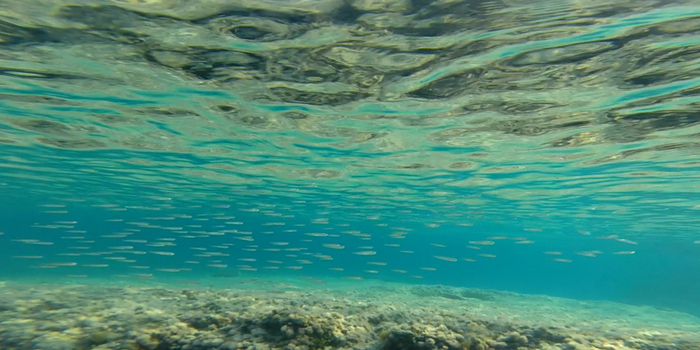
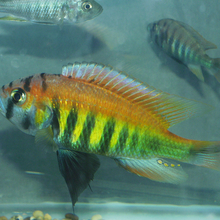
I have studied the large adaptive radiations of cichlid fish in African lakes for more than 35 years, especially the radiations in Lake Victoria and smaller lakes in Tanzania and Uganda, and in lake Mweru. More than 1000 species have emerged in these radiations in the past 1 million years, and more than 500 in Lake Victoria alone within the last 16'000 years. These are the largest and fastest adaptive radiations known in the world and understanding them helps understanding the origin of species diversity in general. Cichlid fish are also well suited for experimental work in laboratory aquaria. Unfortunately , cichlids also experienced the fastest large scale extinction event ever observed by humans. Due to eutrophication of Lake Victoria, and the arrival of a non-native predator and competitor, the Nile perch, perhaps as many as 250 endemic cichlid species disappeared in the past 50 years. Taken together, these three facts make Lake Victoria cichlids an incredibly powerful model organism group for studying the origins, maintenance and loss of species diversity. It is also a great system to study the effects of species diversity and its loss on ecosystems because entire multi-trophic fish communities have evolved from scratch here through adaptive radiation, including three to four different trophic levels. This is unparalleled in any other contemporary adaptive radiation.
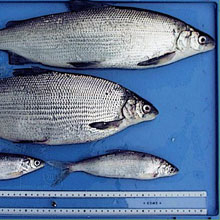
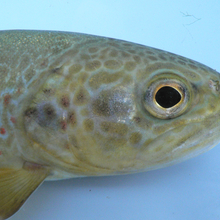
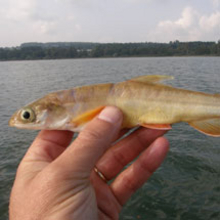
After moving to Switzerland in 2004, I established a second research program - parallel to the African cichlids - to investigate adaptive radiations of fish in the postglacial subalpine lake system of the European Alps. Switzerland alone has an impressive radiation of more than 30 endemic species of whitefish (Coregonus spp) most of which originated in the past 15,000 years. Like in the African cichlids, it appears that most larger lakes gave rise to their own endemic radiations, allowing for comparative analysis of speciation and adaptation between replicate radiations. Sadly, the whitefish radiations - much like Lake Victoria cichlids - are also an example of rapid recent mass extinction. My students and I, and my more recent colleague and collaborator Philine Feulner, showed that more than 30% of the endemic whitefish diversity of Switzerland has been lost in the past few decades. Our comparative analysis of extinction revealed that eutrophication of lakes is to blame, which reduced the diversity of reproductive and ecological niches available for coldwater fish in lakes. A little over a decade ago I finally extended this research program to Alpine char (Salvelinus spp) that have diversified and gone extinct again in parallel with the whitefish in the same Swiss lakes, but much work on that system remains to be done.
In Switzerland I also started working on Threespined stickleback (Gasterosteus spp), a fish that fascinates me since my youth. A little indigenous population of NW-european freshwater stickleback around Basel and a long overlooked population of Italian stickleback in Ticino aside, stickleback only arrived in Switzerland in the 1870s following several introductions. Yet, my students and I documented phenotypically and genetically very diverse types of stickleback in and around all larger midland lakes and some smaller lakes. We reconstructed the invasion history which involved three source lineages, one indigenous and two introduced that met and mixed in north-western Switzerland. Subsequently, we studied this situation for over a decade to understand contemporary evolution and diversification in an invasive species.
Using cichlid fish, stickleback, salmon-like fish and other species, students and Postdoctoral researchers in my research group address conceptual issues of broader relevance to the understanding of causes of variation in biodiversity and its effects on ecosystems. We combine methods from ecology, morphology, behavioral biology, experimental genetics, population genomics, phylogenomics and comparative methods.
In recent years I often work in more integrative and interdisciplinary projects, where I contribute elements of Evolutionary Biodiversity Dynamics (EBD) to larger questions in environmental and societal contexts, such as climate change and inequity. I developed and led an SNSF Sinergia project to reconstruct 16'000 years of ecosystem history in a freshwater biodiversity hotspot, Lake Victoria. I built and currently co-lead a decadal project (LANAT3) that combines EBD with stakeholder engagement for constructing a climate-change aware prioritization process for freshwater conservation and restoration in Switzerland. I contribute to inclusive and just approaches in global conservation through an Africa-Europe Cluster of Research Excellence. Climate Change, biodiversity loss and poverty are deeply intertwined and share the same ultimate driver: systemic inequity between peoples and nations, that emerged in the colonial era. I see it as our responsibility as concerned scientists, to address these issues together.
[[ element.title ]]
Projets
[[ element.title ]]
[[ element.title ]]
[[ element.title ]]
[[ element.title ]]
Adresse
| E-Mail: | ole.seehausen@cluttereawag.ch |
| Téléphone: | +41 58 765 2121 |
| Fax: | +41 58 765 2168 |
| Adresse: | Eawag
Seestrasse 79 6047 Kastanienbaum |
| Bureau: | SL B16 |
[[ element.title ]]
[[ element.title ]]
Expertise
poissons,
génétique,
ecologie,
évolution