Informationsmanagementsystem zur Grundwasserqualität zu geogenen Schadstoffen
Die Groundwater Assessment Platform (GAP) ist ein von der DEZA unterstütztes Projekt zur Entwicklung eines GIS-basierten Online-Daten- und Informationsportals für Grundwasserfragen mit besonderem Fokus auf geogene Schadstoffe wie Arsen, Fluorid, Eisen, Mangan und Salinität. Diese natürlich vorkommenden Grundwasserschadstoffe führen weltweit bei Hunderten Millionen Menschen zu leichten bis schweren Gesundheitsproblemen. Gapmaps.org bietet hochmoderne globale Risikokarten für Arsen- und Fluoridkontaminationen und ermöglicht Benutzern das Hochladen und Kartieren ihrer Daten sowie die Erstellung eigener Grundwasserqualitätsmodelle. Über GAP-Wiki können Benutzer Dokumente teilen und relevante Themen in einer offenen Umgebung diskutieren. GAP folgt auf das Water Resource Quality (WRQ) -Projekt, das sich mit der Reduzierung der geogenen Grundwasserverschmutzung befasste und das Geogenic Contamination Handbook (Handbuch der geogenen Grundwasserschadstoffe) veröffentlichte.
Geogene Kontamination
Unter geogener Kontamination versteht man natürlich vorkommende erhöhte Konzentrationen bestimmter Elemente im Grundwasser (wie Arsen, Fluorid, Uran, Mangan oder Selen), die sich negativ auf die Gesundheit der Menschen auswirken, die dieses Wasser konsumieren. Eine geogene Kontamination des Grundwassers kann auf geochemische Eigenschaften des Grundwasserleiters zurückzuführen sein, zum Beispiel auf hohe Konzentrationen des Schadstoffs in den Sedimenten, die sich im Grundwasser anreichern. Dabei können Umweltbedingungen wie trockenes Klima oder reduzierende Grundwasserleiter die Auflösung des Schadstoffs begünstigen.
Die am weitesten verbreiteten geogenen Schadstoffe sind Arsen und Fluorid, die die Gesundheit von Hunderten Millionen Menschen weltweit beeinträchtigen.
Fluorid
Fluorid ist das 13. häufigste Element in der Erdkruste (625 mg/kg) und kommt in Spuren in fast allen Grundwässern vor. Nach Schätzungen der UNESCO sind weltweit mehr als 200 Millionen Menschen auf Trinkwasser angewiesen, dessen Fluoridkonzentration über dem aktuellen WHO-Richtwert von 1,5 mg/L liegt. Fluorose, eine Erkrankung die mit erhöhten Fluoridkonzentrationen im Trinkwasser zusammenhängt, ist in vielen Ländern ein ernstes Gesundheitsproblem.
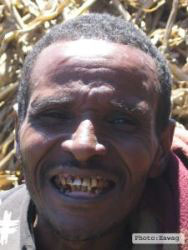
Während eine geringe Fluoridaufnahme Zahnkaries verhindern kann, verursacht eine übermässige Fluoridaufnahme verschiedene Arten von Fluorose; hauptsächlich Zahn- und Skelettfluorose. Weisse Streifen auf den Zähnen, gefolgt von braunen Flecken und in schweren Fällen Brüchigkeit des Zahnschmelzes sind häufige Symptome einer Zahnfluorose. Dies ist nicht nur ein gesundheitliches Problem, sondern hat auch psychische und soziale Auswirkungen, da Menschen sich aufgrund ihrer schlechten Zähne schämen und möglicherweise ausgegrenzt werden. Eine Skelettfluorose verursacht zunächst Schmerzen in verschiedenen Gelenken, schränkt dann die Gelenkbewegung ein und führt zu Steifheit und Verkrüppelung des Skeletts. Neben Zahn- und Skelettfluorose wurden im Zusammenhang mit einer hohen Fluoridaufnahme auch andere Erscheinungsformen wie Nervosität, Depression und Muskelschwäche berichtet.
Der WHO-Richtwert für Arsen im Trinkwasser wurde auf 10 µg/L festgelegt, in einigen Ländern werden jedoch höhere Werte verwendet (z. B. 50 µg/L in Bangladesch).
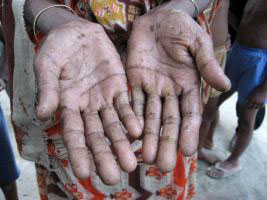
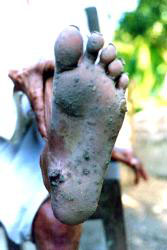
Es wurde festgestellt, dass hohe Arsenkonzentrationen im Grundwasser für chronische gesundheitliche Probleme verantwortlich sind, die unter dem Krankheitsbegriff Arsenikose zusammengefasst werden und sich über einen Zeitraum von mehreren Jahren entwickeln. Die Symptome einer Arsenikose reichen von Hauterkrankungen (Melanose, Keratose) bis hin zu Herz-Kreislauf-Erkrankungen, Krebs und der Beeinträchtigung der neurologischen Entwicklung bei Kindern. Da es bislang keine Heilung für Arsenikose gibt, ist die Bereitstellung von sauberem Wasser zur Vorbeugung dieser Krankheit der entscheidende Ansatz zur Eindämmung.
array(25 items)0 => Snowflake\Publications\Domain\Model\Publicationprototypepersistent entity (uid=30957, pid=124)originalId => protected30957 (integer)
authors => protected'Araya, D.; Podgorski, J.; Berg, M.' (49 chars)
title => protected'Groundwater salinity in the Horn of Africa: spatial prediction modeling and estimated people at risk' (100 chars)
journal => protected'Environment International' (25 chars)
year => protected2023 (integer)
volume => protected176 (integer)
issue => protected'' (0 chars)
startpage => protected'107925 (12 pp.)' (15 chars)
otherpage => protected'' (0 chars)
categories => protected'drinking water; groundwater quality; water scarcity; human health; Djibouti; Eritrea; Ethiopia; Kenya; Somalia; spatial modeling; machine learning; rand om forest' (161 chars)
description => protected'<em>Background:</em> Changes in climate and anthropogenic activities have ma de water salinization a significant threat worldwide, affecting biodiversity , crop productivity and contributing to water insecurity. The Horn of Africa , which includes eastern Ethiopia, northeast Kenya, Eritrea, Djibouti, and S omalia, has natural characteristics that favor high groundwater salinity. Ex cess salinity has been linked to infrastructure and health problems, includi ng increased infant mortality. This region has suffered successive droughts that have limited the availability of safe drinking water resources, leading to a humanitarian crisis for which little spatially explicit information ab out groundwater salinity is available.<br /><em>Methods:</em> Machine learni ng (random forest) is used to make spatial predictions of salinity levels at three electrical conductivity (EC) thresholds using data from 8646 borehole s and wells along with environmental predictor variables. Attention is paid to understanding the input data, balancing classes, performing many iteratio ns, specifying cut-off values, employing spatial cross-validation, and ident ifying spatial uncertainties.<br /><em>Results:</em> Estimates are made for this transboundary region of the population potentially exposed to hazardous salinity levels. The findings indicate that about 11.6 million people (∼7 % of the total population), including 400,000 infants and half a million pre gnant women, rely on groundwater for drinking and live in areas of high grou ndwater salinity (EC > 1500 µS/cm). Somalia is the most affected and h as the largest number of people potentially exposed. Around 50% of the Somal i population (5 million people) may be exposed to unsafe salinity levels in their drinking water. In only five of Somalia's 18 regions are less than 50% of infants potentially exposed to unsafe salinity levels. The main drivers of high salinity include precipitation, groundwater recharge, evaporation, o cean proximity, and frac...' (2633 chars)
serialnumber => protected'0160-4120' (9 chars)
doi => protected'10.1016/j.envint.2023.107925' (28 chars)
uid => protected30957 (integer)
_localizedUid => protected30957 (integer)modified_languageUid => protectedNULL
_versionedUid => protected30957 (integer)modifiedpid => protected124 (integer)1 => Snowflake\Publications\Domain\Model\Publicationprototypepersistent entity (uid=26216, pid=124)originalId => protected26216 (integer)
authors => protected'de Meyer, C. M. C.; Wahnfried, I.; Rodriguez Rodriguez,& nbsp;J. M.; Kipfer, R.; García Avelino, P. A.; Carpio D eza, E. A.; Berg, M.' (187 chars)
title => protected'Hotspots of geogenic arsenic and manganese contamination in groundwater of t he floodplains in lowland Amazonia (South America)' (126 chars)
journal => protected'Science of the Total Environment' (32 chars)
year => protected2023 (integer)
volume => protected860 (integer)
issue => protected'' (0 chars)
startpage => protected'160407 (14 pp.)' (15 chars)
otherpage => protected'' (0 chars)
categories => protected'holocene aquifers; Amazon river; hydrochemistry; drinking water; Peru; Brazi l' (77 chars)
description => protected'Arsenic enrichment in groundwater resources in deltas and floodplains of lar ge sediment-rich rivers is a worldwide natural hazard to human health. High spatial variability of arsenic concentrations in affected river basins limit s cost-effective mitigation strategies. Linking the chemical composition of groundwater with the topography and fluvial geomorphology is a promising app roach for predicting arsenic pollution on a regional scale. Here we correlat e the distribution of arsenic contaminated wells with the fluvial dynamics i n the Amazon basin. Groundwater was sampled from tube wells along the Amazon River and its main tributaries in three distinct regions in Peru and Brazil . For each sample, the major and trace element concentrations were analyzed, and the position of the well within the sedimentary structure was determine d. The results show that aquifers in poorly weathered sediments deposited by sediment-rich rivers are prone to mobilization and accumulation of aqueous arsenic and manganese, both in sub-Andean foreland basins, and in floodplain s downstream. Two zones at risk are distinguished: aquifers in the channel-d ominated part of the floodplain (CDF) and aquifers in the overbank deposits on the less-dynamic part of the floodplain (LDF). Some 70 % of the wells loc ated on the CDF and 20 % on the LDF tap groundwater at concentrations exceed ing the WHO guideline of 10 μg/L arsenic (max. 430 μg/L), and 70 % (CDF) a nd 50 % (LDF) exceeded 0.4 mg/L manganese (max. 6.6 mg/L). None of the water samples located outside the actual floodplain of sediment-rich rivers, or o n riverbanks of sediment-poor rivers exceed 5 μg/L As, and only 4 % exceede d 0.4 mg/L Mn. The areas of highest risk can be delineated using satellite i magery. We observe similar patterns as in affected river basins in South and Southeast Asia indicating a key role of sedimentation processes and fluvial geomorphology in priming arsenic and manganese contamination in aquifers.' (1974 chars)
serialnumber => protected'0048-9697' (9 chars)
doi => protected'10.1016/j.scitotenv.2022.160407' (31 chars)
uid => protected26216 (integer)
_localizedUid => protected26216 (integer)modified_languageUid => protectedNULL
_versionedUid => protected26216 (integer)modifiedpid => protected124 (integer)2 => Snowflake\Publications\Domain\Model\Publicationprototypepersistent entity (uid=24949, pid=124)originalId => protected24949 (integer)
authors => protected'Ling, Y.; Podgorski, J.; Sadiq, M.; Rasheed, H.; Eqani,& nbsp;S. A. M. A. S.; Berg, M.' (130 chars)
title => protected'Monitoring and prediction of high fluoride concentrations in groundwater in Pakistan' (84 chars)
journal => protected'Science of the Total Environment' (32 chars)
year => protected2022 (integer)
volume => protected839 (integer)
issue => protected'' (0 chars)
startpage => protected'156058 (9 pp.)' (14 chars)
otherpage => protected'' (0 chars)
categories => protected'aquifers; geogenic groundwater pollution; drinking water quality; human heal th threat; fluorosis; random forest modeling' (120 chars)
description => protected'Concentrations of naturally occurring fluoride in groundwater exceeding the WHO guideline of 1.5 mg/L have been detected in many parts of Pakistan. This may lead to dental or skeletal fluorosis and thereby poses a potential thre at to public health. Utilizing a total of 5483 fluoride concentrations, comp rising 2160 new measurements as well as those from other sources, we have ap plied machine learning techniques to predict the probability of fluoride in groundwater in Pakistan exceeding 1.5 mg/L at a 250 m spatial resolution. Cl imate, soil, lithology, topography, and land cover parameters were identifie d as effective predictors of high fluoride concentrations in groundwater. Ex cellent model performance was observed in a random forest model that achieve d an Area Under the Curve (AUC) of 0.92 on test data that were not used in m odeling. The highest probabilities of high fluoride concentrations in ground water are predicted in the Thar Desert, Sargodha Division, and scattered alo ng the Sulaiman Mountains. Applying the model predictions to the population density and accounting for groundwater usage in both rural and urban areas, we estimate that about 13 million people may be at risk of fluorosis due to consuming groundwater with fluoride concentrations >1.5 mg/L in Pakistan, which corresponds to ~6% of the total population. Both the fluoride predict ion map and the health risk map can be used as important decision-making too ls for authorities and water resource managers in the identification and mit igation of groundwater fluoride contamination.' (1566 chars)
serialnumber => protected'0048-9697' (9 chars)
doi => protected'10.1016/j.scitotenv.2022.156058' (31 chars)
uid => protected24949 (integer)
_localizedUid => protected24949 (integer)modified_languageUid => protectedNULL
_versionedUid => protected24949 (integer)modifiedpid => protected124 (integer)3 => Snowflake\Publications\Domain\Model\Publicationprototypepersistent entity (uid=25552, pid=124)originalId => protected25552 (integer)
authors => protected'Podgorski, J.; Berg, M.' (33 chars)
title => protected'Global analysis and prediction of fluoride in groundwater' (57 chars)
journal => protected'Nature Communications' (21 chars)
year => protected2022 (integer)
volume => protected13 (integer)
issue => protected'1' (1 chars)
startpage => protected'4232 (9 pp.)' (12 chars)
otherpage => protected'' (0 chars)
categories => protected'' (0 chars)
description => protected'The health of millions of people worldwide is negatively impacted by chronic exposure to elevated concentrations of geogenic fluoride in groundwater. Du e to health effects including dental mottling and skeletal fluorosis, the Wo rld Health Organization maintains a maximum guideline of 1.5 mg/L in drink ing water. As groundwater quality is not regularly tested in many areas, it is often unknown if the water in a given well or spring contains harmful lev els of fluoride. Here we present a state-of-the-art global fluoride hazard m ap based on machine learning and over 400,000 fluoride measurements (10% of which >1.5 mg/L), which is then used to estimate the human population a t risk. Hotspots indicated by the groundwater fluoride hazard map include pa rts of central Australia, western North America, eastern Brazil and many are as of Africa and Asia. Of the approximately 180 million people potentially a ffected worldwide, most reside in Asia (51–59% of total) and Africa (37-46 % of total), with the latter representing 6.5% of the continent’s populati on. Africa also contains 14 of the top 20 affected countries in terms of pop ulation at risk. We also illuminate and discuss the key globally relevant hy drochemical and environmental factors related to fluoride accumulation.' (1287 chars)
serialnumber => protected'' (0 chars)
doi => protected'10.1038/s41467-022-31940-x' (26 chars)
uid => protected25552 (integer)
_localizedUid => protected25552 (integer)modified_languageUid => protectedNULL
_versionedUid => protected25552 (integer)modifiedpid => protected124 (integer)4 => Snowflake\Publications\Domain\Model\Publicationprototypepersistent entity (uid=24847, pid=124)originalId => protected24847 (integer)
authors => protected'Araya, D.; Podgorski, J.; Berg, M.' (49 chars)
title => protected'How widespread is fluoride contamination of Ghana's groundwater?' (64 chars)
journal => protected'Water Science Policy' (20 chars)
year => protected2022 (integer)
volume => protected0 (integer)
issue => protected'' (0 chars)
startpage => protected'(4 pp.)' (7 chars)
otherpage => protected'' (0 chars)
categories => protected'' (0 chars)
description => protected'' (0 chars)
serialnumber => protected'' (0 chars)
doi => protected'10.53014/OGJS9699' (17 chars)
uid => protected24847 (integer)
_localizedUid => protected24847 (integer)modified_languageUid => protectedNULL
_versionedUid => protected24847 (integer)modifiedpid => protected124 (integer)5 => Snowflake\Publications\Domain\Model\Publicationprototypepersistent entity (uid=24363, pid=124)originalId => protected24363 (integer)
authors => protected'Araya, D.; Podgorski, J.; Kumi, M.; Mainoo, P. A.; Berg, M.' (89 chars)
title => protected'Fluoride contamination of groundwater resources in Ghana: country-wide hazar d modeling and estimated population at risk' (119 chars)
journal => protected'Water Research' (14 chars)
year => protected2022 (integer)
volume => protected212 (integer)
issue => protected'' (0 chars)
startpage => protected'118083 (10 pp.)' (15 chars)
otherpage => protected'' (0 chars)
categories => protected'Africa; drinking water resources; human health; fluorosis; random forest mod eling; groundwater pollution; geogenic contamination' (128 chars)
description => protected'Most people in Ghana have no or only basic access to safely managed water. E specially in rural areas, much of the population relies on groundwater for d rinking, which can be contaminated with fluoride and lead to dental fluorosi s. Children under the age of two are particularly susceptible to the adverse effects of fluoride and can retain 80-90% of a fluoride dose, compared to 6 0% in adults. Despite numerous local studies, no spatially continuous pictur e exists of the fluoride contamination across Ghana, nor is there any estima te of what proportion of the population is potentially exposed to unsafe flu oride levels. Here, we spatially model the probability of fluoride concentra tions exceeding 1.0 mg/L in groundwater across Ghana to identify risk areas and estimate the number of children and adults exposed to unsafe fluoride l evels in drinking water. We use a set of geospatial predictor variables with random forest modeling and evaluate the model performance through spatial c ross-validation. We found that approximately 15% of the area of Ghana, mainl y in the northeast, has a high probability of fluoride contamination. The to tal at-risk population is about 920,000 persons, or 3% of the population, wi th an estimated 240,000 children (0-9 years) in at-risk areas. In some distr icts, such as Karaga, Gushiegu, Tamale and Mion, 4 out of 10 children are po tentially exposed to fluoride poisoning. Geology and high evapotranspiration are the main drivers of fluoride enrichment in groundwater. Consequently, c limate change might put even greater pressure on the area's water resources. Our hazard maps should raise awareness and understanding of geogenic fluori de contamination in Ghana and can advise decision making at local levels to avoid or mitigate fluoride-related risks.' (1789 chars)
serialnumber => protected'0043-1354' (9 chars)
doi => protected'10.1016/j.watres.2022.118083' (28 chars)
uid => protected24363 (integer)
_localizedUid => protected24363 (integer)modified_languageUid => protectedNULL
_versionedUid => protected24363 (integer)modifiedpid => protected124 (integer)6 => Snowflake\Publications\Domain\Model\Publicationprototypepersistent entity (uid=24819, pid=124)originalId => protected24819 (integer)
authors => protected'Podgorski, J.; Araya, D.; Berg, M.' (49 chars)
title => protected'Geogenic manganese and iron in groundwater of Southeast Asia and Bangladesh - machine learning spatial prediction modeling and comparison with arsenic' (150 chars)
journal => protected'Science of the Total Environment' (32 chars)
year => protected2022 (integer)
volume => protected833 (integer)
issue => protected'' (0 chars)
startpage => protected'155131 (11 pp.)' (15 chars)
otherpage => protected'' (0 chars)
categories => protected'groundwater quality; drinking water; human health; random forest modeling; g eneralized boosted regression modeling; reducing groundwater' (136 chars)
description => protected'Naturally occurring, geogenic manganese (Mn) and iron (Fe) are frequently fo und dissolved in groundwater at concentrations that make the water difficult to use (deposits, unpleasant taste) or, in the case of Mn, a potential heal th hazard. Over 6000 groundwater measurements of Mn and Fe in Southeast Asia and Bangladesh were assembled and statistically examined with other physico chemical parameters. The machine learning methods random forest and generali zed boosted regression modeling were used with spatially continuous environm ental parameters (climate, geology, soil, topography) to model and map the p robability of groundwater Mn > 400 μg/L and Fe > 0.3 mg/L for Southea st Asia and Bangladesh. The modeling indicated that drier climatic condition s are associated with a tendency of elevated Mn concentrations, whereas high Fe concentrations tend to be found in a more humid climate with elevated le vels of soil organic carbon. The spatial distribution of Mn > 400 μg/L a nd Fe > 0.3 mg/L was compared and contrasted with that of the critical ge ogenic contaminant arsenic (As), confirming that high Fe concentrations are often associated with high As concentrations, whereas areas of high concentr ations of Mn and As are frequently found adjacent to each other. The probabi lity maps draw attention to areas prone to elevated concentrations of geogen ic Mn and Fe in groundwater and can help direct efforts to mitigate their ne gative effects. The greatest Mn hazard is found in densely populated northwe st Bangladesh and the Mekong, Red and Ma River Deltas of Cambodia and Vietna m. Widespread elevated Fe concentrations and their associated negative effec ts on water infrastructure pose challenges to water supply. The Mn and Fe pr ediction maps demonstrate the value of machine learning for the geospatial p rediction modeling and mapping of groundwater contaminants as well as the po tential for further constituents to be targeted by this novel approach.' (1971 chars)
serialnumber => protected'0048-9697' (9 chars)
doi => protected'10.1016/j.scitotenv.2022.155131' (31 chars)
uid => protected24819 (integer)
_localizedUid => protected24819 (integer)modified_languageUid => protectedNULL
_versionedUid => protected24819 (integer)modifiedpid => protected124 (integer)7 => Snowflake\Publications\Domain\Model\Publicationprototypepersistent entity (uid=24157, pid=124)originalId => protected24157 (integer)
authors => protected'Alam, M. F.; Villholth, K. G.; Podgorski, J.' (69 chars)
title => protected'Human arsenic exposure risk via crop consumption and global trade from groun dwater-irrigated areas' (98 chars)
journal => protected'Environmental Research Letters' (30 chars)
year => protected2021 (integer)
volume => protected16 (integer)
issue => protected'12' (2 chars)
startpage => protected'124013 (18 pp.)' (15 chars)
otherpage => protected'' (0 chars)
categories => protected'arsenic; groundwater; irrigation; exposure' (42 chars)
description => protected'While drinking water is known to create significant health risk in arsenic h azard areas, the role of exposure to arsenic through food intake is less wel l understood, including the impact of food trade. Using the best available d atasets on crop production, irrigation, groundwater arsenic hazard, and inte rnational crop trade flows, we estimate that globally 17.2% of irrigated har vested area (or 45.2 million hectares) of 42 main crops are grown in arsenic hazard areas, contributing 19.7% of total irrigated crop production, or 418 million metric tons (MMT) per year of these crops by mass. Two-thirds of th is area is dedicated to the major staple crops of rice, wheat, and maize (RW M) and produces 158 MMT per year of RWM, which is 8.0% of the total RWM prod uction and 18% of irrigated production. More than 25% of RWM consumed in the South Asian countries of India, Pakistan, and Bangladesh, where both arseni c hazard and degree of groundwater irrigation are high, originate from arsen ic hazard areas. Exposure to arsenic risk from crops also comes from interna tional trade, with 10.6% of rice, 2.4% of wheat, and 4.1% of maize trade flo ws coming from production in hazard areas. Trade plays a critical role in re distributing risk, with the greatest exposure risk borne by countries with a high dependence on food imports, particularly in the Middle East and small island nations for which all arsenic risk in crops is imported. Intensifying climate variability and population growth may increase reliance on groundwa ter irrigation, including in arsenic hazard areas. Results show that RWM har vested area could increase by 54.1 million hectares (179% increase over curr ent risk area), predominantly in South and Southeast Asia. This calls for th e need to better understand the relative risk of arsenic exposure through fo od intake, considering the influence of growing trade and increased groundwa ter reliance for crop production.' (1933 chars)
serialnumber => protected'1748-9326' (9 chars)
doi => protected'10.1088/1748-9326/ac34bb' (24 chars)
uid => protected24157 (integer)
_localizedUid => protected24157 (integer)modified_languageUid => protectedNULL
_versionedUid => protected24157 (integer)modifiedpid => protected124 (integer)8 => Snowflake\Publications\Domain\Model\Publicationprototypepersistent entity (uid=21041, pid=124)originalId => protected21041 (integer)
authors => protected'Wu, R.; Podgorski, J.; Berg, M.; Polya, D. A.' (70 chars)
title => protected'Geostatistical model of the spatial distribution of arsenic in groundwaters in Gujarat State, India' (99 chars)
journal => protected'Environmental Geochemistry and Health' (37 chars)
year => protected2021 (integer)
volume => protected43 (integer)
issue => protected'' (0 chars)
startpage => protected'2649' (4 chars)
otherpage => protected'2664' (4 chars)
categories => protected'groundwater; arsenic; health impacts; Gujarat; logistic regression; geostati stics' (81 chars)
description => protected'Geogenic arsenic contamination in groundwaters poses a severe health risk to hundreds of millions of people globally. Notwithstanding the particular ris ks to exposed populations in the Indian sub-continent, at the time of writin g, there was a paucity of geostatistically based models of the spatial distr ibution of groundwater hazard in India. In this study, we used logistic regr ession models of secondary groundwater arsenic data with research-informed s econdary soil, climate and topographic variables as principal predictors gen erate hazard and risk maps of groundwater arsenic at a resolution of 1 km a cross Gujarat State. By combining models based on different arsenic concentr ations, we have generated a pseudo-contour map of groundwater arsenic concen trations, which indicates greater arsenic hazard (> 10 μg/L) in the n orthwest, northeast and south-east parts of Kachchh District as well as nort hwest and southwest Banas Kantha District. The total number of people living in areas in Gujarat with groundwater arsenic concentration exceeding 10 μ g/L is estimated to be around 122,000, of which we estimate approximately 49 ,000 people consume groundwater exceeding 10 µg/L. Using simple previously published dose–response relationships, this is estimated to have given ri se to 700 (prevalence) cases of skin cancer and around 10 cases of premature avoidable mortality/annum from internal (lung, liver, bladder) cancers—th at latter value is on the order of just 0.001% of internal cancers in Gujara t, reflecting the relative low groundwater arsenic hazard in Gujarat State.' (1595 chars)
serialnumber => protected'0269-4042' (9 chars)
doi => protected'10.1007/s10653-020-00655-7' (26 chars)
uid => protected21041 (integer)
_localizedUid => protected21041 (integer)modified_languageUid => protectedNULL
_versionedUid => protected21041 (integer)modifiedpid => protected124 (integer)9 => Snowflake\Publications\Domain\Model\Publicationprototypepersistent entity (uid=20910, pid=124)originalId => protected20910 (integer)
authors => protected'Podgorski, J.; Berg, M.' (33 chars)
title => protected'Global threat of arsenic in groundwater' (39 chars)
journal => protected'Science' (7 chars)
year => protected2020 (integer)
volume => protected368 (integer)
issue => protected'6493' (4 chars)
startpage => protected'845' (3 chars)
otherpage => protected'850' (3 chars)
categories => protected'' (0 chars)
description => protected'Naturally occurring arsenic in groundwater affects millions of people worldw ide. We created a global prediction map of groundwater arsenic exceeding 10 micrograms per liter using a random forest machine-learning model based on 1 1 geospatial environmental parameters and more than 50,000 aggregated data p oints of measured groundwater arsenic concentration. Our global prediction m ap includes known arsenic-affected areas and previously undocumented areas o f concern. By combining the global arsenic prediction model with household g roundwater-usage statistics, we estimate that 94 million to 220 million peop le are potentially exposed to high arsenic concentrations in groundwater, th e vast majority (94%) being in Asia. Because groundwater is increasingly use d to support growing populations and buffer against water scarcity due to ch anging climate, this work is important to raise awareness, identify areas fo r safe wells, and help prioritize testing.' (954 chars)
serialnumber => protected'0036-8075' (9 chars)
doi => protected'10.1126/science.aba1510' (23 chars)
uid => protected20910 (integer)
_localizedUid => protected20910 (integer)modified_languageUid => protectedNULL
_versionedUid => protected20910 (integer)modifiedpid => protected124 (integer)10 => Snowflake\Publications\Domain\Model\Publicationprototypepersistent entity (uid=20587, pid=124)originalId => protected20587 (integer)
authors => protected'Wallis, I.; Prommer, H.; Berg, M.; Siade, A. J.; Su n, J.; Kipfer, R.' (103 chars)
title => protected'The river-groundwater interface as a hotspot for arsenic release' (64 chars)
journal => protected'Nature Geoscience' (17 chars)
year => protected2020 (integer)
volume => protected13 (integer)
issue => protected'' (0 chars)
startpage => protected'288' (3 chars)
otherpage => protected'295' (3 chars)
categories => protected'' (0 chars)
description => protected'Geogenic groundwater arsenic (As) contamination is pervasive in many aquifer s in south and southeast Asia. It is feared that recent increases in groundw ater abstractions could induce the migration of high-As groundwaters into pr eviously As-safe aquifers. Here we study an As-contaminated aquifer in Van P huc, Vietnam, located ~10 km southeast of Hanoi on the banks of the Red Ri ver, which is affected by large-scale groundwater abstraction. We used numer ical model simulations to integrate the groundwater flow and biogeochemical reaction processes at the aquifer scale, constrained by detailed hydraulic, environmental tracer, hydrochemical and mineralogical data. Our simulations provide a mechanistic reconstruction of the anthropogenically induced spatio temporal variations in groundwater flow and biogeochemical dynamics and dete rmine the evolution of the migration rate and mass balance of As over severa l decades. We found that the riverbed–aquifer interface constitutes a biog eochemical reaction hotspot that acts as the main source of elevated As conc entrations. We show that a sustained As release relies on regular replenishm ent of river muds rich in labile organic matter and reactive iron oxides and that pumping-induced groundwater flow may facilitate As migration over dist ances of several kilometres into adjacent aquifers.' (1343 chars)
serialnumber => protected'1752-0894' (9 chars)
doi => protected'10.1038/s41561-020-0557-6' (25 chars)
uid => protected20587 (integer)
_localizedUid => protected20587 (integer)modified_languageUid => protectedNULL
_versionedUid => protected20587 (integer)modifiedpid => protected124 (integer)11 => Snowflake\Publications\Domain\Model\Publicationprototypepersistent entity (uid=20114, pid=124)originalId => protected20114 (integer)
authors => protected'Stopelli, E.; Duyen, V. T.; Mai, T. T.; Trang,  ;P. T. K.; Viet, P. H.; Lightfoot, A.; Kipfer,  ;R.; Schneider, M.; Eiche, E.; Kontny, A.; Neumann, T.; Glodowska, M.; Patzner, M.; Kappler, A.; Kleindienst, S. ; Rathi, B.; Cirpka, O.; Bostick, B.; Prommer, H.; Winke l, L. H. E.; Berg, M.' (421 chars)
title => protected'Spatial and temporal evolution of groundwater arsenic contamination in the R ed River delta, Vietnam: interplay of mobilisation and retardation processes' (152 chars)
journal => protected'Science of the Total Environment' (32 chars)
year => protected2020 (integer)
volume => protected717 (integer)
issue => protected'' (0 chars)
startpage => protected'137143 (13 pp.)' (15 chars)
otherpage => protected'' (0 chars)
categories => protected'groundwater hydrochemistry; water isotopes; arsenic geochemistry; reductive dissolution; redox transition; methanogenic conditions' (130 chars)
description => protected'Geogenic arsenic (As) contamination of groundwater poses a major threat to g lobal health, particularly in Asia. To mitigate this exposure, groundwater i s increasingly extracted from low-As Pleistocene aquifers. This, however, di sturbs groundwater flow and potentially draws high-As groundwater into low-A s aquifers.<br /> Here we report a detailed characterisation of the Van Phuc aquifer in the Red River Delta region, Vietnam, where high-As groundwater f rom a Holocene aquifer is being drawn into a low-As Pleistocene aquifer. Thi s study includes data from eight years (2010–2017) of groundwater observat ions to develop an understanding of the spatial and temporal evolution of th e redox status and groundwater hydrochemistry.<br /> Arsenic concentrations were highly variable (0.5-510 μg/L) over spatial scales of <200 m. Five hydro(geo)chemical zones (indicated as A to E) were identified in the aquife r, each associated with specific As mobilisation and retardation processes. At the riverbank (zone A), As is mobilised from freshly deposited sediments where Fe(III)-reducing conditions occur. Arsenic is then transported across the Holocene aquifer (zone B), where the vertical intrusion of evaporative w ater, likely enriched in dissolved organic matter, promotes methanogenic con ditions and further release of As (zone C). In the redox transition zone at the boundary of the two aquifers (zone D), groundwater arsenic concentration s decrease by sorption and incorporations onto Fe(II) carbonates and Fe(II)/ Fe(III) (oxyhydr)oxides under reducing conditions. The sorption/incorporatio n of As onto Fe(III) minerals at the redox transition and in the Mn(IV)-redu cing Pleistocene aquifer (zone E) has consistently kept As concentrations be low 10 μg/L for the studied period of 2010–2017, and the location of the redox transition zone does not appear to have propagated significantly. Yet, the largest temporal hydrochemical changes were found in the Pleistocene aq uifer caused by groundwa...' (2096 chars)
serialnumber => protected'0048-9697' (9 chars)
doi => protected'10.1016/j.scitotenv.2020.137143' (31 chars)
uid => protected20114 (integer)
_localizedUid => protected20114 (integer)modified_languageUid => protectedNULL
_versionedUid => protected20114 (integer)modifiedpid => protected124 (integer)12 => Snowflake\Publications\Domain\Model\Publicationprototypepersistent entity (uid=18761, pid=124)originalId => protected18761 (integer)
authors => protected'Podgorski, J.; Berg, M.; Kipfer, R.' (50 chars)
title => protected'Isotope mapping of groundwater pollution and renewal' (52 chars)
journal => protected'IAEA Bulletin' (13 chars)
year => protected2019 (integer)
volume => protected60 (integer)
issue => protected'1' (1 chars)
startpage => protected'31' (2 chars)
otherpage => protected'32' (2 chars)
categories => protected'' (0 chars)
description => protected'An index aquifer vulnerability study from western Canada (left) compared wit h a new logistic regression map of these vulnerability index values on the o nline GAP platform (right). The red colour shows areas with the highest vuln erability. The green areas are less vulnerable or adequately protected from surface contamination.' (326 chars)
serialnumber => protected'' (0 chars)
doi => protected'' (0 chars)
uid => protected18761 (integer)
_localizedUid => protected18761 (integer)modified_languageUid => protectedNULL
_versionedUid => protected18761 (integer)modifiedpid => protected124 (integer)13 => Snowflake\Publications\Domain\Model\Publicationprototypepersistent entity (uid=17318, pid=124)originalId => protected17318 (integer)
authors => protected'Podgorski, J. E.; Labhasetwar, P.; Saha, D.; Berg, M.' (78 chars)
title => protected'Prediction modeling and mapping of groundwater fluoride contamination throug hout India' (86 chars)
journal => protected'Environmental Science and Technology' (36 chars)
year => protected2018 (integer)
volume => protected52 (integer)
issue => protected'17' (2 chars)
startpage => protected'9889' (4 chars)
otherpage => protected'9898' (4 chars)
categories => protected'' (0 chars)
description => protected'For about the past eight decades, high concentrations of naturally occurring fluoride have been detected in groundwater in different parts of India. The chronic consumption of fluoride in high concentrations is recognized to cau se dental and skeletal fluorosis. We have used the random forest machine-lea rning algorithm to model a data set of 12 600 groundwater fluoride concentra tions from throughout India along with spatially continuous predictor variab les of predominantly geology, climate, and soil parameters. Despite only sur face parameters being available to describe a subsurface phenomenon, this ha s produced a highly accurate prediction map of fluoride concentrations excee ding 1.5 mg/L at 1 km resolution throughout the country. The most affected a reas are the northwestern states/territories of Delhi, Gujarat, Haryana, Pun jab, and Rajasthan and the southern states of Andhra Pradesh, Karnataka, Tam il Nadu, and Telangana. The total number of people at risk of fluorosis due to fluoride in groundwater is predicted to be around 120 million, or 9% of t he population. This number is based on rural populations and accounts for av erage rates of groundwater consumption from nonmanaged sources. The new fluo ride hazard and risk maps can be used by authorities in conjunction with det ailed groundwater utilization information to prioritize areas in need of mit igation measures.' (1385 chars)
serialnumber => protected'0013-936X' (9 chars)
doi => protected'10.1021/acs.est.8b01679' (23 chars)
uid => protected17318 (integer)
_localizedUid => protected17318 (integer)modified_languageUid => protectedNULL
_versionedUid => protected17318 (integer)modifiedpid => protected124 (integer)14 => Snowflake\Publications\Domain\Model\Publicationprototypepersistent entity (uid=16022, pid=124)originalId => protected16022 (integer)
authors => protected'Razanamahandry, L. C.; Andrianisa, H. A.; Karoui, H .; Podgorski, J.; Yacouba, H.' (115 chars)
title => protected'Prediction model for cyanide soil pollution in artisanal gold mining area by using logistic regression' (102 chars)
journal => protected'Catena' (6 chars)
year => protected2018 (integer)
volume => protected162 (integer)
issue => protected'' (0 chars)
startpage => protected'40' (2 chars)
otherpage => protected'50' (2 chars)
categories => protected'hazardous chemicals; catchment area; diffuse pollution; soil contamination; risk assessment; Burkina Faso' (105 chars)
description => protected'It has been reported that persistent cyanide pollution occurs in artisanal s mall-scale gold mining (ASGM)-affected catchment areas in Burkina Faso. In t he present study, the logistic regression method was employed to identify th e factors that influence the spatial distribution of cyanide pollution as we ll as to predict the cyanide pollution map risk at catchment level. Soil sam ples were collected from two ASGM sites in the northern Zougnazagmiline ("No rth") site and southern Galgouli ("South") site parts of Burkina Faso, cover ing areas of 22 km<sup>2</sup> and 20 km<sup>2</sup>, respectively. Free cya nide concentration in each sample was measured. It was shown that the spatia l distribution of cyanide was solely controlled by the soil type in Zougnaza gmiline and both the soil type and electric conductivity in Galgouli. On the other hand, the cyanidation zones within the two catchments were the places where the highest risk of cyanide pollution occurs, with probabilities of 0 .8 and 1 in Zougnazagmiline and Galgouli, respectively. > 20% of the settled area in the Zougnazagmiline and 5% of that in Galgouli were exposed to cyan ide pollution. Logistic regression was able to reliably predict cyanide cont amination in areas affected by ASGM. The model could be useful for decision- makers to plan ASGM-site decontamination.' (1333 chars)
serialnumber => protected'0341-8162' (9 chars)
doi => protected'10.1016/j.catena.2017.11.018' (28 chars)
uid => protected16022 (integer)
_localizedUid => protected16022 (integer)modified_languageUid => protectedNULL
_versionedUid => protected16022 (integer)modifiedpid => protected124 (integer)15 => Snowflake\Publications\Domain\Model\Publicationprototypepersistent entity (uid=17785, pid=124)originalId => protected17785 (integer)
authors => protected'Bretzler, A.; Stolze, L.; Nikiema, J.; Lalanne, F.; Ghad iri, E.; Brennwald, M. S.; Rolle, M.; Schirmer, M.' (151 chars)
title => protected'Hydrogeochemical and multi-tracer investigations of arsenic-affected aquifer s in semi-arid West Africa' (102 chars)
journal => protected'Geoscience Frontiers' (20 chars)
year => protected2019 (integer)
volume => protected10 (integer)
issue => protected'5' (1 chars)
startpage => protected'1685' (4 chars)
otherpage => protected'1699' (4 chars)
categories => protected'arsenic; groundwater chemistry; West Africa; fractured aquifers; residence t ime; noble gases' (92 chars)
description => protected'The semi-arid Sahel regions of West Africa rely heavily on groundwater from shallow to moderately deep (<100 m b.g.l.) crystalline bedrock aquifers f or drinking water production. Groundwater quality may be affected by high ge ogenic arsenic (As) concentrations (>10 μg/L) stemming from the oxidatio n of sulphide minerals (pyrite, arsenopyrite) in mineralised zones. These aq uifers are still little investigated, especially concerning groundwater resi dence times and the influence of the annual monsoon season on groundwater ch emistry. To gain insights on the temporal aspects of As contamination, we ha ve used isotope tracers (noble gases, <sup>3</sup>H, stable water isotopes ( <sup>2</sup>H, <sup>18</sup>O)) and performed hydrochemical analyses on grou ndwater abstracted from tube wells and dug wells in a small study area in so uthwestern Burkina Faso. Results revealed a great variability in groundwater properties (e.g. redox conditions, As concentrations, water level, residenc e time) over spatial scales of only a few hundred metres, characteristic of the highly heterogeneous fractured underground. Elevated As levels are found in oxic groundwater of circum-neutral pH and show little relation with any of the measured parameters. Arsenic concentrations are relatively stable ove r the course of the year, with little effect seen by the monsoon. Groundwate r residence time does not seem to have an influence on As concentrations, as elevated As can be found both in groundwater with short (<50 a) and long (>10<sup>3</sup> a) residence times as indicated by <sup>3</sup>He/<sup> 4</sup>He ratios spanning three orders of magnitude. These results support t he hypothesis that the proximity to mineralised zones is the most crucial fa ctor controlling As concentrations in the observed redox/pH conditions. The existence of very old water portions with residence times >10<sup>3</sup> years already at depths of <50 m b.g.l. is a new finding for the shallow fractured bedrock aquif...' (2126 chars)
serialnumber => protected'1674-9871' (9 chars)
doi => protected'10.1016/j.gsf.2018.06.004' (25 chars)
uid => protected17785 (integer)
_localizedUid => protected17785 (integer)modified_languageUid => protectedNULL
_versionedUid => protected17785 (integer)modifiedpid => protected124 (integer)16 => Snowflake\Publications\Domain\Model\Publicationprototypepersistent entity (uid=15112, pid=124)originalId => protected15112 (integer)
authors => protected'de Meyer, C. M. C.; Rodríguez, J. M.; Carpio,  ;E. A.; García, P. A.; Stengel, C.; Berg, M.' (146 chars)
title => protected'Arsenic, manganese and aluminum contamination in groundwater resources of We stern Amazonia (Peru)' (97 chars)
journal => protected'Science of the Total Environment' (32 chars)
year => protected2017 (integer)
volume => protected607 (integer)
issue => protected'' (0 chars)
startpage => protected'1437' (4 chars)
otherpage => protected'1450' (4 chars)
categories => protected'geogenic contamination; drinking water; trace elements; Amazon River; holoce ne; Iquitos' (87 chars)
description => protected'This paper presents a first integrated survey on the occurrence and distribu tion of geogenic contaminants in groundwater resources of Western Amazonia i n Peru. An increasing number of groundwater wells have been constructed for drinking water purposes in the last decades; however, the chemical quality o f the groundwater resources in the Amazon region is poorly studied. We colle cted groundwater from the regions of Iquitos and Pucallpa to analyze the hyd rochemical characteristics, including trace elements. The source aquifer of each well was determined by interpretation of the available geological infor mation, which identified four different aquifer types with distinct hydroche mical properties. The majority of the wells in two of the aquifer types tap groundwater enriched in aluminum, arsenic, or manganese at levels harmful to human health. Holocene alluvial aquifers along the main Amazon tributaries with anoxic, near pH-neutral groundwater contained high concentrations of ar senic (up to 700 μg/L) and manganese (up to 4 mg/L). Around Iquitos, the ac idic groundwater (4.2 ≤ pH ≤ 5.5) from unconfined aquifers composed of p ure sand had dissolved aluminum concentrations of up to 3.3 mg/L. Groundwate r from older or deeper aquifers generally was of good chemical quality. The high concentrations of toxic elements highlight the urgent need to assess th e groundwater quality throughout Western Amazonia.' (1418 chars)
serialnumber => protected'0048-9697' (9 chars)
doi => protected'10.1016/j.scitotenv.2017.07.059' (31 chars)
uid => protected15112 (integer)
_localizedUid => protected15112 (integer)modified_languageUid => protectedNULL
_versionedUid => protected15112 (integer)modifiedpid => protected124 (integer)17 => Snowflake\Publications\Domain\Model\Publicationprototypepersistent entity (uid=15138, pid=124)originalId => protected15138 (integer)
authors => protected'Bretzler, A.; Berg, M.; Winkel, L.; Amini, M.; Rodriguez -Lado, L.; Sovann, C.; Polya, D. A.; Johnson, A.' (149 chars)
title => protected'Geostatistical modelling of arsenic hazard in groundwater' (57 chars)
journal => protected'In: Bhattacharya, P.; Polya, D. A.; Jovanovic, D. (Eds.) , Best practice guide on the control of arsenic in drinking water' (141 chars)
year => protected2017 (integer)
volume => protected0 (integer)
issue => protected'' (0 chars)
startpage => protected'153' (3 chars)
otherpage => protected'160' (3 chars)
categories => protected'' (0 chars)
description => protected'' (0 chars)
serialnumber => protected'' (0 chars)
doi => protected'' (0 chars)
uid => protected15138 (integer)
_localizedUid => protected15138 (integer)modified_languageUid => protectedNULL
_versionedUid => protected15138 (integer)modifiedpid => protected124 (integer)18 => Snowflake\Publications\Domain\Model\Publicationprototypepersistent entity (uid=15232, pid=124)originalId => protected15232 (integer)
authors => protected'Podgorski, J. E.; Eqani, S. A. M. A. S.; Khanam, T.; Ullah, R.; Shen, H.; Berg, M.' (137 chars)
title => protected'Extensive arsenic contamination in high-pH unconfined aquifers in the Indus Valley' (82 chars)
journal => protected'Science Advances' (16 chars)
year => protected2017 (integer)
volume => protected3 (integer)
issue => protected'8' (1 chars)
startpage => protected'e1700935 (10 pp.)' (17 chars)
otherpage => protected'' (0 chars)
categories => protected'' (0 chars)
description => protected'Arsenic-contaminated aquifers are currently estimated to affect ~150 million people around the world. However, the full extent of the problem remains el usive. This is also the case in Pakistan, where previous studies focused on isolated areas. Using a new data set of nearly 1200 groundwater quality samp les throughout Pakistan, we have created state-of-the-art hazard and risk ma ps of arsenic-contaminated groundwater for thresholds of 10 and 50 μg/liter . Logistic regression analysis was used with 1000 iterations, where surface slope, geology, and soil parameters were major predictor variables. The haza rd model indicates that much of the Indus Plain is likely to have elevated a rsenic concentrations, although the rest of the country is mostly safe. Unli ke other arsenic-contaminated areas of Asia, the arsenic release process in the arid Indus Plain appears to be dominated by elevated-pH dissolution, res ulting from alkaline topsoil and extensive irrigation of unconfined aquifers , although pockets of reductive dissolution are also present. We estimate th at approximately 50 million to 60 million people use groundwater within the area at risk, with hot spots around Lahore and Hyderabad. This number is ala rmingly high and demonstrates the urgent need for verification and testing o f all drinking water wells in the Indus Plain, followed by appropriate mitig ation measures.' (1383 chars)
serialnumber => protected'' (0 chars)
doi => protected'10.1126/sciadv.1700935' (22 chars)
uid => protected15232 (integer)
_localizedUid => protected15232 (integer)modified_languageUid => protectedNULL
_versionedUid => protected15232 (integer)modifiedpid => protected124 (integer)19 => Snowflake\Publications\Domain\Model\Publicationprototypepersistent entity (uid=14274, pid=124)originalId => protected14274 (integer)
authors => protected'Bretzler, A.; Lalanne, F.; Nikiema, J.; Podgorski, J.; P fenninger, N.; Berg, M.; Schirmer, M.' (128 chars)
title => protected'Groundwater arsenic contamination in Burkina Faso, West Africa: predicting a nd verifying regions at risk' (104 chars)
journal => protected'Science of the Total Environment' (32 chars)
year => protected2017 (integer)
volume => protected584 (integer)
issue => protected'' (0 chars)
startpage => protected'958' (3 chars)
otherpage => protected'970' (3 chars)
categories => protected'arsenic contamination; drinking water; West Africa; sulphide minerals; hazar d modelling; health threat' (102 chars)
description => protected'Arsenic contamination in groundwater from crystalline basement rocks in West Africa has only been documented in isolated areas and presents a serious he alth threat in a region already facing multiple challenges related to water quality and scarcity. We present a comprehensive dataset of arsenic concentr ations from drinking water wells in rural Burkina Faso (n = 1498), of which 14.6% are above 10 μg/L. Included in this dataset are 269 new samples from regions where no published water quality data existed. We used multivariate logistic regression with arsenic measurements as calibration data and maps o f geology and mineral deposits as independent predictor variables to create arsenic prediction models at concentration thresholds of 5, 10 and 50 μg/L. These hazard maps delineate areas vulnerable to groundwater arsenic contami nation in Burkina Faso. Bedrock composed of schists and volcanic rocks of th e Birimian formation, potentially harbouring arsenic-containing sulphide min erals, has the highest probability of yielding groundwater arsenic concentra tions > 10 μg/L. Combined with population density estimates, the arsenic pr ediction models indicate that ~ 560,000 people are potentially exposed to ar senic-contaminated groundwater in Burkina Faso. The same arsenic-bearing geo logical formations that are positive predictors for elevated arsenic concent rations in Burkina Faso also exist in neighbouring countries such as Mali, G hana and Ivory Coast. This study's results are thus of transboundary relevan ce and can act as a trigger for targeted water quality surveys and mitigatio n efforts.' (1606 chars)
serialnumber => protected'0048-9697' (9 chars)
doi => protected'10.1016/j.scitotenv.2017.01.147' (31 chars)
uid => protected14274 (integer)
_localizedUid => protected14274 (integer)modified_languageUid => protectedNULL
_versionedUid => protected14274 (integer)modifiedpid => protected124 (integer)20 => Snowflake\Publications\Domain\Model\Publicationprototypepersistent entity (uid=7346, pid=124)originalId => protected7346 (integer)
authors => protected'Rodríguez-Lado, L.; Sun, G.; Berg, M.; Zhang, Q.; Xue,& nbsp;H.; Zheng, Q.; Johnson, C. A.' (125 chars)
title => protected'Groundwater arsenic contamination throughout China' (50 chars)
journal => protected'Science' (7 chars)
year => protected2013 (integer)
volume => protected341 (integer)
issue => protected'6148' (4 chars)
startpage => protected'866' (3 chars)
otherpage => protected'868' (3 chars)
categories => protected'' (0 chars)
description => protected'Arsenic-contaminated groundwater used for drinking in China is a health thre at that was first recognized in the 1960s. However, because of the sheer siz e of the country, millions of groundwater wells remain to be tested in order to determine the magnitude of the problem. We developed a statistical risk model that classifies safe and unsafe areas with respect to geogenic arsenic contamination in China, using the threshold of 10 micrograms per liter, the World Health Organization guideline and current Chinese standard for drinki ng water. We estimate that 19.6 million people are at risk of being affected by the consumption of arsenic-contaminated groundwater. Although the result s must be confirmed with additional field measurements, our risk model ident ifies numerous arsenic-affected areas and highlights the potential magnitude of this health threat in China.' (868 chars)
serialnumber => protected'0036-8075' (9 chars)
doi => protected'10.1126/science.1237484' (23 chars)
uid => protected7346 (integer)
_localizedUid => protected7346 (integer)modified_languageUid => protectedNULL
_versionedUid => protected7346 (integer)modifiedpid => protected124 (integer)21 => Snowflake\Publications\Domain\Model\Publicationprototypepersistent entity (uid=6600, pid=124)originalId => protected6600 (integer)
authors => protected'Winkel, L. H. E.; Trang, P. T. K.; Lan, V . M.; Stengel, C.; Amini, M.; Ha, N. T.; Viet,  ;P. H.; Berg, M.' (178 chars)
title => protected'Arsenic pollution of groundwater in Vietnam exacerbated by deep aquifer expl oitation for more than a century' (108 chars)
journal => protected'Proceedings of the National Academy of Sciences of the United States of Amer ica PNAS' (84 chars)
year => protected2011 (integer)
volume => protected108 (integer)
issue => protected'4' (1 chars)
startpage => protected'1246' (4 chars)
otherpage => protected'1251' (4 chars)
categories => protected'three-dimensional risk modeling; anthropogenic influence; drinking water res ources; geogenic contamination; health threat' (121 chars)
description => protected'Arsenic contamination of shallow groundwater is among the biggest health thr eats in the developing world. Targeting uncontaminated deep aquifers is a po pular mitigation option although its long-term impact remains unknown. Here we present the alarming results of a large-scale groundwater survey covering the entire Red River Delta and a unique probability model based on three-di mensional Quaternary geology. Our unprecedented dataset reveals that ∼7 mi llion delta inhabitants use groundwater contaminated with toxic elements, in cluding manganese, selenium, and barium. Depth-resolved probabilities and ar senic concentrations indicate drawdown of arsenic-enriched waters from Holoc ene aquifers to naturally uncontaminated Pleistocene aquifers as a result of > 100 years of groundwater abstraction. Vertical arsenic migration induced by large-scale pumping from deep aquifers has been discussed to occur elsewh ere, but has never been shown to occur at the scale seen here. The present s ituation in the Red River Delta is a warning for other As-affected regions w here groundwater is extensively pumped from uncontaminated aquifers underlyi ng high arsenic aquifers or zones.' (1174 chars)
serialnumber => protected'0027-8424' (9 chars)
doi => protected'10.1073/pnas.1011915108' (23 chars)
uid => protected6600 (integer)
_localizedUid => protected6600 (integer)modified_languageUid => protectedNULL
_versionedUid => protected6600 (integer)modifiedpid => protected124 (integer)22 => Snowflake\Publications\Domain\Model\Publicationprototypepersistent entity (uid=5733, pid=124)originalId => protected5733 (integer)
authors => protected'Amini, M.; Abbaspour, K. C.; Berg, M.; Winkel, L.; Hug, S. J.; Hoehn, E.; Yang, H.; Johnson, C. A .' (153 chars)
title => protected'Statistical modeling of global geogenic arsenic contamination in groundwater' (76 chars)
journal => protected'Environmental Science and Technology' (36 chars)
year => protected2008 (integer)
volume => protected42 (integer)
issue => protected'10' (2 chars)
startpage => protected'3669' (4 chars)
otherpage => protected'3675' (4 chars)
categories => protected'' (0 chars)
description => protected'Contamination of groundwaters with geogenic arsenic poses a major health ris k to millions of people. Although the main geochemical mechanisms of arsenic mobilization are well understood, the worldwide scale of affected regions i s still unknown. In this study we used a large database of measured arsenic concentration in groundwaters (around 20,000 data points) from around the wo rld as well as digital maps of physical characteristics such as soil, geolog y, climate, and elevation to model probability maps of global arsenic contam ination. A novel rule-based statistical procedure was used to combine the ph ysical data and expert knowledge to delineate two process regions for arseni c mobilization: “reducing” and “high-pH/oxidizing”. Arsenic concentr ations were modeled in each region using regression analysis and adaptive ne uro-fuzzy inferencing followed by Latin hypercube sampling for uncertainty p ropagation to produce probability maps. The derived global arsenic models co uld benefit from more accurate geologic information and aquifer chemical/phy sical information. Using some proxy surface information, however, the models explained 77% of arsenic variation in reducing regions and 68% of arsenic v ariation in high-pH/oxidizing regions. The probability maps based on the abo ve models correspond well with the known contaminated regions around the wor ld and delineate new untested areas that have a high probability of arsenic contamination. Notable among these regions are South East and North West of China in Asia, Central Australia, New Zealand, Northern Afghanistan, and Nor thern Mali and Zambia in Africa.' (1628 chars)
serialnumber => protected'0013-936X' (9 chars)
doi => protected'10.1021/es702859e' (17 chars)
uid => protected5733 (integer)
_localizedUid => protected5733 (integer)modified_languageUid => protectedNULL
_versionedUid => protected5733 (integer)modifiedpid => protected124 (integer)23 => Snowflake\Publications\Domain\Model\Publicationprototypepersistent entity (uid=5789, pid=124)originalId => protected5789 (integer)
authors => protected'Amini, M.; Mueller, K.; Abbaspour, K. C.; Rosenberg,&nbs p;T.; Afyuni, M.; Møller, K. N.; Sarr, M.; Johnson,&nbs p;C. A.' (164 chars)
title => protected'Statistical modeling of global geogenic fluoride contamination in groundwate rs' (78 chars)
journal => protected'Environmental Science and Technology' (36 chars)
year => protected2008 (integer)
volume => protected42 (integer)
issue => protected'10' (2 chars)
startpage => protected'3662' (4 chars)
otherpage => protected'3668' (4 chars)
categories => protected'' (0 chars)
description => protected'The use of groundwater with high fluoride concentrations poses a health thre at to millions of people around the world. This study aims at providing a gl obal overview of potentially fluoride-rich groundwaters by modeling fluoride concentration. A large database of worldwide fluoride concentrations as wel l as available information on related environmental factors such as soil pro perties, geological settings, and climatic and topographical information on a global scale have all been used in the model. The modeling approach combin es geochemical knowledge with statistical methods to devise a rule-based sta tistical procedure, which divides the world into 8 different “process regi ons”. For each region a separate predictive model was constructed. The end result is a global probability map of fluoride concentration in the groundw ater. Comparisons of the modeled and measured data indicate that 60−70% of the fluoride variation could be explained by the models in six process regi ons, while in two process regions only 30% of the variation in the measured data was explained. Furthermore, the global probability map corresponded wel l with fluorotic areas described in the international literature. Although t he probability map should not replace fluoride testing, it can give a first indication of possible contamination and thus may support the planning proce ss of new drinking water projects.' (1402 chars)
serialnumber => protected'0013-936X' (9 chars)
doi => protected'10.1021/es071958y' (17 chars)
uid => protected5789 (integer)
_localizedUid => protected5789 (integer)modified_languageUid => protectedNULL
_versionedUid => protected5789 (integer)modifiedpid => protected124 (integer)24 => Snowflake\Publications\Domain\Model\Publicationprototypepersistent entity (uid=5777, pid=124)originalId => protected5777 (integer)
authors => protected'Winkel, L.; Berg, M.; Amini, M.; Hug, S. J.; Johnso n, C. A.' (94 chars)
title => protected'Predicting groundwater arsenic contamination in Southeast Asia from surface parameters' (86 chars)
journal => protected'Nature Geoscience' (17 chars)
year => protected2008 (integer)
volume => protected1 (integer)
issue => protected'' (0 chars)
startpage => protected'536' (3 chars)
otherpage => protected'542' (3 chars)
categories => protected'' (0 chars)
description => protected'Arsenic contamination of groundwater resources threatens the health of milli ons of people worldwide, particularly in the densely populated river deltas of Southeast Asia. Although many arsenic-affected areas have been identified in recent years, a systematic evaluation of vulnerable areas remains to be carried out. Here we present maps pinpointing areas at risk of groundwater a rsenic concentrations exceeding 10 g l<SUP>-1</SUP>. These maps were produce d by combining geological and surface soil parameters in a logistic regressi on model, calibrated with 1,756 aggregated and geo-referenced groundwater da ta points from the Bengal, Red River and Mekong deltas. We show that Holocen e deltaic and organic-rich surface sediments are key indicators for arsenic risk areas and that the combination of surface parameters is a successful ap proach to predict groundwater arsenic contamination. Predictions are in good agreement with the known spatial distribution of arsenic contamination, and further indicate elevated risks in Sumatra and Myanmar, where no groundwate r studies exist.' (1080 chars)
serialnumber => protected'1752-0894' (9 chars)
doi => protected'10.1038/ngeo254' (15 chars)
uid => protected5777 (integer)
_localizedUid => protected5777 (integer)modified_languageUid => protectedNULL
_versionedUid => protected5777 (integer)modifiedpid => protected124 (integer)
Groundwater salinity in the Horn of Africa: spatial prediction modeling and estimated people at risk
Background: Changes in climate and anthropogenic activities have made water salinization a significant threat worldwide, affecting biodiversity, crop productivity and contributing to water insecurity. The Horn of Africa, which includes eastern Ethiopia, northeast Kenya, Eritrea, Djibouti, and Somalia, has natural characteristics that favor high groundwater salinity. Excess salinity has been linked to infrastructure and health problems, including increased infant mortality. This region has suffered successive droughts that have limited the availability of safe drinking water resources, leading to a humanitarian crisis for which little spatially explicit information about groundwater salinity is available. Methods: Machine learning (random forest) is used to make spatial predictions of salinity levels at three electrical conductivity (EC) thresholds using data from 8646 boreholes and wells along with environmental predictor variables. Attention is paid to understanding the input data, balancing classes, performing many iterations, specifying cut-off values, employing spatial cross-validation, and identifying spatial uncertainties. Results: Estimates are made for this transboundary region of the population potentially exposed to hazardous salinity levels. The findings indicate that about 11.6 million people (∼7% of the total population), including 400,000 infants and half a million pregnant women, rely on groundwater for drinking and live in areas of high groundwater salinity (EC > 1500 µS/cm). Somalia is the most affected and has the largest number of people potentially exposed. Around 50% of the Somali population (5 million people) may be exposed to unsafe salinity levels in their drinking water. In only five of Somalia's 18 regions are less than 50% of infants potentially exposed to unsafe salinity levels. The main drivers of high salinity include precipitation, groundwater recharge, evaporation, ocean proximity, and fractured rocks. The combined overall accuracy and area under the curve of multiple runs is ∼ 82%. Conclusions: The modelled groundwater salinity maps for three different salinity thresholds in the Horn of Africa highlight the uneven spatial distribution of salinity in the studied countries and the large area affected, which is mainly arid flat lowlands. The results of this study provide the first detailed mapping of groundwater salinity in the region, providing essential information for water and health scientists along with decision-makers to identify and prioritize areas and populations in need of assistance.
Araya, D.; Podgorski, J.; Berg, M. (2023) Groundwater salinity in the Horn of Africa: spatial prediction modeling and estimated people at risk, Environment International, 176, 107925 (12 pp.), doi:10.1016/j.envint.2023.107925, Institutional Repository
Hotspots of geogenic arsenic and manganese contamination in groundwater of the floodplains in lowland Amazonia (South America)
Arsenic enrichment in groundwater resources in deltas and floodplains of large sediment-rich rivers is a worldwide natural hazard to human health. High spatial variability of arsenic concentrations in affected river basins limits cost-effective mitigation strategies. Linking the chemical composition of groundwater with the topography and fluvial geomorphology is a promising approach for predicting arsenic pollution on a regional scale. Here we correlate the distribution of arsenic contaminated wells with the fluvial dynamics in the Amazon basin. Groundwater was sampled from tube wells along the Amazon River and its main tributaries in three distinct regions in Peru and Brazil. For each sample, the major and trace element concentrations were analyzed, and the position of the well within the sedimentary structure was determined. The results show that aquifers in poorly weathered sediments deposited by sediment-rich rivers are prone to mobilization and accumulation of aqueous arsenic and manganese, both in sub-Andean foreland basins, and in floodplains downstream. Two zones at risk are distinguished: aquifers in the channel-dominated part of the floodplain (CDF) and aquifers in the overbank deposits on the less-dynamic part of the floodplain (LDF). Some 70 % of the wells located on the CDF and 20 % on the LDF tap groundwater at concentrations exceeding the WHO guideline of 10 μg/L arsenic (max. 430 μg/L), and 70 % (CDF) and 50 % (LDF) exceeded 0.4 mg/L manganese (max. 6.6 mg/L). None of the water samples located outside the actual floodplain of sediment-rich rivers, or on riverbanks of sediment-poor rivers exceed 5 μg/L As, and only 4 % exceeded 0.4 mg/L Mn. The areas of highest risk can be delineated using satellite imagery. We observe similar patterns as in affected river basins in South and Southeast Asia indicating a key role of sedimentation processes and fluvial geomorphology in priming arsenic and manganese contamination in aquifers.
de Meyer, C. M. C.; Wahnfried, I.; Rodriguez Rodriguez, J. M.; Kipfer, R.; García Avelino, P. A.; Carpio Deza, E. A.; Berg, M. (2023) Hotspots of geogenic arsenic and manganese contamination in groundwater of the floodplains in lowland Amazonia (South America), Science of the Total Environment, 860, 160407 (14 pp.), doi:10.1016/j.scitotenv.2022.160407, Institutional Repository
Monitoring and prediction of high fluoride concentrations in groundwater in Pakistan
Concentrations of naturally occurring fluoride in groundwater exceeding the WHO guideline of 1.5 mg/L have been detected in many parts of Pakistan. This may lead to dental or skeletal fluorosis and thereby poses a potential threat to public health. Utilizing a total of 5483 fluoride concentrations, comprising 2160 new measurements as well as those from other sources, we have applied machine learning techniques to predict the probability of fluoride in groundwater in Pakistan exceeding 1.5 mg/L at a 250 m spatial resolution. Climate, soil, lithology, topography, and land cover parameters were identified as effective predictors of high fluoride concentrations in groundwater. Excellent model performance was observed in a random forest model that achieved an Area Under the Curve (AUC) of 0.92 on test data that were not used in modeling. The highest probabilities of high fluoride concentrations in groundwater are predicted in the Thar Desert, Sargodha Division, and scattered along the Sulaiman Mountains. Applying the model predictions to the population density and accounting for groundwater usage in both rural and urban areas, we estimate that about 13 million people may be at risk of fluorosis due to consuming groundwater with fluoride concentrations >1.5 mg/L in Pakistan, which corresponds to ~6% of the total population. Both the fluoride prediction map and the health risk map can be used as important decision-making tools for authorities and water resource managers in the identification and mitigation of groundwater fluoride contamination.
Ling, Y.; Podgorski, J.; Sadiq, M.; Rasheed, H.; Eqani, S. A. M. A. S.; Berg, M. (2022) Monitoring and prediction of high fluoride concentrations in groundwater in Pakistan, Science of the Total Environment, 839, 156058 (9 pp.), doi:10.1016/j.scitotenv.2022.156058, Institutional Repository
Global analysis and prediction of fluoride in groundwater
The health of millions of people worldwide is negatively impacted by chronic exposure to elevated concentrations of geogenic fluoride in groundwater. Due to health effects including dental mottling and skeletal fluorosis, the World Health Organization maintains a maximum guideline of 1.5 mg/L in drinking water. As groundwater quality is not regularly tested in many areas, it is often unknown if the water in a given well or spring contains harmful levels of fluoride. Here we present a state-of-the-art global fluoride hazard map based on machine learning and over 400,000 fluoride measurements (10% of which >1.5 mg/L), which is then used to estimate the human population at risk. Hotspots indicated by the groundwater fluoride hazard map include parts of central Australia, western North America, eastern Brazil and many areas of Africa and Asia. Of the approximately 180 million people potentially affected worldwide, most reside in Asia (51–59% of total) and Africa (37-46% of total), with the latter representing 6.5% of the continent’s population. Africa also contains 14 of the top 20 affected countries in terms of population at risk. We also illuminate and discuss the key globally relevant hydrochemical and environmental factors related to fluoride accumulation.
Araya, D.; Podgorski, J.; Berg, M. (2022) How widespread is fluoride contamination of Ghana's groundwater?, Water Science Policy, (4 pp.), doi:10.53014/OGJS9699, Institutional Repository
Fluoride contamination of groundwater resources in Ghana: country-wide hazard modeling and estimated population at risk
Most people in Ghana have no or only basic access to safely managed water. Especially in rural areas, much of the population relies on groundwater for drinking, which can be contaminated with fluoride and lead to dental fluorosis. Children under the age of two are particularly susceptible to the adverse effects of fluoride and can retain 80-90% of a fluoride dose, compared to 60% in adults. Despite numerous local studies, no spatially continuous picture exists of the fluoride contamination across Ghana, nor is there any estimate of what proportion of the population is potentially exposed to unsafe fluoride levels. Here, we spatially model the probability of fluoride concentrations exceeding 1.0 mg/L in groundwater across Ghana to identify risk areas and estimate the number of children and adults exposed to unsafe fluoride levels in drinking water. We use a set of geospatial predictor variables with random forest modeling and evaluate the model performance through spatial cross-validation. We found that approximately 15% of the area of Ghana, mainly in the northeast, has a high probability of fluoride contamination. The total at-risk population is about 920,000 persons, or 3% of the population, with an estimated 240,000 children (0-9 years) in at-risk areas. In some districts, such as Karaga, Gushiegu, Tamale and Mion, 4 out of 10 children are potentially exposed to fluoride poisoning. Geology and high evapotranspiration are the main drivers of fluoride enrichment in groundwater. Consequently, climate change might put even greater pressure on the area's water resources. Our hazard maps should raise awareness and understanding of geogenic fluoride contamination in Ghana and can advise decision making at local levels to avoid or mitigate fluoride-related risks.
Araya, D.; Podgorski, J.; Kumi, M.; Mainoo, P. A.; Berg, M. (2022) Fluoride contamination of groundwater resources in Ghana: country-wide hazard modeling and estimated population at risk, Water Research, 212, 118083 (10 pp.), doi:10.1016/j.watres.2022.118083, Institutional Repository
Geogenic manganese and iron in groundwater of Southeast Asia and Bangladesh - machine learning spatial prediction modeling and comparison with arsenic
Naturally occurring, geogenic manganese (Mn) and iron (Fe) are frequently found dissolved in groundwater at concentrations that make the water difficult to use (deposits, unpleasant taste) or, in the case of Mn, a potential health hazard. Over 6000 groundwater measurements of Mn and Fe in Southeast Asia and Bangladesh were assembled and statistically examined with other physicochemical parameters. The machine learning methods random forest and generalized boosted regression modeling were used with spatially continuous environmental parameters (climate, geology, soil, topography) to model and map the probability of groundwater Mn > 400 μg/L and Fe > 0.3 mg/L for Southeast Asia and Bangladesh. The modeling indicated that drier climatic conditions are associated with a tendency of elevated Mn concentrations, whereas high Fe concentrations tend to be found in a more humid climate with elevated levels of soil organic carbon. The spatial distribution of Mn > 400 μg/L and Fe > 0.3 mg/L was compared and contrasted with that of the critical geogenic contaminant arsenic (As), confirming that high Fe concentrations are often associated with high As concentrations, whereas areas of high concentrations of Mn and As are frequently found adjacent to each other. The probability maps draw attention to areas prone to elevated concentrations of geogenic Mn and Fe in groundwater and can help direct efforts to mitigate their negative effects. The greatest Mn hazard is found in densely populated northwest Bangladesh and the Mekong, Red and Ma River Deltas of Cambodia and Vietnam. Widespread elevated Fe concentrations and their associated negative effects on water infrastructure pose challenges to water supply. The Mn and Fe prediction maps demonstrate the value of machine learning for the geospatial prediction modeling and mapping of groundwater contaminants as well as the potential for further constituents to be targeted by this novel approach.
Podgorski, J.; Araya, D.; Berg, M. (2022) Geogenic manganese and iron in groundwater of Southeast Asia and Bangladesh - machine learning spatial prediction modeling and comparison with arsenic, Science of the Total Environment, 833, 155131 (11 pp.), doi:10.1016/j.scitotenv.2022.155131, Institutional Repository
Human arsenic exposure risk via crop consumption and global trade from groundwater-irrigated areas
While drinking water is known to create significant health risk in arsenic hazard areas, the role of exposure to arsenic through food intake is less well understood, including the impact of food trade. Using the best available datasets on crop production, irrigation, groundwater arsenic hazard, and international crop trade flows, we estimate that globally 17.2% of irrigated harvested area (or 45.2 million hectares) of 42 main crops are grown in arsenic hazard areas, contributing 19.7% of total irrigated crop production, or 418 million metric tons (MMT) per year of these crops by mass. Two-thirds of this area is dedicated to the major staple crops of rice, wheat, and maize (RWM) and produces 158 MMT per year of RWM, which is 8.0% of the total RWM production and 18% of irrigated production. More than 25% of RWM consumed in the South Asian countries of India, Pakistan, and Bangladesh, where both arsenic hazard and degree of groundwater irrigation are high, originate from arsenic hazard areas. Exposure to arsenic risk from crops also comes from international trade, with 10.6% of rice, 2.4% of wheat, and 4.1% of maize trade flows coming from production in hazard areas. Trade plays a critical role in redistributing risk, with the greatest exposure risk borne by countries with a high dependence on food imports, particularly in the Middle East and small island nations for which all arsenic risk in crops is imported. Intensifying climate variability and population growth may increase reliance on groundwater irrigation, including in arsenic hazard areas. Results show that RWM harvested area could increase by 54.1 million hectares (179% increase over current risk area), predominantly in South and Southeast Asia. This calls for the need to better understand the relative risk of arsenic exposure through food intake, considering the influence of growing trade and increased groundwater reliance for crop production.
Alam, M. F.; Villholth, K. G.; Podgorski, J. (2021) Human arsenic exposure risk via crop consumption and global trade from groundwater-irrigated areas, Environmental Research Letters, 16(12), 124013 (18 pp.), doi:10.1088/1748-9326/ac34bb, Institutional Repository
Geostatistical model of the spatial distribution of arsenic in groundwaters in Gujarat State, India
Geogenic arsenic contamination in groundwaters poses a severe health risk to hundreds of millions of people globally. Notwithstanding the particular risks to exposed populations in the Indian sub-continent, at the time of writing, there was a paucity of geostatistically based models of the spatial distribution of groundwater hazard in India. In this study, we used logistic regression models of secondary groundwater arsenic data with research-informed secondary soil, climate and topographic variables as principal predictors generate hazard and risk maps of groundwater arsenic at a resolution of 1 km across Gujarat State. By combining models based on different arsenic concentrations, we have generated a pseudo-contour map of groundwater arsenic concentrations, which indicates greater arsenic hazard (> 10 μg/L) in the northwest, northeast and south-east parts of Kachchh District as well as northwest and southwest Banas Kantha District. The total number of people living in areas in Gujarat with groundwater arsenic concentration exceeding 10 μg/L is estimated to be around 122,000, of which we estimate approximately 49,000 people consume groundwater exceeding 10 µg/L. Using simple previously published dose–response relationships, this is estimated to have given rise to 700 (prevalence) cases of skin cancer and around 10 cases of premature avoidable mortality/annum from internal (lung, liver, bladder) cancers—that latter value is on the order of just 0.001% of internal cancers in Gujarat, reflecting the relative low groundwater arsenic hazard in Gujarat State.
Wu, R.; Podgorski, J.; Berg, M.; Polya, D. A. (2021) Geostatistical model of the spatial distribution of arsenic in groundwaters in Gujarat State, India, Environmental Geochemistry and Health, 43, 2649-2664, doi:10.1007/s10653-020-00655-7, Institutional Repository
Global threat of arsenic in groundwater
Naturally occurring arsenic in groundwater affects millions of people worldwide. We created a global prediction map of groundwater arsenic exceeding 10 micrograms per liter using a random forest machine-learning model based on 11 geospatial environmental parameters and more than 50,000 aggregated data points of measured groundwater arsenic concentration. Our global prediction map includes known arsenic-affected areas and previously undocumented areas of concern. By combining the global arsenic prediction model with household groundwater-usage statistics, we estimate that 94 million to 220 million people are potentially exposed to high arsenic concentrations in groundwater, the vast majority (94%) being in Asia. Because groundwater is increasingly used to support growing populations and buffer against water scarcity due to changing climate, this work is important to raise awareness, identify areas for safe wells, and help prioritize testing.
The river-groundwater interface as a hotspot for arsenic release
Geogenic groundwater arsenic (As) contamination is pervasive in many aquifers in south and southeast Asia. It is feared that recent increases in groundwater abstractions could induce the migration of high-As groundwaters into previously As-safe aquifers. Here we study an As-contaminated aquifer in Van Phuc, Vietnam, located ~10 km southeast of Hanoi on the banks of the Red River, which is affected by large-scale groundwater abstraction. We used numerical model simulations to integrate the groundwater flow and biogeochemical reaction processes at the aquifer scale, constrained by detailed hydraulic, environmental tracer, hydrochemical and mineralogical data. Our simulations provide a mechanistic reconstruction of the anthropogenically induced spatiotemporal variations in groundwater flow and biogeochemical dynamics and determine the evolution of the migration rate and mass balance of As over several decades. We found that the riverbed–aquifer interface constitutes a biogeochemical reaction hotspot that acts as the main source of elevated As concentrations. We show that a sustained As release relies on regular replenishment of river muds rich in labile organic matter and reactive iron oxides and that pumping-induced groundwater flow may facilitate As migration over distances of several kilometres into adjacent aquifers.
Wallis, I.; Prommer, H.; Berg, M.; Siade, A. J.; Sun, J.; Kipfer, R. (2020) The river-groundwater interface as a hotspot for arsenic release, Nature Geoscience, 13, 288-295, doi:10.1038/s41561-020-0557-6, Institutional Repository
Spatial and temporal evolution of groundwater arsenic contamination in the Red River delta, Vietnam: interplay of mobilisation and retardation processes
Geogenic arsenic (As) contamination of groundwater poses a major threat to global health, particularly in Asia. To mitigate this exposure, groundwater is increasingly extracted from low-As Pleistocene aquifers. This, however, disturbs groundwater flow and potentially draws high-As groundwater into low-As aquifers. Here we report a detailed characterisation of the Van Phuc aquifer in the Red River Delta region, Vietnam, where high-As groundwater from a Holocene aquifer is being drawn into a low-As Pleistocene aquifer. This study includes data from eight years (2010–2017) of groundwater observations to develop an understanding of the spatial and temporal evolution of the redox status and groundwater hydrochemistry. Arsenic concentrations were highly variable (0.5-510 μg/L) over spatial scales of <200 m. Five hydro(geo)chemical zones (indicated as A to E) were identified in the aquifer, each associated with specific As mobilisation and retardation processes. At the riverbank (zone A), As is mobilised from freshly deposited sediments where Fe(III)-reducing conditions occur. Arsenic is then transported across the Holocene aquifer (zone B), where the vertical intrusion of evaporative water, likely enriched in dissolved organic matter, promotes methanogenic conditions and further release of As (zone C). In the redox transition zone at the boundary of the two aquifers (zone D), groundwater arsenic concentrations decrease by sorption and incorporations onto Fe(II) carbonates and Fe(II)/Fe(III) (oxyhydr)oxides under reducing conditions. The sorption/incorporation of As onto Fe(III) minerals at the redox transition and in the Mn(IV)-reducing Pleistocene aquifer (zone E) has consistently kept As concentrations below 10 μg/L for the studied period of 2010–2017, and the location of the redox transition zone does not appear to have propagated significantly. Yet, the largest temporal hydrochemical changes were found in the Pleistocene aquifer caused by groundwater advection from the Holocene aquifer. This is critical and calls for detailed investigations.
Stopelli, E.; Duyen, V. T.; Mai, T. T.; Trang, P. T. K.; Viet, P. H.; Lightfoot, A.; Kipfer, R.; Schneider, M.; Eiche, E.; Kontny, A.; Neumann, T.; Glodowska, M.; Patzner, M.; Kappler, A.; Kleindienst, S.; Rathi, B.; Cirpka, O.; Bostick, B.; Prommer, H.; Winkel, L. H. E.; Berg, M. (2020) Spatial and temporal evolution of groundwater arsenic contamination in the Red River delta, Vietnam: interplay of mobilisation and retardation processes, Science of the Total Environment, 717, 137143 (13 pp.), doi:10.1016/j.scitotenv.2020.137143, Institutional Repository
Isotope mapping of groundwater pollution and renewal
An index aquifer vulnerability study from western Canada (left) compared with a new logistic regression map of these vulnerability index values on the online GAP platform (right). The red colour shows areas with the highest vulnerability. The green areas are less vulnerable or adequately protected from surface contamination.
Podgorski, J.; Berg, M.; Kipfer, R. (2019) Isotope mapping of groundwater pollution and renewal, IAEA Bulletin, 60(1), 31-32, Institutional Repository
Prediction modeling and mapping of groundwater fluoride contamination throughout India
For about the past eight decades, high concentrations of naturally occurring fluoride have been detected in groundwater in different parts of India. The chronic consumption of fluoride in high concentrations is recognized to cause dental and skeletal fluorosis. We have used the random forest machine-learning algorithm to model a data set of 12 600 groundwater fluoride concentrations from throughout India along with spatially continuous predictor variables of predominantly geology, climate, and soil parameters. Despite only surface parameters being available to describe a subsurface phenomenon, this has produced a highly accurate prediction map of fluoride concentrations exceeding 1.5 mg/L at 1 km resolution throughout the country. The most affected areas are the northwestern states/territories of Delhi, Gujarat, Haryana, Punjab, and Rajasthan and the southern states of Andhra Pradesh, Karnataka, Tamil Nadu, and Telangana. The total number of people at risk of fluorosis due to fluoride in groundwater is predicted to be around 120 million, or 9% of the population. This number is based on rural populations and accounts for average rates of groundwater consumption from nonmanaged sources. The new fluoride hazard and risk maps can be used by authorities in conjunction with detailed groundwater utilization information to prioritize areas in need of mitigation measures.
Podgorski, J. E.; Labhasetwar, P.; Saha, D.; Berg, M. (2018) Prediction modeling and mapping of groundwater fluoride contamination throughout India, Environmental Science and Technology, 52(17), 9889-9898, doi:10.1021/acs.est.8b01679, Institutional Repository
Prediction model for cyanide soil pollution in artisanal gold mining area by using logistic regression
It has been reported that persistent cyanide pollution occurs in artisanal small-scale gold mining (ASGM)-affected catchment areas in Burkina Faso. In the present study, the logistic regression method was employed to identify the factors that influence the spatial distribution of cyanide pollution as well as to predict the cyanide pollution map risk at catchment level. Soil samples were collected from two ASGM sites in the northern Zougnazagmiline ("North") site and southern Galgouli ("South") site parts of Burkina Faso, covering areas of 22 km2 and 20 km2, respectively. Free cyanide concentration in each sample was measured. It was shown that the spatial distribution of cyanide was solely controlled by the soil type in Zougnazagmiline and both the soil type and electric conductivity in Galgouli. On the other hand, the cyanidation zones within the two catchments were the places where the highest risk of cyanide pollution occurs, with probabilities of 0.8 and 1 in Zougnazagmiline and Galgouli, respectively. > 20% of the settled area in the Zougnazagmiline and 5% of that in Galgouli were exposed to cyanide pollution. Logistic regression was able to reliably predict cyanide contamination in areas affected by ASGM. The model could be useful for decision-makers to plan ASGM-site decontamination.
Razanamahandry, L. C.; Andrianisa, H. A.; Karoui, H.; Podgorski, J.; Yacouba, H. (2018) Prediction model for cyanide soil pollution in artisanal gold mining area by using logistic regression, Catena, 162, 40-50, doi:10.1016/j.catena.2017.11.018, Institutional Repository
Hydrogeochemical and multi-tracer investigations of arsenic-affected aquifers in semi-arid West Africa
The semi-arid Sahel regions of West Africa rely heavily on groundwater from shallow to moderately deep (<100 m b.g.l.) crystalline bedrock aquifers for drinking water production. Groundwater quality may be affected by high geogenic arsenic (As) concentrations (>10 μg/L) stemming from the oxidation of sulphide minerals (pyrite, arsenopyrite) in mineralised zones. These aquifers are still little investigated, especially concerning groundwater residence times and the influence of the annual monsoon season on groundwater chemistry. To gain insights on the temporal aspects of As contamination, we have used isotope tracers (noble gases, 3H, stable water isotopes (2H, 18O)) and performed hydrochemical analyses on groundwater abstracted from tube wells and dug wells in a small study area in southwestern Burkina Faso. Results revealed a great variability in groundwater properties (e.g. redox conditions, As concentrations, water level, residence time) over spatial scales of only a few hundred metres, characteristic of the highly heterogeneous fractured underground. Elevated As levels are found in oxic groundwater of circum-neutral pH and show little relation with any of the measured parameters. Arsenic concentrations are relatively stable over the course of the year, with little effect seen by the monsoon. Groundwater residence time does not seem to have an influence on As concentrations, as elevated As can be found both in groundwater with short (<50 a) and long (>103 a) residence times as indicated by 3He/4He ratios spanning three orders of magnitude. These results support the hypothesis that the proximity to mineralised zones is the most crucial factor controlling As concentrations in the observed redox/pH conditions. The existence of very old water portions with residence times >103 years already at depths of <50 m b.g.l. is a new finding for the shallow fractured bedrock aquifers of Burkina Faso, suggesting that overexploitation of these relatively low-yielding aquifers may be an issue in the future.
Bretzler, A.; Stolze, L.; Nikiema, J.; Lalanne, F.; Ghadiri, E.; Brennwald, M. S.; Rolle, M.; Schirmer, M. (2019) Hydrogeochemical and multi-tracer investigations of arsenic-affected aquifers in semi-arid West Africa, Geoscience Frontiers, 10(5), 1685-1699, doi:10.1016/j.gsf.2018.06.004, Institutional Repository
Arsenic, manganese and aluminum contamination in groundwater resources of Western Amazonia (Peru)
This paper presents a first integrated survey on the occurrence and distribution of geogenic contaminants in groundwater resources of Western Amazonia in Peru. An increasing number of groundwater wells have been constructed for drinking water purposes in the last decades; however, the chemical quality of the groundwater resources in the Amazon region is poorly studied. We collected groundwater from the regions of Iquitos and Pucallpa to analyze the hydrochemical characteristics, including trace elements. The source aquifer of each well was determined by interpretation of the available geological information, which identified four different aquifer types with distinct hydrochemical properties. The majority of the wells in two of the aquifer types tap groundwater enriched in aluminum, arsenic, or manganese at levels harmful to human health. Holocene alluvial aquifers along the main Amazon tributaries with anoxic, near pH-neutral groundwater contained high concentrations of arsenic (up to 700 μg/L) and manganese (up to 4 mg/L). Around Iquitos, the acidic groundwater (4.2 ≤ pH ≤ 5.5) from unconfined aquifers composed of pure sand had dissolved aluminum concentrations of up to 3.3 mg/L. Groundwater from older or deeper aquifers generally was of good chemical quality. The high concentrations of toxic elements highlight the urgent need to assess the groundwater quality throughout Western Amazonia.
de Meyer, C. M. C.; Rodríguez, J. M.; Carpio, E. A.; García, P. A.; Stengel, C.; Berg, M. (2017) Arsenic, manganese and aluminum contamination in groundwater resources of Western Amazonia (Peru), Science of the Total Environment, 607, 1437-1450, doi:10.1016/j.scitotenv.2017.07.059, Institutional Repository
Bretzler, A.; Berg, M.; Winkel, L.; Amini, M.; Rodriguez-Lado, L.; Sovann, C.; Polya, D. A.; Johnson, A. (2017) Geostatistical modelling of arsenic hazard in groundwater, In: Bhattacharya, P.; Polya, D. A.; Jovanovic, D. (Eds.), Best practice guide on the control of arsenic in drinking water, 153-160, Institutional Repository
Extensive arsenic contamination in high-pH unconfined aquifers in the Indus Valley
Arsenic-contaminated aquifers are currently estimated to affect ~150 million people around the world. However, the full extent of the problem remains elusive. This is also the case in Pakistan, where previous studies focused on isolated areas. Using a new data set of nearly 1200 groundwater quality samples throughout Pakistan, we have created state-of-the-art hazard and risk maps of arsenic-contaminated groundwater for thresholds of 10 and 50 μg/liter. Logistic regression analysis was used with 1000 iterations, where surface slope, geology, and soil parameters were major predictor variables. The hazard model indicates that much of the Indus Plain is likely to have elevated arsenic concentrations, although the rest of the country is mostly safe. Unlike other arsenic-contaminated areas of Asia, the arsenic release process in the arid Indus Plain appears to be dominated by elevated-pH dissolution, resulting from alkaline topsoil and extensive irrigation of unconfined aquifers, although pockets of reductive dissolution are also present. We estimate that approximately 50 million to 60 million people use groundwater within the area at risk, with hot spots around Lahore and Hyderabad. This number is alarmingly high and demonstrates the urgent need for verification and testing of all drinking water wells in the Indus Plain, followed by appropriate mitigation measures.
Podgorski, J. E.; Eqani, S. A. M. A. S.; Khanam, T.; Ullah, R.; Shen, H.; Berg, M. (2017) Extensive arsenic contamination in high-pH unconfined aquifers in the Indus Valley, Science Advances, 3(8), e1700935 (10 pp.), doi:10.1126/sciadv.1700935, Institutional Repository
Groundwater arsenic contamination in Burkina Faso, West Africa: predicting and verifying regions at risk
Arsenic contamination in groundwater from crystalline basement rocks in West Africa has only been documented in isolated areas and presents a serious health threat in a region already facing multiple challenges related to water quality and scarcity. We present a comprehensive dataset of arsenic concentrations from drinking water wells in rural Burkina Faso (n = 1498), of which 14.6% are above 10 μg/L. Included in this dataset are 269 new samples from regions where no published water quality data existed. We used multivariate logistic regression with arsenic measurements as calibration data and maps of geology and mineral deposits as independent predictor variables to create arsenic prediction models at concentration thresholds of 5, 10 and 50 μg/L. These hazard maps delineate areas vulnerable to groundwater arsenic contamination in Burkina Faso. Bedrock composed of schists and volcanic rocks of the Birimian formation, potentially harbouring arsenic-containing sulphide minerals, has the highest probability of yielding groundwater arsenic concentrations > 10 μg/L. Combined with population density estimates, the arsenic prediction models indicate that ~ 560,000 people are potentially exposed to arsenic-contaminated groundwater in Burkina Faso. The same arsenic-bearing geological formations that are positive predictors for elevated arsenic concentrations in Burkina Faso also exist in neighbouring countries such as Mali, Ghana and Ivory Coast. This study's results are thus of transboundary relevance and can act as a trigger for targeted water quality surveys and mitigation efforts.
Bretzler, A.; Lalanne, F.; Nikiema, J.; Podgorski, J.; Pfenninger, N.; Berg, M.; Schirmer, M. (2017) Groundwater arsenic contamination in Burkina Faso, West Africa: predicting and verifying regions at risk, Science of the Total Environment, 584, 958-970, doi:10.1016/j.scitotenv.2017.01.147, Institutional Repository
Groundwater arsenic contamination throughout China
Arsenic-contaminated groundwater used for drinking in China is a health threat that was first recognized in the 1960s. However, because of the sheer size of the country, millions of groundwater wells remain to be tested in order to determine the magnitude of the problem. We developed a statistical risk model that classifies safe and unsafe areas with respect to geogenic arsenic contamination in China, using the threshold of 10 micrograms per liter, the World Health Organization guideline and current Chinese standard for drinking water. We estimate that 19.6 million people are at risk of being affected by the consumption of arsenic-contaminated groundwater. Although the results must be confirmed with additional field measurements, our risk model identifies numerous arsenic-affected areas and highlights the potential magnitude of this health threat in China.
Rodríguez-Lado, L.; Sun, G.; Berg, M.; Zhang, Q.; Xue, H.; Zheng, Q.; Johnson, C. A. (2013) Groundwater arsenic contamination throughout China, Science, 341(6148), 866-868, doi:10.1126/science.1237484, Institutional Repository
Arsenic pollution of groundwater in Vietnam exacerbated by deep aquifer exploitation for more than a century
Arsenic contamination of shallow groundwater is among the biggest health threats in the developing world. Targeting uncontaminated deep aquifers is a popular mitigation option although its long-term impact remains unknown. Here we present the alarming results of a large-scale groundwater survey covering the entire Red River Delta and a unique probability model based on three-dimensional Quaternary geology. Our unprecedented dataset reveals that ∼7 million delta inhabitants use groundwater contaminated with toxic elements, including manganese, selenium, and barium. Depth-resolved probabilities and arsenic concentrations indicate drawdown of arsenic-enriched waters from Holocene aquifers to naturally uncontaminated Pleistocene aquifers as a result of > 100 years of groundwater abstraction. Vertical arsenic migration induced by large-scale pumping from deep aquifers has been discussed to occur elsewhere, but has never been shown to occur at the scale seen here. The present situation in the Red River Delta is a warning for other As-affected regions where groundwater is extensively pumped from uncontaminated aquifers underlying high arsenic aquifers or zones.
Winkel, L. H. E.; Trang, P. T. K.; Lan, V. M.; Stengel, C.; Amini, M.; Ha, N. T.; Viet, P. H.; Berg, M. (2011) Arsenic pollution of groundwater in Vietnam exacerbated by deep aquifer exploitation for more than a century, Proceedings of the National Academy of Sciences of the United States of America PNAS, 108(4), 1246-1251, doi:10.1073/pnas.1011915108, Institutional Repository
Statistical modeling of global geogenic arsenic contamination in groundwater
Contamination of groundwaters with geogenic arsenic poses a major health risk to millions of people. Although the main geochemical mechanisms of arsenic mobilization are well understood, the worldwide scale of affected regions is still unknown. In this study we used a large database of measured arsenic concentration in groundwaters (around 20,000 data points) from around the world as well as digital maps of physical characteristics such as soil, geology, climate, and elevation to model probability maps of global arsenic contamination. A novel rule-based statistical procedure was used to combine the physical data and expert knowledge to delineate two process regions for arsenic mobilization: “reducing” and “high-pH/oxidizing”. Arsenic concentrations were modeled in each region using regression analysis and adaptive neuro-fuzzy inferencing followed by Latin hypercube sampling for uncertainty propagation to produce probability maps. The derived global arsenic models could benefit from more accurate geologic information and aquifer chemical/physical information. Using some proxy surface information, however, the models explained 77% of arsenic variation in reducing regions and 68% of arsenic variation in high-pH/oxidizing regions. The probability maps based on the above models correspond well with the known contaminated regions around the world and delineate new untested areas that have a high probability of arsenic contamination. Notable among these regions are South East and North West of China in Asia, Central Australia, New Zealand, Northern Afghanistan, and Northern Mali and Zambia in Africa.
Amini, M.; Abbaspour, K. C.; Berg, M.; Winkel, L.; Hug, S. J.; Hoehn, E.; Yang, H.; Johnson, C. A. (2008) Statistical modeling of global geogenic arsenic contamination in groundwater, Environmental Science and Technology, 42(10), 3669-3675, doi:10.1021/es702859e, Institutional Repository
Statistical modeling of global geogenic fluoride contamination in groundwaters
The use of groundwater with high fluoride concentrations poses a health threat to millions of people around the world. This study aims at providing a global overview of potentially fluoride-rich groundwaters by modeling fluoride concentration. A large database of worldwide fluoride concentrations as well as available information on related environmental factors such as soil properties, geological settings, and climatic and topographical information on a global scale have all been used in the model. The modeling approach combines geochemical knowledge with statistical methods to devise a rule-based statistical procedure, which divides the world into 8 different “process regions”. For each region a separate predictive model was constructed. The end result is a global probability map of fluoride concentration in the groundwater. Comparisons of the modeled and measured data indicate that 60−70% of the fluoride variation could be explained by the models in six process regions, while in two process regions only 30% of the variation in the measured data was explained. Furthermore, the global probability map corresponded well with fluorotic areas described in the international literature. Although the probability map should not replace fluoride testing, it can give a first indication of possible contamination and thus may support the planning process of new drinking water projects.
Amini, M.; Mueller, K.; Abbaspour, K. C.; Rosenberg, T.; Afyuni, M.; Møller, K. N.; Sarr, M.; Johnson, C. A. (2008) Statistical modeling of global geogenic fluoride contamination in groundwaters, Environmental Science and Technology, 42(10), 3662-3668, doi:10.1021/es071958y, Institutional Repository
Predicting groundwater arsenic contamination in Southeast Asia from surface parameters
Arsenic contamination of groundwater resources threatens the health of millions of people worldwide, particularly in the densely populated river deltas of Southeast Asia. Although many arsenic-affected areas have been identified in recent years, a systematic evaluation of vulnerable areas remains to be carried out. Here we present maps pinpointing areas at risk of groundwater arsenic concentrations exceeding 10 g l-1. These maps were produced by combining geological and surface soil parameters in a logistic regression model, calibrated with 1,756 aggregated and geo-referenced groundwater data points from the Bengal, Red River and Mekong deltas. We show that Holocene deltaic and organic-rich surface sediments are key indicators for arsenic risk areas and that the combination of surface parameters is a successful approach to predict groundwater arsenic contamination. Predictions are in good agreement with the known spatial distribution of arsenic contamination, and further indicate elevated risks in Sumatra and Myanmar, where no groundwater studies exist.
Winkel, L.; Berg, M.; Amini, M.; Hug, S. J.; Johnson, C. A. (2008) Predicting groundwater arsenic contamination in Southeast Asia from surface parameters, Nature Geoscience, 1, 536-542, doi:10.1038/ngeo254, Institutional Repository