
Abteilung Umweltsozialwissenschaften
Policy Analysis and Environmental Governance (PEGO)



Die Forschung in der Gruppe Policy Analysis and Environmental Governance (PEGO) ist inspiriert durch aktuelle Umwelt- und Gesellschaftsprobleme und umfasst Themen wie die Integration von verschiedenen Aspekten von Wassermanagement; die Gründe und Auswirkungen des Klimawandels; sowie die Umsetzung der Energiewende.
Basierend auf Politik-Prozess Theorien, institutionellen Ansätzen und Multi-Level Governance Konzepten, fokussieren wir uns hauptsächlich auf das Design von innovativen und wirkungsvollen Politiken, die Wahl von Politikinstrumenten und –massnahmen, sowie die Integration von Akteuren aus verschiedenen Entscheidungsebenen, Politiksektoren, und geographischen Einheiten.
Unser methodischer Fokus liegt auf Ansätzen zur Analyse und Modellierung sozialer Netzwerke. Daneben verbinden wir diese Ansätze mit anderen qualitativen und quantitativen Methoden wie der Diskursanalyse, der Qualitativ-Komparativen Analyse (QCA), oder der Multikriterienanalyse.
PEGO ist institutionell an den Lehrstuhl für Policy Analyse mit Schwerpunkt Umwelt an der Universität Bern gebunden.
Projekte




Vergangene Projekte







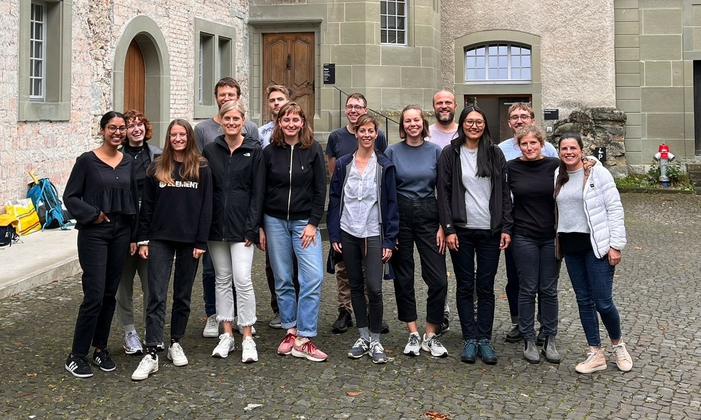
Team











Publikationen
Publikationen 2026
Publikationen 2025
array(2 items)
   publications => '33869,35170,34692,34795,34587,33829,35487,34611,33831,35114,35311,34210,3386
      7,34012,34267,35724,35726,34823,34096,35896,34613,35372,35873,34877,34616,34
      549,35969,35148,35005,35891,34110,35720,34851,34926,35248' (209 chars)
   libraryUrl => '' (0 chars)
array(35 items) 0 => Snowflake\Publications\Domain\Model\Publicationprototypepersistent entity (uid=33869, pid=124) originalId => protected33869 (integer) authors => protected'
' (89 chars) title => protected'Opportunities and challenges of a cap-and-trade system for plastics' (67 chars) journal => protected'Environmental Science and Technology' (36 chars) year => protected2025 (integer) volume => protected59 (integer) issue => protected'4' (1 chars) startpage => protected'1887' (4 chars) otherpage => protected'1896' (4 chars) categories => protected'market-based instruments; plastics policy; cap-and-trade system; circular ec
onomy; global governance' (100 chars) description => protected'Recently, the rapid increase in global plastics production has caused variou
s ecological and economic issues, worsened by poor material and waste manage
ment. Among the market-based instruments that could help mitigate the enviro
nmental impacts of plastics throughout their life-cycle, we evaluate the adv
antages and limitations of incorporating a cap-and-trade (CAT) system into f
uture policy mixes. Our aim is to inspire further investigation of CAT's fea
sibility rather than presenting it as the ultimate solution. Drawing from pa
st CAT implementations in domains such as water resource management and carb
on emissions, we outline three key policy design considerations: (1) materia
l and target group identification, (2) cap establishment and permit allocati
on, and (3) development of a competitive market environment. We explore a th
ree-tiered approach with global, national, and sectoral caps covering the pl
astic lifecycle from cradle to grave. While there are viable reasons to cons
ider a plastics CAT, significant challenges persist, which may ultimately li
mit its implementation. In the context of ongoing UN Plastics Treaty negotia
tions or future policy developments, this evaluation of CAT can be beneficia
l for assessing when and how this tool can address the negative externalitie
s of plastics.' (1306 chars) serialnumber => protected'0013-936X' (9 chars) doi => protected'10.1021/acs.est.4c04931' (23 chars) uid => protected33869 (integer) _localizedUid => protected33869 (integer)modified _languageUid => protectedNULL _versionedUid => protected33869 (integer)modified pid => protected124 (integer) 1 => Snowflake\Publications\Domain\Model\Publicationprototypepersistent entity (uid=35170, pid=124) originalId => protected35170 (integer) authors => protected'Aliyev, T.; Fischer, M.; Bolliger, J.; Donati, G.; Wille
min, R.; Hedjazi, A.; Mantziaras, P.; Lambert, C.' (145 chars) title => protected'Espaces verts urbains: défis et leviers' (40 chars) journal => protected'Collage: Zeitschrift für Planung, Umwelt und Städtebau' (56 chars) year => protected2025 (integer) volume => protected0 (integer) issue => protected'4' (1 chars) startpage => protected'27' (2 chars) otherpage => protected'30' (2 chars) categories => protected'' (0 chars) description => protected'Les espaces verts urbains jouent un rôle central pour la résilience climat
ique, la biodiversité et la qualité de vie. Dans ce cadre, un atelier part
icipatif s'est tenu à Versoix en avril 2025, réunissant chercheur·euse·s
, administrations, associations et praticien·ne·s. Cet atelier, organisé
dans le cadre du projet GreenCityNet (projet financé par le SNSF et mené p
ar WSL et Eawag) [1], a permis d'identifier des défis et de formuler des re
commandations pratiques.' (480 chars) serialnumber => protected'2673-6381' (9 chars) doi => protected'' (0 chars) uid => protected35170 (integer) _localizedUid => protected35170 (integer)modified _languageUid => protectedNULL _versionedUid => protected35170 (integer)modified pid => protected124 (integer) 2 => Snowflake\Publications\Domain\Model\Publicationprototypepersistent entity (uid=34692, pid=124) originalId => protected34692 (integer) authors => protected'Aliyev, T.; Fischer, M.; Bolliger, J.; Donati, G.; Hedja
zi, A.; Mantziaras, P.; Lambert, C.; Willemin, R.' (145 chars) title => protected'Réseaux sociaux et écologiques dans les espaces verts urbains pour souteni
r l'amélioration de la biodiversité en ville. Rapport de synthèse d l'ate
lier' (156 chars) journal => protected'' (0 chars) year => protected2025 (integer) volume => protected0 (integer) issue => protected'' (0 chars) startpage => protected'8 p' (8 chars) otherpage => protected'' (0 chars) categories => protected'' (0 chars) description => protected'• Des fonctions essentielles : Les espaces verts urbains – qu'ils soient
publics ou privés – jouent un rôle clé pour la résilience climatique,
la biodiversité, la qualité de vie et les interactions sociales.<br />•
Une grande diversité de formes : Ils incluent notamment les parcs, forêts
urbaines, jardins collectifs, toitures et murs végétalisés, haies, fric
hes, berges renaturées, cimetières et corridors écologiques.<br />• Des
défis de gouvernance multiples : Leur design, mise en oeuvre et gestion so
nt freinés par une gouvernance fragmentée, un manque de diagnostics écolo
giques, des capacités techniques limitées, une coordination institutionnel
le faible, des obstacles juridiques et un financement souvent insuffisant ou
mal ciblé.<br />• Un pilotage par des réseaux d’acteurs : Ces espaces
lecture en termes de réseaux sociaux pour comprendre les dynamiques de gouv
ernance.' (1072 chars) serialnumber => protected'' (0 chars) doi => protected'' (0 chars) uid => protected34692 (integer) _localizedUid => protected34692 (integer)modified _languageUid => protectedNULL _versionedUid => protected34692 (integer)modified pid => protected124 (integer) 3 => Snowflake\Publications\Domain\Model\Publicationprototypepersistent entity (uid=34795, pid=124) originalId => protected34795 (integer) authors => protected'Aliyev, T.; Fischer, M.; Bolliger, J.; Hedjazi, A.; Mant
ziaras, P.; Donati, G.; Willemin, R.' (127 chars) title => protected'Science-policy practice interface. Co-designing blue-green infrastructure fo
r urban biodiversity and transformation. Insights from Swiss research instit
utes and international Geneva. Roundtable report 2025' (205 chars) journal => protected'' (0 chars) year => protected2025 (integer) volume => protected0 (integer) issue => protected'' (0 chars) startpage => protected'5 p' (8 chars) otherpage => protected'' (0 chars) categories => protected'' (0 chars) description => protected'' (0 chars) serialnumber => protected'' (0 chars) doi => protected'' (0 chars) uid => protected34795 (integer) _localizedUid => protected34795 (integer)modified _languageUid => protectedNULL _versionedUid => protected34795 (integer)modified pid => protected124 (integer) 4 => Snowflake\Publications\Domain\Model\Publicationprototypepersistent entity (uid=34587, pid=124) originalId => protected34587 (integer) authors => protected'Ammann, P.; Jeong, A.; Lovison, G.; Doetzer, J.; Fuhrima
nn, S.; Imboden, M.; Ingold, K.; Winkler, M. S.; Pr
obst-Hensch, N.' (172 chars) title => protected'Human flourishing in the context of farm characteristics and occupational ha
zards – baseline findings from the FarmCoSwiss cohort' (131 chars) journal => protected'Swiss Medical Weekly' (20 chars) year => protected2025 (integer) volume => protected155 (integer) issue => protected'4' (1 chars) startpage => protected'4135 (25 pp.)' (13 chars) otherpage => protected'' (0 chars) categories => protected'' (0 chars) description => protected'
ral health cohort FarmCoSwiss, we carried out a study to investigate farmers
’ flourishing i.e. complete wellbeing and ability to thrive – to our kno
wledge, the first study worldwide to do so –, to descriptively compare it
to the general population and to explore its association with farm character
istics and occupational hazards.<br />METHODS: Of 1480 self-registered adult
farmers recruited as a Swiss-wide convenience sample, 947 individuals (63.9
%) signed the informed consent form, and 872 answered the online questionnai
re in German, French or Italian at baseline between November 2022 and August
2023. The questionnaire obtained information on, among others, the primary
outcome flourishing as assessed by the Secure Flourish Index (SFI) with its
six subdomains <em>Happiness and life satisfaction</em>, <em>Mental and ph
ysical health</em>, <em>Meaning and purpose</em>, <em>Character and virtue
</em>, <em>Close social relationships</em>, and <em>Financial and material
stability</em>, each assessed on a scale from 0 to 10. Participants additio
nally answered questions on the primary predictors farm characteristics and
20 pre-selected occupational hazards classified into five domains (physical,
chemical, biological, psychosocial and environmental). Participants assesse
d the hazards in terms of exposure frequency (Likert scale from 1 to 5) and
perceived health harmfulness (Likert scale from 1 to 4). First, farmer’s m
ean SFI was descriptively compared to mean SFI in the general adult populati
on using the data of 7220 participants from the 2023 follow-up of the popula
tion-based COVCO-Basel cohort established in Basel-Stadt and Basel-Landschaf
t cantons. Second, zero-one inflated beta regression models were constructed
to investigate the age- and sex-adjusted association of mean SFI values (ov
erall; domain-specific) ...' (4113 chars) serialnumber => protected'1424-7860' (9 chars) doi => protected'10.57187/s.4135' (15 chars) uid => protected34587 (integer) _localizedUid => protected34587 (integer)modified _languageUid => protectedNULL _versionedUid => protected34587 (integer)modified pid => protected124 (integer) 5 => Snowflake\Publications\Domain\Model\Publicationprototypepersistent entity (uid=33829, pid=124) originalId => protected33829 (integer) authors => protected'Baker, J.; Kammerer, M.; Castro, P.; Ingold, K.' (67 chars) title => protected'The vertical policy harmonization indices: assessing the gap between climate
mitigation pledges and policies' (108 chars) journal => protected'Climate Policy' (14 chars) year => protected2025 (integer) volume => protected25 (integer) issue => protected'8' (1 chars) startpage => protected'1144' (4 chars) otherpage => protected'1159' (4 chars) categories => protected'Paris agreement; Nationally Determined Contributions (ndcs); pledge and revi
ew; greenhouse gas emission reduction; climate change mitigation policy; pol
icy mix' (159 chars) description => protected'The effectiveness of the Paris Agreement in achieving its global temperature
goal relies on countries adopting ambitious mitigation targets and introduc
ing corresponding measures. But do countries adopt such corresponding climat
e policies? This paper introduces two Vertical Policy Harmonization Indices,
which quantify the gap between a country's nationally determined contributi
on (NDC) mitigation pledge and its national mitigation policies. These indic
es incorporate three dimensions of climate policymaking: emission reduction
targets, the sectors covered by those targets, and the policy instruments in
troduced to reduce emissions. By focusing on policy instruments and mixes, w
e adopt a novel public policy approach for the harmonization assessment. Whi
le the Target Index compares the level and scope of reduction targets in the
NDCs and national policies of 105 countries, covering approximately 91% of
global greenhouse gas (GHG) emissions, the Policy Effort Index also incorpor
ates a comprehensive evaluation of the policy mix of selected countries. Wit
h the Policy Effort Index, we investigate 37 countries, covering over 70% of
global GHG emissions. The indices show that three-quarters of the 105 count
ries have so far failed to translate their NDC targets into national policy.
The remaining quarter has harmonized or even more ambitious national polici
es. Furthermore, countries show the most complete national policy mix in the
ir most GHG-intensive sector, usually the energy sector. These insights demo
nstrate the indices' potential for enabling future research explaining the d
eviations between countries' domestic actions and their international pledge
s and evaluating the effectiveness of the progression mechanism as countries
update their NDCs. Key policy insights Twenty-six of the 105 countries have
national policies with GHG reduction targets either in line with or more am
bitious than their NDC target. Seventy-nine countries (accounting for 50% of
global emissions) have ...' (2426 chars) serialnumber => protected'1469-3062' (9 chars) doi => protected'10.1080/14693062.2024.2443482' (29 chars) uid => protected33829 (integer) _localizedUid => protected33829 (integer)modified _languageUid => protectedNULL _versionedUid => protected33829 (integer)modified pid => protected124 (integer) 6 => Snowflake\Publications\Domain\Model\Publicationprototypepersistent entity (uid=35487, pid=124) originalId => protected35487 (integer) authors => protected'Bolognesi, T.; Fischer, M.' (36 chars) title => protected'Policy design and governance effectiveness: the role of non-linearities in u
rban water management' (97 chars) journal => protected'Governance: An International Journal of Policy, Administration and Instituti
ons' (79 chars) year => protected2025 (integer) volume => protected38 (integer) issue => protected'4' (1 chars) startpage => protected'e70064 (18 pp.)' (15 chars) otherpage => protected'' (0 chars) categories => protected'city; governance effectiveness; participation; policy design; QCA; regulatio
n' (77 chars) description => protected'International Organizations formulate and disseminate principles of good gov
ernance for issues such as urban water governance. These principles are form
ulated in universal and general terms, for example, more transparency or par
ticipation, and are intended to enhance governance effectiveness. Yet, the r
elationship between such principles and governance effectiveness is not line
ar. Different combinations of principles affect governance effectiveness dif
ferently, depending on the context. It raises the general question of the in
fluence of policy instruments interactions on policy outcomes. We investigat
e two types of non-linearities. The first, direct non-linearities, are instr
ument-specific and characterized by two thresholds: a minimum level required
to ensure effectiveness, and a second level beyond which positive effects b
egin to decrease marginally. The second type, compositional non-linearities,
refers to the idea that policy instruments are most effective when combined
in specific ways (joint effect) or by being an enabling condition for other
s. We study the case of urban water governance in 35 megacities worldwide, b
ased on empirical data from OECD reports and a fuzzy-set Qualitative Compara
tive Analysis. The present study assesses the impact of assesses how combina
tions of economic, participatory, and regulatory policy instruments affect u
rban water loss, as a policy outcome. We found that price and wealth are imp
ortant enabling conditions within the policy design. Regulation and particip
ation have important joint effects and follow the logic of direct non-linear
ities. Their absence or excessive presence can be detrimental, but they are
critical for effectiveness when combined with other policy instruments.' (1743 chars) serialnumber => protected'0952-1895' (9 chars) doi => protected'10.1111/gove.70064' (18 chars) uid => protected35487 (integer) _localizedUid => protected35487 (integer)modified _languageUid => protectedNULL _versionedUid => protected35487 (integer)modified pid => protected124 (integer) 7 => Snowflake\Publications\Domain\Model\Publicationprototypepersistent entity (uid=34611, pid=124) originalId => protected34611 (integer) authors => protected'Bryner, A.; Fischer, M.; Vollenweider, S.' (56 chars) title => protected'Wasserpolitischer Jahresrückblick 2024' (39 chars) journal => protected'Aqua & Gas' (10 chars) year => protected2025 (integer) volume => protected105 (integer) issue => protected'5' (1 chars) startpage => protected'52' (2 chars) otherpage => protected'60' (2 chars) categories => protected'' (0 chars) description => protected'Das Jahr 2024 ist extrem warm und namentlich im Frühsommer sehr nass. Das f
ührt zum willkommenen Auffüllen der Grundwasserspeicher, aber auch zu schw
eren Unwettern. In Bern stehen wasserpolitisch der weitere Ausbau der Wasser
kraft im Fokus sowie die Belastung der Wasserressourcen durch Pestizide und
die «Ewigkeitschemikalien» PFAS. Bei beiden Themen wird zwischen Landesver
sorgung und Schutzaspekten gerungen – bei der Wasserkraft zwischen Kilowat
tstunden und Landschafts-, beziehungsweise Gewässerschutz, bei den stofflic
hen Belastungen zwischen der landwirtschaftlichen Produktion und der Vorsorg
e für die Gesundheit von Mensch und Umwelt.' (652 chars) serialnumber => protected'2235-5197' (9 chars) doi => protected'' (0 chars) uid => protected34611 (integer) _localizedUid => protected34611 (integer)modified _languageUid => protectedNULL _versionedUid => protected34611 (integer)modified pid => protected124 (integer) 8 => Snowflake\Publications\Domain\Model\Publicationprototypepersistent entity (uid=33831, pid=124) originalId => protected33831 (integer) authors => protected'Capano, G.; Galanti, M. T.; Ingold, K.; Petridou, E
.; Weible, C. M.' (102 chars) title => protected'Theorizing the functions and patterns of agency in the policymaking process' (75 chars) journal => protected'Policy Sciences' (15 chars) year => protected2025 (integer) volume => protected58 (integer) issue => protected'' (0 chars) startpage => protected'3' (1 chars) otherpage => protected'26' (2 chars) categories => protected'multiple streams framework; advocacy coalition framework; policy entrepreneu
rs; policy brokers; policy leaders; policy experts' (126 chars) description => protected'Theories of the policy process understand the dynamics of policymaking as th
e result of the interaction of structural and agency variables. While these
theories tend to conceptualize structural variables in a careful manner, age
ncy (i.e. the actions of individual agents, like policy entrepreneurs, polic
y leaders, policy brokers, and policy experts) is left as a residual piece i
n the puzzle of the causality of change and stability. This treatment of age
ncy leaves room for conceptual overlaps, analytical confusion and empirical
shortcomings that can complicate the life of the empirical researcher and, m
ost importantly, hinder the ability of theories of the policy process to ful
ly address the drivers of variation in policy dynamics. Drawing on Merton's
concept of function, this article presents a novel theorization of agency in
the policy process. We start from the assumption that agency functions are
a necessary component through which policy dynamics evolve. We then theorise
that agency can fulfil four main functions – steering, innovation, interm
ediation and intelligence – that need to be performed, by individual agent
s, in any policy process through four patterns of action – leadership, ent
repreneurship, brokerage and knowledge accumulation – and we provide a roa
dmap for operationalising and measuring these concepts. We then demonstrate
what can be achieved in terms of analytical clarity and potential theoretica
l leverage by applying this novel conceptualisation to two major policy proc
ess theories: the Multiple Streams Framework (MSF) and the Advocacy Coalitio
n Framework (ACF).' (1614 chars) serialnumber => protected'0032-2687' (9 chars) doi => protected'10.1007/s11077-024-09563-4' (26 chars) uid => protected33831 (integer) _localizedUid => protected33831 (integer)modified _languageUid => protectedNULL _versionedUid => protected33831 (integer)modified pid => protected124 (integer) 9 => Snowflake\Publications\Domain\Model\Publicationprototypepersistent entity (uid=35114, pid=124) originalId => protected35114 (integer) authors => protected'Derwort, S. F.; Manny, L.; Carbajal, J. P.; Fischer
, M.; Rieckermann, J.' (107 chars) title => protected'Modelling the adoption of combined sewer overflow surveillance in Switzerlan
d' (77 chars) journal => protected'Water Science and Technology' (28 chars) year => protected2025 (integer) volume => protected92 (integer) issue => protected'1' (1 chars) startpage => protected'79' (2 chars) otherpage => protected'95' (2 chars) categories => protected'agent-based model; combined sewer overflows; complex systems; policy; regula
tion; theory of planned behaviour' (109 chars) description => protected'During wet weather, combined sewer overflows (CSOs) spill untreated wastewat
er to hydraulically protect wastewater treatment plants. Interestingly, in S
witzerland, the impact of these discharges on surface water quality remains
unclear due to limited monitoring of CSO spills. Although affordable sensors
and regular data review could address this, it is unclear why most wastewat
er associations seldom assess this data, highlighting political and organisa
tional challenges within wastewater associations and their stakeholder netwo
rks rather than technical ones. This study explores different policy instrum
ents to promote sensor adoption in CSOs, e.g. for event duration monitoring,
using an agent-based model (ABM). The stakeholders' behaviour is modelled t
hrough the Theory of Planned Behaviour and the Bounded Confidence Model. We
developed a prototype ABM, testing three policy instruments as scenarios: (i
) professional events, (ii) mandatory sensor installation, and (iii) improve
d sensor technology. Our findings suggest that it is most effective to make
sensor installation mandatory. However, quantitative results of the ABM must
be taken with care, due to sparse data in regard to uncertainties, as empha
sized by sensitivity analysis. Despite this, the process of building the mod
el was considered beneficial, as it enhanced the understanding of the socio-
technical system.' (1385 chars) serialnumber => protected'0273-1223' (9 chars) doi => protected'10.2166/wst.2025.081' (20 chars) uid => protected35114 (integer) _localizedUid => protected35114 (integer)modified _languageUid => protectedNULL _versionedUid => protected35114 (integer)modified pid => protected124 (integer) 10 => Snowflake\Publications\Domain\Model\Publicationprototypepersistent entity (uid=35311, pid=124) originalId => protected35311 (integer) authors => protected'Doetzer, J.; Kaiser-Grolimund, A.; Ammann, P.; Imboden,
M.; Jeong, A.; Veillat, A.; Ingold, K.; Winkler, M. 
;S.; Fuhrimann, S.; Probst-Hensch, N.' (199 chars) title => protected'A call for research and policy into building multi-layered social resilience
toward a sustainable agricultural workforce in Switzerland' (135 chars) journal => protected'Frontiers in Public Health' (26 chars) year => protected2025 (integer) volume => protected13 (integer) issue => protected'' (0 chars) startpage => protected'1617575 (6 pp.)' (15 chars) otherpage => protected'' (0 chars) categories => protected'agriculture; mental health; multi-layered; occupational health; social resil
ience; switzerland' (94 chars) description => protected'The agricultural workforce is exposed to rapidly changing working conditions
due to societal, economic, political, and ecological challenges. In the Swi
ss farming community, poor mental wellbeing is a growing concern and researc
h focuses on the distribution and hazards of psychological distress in farme
rs and their social network. This perspective benefits from insights of the
first agricultural cohort in Switzerland, illustrating the complex field tha
t farmers operate in. Consequently, we call for a paradigm shift in research
and policy from individual vulnerability to multi-layered social resilience
toward building an agricultural workforce with the capacity to create pathw
ays for a sustainable agriculture.' (718 chars) serialnumber => protected'' (0 chars) doi => protected'10.3389/fpubh.2025.1617575' (26 chars) uid => protected35311 (integer) _localizedUid => protected35311 (integer)modified _languageUid => protectedNULL _versionedUid => protected35311 (integer)modified pid => protected124 (integer) 11 => Snowflake\Publications\Domain\Model\Publicationprototypepersistent entity (uid=34210, pid=124) originalId => protected34210 (integer) authors => protected'Doetzer, J.; Ammann, P.; Imboden, M.; Ingold, K.; Jeong,
A.; Kaiser-Grolimund, A.; Schaffner, E.; Winkler, M.&nb
sp;S.; Fuhrimann, S.; Probst-Hensch, N.' (201 chars) title => protected'Methods and exploratory findings of the first Swiss agricultural health coho
rt FarmCoSwiss' (90 chars) journal => protected'Scientific Reports' (18 chars) year => protected2025 (integer) volume => protected15 (integer) issue => protected'' (0 chars) startpage => protected'10690 (18 pp.)' (14 chars) otherpage => protected'' (0 chars) categories => protected'agriculture; cohort study; occupational health; occupational exposures' (70 chars) description => protected'FarmCoSwiss is Switzerland's first agricultural cohort study on farmers' hea
lth and wellbeing. It aims to longitudinally describe farmers' mental and ph
ysical health and identify risk and protective factors. Between November 202
2 and August 2023, 872 participants (65.9% men) were enrolled in the baselin
e survey assessing farm characteristics, occupational hazards, lifestyle and
wellbeing, and physical and mental health. Selected variables were descript
ively compared to the general population using Swiss Health Survey (SHS) dat
a (2022) and the Swiss-wide SAPALDIA cohort (2020–2023). Findings suggest
better physical health-related quality of life (HRQoL) in younger participan
ts, and better mental HRQoL in older farmers. Furthermore, descriptive compa
risons indicate that female farmers may have higher physical, but lower ment
al HRQoL than men. Most participants (60.5%) were classified as overweight o
r obese based on self-reported height and weight. Descriptive comparisons be
tween the SHS and FarmCoSwiss suggest that farmers might spend less hours si
tting, consume less alcohol and tobacco, but eat more red and processed meat
. FarmCoSwiss participants further reported lower prevalences of most diseas
es compared to SAPALDIA participants. Occupational accidents were common in
the farmers' cohort. These high accident rates as well as high BMI values an
d indications for sex-based differences in physical and mental health highli
ght the need for further research and in-depth studies. Given increasing pol
itical, societal, and environmental pressures on agriculture, epidemiologica
l evidence on farmers' health and wellbeing is crucial to maintain a thrivin
g agricultural workforce.' (1697 chars) serialnumber => protected'2045-2322' (9 chars) doi => protected'10.1038/s41598-025-94440-0' (26 chars) uid => protected34210 (integer) _localizedUid => protected34210 (integer)modified _languageUid => protectedNULL _versionedUid => protected34210 (integer)modified pid => protected124 (integer) 12 => Snowflake\Publications\Domain\Model\Publicationprototypepersistent entity (uid=33867, pid=124) originalId => protected33867 (integer) authors => protected'Donati, G. F. A.; van den Brandeler, F.; Fischer, M
.; Molné, F.; Schenk, N.; Grünholz, M.; Bolliger, J.' (150 chars) title => protected'Biodiversity conservation in human-dominated landscapes: toward collaborativ
e management of blue–green systems' (112 chars) journal => protected'Conservation Letters' (20 chars) year => protected2025 (integer) volume => protected18 (integer) issue => protected'1' (1 chars) startpage => protected'e13079 (11 pp.)' (15 chars) otherpage => protected'' (0 chars) categories => protected'circuit theory; collaboration; ERGMs; blue-green infrastructure; social–ec
ological networks; species distribution models' (122 chars) description => protected'Maintaining ecological connectivity is crucial for biodiversity, yet effecti
vely managing interconnected areas through actor collaboration is challengin
g. This study examines collaboration through social–ecological fit in inte
rconnected aquatic "blue" and terrestrial "green" areas, encompassing natura
l and semi-natural elements, in human-dominated landscapes. Combining specie
s distribution models and connectivity analyses focused on declining amphibi
ans and survey data on actors’ area management and collaboration within in
terconnected areas, we create a spatially explicit social–ecological netwo
rk that we analyze using network models. Results highlight diverse ecologica
l dependencies shaping actor interactions. Strong collaboration is observed
in interconnected blue-rural-green areas, whereas blue-urban-green areas lac
k collaboration, with minor rivers and urban-green spaces at the network's c
ore plagued by social–ecological misfit. Strengthening collaboration in th
ese areas is essential to prevent further ecological network degradation. In
corporating a spatially explicit social–ecological perspective covering di
verse blue and green areas guides targeted interventions and fosters effecti
ve conservation policy and practice.' (1252 chars) serialnumber => protected'' (0 chars) doi => protected'10.1111/conl.13079' (18 chars) uid => protected33867 (integer) _localizedUid => protected33867 (integer)modified _languageUid => protectedNULL _versionedUid => protected33867 (integer)modified pid => protected124 (integer) 13 => Snowflake\Publications\Domain\Model\Publicationprototypepersistent entity (uid=34012, pid=124) originalId => protected34012 (integer) authors => protected'Donati, G. F. A.; Albouy, C.; Claverie, T.; Mouillo
t, D.; Govinden, R.; Hagen, O.; Ibrahim, S.; Pagu,
J.; Zareer, I.; Leprieur, F.; Pellissier, L.' (211 chars) title => protected'Continuity in morphological disparity in tropical reef fishes across evoluti
onary scales' (88 chars) journal => protected'Communications Biology' (22 chars) year => protected2025 (integer) volume => protected8 (integer) issue => protected'1' (1 chars) startpage => protected'252 (10 pp.)' (12 chars) otherpage => protected'' (0 chars) categories => protected'' (0 chars) description => protected'Tropical reef fishes exhibit a large disparity of organismal morphologies co
ntributing to their astonishing biodiversity. Morphological disparity, scali
ng from differences among individuals within populations to differences amon
g species, is governed by ecological and evolutionary processes. Here, we ex
amined the relationship between intra- and interspecific disparity in 1111 i
ndividuals from 17 tropical reef fish species, representing 10 families with
different dispersal abilities, across four Indian Ocean regions. We compare
d intraspecific measurements with species-level measures from a database of
1061 reef fish species. Species with high morphological disparity among indi
viduals from distinct regions are found to be nested in families that displa
y a high disparity among their genera. We show an association between the mo
rphological disparity at the intra- and interspecific levels for several mor
phological ratios such as the caudal peduncle elongation. We evaluated the l
ink between morphological disparity and genetic diversity with species dispe
rsal ability. A structural equation model indicates that dispersal ability c
orrelates positively with species genetic diversity, which is associated wit
h morphological disparity. Our results suggest that traits associated with d
ispersal may foster gene flow and morphological evolution. Future works comb
ining genomic, morphological and environmental data across more species is n
ecessary to generalize these findings to other regions.' (1499 chars) serialnumber => protected'2399-3642' (9 chars) doi => protected'10.1038/s42003-025-07634-7' (26 chars) uid => protected34012 (integer) _localizedUid => protected34012 (integer)modified _languageUid => protectedNULL _versionedUid => protected34012 (integer)modified pid => protected124 (integer) 14 => Snowflake\Publications\Domain\Model\Publicationprototypepersistent entity (uid=34267, pid=124) originalId => protected34267 (integer) authors => protected'Duygan, M.; Binder, C. R.; Meylan, G.; Fischer, M.' (75 chars) title => protected'Carving the transformation pathways to sustainable futures: a novel analytic
al framework for backcasting in sustainability transitions' (134 chars) journal => protected'Sustainable Futures' (19 chars) year => protected2025 (integer) volume => protected9 (integer) issue => protected'' (0 chars) startpage => protected'100553 (18 pp.)' (15 chars) otherpage => protected'' (0 chars) categories => protected'sustainability transitions; scenarios; backcasting; cross-impact balance ana
lysis; actor analysis; transition pathways' (118 chars) description => protected'Despite the increasing number of climate and sustainability pledges, knowled
ge of how to reach those targets within a given system – systems and trans
formation knowledge – is often lacking. Backcasting can be highly relevant
for tackling this transformation gap as it starts from future targets and w
orks backwards to uncover how they can be achieved. However, most backcastin
g applications tend to lack formal tools and assessments, raising concerns o
ver their rigor and traceability. This paper addresses these limitations and
presents a novel analytical framework to tackle the what-who-how questions
crucial for backcasting. The analytical framework presents a toolkit combini
ng various approaches such as cross-impact balance analysis, actor analysis,
network analysis, and stakeholder workshops to generate systems and transfo
rmation knowledge. The framework enables the generation of transformation pa
thways to desirable futures in different cases. Paper recycling serves as an
illustrative case study to demonstrate its empirical application. The frame
work contributes to strengthening of the analytical dimension of backcasting
by adding rigor and traceability to the generation of scenarios and assessm
ent of their socio-political feasibility. By providing a novel approach to g
enerate transformation knowledge in formalised, systematic and participatory
way, we aim to contribute to closing the transformation gap in science and
practice.' (1453 chars) serialnumber => protected'' (0 chars) doi => protected'10.1016/j.sftr.2025.100553' (26 chars) uid => protected34267 (integer) _localizedUid => protected34267 (integer)modified _languageUid => protectedNULL _versionedUid => protected34267 (integer)modified pid => protected124 (integer) 15 => Snowflake\Publications\Domain\Model\Publicationprototypepersistent entity (uid=35724, pid=124) originalId => protected35724 (integer) authors => protected'Duygan, M.; Fischer, M.' (33 chars) title => protected'Smart cities' (12 chars) journal => protected'In: Warf, B. (Eds.), The encyclopedia of human geography' (61 chars) year => protected2025 (integer) volume => protected0 (integer) issue => protected'' (0 chars) startpage => protected'1' (1 chars) otherpage => protected'7' (1 chars) categories => protected'digital city; intelligent city; knowledge cities' (48 chars) description => protected'' (0 chars) serialnumber => protected'' (0 chars) doi => protected'10.1007/978-3-031-25900-5_214-1' (31 chars) uid => protected35724 (integer) _localizedUid => protected35724 (integer)modified _languageUid => protectedNULL _versionedUid => protected35724 (integer)modified pid => protected124 (integer) 16 => Snowflake\Publications\Domain\Model\Publicationprototypepersistent entity (uid=35726, pid=124) originalId => protected35726 (integer) authors => protected'Fischer, M.; Ingold, K.; Schegg, J.' (50 chars) title => protected'Ecological nodes in a social-ecological network: a social science perspectiv
e' (77 chars) journal => protected'In: Barnes, M. L.; Bodin, Ö. (Eds.), Handbook of social netw
orks and the environment. Research handbooks on social networks series' (146 chars) year => protected2025 (integer) volume => protected0 (integer) issue => protected'' (0 chars) startpage => protected'23' (2 chars) otherpage => protected'36' (2 chars) categories => protected'' (0 chars) description => protected'The study of social-ecological networks (SEN) is a powerful approach to unde
rstanding and analyzing human-environment systems and interactions (Bodin et
al., 2019; Bodin & Tengö, 2012; Sayles et al., 2019). It particularly
emphasizes the interdependencies within and across societal and ecological s
ystems and operationalizes them as a multi-level network. The ecological nod
es in SEN can range from forest patches to different species or even specifi
c ecosystem services (Ernstson et al., 2010). The social network consists of
nodes such as individuals or organizations (e.g., municipalities, state age
ncies, private associations from different sectors such as land use, water p
rotection, etc.) that communicate, collaborate, or exchange resources or inf
ormation (Guerrero et al., 2015; Hamilton et al., 2019). Jointly analyzing b
oth the ecological and social networks allows for a systematic assessment of
key relationships driving outcomes in these complex systems. Furthermore, i
nterconnectedness within the ecological network (e.g., different wetlands co
nnected through species migrating between them) can be reflected in the soci
al network (e.g., collaboration across different wetland managers). Such a s
ituation is referred to as a social-ecological fit or social-ecological alig
nment, which is assumed to lead to beneficial governance outcomes such as, f
or example, effective and efficient resource management (Bodin et al., 2014;
Bodin & Tengö, 2012; Widmer et al., 2019). Thus, the analysis of SEN c
an contribute to the goal of guiding social-ecological systems toward sustai
nability.' (1605 chars) serialnumber => protected'' (0 chars) doi => protected'10.4337/9781035318759.00012' (27 chars) uid => protected35726 (integer) _localizedUid => protected35726 (integer)modified _languageUid => protectedNULL _versionedUid => protected35726 (integer)modified pid => protected124 (integer) 17 => Snowflake\Publications\Domain\Model\Publicationprototypepersistent entity (uid=34823, pid=124) originalId => protected34823 (integer) authors => protected'Hofmann, B.; Reber, U.; Ammann, P.; Dötzer, J.; Mark,&n
bsp;J.; McCallum, C.; Wiget, M.; Zachmann, L.' (136 chars) title => protected'A typology of interdisciplinary collaborations: insights from agri-food tran
sformation research' (95 chars) journal => protected'Sustainability Science' (22 chars) year => protected2025 (integer) volume => protected20 (integer) issue => protected'' (0 chars) startpage => protected'1791' (4 chars) otherpage => protected'1808' (4 chars) categories => protected'interdisciplinary research; research design; methods; research collaboration
s; sustainability transformation; agriculture; reflection' (133 chars) description => protected'To understand complex societal transformations, scholars have called for mor
e interdisciplinary research in which researchers from various disciplines c
ollaborate. To support the implementation of such collaborations, we introdu
ce a novel typology of interdisciplinary collaborations developed from the l
iterature and from structured reflection on our own research experience. The
typology distinguishes (I) common base, (II) common destination, and (III)
sequential link type of interdisciplinary collaborations. Common base refers
to an interdisciplinary collaboration at one research stage that later sepa
rates into parallel disciplinary work; common destination to a collaboration
where separate disciplinary work feeds into joint interdisciplinary work at
the next stage; and sequential link to a completed stage of disciplinary re
search that provides the basis for research in another discipline. We illust
rate the typology with a case study of interdisciplinary collaborations in a
research project that studied the potential for an evidence-based transform
ation of agricultural pesticide governance. The project involved researchers
from seven natural, health, and social science disciplines who developed a
process for forming and maintaining interdisciplinary collaborations. We pro
vide five examples of interdisciplinary collaborations from the project, exp
laining for each its practical design and implementation, its contribution t
o overall research goals, and related opportunities and challenges. The exam
ples show that the typology can systematize the thinking about interdiscipli
nary collaborations and enable critical reflection about interdisciplinary r
esearch design and implementation. Based on our reflections as early-career
researchers, we conclude with lessons that can inform future interdisciplina
ry research projects on agri-food transformation and beyond.' (1884 chars) serialnumber => protected'1862-4065' (9 chars) doi => protected'10.1007/s11625-025-01702-x' (26 chars) uid => protected34823 (integer) _localizedUid => protected34823 (integer)modified _languageUid => protectedNULL _versionedUid => protected34823 (integer)modified pid => protected124 (integer) 18 => Snowflake\Publications\Domain\Model\Publicationprototypepersistent entity (uid=34096, pid=124) originalId => protected34096 (integer) authors => protected'Hofmann, B.; Fischer, M.; Ingold, K.; Lieberherr, E.; Ho
ffmann, S.' (91 chars) title => protected'Knowledge cumulation at science‐policy interfaces: opportunities for envir
onmental governance research' (104 chars) journal => protected'Environmental Policy and Governance' (35 chars) year => protected2025 (integer) volume => protected35 (integer) issue => protected'3' (1 chars) startpage => protected'538' (3 chars) otherpage => protected'546' (3 chars) categories => protected'environmental governance; environmental policy; knowledge cumulation; knowle
dge integration; knowledge use; science-policy interfaces; synthesis' (144 chars) description => protected'To increase the societal impact of environmental governance research, schola
rs have called for knowledge cumulation, meaning that scientific evidence bu
ilds more systematically on previous findings. Our article develops the pers
pective that such knowledge cumulation takes place not only within academia
but also at science-policy interfaces (SPIs). Drawing on literature on knowl
edge integration, synthesis, and use as well as science-policy literature, w
e outline five opportunities for knowledge cumulation at SPIs: (1) proximity
to democratic discourse and decision-making; (2) suitability for inter- and
transdisciplinary integration; (3) combined problem and solution focus; (4)
potential to increase the generality of scientific findings; and (5) creati
on of targeted synthesis products. We illustrate their respective benefits a
nd challenges with empirical examples from SPIs for climate change, biodiver
sity and natural resources, and food systems. We conclude that SPIs are an i
mportant locus for cumulating knowledge used in complex environmental govern
ance and that future research could explore how this interacts with knowledg
e cumulation in the academic realm.' (1175 chars) serialnumber => protected'1756-932X' (9 chars) doi => protected'10.1002/eet.2155' (16 chars) uid => protected34096 (integer) _localizedUid => protected34096 (integer)modified _languageUid => protectedNULL _versionedUid => protected34096 (integer)modified pid => protected124 (integer) 19 => Snowflake\Publications\Domain\Model\Publicationprototypepersistent entity (uid=35896, pid=124) originalId => protected35896 (integer) authors => protected'Ingold, K.; Wiedemann, R.; Fischer, M.; Varone, F.' (70 chars) title => protected'Analyzing beliefs and coordination in nascent policy subsystems' (63 chars) journal => protected'In: Jenkins-Smith, H. C.; Weible, C. M. (Eds.), The advo
cacy coalition framework' (100 chars) year => protected2025 (integer) volume => protected0 (integer) issue => protected'' (0 chars) startpage => protected'245' (3 chars) otherpage => protected'273' (3 chars) categories => protected'' (0 chars) description => protected'Now and then, new issues arrive on the public agenda, such as a sudden healt
h crisis or a disruptive technology. These issues get media attention, and t
he political actors start thinking about how to best address them. Following
the Advocacy Coalition Framework (ACF), such situations can be grasped thro
ugh the concept of nascent subsystems, which contrast with mature subsystems
that have been around for some time and that deal with established issues.
Over time, nascent subsystems can develop into autonomous subsystems, or the
y can be absorbed by an already mature subsystem.' (581 chars) serialnumber => protected'' (0 chars) doi => protected'10.1007/978-3-031-85554-2_10' (28 chars) uid => protected35896 (integer) _localizedUid => protected35896 (integer)modified _languageUid => protectedNULL _versionedUid => protected35896 (integer)modified pid => protected124 (integer) 20 => Snowflake\Publications\Domain\Model\Publicationprototypepersistent entity (uid=34613, pid=124) originalId => protected34613 (integer) authors => protected'Ingold, K.; Fischer, M.; Freiburghaus, R.; Nohrstedt, D.
; Vatter, A.' (93 chars) title => protected'How patterns of democracy impact policy processes: when Lijphart and Sabatie
r meet' (82 chars) journal => protected'European Policy Analysis' (24 chars) year => protected2025 (integer) volume => protected11 (integer) issue => protected'2' (1 chars) startpage => protected'254' (3 chars) otherpage => protected'270' (3 chars) categories => protected'advocacy coalition framework; Lijphart; macro‐institutions; patterns of de
mocracy; Sabatier' (93 chars) description => protected'Policy process theories and institutional theories are two foundational stra
nds in political science, both concerned with how people engage in politics.
However, they differ in their focus, with policy process theories emphasizi
ng the roles of actors, while institutional theories concentrate on the stru
ctures in which these actors are embedded. This paper bridges these two prev
iously isolated strands, exploring how macro-institutions influence policy p
rocesses. Specifically, we investigated how political institutions, such as
decentralization and corporatism, relate to coalition opportunity structures
(COSs), a key concept within the advocacy coalition framework (ACF); we als
o investigated the role of minority coalitions and subsystem collaboration.
Empirically, we based our analysis on prototypes selected according to Arand
a Lijphart's models of majoritarian and consensus democracies. Drawing on ex
isting comparative ACF applications related to climate, water, and energy po
licy processes, we compared results from these studies to assess the impact
of institutional settings on coalition dynamics. Our findings suggest that m
inority coalitions are more present—and sometimes more influential—in fe
deralist than in unitary countries and that corporatism has a greater effect
on collaboration within policy subsystems than consensualism.' (1354 chars) serialnumber => protected'2380-6567' (9 chars) doi => protected'10.1002/epa2.70006' (18 chars) uid => protected34613 (integer) _localizedUid => protected34613 (integer)modified _languageUid => protectedNULL _versionedUid => protected34613 (integer)modified pid => protected124 (integer) 21 => Snowflake\Publications\Domain\Model\Publicationprototypepersistent entity (uid=35372, pid=124) originalId => protected35372 (integer) authors => protected'Kammerer, M.; Baker, J.; Fesenfeld, L. P.; Maier, M
.; Montfort, S.; Ingold, K.' (113 chars) title => protected'Hijacking or helping? - How political actors use the COVID-19 pandemic in th
e climate discourse to advocate their policy beliefs and preferences' (144 chars) journal => protected'Policy Sciences' (15 chars) year => protected2025 (integer) volume => protected58 (integer) issue => protected'' (0 chars) startpage => protected'469' (3 chars) otherpage => protected'506' (3 chars) categories => protected'climate policy; COVID-19 pandemic; discourse analysis; mixed-methods; narrat
ive policy framework' (96 chars) description => protected'Many of today’s challenges, such as climate change, war, or health crises,
are highly interlinked and intertwined. Actors in the public discourse some
times use the term “polycrisis” to describe this “causal entanglement
of crises”. This article investigates whether this entanglement is visible
in the media discourse and whether political actors strategically (mis-)use
simultaneous and overlapping crises to influence policymaking in favor of t
heir policy beliefs and preferences. Specifically, it studies how the outbre
ak of the COVID-19 pandemic in 2020 influenced the climate discourse at that
time and whether and how political actors included the pandemic as “narra
tive strategy” to advocate their climate policy beliefs and preferences. T
o answer this question, this article scrutinizes the climate media discourse
in 2020 in Germany and Switzerland and employs a logistic regression model
combined with a descriptive and qualitative analysis of the climate discours
e in the two countries. Our results show that in both countries primarily pr
o-environment actors use COVID-19-related arguments as narrative strategy to
increase public attention for the need of a more ambitious climate policy,
while pro-economy actors follow a strategy of decreasing the salience of the
climate issue (i.e., not linking the issues), potentially reducing public p
ressure for more ambitious climate mitigation.' (1414 chars) serialnumber => protected'0032-2687' (9 chars) doi => protected'10.1007/s11077-025-09587-4' (26 chars) uid => protected35372 (integer) _localizedUid => protected35372 (integer)modified _languageUid => protectedNULL _versionedUid => protected35372 (integer)modified pid => protected124 (integer) 22 => Snowflake\Publications\Domain\Model\Publicationprototypepersistent entity (uid=35873, pid=124) originalId => protected35873 (integer) authors => protected'Kammerer, M.; Zeigermann, U.' (38 chars) title => protected'Managing climate impacts—an analysis of adaptation funding in German citie
s and districts' (91 chars) journal => protected'npj Climate Action' (18 chars) year => protected2025 (integer) volume => protected4 (integer) issue => protected'1' (1 chars) startpage => protected'76 (14 pp.)' (11 chars) otherpage => protected'' (0 chars) categories => protected'' (0 chars) description => protected'With accelerating climate change, local governments must enhance adaptation
efforts. Germany’s federal adaptation funding scheme (DAS) supports munici
palities in developing adaptation strategies, yet disparities in funding dis
tribution remain. This study analyses DAS adaptation funding across 400 Germ
an cities and districts using multilevel regression models. Findings reveal
that urban areas receive more funding, influenced by higher education levels
, income, and political support, and prior climate mitigation funding. In co
ntrast, the sensitivity dimension of climate vulnerability shows weak correl
ations with funding allocation. These results highlight an urban-rural divid
e in climate adaptation financing and emphasize the role of socioeconomic an
d political factors in shaping local climate action. By addressing gaps in a
daptation policy implementation, this study contributes to the understanding
of climate governance and provides insights for improving the equitable dis
tribution of adaptation funding.' (1020 chars) serialnumber => protected'' (0 chars) doi => protected'10.1038/s44168-025-00280-z' (26 chars) uid => protected35873 (integer) _localizedUid => protected35873 (integer)modified _languageUid => protectedNULL _versionedUid => protected35873 (integer)modified pid => protected124 (integer) 23 => Snowflake\Publications\Domain\Model\Publicationprototypepersistent entity (uid=34877, pid=124) originalId => protected34877 (integer) authors => protected'Kammerer, M.; Beer, T.; Wiedemann, R.' (52 chars) title => protected'Taming plastic pollution - a systematic mapping of the literature on plastic
policies between 2009 and 2024' (107 chars) journal => protected'Regional Environmental Change' (29 chars) year => protected2025 (integer) volume => protected25 (integer) issue => protected'3' (1 chars) startpage => protected'90 (19 pp.)' (11 chars) otherpage => protected'' (0 chars) categories => protected'literature mapping; plastic policy; politics; wicked problem' (60 chars) description => protected'This review article systematically maps the literature on the policy and pol
itics of plastic pollution since 2009 and identifies future avenues for rese
arch. The conceptualization of wicked problems guides the structure of this
review along two dimensions of policymaking: the policy dimension, which con
cerns problem definitions and objectives, and policy solutions. The politics
dimension reflects stakeholders and their perception of problems and intere
sts. We show that the respective research has gained momentum in the past 15
years, but it still has a strong focus on inventorying policies or policy
instruments, policy evaluations or impact assessments, and behavioural analy
ses, as well as investigations of the global governance architecture and the
need for a new multilateral environmental agreement (MEA). In contrast, sys
tematic assessments of policy efficacy or country-level plastic policy perfo
rmance are still rare. Likewise, studies about the politics dimension, i.e.
on actors involved in policymaking and their policy beliefs and preferences,
are still scant. However, both aspects are crucial in the light of a new ME
A, as its success and effectiveness strongly hinge on the capacity and willi
ngness of countries to comply with MEA obligations, i.e. adopt and implement
respective policies at the national and local levels. Hence, future researc
h should focus more on politics instead of policy to provide new insights in
to the feasibility of the different policy options, and it should work more
on systematic evaluations of policy instruments along the life cycle of plas
tics and country performances.' (1626 chars) serialnumber => protected'1436-3798' (9 chars) doi => protected'10.1007/s10113-025-02420-x' (26 chars) uid => protected34877 (integer) _localizedUid => protected34877 (integer)modified _languageUid => protectedNULL _versionedUid => protected34877 (integer)modified pid => protected124 (integer) 24 => Snowflake\Publications\Domain\Model\Publicationprototypepersistent entity (uid=34616, pid=124) originalId => protected34616 (integer) authors => protected'Montfort, S.; Fesenfeld, L.; Ingold, K.; Lamb, W. F
.; Andrijevic, M.' (98 chars) title => protected'Political enablers of ambitious climate policies: a framework and thematic r
eview' (81 chars) journal => protected'npj Climate Action' (18 chars) year => protected2025 (integer) volume => protected4 (integer) issue => protected'' (0 chars) startpage => protected'14 (12 pp.)' (11 chars) otherpage => protected'' (0 chars) categories => protected'' (0 chars) description => protected'Currently, most research explaining why countries lead or lag in climate pol
icy assumes a problem-oriented perspective, focusing on barriers to climate
policy adoption. Here, we argue that correcting for past failures, solving p
roblems, and bringing climate policies back on track for the Paris Agreement
requires a solution-oriented perspective on the political enablers of ambit
ious climate policies. We unite a growing research community that has previo
usly been scattered across disciplinary subfields with various ontological a
nd epistemological assumptions. Rooted in a thematic review of the scientifi
c literature, we introduce a framework with a typology of six political enab
lers for ambitious climate policy at its core. For each enabler, we summariz
e key policy implications. We illustrate our framework with a case study on
the adoption of emission trading systems in the transport and building secto
rs in Germany and the European Union (EU) allowing future solution-oriented
research to build on our effort.' (1020 chars) serialnumber => protected'' (0 chars) doi => protected'10.1038/s44168-024-00206-1' (26 chars) uid => protected34616 (integer) _localizedUid => protected34616 (integer)modified _languageUid => protectedNULL _versionedUid => protected34616 (integer)modified pid => protected124 (integer) 25 => Snowflake\Publications\Domain\Model\Publicationprototypepersistent entity (uid=34549, pid=124) originalId => protected34549 (integer) authors => protected'Oltmer, M.; Löhr, M.' (31 chars) title => protected'Tracing actors in policy mixes for transitions: a systematic literature revi
ew and insights from policy process theories' (120 chars) journal => protected'Environmental Innovation and Societal Transitions' (49 chars) year => protected2025 (integer) volume => protected56 (integer) issue => protected'' (0 chars) startpage => protected'100989 (20 pp.)' (15 chars) otherpage => protected'' (0 chars) categories => protected'policy mix; actors; advocacy coalition framework; multiple streams framework
; transition studies' (96 chars) description => protected'In transition studies, the concept of policy mixes gains traction. Despite t
he crucial role actors play in both transition studies and policy processes,
it is surprising that explicit conceptualisations of actors within the poli
cy mix concept remain scarce. This paper addresses this gap by conducting a
systematic literature review to assess how existing contributions in transit
ion studies conceptualise actors within the concept of policy mixes. We find
diverse yet predominantly implicit conceptualisations of actors in the lite
rature. We argue that policy process theories offer considerable potential t
o strengthen actor conceptualisations within policy mixes. Consequently, we
present and discuss actor conceptualisations inspired by two well-establishe
d policy process theories: the Advocacy Coalition Framework and the Multiple
Streams Framework. A refined theoretical understanding of actors in this fi
eld enhances our ability to discern their roles and actions in the politics
of policy processes towards policy mixes for sustainability transitions.' (1060 chars) serialnumber => protected'2210-4224' (9 chars) doi => protected'10.1016/j.eist.2025.100989' (26 chars) uid => protected34549 (integer) _localizedUid => protected34549 (integer)modified _languageUid => protectedNULL _versionedUid => protected34549 (integer)modified pid => protected124 (integer) 26 => Snowflake\Publications\Domain\Model\Publicationprototypepersistent entity (uid=35969, pid=124) originalId => protected35969 (integer) authors => protected'Reber, U.; Ingold, K.; Stamm, C.' (47 chars) title => protected'Patterns in the use of problem- and solution-oriented evidence in legislativ
e discourse: the case of pesticide policy in Switzerland' (132 chars) journal => protected'Policy & Politics' (17 chars) year => protected2025 (integer) volume => protected0 (integer) issue => protected'' (0 chars) startpage => protected'1' (1 chars) otherpage => protected'20' (2 chars) categories => protected'evidence use; evidence-informed policy making; political discourse; problem-
oriented knowledge; solution-oriented knowledge; knowledge creep; policy cha
nge; text analysis' (170 chars) description => protected'Factual knowledge plays a key role in building support for policy change. Wh
ile change does not depend on factual information alone, it helps in both de
fining problems and finding solutions. By their very nature, policy issues a
re controversial and subject to political discourse. Factual knowledge becom
es part of this discourse when it is used as evidence to either support or o
ppose a particular problem definition or solution. In the context of the Swi
ss parliament’s discourse on pesticide risk reduction between 2013 and 202
2, we examined how problem- and solution-oriented evidence were used in both
proposing and opposing policy change. To do so, we used computational text
classification methods to examine policy documents produced by actors in the
parliamentary arena. Our results indicate clear patterns in how evidence wa
s used by these actors. While proponents of change regularly used problem-or
iented evidence to highlight the risks of pesticides, opponents relied more
on solution-oriented evidence to show that current policies are sufficient a
nd additional policies are unnecessary. Furthermore, over time, those who op
posed change shifted from using problem-oriented evidence to using more solu
tion-oriented evidence. We argue that this is related to both triggering eve
nts and the advancing accumulation of knowledge about the problem, also know
n as knowledge creep. Thus, evidence use in political discourse is influence
d by several factors, the effects of which may vary in magnitude and overlap
over time.' (1531 chars) serialnumber => protected'0305-5736' (9 chars) doi => protected'10.1332/03055736Y2025D000000082' (31 chars) uid => protected35969 (integer) _localizedUid => protected35969 (integer)modified _languageUid => protectedNULL _versionedUid => protected35969 (integer)modified pid => protected124 (integer) 27 => Snowflake\Publications\Domain\Model\Publicationprototypepersistent entity (uid=35148, pid=124) originalId => protected35148 (integer) authors => protected'Reber, U.; Hofmann, B.; Stamm, C.; Ingold, K.' (65 chars) title => protected'Pick of the crop: understanding the choice of scientific and experiential ev
idence in Swiss pesticide discourse' (111 chars) journal => protected'Evidence and Policy' (19 chars) year => protected2025 (integer) volume => protected0 (integer) issue => protected'' (0 chars) startpage => protected'' (0 chars) otherpage => protected'' (0 chars) categories => protected'evidence use; political discourse; scientific evidence; experiential evidenc
e; pesticides; sustainability; Switzerland' (118 chars) description => protected'In political discourse, speakers use scientific and experiential evidence. B
oth types can inform policy making, yet little is known about when political
actors turn to experiential evidence to back their statements. In this arti
cle, we examine factors that influence the selection of scientific and exper
iential evidence in political discourses. Using data from a quantitative con
tent analysis, we assess the influence of (1) issue polarisation, (2) the st
course on pesticides between 2013 and 2022. Our results show that an increas
e in issue polarisation was associated with an increase in the use of experi
ential evidence. It also mattered whether evidence was used to describe prob
lems or solutions. In both cases, scientific evidence was preferred, but exp
eriential evidence was used more often when speaking about solutions. Whethe
r speakers were proponents or opponents of policy change had no influence on
the type of evidence used. These findings suggest that speakers generally c
onsidered scientific evidence more appropriate to support their statements t
han experiential evidence. However, with increasing polarisation, the relian
ce on experiential evidence over scientific evidence suggests a shift toward
s emotionally resonant narratives rather than rigorously validated knowledge
. For the case studied, we conclude that while speakers are committed to evi
dence-informed policy making in principle, experiential evidence is at risk
of being devalued and weaponised in polarised contexts.' (1651 chars) serialnumber => protected'1744-2648' (9 chars) doi => protected'10.1332/17442648Y2025D000000064' (31 chars) uid => protected35148 (integer) _localizedUid => protected35148 (integer)modified _languageUid => protectedNULL _versionedUid => protected35148 (integer)modified pid => protected124 (integer) 28 => Snowflake\Publications\Domain\Model\Publicationprototypepersistent entity (uid=35005, pid=124) originalId => protected35005 (integer) authors => protected'Revel, M.; Groh, K.; Bertoli, J.; Degeratu, M.-O.; Fisch
er, M.; Fischer, S.; Hoekman, J.; Jozef, B.; Li, R.
; Mosimann, S. L.; vom Berg, C.; Županič, A.; Truffer,
B.; Schirmer, K.' (255 chars) title => protected'Development of the fish invitrome for animal-free environmental risk assessm
ent of chemicals' (92 chars) journal => protected'Environmental Toxicology and Chemistry' (38 chars) year => protected2025 (integer) volume => protected44 (integer) issue => protected'9' (1 chars) startpage => protected'2648' (4 chars) otherpage => protected'2658' (4 chars) categories => protected'new approach methodologies; rainbow trout cell lines; toxicity testing; soci
o-technical approach; co-design with stakeholders' (125 chars) description => protected'Given the need to reduce animal testing for environmental risk assessment, w
e aim to develop a fish invitrome, an alternative fish modular framework cap
able of predicting chemical toxicity in fish without the use of animals. The
central module of the framework is the validated RTgill-W1 cell line assay
that predicts fish acute toxicity of chemicals (Organisation for Economic Co
-operation and Development test guideline 249). Expanding towards prediction
of chronic toxicity, the fish invitrome includes two other well-advanced mo
dules for chemical bioaccumulation/biotransformation and inhibition of fish
growth. This framework is expected to continuously evolve with the developme
nt of modules that predict, for instance, neurotoxicity and reproductive tox
icity. We envisage the fish invitrome framework becoming part of the broader
academic field of new approach methodologies (NAMs), where it will remain f
lexible and open to integration of new developments from research groups aro
und the world. To accelerate the development and uptake of this framework, w
e strive for transdisciplinarity, integrating both natural and social scienc
es, along with broader stakeholder interactions. A stepwise socio-technical
approach was chosen, where mainstreaming the fish invitrome involves progres
sive adoption across various ecotoxicological contexts. The framework will b
e codesigned with stakeholders from academia, industry, and regulatory bodie
s. Rather than aiming for immediate regulatory acceptance, this approach aim
s to build trust and familiarity with fish cell line–based testing among s
takeholders. By doing so, it encourages broader use of the framework in prac
tical applications while gradually overcoming institutional, cultural, and t
echnical barriers. Additionally, establishing a clear roadmap for mainstream
ing the fish invitrome will help identify and address challenges to its upta
ke, ensuring a smoother transition<br />to nonorganismal testing methodologi
es.' (1979 chars) serialnumber => protected'0730-7268' (9 chars) doi => protected'10.1093/etojnl/vgaf028' (22 chars) uid => protected35005 (integer) _localizedUid => protected35005 (integer)modified _languageUid => protectedNULL _versionedUid => protected35005 (integer)modified pid => protected124 (integer) 29 => Snowflake\Publications\Domain\Model\Publicationprototypepersistent entity (uid=35891, pid=124) originalId => protected35891 (integer) authors => protected'Schegg, J.; Pärli, R.; Fischer, M.; Lieberherr, E.' (71 chars) title => protected'Research shaped through context: lessons from transdisciplinary projects' (72 chars) journal => protected'Environmental Science and Policy' (32 chars) year => protected2025 (integer) volume => protected174 (integer) issue => protected'' (0 chars) startpage => protected'104286 (10 pp.)' (15 chars) otherpage => protected'' (0 chars) categories => protected'transdisciplinary research; context factors; research projects; effects; nat
ural resources' (90 chars) description => protected'Transdisciplinary research (TDR) targets societal challenges through equitab
le knowledge co-production with non-academic actors for a given case context
. Frequently, results of TDR projects are harder to generalize compared to t
hose of non-TD projects, primarily because TD projects are designed to addre
ss specific, context-dependent situations. Including context (factors, such
as COVID-19, public discourse, and action resources of project actors) when
assessing TDR projects is thus important for the transferability of effects
of TDR projects to other contexts. This study investigates the influence of
context factors on TDR projects and their effects. Empirically, we rely on i
nterviews with 23 researchers and non-academic actors involved in 9 TDR proj
ects in the field of natural resources in Switzerland. We find that, particu
larly, the effects of knowledge integration into practice and into politics
are most affected by context factors. We find the context factors: action re
sources of political support, organisation and consensus, and the system con
ditions of private economy and external natural events to be most influentia
l for the achievement of aspired effects in TDR projects.' (1197 chars) serialnumber => protected'1462-9011' (9 chars) doi => protected'10.1016/j.envsci.2025.104286' (28 chars) uid => protected35891 (integer) _localizedUid => protected35891 (integer)modified _languageUid => protectedNULL _versionedUid => protected35891 (integer)modified pid => protected124 (integer) 30 => Snowflake\Publications\Domain\Model\Publicationprototypepersistent entity (uid=34110, pid=124) originalId => protected34110 (integer) authors => protected'Sierro, F.; Pakizer, K.' (33 chars) title => protected'Towards sustainable underground development through synergies' (61 chars) journal => protected'In: Agrawal, M. (Eds.), Underground spaces for climate resilience and s
ustainability' (89 chars) year => protected2025 (integer) volume => protected0 (integer) issue => protected'' (0 chars) startpage => protected'63' (2 chars) otherpage => protected'74' (2 chars) categories => protected'sustainable underground development; synergies; sustainability; underground
resources; subsurface planning; subsurface management' (129 chars) description => protected'The importance of underground resources in addressing societal challenges su
ch as climate change, population growth, and urbanisation is increasingly ev
ident, as they play a crucial role in advancing sustainability goals. Howeve
r, current underground development is often uncoordinated and reactive, foll
owing ad-hoc, “first-come, first-served”, or last-resort principles. Thi
s fragmented approach results in unsustainable management practices that ove
rlook opportunities for synergies between underground uses. This chapter out
lines synergistic relationships between various underground resource uses by
drawing on real-world examples. We have identified three core principles th
at enable subsurface synergies: multifunctionality, circularity, and repurpo
sing. By showcasing examples from around the globe, we illustrate how these
principles can be integrated into legal planning frameworks, such as master
plans, to promote sustainable underground development and ensure long-term f
unctioning. To facilitate and implement subsurface synergies effectively, a
holistic, interdisciplinary, and integrated approach to underground planning
is essential. Researchers, policymakers, legislators, and practitioners mus
t go beyond mere conflict resolution arising from competing underground uses
to leverage synergies for long-term sustainable development above and below
ground.' (1376 chars) serialnumber => protected'' (0 chars) doi => protected'10.1007/978-981-96-0547-7_5' (27 chars) uid => protected34110 (integer) _localizedUid => protected34110 (integer)modified _languageUid => protectedNULL _versionedUid => protected34110 (integer)modified pid => protected124 (integer) 31 => Snowflake\Publications\Domain\Model\Publicationprototypepersistent entity (uid=35720, pid=124) originalId => protected35720 (integer) authors => protected'Trencher, G.; Duygan, M.; Rinscheid, A.; Rosenbloom, D.;
Newell, P.' (92 chars) title => protected'Decline by design: assessing decline policies as a decarbonisation strategy
under the Paris Agreement' (101 chars) journal => protected'PLoS One' (8 chars) year => protected2025 (integer) volume => protected20 (integer) issue => protected'' (0 chars) startpage => protected'e0334512 (28 pp.)' (17 chars) otherpage => protected'' (0 chars) categories => protected'' (0 chars) description => protected'Limiting climate change to targets set under the Paris Agreement requires ur
gent action to reduce the production and use of carbon-intensive technologie
s, fuels, materials and industrial processes. Accordingly, scholars are incr
easingly studying 'decline policies', which, by design or effect, induce the
reduction or discontinuation of carbon-intensive artefacts and activities.
However, understanding of the diversity and decarbonisation potential of suc
h policies is hindered by a lack of large-scale, cross-sectoral and cross-na
tional analyses. Here we present a novel dataset of 233 decline policies for
mulated by the ten highest-emitting Annex I countries to spur decarbonisatio
n. We examine: (1) decline approaches and policies used across sectors; (2)
variations in policy design features expected to influence the magnitude of
decline and mitigation outcomes; (3) the relationship between decline approa
ches, policy design features and mitigation impact. We find that decline pol
icies are widely used across the ten countries, including <em><em>direct</em
></em> approaches (targeting incumbent carbon-intensive elements), and <em><
em>indirect</em></em> approaches (promoting substitution with cleaner altern
atives). Statistical analysis indicates that policy design is a critical det
erminant of decarbonisation potential. While evidence that <em><em>direct</e
m></em> decline policies might be more effective compared to <em><em>indirec
t</em></em> policies is limited, the 'intensity' of decline policies – def
ined by design features such as strictness, reduction speed and geographic c
overage – is significantly associated with higher mitigation impact estima
tes. Finally, by proposing a typology of archetypical decline policies, our
study advances an empirically grounded conceptual framework for understandin
g decline as a critical strategy for accelerating decarbonisation.' (1890 chars) serialnumber => protected'' (0 chars) doi => protected'10.1371/journal.pone.0334512' (28 chars) uid => protected35720 (integer) _localizedUid => protected35720 (integer)modified _languageUid => protectedNULL _versionedUid => protected35720 (integer)modified pid => protected124 (integer) 32 => Snowflake\Publications\Domain\Model\Publicationprototypepersistent entity (uid=34851, pid=124) originalId => protected34851 (integer) authors => protected'Trencher, G.; Hamano, T.; Shimono, K.; Campfens, J.; Duy
gan, M.' (88 chars) title => protected'Smart mobility innovations in regional transport services: a systemic view o
f triggers, approaches and outcomes in Japan' (120 chars) journal => protected'Frontiers in Sustainable Cities' (31 chars) year => protected2025 (integer) volume => protected7 (integer) issue => protected'' (0 chars) startpage => protected'1574300 (20 pp.)' (16 chars) otherpage => protected'' (0 chars) categories => protected'smart mobility; evaluation; regional transport; innovation; regional governa
nce; autonomous vehicles; MaaS' (106 chars) description => protected'<em>Introduction</em>: Regional urban and rural areas outside major metropol
itan centres are facing escalating mobility challenges driven by declining s
ocio-economic vitality and demographic shifts like population decline and ag
eing. Smart mobility innovations – including Autonomous Vehicles (AV), Dem
and-Responsive Transport (DRT), ridesharing and Mobility-as-a-Service (MaaS)
– have attracted attention as potential solutions. Yet most scholarship o
n these innovations has focused on user acceptance or theoretical potential,
offering limited empirical assessment of their actual problem-solving effec
tiveness. It consequently remains unclear whether these smart mobility techn
ologies can live up to lofty expectations about their benefits, especially i
n regional settings facing declining socio-economic conditions. <em>Objectiv
e and method</em>: We examine the experiences of regional Japan, where decli
their financial sustainability. Drawing on evidence from questionnaires and
interviews, we comparatively examine the challenges, approaches and outcomes
of 67 smart mobility projects implemented in 65 cities, towns and villages
across Japan. A key contribution lies in our application of a common, system
ic perspective – grounded in systems mapping methods – to analyse transp
ort challenges across larger and smaller municipalities.<br /><em>Results</e
m>: Findings show that both larger and smaller municipalities are grappling
with broadly the same challenges despite vastly differing geographical condi
tions. Our structural analysis indicates that challenges consist of root cau
ses (driver shortages, declining revenue, poor convenience, downscaling of t
ransport networks) and symptoms (poor access). In terms of effectiveness at
tackling these challenges, the analysis reveals a mixed picture. On the one
hand, projects reported ...' (2752 chars) serialnumber => protected'' (0 chars) doi => protected'10.3389/frsc.2025.1574300' (25 chars) uid => protected34851 (integer) _localizedUid => protected34851 (integer)modified _languageUid => protectedNULL _versionedUid => protected34851 (integer)modified pid => protected124 (integer) 33 => Snowflake\Publications\Domain\Model\Publicationprototypepersistent entity (uid=34926, pid=124) originalId => protected34926 (integer) authors => protected'Truffer, O.; Hofmann, B.; Lieberherr, E.' (55 chars) title => protected'Salient and contested scientific evidence in debates over sustainable transf
ormation: pesticide policymaking in Switzerland' (123 chars) journal => protected'Humanities and Social Sciences Communications' (45 chars) year => protected2025 (integer) volume => protected12 (integer) issue => protected'' (0 chars) startpage => protected'1022 (16 pp.)' (13 chars) otherpage => protected'' (0 chars) categories => protected'' (0 chars) description => protected'Research indicates that the increased use of scientific evidence is an impor
tant lever for transforming policy toward sustainability goals. We explore h
ow actors use scientific evidence in contests over policy transformation in
the agri-food sector. Theoretically, we build on prior research on evidence
use in policymaking and the 3i's —ideas, interests, and institutions—tha
t constitute policy regimes. We argue that some pieces of scientific evidenc
e become salient in policy debates but are contested by competing actor coal
itions. Salient and contested means that different actors refer to the same
scientific evidence to support arguments for and against options of policy t
ransformation. We posit that, in these arguments, evidence use is closely li
nked to the ideas, interests, and institutions that actor coalitions want to
protect or challenge. We assess our arguments through a close examination o
f a landmark Swiss policy reform between 2019 and 2022 aimed at pesticide ri
sk reduction. Drawing on policy post-exceptionalism literature to operationa
lize our analytical categories, we analyzed a comprehensive set of content-c
oded parliamentary and consultation documents derived from the policy proces
s. Our analysis shows that (1) only a few pieces of scientific evidence beca
me salient, (2) actor coalitions linked scientific evidence to different ide
as, interests and institutions in line with their policy preferences, and (3
) salient scientific evidence in support of transformation becomes contested
when it is "too big to ignore". We conclude that while salient scientific e
vidence promotes evidence-informed debate, it does not necessarily provide c
lear and unambiguous direction for policy.' (1714 chars) serialnumber => protected'' (0 chars) doi => protected'10.1057/s41599-025-05159-2' (26 chars) uid => protected34926 (integer) _localizedUid => protected34926 (integer)modified _languageUid => protectedNULL _versionedUid => protected34926 (integer)modified pid => protected124 (integer) 34 => Snowflake\Publications\Domain\Model\Publicationprototypepersistent entity (uid=35248, pid=124) originalId => protected35248 (integer) authors => protected'Wiget, M.; Lienert, J.; Ingold, K.' (49 chars) title => protected'Understanding policy instrument preferences under conflicting beliefs and un
certainty' (85 chars) journal => protected'Journal of Public Policy' (24 chars) year => protected2025 (integer) volume => protected45 (integer) issue => protected'4' (1 chars) startpage => protected'577' (3 chars) otherpage => protected'610' (3 chars) categories => protected'advocacy coalition framework; beliefs; multi-attribute utility theory; pesti
cides; policy instrument preferences; risk attitudes' (128 chars) description => protected'Anticipating policy instrument preferences can be an important step in polic
y design to address pressing sustainability problems. But studying preferenc
es for policy instruments is a difficult task because sustainability problem
s involve a non-negligible degree of tradeoffs and uncertainty. We therefore
study the role of actors’ underlying ideologies (policy core beliefs) and
risk attitudes in forming their preferences for different instruments. Comb
ining the advocacy coalition framework with multi-attribute utility theory,
both ideologies and attitudes toward uncertain policy consequences can influ
ence instrument preferences. So far, policy studies literature has paid litt
le attention to trade-offs between policy core beliefs or risk attitudes. Us
ing Bayesian regression models on data from actors in Swiss pesticide risk r
eduction policy, we found that attitudes toward trade-offs and risk are inde
ed relevant to explain preferences for different regulatory and market-based
instruments addressing agricultural pesticide use. Therefore, when designin
g policies for sustainability problems, considering the relative importance
of policy core beliefs for different actors can help to find effective and b
roadly supported solutions. In addition, risk attitudes should be considered
when policy design involves more coercive and stimulative policy instrument
s.' (1370 chars) serialnumber => protected'0143-814X' (9 chars) doi => protected'10.1017/S0143814X25100664' (25 chars) uid => protected35248 (integer) _localizedUid => protected35248 (integer)modified _languageUid => protectedNULL _versionedUid => protected35248 (integer)modified pid => protected124 (integer)
Opportunities and challenges of a cap-and-trade system for plastics
Espaces verts urbains: défis et leviers
Réseaux sociaux et écologiques dans les espaces verts urbains pour soutenir l'amélioration de la biodiversité en ville. Rapport de synthèse d l'atelier
• Une grande diversité de formes : Ils incluent notamment les parcs, forêts urbaines, jardins collectifs, toitures et murs végétalisés, haies, friches, berges renaturées, cimetières et corridors écologiques.
• Des défis de gouvernance multiples : Leur design, mise en oeuvre et gestion sont freinés par une gouvernance fragmentée, un manque de diagnostics écologiques, des capacités techniques limitées, une coordination institutionnelle faible, des obstacles juridiques et un financement souvent insuffisant ou mal ciblé.
• Un pilotage par des réseaux d’acteurs : Ces espaces sont gérés et transformés par un réseau d'acteurs sociaux (collectivités, propriétaires privés, associations, entreprises), ce qui justifie une lecture en termes de réseaux sociaux pour comprendre les dynamiques de gouvernance.
Human flourishing in the context of farm characteristics and occupational hazards – baseline findings from the FarmCoSwiss cohort
METHODS: Of 1480 self-registered adult farmers recruited as a Swiss-wide convenience sample, 947 individuals (63.9%) signed the informed consent form, and 872 answered the online questionnaire in German, French or Italian at baseline between November 2022 and August 2023. The questionnaire obtained information on, among others, the primary outcome flourishing as assessed by the Secure Flourish Index (SFI) with its six subdomains Happiness and life satisfaction, Mental and physical health, Meaning and purpose, Character and virtue, Close social relationships, and Financial and material stability, each assessed on a scale from 0 to 10. Participants additionally answered questions on the primary predictors farm characteristics and 20 pre-selected occupational hazards classified into five domains (physical, chemical, biological, psychosocial and environmental). Participants assessed the hazards in terms of exposure frequency (Likert scale from 1 to 5) and perceived health harmfulness (Likert scale from 1 to 4). First, farmer’s mean SFI was descriptively compared to mean SFI in the general adult population using the data of 7220 participants from the 2023 follow-up of the population-based COVCO-Basel cohort established in Basel-Stadt and Basel-Landschaft cantons. Second, zero-one inflated beta regression models were constructed to investigate the age- and sex-adjusted association of mean SFI values (overall; domain-specific) with the farming system (non-organic or organic), the production system (animal husbandry or crop cultivation), farm size (five categories) as well as the exposure to, and perception of, occupational hazards (sum of respective Likert scales).
RESULTS: Mean SFI values were between 7 and 8, in both FarmCoSwiss and COVCO-Basel. Descriptively comparing these two samples, farmers showed lower flourishing overall (7.44, SD = 1.41; COVCO: 7.70, SD = 1.30) and in the four domains Happiness and life satisfaction (7.39, SD = 1.87; COVCO: 7.91, SD = 1.55), Mental and physical health (7.03, SD = 1.73; COVCO: 7.68, SD = 1.53), Close social relationships (7.66, SD = 2.08; COVCO: 7.94, SD = 1.73) and Financial and material stability (7.06, SD = 2.45; COVCO: 7.33, SD = 2.69). Farmers reported being most frequently exposed to biological hazards (66.2% often/always exposed), but psychosocial hazards were perceived as the most harmful to health (51.9% judging them as rather/very harmful). Exposure to psychosocial hazards was negatively associated with overall flourishing and its six subdomains. In the domains Happiness and life satisfaction, Mental and physical health, and Meaning and purpose, organic farming was associated with higher flourishing. In the domain Close social relationships, organic farming was associated with lower flourishing. The largest association was observed for farm size. Farmers with the smallest farms (<5 ha) scored low in the Financial and material stability domain, with a decrease in mean SFI (logit scale) of 1 as compared to farmers with the largest farms (>50 ha).
CONCLUSION: Our findings suggest a potentially lower overall flourishing among farmers as compared to a sample from the general population, with small farm size and exposure to psychosocial hazards being of particular concern, but organic farming having potential benefits. The study underscores the need for longitudinal research of farmers’ wellbeing to maintain a thriving agricultural workforce.
The vertical policy harmonization indices: assessing the gap between climate mitigation pledges and policies
Policy design and governance effectiveness: the role of non-linearities in urban water management
Wasserpolitischer Jahresrückblick 2024
Theorizing the functions and patterns of agency in the policymaking process
Modelling the adoption of combined sewer overflow surveillance in Switzerland
A call for research and policy into building multi-layered social resilience toward a sustainable agricultural workforce in Switzerland
Methods and exploratory findings of the first Swiss agricultural health cohort FarmCoSwiss
Biodiversity conservation in human-dominated landscapes: toward collaborative management of blue–green systems
Continuity in morphological disparity in tropical reef fishes across evolutionary scales
Carving the transformation pathways to sustainable futures: a novel analytical framework for backcasting in sustainability transitions
Ecological nodes in a social-ecological network: a social science perspective
A typology of interdisciplinary collaborations: insights from agri-food transformation research
Knowledge cumulation at science‐policy interfaces: opportunities for environmental governance research
Analyzing beliefs and coordination in nascent policy subsystems
How patterns of democracy impact policy processes: when Lijphart and Sabatier meet
Hijacking or helping? - How political actors use the COVID-19 pandemic in the climate discourse to advocate their policy beliefs and preferences
Managing climate impacts—an analysis of adaptation funding in German cities and districts
Taming plastic pollution - a systematic mapping of the literature on plastic policies between 2009 and 2024
Political enablers of ambitious climate policies: a framework and thematic review
Tracing actors in policy mixes for transitions: a systematic literature review and insights from policy process theories
Patterns in the use of problem- and solution-oriented evidence in legislative discourse: the case of pesticide policy in Switzerland
Pick of the crop: understanding the choice of scientific and experiential evidence in Swiss pesticide discourse
Development of the fish invitrome for animal-free environmental risk assessment of chemicals
to nonorganismal testing methodologies.
Research shaped through context: lessons from transdisciplinary projects
Towards sustainable underground development through synergies
Decline by design: assessing decline policies as a decarbonisation strategy under the Paris Agreement
Smart mobility innovations in regional transport services: a systemic view of triggers, approaches and outcomes in Japan
Results: Findings show that both larger and smaller municipalities are grappling with broadly the same challenges despite vastly differing geographical conditions. Our structural analysis indicates that challenges consist of root causes (driver shortages, declining revenue, poor convenience, downscaling of transport networks) and symptoms (poor access). In terms of effectiveness at tackling these challenges, the analysis reveals a mixed picture. On the one hand, projects reported substantial success in improving convenience, reducing accessibility barriers for users, and filling gaps in transport networks. On the other hand, we find less success at ameliorating other root-cause problems, notably driver shortages and low profitability.
Discussion: Our empirics suggest that smart mobility innovations do not provide a panacea for all transport challenges, particularly when macro-level demographic conditions such as population ageing and decline pose a structural impediment to their effectiveness. Japan’s experiences in dealing with the impacts of population ageing and associated socio-economic decline on regional mobility carry high instructive value for other countries facing similar demographic changes.
Salient and contested scientific evidence in debates over sustainable transformation: pesticide policymaking in Switzerland
Understanding policy instrument preferences under conflicting beliefs and uncertainty
Publikationen 2024
array(2 items)
   publications => '32990,33288,33289,31848,32467,32831,32629,33060,32763,32844,33279,33255,3284
      0,32972,33137' (89 chars)
   libraryUrl => '' (0 chars)
array(15 items) 0 => Snowflake\Publications\Domain\Model\Publicationprototypepersistent entity (uid=32990, pid=124) originalId => protected32990 (integer) authors => protected'Aeschlimann, A.; Fehle, P.; Neuhaus, M.; Seehausen, O.;
Josi, D.; Wegscheider, B.; Waldock, C.; Calegari, B.&nbs
p;B.; Ingold, K.; Fischer, M.; Zinn, N.' (206 chars) title => protected'Fünf Stossrichtungen zur Förderung der Gewässerbiodiversität. Erste Impu
lse des Wyss Academy-Projekts Lanat-3' (113 chars) journal => protected'Aqua & Gas' (10 chars) year => protected2024 (integer) volume => protected104 (integer) issue => protected'6' (1 chars) startpage => protected'50' (2 chars) otherpage => protected'54' (2 chars) categories => protected'' (0 chars) description => protected'In einer Artikelreihe werden die Erkenntnisse der ersten Phase des Wyss Acad
emy-Projekts «Den Biodiversitätsverlust der Gewässer stoppen – trotz Kl
imawandel» (LANAT-3) vorgestellt. Der erste Artikel fokussiert auf den part
izipativen Prozess in der Testregion «Untere Emme», der der Identifikation
von Herausforderungen und Lösungsansätzen rund um den Schutz der Gewässe
rbiodiversität diente. Die resultierenden «5 Stossrichtungen zur Förderun
g der Gewässerbiodiversität» sind ein Zwischenergebnis. Sie dienen als Gr
undlage für die Weiterarbeit und liefern erste Impulse.' (588 chars) serialnumber => protected'2235-5197' (9 chars) doi => protected'' (0 chars) uid => protected32990 (integer) _localizedUid => protected32990 (integer)modified _languageUid => protectedNULL _versionedUid => protected32990 (integer)modified pid => protected124 (integer) 1 => Snowflake\Publications\Domain\Model\Publicationprototypepersistent entity (uid=33288, pid=124) originalId => protected33288 (integer) authors => protected'Altermatt, F.; Graham, C.; Holderegger, R.; Fischer, M.;
Klaus, G.' (91 chars) title => protected'Blau-grüne Biodiversität erkennen, erhalten und fördern. Erkenntnisse aus
der Forschungsinitiative «Blue-Green Biodiversity»' (129 chars) journal => protected'' (0 chars) year => protected2024 (integer) volume => protected0 (integer) issue => protected'' (0 chars) startpage => protected'55 p' (9 chars) otherpage => protected'' (0 chars) categories => protected'' (0 chars) description => protected'' (0 chars) serialnumber => protected'' (0 chars) doi => protected'' (0 chars) uid => protected33288 (integer) _localizedUid => protected33288 (integer)modified _languageUid => protectedNULL _versionedUid => protected33288 (integer)modified pid => protected124 (integer) 2 => Snowflake\Publications\Domain\Model\Publicationprototypepersistent entity (uid=33289, pid=124) originalId => protected33289 (integer) authors => protected'Altermatt, F.; Graham, C.; Holderegger, R.; Fischer, M.;
Klaus, G.' (91 chars) title => protected'Identifier, préserver et promouvoir la biodiversité bleu-vert. Enseignemen
ts tirés de l'initiative de recherche «Blue-Green Biodiversity»' (142 chars) journal => protected'' (0 chars) year => protected2024 (integer) volume => protected0 (integer) issue => protected'' (0 chars) startpage => protected'55 p' (9 chars) otherpage => protected'' (0 chars) categories => protected'' (0 chars) description => protected'' (0 chars) serialnumber => protected'' (0 chars) doi => protected'' (0 chars) uid => protected33289 (integer) _localizedUid => protected33289 (integer)modified _languageUid => protectedNULL _versionedUid => protected33289 (integer)modified pid => protected124 (integer) 3 => Snowflake\Publications\Domain\Model\Publicationprototypepersistent entity (uid=31848, pid=124) originalId => protected31848 (integer) authors => protected'Angst, M.; Huber, M. N.' (38 chars) title => protected'Who is satisfied with their inclusion in polycentric sustainability governan
ce? Networks, power, and procedural justice in Swiss wetlands' (137 chars) journal => protected'Policy Studies Journal' (22 chars) year => protected2024 (integer) volume => protected52 (integer) issue => protected'1' (1 chars) startpage => protected'139' (3 chars) otherpage => protected'167' (3 chars) categories => protected'governance; networks; polycentricity; procedural justice; sustainability' (72 chars) description => protected'Sustainability governance in polycentric systems needs to ensure both effect
iveness and procedural justice. Effectiveness and procedural justice are int
ricately linked to power dynamics in governance. To assess polycentric susta
inability governance, understanding different types, sources, and effects of
power is key. Here, we investigate network-derived bonding and bridging soc
ial capital of actors as specific sources of power in polycentric sustainabi
lity governance. We ask two questions: How does bridging and bonding social
capital translate into power? And: How is the power associated with satisfac
tion with inclusion? We relate levels of bonding and bridging social capital
to power and satisfaction with inclusion in governance processes for 299 ac
tors in 10 cases of Swiss wetlands governance. Using a Bayesian multi-level
regression model, we find that especially bonding social capital is a source
of power for actors. Further, network-derived power but also nonnetwork-der
ived power by design translates into satisfaction with inclusion. Research a
nd practice of sustainability governance need to be careful to account for p
ower in nuanced ways, acknowledging its sources and relation to procedural j
ustice.' (1223 chars) serialnumber => protected'0190-292X' (9 chars) doi => protected'10.1111/psj.12515' (17 chars) uid => protected31848 (integer) _localizedUid => protected31848 (integer)modified _languageUid => protectedNULL _versionedUid => protected31848 (integer)modified pid => protected124 (integer) 4 => Snowflake\Publications\Domain\Model\Publicationprototypepersistent entity (uid=32467, pid=124) originalId => protected32467 (integer) authors => protected'Bolognesi, T.; Lieberherr, E.; Fischer, M.' (57 chars) title => protected'Identifying and explaining policy preferences in Swiss water management' (71 chars) journal => protected'Policy & Politics' (17 chars) year => protected2024 (integer) volume => protected52 (integer) issue => protected'3' (1 chars) startpage => protected'384' (3 chars) otherpage => protected'411' (3 chars) categories => protected'policy preferences; policy process; political actors; policy instruments; or
ganisational forms; Switzerland; water policy; principal component analysis' (151 chars) description => protected'Policy preferences are a key element in understanding the policy process. In
this article, we conceptualise policy preferences as latent constructs, whi
ch can be identified in an inductive way, based on actors’ choice of polic
y instruments and organisational structures. To inductively identify policy
preferences, we take an approach based on principal component analysis, info
rmed by theory on preference formation. Using water supply in Switzerland as
a case study, we propose an approach based on policy preference spaces to i
dentify preferences based on clusters of choices. Our results show the prese
nce of three distinct policy preferences: 1) local management with regional
support, 2) local autonomy, and 3) strong regional management with local fin
ancing autonomy. We investigate the factors affecting the formation of these
policy preferences through a regression analysis. Our results indicate that
preference formation is affected by actor types and, to a lesser degree, by
goal priority. In this way, the article makes two distinct contributions to
the field. The first is a methodological contribution, through its proposit
ion for measuring and operationalising policy preferences; and the second is
a theoretical contribution, in demonstrating how policy preferences are inf
luenced by actor types and goal priority it highlights the context-dependent
nature of policy preferences.' (1398 chars) serialnumber => protected'0305-5736' (9 chars) doi => protected'10.1332/03055736Y2023D000000004' (31 chars) uid => protected32467 (integer) _localizedUid => protected32467 (integer)modified _languageUid => protectedNULL _versionedUid => protected32467 (integer)modified pid => protected124 (integer) 5 => Snowflake\Publications\Domain\Model\Publicationprototypepersistent entity (uid=32831, pid=124) originalId => protected32831 (integer) authors => protected'Bryner, A.; Fischer, M.; Vollenweider, S.' (56 chars) title => protected'Wasserpolitischer Jahresrückblick 2023' (39 chars) journal => protected'Aqua & Gas' (10 chars) year => protected2024 (integer) volume => protected104 (integer) issue => protected'5' (1 chars) startpage => protected'66' (2 chars) otherpage => protected'75' (2 chars) categories => protected'' (0 chars) description => protected'Das Jahr 2023 startet trocken und mild. Vor allem im Süden und in Graubünd
en fehlen Niederschläge, die Waldbrandgefahr ist hoch. Ab Mitte Juli fallen
auch in der Ostschweiz kleine Gewässer trocken. Die Behörden schränken W
asserbezüge für die Bewässerung ein. Schon im Juni nimmt das Stimmvolk da
s Klimaschutzgesetz an. Und auch das nationale Parlament befasst sich mit de
m Klimawandel: Es verankert die Philosophie des integralen Risikomanagements
im revidierten Wasserbaugesetz. Stark gerungen wird in Bern um den «Mantel
erlass», der unter anderem einen weiteren Ausbau der Wasserkraft verlangt.' (607 chars) serialnumber => protected'2235-5197' (9 chars) doi => protected'' (0 chars) uid => protected32831 (integer) _localizedUid => protected32831 (integer)modified _languageUid => protectedNULL _versionedUid => protected32831 (integer)modified pid => protected124 (integer) 6 => Snowflake\Publications\Domain\Model\Publicationprototypepersistent entity (uid=32629, pid=124) originalId => protected32629 (integer) authors => protected'Donati, G.; van den Brandeler, F.; Sägesser, A.; Ritter,&nbs
p;L.; Fischer, M.; Bolliger, J.' (117 chars) title => protected'Dialog über ökologische Infrastruktur - Herausforderungen und Perspektiven' (76 chars) journal => protected'Nature et Paysage. Natur und Landschaft: Inside' (47 chars) year => protected2024 (integer) volume => protected0 (integer) issue => protected'1' (1 chars) startpage => protected'40' (2 chars) otherpage => protected'43' (2 chars) categories => protected'' (0 chars) description => protected'Angesichts der schnellen Landschaftsveränderungen, insbesondere im urbanen
Raum, haben innovative, gemeinsam erarbeitete Ideen zu einer verbesserten Um
setzung von ökologischer Infrastruktur höchste Priorität. Zwei Workshops
mit unterschiedlichen Teilnehmenden haben eine Plattform geboten, um sich ü
ber die Herausforderungen und Herangehensweisen rund um die ökologische Inf
rastruktur auszutauschen. Es scheinen besonders Hürden in Bezug auf Koordin
ation über die verschiedenen Sektoren hinweg, Ausbildung als auch Finanzier
ung zu bestehen. Es wird auch klar, dass alle Akteure aus verschiedenen Bere
ichen der Praxis und Wissenschaft gefragt sind, um gemeinsam das Ziel einer
ökologischen Infrastruktur zur Förderung und Erhaltung der Biodiversität
langfristig zu realisieren.<br /><br />Eu égard aux modifications rapides d
u paysage, en particulier dans l'espace urbain, il est urgent de produire de
s idées collaboratives et innovantes afin d'améliorer la mise en oeuvre de
l'infrastructure écologique. Deux ateliers accueillant des profils différ
ents ont servi de plateforme d'échange sur le thème des difficultés et de
s approches en lien avec l'infrastructure écologique. Les obstacles rencont
rés concernent principalement la coordination intersectorielle, la formatio
n et le financement. Tous les acteurs des différents domaines de la pratiqu
de promouvoir et de préserver la biodiversité.' (1569 chars) serialnumber => protected'' (0 chars) doi => protected'' (0 chars) uid => protected32629 (integer) _localizedUid => protected32629 (integer)modified _languageUid => protectedNULL _versionedUid => protected32629 (integer)modified pid => protected124 (integer) 7 => Snowflake\Publications\Domain\Model\Publicationprototypepersistent entity (uid=33060, pid=124) originalId => protected33060 (integer) authors => protected'Fesenfeld, L. P.; Hering, J. G.; Ingold, K.' (68 chars) title => protected'Science-policy interface' (24 chars) journal => protected'In: Darbellay, F. (Eds.), Elgar encyclopedia of interdisciplinarity and
transdisciplinarity' (96 chars) year => protected2024 (integer) volume => protected0 (integer) issue => protected'' (0 chars) startpage => protected'461' (3 chars) otherpage => protected'465' (3 chars) categories => protected'evidence-based decision-making; knowledge exchange; legitimacy; science comm
unication' (85 chars) description => protected'The goal of activities and processes at the science-policy interface (SPI) i
s to improve the outcome of decision- and policy-making. The underlying rati
onale is that decisions and policies will be more robust and effective if th
ey are informed by scientific evidence. The pressing challenges that humanit
y is facing are complex and can only be addressed by integrating across acad
emic disciplines and by incorporating the knowledge, experience and expertis
e of non-academic actors. This is illustrated for the development of pathway
s for sustainable food systems, specifically in the context of Switzerland.
Inter- and transdisciplinarity (ITD) provide valuable insights, methods, and
approaches for SPI activities. Co-production of knowledge is a central ITD
concept, which could be extended to co-production of policy. At the same tim
e, the involvement of unelected experts in policy development can compromise
democratic legitimacy, posing a challenge to the ITD approach.' (975 chars) serialnumber => protected'' (0 chars) doi => protected'10.4337/9781035317967.ch102' (27 chars) uid => protected33060 (integer) _localizedUid => protected33060 (integer)modified _languageUid => protectedNULL _versionedUid => protected33060 (integer)modified pid => protected124 (integer) 8 => Snowflake\Publications\Domain\Model\Publicationprototypepersistent entity (uid=32763, pid=124) originalId => protected32763 (integer) authors => protected'Fischer, M.; Donati, G.; van den Brandeler, F.; Bolliger,&nbs
p;J.; Bach, P.; Pakizer, K.; Sägesser, A.; Ritter, L.' (150 chars) title => protected'Workshop für Stakeholder zu vernetzter ökologischer Infrastruktur' (67 chars) journal => protected'Aqua & Gas' (10 chars) year => protected2024 (integer) volume => protected104 (integer) issue => protected'4' (1 chars) startpage => protected'58' (2 chars) otherpage => protected'60' (2 chars) categories => protected'' (0 chars) description => protected'Im Rahmen der Forschungsinitiative «Blau-grüne Biodiversität» von Eawag
und WSL diskutierten an zwei Workshops verschiedenste Interessenvertretende
über die Herausforderungen rund um die ökologische Infrastruktur. Die Teil
nehmenden betonten die Notwendigkeit, die interdisziplinäre Zusammenarbeit
zu verbessern, und erkundeten Hindernisse wie Interessenkonflikte, politisch
solcher Veranstaltungen für die Umweltpolitik und eine nachhaltige Entwick
lung.' (613 chars) serialnumber => protected'2235-5197' (9 chars) doi => protected'' (0 chars) uid => protected32763 (integer) _localizedUid => protected32763 (integer)modified _languageUid => protectedNULL _versionedUid => protected32763 (integer)modified pid => protected124 (integer) 9 => Snowflake\Publications\Domain\Model\Publicationprototypepersistent entity (uid=32844, pid=124) originalId => protected32844 (integer) authors => protected'Huber, M. N.; Angst, M.; Fischer, M.' (56 chars) title => protected'The link between social-ecological network fit and outcomes: a rare empirica
l assessment of a prominent hypothesis' (114 chars) journal => protected'Society and Natural Resources' (29 chars) year => protected2024 (integer) volume => protected37 (integer) issue => protected'7' (1 chars) startpage => protected'1090' (4 chars) otherpage => protected'1107' (4 chars) categories => protected'multi-level networks; risk hypothesis; social-ecological fit; social-ecologi
cal networks; social-ecological systems' (115 chars) description => protected'It is often claimed that the structure of networks influences outcomes in en
vironmental governance. For example, network motifs of social-ecological fit
have been linked to positive environmental outcomes, but empirical tests of
this link are rare. Social-ecological network fit represents a situation in
which actors involved in the governance and management of linked ecological
elements coordinate. We empirically analyze how motifs of social-ecological
network fit are associated with actors’ outcome assessments in ten cases
of Swiss wetlands governance. We combine social networks among organizationa
l actors, networks of interrelated ecosystem management activities, and acto
rs’ assessments of outcomes. Results show that–contrary to the prominent
theoretical claim–more fit is linked to worse outcomes. Drawing on the so
-called risk hypothesis, we argue that our negative findings likely highligh
t a complicated causal process between actors’ assessments of outcomes and
their adjustment to risks through coordination in networks.' (1048 chars) serialnumber => protected'0894-1920' (9 chars) doi => protected'10.1080/08941920.2024.2335393' (29 chars) uid => protected32844 (integer) _localizedUid => protected32844 (integer)modified _languageUid => protectedNULL _versionedUid => protected32844 (integer)modified pid => protected124 (integer) 10 => Snowflake\Publications\Domain\Model\Publicationprototypepersistent entity (uid=33279, pid=124) originalId => protected33279 (integer) authors => protected'Ingold, K.; Stadelmann-Steffen, I.' (44 chars) title => protected'Postface: Concluding remarks on relevance and impact of political science in
Switzerland' (88 chars) journal => protected'Swiss Political Science Review' (30 chars) year => protected2024 (integer) volume => protected30 (integer) issue => protected'3' (1 chars) startpage => protected'255' (3 chars) otherpage => protected'262' (3 chars) categories => protected'direct democracy; impact of science for society; policy evaluation; science-
policy interface' (92 chars) description => protected'We feel honored to contribute the postface to this debate which reflects on
the relevance and impact of our discipline for the <em>Swiss Political Scien
ce Review</em>. In what follows, we have summarized the "take-home messages"
that we identified when reading the debate. We have therefore synthesized t
hose elements of the relevance and impact of political science that should h
old true in a more generalizable or global context. In the second part, we p
ut the insights from this debate in a Swiss context, whether academic, polit
ical, or societal. Most importantly, we elaborate on the peculiarities of th
e Swiss system and their implications for Swiss political science to be rele
vant and create an impact.' (710 chars) serialnumber => protected'1424-7755' (9 chars) doi => protected'10.1111/spsr.12615' (18 chars) uid => protected33279 (integer) _localizedUid => protected33279 (integer)modified _languageUid => protectedNULL _versionedUid => protected33279 (integer)modified pid => protected124 (integer) 11 => Snowflake\Publications\Domain\Model\Publicationprototypepersistent entity (uid=33255, pid=124) originalId => protected33255 (integer) authors => protected'Löhr, M.; Markard, J.; Ohlendorf, N.' (52 chars) title => protected'(Un)usual advocacy coalitions in a multi-system setting: the case of hydroge
n in Germany' (88 chars) journal => protected'Policy Sciences' (15 chars) year => protected2024 (integer) volume => protected57 (integer) issue => protected'' (0 chars) startpage => protected'567' (3 chars) otherpage => protected'597' (3 chars) categories => protected'multi-system interaction; advocacy coalition framework; nascent policy subsy
stem; politics of transitions; hydrogen; energy transition' (134 chars) description => protected'Grand sustainability challenges span multiple sectors and fields of policyma
king. Novel technologies that respond to these challenges may trigger the em
ergence of new policy subsystems at the intersection of established sectors.
We develop a framework that addresses the complexities of 'multi-system set
tings.' Empirically, we explore belief and coalition formation in the nascen
t policy subsystem around hydrogen technologies in Germany, which emerges at
the intersection of electricity, transport, heating, and industry and is ch
aracterised by a broad range of actors from different sectoral backgrounds.
We find two coalitions: a rather unusual coalition of actors from industry,
NGOs, and research institutes as well as an expectable coalition of gas and
heat sector actors. Actors disagree over production, application, and import
standards for hydrogen. However, there is widespread support for hydrogen a
nd for a strong role of the state across almost all actors. We explain our f
indings by combining insights from the advocacy coalition framework and poli
tics of transitions: Belief and coalition formation in a nascent subsystem a
re influenced by sectoral backgrounds of actors, technology characteristics,
as well as trust and former contacts. Our study contributes to a better und
erstanding of early stages of coalition formation in a multi-system setting.' (1368 chars) serialnumber => protected'0032-2687' (9 chars) doi => protected'10.1007/s11077-024-09536-7' (26 chars) uid => protected33255 (integer) _localizedUid => protected33255 (integer)modified _languageUid => protectedNULL _versionedUid => protected33255 (integer)modified pid => protected124 (integer) 12 => Snowflake\Publications\Domain\Model\Publicationprototypepersistent entity (uid=32840, pid=124) originalId => protected32840 (integer) authors => protected'Marcionetti, A.; Bertrand, J. A. M.; Cortesi, F.; D
onati, G. F. A.; Heim, S.; Huyghe, F.; Kochzius,&nb
sp;M.; Pellissier, L.; Salamin, N.' (196 chars) title => protected'Recurrent gene flow events occurred during the diversification of clownfishe
s of the skunk complex' (98 chars) journal => protected'Molecular Ecology' (17 chars) year => protected2024 (integer) volume => protected33 (integer) issue => protected'11' (2 chars) startpage => protected'e17347 (16 pp.)' (15 chars) otherpage => protected'' (0 chars) categories => protected'Amphiprion; comparative genomics; disjunct geographic distribution; hybridiz
ation; introgression; species diversification' (121 chars) description => protected'Clownfish (subfamily Amphiprioninae) are an iconic group of coral reef fish
that evolved a mutualistic interaction with sea anemones, which triggered th
e adaptive radiation of the clade. Within clownfishes, the "skunk complex" i
s particularly interesting. Besides ecological speciation, interspecific gen
e flow and hybrid speciation are thought to have shaped the evolution of the
group. We investigated the mechanisms characterizing the diversification of
this complex. By taking advantage of their disjunct geographical distributi
on, we obtained whole-genome data of sympatric and allopatric populations of
the three main species of the complex (<em>Amphiprion akallopisos</em>, <em
>A. perideraion</em> and <em>A. sandaracinos</em>). We examined populati
on structure, genomic divergence and introgression signals and performed dem
ographic modelling to identify the most realistic diversification scenario.
We excluded scenarios of strict isolation or hybrid origin of <em>A. sanda
racinos</em>. We discovered moderate gene flow from <em>A. perideraion</em
> to the ancestor of <em>A. akallopisos + A. sandaracinos</em> and w
eak gene flow between the species in the Indo-Australian Archipelago through
out the diversification of the group. We identified introgressed regions in
<em>A. sandaracinos</em> and detected in <em>A. perideraion</em> two lar
ge regions of high divergence from the two other species. While we found tha
t gene flow has occurred throughout the species' diversification, we also ob
served that recent admixture was less pervasive than initially thought, sugg
esting a role of host repartition or behavioural barriers in maintaining the
genetic identity of the species in sympatry.' (1717 chars) serialnumber => protected'0962-1083' (9 chars) doi => protected'10.1111/mec.17347' (17 chars) uid => protected32840 (integer) _localizedUid => protected32840 (integer)modified _languageUid => protectedNULL _versionedUid => protected32840 (integer)modified pid => protected124 (integer) 13 => Snowflake\Publications\Domain\Model\Publicationprototypepersistent entity (uid=32972, pid=124) originalId => protected32972 (integer) authors => protected'Pärli, R.; Byamungu, M.; Fischer, M.; Kantengwa, S.; Ki
ntche, K.; Konlambigue, M.; Lieberherr, E.; Six, J.; Wil
de, B.; Späth, L.' (180 chars) title => protected'“The reality in the DRC is just not the reality in Rwanda” - how context
factors affect transdisciplinary research projects' (127 chars) journal => protected'Research Policy' (15 chars) year => protected2024 (integer) volume => protected53 (integer) issue => protected'7' (1 chars) startpage => protected'105035 (12 pp.)' (15 chars) otherpage => protected'' (0 chars) categories => protected'transdisciplinary research; realist evaluation; context factors; circular ec
onomy' (81 chars) description => protected'Transitioning toward more sustainable livelihoods requires tackling complex
challenges in innovative ways. Positioned at the intersection of innovation
and transition studies, transdisciplinary research (TD) has surfaced as a me
thod to confront sustainability challenges by integrating various scientific
disciplines and engaging non-academic stakeholders. Currently, there is a g
rowing call from both policy makers and research funders to assess the effec
ts of TD research, especially its societal impacts. However, TD research typ
ically involves local projects where the context may substantially shape the
effects of the research conducted. In this paper we explore how understandi
ng the context factors of a TD project contributes to the understanding of i
ts effects. We built a working model, based on different established concept
s from policy studies to conceptualize context and effects of TD project. We
applied the model to a comparative case study of two regional sub-projects
of one large TD project on circular bioeconomy for sustainable agriculture i
n Sub Saharan Africa. The core concept and design were the same for both sub
projects, but they achieved different effects. We studied the differences in
context factors to explain this variation. We found that a strongly develop
ed public and private sector and access to a variety of action resources suc
h as political support or laws, supported the implementation of innovations
as well as dialogue with policy. Nevertheless, a strong public sector can al
so hinder a project's success, if the interest of the government is not in l
ine with the interests of the project. Further, we found that TD projects ma
y achieve learning and social effects by tackling certain gaps in action res
ources. Our findings highlight that taking the context of a project into acc
ount is key to understanding the scope of action and possibilities of a proj
ect. Thus, the context should be considered not only when planning but also
- and especially - when ...' (2024 chars) serialnumber => protected'0048-7333' (9 chars) doi => protected'10.1016/j.respol.2024.105035' (28 chars) uid => protected32972 (integer) _localizedUid => protected32972 (integer)modified _languageUid => protectedNULL _versionedUid => protected32972 (integer)modified pid => protected124 (integer) 14 => Snowflake\Publications\Domain\Model\Publicationprototypepersistent entity (uid=33137, pid=124) originalId => protected33137 (integer) authors => protected'Zinn, N.; Archbold, J.; Fischer, M.; Ingold, K.; Aeschli
mann, A.; Fehle, P.; Seehausen, O.; Josi, D.; Wegscheide
r, B.; Waldock, C.; Calegari, B.' (199 chars) title => protected'LANAT-3: Klimawandel U. Biodiversitätsverlust im unteren Emmental. Im Fokus
: Akteure, Akteurinnen und ihr Netzwerk' (115 chars) journal => protected'Aqua & Gas' (10 chars) year => protected2024 (integer) volume => protected104 (integer) issue => protected'7+8' (3 chars) startpage => protected'46' (2 chars) otherpage => protected'50' (2 chars) categories => protected'' (0 chars) description => protected'In einer Artikelreihe werden die Erkenntnisse der ersten Phase des Wyss Acad
emy-Projekts «Den Biodiversitätsverlust der Gewässer stoppen – trotz Kl
imawandel» (LANAT-3) vorgestellt. Der erste Artikel handelte vom partizipat
iven Prozess in der Region «Untere Emme», dieser Artikel analysiert sämtl
iche beteiligten Personen und deren Netzwerk sowie die Wahrnehmung der Ziele
und Herausforderungen. Das Flussgebietsmanagement erfordert viel Zusammenar
beit und wird durch Konflikte und Umweltprobleme beeinflusst. Ein sektorübe
rgreifender Ansatz ist nötig, um diese Herausforderungen zu bewältigen.' (605 chars) serialnumber => protected'2235-5197' (9 chars) doi => protected'' (0 chars) uid => protected33137 (integer) _localizedUid => protected33137 (integer)modified _languageUid => protectedNULL _versionedUid => protected33137 (integer)modified pid => protected124 (integer)
Fünf Stossrichtungen zur Förderung der Gewässerbiodiversität. Erste Impulse des Wyss Academy-Projekts Lanat-3
Who is satisfied with their inclusion in polycentric sustainability governance? Networks, power, and procedural justice in Swiss wetlands
Identifying and explaining policy preferences in Swiss water management
Wasserpolitischer Jahresrückblick 2023
Dialog über ökologische Infrastruktur - Herausforderungen und Perspektiven
Eu égard aux modifications rapides du paysage, en particulier dans l'espace urbain, il est urgent de produire des idées collaboratives et innovantes afin d'améliorer la mise en oeuvre de l'infrastructure écologique. Deux ateliers accueillant des profils différents ont servi de plateforme d'échange sur le thème des difficultés et des approches en lien avec l'infrastructure écologique. Les obstacles rencontrés concernent principalement la coordination intersectorielle, la formation et le financement. Tous les acteurs des différents domaines de la pratique et de la recherche sont appelés à conjuguer leurs efforts afin de concrétiser en commun l'objectif durable d'une infrastructure écologique capable de promouvoir et de préserver la biodiversité.
Science-policy interface
Workshop für Stakeholder zu vernetzter ökologischer Infrastruktur
The link between social-ecological network fit and outcomes: a rare empirical assessment of a prominent hypothesis
Postface: Concluding remarks on relevance and impact of political science in Switzerland
(Un)usual advocacy coalitions in a multi-system setting: the case of hydrogen in Germany
Recurrent gene flow events occurred during the diversification of clownfishes of the skunk complex
“The reality in the DRC is just not the reality in Rwanda” - how context factors affect transdisciplinary research projects
LANAT-3: Klimawandel U. Biodiversitätsverlust im unteren Emmental. Im Fokus: Akteure, Akteurinnen und ihr Netzwerk
Publikationen 2023
array(2 items)
   publications => '32765,30790,32277,26165,25966,26046,26088,29860,31899,30962,30295,32497,3084
      8,29852,30023,32935,31073,30209,30317' (113 chars)
   libraryUrl => '' (0 chars)
array(19 items) 0 => Snowflake\Publications\Domain\Model\Publicationprototypepersistent entity (uid=32765, pid=124) originalId => protected32765 (integer) authors => protected'Aliyev, T.; Fischer, M.; Hedjazi, A.' (51 chars) title => protected'Baku sea-level rise resilience challenges: beyond the unidirectional coastal
urban renewal program' (98 chars) journal => protected'International Scientific Journal of Urban Planning and Sustainable Developme
nt' (78 chars) year => protected2023 (integer) volume => protected0 (integer) issue => protected'28' (2 chars) startpage => protected'1' (1 chars) otherpage => protected'19' (2 chars) categories => protected'sea level rise adaptation; flooding; Coastal Urban Areas; Baku and Caspian S
ea' (78 chars) description => protected'Climate change is manifesting its influence on urban areas, intensifying app
rehensions regarding their resilience in the face of future challenges. The
challenges are notably pronounced in coastal city regions, marked by high po
pulation density and land use. Alongside the established perils inherent to
coastal cities, such as irregular precipitation and cyclical water level flu
ctuations, the Caspian Sea region carries its own unique range of challenges
associated with urban and industrial development, including activities like
oil exploration and exploitation.<br />The challenges associated with the C
aspian Sea's rising sea levels for coastal areas highlight the importance of
integrating natural and physical protective measures into the built environ
ment. Within this context, various urban planning strategies play a crucial
role in adapting to and efficiently managing a range of challenges, notably
including flooding, displacement, and infrastructure damage.<br />Baku, the
largest city in terms of both size and population along the Caspian Sea, als
o grapples with the hazards linked to increasing water levels in its coastal
urban areas. This is a significant concern for the city, as the increasing
complexity of disasters disproportionately affects its coastal areas. Furthe
rmore, the cyclic environmental risks in coastal urban areas are compounded
by the growing influence of climate change, seismic hazards, and the potenti
al for associated tsunamis.<br />The article begins with the analysis of cur
rent resilient situation of Baku related to sea level rise, addresses risks
related to ongoing urban projects on coastal areas and emphasizes the import
ance of transcending a one-sided (unidirectional) urban renewal approach. It
illustrates the various components of a comprehensive and holistic (multidi
rectional) framework tailored for urban littoral areas, aimed at bolstering
the resilience of Baku's coastal areas.' (1939 chars) serialnumber => protected'1811 - 6582' (11 chars) doi => protected'10.58225/urbanizm.2023-28-1-19' (30 chars) uid => protected32765 (integer) _localizedUid => protected32765 (integer)modified _languageUid => protectedNULL _versionedUid => protected32765 (integer)modified pid => protected124 (integer) 1 => Snowflake\Publications\Domain\Model\Publicationprototypepersistent entity (uid=30790, pid=124) originalId => protected30790 (integer) authors => protected'Bryner, A.; Fischer, M.; Vollenweider, S.' (56 chars) title => protected'Wasserpolitischer Jahresrückblick 2022' (39 chars) journal => protected'Aqua & Gas' (10 chars) year => protected2023 (integer) volume => protected103 (integer) issue => protected'5' (1 chars) startpage => protected'70' (2 chars) otherpage => protected'80' (2 chars) categories => protected'' (0 chars) description => protected'Das wasserpolitische Jahr 2022 ist geprägt von einem heissen und vielerorts
trockenen Sommer. Das verstärkt die Sorge um ausreichend verfügbares Wass
er genauso wie den Willen, ein Wassermanagement einzuführen oder zu verbess
ern. Politische Aktivität lösen auch der vom Bundesrat vorgelegte Bericht
zur Wasserversorgungssicherheit sowie der kritische Bericht der nationalrät
lichen Geschäftsprüfungskommission zum Vollzugsdefizit beim Ausscheiden vo
n Grundwasserschutzzonen aus. Im zweiten Halbjahr rücken der steigende Stro
mbedarf und die «ewigen Chemikalien» in den Fokus.' (584 chars) serialnumber => protected'2235-5197' (9 chars) doi => protected'' (0 chars) uid => protected30790 (integer) _localizedUid => protected30790 (integer)modified _languageUid => protectedNULL _versionedUid => protected30790 (integer)modified pid => protected124 (integer) 2 => Snowflake\Publications\Domain\Model\Publicationprototypepersistent entity (uid=32277, pid=124) originalId => protected32277 (integer) authors => protected'Donati, G.; van den Brandeler, F.; Bolliger, J.; Fischer,&nbs
p;M.' (80 chars) title => protected'Wirksame blau-grüne Infrastruktur bedingt vernetzte Stakeholder' (64 chars) journal => protected'Hotspot' (7 chars) year => protected2023 (integer) volume => protected48 (integer) issue => protected'' (0 chars) startpage => protected'17' (2 chars) otherpage => protected'19' (2 chars) categories => protected'' (0 chars) description => protected'Der Aufbau einer blau-grünen Infrastruktur erfordert die Koordination zwisc
hen ganz verschiedenen gesellschaftlichen Akteurinnen und Akteuren. Es ist d
aher essenziell, die sozio-ökologischen Netzwerke zu analysieren sowie die
Herausforderungen für alle Beteiligten bei der Planung und Umsetzung zu ver
stehen.' (311 chars) serialnumber => protected'2235-2538' (9 chars) doi => protected'' (0 chars) uid => protected32277 (integer) _localizedUid => protected32277 (integer)modified _languageUid => protectedNULL _versionedUid => protected32277 (integer)modified pid => protected124 (integer) 3 => Snowflake\Publications\Domain\Model\Publicationprototypepersistent entity (uid=26165, pid=124) originalId => protected26165 (integer) authors => protected'Duygan, M.; Fischer, M.; Ingold, K.' (50 chars) title => protected'Assessing the readiness of municipalities for digital process innovation' (72 chars) journal => protected'Technology in Society' (21 chars) year => protected2023 (integer) volume => protected72 (integer) issue => protected'' (0 chars) startpage => protected'102179 (11 pp.)' (15 chars) otherpage => protected'' (0 chars) categories => protected'digitalisation; innovation adoption; pre-adoption phases; municipalities; di
ffusion of innovations; theory of planned behaviour' (127 chars) description => protected'Pre-adoption phases of innovation are understudied in the innovation literat
ure. This article addresses pre-adoption phases of innovation by running a p
rospective analysis. We assess the readiness of municipalities for the adopt
ion of a digital tool that brings about process innovation concerning stakeh
older management. Through an online survey, we elicit the public managers’
attitudes and their adoption expectation towards the tool. By drawing on in
sights from Diffusion of Innovation Theory and Theory of Planned Behaviour,
we investigate which attributes of innovation along with managerial, organis
ational and environmental factors, contribute to a favourable attitude and a
n increased likelihood of innovation adoption. Our analysis reveals that whi
le the perceived attributes of innovation such as its relative advantage and
compatibility are major determinants of attitude formation and adoption exp
ectation, pro-digitalisation beliefs, innovation-oriented organisational cul
ture and environmental context factors such as high population and rates of
new residential growth are critical in translation of positive attitudes to
increased likelihood of adoption. Hence, in addition to perceived attributes
of innovation and managerial characteristics, our findings also highlight t
he importance of organisational and environmental factors to the adoption ex
pectation, and thus provide a more nuanced understanding of pre-adoption pha
ses of innovation.' (1462 chars) serialnumber => protected'0160-791X' (9 chars) doi => protected'10.1016/j.techsoc.2022.102179' (29 chars) uid => protected26165 (integer) _localizedUid => protected26165 (integer)modified _languageUid => protectedNULL _versionedUid => protected26165 (integer)modified pid => protected124 (integer) 4 => Snowflake\Publications\Domain\Model\Publicationprototypepersistent entity (uid=25966, pid=124) originalId => protected25966 (integer) authors => protected'Fischer, M.; Ingold, K.; Duygan, M.; Manny, L.; Pakizer,
K.' (84 chars) title => protected'Actor networks in urban water governance' (40 chars) journal => protected'In: Bolognesi, T.; Silva Pinto, F.; Farrelly, M. (Eds.), Rout
ledge handbook of urban water governance' (116 chars) year => protected2023 (integer) volume => protected0 (integer) issue => protected'' (0 chars) startpage => protected'243' (3 chars) otherpage => protected'256' (3 chars) categories => protected'' (0 chars) description => protected'A network perspective to urban water governance provides a useful analytical
perspective. Network approaches allow systematic descriptions and analysis
of the structure of interactions among actors and technical elements. This c
hapter presents conceptual approaches, theoretical elements, and methodologi
cal tools related to actor networks in urban water governance. The chapter s
tarts by presenting theoretical aspects and related research questions at th
e intersection of network governance and urban water governance. After an in
troduction to the main concepts and measures of Social Network Analysis, the
chapter focuses on how network approaches can help in analyzing processes o
f digitalization and decentralization, not least with the concept of sociote
chnical network approaches that combine actor networks with technical networ
ks.' (839 chars) serialnumber => protected'' (0 chars) doi => protected'10.4324/9781003057574-21' (24 chars) uid => protected25966 (integer) _localizedUid => protected25966 (integer)modified _languageUid => protectedNULL _versionedUid => protected25966 (integer)modified pid => protected124 (integer) 5 => Snowflake\Publications\Domain\Model\Publicationprototypepersistent entity (uid=26046, pid=124) originalId => protected26046 (integer) authors => protected'Hofmann, B.; Ingold, K.; Stamm, C.; Ammann, P.; Eggen,&n
bsp;R. I. L.; Finger, R.; Fuhrimann, S.; Lienert, J
.; Mark, J.; McCallum, C.; Probst-Hensch, N.; Reber, U.;
Tamm, L.; Wiget, M.; Winkler, M. S.; Zachmann, L.;
Hoffmann, S.' (322 chars) title => protected'Barriers to evidence use for sustainability: insights from pesticide policy
and practice' (88 chars) journal => protected'Ambio' (5 chars) year => protected2023 (integer) volume => protected52 (integer) issue => protected'2' (1 chars) startpage => protected'425' (3 chars) otherpage => protected'439' (3 chars) categories => protected'agriculture; evidence; pesticides; policy and practice; sustainability; tran
sformation' (86 chars) description => protected'Calls for supporting sustainability through more and better research rest on
an incomplete understanding of scientific evidence use. We argue that a var
iety of barriers to a transformative impact of evidence arises from diverse
actor motivations within different stages of evidence use. We abductively sp
ecify this variety in policy and practice arenas for three actor motivations
(truth-seeking, sense-making, and utility-maximizing) and five stages (evid
ence production, uptake, influence on decisions, effects on sustainability o
utcomes, and feedback from outcome evaluations). Our interdisciplinary synth
esis focuses on the sustainability challenge of reducing environmental and h
uman health risks of agricultural pesticides. It identifies barriers resulti
ng from (1) truth-seekers’ desire to reduce uncertainty that is complicate
d by evidence gaps, (2) sense-makers’ evidence needs that differ from the
type of evidence available, and (3) utility-maximizers’ interests that gui
de strategic evidence use. We outline context-specific research–policy–p
ractice measures to increase evidence use for sustainable transformation in
pesticides and beyond.' (1162 chars) serialnumber => protected'0044-7447' (9 chars) doi => protected'10.1007/s13280-022-01790-4' (26 chars) uid => protected26046 (integer) _localizedUid => protected26046 (integer)modified _languageUid => protectedNULL _versionedUid => protected26046 (integer)modified pid => protected124 (integer) 6 => Snowflake\Publications\Domain\Model\Publicationprototypepersistent entity (uid=26088, pid=124) originalId => protected26088 (integer) authors => protected'Huber, M. N.; Fischer, M.; Egli, N.' (55 chars) title => protected'Cross‐sectoral information and actors' contact networks in natural resourc
e governance in the Swiss Alps' (106 chars) journal => protected'Environmental Policy and Governance' (35 chars) year => protected2023 (integer) volume => protected33 (integer) issue => protected'44' (2 chars) startpage => protected'411' (3 chars) otherpage => protected'422' (3 chars) categories => protected'cross-sectoral governance; exponential random graph models; information; nat
ural resource governance; social network analysis' (125 chars) description => protected'Governance of natural resources is challenging due to cross-sectoral depende
ncies across related sectors such as, for example, water, agriculture, and e
nergy. Actors involved in natural resource governance create network contact
s with each other, in order to deal with specific governance issues. An impo
rtant resource for actors is information, and actors act according to the am
ount of information they have about other related sectors. In this article,
we study how the information actors possess about different sectors is relat
ed to their contact network across sectors. We empirically study a case of w
ater management in the Swiss mountain valley of Engadin. We use descriptive
and inferential network analysis to show that actors with more information a
bout other sectors establish more contacts in general, as well as with actor
s from those other sectors. We conclude that successful natural resource gov
ernance hinges upon the information that actors have about other sectors rel
ated to their sector.' (1009 chars) serialnumber => protected'1756-932X' (9 chars) doi => protected'10.1002/eet.2036' (16 chars) uid => protected26088 (integer) _localizedUid => protected26088 (integer)modified _languageUid => protectedNULL _versionedUid => protected26088 (integer)modified pid => protected124 (integer) 7 => Snowflake\Publications\Domain\Model\Publicationprototypepersistent entity (uid=29860, pid=124) originalId => protected29860 (integer) authors => protected'Janz, J.; Binz, C.; Fischer, M.; Hänggli, A.' (65 chars) title => protected'Paradigmenwechsel im Gewässerschutz. Illustriert durch die Wasser-Timeline
der Schweiz' (87 chars) journal => protected'Aqua & Gas' (10 chars) year => protected2023 (integer) volume => protected103 (integer) issue => protected'1' (1 chars) startpage => protected'64' (2 chars) otherpage => protected'68' (2 chars) categories => protected'' (0 chars) description => protected'Die online verfügbare Wasser-Timeline «Schweizer Gewässerschutz seit 1800
» illustriert Ereignisse und Paradigmenwechsel im Umgang mit natürlichen R
essourcen. In der jüngeren Geschichte des Schweizer Gewässerschutzes lasse
n sich zwei grosse Paradigmenwechsel identifizieren, in denen sich die ökol
ogischen, gesellschaftlich-politischen und technologischen Dynamiken grundle
gend verändert haben. Der Artikel fasst diese Paradigmenwechsel zusammen un
d gibt einen Einblick in die Wasser-Timeline.' (501 chars) serialnumber => protected'2235-5197' (9 chars) doi => protected'' (0 chars) uid => protected29860 (integer) _localizedUid => protected29860 (integer)modified _languageUid => protectedNULL _versionedUid => protected29860 (integer)modified pid => protected124 (integer) 8 => Snowflake\Publications\Domain\Model\Publicationprototypepersistent entity (uid=31899, pid=124) originalId => protected31899 (integer) authors => protected'Josi, D.; Seehausen, O.; Wegscheider, B.; Waldock, C.; C
alegari, B.; Zinn, N.; Ingold, K.; Neuhaus, M.; Aeschlim
ann, A.; Fischer, M.' (182 chars) title => protected'Biodiversitätsverlust der Gewässer stoppen' (44 chars) journal => protected'Aqua & Gas' (10 chars) year => protected2023 (integer) volume => protected103 (integer) issue => protected'9' (1 chars) startpage => protected'66' (2 chars) otherpage => protected'67' (2 chars) categories => protected'' (0 chars) description => protected'Im Rahmen des Projekts LANAT-3 wollen Forschende der Universität Bern und d
er Eawag zusammen mit dem Schweizerischen Kompetenzzentrum Fischerei evidenz
-basierte Ansätze für ein integrales Gewässermanagement entwickeln mit de
m Ziel, die Biodiversität der Gewässer zu erhalten, wiederherzustellen und
deren Resilienz gegenüber Klimaveränderungen zu stärken.' (364 chars) serialnumber => protected'2235-5197' (9 chars) doi => protected'' (0 chars) uid => protected31899 (integer) _localizedUid => protected31899 (integer)modified _languageUid => protectedNULL _versionedUid => protected31899 (integer)modified pid => protected124 (integer) 9 => Snowflake\Publications\Domain\Model\Publicationprototypepersistent entity (uid=30962, pid=124) originalId => protected30962 (integer) authors => protected'Molné, F.; Donati, G. F. A.; Bolliger, J.; Fischer
, M.; Maurer, M.; Bach, P. M.' (125 chars) title => protected'Supporting the planning of urban blue-green infrastructure for biodiversity:
a multi-scale prioritisation framework' (115 chars) journal => protected'Journal of Environmental Management' (35 chars) year => protected2023 (integer) volume => protected342 (integer) issue => protected'' (0 chars) startpage => protected'118069 (12 pp.)' (15 chars) otherpage => protected'' (0 chars) categories => protected'ecological connectivity; circuit theory; network analysis; ecosystem service
s; sustainable urban planning; planning-support modelling' (133 chars) description => protected'Primary considerations for urban blue-green infrastructure (BGI) encompass s
ustainable stormwater/urban heat management while biodiversity conservation
is often considered an inherent benefit rather than a core planning requirem
ent. However, ecological function of BGI as 'stepping stones' or linear corr
idors for otherwise fragmented habitats is undisputed. While quantitative ap
proaches for modelling ecological connectivity in conservation planning are
well established, mismatches in scope and scale with models that support the
planning of BGI makes their adoption and integration difficult across disci
plines. Technical complexities have led to ambiguity around circuit and netw
ork-based approaches, focal node placement, spatial extents, and resolution.
Furthermore, these approaches are often computationally intensive, and cons
iderable gaps remain in their use for identifying local-scale critical "pinc
h-points" that urban planners may respond to with the integration of BGI int
erventions that address biodiversity enhancement among other ecosystem servi
ces. Here, we present a framework that simplifies and integrates the merits
of regional connectivity assessments with a focus on urban areas to prioriti
se BGI planning interventions while reducing computational demands. Our fram
ework facilitates: (1) modelling potential ecological corridors at a coarse
regional scale, (2) prioritising local-scale BGI interventions based on the
relative contribution of individual nodes in this regional network, and (3)
inferring connectivity hot- and cold-spots for local-scale BGI interventions
. We illustrate this in the Swiss lowlands, demonstrating how, compared to p
revious work, we are able to identify and rank different priority locations
across the region for BGI interventions in support of biodiversity enhanceme
nt and how their local-scale functional design may be benefited by addressin
g specific environmental variables.' (1935 chars) serialnumber => protected'0301-4797' (9 chars) doi => protected'10.1016/j.jenvman.2023.118069' (29 chars) uid => protected30962 (integer) _localizedUid => protected30962 (integer)modified _languageUid => protectedNULL _versionedUid => protected30962 (integer)modified pid => protected124 (integer) 10 => Snowflake\Publications\Domain\Model\Publicationprototypepersistent entity (uid=30295, pid=124) originalId => protected30295 (integer) authors => protected'Montfort, S.; Fischer, M.; Hollway, J.; Jager, N. W
.' (77 chars) title => protected'Design paths of federal intergovernmental cooperation' (53 chars) journal => protected'Policy Studies Journal' (22 chars) year => protected2023 (integer) volume => protected51 (integer) issue => protected'4' (1 chars) startpage => protected'773' (3 chars) otherpage => protected'792' (3 chars) categories => protected'federalism; institutional design; intergovernmental cooperation; path-depend
ency; sequencing' (92 chars) description => protected'Actors rarely approach institutional design choices with a blank slate but a
re influenced by design choices made at earlier stages. How does institution
al design evolve over time and are there specific paths to deepening coopera
tion? We investigate the institutional design paths of subnational cooperati
on that are chosen to address increasingly complex and interconnected policy
problems. We theorize that besides the substantive problem, earlier choices
matter to explain what institutional design mechanism is chosen; that is, t
he design of existing institutions between two subnational governance units,
called substates, influences the design of subsequent institutions. Using a
semi-parametric Cox proportional hazards model, we show that the design pat
hs of subnational cooperation in the Swiss water governance sector correlate
with earlier design choices. Our results indicate that not all cooperation
tergovernmental cooperation.' (1092 chars) serialnumber => protected'0190-292X' (9 chars) doi => protected'10.1111/psj.12498' (17 chars) uid => protected30295 (integer) _localizedUid => protected30295 (integer)modified _languageUid => protectedNULL _versionedUid => protected30295 (integer)modified pid => protected124 (integer) 11 => Snowflake\Publications\Domain\Model\Publicationprototypepersistent entity (uid=32497, pid=124) originalId => protected32497 (integer) authors => protected'Montfort, S.; Fesenfeld, L.; Stadelmann-Steffen, I.; Ingold,&
nbsp;K.' (83 chars) title => protected'Policy sequencing can increase public support for ambitious climate policy' (74 chars) journal => protected'Policy and Society' (18 chars) year => protected2023 (integer) volume => protected42 (integer) issue => protected'4' (1 chars) startpage => protected'454' (3 chars) otherpage => protected'477' (3 chars) categories => protected'policy sequencing; policy feedback; public support; climate policy' (66 chars) description => protected'Public support for ambitious climate policies and carbon prices that have di
rect costs for voters may depend on policy sequencing. Policy sequencing the
ory suggests that the strategic ordering of policies into sequences that ini
tially create benefits can subsequently increase support for higher carbon p
rices. However, systematic quantitative evidence about the effects of sequen
cing on public support is lacking. We provide novel theoretical and empirica
l insights on the mechanisms through which strategic policy sequencing affec
ts public support for climate policies. We generated these insights using ge
ospatial data and a representative conjoint experiment with Swiss voters con
ducted just before the popular vote on an amendment to the Federal Act on th
e Reduction of Greenhouse Gas Emissions in June 2021. Our evidence shows tha
t the perceived effectiveness of prior policy-induced benefits is related to
more public support for higher carbon prices across sectors. Moreover, we f
ind that more opportunity structures for low-emission alternatives-like high
er EV charging station density-are associated with increased public support
for carbon prices in the sector where the former material benefits occur. Ou
r results also imply that positive policy perceptions of prior climate polic
ies are related to increased support, particularly among conservative voters
and those who do not regard climate change as a salient issue. Thus, strate
gic policy sequencing could be an effective strategy for broadening public s
upport for ambitious climate policies.' (1558 chars) serialnumber => protected'1449-4035' (9 chars) doi => protected'10.1093/polsoc/puad030' (22 chars) uid => protected32497 (integer) _localizedUid => protected32497 (integer)modified _languageUid => protectedNULL _versionedUid => protected32497 (integer)modified pid => protected124 (integer) 12 => Snowflake\Publications\Domain\Model\Publicationprototypepersistent entity (uid=30848, pid=124) originalId => protected30848 (integer) authors => protected'Pakizer, K.; Lieberherr, E.; Farrelly, M.; Bach, P. 
;M.; Saurí, D.; March, H.; Hacker, M.; Binz, C.' (144 chars) title => protected'Policy sequencing for early-stage transition dynamics - a process model and
comparative case study in the water sector' (118 chars) journal => protected'Environmental Innovation and Societal Transitions' (49 chars) year => protected2023 (integer) volume => protected48 (integer) issue => protected'' (0 chars) startpage => protected'100730 (20 pp.)' (15 chars) otherpage => protected'' (0 chars) categories => protected'early-stage transitions; sustainability transitions; policy sequencing; inst
itutional barriers; urban water systems; decentralized water reuse technolog
y' (153 chars) description => protected'Sustainability scholars increasingly recognize that policy mixes can positiv
ely impact socio-technical transitions. However, the temporal dimension of p
olicy interventions remains under-researched, especially in the context of e
arly transition dynamics that typically emerge in niche contexts. In this ar
ticle, we explore how policy sequencing can play a key role in supporting th
e scaling-up of early-stage transition dynamics to drive wider system change
. We contribute to transition research by proposing a process model for anal
yzing policy sequences by focusing on the interplay between policy instrumen
ts and institutional barriers. We conceptualize two ideal-type policy sequen
cing patterns - strategic and reactive - which we illustrate with empirical
examples from early transition dynamics in the urban water sector of San Fra
ncisco (United States) and Sant Cugat del Vallès (Spain). Applying the proc
ess model to these case studies reveals how different sequences of policy (i
nstrument) mixes can assist in overcoming institutional barriers, thus suppo
rting transition trajectories.' (1094 chars) serialnumber => protected'2210-4224' (9 chars) doi => protected'10.1016/j.eist.2023.100730' (26 chars) uid => protected30848 (integer) _localizedUid => protected30848 (integer)modified _languageUid => protectedNULL _versionedUid => protected30848 (integer)modified pid => protected124 (integer) 13 => Snowflake\Publications\Domain\Model\Publicationprototypepersistent entity (uid=29852, pid=124) originalId => protected29852 (integer) authors => protected'Reber, U.; Ingold, K.; Fischer, M.' (49 chars) title => protected'The role of actors' issue and sector specialization for policy integration i
n the parliamentary arena: an analysis of Swiss biodiversity policy using te
xt as data' (162 chars) journal => protected'Policy Sciences' (15 chars) year => protected2023 (integer) volume => protected56 (integer) issue => protected'' (0 chars) startpage => protected'95' (2 chars) otherpage => protected'114' (3 chars) categories => protected'policy integration; cross-sectoral integration; mainstreaming; issue attenti
on; biodiversity; parliament; quantitative text analysis' (132 chars) description => protected'The role of the parliamentary arena and members of parliament (MPs) therein
for both mainstreaming and cross-sectoral policy integration is largely unkn
own. Studying the case of Switzerland, this paper analyzes the integration o
f the biodiversity issue into policies of 20 different policy sectors over a
period of 19 years to assess how two specific actor attributes - issue and
sector specialization - increase the chances of MPs of engaging in both bio
diversity mainstreaming and its cross-sectoral integration. The results base
d on a comprehensive collection of political documents from the parliamentar
y arena, and multilevel regression models show that an increase in MPs' sect
or specialization is associated with both a decrease in mainstreaming and a
decrease in cross-sectoral integration activities. By contrast, an increase
in issue specialization typically translates into biodiversity-related activ
ity in a larger number of sectors. In the parliamentary arena, therefore, it
is primarily a small group of "issue specialists" who take responsibility f
or the integration of crosscutting issues, such as biodiversity, into critic
al sectoral policies.' (1161 chars) serialnumber => protected'0032-2687' (9 chars) doi => protected'10.1007/s11077-022-09490-2' (26 chars) uid => protected29852 (integer) _localizedUid => protected29852 (integer)modified _languageUid => protectedNULL _versionedUid => protected29852 (integer)modified pid => protected124 (integer) 14 => Snowflake\Publications\Domain\Model\Publicationprototypepersistent entity (uid=30023, pid=124) originalId => protected30023 (integer) authors => protected'Trein, P.; Fischer, M.; Maggetti, M.; Sarti, F.' (67 chars) title => protected'Empirical research on policy integration: a review and new directions' (69 chars) journal => protected'Policy Sciences' (15 chars) year => protected2023 (integer) volume => protected59 (integer) issue => protected'' (0 chars) startpage => protected'29' (2 chars) otherpage => protected'48' (2 chars) categories => protected'policy integration; policy process; concepts; methods; research agenda' (70 chars) description => protected'Research on policy integration has become an important part of public policy
scholarship by analyzing how policymakers create linkages between policy su
bsystems to deal with complex policy problems. To develop this research prog
ram further, it is crucial to know how policy integration relates to broader
theoretical and methodological developments in the field of public policy s
tudies. This article reviews the empirical literature on policy integration
in the last 10 years focusing on concepts, theories, research design, and m
ethods, drawing upon a sample of 413 articles. Results show no systematic pa
tterns in how these four dimensions combine in policy integration research.
Above all, stages and theories of the policy process appear to be incorporat
ed in policy integration studies only to a very limited extent. These findin
gs point to four new directions for policy integration research: (1) Strikin
g a balance between conceptual richness and consolidation regarding "policy
integration"; (2) An increased focus on the evaluation of integrated policie
s; (3) More attention to actor-oriented and explanatory theories; (4) The po
tential for combining qualitative and quantitative methods of data analysis.' (1216 chars) serialnumber => protected'0032-2687' (9 chars) doi => protected'10.1007/s11077-022-09489-9' (26 chars) uid => protected30023 (integer) _localizedUid => protected30023 (integer)modified _languageUid => protectedNULL _versionedUid => protected30023 (integer)modified pid => protected124 (integer) 15 => Snowflake\Publications\Domain\Model\Publicationprototypepersistent entity (uid=32935, pid=124) originalId => protected32935 (integer) authors => protected'Varone, F.; Ingold, K.' (32 chars) title => protected'Policy analysis' (15 chars) journal => protected'In: Grasso, M.; Giugni, M. (Eds.), Elgar Encyclopedia of Political
Sociology' (86 chars) year => protected2023 (integer) volume => protected0 (integer) issue => protected'' (0 chars) startpage => protected'355' (3 chars) otherpage => protected'358' (3 chars) categories => protected'direct democracy; europeanization; evidence-based policymaking; experts; fed
eralism; interest groups; judicialization; regulatory agencies; policy cycle' (152 chars) description => protected'Three peculiarities of the Swiss political system must be considered when as
sessing the institutional venues in which policymaking occurs and the resour
ces and effective power of different policy stakeholders. First, direct demo
cracy instruments allow policy actors to put a new policy issue on the polit
ical agenda (by launching a popular initiative) and to veto a policy solutio
n that was enacted by the parliament (by calling for an ex post referendum).
Second, Switzerland is characterized by strong federalism: the subnational
entities (cantons) can co-determine the formulation of federal policies and,
furthermore, have significant manoeuvrability when implementing these polic
ies. In addition, cantons have important policy competences in several areas
, including health care, public order and security, or education. They also
negotiate hundreds of inter-cantonal agreements to address tax and finance,
research, or cultural issues. Third, the Federal Assembly (i.e. Swiss parlia
ment) is a militia parliament, meaning that most elected representatives are
not professional politicians. They often depend upon the policy expertise p
rovided by administrative agencies and interest groups. This chapter discuss
es how these institutional rules matter along the four main phases of the po
licy cycle: agenda setting, formulation, implementation, and evaluation.' (1364 chars) serialnumber => protected'' (0 chars) doi => protected'10.4337/9781803921235.00096' (27 chars) uid => protected32935 (integer) _localizedUid => protected32935 (integer)modified _languageUid => protectedNULL _versionedUid => protected32935 (integer)modified pid => protected124 (integer) 16 => Snowflake\Publications\Domain\Model\Publicationprototypepersistent entity (uid=31073, pid=124) originalId => protected31073 (integer) authors => protected'Varone, F.; Ingold, K.' (32 chars) title => protected'Switzerland, public policy in' (29 chars) journal => protected'In: van Gerven, M.; Rothmayr Allison, C.; Schubert, K. (Eds.)
, Encyclopedia of public policy' (107 chars) year => protected2023 (integer) volume => protected0 (integer) issue => protected'' (0 chars) startpage => protected'1' (1 chars) otherpage => protected'10' (2 chars) categories => protected'direct democracy; Europeanization; evidence-based policymaking; experts; fed
eralism; interest groups; judicialization; regulatory agencies; policy cycle' (152 chars) description => protected'' (0 chars) serialnumber => protected'' (0 chars) doi => protected'10.1007/978-3-030-90434-0_54-1' (30 chars) uid => protected31073 (integer) _localizedUid => protected31073 (integer)modified _languageUid => protectedNULL _versionedUid => protected31073 (integer)modified pid => protected124 (integer) 17 => Snowflake\Publications\Domain\Model\Publicationprototypepersistent entity (uid=30209, pid=124) originalId => protected30209 (integer) authors => protected'Vilcot, M.; Albouy, C.; Donati, G. F. A.; Claverie,
T.; Julius, P.; Manel, S.; Pellissier, L.; Leprieur,&nb
sp;F.' (157 chars) title => protected'Spatial genetic differentiation correlates with species assemblage turnover
across tropical reef fish lineages' (110 chars) journal => protected'Global Ecology and Biogeography' (31 chars) year => protected2023 (integer) volume => protected32 (integer) issue => protected'4' (1 chars) startpage => protected'535' (3 chars) otherpage => protected'547' (3 chars) categories => protected'ddRADseq; dispersal; genetic diversity; Indian Ocean; macrogenetics; marine
barrier; species diversity; tropical reef fishes; β-diversity' (138 chars) description => protected'<em>Aim:</em> Evaluating the similarity of diversity patterns across micro-
to macroevolutionary scales in natural communities, such as species–geneti
c diversity correlations (SGDCs), may inform on processes shaping community
assembly. However, whether SGDCs not only hold across communities but also a
cross lineages has never been explored so far. Here we investigated SGDCs ac
ross co-distributed taxa for different spatial components (α, β, γ), and
formally tested the influence of dispersal traits on β-SGDCs.<br /><em>Loca
tion:</em> Western Indian Ocean.<br /><em>Time period:</em> 2016–2017.<br
/><em>Major taxa studied:</em> Tropical reef fish species with contrasting d
ispersal traits.<br /><em>Methods: </em>Using double-digest restriction-site
associated DNA sequencing (ddRADseq) Single Nucleotide Polymorphism data fo
r 20 tropical reef fishes and distribution data of 2,446 species belonging t
o 12 families, we analysed the correlations between within-species genetic d
iversity and within-family species diversity (i.e., lineage diversity) for t
he three spatial components (α, β, γ-SGDCs). We then related the strength
of β-SGDCs per species to proxies of larval dispersal abilities.<br /><em>
Results: </em>We detected positive and significant lineage-based SGDC only f
or the β component, that is, the families showing the greatest level of spe
cies turnover among sites contain the species with the greatest levels of ge
netic differentiation. We showed that the Monsoon Drift mainly explained the
β-diversity patterns at both intraspecific and interspecific levels. Highe
r β-SGDCs were found for species with short pelagic larval duration and wea
k larval swimming capacity.<br /><em>Main conclusions:</em> Our study reveal
s a strong correlation between genetic and species β-diversity, a result ex
plained by the presence of a 'soft' barrier and mediated by larval dispersal
processes. This suggests that vicariance and dispersal limitation are major
processes shaping β-di...' (2092 chars) serialnumber => protected'1466-822X' (9 chars) doi => protected'10.1111/geb.13637' (17 chars) uid => protected30209 (integer) _localizedUid => protected30209 (integer)modified _languageUid => protectedNULL _versionedUid => protected30209 (integer)modified pid => protected124 (integer) 18 => Snowflake\Publications\Domain\Model\Publicationprototypepersistent entity (uid=30317, pid=124) originalId => protected30317 (integer) authors => protected'Wiedemann, R.; Inauen, J.' (35 chars) title => protected'Identifying determinants of pesticide use behaviors for effective agri-envir
onmental policies: a systematic review' (114 chars) journal => protected'Environmental Research Letters' (30 chars) year => protected2023 (integer) volume => protected18 (integer) issue => protected'4' (1 chars) startpage => protected'043001 (18 pp.)' (15 chars) otherpage => protected'' (0 chars) categories => protected'pesticide use; behavioral determinants; policy instruments; link behavior-po
licy; behavioral change wheel; Global South' (119 chars) description => protected'Environmental problems demand for innovative interdisciplinary research to t
ackle problem complexity and provide insights for problem-solving. Along the
se lines, behavioral insights have the potential to improve the effectivenes
s of policies by identifying which behaviors are best tackled and how. In th
is paper, we present a systematic review of the literature on small-scale fa
rmers' pesticide use in the Global South to identify (a) pesticide use behav
iors and (b) their behavioral determinants. We defined our body of literatur
e by establishing inclusion criteria and screened studies in a two-step proc
ess involving multiple coders. From the selected studies (k = 70), we extrac
ted data about farmers' pesticide use behaviors. We also extracted the deter
minants of these behaviors with an established framework of behavioral chang
e, the behavior change wheel. Finally, we show how the behavioral insights t
hus obtained can provide hypotheses on the suitability and ultimate effectiv
eness of policy instruments for agriculture and environmental protection. Ov
erall, this systematic approach showcases how behavioral insights can be use
d to systematically gather new knowledge on what works and why in pesticide
policy. Additionally, this paper illustrates that the current literature on
pesticide use behavior in the Global South lacks standardized and consistent
measures of behavior and determinants to provide valid and robust results.
Overall, this hampers evidence synthesis and thus scientific progress in the
field.' (1527 chars) serialnumber => protected'1748-9326' (9 chars) doi => protected'10.1088/1748-9326/acbe51' (24 chars) uid => protected30317 (integer) _localizedUid => protected30317 (integer)modified _languageUid => protectedNULL _versionedUid => protected30317 (integer)modified pid => protected124 (integer)
Baku sea-level rise resilience challenges: beyond the unidirectional coastal urban renewal program
The challenges associated with the Caspian Sea's rising sea levels for coastal areas highlight the importance of integrating natural and physical protective measures into the built environment. Within this context, various urban planning strategies play a crucial role in adapting to and efficiently managing a range of challenges, notably including flooding, displacement, and infrastructure damage.
Baku, the largest city in terms of both size and population along the Caspian Sea, also grapples with the hazards linked to increasing water levels in its coastal urban areas. This is a significant concern for the city, as the increasing complexity of disasters disproportionately affects its coastal areas. Furthermore, the cyclic environmental risks in coastal urban areas are compounded by the growing influence of climate change, seismic hazards, and the potential for associated tsunamis.
The article begins with the analysis of current resilient situation of Baku related to sea level rise, addresses risks related to ongoing urban projects on coastal areas and emphasizes the importance of transcending a one-sided (unidirectional) urban renewal approach. It illustrates the various components of a comprehensive and holistic (multidirectional) framework tailored for urban littoral areas, aimed at bolstering the resilience of Baku's coastal areas.
Wasserpolitischer Jahresrückblick 2022
Wirksame blau-grüne Infrastruktur bedingt vernetzte Stakeholder
Assessing the readiness of municipalities for digital process innovation
Actor networks in urban water governance
Barriers to evidence use for sustainability: insights from pesticide policy and practice
Cross‐sectoral information and actors' contact networks in natural resource governance in the Swiss Alps
Paradigmenwechsel im Gewässerschutz. Illustriert durch die Wasser-Timeline der Schweiz
Biodiversitätsverlust der Gewässer stoppen
Supporting the planning of urban blue-green infrastructure for biodiversity: a multi-scale prioritisation framework
Design paths of federal intergovernmental cooperation
Policy sequencing can increase public support for ambitious climate policy
Policy sequencing for early-stage transition dynamics - a process model and comparative case study in the water sector
The role of actors' issue and sector specialization for policy integration in the parliamentary arena: an analysis of Swiss biodiversity policy using text as data
Empirical research on policy integration: a review and new directions
Policy analysis
Spatial genetic differentiation correlates with species assemblage turnover across tropical reef fish lineages
Location: Western Indian Ocean.
Time period: 2016–2017.
Major taxa studied: Tropical reef fish species with contrasting dispersal traits.
Methods: Using double-digest restriction-site associated DNA sequencing (ddRADseq) Single Nucleotide Polymorphism data for 20 tropical reef fishes and distribution data of 2,446 species belonging to 12 families, we analysed the correlations between within-species genetic diversity and within-family species diversity (i.e., lineage diversity) for the three spatial components (α, β, γ-SGDCs). We then related the strength of β-SGDCs per species to proxies of larval dispersal abilities.
Results: We detected positive and significant lineage-based SGDC only for the β component, that is, the families showing the greatest level of species turnover among sites contain the species with the greatest levels of genetic differentiation. We showed that the Monsoon Drift mainly explained the β-diversity patterns at both intraspecific and interspecific levels. Higher β-SGDCs were found for species with short pelagic larval duration and weak larval swimming capacity.
Main conclusions: Our study reveals a strong correlation between genetic and species β-diversity, a result explained by the presence of a 'soft' barrier and mediated by larval dispersal processes. This suggests that vicariance and dispersal limitation are major processes shaping β-diversity patterns from microevolutionary to macroevolutionary scales in tropical reef fishes.
Identifying determinants of pesticide use behaviors for effective agri-environmental policies: a systematic review
Publikationen 2022
array(2 items)
   publications => '23544,21180,24856,24929,24116,24134,25230,29854,23450,24506,23331,26057,2507
      4,31113,32249,25101,26066,25083,24491,24860,25747,30064,30025,25698,24718,24
      455,24712,24009,23257,24201,25906' (185 chars)
   libraryUrl => '' (0 chars)
array(31 items) 0 => Snowflake\Publications\Domain\Model\Publicationprototypepersistent entity (uid=23544, pid=124) originalId => protected23544 (integer) authors => protected'Angst, M.; Mewhirter, J.; McLaughlin, D.; Fischer, M.' (73 chars) title => protected'Who joins a forum - and who does not? - Evaluating drivers of forum particip
ation in polycentric governance systems' (115 chars) journal => protected'Public Administration Review' (28 chars) year => protected2022 (integer) volume => protected82 (integer) issue => protected'4' (1 chars) startpage => protected'692' (3 chars) otherpage => protected'707' (3 chars) categories => protected'' (0 chars) description => protected'In polycentric governance systems, decisions that influence a given policy i
ssue are often made across a series of forums: venues where actors meet to r
esolve collective action problems. Here, we examine who does and does not pa
rticipate in forums, and the factors driving that participation. We analyse
forum participation patterns of 307 actors involved in Swiss water governanc
e, who could participate in water governance forums. We find that the majori
ty of actors do not participate in any forums. Results from a Bayesian multi
-level logistic regression model show that especially those concerned with a
broader range of policy issues and those that have more organizational reso
urces at their disposal are more likely to participate. To a lesser extent,
this also holds for organizations that represent policy beliefs consistent w
ith median beliefs in the system. A belief that increased cross-sectoral coo
rdination is needed to promote more effective governance does not have a dis
cernible impact on participation. These results question the integrative cha
racteristics often attributed to forums in polycentric governance more gener
ally.' (1145 chars) serialnumber => protected'0033-3352' (9 chars) doi => protected'10.1111/puar.13427' (18 chars) uid => protected23544 (integer) _localizedUid => protected23544 (integer)modified _languageUid => protectedNULL _versionedUid => protected23544 (integer)modified pid => protected124 (integer) 1 => Snowflake\Publications\Domain\Model\Publicationprototypepersistent entity (uid=21180, pid=124) originalId => protected21180 (integer) authors => protected'Brandenberger, L.; Ingold, K.; Fischer, M.; Schläpfer,
I.; Leifeld, P.' (96 chars) title => protected'Boundary spanning through engagement of policy actors in multiple issues' (72 chars) journal => protected'Policy Studies Journal' (22 chars) year => protected2022 (integer) volume => protected50 (integer) issue => protected'1' (1 chars) startpage => protected'35' (2 chars) otherpage => protected'64' (2 chars) categories => protected'policy subsystem; policy issues; issue engagement; collaborative governance;
collective action; policy network' (110 chars) description => protected'Prominent current policy problems such as climate change, migration, or the
financial crisis embrace a multitude of issues that are tackled within singl
e- or multiple-policy subsystems. However, interdependencies among actors th
at arise due to their multi-issue engagement are often discounted when study
ing policy processes, including learning dynamics and alliance or trust form
ation among actors engaged in multiple issues. Various issues compete for ac
tors' attention, and actors need to choose an appropriate set of issues to d
eal with given their scarce resources. In this, why do actors engage in mult
iple issues? We present an innovative inductive approach that identifies pol
icy issues related to Swiss water politics and actors involved therein. We u
se a two-mode exponential random graph model to estimate actors' multi-issue
activity. Results show that 39% of actors engage in more than one water-rel
ated issue and that cross-subsystem and homophily clustering and clustered i
ssue popularity drive this issue engagement.' (1032 chars) serialnumber => protected'0190-292X' (9 chars) doi => protected'10.1111/psj.12404' (17 chars) uid => protected21180 (integer) _localizedUid => protected21180 (integer)modified _languageUid => protectedNULL _versionedUid => protected21180 (integer)modified pid => protected124 (integer) 2 => Snowflake\Publications\Domain\Model\Publicationprototypepersistent entity (uid=24856, pid=124) originalId => protected24856 (integer) authors => protected'Bryner, A.; Fischer, M.; Vollenweider, S.' (56 chars) title => protected'Wasserpolitischer Jahresrückblick 2021' (39 chars) journal => protected'Aqua & Gas' (10 chars) year => protected2022 (integer) volume => protected102 (integer) issue => protected'5' (1 chars) startpage => protected'56' (2 chars) otherpage => protected'64' (2 chars) categories => protected'' (0 chars) description => protected'Mit der Abstimmung über die Pestizidverbots- und die Trinkwasser-Initiative
stehen im ersten Halbjahr 2021 Fragen zur Qualität der Wasserressourcen un
d des Trinkwassers im Zentrum der Wasserpolitik. Zwar legt das Parlament ein
e ökologischer ausgerichtete Agrarpolitik auf Eis, stimmt aber einzelnen Ma
ssnahmen zur Verringerung pestizidbedingter Risiken zu. Die Hochwasserperiod
e im Juli löst vielerorts neue Fragen aus, etwa zur Regulierung der Juraran
dseen. Im Bereich Wasserkraft wächst der Druck, die Produktion von Strom al
lenfalls zulasten des Gewässerund Landschaftsschutzes zu steigern.' (599 chars) serialnumber => protected'2235-5197' (9 chars) doi => protected'' (0 chars) uid => protected24856 (integer) _localizedUid => protected24856 (integer)modified _languageUid => protectedNULL _versionedUid => protected24856 (integer)modified pid => protected124 (integer) 3 => Snowflake\Publications\Domain\Model\Publicationprototypepersistent entity (uid=24929, pid=124) originalId => protected24929 (integer) authors => protected'Donati, G. F. A.; Bolliger, J.; Psomas, A.; Maurer,
M.; Bach, P. M.' (107 chars) title => protected'Reconciling cities with nature: Identifying local Blue-Green Infrastructure
interventions for regional biodiversity enhancement' (127 chars) journal => protected'Journal of Environmental Management' (35 chars) year => protected2022 (integer) volume => protected316 (integer) issue => protected'' (0 chars) startpage => protected'115254 (14 pp.)' (15 chars) otherpage => protected'' (0 chars) categories => protected'biodiversity; circuit theory; ecological corridors; human dominated landscap
es; integrated modelling; urban spatial planning' (124 chars) description => protected'Increasing urbanization degrades quantity, quality, and the functionality of
spatial cohesion of natural areas essential to biodiversity and ecosystem f
unctioning worldwide. The uncontrolled pace of building activity and the ero
sion of blue (i.e., aquatic) and green (i.e., terrestrial) landscape element
s threaten existing habitat ranges and movability of wildlife. Local scale m
easures, such as nature-inspired engineered Blue-Green Infrastructure (BGI)
are emerging mitigation solutions. Originally planned to promote sustainable
stormwater management, adaptation to climate change and improved human liva
bility in cities, such instruments offer interesting synergies for biodivers
ity in support of existing ecological infrastructure. BGI are especially app
ealing for globally declining amphibians, a rich and diverse vertebrate asse
mblage sensitive to urbanization. We integrated biological and highly resolv
ed urban-rural land-cover data, ensemble models of habitat suitability, and
connectivity models based on circuit theory to improve multi-scale and multi
-species protection of core habitats and ecological corridors in the Swiss l
owlands. Considering a broad spectrum of amphibian biodiversity, we identifi
ed distributions of amphibian biodiversity hotspots and four landscape eleme
nts essential to amphibian movability at the regional scale, namely i) fores
t edges, ii) wet-forest habitats, iii) soils with variable moisture and iv)
riparian zones. Our work shows that cities can make a substantial contributi
on (e.g., up to 15% of urban space in the study area) to wider landscape hab
itat connectivity. We highlight the importance of planning BGI locally in st
rategic locations across urban and peri-urban areas to promote the permeabil
ity and availability of ‘stepping stone’ habitats in densely populated l
andscapes, essential to the maintenance of regional habitat connectivity and
thereby enhancing biodiversity and ecosystem functioning.' (1958 chars) serialnumber => protected'0301-4797' (9 chars) doi => protected'10.1016/j.jenvman.2022.115254' (29 chars) uid => protected24929 (integer) _localizedUid => protected24929 (integer)modified _languageUid => protectedNULL _versionedUid => protected24929 (integer)modified pid => protected124 (integer) 4 => Snowflake\Publications\Domain\Model\Publicationprototypepersistent entity (uid=24116, pid=124) originalId => protected24116 (integer) authors => protected'Duygan, M.; Kachi, A.; Oliveira, T. D.; Rinscheid,
A.' (78 chars) title => protected'A survey of stakeholders’ views and practices. Energy policymaking in Swit
zerland' (83 chars) journal => protected'In: Hettich, P.; Kachi, A. (Eds.), Swiss energy governance. Politi
cal, economic and legal challenges and opportunities in the energy transitio
n' (153 chars) year => protected2022 (integer) volume => protected0 (integer) issue => protected'' (0 chars) startpage => protected'369' (3 chars) otherpage => protected'394' (3 chars) categories => protected'' (0 chars) description => protected'Along with policy proposers and individual voters, key stakeholders play a c
rucial role in shaping the socio-political acceptance of energy policy. Unde
rstanding a broad landscape of energy stakeholders’ views and practices th
us should be a central theme in energy transition research. The Energy Strat
egy 2050 (ES2050), a sweeping energy transition policy package in Switzerlan
d, was adopted in 2017. Concrete policy goals implied by ES2050 are yet to b
e implemented. Although there is a large body of social acceptance studies f
ocusing on individual voters, we have a relatively scant empirical understan
ding of how stakeholders in this domain perceive the policy goals and how pe
rceptions are linked to their organizational characteristics. To elucidate S
wiss energy stakeholders’ perceptions on key action targets implied by rec
ent energy policies in Switzerland, we analyzed data from our original surve
y with 364 organizations. We examined their views on concrete policy goals r
elated to electric mobility, deep geothermal energy, wind energy, hydropower
, and planned phase-outs of renewable energy subsidies. When asked to rate h
ow realistic these goals appear to them, the majority of the stakeholders re
sponded negatively. Furthermore, our findings indicate that, despite the con
siderable diversity and the overall pessimism in their feasibility perceptio
ns, those that consider goals to be realistic are more likely to be active i
n the media. This is a concerning finding as the public might receive a bias
ed impression via the media about the level of consensus among the stakehold
ers, who could, at times, be seen by the public as experts on the topic.' (1668 chars) serialnumber => protected'' (0 chars) doi => protected'10.1007/978-3-030-80787-0_15' (28 chars) uid => protected24116 (integer) _localizedUid => protected24116 (integer)modified _languageUid => protectedNULL _versionedUid => protected24116 (integer)modified pid => protected124 (integer) 5 => Snowflake\Publications\Domain\Model\Publicationprototypepersistent entity (uid=24134, pid=124) originalId => protected24134 (integer) authors => protected'Duygan, M.; Fischer, M.; Pärli, R.; Ingold, K.' (67 chars) title => protected'Where do smart cities grow? The spatial and socio-economic configurations of
smart city development' (99 chars) journal => protected'Sustainable Cities and Society' (30 chars) year => protected2022 (integer) volume => protected77 (integer) issue => protected'' (0 chars) startpage => protected'103578 (12 pp.)' (15 chars) otherpage => protected'' (0 chars) categories => protected'smart cities; geographies of innovation; Switzerland; QCA; knowledge economy
; urban density' (91 chars) description => protected'In the last decade, a number of smart city initiatives have flourished aroun
d the world. While the literature is ripe with descriptions of those project
s and pioneering cities, there is far less systematic research on why some c
ities are more advanced than others. As single locating entities, cities are
posited to have strong geographic rootedness. Hence, spatial and socio-econ
omic context, considered as the main stimulant of organizational innovation,
can be particularly important for cities. We investigate 22 Swiss cities wi
th smart city projects and use fuzzy-set Qualitative Comparative Analysis to
determine the configuration of conditions that make some cities more advanc
ed than others in their smart city development. Results indicate that a conf
iguration of high share of service sector, presence of research institutions
and high urban density is sufficient for the outcome, whereas population si
ze, new residential development and participation to international networks
appear as less important. By providing insights into the spatial and socio-e
conomic underpinnings of smart city development, the study contributes to th
e understanding of the geographies of smart cities.' (1191 chars) serialnumber => protected'2210-6707' (9 chars) doi => protected'10.1016/j.scs.2021.103578' (25 chars) uid => protected24134 (integer) _localizedUid => protected24134 (integer)modified _languageUid => protectedNULL _versionedUid => protected24134 (integer)modified pid => protected124 (integer) 6 => Snowflake\Publications\Domain\Model\Publicationprototypepersistent entity (uid=25230, pid=124) originalId => protected25230 (integer) authors => protected'Fischer, M.; Maag, S.' (31 chars) title => protected'Actors in forums: work input and different types of benefits' (60 chars) journal => protected'Journal of Public Policy' (24 chars) year => protected2022 (integer) volume => protected42 (integer) issue => protected'3' (1 chars) startpage => protected'573' (3 chars) otherpage => protected'592' (3 chars) categories => protected'costs and benefits of participation; forum; governance; individual and colle
ctive outputs; policymaking' (103 chars) description => protected'Forums provide venues where different actors from the public administration
sector, the interest group sector, or the research sector jointly discuss an
issue of common interest. This article analyses which types of benefits are
related to actors' investing working time to forums. Actors' dedication and
work are basic predicates for forums to be able to produce outputs. The ana
lysis of members of eight forums dealing with habitat and natural hazard gov
ernance in Switzerland suggests that actors participating in forums attribut
e more importance to exchange benefits, corresponding to opportunities of in
teraction with other actors – than to policy benefits – corresponding to
opportunities for actors to influence policy or practice. However, more wor
king time is invested by actors that lend importance to individual benefits
– as opposed to collective benefits. These findings are important for unde
rstanding why actors provide work for forums in collaborative and polycentri
c governance systems.' (1009 chars) serialnumber => protected'0143-814X' (9 chars) doi => protected'10.1017/S0143814X22000022' (25 chars) uid => protected25230 (integer) _localizedUid => protected25230 (integer)modified _languageUid => protectedNULL _versionedUid => protected25230 (integer)modified pid => protected124 (integer) 7 => Snowflake\Publications\Domain\Model\Publicationprototypepersistent entity (uid=29854, pid=124) originalId => protected29854 (integer) authors => protected'Fischer, M.; Reber, U.' (32 chars) title => protected'Im Schatten des politischen Fokus' (33 chars) journal => protected'Aqua Viva' (9 chars) year => protected2022 (integer) volume => protected64 (integer) issue => protected'4' (1 chars) startpage => protected'30' (2 chars) otherpage => protected'31' (2 chars) categories => protected'' (0 chars) description => protected'Biodiversität betrifft viele verschiedene Aspekte von Politik - Energieprod
uktion, invasive Arten, Pestizide oder die Rückkehr des Wolfes sind nur wen
ige davon. Dementsprechend sollte eine effektive Biodiversitätspolitik auch
in vielen verschiedenen Bereichen präsent sein. Ein Forschungsprojekt der
WSL und der Eawag zeigt, dass dies kaum der Fall ist.' (357 chars) serialnumber => protected'2296-2506' (9 chars) doi => protected'' (0 chars) uid => protected29854 (integer) _localizedUid => protected29854 (integer)modified _languageUid => protectedNULL _versionedUid => protected29854 (integer)modified pid => protected124 (integer) 8 => Snowflake\Publications\Domain\Model\Publicationprototypepersistent entity (uid=23450, pid=124) originalId => protected23450 (integer) authors => protected'Glaus, A.; Wiedemann, R.; Brandenberger, L.' (58 chars) title => protected'Toward <em>sustainable</em> policy instruments: assessing instrument selecti
on among policy actors' (98 chars) journal => protected'Journal of Environmental Planning and Management' (48 chars) year => protected2022 (integer) volume => protected65 (integer) issue => protected'9' (1 chars) startpage => protected'1708' (4 chars) otherpage => protected'1726' (4 chars) categories => protected'policy instruments; instrument selection; sustainability performance; proble
m perception; flood risk management' (111 chars) description => protected'To address complex environmental problems we need sustainable policy solutio
ns, which are often disregarded by policy actors in charge of addressing the
se problems. In this article, we study factors that promote or hinder policy
actors’ selection for sustainable policy instruments using the case of fl
ood risk management in Switzerland. We evaluate flood risk management instru
ments based on three key sustainability dimensions and forgo conventional ap
proaches to categorizing policy instruments. In a survey, we ask policy acto
rs which policy instruments they prefer and thus evaluate which policy actor
s select sustainable policy instruments. Results indicate that problem perce
ption is the key determinant influencing policy actors’ selection of susta
inable flood risk management instruments. Results also suggest that the tend
ency to select sustainable flood risk management instruments differs dependi
ng on actor type and actor level. These findings help us understand which se
ttings promote the selection of sustainable policy solutions to tackle compl
ex environmental problems.' (1090 chars) serialnumber => protected'0964-0568' (9 chars) doi => protected'10.1080/09640568.2021.1944847' (29 chars) uid => protected23450 (integer) _localizedUid => protected23450 (integer)modified _languageUid => protectedNULL _versionedUid => protected23450 (integer)modified pid => protected124 (integer) 9 => Snowflake\Publications\Domain\Model\Publicationprototypepersistent entity (uid=24506, pid=124) originalId => protected24506 (integer) authors => protected'Gong, H.; Binz, C.; Hassink, R.; Trippl, M.' (63 chars) title => protected'Emerging industries: institutions, legitimacy and system-level agency' (69 chars) journal => protected'Regional Studies' (16 chars) year => protected2022 (integer) volume => protected56 (integer) issue => protected'4' (1 chars) startpage => protected'523' (3 chars) otherpage => protected'535' (3 chars) categories => protected'emerging industries; institutions; economic geography; heuristic' (64 chars) description => protected'Economic geographers have studied emerging industries in regions from variou
s perspectives, such as life cycle, evolutionary economic geography and syst
emic approaches. However, so far they have insufficiently conceptualized the
effects of institutional structures on new industry emergence. This special
issue on 'Emerging Industries: Institutions, Legitimacy and System Building
' therefore shows recent work that seeks to advance the analysis of emerging
industries by drawing on institutional approaches. The present introductory
article identifies key characteristics of 'emerging industries', establishe
s a heuristic for the conceptualization of the institutional dynamics in eme
rging industries, applies it to the special issue papers and outlines a futu
re research agenda.' (779 chars) serialnumber => protected'0034-3404' (9 chars) doi => protected'10.1080/00343404.2022.2033199' (29 chars) uid => protected24506 (integer) _localizedUid => protected24506 (integer)modified _languageUid => protectedNULL _versionedUid => protected24506 (integer)modified pid => protected124 (integer) 10 => Snowflake\Publications\Domain\Model\Publicationprototypepersistent entity (uid=23331, pid=124) originalId => protected23331 (integer) authors => protected'Herzog, L.; Ingold, K.; Schlager, E.' (51 chars) title => protected'Prescribed by law and therefore realized? Analyzing rules and their implied
actor interactions as networks' (106 chars) journal => protected'Policy Studies Journal' (22 chars) year => protected2022 (integer) volume => protected50 (integer) issue => protected'2' (1 chars) startpage => protected'366' (3 chars) otherpage => protected'386' (3 chars) categories => protected'Advocacy Coalition Framework; Institutional Analysis and Development Framewo
rk; institutional grammar' (101 chars) description => protected'Managing environmental problems requires cross-sectoral and cross-level coll
aboration among actors. Scholars of institutional arrangements investigate h
ow rules shape such collaboration. Scholars of the Advocacy Coalition Framew
ork (ACF) look for explanations for collaboration in actors' values and beli
efs. Rarely have these two factors been considered together when studying co
llaborative behavior. This paper considers institutional arrangements and ac
tor values to examine the structure and potential drivers of actor collabora
tion. The study combines the Institutional Analysis and Development framewor
k and the ACF, applying social network analysis to explore an interaction ne
twork prescribed by rules and a surveyed collaboration network. It tests the
influence of actor beliefs, reputation, and institutional arrangements on c
ollaboration investigating water management in the German Ruhr catchment. Th
e study finds that perceived power and actor beliefs explain actor collabora
tion better than institutional arrangements and that perceived interactions
are more diverse and denser than hierarchically structured networks of presc
ribed interactions.' (1159 chars) serialnumber => protected'0190-292X' (9 chars) doi => protected'10.1111/psj.12448' (17 chars) uid => protected23331 (integer) _localizedUid => protected23331 (integer)modified _languageUid => protectedNULL _versionedUid => protected23331 (integer)modified pid => protected124 (integer) 11 => Snowflake\Publications\Domain\Model\Publicationprototypepersistent entity (uid=26057, pid=124) originalId => protected26057 (integer) authors => protected'Huber, M. N.' (22 chars) title => protected'How the qualities of actor-issue interdependencies influence collaboration p
atterns' (83 chars) journal => protected'Ecology and Society' (19 chars) year => protected2022 (integer) volume => protected27 (integer) issue => protected'4' (1 chars) startpage => protected'6 (14 pp.)' (10 chars) otherpage => protected'' (0 chars) categories => protected'collaboration; exponential random graph model (ERGM); natural resource gover
nance; social-ecological networks (SEN); social-ecological systems (SES)' (148 chars) description => protected'Environmental governance is complex because it addresses challenges anchored
in different sectors and concerns multiple interdependent issues. Managing
those complex interdependencies through collaboration is vital for efficient
long-term environmental governance. However, because interdependencies betw
een environmental issues are challenging to unravel and vastly complex, it i
s challenging for actors to account for them when deciding with whom to coll
aborate. I use the concept of social-ecological networks to study interdepen
dencies among actors and environmental issues and ask how the quality of act
or-issue interdependencies influences collaboration patterns. Based on the a
ctor-issue network, I account for interdependencies based on three distinct
qualities of actor-issue paths, i.e., (i) length of actor-issue paths: how c
losely actors are connected by environmental issues, (ii) multiplexity of ac
tor-issue paths: if actors have multiple parallel paths connecting them thro
ugh environmental issues, and (iii) similarity of actor-issue paths: whether
actors’ environmental impact is similar to one of their potential collabo
ration partners. Using exponential random graph models and data on eight Swi
ss wetlands, a qualitative meta-regression analysis of the results reveals t
hat the three qualities of actor-issue interdependencies influence collabora
tion patterns between actors. Whether the impact of actor-issue interdepende
ncies on the probability of collaboration ties is positive or negative large
ly depends on the complexity of the governance situations. Only in situation
s with homogeneous case areas and under the absence of borders (low network
exogenous governance complexity) as well as in the presence of many actors d
o the length, multiplexity, and similarity of actor-issue interdependencies
have a clear, positive impact on the formation of collaboration ties. Althou
gh the comparative setting helps identify specific governance settings where
the hypotheses are supp...' (2108 chars) serialnumber => protected'1708-3087' (9 chars) doi => protected'10.5751/ES-13536-270406' (23 chars) uid => protected26057 (integer) _localizedUid => protected26057 (integer)modified _languageUid => protectedNULL _versionedUid => protected26057 (integer)modified pid => protected124 (integer) 12 => Snowflake\Publications\Domain\Model\Publicationprototypepersistent entity (uid=25074, pid=124) originalId => protected25074 (integer) authors => protected'Huber, M. N.; Angst, M.; Fischer, M.' (56 chars) title => protected'Multi-level network dataset of ten Swiss wetlands governance cases based on
qualitative interviews and quantitative surveys' (123 chars) journal => protected'Data in Brief' (13 chars) year => protected2022 (integer) volume => protected43 (integer) issue => protected'' (0 chars) startpage => protected'108401 (10 pp.)' (15 chars) otherpage => protected'' (0 chars) categories => protected'collaboration network; conceptual maps; social-ecological systems (SES); com
parative case study' (95 chars) description => protected'The dataset of this paper originated from quantitative online surveys and qu
alitative expert interviews with organizational actors relevant to the gover
nance of ten Swiss wetlands from 2019 till 2021. Multi-level networks repres
ent the wetlands governance for each of the ten cases. The collaboration net
works of actors form the first level of the multi-level networks and are con
nected to multiple other network levels that account for the social and ecol
ogical systems those actors are active in. 521 actors relevant to the manage
ment of the ten wetlands are included in the collaboration networks; quantit
ative survey data exists for 71% of them. A unique feature of the collaborat
ion networks is that it differentiates between positive and negative forms o
f collaboration specified based on actors' activity areas. Therefore, the da
ta describes not only if actors collaborate but also how and where actors co
llaborate. Further additional two-mode networks (actor participation in foru
ms and involvement in other regions outside the case area) are elicited in t
he survey and connected to the collaboration network. Finally, the dataset a
lso contains data on ecological system interdependencies in the form of conc
eptual maps derived from 34 expert interviews (3-4 experts per case).' (1285 chars) serialnumber => protected'2352-3409' (9 chars) doi => protected'10.1016/j.dib.2022.108401' (25 chars) uid => protected25074 (integer) _localizedUid => protected25074 (integer)modified _languageUid => protectedNULL _versionedUid => protected25074 (integer)modified pid => protected124 (integer) 13 => Snowflake\Publications\Domain\Model\Publicationprototypepersistent entity (uid=31113, pid=124) originalId => protected31113 (integer) authors => protected'Ingold, K.; Christopoulos, D.; Fischer, M.' (57 chars) title => protected'Resilience in political networks' (32 chars) journal => protected'In: Lazega, E.; Snijders, T.; Wittek, R. P. M. (Eds
.), A research agenda for social networks and social resilience' (139 chars) year => protected2022 (integer) volume => protected0 (integer) issue => protected'' (0 chars) startpage => protected'115' (3 chars) otherpage => protected'130' (3 chars) categories => protected'' (0 chars) description => protected'Resilience is generally defined as the capacity of a system to recover quick
ly after shocks. Such an ability for continuity is also relevant for politic
al systems. Important shocks to political systems can be triggered by natura
l disasters, political regime change, or other major events. We conceptualiz
e political systems as political networks consisting of several interconnect
ed political actors tackling problems on the political agenda. We investigat
e political networks' ability to recover from shocks. To do so, we first ide
ntify different types of shocks that have the ability to impact political ne
tworks. Second, we review the literature on resilience and discuss concepts
related to political resilience. Third, we outline network measures and mode
ls able to grasp the reaction of a political network to shocks, so that we c
an operationalize the level of resilience of such a system. Throughout the t
ext, we illustrate our theoretical ideas with selected case studies and empi
rical examples. We conclude that political networks need to allow for change
and flexibility during the "after shock" situation: a resilient political n
etwork is not one that adopts the exact same shape, but one that has reinfor
ced elements of its structure as a response to a shock. Finally, we outline
pathways to future research.' (1320 chars) serialnumber => protected'' (0 chars) doi => protected'10.4337/9781803925783.00014' (27 chars) uid => protected31113 (integer) _localizedUid => protected31113 (integer)modified _languageUid => protectedNULL _versionedUid => protected31113 (integer)modified pid => protected124 (integer) 14 => Snowflake\Publications\Domain\Model\Publicationprototypepersistent entity (uid=32249, pid=124) originalId => protected32249 (integer) authors => protected'Ingold, K.' (15 chars) title => protected'Studying EU politics through the ACF-key challenges' (51 chars) journal => protected'In: Graziano, P. R.; Tosun, J. (Eds.), Elgar encyclopedia of
European Union public policy' (104 chars) year => protected2022 (integer) volume => protected0 (integer) issue => protected'' (0 chars) startpage => protected'567' (3 chars) otherpage => protected'574' (3 chars) categories => protected'' (0 chars) description => protected'' (0 chars) serialnumber => protected'' (0 chars) doi => protected'10.4337/9781800881112.ch58' (26 chars) uid => protected32249 (integer) _localizedUid => protected32249 (integer)modified _languageUid => protectedNULL _versionedUid => protected32249 (integer)modified pid => protected124 (integer) 15 => Snowflake\Publications\Domain\Model\Publicationprototypepersistent entity (uid=25101, pid=124) originalId => protected25101 (integer) authors => protected'Lieberherr, E.; Ingold, K.' (36 chars) title => protected'Public, private, or inter-municipal organizations: actors’ preferences in
the Swiss water sector' (98 chars) journal => protected'Sustainability' (14 chars) year => protected2022 (integer) volume => protected14 (integer) issue => protected'13' (2 chars) startpage => protected'7560 (12 pp.)' (13 chars) otherpage => protected'' (0 chars) categories => protected'administrative reforms; organizational autonomy; coordination; actor prefere
nces; water sector; Switzerland' (107 chars) description => protected'To improve sustainable service provision, the public sector has been repeate
dly subject to administrative reforms. Yet, the question arises of which typ
es of organizations might be preferred. To address this, we systematically a
nalyze which water supply organizations decision-makers and stakeholders, ac
ross different levels of government in Switzerland, prefer. We find that the
actors prefer public organizations that involve coordination between munici
palities and reject private organizations. Distinguishing between different
actor levels reveals a distinct pattern, mainly related to the level of resp
onsibility: the national (confederation) and regional (cantonal) actors only
prefer coordination across municipalities, where local politicians lose a d
egree of control. In contrast, the local actors prefer those organizations w
here they can maintain democratic control the most. However, such organizati
ons are not expected to perform sustainably, mainly because of lengthy decis
ion-making processes, lack of access to external funds, and short-term finan
cial planning. We, thus, conclude that, at the local level, there is potenti
ally a trade-off between democratic values and performance.' (1199 chars) serialnumber => protected'' (0 chars) doi => protected'10.3390/su14137560' (18 chars) uid => protected25101 (integer) _localizedUid => protected25101 (integer)modified _languageUid => protectedNULL _versionedUid => protected25101 (integer)modified pid => protected124 (integer) 16 => Snowflake\Publications\Domain\Model\Publicationprototypepersistent entity (uid=26066, pid=124) originalId => protected26066 (integer) authors => protected'Manny, L.' (14 chars) title => protected'Socio-technical challenges towards smart urban water systems' (60 chars) journal => protected'' (0 chars) year => protected2022 (integer) volume => protected0 (integer) issue => protected'' (0 chars) startpage => protected'200 p' (10 chars) otherpage => protected'' (0 chars) categories => protected'' (0 chars) description => protected'Globally, urbanization, climate change, and ageing assets affect urban water
management. One potential solution is recognized in smart urban water syste
ms, which rely on monitoring data from infrastructure elements, e.g., combin
ed sewer overflows (CSOs). Such monitoring data provides evidence on system
functioning and performance and allows a dynamic control to exploit all exis
ting infrastructure capacities, for example during heavy rainfalls. As a res
ult, smart urban water systems hold the potential to improve performance out
comes, to reduce environmental impacts on surface waters, and to manage infr
astructures more efficiently.<br />However, despite the availability of digi
tal technologies for monitoring, data transfer, and control, only few exampl
es of smart urban water systems exist. Where monitoring data is already obta
ined, it is often not optimally handled. Potential reasons cannot be found a
t the technical level only, but require an understanding of smart urban wate
r systems in their social and socio-technical dimensions. To achieve smart u
rban water systems, not only technical innovation, but also adaptations of t
he surrounding social system are needed. [...]' (1186 chars) serialnumber => protected'' (0 chars) doi => protected'10.3929/ethz-b-000578852' (24 chars) uid => protected26066 (integer) _localizedUid => protected26066 (integer)modified _languageUid => protectedNULL _versionedUid => protected26066 (integer)modified pid => protected124 (integer) 17 => Snowflake\Publications\Domain\Model\Publicationprototypepersistent entity (uid=25083, pid=124) originalId => protected25083 (integer) authors => protected'Manny, L.; Angst, M.; Rieckermann, J.; Fischer, M.' (70 chars) title => protected'Socio-technical networks of infrastructure management: network concepts and
motifs for studying digitalization, decentralization, and integrated managem
ent' (155 chars) journal => protected'Journal of Environmental Management' (35 chars) year => protected2022 (integer) volume => protected318 (integer) issue => protected'' (0 chars) startpage => protected'115596 (14 pp.)' (15 chars) otherpage => protected'' (0 chars) categories => protected'socio-technical networks; multi-level networks; socio-technical relations; i
nfrastructure management; urban wastewater management' (129 chars) description => protected'Networked infrastructure systems - including energy, transportation, water,
and wastewater systems — provide essential services to society. Globally,
these services are undergoing major transformative processes such as digital
ization, decentralization, or integrated management. Such processes not only
depend on technical changes in infrastructure systems but also include impo
rtant social and socio-technical dimensions. In this article, we propose a s
ocio-technical network perspective to study the ensemble of social actors an
d technical elements involved in an infrastructure system, and their complex
relations. We conceptualize structurally explicit socio-technical networks
of networked infrastructure systems based on methodological considerations f
rom network analysis and draw on concepts from socio-technical system theori
es and social-ecological network studies. Based on these considerations, we
suggest analytical methods to study basic network concepts such as density,
reciprocity, and centrality in a socio-technical network. We illustrate soci
o-technical motifs, i.e., meaningful sub-structures in socio-technical netwo
rks of infrastructure management. Drawing on these, we describe how infrastr
ucture systems can be analyzed in terms of digitalization, decentralization,
and integrated management from a socio-technical network perspective. Using
the example of urban wastewater systems, we illustrate an empirical applica
tion of our approach. The results of an empirical case study in Switzerland
demonstrate the potential of socio-technical networks to promote a deeper un
derstanding of complex socio-technical relations in networked infrastructure
systems. We contend that such a deeper understanding could improve manageme
nt practices of infrastructure systems and is becoming even more important f
or enabling future data-driven, decentralized, and more integrated infrastru
cture management.' (1917 chars) serialnumber => protected'0301-4797' (9 chars) doi => protected'10.1016/j.jenvman.2022.115596' (29 chars) uid => protected25083 (integer) _localizedUid => protected25083 (integer)modified _languageUid => protectedNULL _versionedUid => protected25083 (integer)modified pid => protected124 (integer) 18 => Snowflake\Publications\Domain\Model\Publicationprototypepersistent entity (uid=24491, pid=124) originalId => protected24491 (integer) authors => protected'Moor, H.; Gossner, M. M.; Graham, C.; Hobi, M. 
;L.; Logar, I.; Narwani, A.; Reber, U.; Seehausen, O.; H
oldereger, R.; Altermatt, F.' (190 chars) title => protected'Besserer Biodiversitätsschutz in Blau-Grünen Ökosystemen. Des écosystèm
es bleus-verts pour mieux protéger la biodiversité' (128 chars) journal => protected'Nature et Paysage. Natur und Landschaft: Inside' (47 chars) year => protected2022 (integer) volume => protected0 (integer) issue => protected'1' (1 chars) startpage => protected'25' (2 chars) otherpage => protected'29' (2 chars) categories => protected'' (0 chars) description => protected'Obwohl aquatische (blaue) und terrestrische (grüne) Ökosysteme eng miteina
nder verwoben sind, werden sie oft getrennt voneinander betrachtet und verwa
ltet. Um Biodiversität Ökosystem-übergreifend besser zu schützen, brauch
t es integrative Ansätze in Forschung, Praxis und Gesetzgebung.<br /><br />
Bien qu’ils soient interdépendants, les écosystèmes aquatiques (bleus)
et terrestres (verts) sont trop souvent appréhendés isolément les uns des
autres. Pour que la conservation de la biodiversité soit plus efficace, la
recherche, la pratique et la législation doivent dépasser cette approche
cloisonnée au profit d’une vision inter-écosystémique.' (667 chars) serialnumber => protected'' (0 chars) doi => protected'' (0 chars) uid => protected24491 (integer) _localizedUid => protected24491 (integer)modified _languageUid => protectedNULL _versionedUid => protected24491 (integer)modified pid => protected124 (integer) 19 => Snowflake\Publications\Domain\Model\Publicationprototypepersistent entity (uid=24860, pid=124) originalId => protected24860 (integer) authors => protected'Osei-Kojo, A.; Ingold, K.; Weible, C. M.' (60 chars) title => protected'The Advocacy Coalition Framework: lessons from applications in African count
ries' (80 chars) journal => protected'Politische Vierteljahresschrift' (31 chars) year => protected2022 (integer) volume => protected63 (integer) issue => protected'' (0 chars) startpage => protected'181' (3 chars) otherpage => protected'201' (3 chars) categories => protected'Advocacy Coalition Framework; Africa; advocacy coalitions; policy change; po
licy-oriented learning; policy process' (114 chars) description => protected'Although the Advocacy Coalition Framework (ACF) emerged in Western democrati
c contexts, scholars increasingly apply it in other parts of the world to an
alyze diverse policy topics. These cross-country comparisons have provided a
means for advancing comparative research, drawing lessons about policy pro
cesses, and offering opportunities to refine the framework. In this paper, w
e provide an overview of the ACF and its use as an analytical tool for compa
rative research. Through a systematic literature review, we identified 27
applications in 15 African countries, including democracies, authoritarian
governments, and hybrid systems. Based on these applications published in pe
er-reviewed journals, we explore this illustrated collection of case studies
to see how the ACF has been applied outside of Western democracies and to i
dentify strengths and weaknesses of the ACF as a portable framework. These
applications confirm the basic postulations of the ACF, but we also identify
a few nuances and expectations. Based on these insights, we finally lay ou
t a research agenda and a new generation of questions for applying the ACF
in the African context as well as globally.<br /><br />Während das Advocac
y Coalition Framework (ACF) in westlich-demokratischen Kontexten entstanden
ist, wird es von Wissenschaftlerinnen und Wissenschaftlern zunehmend in ande
ren Teilen der Welt angewandt. Diese länderübergreifenden Analysen haben e
s ermöglicht, die vergleichende Forschung voranzutreiben, Erkenntnisse übe
r diverse politische Prozesse und Themen zu gewinnen und den analytischen Ra
hmen des ACF zu verfeinern. In diesem Papier geben wir einen Überblick übe
r das ACF und seine Verwendung als Analyseinstrument für die vergleichende
Forschung. Durch eine systematische Literaturrecherche haben wir 27 Anwendun
gen in 15 afrikanischen Ländern identifiziert, darunter Demokratien, autori
täre und hybride Systeme. Auf der Grundlage dieser in Fachzeitschriften ver
öffentlichten Anwendung...' (2508 chars) serialnumber => protected'0032-3470' (9 chars) doi => protected'10.1007/s11615-022-00399-2' (26 chars) uid => protected24860 (integer) _localizedUid => protected24860 (integer)modified _languageUid => protectedNULL _versionedUid => protected24860 (integer)modified pid => protected124 (integer) 20 => Snowflake\Publications\Domain\Model\Publicationprototypepersistent entity (uid=25747, pid=124) originalId => protected25747 (integer) authors => protected'Pakizer, K.; Fischer, M.; Lieberherr, E.' (55 chars) title => protected'Entrepreneurial strategies for transformative change: an application to gras
sroots movements for sustainable urban water systems' (128 chars) journal => protected'Journal of Cleaner Production' (29 chars) year => protected2022 (integer) volume => protected375 (integer) issue => protected'' (0 chars) startpage => protected'134003 (13 pp.)' (15 chars) otherpage => protected'' (0 chars) categories => protected'' (0 chars) description => protected'' (0 chars) serialnumber => protected'0959-6526' (9 chars) doi => protected'10.1016/j.jclepro.2022.134003' (29 chars) uid => protected25747 (integer) _localizedUid => protected25747 (integer)modified _languageUid => protectedNULL _versionedUid => protected25747 (integer)modified pid => protected124 (integer) 21 => Snowflake\Publications\Domain\Model\Publicationprototypepersistent entity (uid=30064, pid=124) originalId => protected30064 (integer) authors => protected'Pakizer, K. M.' (24 chars) title => protected'Flexibility through hybridity: governance arrangements for sustainable urban
water systems' (90 chars) journal => protected'' (0 chars) year => protected2022 (integer) volume => protected0 (integer) issue => protected'' (0 chars) startpage => protected'156 p' (10 chars) otherpage => protected'' (0 chars) categories => protected'urban water governance; urban water; socio-technical transitions; policy ins
trument mixes; policy sequencing; bottom-up transitions; entrepreneurial act
ors' (155 chars) description => protected'Conventional large-scale water infrastructures in urban areas are increasing
ly under pressure to transition toward more flexible and sustainable modes t
o cope with the major challenges of the 21st century. Climate change and pop
ulation growth coupled with increased urbanization will likely expand the de
mand for water services, which are already confronted with water scarcity du
e to hydro-climatic variability. On top of these challenges, ageing water su
pply and sanitation infrastructures are facing underinvestment and shrinking
subsidies. Integrating decentralized water technologies that are multifunct
ional and fit-for-purpose could enable a more efficient treatment of resourc
es and diversify water assets, creating mixed-scale or hybrid water systems.
Although such technological solutions already exist, the implementation rat
e remains low, as the transition of infrastructures also necessitates instit
utional change, altering, e.g., user practices, regulations, organizational
structures and markets. As institutions provide stability and regularity to
urban water infrastructures and their management, however, they are not easi
ly changed. [...]<br /><br />Konventionelle gross angelegte Wasserinfrastruk
turen im urbanen Raum stehen unter steigendem Druck flexibler und nachhaltig
er zu werden, um die Herausforderungen des 21. Jahrhunderts zu bewältigen.
Klimawandel und Bevölkerungswachstum zusammen mit zunehmender Urbanisierung
werden die Nachfrage nach Wasserdienstleistungen wahrscheinlich steigern. D
iese sind bereits heute mit Wasserknappheit auf Grund von hydroklimatischen
Schwankungen konfrontiert. Dazu kommt noch, dass alternde Wasserversorgungs-
und Abwasserreinigungsinfrastrukturen geringen Investitionen und sinkenden
Subventionen ausgesetzt sind. Die Integration von zweckmässigen ('fit-for-p
urpose') und multifunktionalen dezentralen Wassertechnologien in konventione
lle Wasserinfrastrukturen könnte einen effizienteren Umgang mit Ressourcen
ermöglichen und Wasserr...' (2512 chars) serialnumber => protected'' (0 chars) doi => protected'10.3929/ethz-b-000554583' (24 chars) uid => protected30064 (integer) _localizedUid => protected30064 (integer)modified _languageUid => protectedNULL _versionedUid => protected30064 (integer)modified pid => protected124 (integer) 22 => Snowflake\Publications\Domain\Model\Publicationprototypepersistent entity (uid=30025, pid=124) originalId => protected30025 (integer) authors => protected'Pärli, R.; Fischer, M.; Späth, L.; Lieberherr, E.' (71 chars) title => protected'Transdisciplinary research for sustainable development ‐ doing research ab
out research' (88 chars) journal => protected'GAIA: Ecological Perspectives for Science and Society' (53 chars) year => protected2022 (integer) volume => protected31 (integer) issue => protected'4' (1 chars) startpage => protected'238' (3 chars) otherpage => protected'242' (3 chars) categories => protected'evaluation; project effects; research impact; research projects; social netw
orks; sustainable development; transdisciplinary research' (133 chars) description => protected'Transdisciplinary research (TDR) projects integrate several disciplines as w
ell as non-academic actors. Researchers claim that TDR projects are key for
tackling complex sustainability issues. We study the effects and the factors
influencing the effects of TDR projects in transnational research for devel
opment between the global North and the global South (North-South), as well
as TDR projects conducted within the global North. This article explains our
conceptual approach and presents selected findings.' (508 chars) serialnumber => protected'0940-5550' (9 chars) doi => protected'10.14512/gaia.31.4.9' (20 chars) uid => protected30025 (integer) _localizedUid => protected30025 (integer)modified _languageUid => protectedNULL _versionedUid => protected30025 (integer)modified pid => protected124 (integer) 23 => Snowflake\Publications\Domain\Model\Publicationprototypepersistent entity (uid=25698, pid=124) originalId => protected25698 (integer) authors => protected'Pärli, R.; Fischer, M.; Lieberherr, E.' (54 chars) title => protected'What are the effects of transdisciplinary research projects in the global No
rth and South? A comparative analysis' (113 chars) journal => protected'Current Research in Environmental Sustainability' (48 chars) year => protected2022 (integer) volume => protected4 (integer) issue => protected'' (0 chars) startpage => protected'100180 (15 pp.)' (15 chars) otherpage => protected'' (0 chars) categories => protected'transdisciplinary research; sustainable development; project effects; North-
South research partnerships; evaluation' (115 chars) description => protected'Transdisciplinary research (TD) integrates knowledge from different scientif
ic disciplines, as well as from research and practice. Research and practice
therefore describe TD as well-suited for addressing complex sustainability
challenges. However, the effects of TD on sustainable development are diffic
ult to assess, as such projects produce manifold, interconnected effects thr
ough nonlinear processes, contingent on different contexts. In this article,
we use a systematic literature review of 101 TD projects to assess the diff
erent effects of TD projects and their interconnections. We distinguish betw
een North-South TD projects and TD projects within the global North. Due to
differences in terms of historical development and context, we expect to obs
erve differences in the effects they achieve. We find that North-South proje
cts scored higher for societal effects and uptake of knowledge, while projec
ts in the global North produced more tangible outputs, such as academic publ
ications. In terms of interconnections of effects, N-S projects emphasize in
clusion more strongly than global North projects, due to an increased awaren
ess of differences between different project participants. However, effects
related to uptake of knowledge, learning, and societal effects are often int
erconnected in both types of projects. This article improves our understandi
ng of the prominence of different effects of TD projects, the interconnectio
ns between effects they produce, and the differences between N-S and North p
rojects. Acknowledging this diversity of effects is important, not least for
evaluating the efficacy of TD projects.' (1636 chars) serialnumber => protected'2666-0490' (9 chars) doi => protected'10.1016/j.crsust.2022.100180' (28 chars) uid => protected25698 (integer) _localizedUid => protected25698 (integer)modified _languageUid => protectedNULL _versionedUid => protected25698 (integer)modified pid => protected124 (integer) 24 => Snowflake\Publications\Domain\Model\Publicationprototypepersistent entity (uid=24718, pid=124) originalId => protected24718 (integer) authors => protected'Reber, U.; Fischer, M.; Ingold, K.; Kienast, F.; Hersper
ger, A. M.; Grütter, R.; Benz, R.' (130 chars) title => protected'Integrating biodiversity: a longitudinal and cross-sectoral analysis of Swis
s politics' (86 chars) journal => protected'Policy Sciences' (15 chars) year => protected2022 (integer) volume => protected55 (integer) issue => protected'' (0 chars) startpage => protected'311' (3 chars) otherpage => protected'335' (3 chars) categories => protected'policy integration; mainstreaming; biodiversity; issue attention; quantitati
ve text analysis' (92 chars) description => protected'The effective conservation and promotion of biodiversity requires its integr
ation into a wide range of sectoral policies. For this to happen, the issue
must receive attention across policy sectors. Yet, we know little about how
attention to the issue evolves over time and across sectors. Drawing from th
e literature on environmental policy integration/mainstreaming and policy pr
ocess theories, we develop competing hypotheses, expecting either increasing
or fluctuating attention to the biodiversity issue. We tested the hypothese
s using the case of Swiss politics between 1999 and 2018. Applying a combina
tion of computational methods, we analyze the content of a comprehensive col
lection of policy documents (<em>n</em> ≈ 440,000) attributed to 20 poli
cy sectors. Comparing the sectors, we find that (1) a persistent increase in
attention is the exception, (2) if there is an increase in attention, it is
likely to be temporary, and (3) the most common pattern is that of invarian
t attention over time. Biodiversity integration - if it does happen at all -
tends to occur in cycles rather than in steady long-term shifts. This impli
es that the conservation of biodiversity does not follow the cross-sectoral
nature of the problem, but is subject to the dynamics of "politics," where a
ctors, because of limited resources, engage with (aspects of) an issue only
for a certain amount of time.' (1397 chars) serialnumber => protected'0032-2687' (9 chars) doi => protected'10.1007/s11077-022-09456-4' (26 chars) uid => protected24718 (integer) _localizedUid => protected24718 (integer)modified _languageUid => protectedNULL _versionedUid => protected24718 (integer)modified pid => protected124 (integer) 25 => Snowflake\Publications\Domain\Model\Publicationprototypepersistent entity (uid=24455, pid=124) originalId => protected24455 (integer) authors => protected'Rèfle, J. E.; Fischer, M.; Maggetti, M.' (60 chars) title => protected'Informal Europeanization processes and domestic governance networks' (67 chars) journal => protected'European Policy Analysis' (24 chars) year => protected2022 (integer) volume => protected8 (integer) issue => protected'1' (1 chars) startpage => protected'33' (2 chars) otherpage => protected'50' (2 chars) categories => protected'energy; Europeanization; governance network; multilevel governance; social n
etwork analysis' (91 chars) description => protected'The influence of the European Union on national power structures, actors' in
stitutional opportunities, and governance networks is well established in ca
ses of Europeanization processes unfolding in member states or associated co
untries for which a formal agreement is in place. This article focuses inste
ad on Europeanization processes that are more informal and do not include fo
rmal agreements but bottom-up dynamics. Empirically, we analyze the collabor
ation network in Swiss energy policy with Exponential Random Graph Models an
d find that actors with EU contacts and those that consider the internationa
l process as important are particularly active in the domestic governance ne
twork, whereas actors considering the domestic process as strongly Europeani
zed and those with pro-EU beliefs are particularly inactive. This points tow
ards a complex influence of informal Europeanization on domestic governance
networks.' (921 chars) serialnumber => protected'2380-6567' (9 chars) doi => protected'10.1002/epa2.1138' (17 chars) uid => protected24455 (integer) _localizedUid => protected24455 (integer)modified _languageUid => protectedNULL _versionedUid => protected24455 (integer)modified pid => protected124 (integer) 26 => Snowflake\Publications\Domain\Model\Publicationprototypepersistent entity (uid=24712, pid=124) originalId => protected24712 (integer) authors => protected'Schippl, J.; Truffer, B.; Fleischer, T.' (54 chars) title => protected'Potential impacts of institutional dynamics on the development of automated
vehicles: towards sustainable mobility?' (115 chars) journal => protected'Transportation Research Interdisciplinary Perspectives' (54 chars) year => protected2022 (integer) volume => protected14 (integer) issue => protected'' (0 chars) startpage => protected'100587 (11 pp.)' (15 chars) otherpage => protected'' (0 chars) categories => protected'automated vehicles; sustainable mobility; transition research; institutional
dynamics' (85 chars) description => protected'Most experts agree that automated vehicles (AV) will be commercialized soone
r or later and that this will lead to far-reaching changes in the mobility s
ystem. However, it is still open whether these developments will lead to mor
e sustainable transport systems. AVs may render private car ownership more a
ttractive and therefore intensify car-oriented mobility patterns, or may inc
rease the attractiveness of public transport when mostly used as robo-taxis.
Once development has started to move in a specific direction, self-reinforc
ing dynamics and path-dependencies may unfold. Therefore, it is important to
analyze which factors may influence the direction of path-dependencies. We
argue that understanding emerging path-dependencies requires an understandin
g of the interrelated technical, economic and societal dynamics. We draw on
recent insights into societal dynamics in sociotechnical regimes, drawn from
sustainability transition research, to identify potential development traje
ctories of automated driving due to changes in what is conceptualized as nor
mative-cognitive institutions. We introduce an approach to map such institut
ional dynamics based on recent data from developments in the German mobility
sector. Results demonstrate that the direction of future AV pathways may de
pend on such institutional developments. Both a reinforcing and a disruptive
pathway are plausible. Governance strategies that aim to tap the potential
of AVs in supporting sustainable urban mobility should consider institutiona
l dynamics more explicitly.' (1547 chars) serialnumber => protected'' (0 chars) doi => protected'10.1016/j.trip.2022.100587' (26 chars) uid => protected24712 (integer) _localizedUid => protected24712 (integer)modified _languageUid => protectedNULL _versionedUid => protected24712 (integer)modified pid => protected124 (integer) 27 => Snowflake\Publications\Domain\Model\Publicationprototypepersistent entity (uid=24009, pid=124) originalId => protected24009 (integer) authors => protected'Wiedemann, R.; Stamm, C.; Staudacher, P.' (55 chars) title => protected'Participatory knowledge integration to promote safe pesticide use in Uganda' (75 chars) journal => protected'Environmental Science and Policy' (32 chars) year => protected2022 (integer) volume => protected128 (integer) issue => protected'' (0 chars) startpage => protected'154' (3 chars) otherpage => protected'164' (3 chars) categories => protected'knowledge integration; co-production; design thinking; uncertainty; pesticid
e management; Uganda' (96 chars) description => protected'Wicked problems exceed traditional sectoral and jurisdictional boundaries an
d involve multiple actors as stakeholders, victims, and culprits. Wicked pro
blems inherently feature uncertainty and knowledge gaps. Science plays a cru
cial role in generating evidence for solving these problems and contributing
to societal transformation. However, researchers may perceive and study pro
blems detached from practitioners' perceptions of the world. We use the exam
ple of smallholder pesticide management in Uganda and the three types of kno
wledge approach, a framework borrowed from transdisciplinary research, to di
sentangle knowledge gaps. To identify these gaps, we integrated and co-produ
ce knowledge in a two-day participatory workshop applying design thinking. O
ur results show, that a transition towards safe pesticide management depends
on changes in the system, such as a revision and implementation of exiting
regulation or professionalization of agro-dealers. Furthermore, this transit
ion is only possible if interventions address target groups beyond the indiv
idual farmers (e.g. agro-dealers or district government officials). Compared
to existing academic knowledge, co-produced knowledge provides a broader sy
stemic perspective and yields more fine grained insights about potential new
pathways. This investigation confirms, that practitioners’ knowledge is m
ore fine-grained and detailed, thus exemplifying how knowledge integration i
s essential to avoid a gap between what researchers investigate and what pra
ctitioners need.' (1536 chars) serialnumber => protected'1462-9011' (9 chars) doi => protected'10.1016/j.envsci.2021.11.012' (28 chars) uid => protected24009 (integer) _localizedUid => protected24009 (integer)modified _languageUid => protectedNULL _versionedUid => protected24009 (integer)modified pid => protected124 (integer) 28 => Snowflake\Publications\Domain\Model\Publicationprototypepersistent entity (uid=23257, pid=124) originalId => protected23257 (integer) authors => protected'Wiedemann, R.; Ingold, K.' (35 chars) title => protected'Solving cross-sectoral policy problems: adding a cross-sectoral dimension to
assess policy performance' (102 chars) journal => protected'Journal of Environmental Policy and Planning' (44 chars) year => protected2022 (integer) volume => protected24 (integer) issue => protected'5' (1 chars) startpage => protected'526' (3 chars) otherpage => protected'539' (3 chars) categories => protected'' (0 chars) description => protected'Many policy problems such as climate change, water pollution, or biodiversit
y loss originate in one sector or location but deploy their effects elsewher
e and so require comprehensive regulation that is both source-directed and c
ross-sectoral. But, how can we assess a country’s cross-sectoral policy pe
rformance when it comes to solving complex (environmental) problems? To answ
er this question, the study examines pesticide regulation in Costa Rica. Syn
thetic pesticides are widely used to sustain agricultural production, but th
ey constitute a risk for humans and nature. To assess policy performance, bo
th the substantive (policy instruments) and institutional (legislation) aspe
cts of policymaking targeting pesticide risks mitigation are considered for
evaluation. More specifically, the policy mix of instruments in respective a
ction plans as well as legislation in respective laws and regulations are an
alysed. To assess the cross-sectoral dimension and to add to literature on p
olicy density and intensity, criteria like formulation of objectives, target
group integration, coordination and policy instrument types are used. The f
indings indicate that policy mixes in the water and health sector exhibit hi
gh cross-sectoral performance in terms of source-directed instruments, but c
ross-sectoral performance in the overarching legislation is limited.' (1360 chars) serialnumber => protected'1523-908X' (9 chars) doi => protected'10.1080/1523908X.2021.1960809' (29 chars) uid => protected23257 (integer) _localizedUid => protected23257 (integer)modified _languageUid => protectedNULL _versionedUid => protected23257 (integer)modified pid => protected124 (integer) 29 => Snowflake\Publications\Domain\Model\Publicationprototypepersistent entity (uid=24201, pid=124) originalId => protected24201 (integer) authors => protected'Wiedemann, R.' (18 chars) title => protected'To intervene or not to intervene: potential for targeted pesticide policy in
Uganda' (83 chars) journal => protected'Environmental Science and Policy' (32 chars) year => protected2022 (integer) volume => protected129 (integer) issue => protected'' (0 chars) startpage => protected'168' (3 chars) otherpage => protected'178' (3 chars) categories => protected'state intervention; stakeholder preferences; policy instruments; risk preven
tion; pesticide management; Uganda' (110 chars) description => protected'Targeted state intervention is needed to tackle complex environmental proble
ms. However, state intervention faces rejection by some actors because these
problems are typically cross-sectoral, multi-actor, and conflictual. To exp
lore why some stakeholders nevertheless favor state intervention as an appro
ach to environmental risk prevention, the study examines the case of pestici
de risk prevention in Uganda. Using a mixed-methods approach that combined a
n online survey and face-to-face interviews, stakeholders were asked about t
heir agreement with different policy instruments. In general, the results in
dicate strong preferences for state intervention in risk prevention, but the
se preferences vary across actors and levels. Correlation and regression ana
lysis reveal that high threat perception and agreement with precautionary ac
tion are associated with preferences for preventive state intervention. Howe
ver, external drivers like forum participation and cross-sectoral collaborat
ion do not exhibit the expected effects. Based on these findings, the study
suggests how future policy making can be enhanced and clarifies which settin
gs promote state intervention to address complex environmental problems.' (1212 chars) serialnumber => protected'1462-9011' (9 chars) doi => protected'10.1016/j.envsci.2022.01.003' (28 chars) uid => protected24201 (integer) _localizedUid => protected24201 (integer)modified _languageUid => protectedNULL _versionedUid => protected24201 (integer)modified pid => protected124 (integer) 30 => Snowflake\Publications\Domain\Model\Publicationprototypepersistent entity (uid=25906, pid=124) originalId => protected25906 (integer) authors => protected'van den Brandeler, F.' (26 chars) title => protected'Scalar mismatches in metropolitan water governance. A comparative study of S
ão Paulo and Mexico City' (101 chars) journal => protected'' (0 chars) year => protected2022 (integer) volume => protected0 (integer) issue => protected'' (0 chars) startpage => protected'283 p' (10 chars) otherpage => protected'' (0 chars) categories => protected'' (0 chars) description => protected'' (0 chars) serialnumber => protected'' (0 chars) doi => protected'10.1007/978-3-031-08061-6' (25 chars) uid => protected25906 (integer) _localizedUid => protected25906 (integer)modified _languageUid => protectedNULL _versionedUid => protected25906 (integer)modified pid => protected124 (integer)
Who joins a forum - and who does not? - Evaluating drivers of forum participation in polycentric governance systems
Boundary spanning through engagement of policy actors in multiple issues
Wasserpolitischer Jahresrückblick 2021
Reconciling cities with nature: Identifying local Blue-Green Infrastructure interventions for regional biodiversity enhancement
A survey of stakeholders’ views and practices. Energy policymaking in Switzerland
Where do smart cities grow? The spatial and socio-economic configurations of smart city development
Actors in forums: work input and different types of benefits
Im Schatten des politischen Fokus
Toward sustainable policy instruments: assessing instrument selection among policy actors
Emerging industries: institutions, legitimacy and system-level agency
Prescribed by law and therefore realized? Analyzing rules and their implied actor interactions as networks
How the qualities of actor-issue interdependencies influence collaboration patterns
Multi-level network dataset of ten Swiss wetlands governance cases based on qualitative interviews and quantitative surveys
Resilience in political networks
Public, private, or inter-municipal organizations: actors’ preferences in the Swiss water sector
Socio-technical challenges towards smart urban water systems
However, despite the availability of digital technologies for monitoring, data transfer, and control, only few examples of smart urban water systems exist. Where monitoring data is already obtained, it is often not optimally handled. Potential reasons cannot be found at the technical level only, but require an understanding of smart urban water systems in their social and socio-technical dimensions. To achieve smart urban water systems, not only technical innovation, but also adaptations of the surrounding social system are needed. [...]
Socio-technical networks of infrastructure management: network concepts and motifs for studying digitalization, decentralization, and integrated management
Besserer Biodiversitätsschutz in Blau-Grünen Ökosystemen. Des écosystèmes bleus-verts pour mieux protéger la biodiversité
Bien qu’ils soient interdépendants, les écosystèmes aquatiques (bleus) et terrestres (verts) sont trop souvent appréhendés isolément les uns des autres. Pour que la conservation de la biodiversité soit plus efficace, la recherche, la pratique et la législation doivent dépasser cette approche cloisonnée au profit d’une vision inter-écosystémique.
The Advocacy Coalition Framework: lessons from applications in African countries
Während das Advocacy Coalition Framework (ACF) in westlich-demokratischen Kontexten entstanden ist, wird es von Wissenschaftlerinnen und Wissenschaftlern zunehmend in anderen Teilen der Welt angewandt. Diese länderübergreifenden Analysen haben es ermöglicht, die vergleichende Forschung voranzutreiben, Erkenntnisse über diverse politische Prozesse und Themen zu gewinnen und den analytischen Rahmen des ACF zu verfeinern. In diesem Papier geben wir einen Überblick über das ACF und seine Verwendung als Analyseinstrument für die vergleichende Forschung. Durch eine systematische Literaturrecherche haben wir 27 Anwendungen in 15 afrikanischen Ländern identifiziert, darunter Demokratien, autoritäre und hybride Systeme. Auf der Grundlage dieser in Fachzeitschriften veröffentlichten Anwendungen untersuchen wir – in Form einer illustrierten Sammlung von Fallstudien – wie das ACF außerhalb westlicher Demokratien angewandt wurde, und ermitteln dabei Stärken und Schwächen des ACF. Die 27 untersuchten Fallstudien bestätigen die grundlegenden Postulate des ACF, aber wir zeigen auch einige Nuancen auf. Auf der Grundlage dieser Erkenntnisse entwerfen wir schließlich eine Forschungsagenda und eine neue Generation von Fragen für die Anwendung des ACF im afrikanischen und weltweiten Kontext.
Flexibility through hybridity: governance arrangements for sustainable urban water systems
Konventionelle gross angelegte Wasserinfrastrukturen im urbanen Raum stehen unter steigendem Druck flexibler und nachhaltiger zu werden, um die Herausforderungen des 21. Jahrhunderts zu bewältigen. Klimawandel und Bevölkerungswachstum zusammen mit zunehmender Urbanisierung werden die Nachfrage nach Wasserdienstleistungen wahrscheinlich steigern. Diese sind bereits heute mit Wasserknappheit auf Grund von hydroklimatischen Schwankungen konfrontiert. Dazu kommt noch, dass alternde Wasserversorgungs- und Abwasserreinigungsinfrastrukturen geringen Investitionen und sinkenden Subventionen ausgesetzt sind. Die Integration von zweckmässigen ('fit-for-purpose') und multifunktionalen dezentralen Wassertechnologien in konventionelle Wasserinfrastrukturen könnte einen effizienteren Umgang mit Ressourcen ermöglichen und Wasserressourcen diversifizieren. So entstünden gemischte ('mixed-scale') oder hybride Wassersysteme. Obwohl diese technischen Lösungen bereits bestehen, werden sie nur selten implementiert. Dies liegt daran, dass die Transformation von Infrastrukturen auch institutionellen Wandel voraussetzt: das Verändern von Nutzerverhalten, Gesetzen, organisatorischen Strukturen und Märkten. Da Institutionen urbane Wasserinfrastrukturen und deren Management stabilisieren, sind diese jedoch nicht leicht zu verändern. [...]
Transdisciplinary research for sustainable development ‐ doing research about research
What are the effects of transdisciplinary research projects in the global North and South? A comparative analysis
Integrating biodiversity: a longitudinal and cross-sectoral analysis of Swiss politics
Informal Europeanization processes and domestic governance networks
Potential impacts of institutional dynamics on the development of automated vehicles: towards sustainable mobility?
Participatory knowledge integration to promote safe pesticide use in Uganda
Solving cross-sectoral policy problems: adding a cross-sectoral dimension to assess policy performance
To intervene or not to intervene: potential for targeted pesticide policy in Uganda
Publikationen 2021
array(2 items)
   publications => '22158,22367,22490,22618,23450,23331,23257,23093,23003,23251,23820,23544,2400
      9' (77 chars)
   libraryUrl => '' (0 chars)
array(13 items) 0 => Snowflake\Publications\Domain\Model\Publicationprototypepersistent entity (uid=22158, pid=124) originalId => protected22158 (integer) authors => protected'Duygan, M.; Kachi, A.; Oliveira, T. D.; Rinscheid,
A.' (78 chars) title => protected'Introducing the Endowment-Practice-Institutions (EPI) framework for studying
agency in the institutional contestation of socio-technical regimes' (144 chars) journal => protected'Journal of Cleaner Production' (29 chars) year => protected2021 (integer) volume => protected296 (integer) issue => protected'' (0 chars) startpage => protected'126396 (13 pp.)' (15 chars) otherpage => protected'' (0 chars) categories => protected'institutional work; agency; socio-technical regimes; transitions; destabiliz
ation; coal' (87 chars) description => protected'A timely transition of socio-technical systems to more sustainable alternati
ves is crucial in mitigating climate change and other environmental problems
. While innovation plays a significant role in such transitions, policy make
rs and the scientific community have become increasingly aware that the deli
berate destabilization of existing socio-technical regimes—including assoc
iated institutions and technologies—is also often necessary. However, such
aspiration is politically contested. This paper presents the Endowment-Prac
tice-Institutions (EPI) Framework to study the contestation of institutions
underpinning socio-technical regimes. By integrating key theories from Insti
tutional Sociology and Political Economy, the framework conceives actors' ca
pability of influencing institutional structures to be dependent on their in
stitutional work practices and the various endowments that enable these prac
tices. We present Japanese coal policy as an example to illustrate how the f
ramework can be used to assess actors' institutional work and their influenc
e on institutional outcomes. In addition to providing new theoretical insigh
ts, the framework helps to systematically analyze agency-driven mechanisms p
ertinent for the maintenance or destabilization of socio-technical regimes.' (1291 chars) serialnumber => protected'0959-6526' (9 chars) doi => protected'10.1016/j.jclepro.2021.126396' (29 chars) uid => protected22158 (integer) _localizedUid => protected22158 (integer)modified _languageUid => protectedNULL _versionedUid => protected22158 (integer)modified pid => protected124 (integer) 1 => Snowflake\Publications\Domain\Model\Publicationprototypepersistent entity (uid=22367, pid=124) originalId => protected22367 (integer) authors => protected'Ingold, K.; Fischer, M.; Christopoulos, D.' (57 chars) title => protected'The roles actors play in policy networks: central positions in strongly inst
itutionalized fields' (96 chars) journal => protected'Network Science' (15 chars) year => protected2021 (integer) volume => protected9 (integer) issue => protected'2' (1 chars) startpage => protected'213' (3 chars) otherpage => protected'235' (3 chars) categories => protected'policy network; central network positions; ERGM; longitudinal analysis; Swit
zerland' (83 chars) description => protected'Centralities are a widely studied phenomenon in network science. In policy n
etworks, central actors are of interest because they are assumed to control
information flows, to link opposing coalitions and to directly impact decisi
on-making. First, we study what type of actor (e.g., state authorities or in
terest groups) is able to occupy central positions in the highly institution
alized context of policy networks. Second, we then ask whether bonding or br
idging centralities prove to be more stable over time. Third, we investigate
how these types of centrality influence actors' positions in a network over
time. We therefore adopt a longitudinal perspective and run exponential ran
dom graph models, including lagged central network positions at t1 as the ma
in independent variable for actors' activity and popularity at t2. Results c
onfirm that very few actors are able to maintain central positions over time
.' (913 chars) serialnumber => protected'2050-1242' (9 chars) doi => protected'10.1017/nws.2021.1' (18 chars) uid => protected22367 (integer) _localizedUid => protected22367 (integer)modified _languageUid => protectedNULL _versionedUid => protected22367 (integer)modified pid => protected124 (integer) 2 => Snowflake\Publications\Domain\Model\Publicationprototypepersistent entity (uid=22490, pid=124) originalId => protected22490 (integer) authors => protected'Brandenberger, L.; Angst, M.' (38 chars) title => protected'Information exchange in governance networks - who brokers across political d
ivides?' (83 chars) journal => protected'Governance: An International Journal of Policy, Administration and Instituti
ons' (79 chars) year => protected2022 (integer) volume => protected35 (integer) issue => protected'2' (1 chars) startpage => protected'585' (3 chars) otherpage => protected'608' (3 chars) categories => protected'' (0 chars) description => protected'The exchange of information among organizations is the lifeblood of governan
ce networks. It is a necessary condition for successful governance. Politica
l divides between organizations often impede information exchange. We ask wh
ich organizations are most likely to broker information across political div
ides. We consider survey (<em>n</em> = 312) evidence of technical informatio
n exchange in Swiss water governance. Bayesian exponential random graph mode
ling results show that scientific organizations play crucial roles for cross
‐divide brokerage. To a lesser extent, this also holds for higher‐level
governmental agencies. Participation in policy forums is associated with a h
igher likelihood of brokering across political divides. There is however no
clear benefit to participating in more than two or three forums. We conclude
that an active role played by scientific organizations is the most promisin
g avenue to increase information flow across political divides. Beyond this,
we suggest setting up carefully constructed exchange forums and selectively
engaging moderate members of subgroups.' (1104 chars) serialnumber => protected'0952-1895' (9 chars) doi => protected'10.1111/gove.12601' (18 chars) uid => protected22490 (integer) _localizedUid => protected22490 (integer)modified _languageUid => protectedNULL _versionedUid => protected22490 (integer)modified pid => protected124 (integer) 3 => Snowflake\Publications\Domain\Model\Publicationprototypepersistent entity (uid=22618, pid=124) originalId => protected22618 (integer) authors => protected'Pärli, R.; Fischer, M.; Lieberherr, E.' (54 chars) title => protected'Information exchange networks among actors for the implementation of SDGs' (73 chars) journal => protected'Current Research in Environmental Sustainability' (48 chars) year => protected2021 (integer) volume => protected3 (integer) issue => protected'' (0 chars) startpage => protected'100049 (14 pp.)' (15 chars) otherpage => protected'' (0 chars) categories => protected'sustainable development goals; network governance; sustainability governance
; homophily; heterophily; water' (107 chars) description => protected'This article emphasizes the importance of actor networks for the implementat
ion of the Sustainable Development Goals (SDG), and suggests how a network p
erspective can contribute to our understanding of (global) sustainability go
vernance. Actor networks are often driven by homophily, as actors tend to in
teract with those similar to them. Yet, not least in a context sustainabilit
y governance, heterophily of actor cooperation is claimed to be beneficial.
In contrast to homophily, heterophily represents situations where actors coo
perate with those that are different, and thus combine diverse sets of knowl
edge and competences. Based on the case of Swiss actors involved in the impl
ementation of the SDG 6 on water in countries of the global South, we use so
cial network analysis and qualitative interview data to study how homophily
and heterophily influence actors' information exchange. According to quantit
ative network data, information exchange between actors is indeed influenced
by homophily regarding the type of actor and the policy forums actors are p
articipating in. Nevertheless, we also find evidence for heterophily, as act
ors tend to exchange information with actors with different methodological f
oci. Furthermore, qualitative interview data show that actors perceive heter
ophilous network ties as beneficial for SDG implementation.' (1351 chars) serialnumber => protected'2666-0490' (9 chars) doi => protected'10.1016/j.crsust.2021.100049' (28 chars) uid => protected22618 (integer) _localizedUid => protected22618 (integer)modified _languageUid => protectedNULL _versionedUid => protected22618 (integer)modified pid => protected124 (integer) 4 => Snowflake\Publications\Domain\Model\Publicationprototypepersistent entity (uid=23450, pid=124) originalId => protected23450 (integer) authors => protected'Glaus, A.; Wiedemann, R.; Brandenberger, L.' (58 chars) title => protected'Toward <em>sustainable</em> policy instruments: assessing instrument selecti
on among policy actors' (98 chars) journal => protected'Journal of Environmental Planning and Management' (48 chars) year => protected2022 (integer) volume => protected65 (integer) issue => protected'9' (1 chars) startpage => protected'1708' (4 chars) otherpage => protected'1726' (4 chars) categories => protected'policy instruments; instrument selection; sustainability performance; proble
m perception; flood risk management' (111 chars) description => protected'To address complex environmental problems we need sustainable policy solutio
ns, which are often disregarded by policy actors in charge of addressing the
se problems. In this article, we study factors that promote or hinder policy
actors’ selection for sustainable policy instruments using the case of fl
ood risk management in Switzerland. We evaluate flood risk management instru
ments based on three key sustainability dimensions and forgo conventional ap
proaches to categorizing policy instruments. In a survey, we ask policy acto
rs which policy instruments they prefer and thus evaluate which policy actor
s select sustainable policy instruments. Results indicate that problem perce
ption is the key determinant influencing policy actors’ selection of susta
inable flood risk management instruments. Results also suggest that the tend
ency to select sustainable flood risk management instruments differs dependi
ng on actor type and actor level. These findings help us understand which se
ttings promote the selection of sustainable policy solutions to tackle compl
ex environmental problems.' (1090 chars) serialnumber => protected'0964-0568' (9 chars) doi => protected'10.1080/09640568.2021.1944847' (29 chars) uid => protected23450 (integer) _localizedUid => protected23450 (integer)modified _languageUid => protectedNULL _versionedUid => protected23450 (integer)modified pid => protected124 (integer) 5 => Snowflake\Publications\Domain\Model\Publicationprototypepersistent entity (uid=23331, pid=124) originalId => protected23331 (integer) authors => protected'Herzog, L.; Ingold, K.; Schlager, E.' (51 chars) title => protected'Prescribed by law and therefore realized? Analyzing rules and their implied
actor interactions as networks' (106 chars) journal => protected'Policy Studies Journal' (22 chars) year => protected2022 (integer) volume => protected50 (integer) issue => protected'2' (1 chars) startpage => protected'366' (3 chars) otherpage => protected'386' (3 chars) categories => protected'Advocacy Coalition Framework; Institutional Analysis and Development Framewo
rk; institutional grammar' (101 chars) description => protected'Managing environmental problems requires cross-sectoral and cross-level coll
aboration among actors. Scholars of institutional arrangements investigate h
ow rules shape such collaboration. Scholars of the Advocacy Coalition Framew
ork (ACF) look for explanations for collaboration in actors' values and beli
efs. Rarely have these two factors been considered together when studying co
llaborative behavior. This paper considers institutional arrangements and ac
tor values to examine the structure and potential drivers of actor collabora
tion. The study combines the Institutional Analysis and Development framewor
k and the ACF, applying social network analysis to explore an interaction ne
twork prescribed by rules and a surveyed collaboration network. It tests the
influence of actor beliefs, reputation, and institutional arrangements on c
ollaboration investigating water management in the German Ruhr catchment. Th
e study finds that perceived power and actor beliefs explain actor collabora
tion better than institutional arrangements and that perceived interactions
are more diverse and denser than hierarchically structured networks of presc
ribed interactions.' (1159 chars) serialnumber => protected'0190-292X' (9 chars) doi => protected'10.1111/psj.12448' (17 chars) uid => protected23331 (integer) _localizedUid => protected23331 (integer)modified _languageUid => protectedNULL _versionedUid => protected23331 (integer)modified pid => protected124 (integer) 6 => Snowflake\Publications\Domain\Model\Publicationprototypepersistent entity (uid=23257, pid=124) originalId => protected23257 (integer) authors => protected'Wiedemann, R.; Ingold, K.' (35 chars) title => protected'Solving cross-sectoral policy problems: adding a cross-sectoral dimension to
assess policy performance' (102 chars) journal => protected'Journal of Environmental Policy and Planning' (44 chars) year => protected2022 (integer) volume => protected24 (integer) issue => protected'5' (1 chars) startpage => protected'526' (3 chars) otherpage => protected'539' (3 chars) categories => protected'' (0 chars) description => protected'Many policy problems such as climate change, water pollution, or biodiversit
y loss originate in one sector or location but deploy their effects elsewher
e and so require comprehensive regulation that is both source-directed and c
ross-sectoral. But, how can we assess a country’s cross-sectoral policy pe
rformance when it comes to solving complex (environmental) problems? To answ
er this question, the study examines pesticide regulation in Costa Rica. Syn
thetic pesticides are widely used to sustain agricultural production, but th
ey constitute a risk for humans and nature. To assess policy performance, bo
th the substantive (policy instruments) and institutional (legislation) aspe
cts of policymaking targeting pesticide risks mitigation are considered for
evaluation. More specifically, the policy mix of instruments in respective a
ction plans as well as legislation in respective laws and regulations are an
alysed. To assess the cross-sectoral dimension and to add to literature on p
olicy density and intensity, criteria like formulation of objectives, target
group integration, coordination and policy instrument types are used. The f
indings indicate that policy mixes in the water and health sector exhibit hi
gh cross-sectoral performance in terms of source-directed instruments, but c
ross-sectoral performance in the overarching legislation is limited.' (1360 chars) serialnumber => protected'1523-908X' (9 chars) doi => protected'10.1080/1523908X.2021.1960809' (29 chars) uid => protected23257 (integer) _localizedUid => protected23257 (integer)modified _languageUid => protectedNULL _versionedUid => protected23257 (integer)modified pid => protected124 (integer) 7 => Snowflake\Publications\Domain\Model\Publicationprototypepersistent entity (uid=23093, pid=124) originalId => protected23093 (integer) authors => protected'Trencher, G.; Truong, N.; Temocin, P.; Duygan, M.' (69 chars) title => protected'Top-down sustainability transitions in action: how do incumbent actors drive
electric mobility diffusion in China, Japan, and California?' (137 chars) journal => protected'Energy Research and Social Science' (34 chars) year => protected2021 (integer) volume => protected79 (integer) issue => protected'' (0 chars) startpage => protected'102184 (28 pp.)' (15 chars) otherpage => protected'' (0 chars) categories => protected'sustainability transitions; electric vehicles; top-down; incumbent; state; a
cceleration strategies' (98 chars) description => protected'In explaining how socio-technical transitions occur, prevailing theories foc
us on bottom-up processes driven by new entrants, diverse actors and open-en
ded exploration in small, protected niches. Incumbent firms are frequently p
ortrayed as hampering change, while managerial strategies using traditional
public policy instruments remain understudied. Addressing this bias, we exam
ine strategies used by networks of incumbent state and industry actors in Ch
ina, Japan and California to accelerate the production and diffusion of batt
ery-electric or hydrogen-powered vehicles. We build a comprehensive framewor
k that systematically marries mechanisms of industrial transformation descri
bed in developmental-state literature with theories of socio-technical chang
e from transitions scholarship. We then use a vast dataset of secondary docu
ments and interviews to examine the principal strategies employed in each co
untry, identifying variations over two phases of technological diffusion. Fi
ndings reveal that the incumbent actor networks in each country have collect
ively employed multiple but similar strategies. Yet closer inspection of spe
cific policy instruments, such as regulations and performance-based incentiv
es, along with ambitions to phase out vehicles with internal combustion engi
nes, reveals differences across cases. We explain these by considering diffe
rent motivations for each country’s transition and influencing socio-polit
ical conditions. Our study contributes to the enrichment of future transitio
ns research in at least two ways. Theoretically, by integrating literature o
n transitions and developmental states, we deepen understanding of how incum
bent state and market actors can attempt to drive socio-technical change. Em
pirically, our analysis provides important evidence for understanding the st
rategies driving top-down transitions outside northern Europe, and the condi
tions affecting instrument choice.' (1934 chars) serialnumber => protected'2214-6296' (9 chars) doi => protected'10.1016/j.erss.2021.102184' (26 chars) uid => protected23093 (integer) _localizedUid => protected23093 (integer)modified _languageUid => protectedNULL _versionedUid => protected23093 (integer)modified pid => protected124 (integer) 8 => Snowflake\Publications\Domain\Model\Publicationprototypepersistent entity (uid=23003, pid=124) originalId => protected23003 (integer) authors => protected'Hileman, J. D.; Angst, M.; Scott, T. A.; Sundström
, E.' (85 chars) title => protected'Recycled text and risk communication in natural gas pipeline environmental i
mpact assessments' (93 chars) journal => protected'Energy Policy' (13 chars) year => protected2021 (integer) volume => protected156 (integer) issue => protected'' (0 chars) startpage => protected'112379 (12 pp.)' (15 chars) otherpage => protected'' (0 chars) categories => protected'environmental impact assessment; federal energy regulatory commission; lands
lide risk; natural gas pipeline; risk communication; text similarity' (144 chars) description => protected'Under the U.S. National Environmental Policy Act (NEPA), energy infrastructu
re projects that are permitted by federal agencies require preparation and p
ublication of an environmental impact assessment. However, fifty years after
the passage of NEPA, agencies’ compliance behaviors, and how these behavi
ors might shape the risks associated with energy infrastructure, remain larg
ely unexplored. Here, we consider how assessment documents from forty-six of
the largest U.S. natural gas pipeline mega-projects address landslide risks
. Using a series of text mining and content analysis methods, we evaluate th
e prevalence of recycled text across assessments. We find that text similari
ty does not correspond closely to reported risk levels – in many cases, co
mmon verbiage is used and only project-specific details (e.g., locations, nu
meric figures) are substituted. While such approaches likely expedite prepar
ation of assessments and facilitate knowledge transfer between projects, we
argue that common text potentially hinders clear communication of differenti
al risks to decision-makers and the public, who may lack the technical exper
tise to contextualize the magnitude and severity of reported figures. In lig
ht of ongoing policy efforts to streamline lengthy and costly energy infrast
ructure permitting processes under NEPA, it is vital that such efforts do no
t undermine the risk communication requirements of the review process.' (1438 chars) serialnumber => protected'0301-4215' (9 chars) doi => protected'10.1016/j.enpol.2021.112379' (27 chars) uid => protected23003 (integer) _localizedUid => protected23003 (integer)modified _languageUid => protectedNULL _versionedUid => protected23003 (integer)modified pid => protected124 (integer) 9 => Snowflake\Publications\Domain\Model\Publicationprototypepersistent entity (uid=23251, pid=124) originalId => protected23251 (integer) authors => protected'Stutzer, R.; Rinscheid, A.; Oliveira, T. D.; Loureiro,&n
bsp;P. M.; Kachi, A.; Duygan, M.' (123 chars) title => protected'Black coal, thin ice: the discursive legitimisation of Australian coal in th
e age of climate change' (99 chars) journal => protected'Humanities and Social Sciences Communications' (45 chars) year => protected2021 (integer) volume => protected8 (integer) issue => protected'' (0 chars) startpage => protected'178 (9 pp.)' (11 chars) otherpage => protected'' (0 chars) categories => protected'' (0 chars) description => protected'Despite mounting urgency to mitigate climate change, new coal mines have rec
ently been approved in various countries, including in Southeast Asia and Au
stralia. Adani's Carmichael coal mine project in the Galilee Basin, Queensla
nd (Australia), was approved in June 2019 after 9 years of political contest
ation. Counteracting global efforts to decarbonise energy systems, this mine
will substantially increase Australia's per capita CO<sub>2</sub> emissions
, which are already among the highest in the world. Australia’s deepening
carbon lock-in can be attributed to the essential economic role played by th
e coal industry, which gives it structural power to dominate political dynam
ics. Furthermore, tenacious networks among the traditional mass media, minin
g companies, and their shareholders have reinforced the politico-economic in
fluence of the industry, allowing the mass media to provide a venue for the
industry's outside lobbying strategies as well as ample backing for its disc
ursive legitimisation with pro-coal narratives. To investigate the enduring
symbiosis between the coal industry, business interests, the Australian stat
e, and mainstream media, we draw on natural language processing techniques a
nd systematically study discourses about the coal mine in traditional and so
cial media between 2017 and 2020. Our results indicate that while the mine's
approval was aided by the pro-coal narratives of Queensland's main daily ne
wspaper, the <em>Courier-Mail</em>, collective public sentiment on Twitter h
as diverged significantly from the newspaper's stance. The rationale for the
mine's approval, notwithstanding increasing public contestation, lies in th
e enduring symbiosis between the traditional economic actors and the state;
and yet, our results highlight a potential corner of the discursive battlefi
eld favourable for hosting more diverse arguments.' (1874 chars) serialnumber => protected'' (0 chars) doi => protected'10.1057/s41599-021-00827-5' (26 chars) uid => protected23251 (integer) _localizedUid => protected23251 (integer)modified _languageUid => protectedNULL _versionedUid => protected23251 (integer)modified pid => protected124 (integer) 10 => Snowflake\Publications\Domain\Model\Publicationprototypepersistent entity (uid=23820, pid=124) originalId => protected23820 (integer) authors => protected'Manny, L.; Duygan, M.; Fischer, M.; Rieckermann, J.' (71 chars) title => protected'Barriers to the digital transformation of infrastructure sectors' (64 chars) journal => protected'Policy Sciences' (15 chars) year => protected2021 (integer) volume => protected54 (integer) issue => protected'' (0 chars) startpage => protected'943' (3 chars) otherpage => protected'983' (3 chars) categories => protected'digital transformation; data utilization; infrastructure; wastewater; Switze
rland; QCA' (86 chars) description => protected'Digital technologies can be important to policy-makers and public servants,
as these technologies can increase infrastructure performance and reduce env
ironmental impacts. For example, utilizing data from sensors in sewer system
s can improve their management, which in turn may result in better surface w
ater quality. Whether such <em>big data</em> from sensors is utilized is, ho
wever, not only a technical issue, but also depends on different types of so
cial and institutional conditions. Our article identifies individual, organi
zational, and institutional barriers at the level of sub-states that hinder
the evaluation of data from sewer systems. We employ fuzzy-set Qualitative C
omparative Analysis (fsQCA) to compare 23 Swiss sub-states and find that tw
o barriers at different levels can each hinder data evaluation on their own.
More specifically, either a lack of vision at the individual level or a lac
k of resources at the organizational level hinder the evaluation of data. Fi
ndings suggest that taking into account different levels is crucial for unde
rstanding digital transformation in public organizations.' (1121 chars) serialnumber => protected'0032-2687' (9 chars) doi => protected'10.1007/s11077-021-09438-y' (26 chars) uid => protected23820 (integer) _localizedUid => protected23820 (integer)modified _languageUid => protectedNULL _versionedUid => protected23820 (integer)modified pid => protected124 (integer) 11 => Snowflake\Publications\Domain\Model\Publicationprototypepersistent entity (uid=23544, pid=124) originalId => protected23544 (integer) authors => protected'Angst, M.; Mewhirter, J.; McLaughlin, D.; Fischer, M.' (73 chars) title => protected'Who joins a forum - and who does not? - Evaluating drivers of forum particip
ation in polycentric governance systems' (115 chars) journal => protected'Public Administration Review' (28 chars) year => protected2022 (integer) volume => protected82 (integer) issue => protected'4' (1 chars) startpage => protected'692' (3 chars) otherpage => protected'707' (3 chars) categories => protected'' (0 chars) description => protected'In polycentric governance systems, decisions that influence a given policy i
ssue are often made across a series of forums: venues where actors meet to r
esolve collective action problems. Here, we examine who does and does not pa
rticipate in forums, and the factors driving that participation. We analyse
forum participation patterns of 307 actors involved in Swiss water governanc
e, who could participate in water governance forums. We find that the majori
ty of actors do not participate in any forums. Results from a Bayesian multi
-level logistic regression model show that especially those concerned with a
broader range of policy issues and those that have more organizational reso
urces at their disposal are more likely to participate. To a lesser extent,
this also holds for organizations that represent policy beliefs consistent w
ith median beliefs in the system. A belief that increased cross-sectoral coo
rdination is needed to promote more effective governance does not have a dis
cernible impact on participation. These results question the integrative cha
racteristics often attributed to forums in polycentric governance more gener
ally.' (1145 chars) serialnumber => protected'0033-3352' (9 chars) doi => protected'10.1111/puar.13427' (18 chars) uid => protected23544 (integer) _localizedUid => protected23544 (integer)modified _languageUid => protectedNULL _versionedUid => protected23544 (integer)modified pid => protected124 (integer) 12 => Snowflake\Publications\Domain\Model\Publicationprototypepersistent entity (uid=24009, pid=124) originalId => protected24009 (integer) authors => protected'Wiedemann, R.; Stamm, C.; Staudacher, P.' (55 chars) title => protected'Participatory knowledge integration to promote safe pesticide use in Uganda' (75 chars) journal => protected'Environmental Science and Policy' (32 chars) year => protected2022 (integer) volume => protected128 (integer) issue => protected'' (0 chars) startpage => protected'154' (3 chars) otherpage => protected'164' (3 chars) categories => protected'knowledge integration; co-production; design thinking; uncertainty; pesticid
e management; Uganda' (96 chars) description => protected'Wicked problems exceed traditional sectoral and jurisdictional boundaries an
d involve multiple actors as stakeholders, victims, and culprits. Wicked pro
blems inherently feature uncertainty and knowledge gaps. Science plays a cru
cial role in generating evidence for solving these problems and contributing
to societal transformation. However, researchers may perceive and study pro
blems detached from practitioners' perceptions of the world. We use the exam
ple of smallholder pesticide management in Uganda and the three types of kno
wledge approach, a framework borrowed from transdisciplinary research, to di
sentangle knowledge gaps. To identify these gaps, we integrated and co-produ
ce knowledge in a two-day participatory workshop applying design thinking. O
ur results show, that a transition towards safe pesticide management depends
on changes in the system, such as a revision and implementation of exiting
regulation or professionalization of agro-dealers. Furthermore, this transit
ion is only possible if interventions address target groups beyond the indiv
idual farmers (e.g. agro-dealers or district government officials). Compared
to existing academic knowledge, co-produced knowledge provides a broader sy
stemic perspective and yields more fine grained insights about potential new
pathways. This investigation confirms, that practitioners’ knowledge is m
ore fine-grained and detailed, thus exemplifying how knowledge integration i
s essential to avoid a gap between what researchers investigate and what pra
ctitioners need.' (1536 chars) serialnumber => protected'1462-9011' (9 chars) doi => protected'10.1016/j.envsci.2021.11.012' (28 chars) uid => protected24009 (integer) _localizedUid => protected24009 (integer)modified _languageUid => protectedNULL _versionedUid => protected24009 (integer)modified pid => protected124 (integer)
Introducing the Endowment-Practice-Institutions (EPI) framework for studying agency in the institutional contestation of socio-technical regimes
The roles actors play in policy networks: central positions in strongly institutionalized fields
Information exchange in governance networks - who brokers across political divides?
Information exchange networks among actors for the implementation of SDGs
Toward sustainable policy instruments: assessing instrument selection among policy actors
Prescribed by law and therefore realized? Analyzing rules and their implied actor interactions as networks
Solving cross-sectoral policy problems: adding a cross-sectoral dimension to assess policy performance
Top-down sustainability transitions in action: how do incumbent actors drive electric mobility diffusion in China, Japan, and California?
Recycled text and risk communication in natural gas pipeline environmental impact assessments
Black coal, thin ice: the discursive legitimisation of Australian coal in the age of climate change
Barriers to the digital transformation of infrastructure sectors
Who joins a forum - and who does not? - Evaluating drivers of forum participation in polycentric governance systems
Participatory knowledge integration to promote safe pesticide use in Uganda
Publikationen 2020
array(2 items)
   publications => '19941,19943,20382,20363,20536,20570,20608,20958,20986,21180,21216,21395,2130
      4,21483,21523,21403' (95 chars)
   libraryUrl => '' (0 chars)
array(16 items) 0 => Snowflake\Publications\Domain\Model\Publicationprototypepersistent entity (uid=19941, pid=124) originalId => protected19941 (integer) authors => protected'Narayan, A. S.; Fischer, M.; Lüthi, C.' (59 chars) title => protected'Social network analysis for water, sanitation, and hygiene (WASH): applicati
on in governance of decentralized wastewater treatment in India using a nove
l validation methodology' (176 chars) journal => protected'Frontiers in Environmental Science' (34 chars) year => protected2020 (integer) volume => protected7 (integer) issue => protected'' (0 chars) startpage => protected'198 (18 pp.)' (12 chars) otherpage => protected'' (0 chars) categories => protected'social network analysis; validation methodology; decentralized wastewater tr
eatment; mega and secondary cities; citywide inclusive sanitation' (141 chars) description => protected'Social network analysis (SNA) is a versatile and increasingly popular method
ological tool to understand structures of relationships between actors invol
ved in governance situations. Given the complexity of the set of stakeholder
s involved in the governance of Water, Sanitation and Hygiene (WASH) and the
diversity of their interests, this article proposes SNA to the WASH sector.
The use of SNA as an appropriate diagnostic tool for planning Citywide Incl
usive Sanitation is explored. Missing data is a major problem for SNA in the
studies of governance situations, especially in low- and middle-income coun
tries. Therefore, a novel validation methodology for incomplete SNA data, re
lying on information from internal and external experts is proposed. SNA and
the validation method is then applied to study the governance of decentrali
zed wastewater treatment in four cities of India. The results corroborate ke
y differences between mega and secondary cities in terms of institutions, co
mmunity engagement and overall sanitation situation including aspects of dec
entralized wastewater treatment plants, based on the city types.' (1128 chars) serialnumber => protected'' (0 chars) doi => protected'10.3389/fenvs.2019.00198' (24 chars) uid => protected19941 (integer) _localizedUid => protected19941 (integer)modified _languageUid => protectedNULL _versionedUid => protected19941 (integer)modified pid => protected124 (integer) 1 => Snowflake\Publications\Domain\Model\Publicationprototypepersistent entity (uid=19943, pid=124) originalId => protected19943 (integer) authors => protected'Pakizer, K.; Fischer, M.; Lieberherr, E.' (55 chars) title => protected'Policy instrument mixes for operating modular technology within hybrid water
systems' (84 chars) journal => protected'Environmental Science and Policy' (32 chars) year => protected2020 (integer) volume => protected105 (integer) issue => protected'' (0 chars) startpage => protected'120' (3 chars) otherpage => protected'133' (3 chars) categories => protected'water governance; modular water technology; hybrid water systems; policy ins
truments; QCA' (89 chars) description => protected'Water systems are experiencing dynamic societal demands and extreme environm
ental changes. The integration of modular water systems into existing centra
lized infrastructures, creating hybrid systems, could mitigate these challen
ges by enabling more resilient water management. However, the existence of t
echnological alternatives has not changed the continuous reliance on central
ized water infrastructure. Supportive policy instruments are key to foster t
he operation of modular technology within hybrid water systems. This article
focuses on the role of substantive and procedural policy instruments for th
e successful operation of modular water systems within a hybrid water infras
tructure. Based on Qualitative Comparative Analysis (QCA), we can confirm th
e claim in the literature that relying on regulatory instruments is relevant
for operating modular technology within hybrid systems. However, we also fi
nd combinations of policy instruments where regulatory instruments do not ma
tter. Furthermore, we find that procedural instruments emphasizing stakehold
er participation interplay with different substantive policy instruments to
support the successful operation of modular systems.' (1192 chars) serialnumber => protected'1462-9011' (9 chars) doi => protected'10.1016/j.envsci.2019.12.009' (28 chars) uid => protected19943 (integer) _localizedUid => protected19943 (integer)modified _languageUid => protectedNULL _versionedUid => protected19943 (integer)modified pid => protected124 (integer) 2 => Snowflake\Publications\Domain\Model\Publicationprototypepersistent entity (uid=20382, pid=124) originalId => protected20382 (integer) authors => protected'Metz, F.; Angst, M.; Fischer, M.' (47 chars) title => protected'Policy integration: do laws or actors integrate issues relevant to flood ris
k management in Switzerland?' (104 chars) journal => protected'Global Environmental Change' (27 chars) year => protected2020 (integer) volume => protected61 (integer) issue => protected'' (0 chars) startpage => protected'101945 (12 pp.)' (15 chars) otherpage => protected'' (0 chars) categories => protected'policy integration; issue integration; flood risk management; adaptive gover
nance; network analysis; bipartite network' (118 chars) description => protected'Existing research emphasizes interdependencies between social and ecological
systems in climate change adaptation. Ecological systems are often complex
and span several issues that are not integrated in the social governance sys
tem. In order to increase the fit between social and ecological systems, und
erstanding factors that promote the integration of interdependent issues is
crucial. In this paper, we consider 11 issues related to flood risk manageme
nt, e.g., technical flood protection and habitat loss, which are typically a
ddressed in different policy sectors but exhibit ecological, functional, or
geographical interdependencies. We analyze two bases for issue integration:
a) political actors connecting issues and, b) the legal framework cross-refe
rencing issues. We propose a network method for systematic comparisons betwe
en issue integration based on actors and integration based on laws. For the
case of Swiss flood risk management, we find that actor- and law-based issue
integration co-vary and might be self-reinforcing. We further find that iss
ue integration mostly rests on laws, although cases exist where actors are t
he main basis of integration. Results promote our understanding of potential
bases for the integration of policy issues, thereby contributing knowledge
about adaptive governance capacities in social-ecological systems that buffe
r the effects of climate change.' (1400 chars) serialnumber => protected'0959-3780' (9 chars) doi => protected'10.1016/j.gloenvcha.2019.101945' (31 chars) uid => protected20382 (integer) _localizedUid => protected20382 (integer)modified _languageUid => protectedNULL _versionedUid => protected20382 (integer)modified pid => protected124 (integer) 3 => Snowflake\Publications\Domain\Model\Publicationprototypepersistent entity (uid=20363, pid=124) originalId => protected20363 (integer) authors => protected'Pärli, R.; Fischer, M.' (33 chars) title => protected'Implementing the Agenda 2030 - what is the role of forums?' (58 chars) journal => protected'International Journal of Sustainable Development & World Ecology' (64 chars) year => protected2020 (integer) volume => protected27 (integer) issue => protected'5' (1 chars) startpage => protected'443' (3 chars) otherpage => protected'457' (3 chars) categories => protected'forums; sustainable development goals; agenda 2030; implementation; informat
ion exchange; participation' (103 chars) description => protected'The implementation of the Agenda 2030 and the 17 Sustainable Development Goa
ls (SDG) requires collaboration between actors from different sectors. One w
ay of facilitating exchange between different actors are forums. This articl
e investigates the contribution of different types of forums for SDG impleme
ntation. We use the case of Switzerland's implementation of SDG 6 in the Glo
bal South to explore this question and rely on a small-N comparison of four
forums. Based on a broad set of different empirical sources such as intervie
ws, document analysis, and survey data, we characterize the forums according
to important dimensions emphasized in forum research and use the forum char
acteristics to explain three types of first-order forum outputs: participati
on patterns, information exchange, and trust and procedural fairness. We obs
erve that a mix of different forum characteristics accounts for different fo
rum outputs. One forum that is actively promoting networking opportunities,
for example, manages to reach many participants that are not reached by othe
r forums. Furthermore, our results indicate that new types of forums that fo
cus more on the implementation of the Agenda 2030 in general rather than sin
gle SDGs might become crucial to foster information exchange among actors.' (1290 chars) serialnumber => protected'1350-4509' (9 chars) doi => protected'10.1080/13504509.2020.1719546' (29 chars) uid => protected20363 (integer) _localizedUid => protected20363 (integer)modified _languageUid => protectedNULL _versionedUid => protected20363 (integer)modified pid => protected124 (integer) 4 => Snowflake\Publications\Domain\Model\Publicationprototypepersistent entity (uid=20536, pid=124) originalId => protected20536 (integer) authors => protected'Fischer, M.; Jager, N. W.' (40 chars) title => protected'How policy-specific factors influence horizontal cooperation among subnation
al governments: evidence from the Swiss water sector' (128 chars) journal => protected'Publius: The Journal of Federalism' (34 chars) year => protected2020 (integer) volume => protected50 (integer) issue => protected'4' (1 chars) startpage => protected'645' (3 chars) otherpage => protected'671' (3 chars) categories => protected'' (0 chars) description => protected'Horizontal cooperation among political systems is crucial for addressing lar
ge-scale and boundary-crossing policy problems. This article introduces and
analyzes policy-specific factors that help to explain horizontal cooperation
among subnational-governments. It thereby builds on but specifies arguments
from the literature on horizontal federalism that has usually been focusing
on general institutional and societal factors to explain cooperation. These
factors capture how a given policy problem unfolds (problem pressure), the
ways in which subnational governments are exposed to and experience its cons
equences in similar or unequal ways (functional interdependencies and their
symmetry), and how the issues are treated domestically (problem awareness).
We illustrate the potential importance of these factors by analyzing treatie
s among Swiss substates in the water domain and relying on network analytic
methods. We find that problem awareness and functional interdependencies and
their (a)symmetries are important, whereas problem pressure has a mixed inf
luence, depending on the issue area.' (1100 chars) serialnumber => protected'0048-5950' (9 chars) doi => protected'10.1093/publius/pjaa002' (23 chars) uid => protected20536 (integer) _localizedUid => protected20536 (integer)modified _languageUid => protectedNULL _versionedUid => protected20536 (integer)modified pid => protected124 (integer) 5 => Snowflake\Publications\Domain\Model\Publicationprototypepersistent entity (uid=20570, pid=124) originalId => protected20570 (integer) authors => protected'Ingold, K.; Gavilano, A.' (34 chars) title => protected'Under what conditions does an extreme event deploy its focal power? Toward c
ollaborative governance in Swiss flood risk management' (130 chars) journal => protected'In: Bynander, F.; Nohrstedt, D. (Eds.), Collaborative crisis manag
ement. Inter-organizational approaches to extreme events' (132 chars) year => protected2020 (integer) volume => protected0 (integer) issue => protected'' (0 chars) startpage => protected'132' (3 chars) otherpage => protected'147' (3 chars) categories => protected'' (0 chars) description => protected'In this chapter we study the longer-term response of a national government t
o natural disasters. We are interested in when and how collaborative governa
nce arrangements spark new national flood prevention policies. Our understan
ding of collaborative governance not only includes public and private actors
that are involved in a complex network (see Nohrstedt 2015) but also the la
rger institutional setting as well as regulations in the domain of flood ris
k management. In other words, we conceive the full range from politics and p
olity to policies when defining collaborative risk management (see also Drie
ssen et al. 2012). For national flood prevention this concretely means that
decision making and implementation processes are designed multilevel and cro
ss-sectoral, that competences and responsibilities are shared between differ
ent jurisdictions and policy subsystems, and that policies and regulations r
eflect this horizontal and vertical integration of actors and institutions (
Ingold et al. 2018; Ingold 2017). [...]' (1027 chars) serialnumber => protected'' (0 chars) doi => protected'10.4324/9780429244308-11' (24 chars) uid => protected20570 (integer) _localizedUid => protected20570 (integer)modified _languageUid => protectedNULL _versionedUid => protected20570 (integer)modified pid => protected124 (integer) 6 => Snowflake\Publications\Domain\Model\Publicationprototypepersistent entity (uid=20608, pid=124) originalId => protected20608 (integer) authors => protected'Weible, C. M.; Nohrstedt, D.; Cairney, P.; Carter,
D. P.; Crow, D. A.; Durnová, A. P.; Heikkila, 
;T.; Ingold, K.; McConnell, A.; Stone, D.' (208 chars) title => protected'COVID-19 and the policy sciences: initial reactions and perspectives' (68 chars) journal => protected'Policy Sciences' (15 chars) year => protected2020 (integer) volume => protected53 (integer) issue => protected'' (0 chars) startpage => protected'225' (3 chars) otherpage => protected'241' (3 chars) categories => protected'coronavirus; pandemic; policy sciences; public policy; policy processes; cri
sis' (79 chars) description => protected'The world is in the grip of a crisis that stands unprecedented in living mem
ory. The COVID-19 pandemic is urgent, global in scale, and massive in impact
s. Following Harold D. Lasswell's goal for the policy sciences to offer insi
ghts into unfolding phenomena, this commentary draws on the lessons of the p
olicy sciences literature to understand the dynamics related to COVID-19. We
explore the ways in which scientific and technical expertise, emotions, and
narratives influence policy decisions and shape relationships among citizen
s, organizations, and governments. We discuss varied processes of adaptation
and change, including learning, surges in policy responses, alterations in
networks (locally and globally), implementing policies across transboundary
issues, and assessing policy success and failure. We conclude by identifying
understudied aspects of the policy sciences that deserve attention in the p
andemic’s aftermath.' (934 chars) serialnumber => protected'0032-2687' (9 chars) doi => protected'10.1007/s11077-020-09381-4' (26 chars) uid => protected20608 (integer) _localizedUid => protected20608 (integer)modified _languageUid => protectedNULL _versionedUid => protected20608 (integer)modified pid => protected124 (integer) 7 => Snowflake\Publications\Domain\Model\Publicationprototypepersistent entity (uid=20958, pid=124) originalId => protected20958 (integer) authors => protected'Pham-Truffert, M.; Metz, F.; Fischer, M.; Rueff, H.; Mes
serli, P.' (90 chars) title => protected'Interactions among sustainable development goals: knowledge for identifying
multipliers and virtuous cycles' (107 chars) journal => protected'Sustainable Development' (23 chars) year => protected2020 (integer) volume => protected28 (integer) issue => protected'5' (1 chars) startpage => protected'1236' (4 chars) otherpage => protected'1250' (4 chars) categories => protected'2030 agenda; network analysis; policy coherence; science-policy interface; S
DG interlinkages; social-–ecological system' (121 chars) description => protected'Developed to be interconnected by design, the 17 sustainable development goa
ls (SDGs) and their 169 targets have attracted a growing scientific communit
y committed to exploring the systemic interactions inherent to the 2030 Agen
da. Understanding which SDGs influence one another (positively or negatively
) is critical to prioritize and implement policies that maximize synergies b
etween goals while navigating trade-offs. In this way, the need for informed
decision-making urgently requires knowledge of context-specific SDG interac
tions. Drawing on an extensive literature review (including scientific repor
ts and scholarly articles), we collected, synthesized, and analyzed data abo
ut negative and positive interactions among SDG goals and targets. Based on
this unique dataset, our analysis focused on three key elements of the resul
ting network of SDG interactions: First, we identified the most dominant SDG
s in the network. Second, we identified systemic multipliers, defined as nod
es with higher weighted amounts of outgoing than incoming influence. Third,
we identified critical sub-networks of strongly interconnected SDG targets,
highlighting possible virtuous cycles that could serve as concrete entry poi
nts to realize the 2030 Agenda. Building on our results, a collaborative eff
ort to add and refine data on behalf of an open-knowledge platform could pro
vide a solid basis for further analysis and enhanced usability in concrete c
ontexts.' (1452 chars) serialnumber => protected'0968-0802' (9 chars) doi => protected'10.1002/sd.2073' (15 chars) uid => protected20958 (integer) _localizedUid => protected20958 (integer)modified _languageUid => protectedNULL _versionedUid => protected20958 (integer)modified pid => protected124 (integer) 8 => Snowflake\Publications\Domain\Model\Publicationprototypepersistent entity (uid=20986, pid=124) originalId => protected20986 (integer) authors => protected'Berardo, R.; Fischer, M.; Hamilton, M.' (53 chars) title => protected'Collaborative governance and the challenges of network-based research' (69 chars) journal => protected'American Review of Public Administration' (40 chars) year => protected2020 (integer) volume => protected50 (integer) issue => protected'8' (1 chars) startpage => protected'898' (3 chars) otherpage => protected'913' (3 chars) categories => protected'collaborative governance; network analysis; nodes; ties; network boundaries' (75 chars) description => protected'We review the literature examining collaborative governance processes from a
network perspective and evaluate the extent to which it tackles important c
onceptual and methodological challenges. In particular, we assess whether sc
holars clearly identify the boundaries of the network, define nodes and the
nature of ties, and examine how they deal with missing data, account for tie
strength, take tie multiplexity into account, and study networks over time.
We discuss the implications of our findings for the collaborative governanc
e literature and ways to address the shortcomings in existing research.' (603 chars) serialnumber => protected'0275-0740' (9 chars) doi => protected'10.1177/0275074020927792' (24 chars) uid => protected20986 (integer) _localizedUid => protected20986 (integer)modified _languageUid => protectedNULL _versionedUid => protected20986 (integer)modified pid => protected124 (integer) 9 => Snowflake\Publications\Domain\Model\Publicationprototypepersistent entity (uid=21180, pid=124) originalId => protected21180 (integer) authors => protected'Brandenberger, L.; Ingold, K.; Fischer, M.; Schläpfer,
I.; Leifeld, P.' (96 chars) title => protected'Boundary spanning through engagement of policy actors in multiple issues' (72 chars) journal => protected'Policy Studies Journal' (22 chars) year => protected2022 (integer) volume => protected50 (integer) issue => protected'1' (1 chars) startpage => protected'35' (2 chars) otherpage => protected'64' (2 chars) categories => protected'policy subsystem; policy issues; issue engagement; collaborative governance;
collective action; policy network' (110 chars) description => protected'Prominent current policy problems such as climate change, migration, or the
financial crisis embrace a multitude of issues that are tackled within singl
e- or multiple-policy subsystems. However, interdependencies among actors th
at arise due to their multi-issue engagement are often discounted when study
ing policy processes, including learning dynamics and alliance or trust form
ation among actors engaged in multiple issues. Various issues compete for ac
tors' attention, and actors need to choose an appropriate set of issues to d
eal with given their scarce resources. In this, why do actors engage in mult
iple issues? We present an innovative inductive approach that identifies pol
icy issues related to Swiss water politics and actors involved therein. We u
se a two-mode exponential random graph model to estimate actors' multi-issue
activity. Results show that 39% of actors engage in more than one water-rel
ated issue and that cross-subsystem and homophily clustering and clustered i
ssue popularity drive this issue engagement.' (1032 chars) serialnumber => protected'0190-292X' (9 chars) doi => protected'10.1111/psj.12404' (17 chars) uid => protected21180 (integer) _localizedUid => protected21180 (integer)modified _languageUid => protectedNULL _versionedUid => protected21180 (integer)modified pid => protected124 (integer) 10 => Snowflake\Publications\Domain\Model\Publicationprototypepersistent entity (uid=21216, pid=124) originalId => protected21216 (integer) authors => protected'Fischer, M.; Ingold, K.' (33 chars) title => protected'Networks in water governance' (28 chars) journal => protected'' (0 chars) year => protected2020 (integer) volume => protected0 (integer) issue => protected'' (0 chars) startpage => protected'333 p' (10 chars) otherpage => protected'' (0 chars) categories => protected'' (0 chars) description => protected'' (0 chars) serialnumber => protected'' (0 chars) doi => protected'10.1007/978-3-030-46769-2' (25 chars) uid => protected21216 (integer) _localizedUid => protected21216 (integer)modified _languageUid => protectedNULL _versionedUid => protected21216 (integer)modified pid => protected124 (integer) 11 => Snowflake\Publications\Domain\Model\Publicationprototypepersistent entity (uid=21395, pid=124) originalId => protected21395 (integer) authors => protected'Trencher, G.; Rinscheid, A.; Duygan, M.; Truong, N.; Asu
ka, J.' (87 chars) title => protected'Revisiting carbon lock-in in energy systems: explaining the perpetuation of
coal power in Japan' (95 chars) journal => protected'Energy Research and Social Science' (34 chars) year => protected2020 (integer) volume => protected69 (integer) issue => protected'' (0 chars) startpage => protected'101770 (17 pp.)' (15 chars) otherpage => protected'' (0 chars) categories => protected'carbon lock-in; socio-technical; path dependency; energy transition; coal ph
ase-out; Japan' (90 chars) description => protected'Carbon lock-in hampers the realisation of sustainable energy systems. It occ
urs when carbon-intensive technologies, markets and institutions co-evolve a
nd become wedded to historical trajectories despite environmentally superior
technologies being available. Multiple material and non-material causes are
discussed in literature on socio-technical or energy transitions and carbon
lock-in. However, these are yet to be synthesised into a comprehensive fram
ework to guide the empirical identification of lock-in factors. Also, empiri
cal understanding into how various causes of lock-in can interact is limited
. To deepen understanding into the various types of socio-technical lock-in
affecting energy transitions, we develop an encompassing analytical framewor
k accounting for material, human, non-material and exogenous factors. In add
ition to carbon lock-in and path dependency, we synthesise diverse literatur
e encompassing sustainability transitions, energy policy, innovation and fir
m management, economics and political economy. The resultant framework provi
des a finer-grained and more comprehensive understanding of lock-in than pre
vious studies. Using Japan as a case study, we then apply this framework wit
h two questions in mind: (i) What factors are contributing to the perpetuati
on of coal power in Japan? and ii) What opportunities emerge to overcome the
se? The empirical analysis is informed by triangulated data involving 46 sem
i-structured interviews and diverse documents. Our findings reveal a wide ar
ray of interacting factors that contribute to the perpetuation of coal-power
in Japan and several emerging opportunities to tackle these. They also demo
nstrate our framework's utility as a heuristic that scholars could apply to
other cases to increase empirical understanding into the multiple causes of
socio-technical lock-in.' (1848 chars) serialnumber => protected'2214-6296' (9 chars) doi => protected'10.1016/j.erss.2020.101770' (26 chars) uid => protected21395 (integer) _localizedUid => protected21395 (integer)modified _languageUid => protectedNULL _versionedUid => protected21395 (integer)modified pid => protected124 (integer) 12 => Snowflake\Publications\Domain\Model\Publicationprototypepersistent entity (uid=21304, pid=124) originalId => protected21304 (integer) authors => protected'Ingold, K.; Tosun, J.' (31 chars) title => protected'Special issue "public policy analysis of integrated water resource managemen
t"' (78 chars) journal => protected'Water' (5 chars) year => protected2020 (integer) volume => protected12 (integer) issue => protected'9' (1 chars) startpage => protected'2321 (7 pp.)' (12 chars) otherpage => protected'' (0 chars) categories => protected'complexity; cross-sectoral policies; Integrated Water Resources Management;
multi-level actor involvement; policy analysis' (122 chars) description => protected'Public policy analysis is interested in how policies emerge and develop in o
rder to address societal problems. Issues related to water, such as the cont
amination of surface waters, floods, or plastic pollution in oceans are ofte
n highly complex, concern different jurisdictions, and require the collabora
tion of public and private actors. This complexity is addressed through inte
grated water management principles. However, these principles give room to o
pen questions such as: what are the main challenges of policy analysis (rese
arch and practice) in terms of multi-level actor involvement (politics), cro
ss-sectoral solutions (policies), and new institutional arrangements (polity
)? To answer these questions, the seven papers of this Special Issue combine
approaches borrowed from policy analysis with principles of Integrated Wate
r Resources Management (IWRM). Each article tackles a complex, water-related
problem and collectively, the papers present empirical evidence from case s
tudies located around the world. We learn from all these analyses that adopt
ing a policy perspective helps disentangling the procedural components of IW
RM (the involvement of actors, the definition of the appropriate management
area, the attribution of competences, etc.) from more substantial ones (like
the development of a management plan and the implementation of measures). A
ddressing cross-sectoral and multi-level challenges is a difficult task, and
policy analysis can help shedding light on both, the legitimacy of processe
s, and the effectiveness of their outputs and outcomes.' (1575 chars) serialnumber => protected'2073-4441' (9 chars) doi => protected'10.3390/w12092321' (17 chars) uid => protected21304 (integer) _localizedUid => protected21304 (integer)modified _languageUid => protectedNULL _versionedUid => protected21304 (integer)modified pid => protected124 (integer) 13 => Snowflake\Publications\Domain\Model\Publicationprototypepersistent entity (uid=21483, pid=124) originalId => protected21483 (integer) authors => protected'Glaus, A.; Mosimann, M.; Röthlisberger, V.; Ingold, K.' (75 chars) title => protected'How flood risks shape policies: flood exposure and risk perception in Swiss
municipalities' (90 chars) journal => protected'Regional Environmental Change' (29 chars) year => protected2020 (integer) volume => protected20 (integer) issue => protected'4' (1 chars) startpage => protected'120 (17 pp.)' (12 chars) otherpage => protected'' (0 chars) categories => protected'flooding; flood risk management; risk perception; policy preferences; policy
design' (83 chars) description => protected'Despite an increasing number of people exposed to flood risks in Europe, flo
od risk perception remains low and effective flood risk management policies
are rarely implemented. It becomes increasingly important to understand how
local governments can design effective flood risk management policies to add
ress flood risks. In this article, we study whether high flood exposure and
flood risk perception correlate with the demand for a specific design of flo
od risk management policies. We take the ideal case of Switzerland and analy
ze flood risk management portfolios in 18 flood-prone municipalities along t
he Aare River. We introduce a novel combination of risk analysis and public
policy data: we analyze correlations between recorded flood exposure data an
d survey data on flood risk perception and policy preferences for selected f
lood risk management measures. Our results indicate that local governments w
ith high flood risk perception tend to prefer non-structural measures, such
as spatial planning and ecological river restoration, to infrastructure meas
ures. In contrast, flood exposure is neither linked to flood risk perception
nor to policy preferences. We conclude that flood risk perception is key: i
t can decisively affect local governments' preferences to implement specific
diversified policy portfolios including more preventive or integrated flood
risk management measures. These findings imply that local governments in fl
ood-prone areas should invest in raising their population’s awareness capa
city of flood risks and keep it high during periods without flooding.' (1589 chars) serialnumber => protected'1436-3798' (9 chars) doi => protected'10.1007/s10113-020-01705-7' (26 chars) uid => protected21483 (integer) _localizedUid => protected21483 (integer)modified _languageUid => protectedNULL _versionedUid => protected21483 (integer)modified pid => protected124 (integer) 14 => Snowflake\Publications\Domain\Model\Publicationprototypepersistent entity (uid=21523, pid=124) originalId => protected21523 (integer) authors => protected'Duygan, M.; Stauffacher, M.; Meylan, G.' (54 chars) title => protected'What constitutes agency? Determinants of actors' influence on formal institu
tions in Swiss waste management' (107 chars) journal => protected'Technological Forecasting and Social Change' (43 chars) year => protected2021 (integer) volume => protected162 (integer) issue => protected'' (0 chars) startpage => protected'120413 (13 pp.)' (15 chars) otherpage => protected'' (0 chars) categories => protected'agency; transitions; qualitative comparative analysis; social network analys
is; discourse analysis; endowments' (110 chars) description => protected'Institutional change is crucial for the transitions of socio-technical syste
ms. This study addresses why some actors have strong agency by uncovering th
e determinants of their influence on formal institutions. We focused on a re
cent and major policy process in Swiss waste management as the empirical cas
e. We carried out content analysis of consultation documents, expert surveys
, online questionnaire and social network analysis. The resulting data were
then analysed with Qualitative Comparative Analysis (QCA) to determine the n
ecessary and sufficient conditions associated with large influence. Results
suggest that only several actors have a major influence on the policy output
. Possessing material or non-material resources is found to be necessary yet
not sufficient, as actors need to exhibit high activity and embeddedness in
social networks or articulate a discourse rich in various concepts. By eluc
idating the configuration of endowments critical for actors' influence on fo
rmal institutions, this study yields novel insights into the ingredients of
strong agency. The analytical approach we present can be applied to various
settings and thus can be pursued for a systematic analysis on the determinan
ts of actors’ influence and how it varies with political or organizational
context.' (1301 chars) serialnumber => protected'0040-1625' (9 chars) doi => protected'10.1016/j.techfore.2020.120413' (30 chars) uid => protected21523 (integer) _localizedUid => protected21523 (integer)modified _languageUid => protectedNULL _versionedUid => protected21523 (integer)modified pid => protected124 (integer) 15 => Snowflake\Publications\Domain\Model\Publicationprototypepersistent entity (uid=21403, pid=124) originalId => protected21403 (integer) authors => protected'Möhring, N.; Ingold, K.; Kudsk, P.; Martin-Laurent, F.;
Niggli, U.; Siegrist, M.; Studer, B.; Walter, A.; Finge
r, R.' (162 chars) title => protected'Pathways for advancing pesticide policies' (41 chars) journal => protected'Nature Food' (11 chars) year => protected2020 (integer) volume => protected1 (integer) issue => protected'' (0 chars) startpage => protected'535' (3 chars) otherpage => protected'540' (3 chars) categories => protected'' (0 chars) description => protected'Numerous pesticide policies have been introduced to mitigate the risks of pe
sticide use, but most have not been successful in reaching usage reduction g
oals. Here, we name key challenges for the reduction of environmental and he
alth risks from agricultural pesticide use and develop a framework for impro
ving current policies. We demonstrate the need for policies to encompass all
actors in the food value chain. By adopting a multi-disciplinary approach,
we suggest ten key steps to achieve a reduction in pesticide risks. We highl
ight how new technologies and regulatory frameworks can be implemented and a
ligned with all actors in food value chains. Finally, we discuss major trade
-offs and areas of tension with other agricultural policy goals and propose
a holistic approach to advancing pesticide policies.' (812 chars) serialnumber => protected'' (0 chars) doi => protected'10.1038/s43016-020-00141-4' (26 chars) uid => protected21403 (integer) _localizedUid => protected21403 (integer)modified _languageUid => protectedNULL _versionedUid => protected21403 (integer)modified pid => protected124 (integer)
Social network analysis for water, sanitation, and hygiene (WASH): application in governance of decentralized wastewater treatment in India using a novel validation methodology
Policy instrument mixes for operating modular technology within hybrid water systems
Policy integration: do laws or actors integrate issues relevant to flood risk management in Switzerland?
Implementing the Agenda 2030 - what is the role of forums?
How policy-specific factors influence horizontal cooperation among subnational governments: evidence from the Swiss water sector
Under what conditions does an extreme event deploy its focal power? Toward collaborative governance in Swiss flood risk management
COVID-19 and the policy sciences: initial reactions and perspectives
Interactions among sustainable development goals: knowledge for identifying multipliers and virtuous cycles
Collaborative governance and the challenges of network-based research
Boundary spanning through engagement of policy actors in multiple issues
Revisiting carbon lock-in in energy systems: explaining the perpetuation of coal power in Japan
Special issue "public policy analysis of integrated water resource management"
How flood risks shape policies: flood exposure and risk perception in Swiss municipalities
What constitutes agency? Determinants of actors' influence on formal institutions in Swiss waste management
Pathways for advancing pesticide policies
Publikationen 2019
array(2 items)
   publications => '18647,18280,18306,18366,18427,18388,18528,18983,18991,19200,19166' (65 chars)
   libraryUrl => '' (0 chars)
array(11 items) 0 => Snowflake\Publications\Domain\Model\Publicationprototypepersistent entity (uid=18647, pid=124) originalId => protected18647 (integer) authors => protected'Lieberherr, E.; Fischer, M.; Tschannen, A.' (57 chars) title => protected'Taking stock of institutional resource regime research: a meta-analysis' (71 chars) journal => protected'Environmental Science and Policy' (32 chars) year => protected2019 (integer) volume => protected97 (integer) issue => protected'' (0 chars) startpage => protected'81' (2 chars) otherpage => protected'89' (2 chars) categories => protected'Institutional Resource Regime; literature review; Multiple correspondence an
alysis (MCA); meta-analysis; natural resources' (122 chars) description => protected'This article presents a review of over 100 studies relying on the Institutio
nal Research Regime (IRR) framework. We base the review on a set of 13 eleme
nts that cover categories concerning research focus, research design and res
ults. The article first presents the development of IRR studies over time by
showing and discussing how different elements of the IRR framework are more
or less popular in the literature, and how this popularity develops over ti
me. For example, we have identified a trend in the IRR literature to focus m
ore on actors and activities, while the resource focus predominates across t
ime. Second, the article analyses how different elements of the IRR framewor
k are combined in the existing literature and thus identifies three groups o
f IRR studies, that is, complex IRR studies, bottom-up IRR studies, and top-
down IRR studies.' (853 chars) serialnumber => protected'1462-9011' (9 chars) doi => protected'10.1016/j.envsci.2019.04.003' (28 chars) uid => protected18647 (integer) _localizedUid => protected18647 (integer)modified _languageUid => protectedNULL _versionedUid => protected18647 (integer)modified pid => protected124 (integer) 1 => Snowflake\Publications\Domain\Model\Publicationprototypepersistent entity (uid=18280, pid=124) originalId => protected18280 (integer) authors => protected'Angst, M.' (14 chars) title => protected'Networks of Swiss water governance issues. Studying fit between media attent
ion and organizational activity' (107 chars) journal => protected'Society and Natural Resources' (29 chars) year => protected2019 (integer) volume => protected32 (integer) issue => protected'12' (2 chars) startpage => protected'1416' (4 chars) otherpage => protected'1432' (4 chars) categories => protected'governance; media attention; networks; Switzerland; water' (57 chars) description => protected'This study analyzes Swiss water governance as a network of interrelated issu
es. It compares how organizations reflect relations between governance issue
s in their activity with the way issue relations are depicted by the media (
issue attention-activity fit). To do so, a media data analysis, supported by
machine learning, is combined with a nation-wide survey. Prominent areas of
misfit relate to the coordination between water saving measures and drought
risks; the exploitation of subterranean resources and drinking water protec
tion; and issues of micropollutants. The study demonstrates that comparing o
rganizational activity with media attention is particularly well suited to r
ecognize newly emerging, currently neglected areas of governance.' (749 chars) serialnumber => protected'0894-1920' (9 chars) doi => protected'10.1080/08941920.2018.1535102' (29 chars) uid => protected18280 (integer) _localizedUid => protected18280 (integer)modified _languageUid => protectedNULL _versionedUid => protected18280 (integer)modified pid => protected124 (integer) 2 => Snowflake\Publications\Domain\Model\Publicationprototypepersistent entity (uid=18306, pid=124) originalId => protected18306 (integer) authors => protected'Fischer, M.; Maag, S.' (31 chars) title => protected'Why are cross-sectoral forums important to actors? Forum contributions to co
operation, learning, and resource distribution' (122 chars) journal => protected'Policy Studies Journal' (22 chars) year => protected2019 (integer) volume => protected47 (integer) issue => protected'1' (1 chars) startpage => protected'114' (3 chars) otherpage => protected'137' (3 chars) categories => protected'polycentric governance; ecology of games; forum; cross-sectoral interaction;
Switzerland' (88 chars) description => protected'Actors within an ecology of games in a polycentric governance system have to
choose from a large number of forums they could participate in. This articl
e analyzes why given types of forums are important to actors, as compared to
other forums. It shows that functions of an ecology of games, such as coope
ration, learning, and resource distribution, influence the importance that a
ctors attribute to forums. The empirical analysis focuses on cross‐sectora
l forums, a particular type of forum that is specialized in coordination amo
ng actors from different societal sectors, such as government, private inter
est, or science. Analysis of survey data from eight cross‐sectoral forums
in Swiss habitat and land use governance and their 159 members shows that cr
oss‐sectoral forums are comparatively important to actors that perceive th
eir forum to contribute to learning and resource distribution.' (898 chars) serialnumber => protected'0190-292X' (9 chars) doi => protected'10.1111/psj.12310' (17 chars) uid => protected18306 (integer) _localizedUid => protected18306 (integer)modified _languageUid => protectedNULL _versionedUid => protected18306 (integer)modified pid => protected124 (integer) 3 => Snowflake\Publications\Domain\Model\Publicationprototypepersistent entity (uid=18366, pid=124) originalId => protected18366 (integer) authors => protected'Herzog, L. M.; Ingold, K.' (40 chars) title => protected'Threats to common-pool resources and the importance of forums: on the emerge
nce of cooperation in CPR problem settings' (118 chars) journal => protected'Policy Studies Journal' (22 chars) year => protected2019 (integer) volume => protected47 (integer) issue => protected'1' (1 chars) startpage => protected'77' (2 chars) otherpage => protected'113' (3 chars) categories => protected'CPR problem; cooperation; problem perception; ecology of games; water qualit
y management; micro-pollutants; SNA; ERGM' (117 chars) description => protected'This paper focuses on cooperation among organizations in a common‐pool res
ource (CPR) problem situation. Cooperation is particularly challenging in se
ttings where resource degradation is produced by a variety of different sect
ors and parts of the population; and where the problem, as well as public re
sponsibilities, transcend borders and jurisdictions. Focusing on transbounda
ry water quality management in the Rhine catchment area, we ask: <i>What dri
ves two actors in a CPR problem situation to cooperate with each other?</i>
We argue that the degree of threat to a CPR is an important driver for colle
ctive action, and focus on actors' <i>exposure to</i> and <i>perception of</
i> a threat to a CPR. Furthermore, we rely on applications of the ecology of
games framework (EGF), taking into account the larger institutional context
of CPR management. This allows us to test whether actors' participation in
forums, such as regional and international water body associations, helps to
overcome the CPR problem by further enhancing interactions among actors. Ba
sed on survey data and applying advanced network statistics (exponential ran
dom graph models [ERGM]), we conclude that although problem exposure is one
factor that enhances joint cooperation, participation in forums plays an eve
n bigger role for cooperation in a CPR problem setting. Our study contribute
s to research on cooperation in CPR problem settings, highlights the need to
more systematically include the effects that CPR problems have on actors wh
en analyzing CPR problem settings, and stresses the function of forums as tr
iggers for cooperation in CPR problem situations. <br/><br/> 本文重点关
' (2822 chars) serialnumber => protected'0190-292X' (9 chars) doi => protected'10.1111/psj.12308' (17 chars) uid => protected18366 (integer) _localizedUid => protected18366 (integer)modified _languageUid => protectedNULL _versionedUid => protected18366 (integer)modified pid => protected124 (integer) 4 => Snowflake\Publications\Domain\Model\Publicationprototypepersistent entity (uid=18427, pid=124) originalId => protected18427 (integer) authors => protected'Andriamihaja, O. R.; Metz, F.; Zaehringer, J. G.; F
ischer, M.; Messerli, P.' (110 chars) title => protected'Land competition under telecoupling: distant actors' environmental versus ec
onomic claims on land in north-eastern Madagascar' (125 chars) journal => protected'Sustainability' (14 chars) year => protected2019 (integer) volume => protected11 (integer) issue => protected'3' (1 chars) startpage => protected'851 (24 pp.)' (12 chars) otherpage => protected'' (0 chars) categories => protected'land system science; land governance; land competition; telecoupling; Social
Network Analysis; Madagascar' (105 chars) description => protected'In north-eastern Madagascar, maintenance of biodiversity competes with expan
sion of land for agriculture and mining. The concept of "telecoupling" provi
des a framework for analysis of distant actors and institutions that influen
ce local land use decisions. However, there is a lack of knowledge regarding
the extent of telecoupling of land governance in north-eastern Madagascar a
nd a lack of evidence regarding its role in driving land use change and land
competition. Using a descriptive Social Network Analysis, we disentangled d
istant interactions between actors in terms of flows and institutions. Our f
indings show that the domains of economic and environmental interactions are
dominated by actors from different sectors that have claims on the same lan
d but generally do not interact. Distant influences occurring via remote flo
ws of goods, money, and institutions serve to reinforce local land competiti
on. Balancing economic and environmental land claims for more sustainable re
gional development in north-eastern Madagascar requires collaboration betwee
n actors across sectors, scales, and domains.' (1109 chars) serialnumber => protected'' (0 chars) doi => protected'10.3390/su11030851' (18 chars) uid => protected18427 (integer) _localizedUid => protected18427 (integer)modified _languageUid => protectedNULL _versionedUid => protected18427 (integer)modified pid => protected124 (integer) 5 => Snowflake\Publications\Domain\Model\Publicationprototypepersistent entity (uid=18388, pid=124) originalId => protected18388 (integer) authors => protected'Ingold, K.; Driessen, P. P. J.; Runhaar, H. A.
C.; Widmer, A.' (101 chars) title => protected'On the necessity of connectivity: linking key characteristics of environment
al problems with governance modes' (109 chars) journal => protected'Journal of Environmental Planning and Management' (48 chars) year => protected2018 (integer) volume => protected62 (integer) issue => protected'11' (2 chars) startpage => protected'1821' (4 chars) otherpage => protected'1844' (4 chars) categories => protected'connectivity; effectiveness; environmental problems; governance modes; publi
c policy' (84 chars) description => protected'Environmental problems are often multi-faceted and complex by nature, consis
ting of diverse, intertwined dimensions. In this article, we argue that envi
ronmental problem characteristics have consequences for the selection of app
ropriate governance modes, and finally on policy effectiveness. We rely on a
n in-depth literature review to proceed in two steps. First, we outline thre
e key environmental problem characteristics: uncertainties, cause-effect mis
matches and norm plurality. We then outline six different governance modes c
apable of producing policies and solutions to tackle challenges arising from
the three problem characteristics. Next, through empirical illustrations, w
e demonstrate the relevance of linking governance modes to these characteris
tics via the introduction and articulation of the concept of ‘connectivity
’, i.e., linking actors, issues, sectors and scale levels towards realizin
g effective policy solutions for complex environmental problems.' (976 chars) serialnumber => protected'0964-0568' (9 chars) doi => protected'10.1080/09640568.2018.1486700' (29 chars) uid => protected18388 (integer) _localizedUid => protected18388 (integer)modified _languageUid => protectedNULL _versionedUid => protected18388 (integer)modified pid => protected124 (integer) 6 => Snowflake\Publications\Domain\Model\Publicationprototypepersistent entity (uid=18528, pid=124) originalId => protected18528 (integer) authors => protected'Lieberherr, E.; Ingold, K.' (36 chars) title => protected'Actors in water governance: barriers and bridges for coordination' (65 chars) journal => protected'Water' (5 chars) year => protected2019 (integer) volume => protected11 (integer) issue => protected'2' (1 chars) startpage => protected'326 (17 pp.)' (12 chars) otherpage => protected'' (0 chars) categories => protected'coordination; water supply; social network analysis' (51 chars) description => protected'Multiple actors across different institutional levels play a role in water g
overnance. The coordination of these actors is important for effective water
governance. However, the joining together of multiple actors can have sever
al implications, such as a redistribution of power across actors, a change i
n democratic control and citizen influence as well as shifting accountabilit
y structures. These implications can involve different barriers and bridges
that might impede or foster coordination. Through qualitative and quantitati
ve methods, we assess the following barriers and bridges for coordination: (
1) reputational power in terms of who is perceived as important for coordina
tion in the water sector; (2) democratic legitimacy in terms of actors' valu
e of local control of water services; and (3) accountability in terms of the
regional actors' capacity to steer in the water sector. This article focuse
s on three cases in a Swiss region that has experienced water provision chal
lenges due to its highly fragmented water supply structures. We find that re
putational power serves as a bridge in our three cases: when the actors resp
onsible for water supply regard potential coordination partners as important
, then we observe coordination. In contrast, we do not find conclusive evide
nce to support the assumption that a fear of losing local control is a barri
er for coordination. Instead, our results indicate that accountability, in t
he form of vertical steering by the regional actors, serves as a bridge for
coordination, and that this could help mitigate some of the potentially nega
tive effects of democratic legitimacy perceptions: through convening local a
ctors or providing positive incentives to municipalities to work together, r
egional actors can foster coordination.' (1787 chars) serialnumber => protected'2073-4441' (9 chars) doi => protected'10.3390/w11020326' (17 chars) uid => protected18528 (integer) _localizedUid => protected18528 (integer)modified _languageUid => protectedNULL _versionedUid => protected18528 (integer)modified pid => protected124 (integer) 7 => Snowflake\Publications\Domain\Model\Publicationprototypepersistent entity (uid=18983, pid=124) originalId => protected18983 (integer) authors => protected'Weible, C. M.; Ingold, K.; Nohrstedt, D.; Henry, A.
D.; Jenkins-Smith, H. C.' (116 chars) title => protected'Sharpening advocacy coalitions' (30 chars) journal => protected'Policy Studies Journal' (22 chars) year => protected2020 (integer) volume => protected48 (integer) issue => protected'4' (1 chars) startpage => protected'1054' (4 chars) otherpage => protected'1081' (4 chars) categories => protected'advocacy coalition framework; ACF; policy process; policy networks' (66 chars) description => protected'The concept of “advocacy coalitions” is the bedrock of the Advocacy Coal
ition Framework (ACF), one of the most established and successful approaches
for understanding policy processes across the globe. This article revisits
and sharpens the conceptual definition of advocacy coalitions. We summarize
the lessons from its theoretical emphases under the ACF and specify its five
attributes (policy actors, shared beliefs, coordination, resources, and sta
bility). Through this specification, we identify the ideal coalition type an
d several coalition subtypes. We then clarify and make a distinction between
how we think about coalitions as a concept and how we approach coalitions e
mpirically. This article sharpens the lens for describing and explaining coa
litions toward better observations, theorizing, and measurements. It ends wi
th next steps for further deepening and broadening knowledge about advocacy
coalitions.' (923 chars) serialnumber => protected'0190-292X' (9 chars) doi => protected'10.1111/psj.12360' (17 chars) uid => protected18983 (integer) _localizedUid => protected18983 (integer)modified _languageUid => protectedNULL _versionedUid => protected18983 (integer)modified pid => protected124 (integer) 8 => Snowflake\Publications\Domain\Model\Publicationprototypepersistent entity (uid=18991, pid=124) originalId => protected18991 (integer) authors => protected'Bodin, Ö.; Alexander, S. M.; Baggio, J.; Barnes, M
. L.; Berardo, R.; Cumming, G. S.; Dee, L. E.;
Fischer, A. P.; Fischer, M.; Mancilla Garcia, M.; Guerr
ero, A. M.; Hileman, J.; Ingold, K.; Matous, P.; Mo
rrison, T. H.; Nohrstedt, D.; Pittman, J.; Robins,
G.; Sayles, J. S.' (407 chars) title => protected'Improving network approaches to the study of complex social–ecological int
erdependencies' (90 chars) journal => protected'Nature Sustainability' (21 chars) year => protected2019 (integer) volume => protected2 (integer) issue => protected'7' (1 chars) startpage => protected'551' (3 chars) otherpage => protected'559' (3 chars) categories => protected'' (0 chars) description => protected'Achieving effective, sustainable environmental governance requires a better
understanding of the causes and consequences of the complex patterns of inte
rdependencies connecting people and ecosystems within and across scales. Net
work approaches for conceptualizing and analysing these interdependencies of
fer one promising solution. Here, we present two advances we argue are neede
d to further this area of research: (i) a typology of causal assumptions exp
licating the causal aims of any given network-centric study of social–ecol
ogical interdependencies; (ii) unifying research design considerations that
facilitate conceptualizing exactly what is interdependent, through what type
s of relationships and in relation to what kinds of environmental problems.
The latter builds on the appreciation that many environmental problems draw
from a set of core challenges that re-occur across contexts. We demonstrate
how these advances combine into a comparative heuristic that facilitates lev
eraging case-specific findings of social–ecological interdependencies to g
eneralizable, yet context-sensitive, theories based on explicit assumptions
of causal relationships.' (1164 chars) serialnumber => protected'' (0 chars) doi => protected'10.1038/s41893-019-0308-0' (25 chars) uid => protected18991 (integer) _localizedUid => protected18991 (integer)modified _languageUid => protectedNULL _versionedUid => protected18991 (integer)modified pid => protected124 (integer) 9 => Snowflake\Publications\Domain\Model\Publicationprototypepersistent entity (uid=19200, pid=124) originalId => protected19200 (integer) authors => protected'Fischer, M.; Nguyen, M.; Strande, L.' (51 chars) title => protected'Context matters: horizontal and hierarchical network governance structures i
n Vietnam's sanitation sector' (105 chars) journal => protected'Ecology and Society' (19 chars) year => protected2019 (integer) volume => protected24 (integer) issue => protected'3' (1 chars) startpage => protected'17 (14 pp.)' (11 chars) otherpage => protected'' (0 chars) categories => protected'hierarchical network structures; horizontal network structures; information
exchange; network governance; sanitation; Vietnam' (125 chars) description => protected'Governance networks describe the complex relations among different types of
actors involved in the governance of a policy issue. Here, we ask how differ
ent institutional and socioeconomic contextual conditions influence the stru
cture of these networks and result in more horizontal or hierarchical types
of governance networks. To answer this question, we study Vietnam’s sanita
tion sector and compare two different provinces, Hanoi and Ben Tre. More spe
cifically, we analyze networks of information exchange among key actors base
d on face-to-face interviews and prestructured questionnaires. We find that
in the highly urbanized capital city of Hanoi, which serves as a national le
ader of innovation, where national and international actors are present, and
where local actors have high capacities, information exchange tends to foll
ow horizontal network structures. In the more rural, typical province of Ben
Tre, hierarchical structures dominate.' (951 chars) serialnumber => protected'1708-3087' (9 chars) doi => protected'10.5751/ES-11036-240317' (23 chars) uid => protected19200 (integer) _localizedUid => protected19200 (integer)modified _languageUid => protectedNULL _versionedUid => protected19200 (integer)modified pid => protected124 (integer) 10 => Snowflake\Publications\Domain\Model\Publicationprototypepersistent entity (uid=19166, pid=124) originalId => protected19166 (integer) authors => protected'Mewhirter, J.; McLaughlin, D. M.; Fischer, M.' (65 chars) title => protected'The role of forum membership diversity on institutional externalities in res
ource governance systems' (100 chars) journal => protected'Society and Natural Resources' (29 chars) year => protected2019 (integer) volume => protected32 (integer) issue => protected'11' (2 chars) startpage => protected'1239' (4 chars) otherpage => protected'1257' (4 chars) categories => protected'Ecology of Games; forums; institutional externalities; polycentrism; water g
overnance' (85 chars) description => protected'In many resource governance systems, representatives of resource-related org
anizations gather in forums to discuss and develop solutions to policy probl
ems. Forums often deal with interdependent policy problems, giving rise to i
nstitutional externalities: instances where decisions made in one forum eith
er decrease (negative institutional externality) or increase (positive insti
tutional externality) the rate by which current policy outputs in <em>other
forums</em> resolve their prescribed policy problems. In this article we arg
ue that forum-specific factors can impact the direction of such externalitie
s. We theorize that forums with more diverse memberships in terms of both th
e issues that participants care about and types of organizations represented
are better equipped to incorporate more holistic, ecosystem-based perspecti
ves, which promote the generation of positive institutional externalities. O
ur study utilizes survey data collected from forum participants in the Calif
ornia Delta. Results from a series of cross-nested regressions demonstrate a
positive association between forum diversity and positive externalities.<br
/>' (1143 chars) serialnumber => protected'0894-1920' (9 chars) doi => protected'10.1080/08941920.2019.1646366' (29 chars) uid => protected19166 (integer) _localizedUid => protected19166 (integer)modified _languageUid => protectedNULL _versionedUid => protected19166 (integer)modified pid => protected124 (integer)
Taking stock of institutional resource regime research: a meta-analysis
Networks of Swiss water governance issues. Studying fit between media attention and organizational activity
Why are cross-sectoral forums important to actors? Forum contributions to cooperation, learning, and resource distribution
Threats to common-pool resources and the importance of forums: on the emergence of cooperation in CPR problem settings
本文重点关注公共池塘资源(CPR)问题下的组织合作。当资源退化的“始作俑者”来自各类不 同群体,且CPR问题和公共责任超越了司法管辖范围时,合作会很困难。我们将焦点放在莱茵河流域 的水质管理上,并提出如下问题:在面临CPR问题的情况下,什么因素会驱动两个行为者进行合作? 我们认为,对CPR的威胁是集体行动的驱动因素,因此,我们关注了行为者对CPR威胁的接触以及感 知。我们依赖于生态博弈框架(EGF),来考虑CPR管理背后更大的制度背景。我们检验了行为者参与 论坛是否会有助于增强行为者之间的互动,进而克服CPR问题。根据调查数据,我们采用了社会网 络高级统计分析方法(指数随机图模型,ERGM),并得出结论:对威胁问题的接触可以促进共同合 作;此外,参与论坛对于CPR问题环境下的合作更为重要。该研究有助于对CPR问题环境下的合作进 行探索,突出了在分析CPR问题时系统考虑其对行为者的影响的必要性,并强调了论坛引发合作的 这一功能。
Land competition under telecoupling: distant actors' environmental versus economic claims on land in north-eastern Madagascar
On the necessity of connectivity: linking key characteristics of environmental problems with governance modes
Actors in water governance: barriers and bridges for coordination
Sharpening advocacy coalitions
Improving network approaches to the study of complex social–ecological interdependencies
Context matters: horizontal and hierarchical network governance structures in Vietnam's sanitation sector
The role of forum membership diversity on institutional externalities in resource governance systems
Themen Masterarbeit
PEGO sucht Studierende, die ihre Master- oder Bachelor-Arbeit in einem der folgenden Themenbereiche absolvieren möchten:
Wasserwiederverwendung: Heute ist eine Wiederverwendung von gereinigtem Abwasser in der Schweiz nicht mit der Gesetzgebung vereinbar oder gesetzlich gar nicht geregelt. Es gibt aber Gründe über die Chancen und Risiken der Wiederverwendung auch in der Schweiz nachzudenken, da sich die Verfügbarkeit von Wasserressourcen und Bedarf für Bewässerung in den nächsten Jahrzehnten auf Grund des Klimawandels ändern wird. Die Masterarbeit soll der Frage nachgehen, inwiefern Wasserwiederverwendung in der Schweiz gesellschaftlich und politisch akzeptiert und als legitim angesehen wird. Eine vertiefte Analyse des momentanen institutionellen und politischen Umfeldes der Idee ist eine wichtige Bedingung um zu verstehen, unter welchen Umständen eine Änderung der Praxis und Gesetzgebung und eine Umsetzung von innovativer Wasserwiederverwendung in der Schweiz möglich wäre. Konkret setzt sich die Masterarbeit mit einer oder verschiedenen Dimensionen der politischen und/oder gesellschaftlichen Legitimität auseinander. Diese können politischer, diskursiver, regulativer, kultureller oder anderer Natur sein. Die Arbeit kann sich weiter mit dem Aspekt auseinandersetzen, welche Faktoren der Legitimität und deren Veränderung über die Zeit beeinflussen und wie heutige Barrieren in der breiteren Legitimierung überwunden werden könnten.
Netzwerkanalyse Ernährungszukunft Schweiz: SDSN und die Forschungsgruppe Pego (Eawag / Uni Bern), suchen eine/n Studierende/n, um im Rahmen einer Abschlussarbeit (Master, möglicherweise auch Bachelor) eine Netzwerkanalyse auszuarbeiten, welche die komplexen Interaktionen der Akteure, die beeinflussen was von der Heugabel auf den Teller kommt, analysiert. Es sollen Cluster der Akteure aufgezeigt, die gemeinsame Ziele verfolgen, sowie Broker für Lösungen ermittelt werden. Inspiriert vom Ansatz der sozial- ökologischen Netzwerkanalyse soll die Struktur des Problembereichs des Ernährungssystems analysiert werden und untersucht werden, welche Akteure aufgrund welcher gemeinsamen oder abhängigen Problembereiche eine Zusammenarbeit suche sollten, um das Zusammenspiel zwischen Problemnetzwerk und Akteursnetzwerk zu verbessern.
Biodiversitätspolitik im Schweizer Parlament. Biodiversität zu erhalten und fördern, ist ein in der Schweiz politisch verankertes Ziel, das verschiedene Bereiche wie den Gewässerschutz, Wald und Umwelt, aber auch Raumplanung oder Gesundheit tangiert. Es gibt deshalb unzählige parlamentarische Vorstösse und weitere Geschäfte, die sich mit Biodiversität im engeren oder weiteren Sinne beschäftigen. Wir haben solche Geschäfte über die letzten 20 Jahre gesammelt und stellen sie in einem Text-Korpus für manuelle oder automatisierte Inhaltsanalysen zur Verfügung. Folgende Forschungsfragen sind dabei unter anderem denkbar: Wie hat sich die politische Agenda mit Blick auf Biodiversität seit dem Jahr 2000 verändert? Welche Akteure kümmern sich hauptsächlich um Arten- und Landschaftsschutz, sowie den Schutz der genetischen Diversität? Was gibt es dabei für (wechselnde) Allianzen? Und welche Aspekte betonen die Akteure beziehungsweise blenden sie aus?
Analyse von Energiepolitikmassnahmen in der Schweiz: Akteurskoalitionen über Zeit. Eine Dekarbonisierung des Energiesektors ist zentral um Klimawandel zu bekämpfen. Um dies zu erreichen werden Politikmassnahmen benötigt. Diese Massnahmen sollten langfristig bestehen, um über Zeit Wirkung zu erzielen. Gleichzeitig sollten solche Massnahmen aber auch reformierbar sein, insbesondere um der Dynamik technologischen Wandels gerecht zu werden. Wir suchen ein/e Masterstudierende(n) mit Interesse an Schweizer Klima- und Energiepolitik. Die Masterarbeit beinhaltet die Analyse einer Policy im Schweizer Energiesektor über die Zeit (mehrere Jahre bis ein Jahrzehnt). Methodisch soll mit Discourse Network Analysis (DNA) gearbeitet werden, um die Positionen und Argumente zentraler politischer Akteure zum Design solcher Policies zu erheben. Empirisch ist eine Analyse der Schweizer Einspeisevergütung (KEV) oder der CO2-Besteuerung denkbar. Andere langfristige Policies wären ebenfalls möglich, ein Vergleich mit entsprechenden Daten aus Deutschland ist ebenfalls denkbar. Die Arbeit soll ko-betreut werden von Manuel Fischer (Lehrstuhl für Policy Analysis and Environmental Governance, Eawag und Uni Bern) gemeinsam mit der Energy Politics Group der ETH Zürich.
Governance von Auengebieten. Die Governance von Auengebieten ist eine komplexe Angelegenheit. Darin interagieren Organisationen aus Verwaltung, Zivilgesellschaft und Privatwirtschaft mit unterschiedlichen Verantwortlichkeiten und Präferenzen. Daneben existieren innerhalb der Auengebiets-Governance verschiedene Problemstellungen, welche miteinander abgestimmt werden müssen. Diese befinden sich im Spannungsfeld zwischen Hochwasserschutz, Naturschutz und landwirtschaftlicher Produktion. Das von Manuel Fischer an der Eawag geleitete Wetlands-Projekt untersucht, wie sozial-ökologische Netzwerkmodelle verwendet werden können, um die Governance von Auengebieten zu verstehen und Bedingung für erfolgreiche Governance zu identifizieren. Dafür vergleicht das Gebiet 10-12 Auengebiete in der ganzen Schweiz. Die ausgeschriebene Masterarbeit beinhaltet die Mithilfe in diesem Projekt und die Hauptverantwortung für die Datenerhebung mittels Stakeholder-Interviews und tiefergehende Analyse in einem oder mehreren der Gebiete. Wir bieten Einbindung in ein tolles Projektteam, Arbeit in einem spannenden, neuen Forschungsfeld und enge Betreuung der Arbeit. Eine Anstellung als Hilfswissenschaftler an der Eawag in Dübendorf ist in diesem Zusammenhang möglich. Wir sind speziell auf der Suche nach französischsprachigen Personen mit einer hohen Affinität zu Umweltthemen. Dir sind Biber, Föderalismus, Schwall, Sunk und Policy keine Fremdwörter? Wir würden uns freuen, von dir zu hören.
Biodiversität als komplexes Politikfeld. Die Masterarbeit setzt sich mit der komplexen Akteurskonstellation im Bereich der Biodiversität auseinander. Der Bereich betrifft viele verschiedene traditionelle Politikbereiche (Wasser, Wald, Energie, Raumentwicklung, Landwirtschaft) und ist durch Entscheidungsprozesse (Strategie Biodiversität, etc.) auf verschiedenen Ebenen (von Gemeinde bis zu internationalen Verträgen) beeinflusst. Theoretische Ansätze aus Politikprozesstheorien und Politiknetzwerkliteratur sollen die empirische Darstellung der Akteurskonstellation einbetten.
Kompetenzverlagerung an Gemeindeverbände. Gemeinden als unterste Ebene in politischen Mehrebenensystemen stehen im Schweizer föderalistischen Politiksystem mit zentripetalen Tendenzen unter Druck. Unter anderem stellen steigende technische Anforderungen beispielsweise im Infrastrukturbereich für Gemeinden immer grösser werdende Herausforderungen dar. Eine Lösungsmöglichkeit, welche von Gemeinden schon länger praktiziert wird, sind Gemeindeverbände, in welchen mehrere Gemeinden sich gemeinsam um ein Problem kümmern. Die Masterarbeit setzt sich mit der Frage auseinander, aus welchen Gründen eine solche Kompetenzverlagerung an Gemeindeverbände akzeptiert wird oder nicht, und unter welchen Umständen sie erfolgreich ist oder nicht. Inhaltlich geht es um den Abwasser- und Wasserversorgungsbereich.
Privatisierung von Trinkwasser. Über die Revision des kantonalen Zürcher Wassergesetzes wird die Bevölkerung des Kantons in Bälde abstimmen. Grund für das grosse öffentliche Interesse und die konfliktuellen Diskussionen um die Revision des Gesetzes ist eine Passage, welche explizit die Möglichkeit vorsieht, dass private Unternehmen einen Teil der Trinkwasserversorgung übernehmen. Die Diskussion im Kanton Zürich könnte auch zukünftige ähnliche Diskussionen in anderen Kantonen beeinflussen. Die Masterarbeit setzt sich mit dem Politikprozess und dem Netzwerk der involvierten Akteuren auseinander, versucht deren Präferenzen und Strategien zu durchleuchten, und somit die spezifischen Merkmale dieses Politikbereichs im Lichte von Politikprozess- und Politiknetzwerk-Theorien zu erklären.
Schutz des Tiefengrundwassers. Das Tiefengrundwasser wird zunehmend durch neue Nutzungen in Beschlag genommen und wird künftig noch wichtiger werden (Mineralwasser, Thermalwasser, Tiefengeothermie und bald vermehrt auch die landwirtschaftliche Bewässerung infolge des Klimawandels, Beeinträchtigung durch neue Untertagebauten und mittelfristig wohl auch durch die CO2-Einlagerung in Tiefengrundwässer). Der Schutz sowie die Nutzungskoordination dazu (z.B. durch planerische Festsetzungen oder durch eine regionale Priorisierung einzelner Nutzungen) müssen diesen neuen Nutzungsmöglichkeiten angepasst werden, um zu verhindern dass Nutzer und Fachbeauftragte als auch die Behörden früher oder später in Zugzwang versetzt werden oder rechtlichen Blockaden ausgesetzt sind. Die Masterarbeit erarbeitet die Grundlagen über dieses neue und wenig bearbeitete Thema aus Sicht der Politikanalyse, in dem sie relevante Akteure, Interessen, Konflikte, Koordinationsmöglichkeiten oder Politikinstrumente identifiziert und kritisch hinterfragt.
Vergleich kantonaler Revitalisierungsplanungen. In den nächsten Jahrzehnten werden in der Schweiz grosse Teile von verbauten Gewässern revitalisiert. Während Ziele, Beurteilungskriterien und Finanzierungsmechanismen auf nationaler Ebene geregelt sind, sind die Kantone hauptsächlich verantwortlich für die Identifikation der zu revitalisierenden Gewässerabschnitte. Die Kantone sehen sich dabei mit verschiedenen politischen und geografischen Herausforderungen konfrontiert und organisieren aus diesem Grund ihre strategischen Revitalisierungsplanungen in verschiedener Weise. Aufgrund der langfristigen Aufgabe der Revitalisierungen in der Schweiz ist es wichtig zu verstehen, wie Kantone ihre Massnahmen planen, und so gegenseitiges Lernen zu ermöglichen. Das Ziel der Masterarbeit ist der Vergleich der kantonalen Planungsprozesse, der aufgewendeten Ressourcen und der Akteurskonstellationen im Zusammenhang mit der Revitalisierungsplanung. Eine Qualitativ Komparative Analyse (QCA) könnte eine geeignete methodische Herangehensweise darstellen.
Wie sieht biologische Vielfalt am Bach aus der Sicht von Laien aus? Die Renaturierung von Flüssen ist eine wichtige Massnahme zur Förderung der Biodiversität. Gemäss aktuellen Untersuchungen befürwortet die Schweizer Bevölkerung solche Massnahmen weitgehend. Trotzdem stossen konkrete Projekte bei der Umsetzung oft auf Widerstand. Es gibt Hinweise darauf, dass dieser Widerstand vor allem aus dem mangelnden Verständnis für die Bedeutung natürlicher Fliessgewässer zur Förderung der lokalen Biodiversität resultiert. In diesem Kontext ist es wichtig zu wissen, welche Charakteristiken ein naturnahes Fliessgewässer aus der Sicht der Bevölkerung aufweist. Im Rahmen eines Citizen Science Projekts haben wir Informationen darüber gesammelt, welche Gewässersituationen Teilnehmende als ökologisch wertvoll bzw. problematisch einstufen. In dieser Bachelorarbeit analysieren Sie bereits vorhandene Daten dazu und bereiten die Erkenntnisse in geeigneter Form auf.
Partner & Communities
Partner Wissenschaft (Schweiz)
Institut für Politikwissenschaft, Universität Bern
Oeschger Zentrum für Klimaforschung, Universität Bern
Center for Development and Environment, Universität Bern
Gruppe Politik Natürlicher Ressourcen, ETHZ
Social Networks Lab, ETHZ
Group for Sustainability and Technology (SusTec), ETHZ
Wirtschafts- und Sozialwissenschaften, WSL
Département de science politique et relations internationales, Université de Genève
Gouvernance de l’environnement et développement territorial, Université de Genève