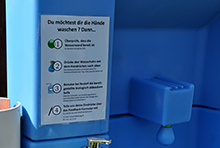
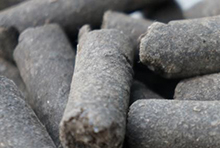
Ein sparsamer Umgang mit Ressourcen wird auch in der Schweiz immer wichtiger. Wie man es vom Abfallrecycling schon lange kennt, lassen sich auch aus dem Abwasser Ressourcen effizient rückgewinnen. Die Eawag forscht interdisziplinär an nachhaltigen Lösungen, welche dem Menschen und der Umwelt dienen.
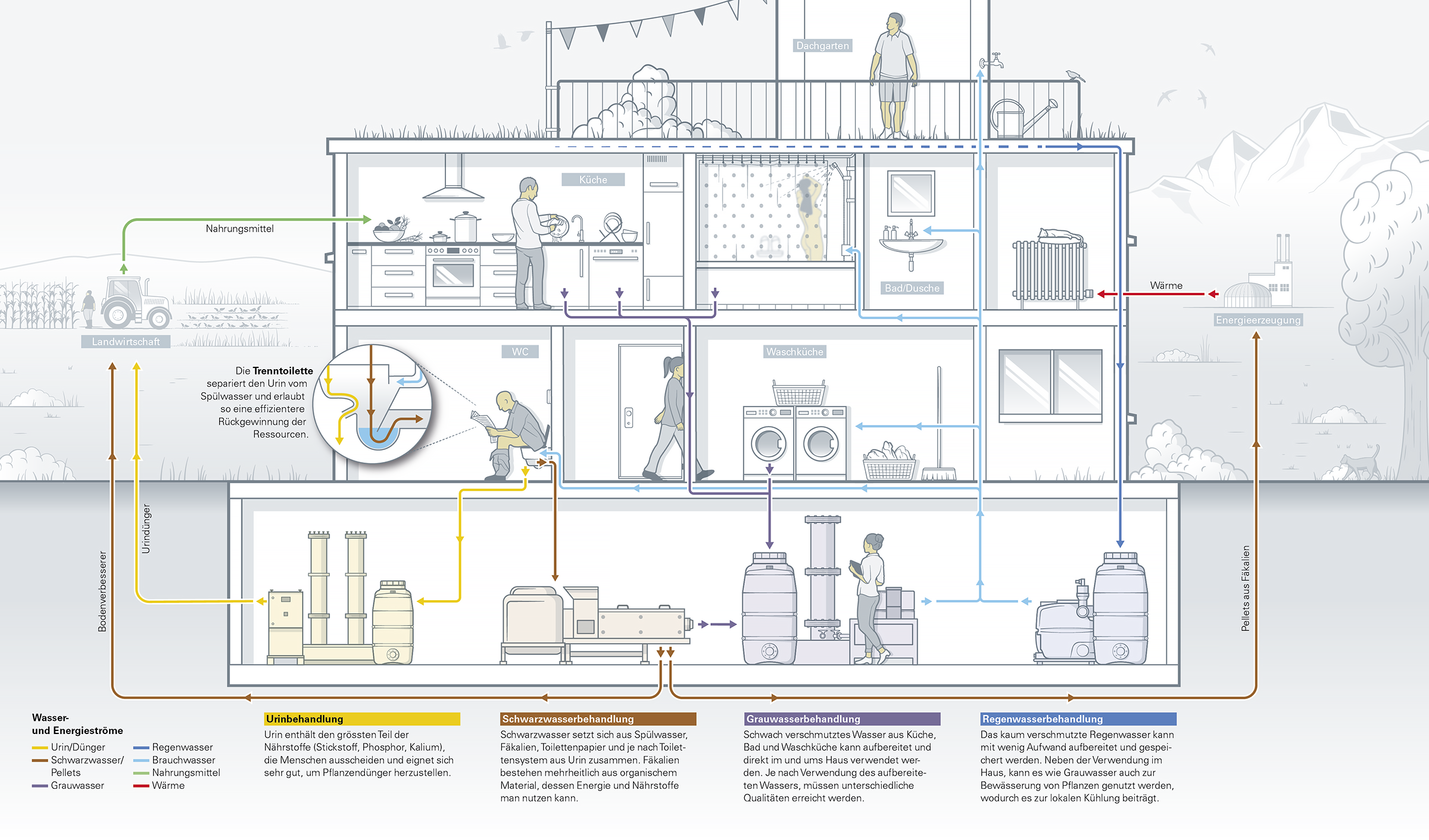
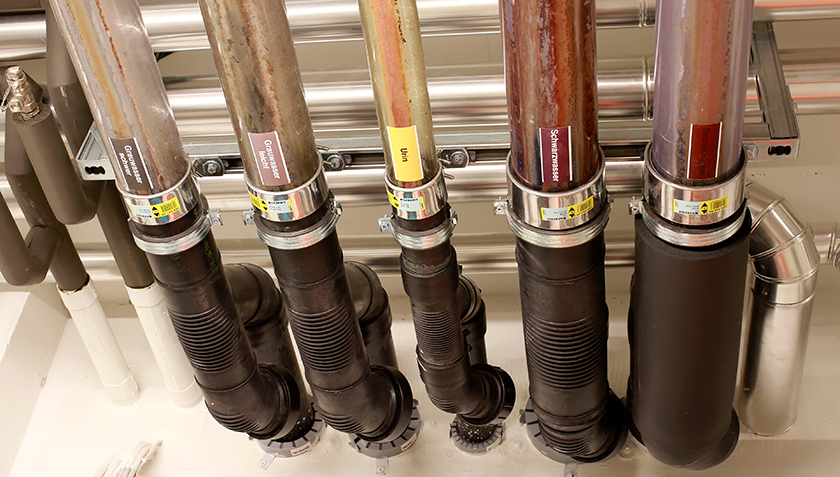
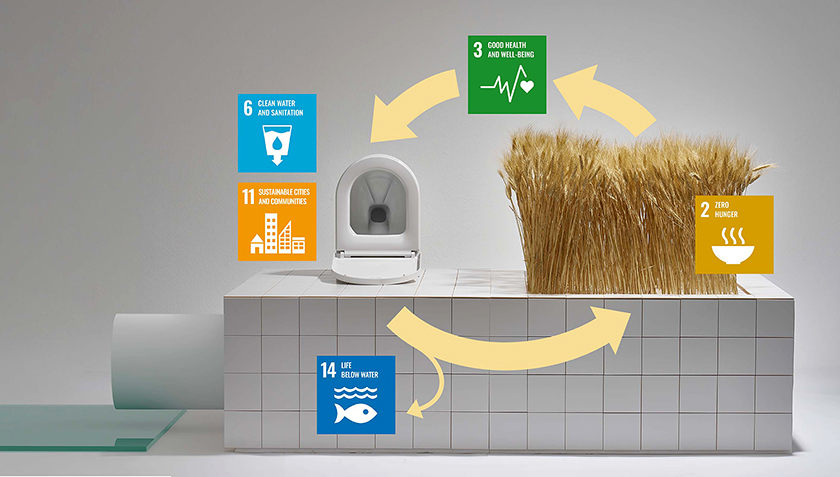
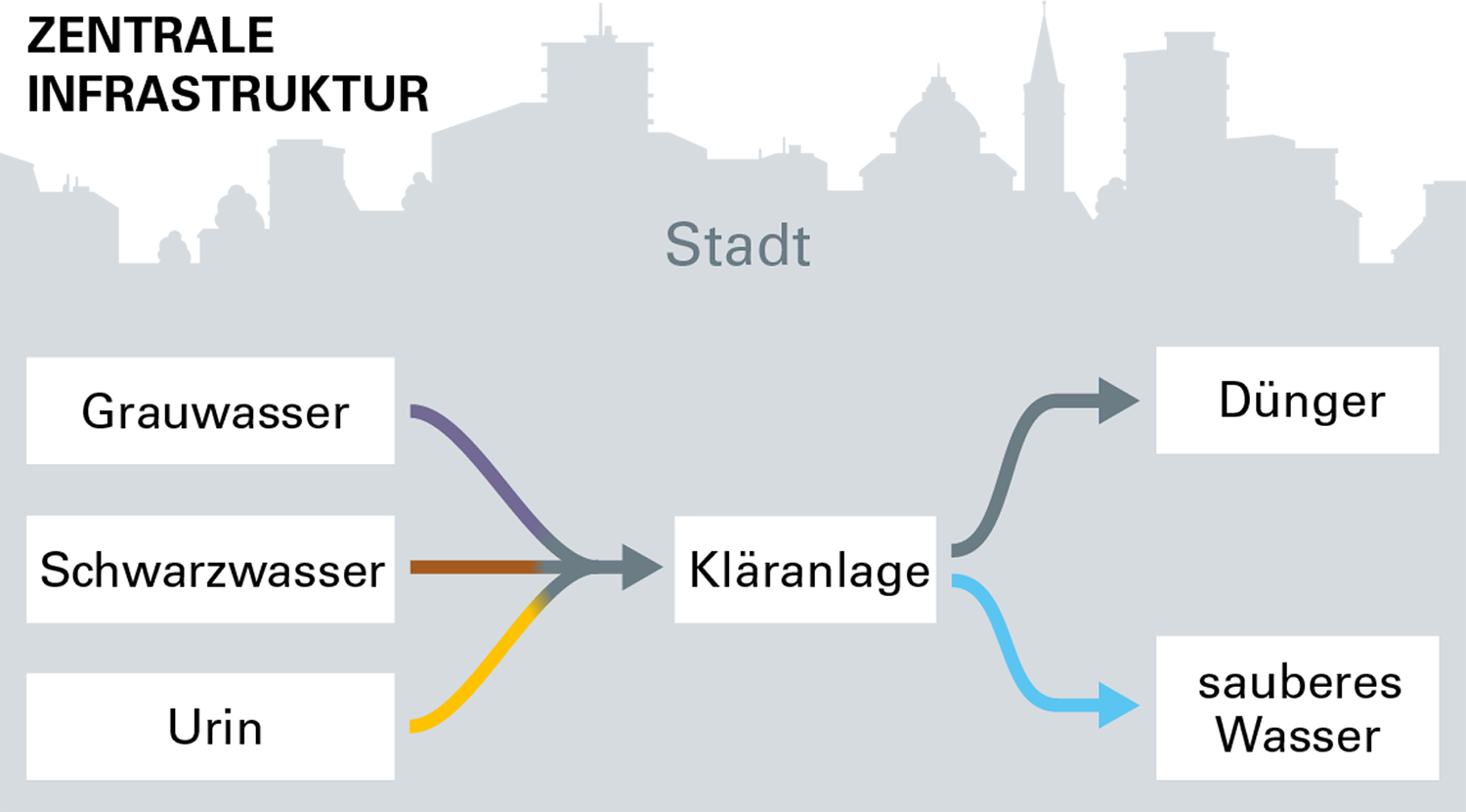
Ressourcenkreislauf am Beispiel eines Gebäudes: Die Abwasserströme werden an der Quelle getrennt, die gewonnenen Ressourcen wiederverwendet (Infografik: Daniel Röttele/ infografik.ch)
Grafik anklicken zum Vergrössern
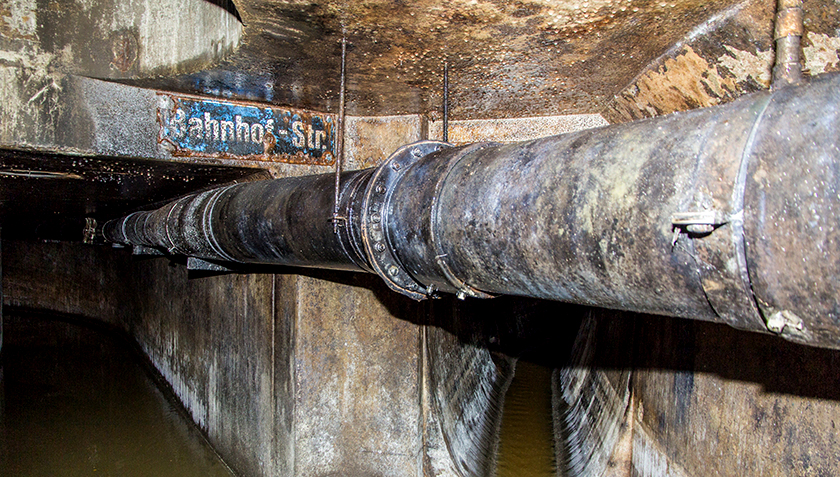
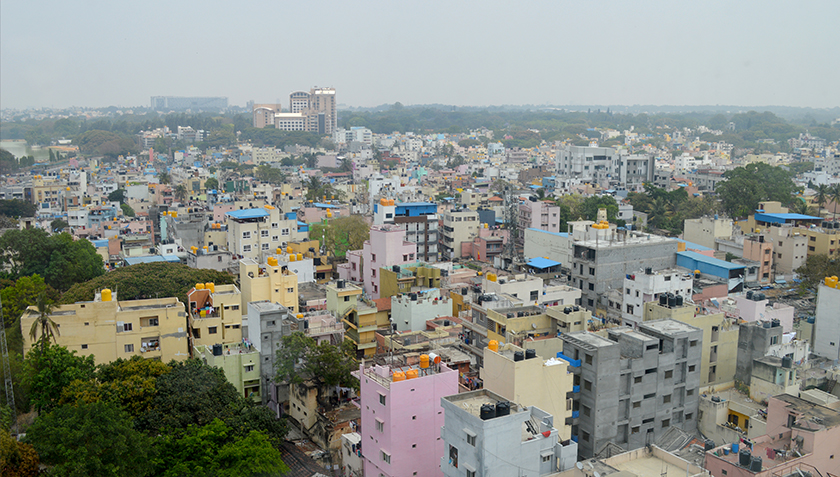
Der Bau von Kanalisationen und Abwasserreinigungsanlagen (ARA) zur zentralen Behandlung von Abwasser hat im letzten Jahrhundert entscheidende Fortschritte für die menschliche Hygiene und Gesundheit, aber auch für den Schutz der Umwelt rund um Städte und Dörfer ermöglicht. Allerdings verbraucht dieses System grosse Mengen an Wasser und erschwert die Rückgewinnung der im Abwasser enthaltenen Wertstoffe. Der Klimawandel, die hohen Nährstoffeinträge in die Umwelt, die wachsende Bevölkerung sowie der massive Verlust der Biodiversität drängen dazu, das bestehende System zu überdenken. Wenn Hitzeperioden häufiger werden und Niederschläge sich verschieben, werden in den immer bevölkerungsreicheren Städten grosse Mengen an Wasser benötigt. Im Abwasser enthaltene Wertstoffe wie etwa Phosphor und Stickstoff werden zu Problemstoffen, wenn sie in die natürlichen Gewässer gelangen. Gleichzeitig muss Phosphor unter umweltbelastenden Bedingungen abgebaut und importiert werden, weil ihn die Landwirtschaft als Dünger benötigt.
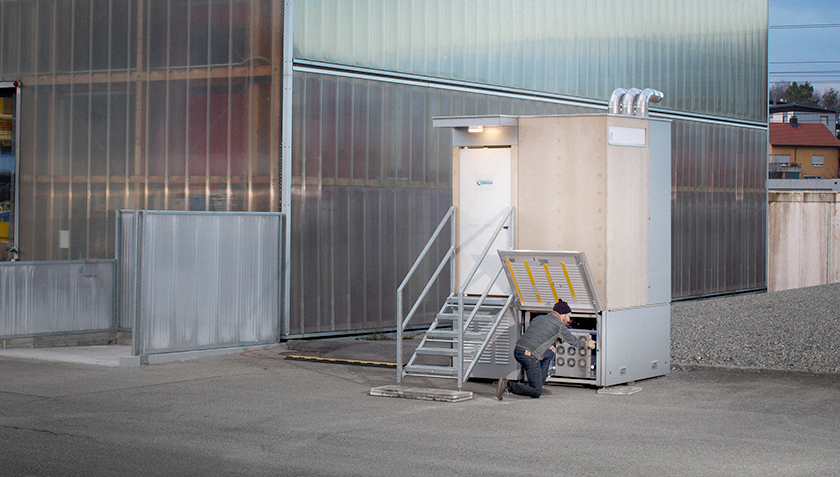
Neben dem Schutz der menschlichen Gesundheit und der Gewässer ist daher die effizientere Nutzung der Ressourcen aus dem Abwasser ein Ziel bei der Abwasserbehandlung. Ein Ansatz dafür ist, die Kreisläufe von Wasser, Nährstoffen und Energie möglichst lokal zu schliessen. Neue Technologien, die auf dem Konzept der Trennung an der Quelle basieren, erlauben eine dezentrale Behandlung von Abwasser vor Ort auf kleinstem Raum.
array(6 items)0 => Snowflake\Publications\Domain\Model\Publicationprototypepersistent entity (uid=23527, pid=124)originalId => protected23527 (integer)
authors => protected'Hadengue, B.; Joshi, P.; Figueroa, A.; Larsen, T. A .; Blumensaat, F.' (98 chars)
title => protected'In-building heat recovery mitigates adverse temperature effects on biologica l wastewater treatment: a network-scale analysis of thermal-hydraulics in se wers' (156 chars)
journal => protected'Water Research' (14 chars)
year => protected2021 (integer)
volume => protected204 (integer)
issue => protected'' (0 chars)
startpage => protected'117552 (11 pp.)' (15 chars)
otherpage => protected'' (0 chars)
categories => protected'energy harvesting; household wastewater; private connection; sewer networks; thermal-hydraulic analysis; wastewater temperature' (127 chars)
description => protected'Heat recovery from wastewater is a robust and straightforward strategy to re duce water-related energy consumption. Its implementation, though, requires a careful assessment of its impacts across the entire wastewater system as a dverse effects on the water and resource recovery facility and competition a mong heat recovery strategies may arise. A model-based assessment of heat re covery from wastewater therefore implies extending the modeling spatial scop e, with the aim of enabling thermal-hydraulic simulations from the household tap along its entire flow path down to the wastewater resource recovery fac ility. With this aim in mind, we propose a new modeling framework interfacin g thermal-hydraulic simulations of (i) households, (ii) private lateral conn ections, and (iii) the main public sewer network. Applying this framework to analyze the fate of wastewater heat budgets in a Swiss catchment, we find t hat heat losses in lateral connections are large and cannot be overlooked in any thermal-hydraulic analysis, due to the high-temperature, low-flow waste water characteristics maximizing heat losses to the environment. Further, we find that implementing shower drain heat recovery devices in 50% of the cat chment's households lower the wastewater temperature at the recovery facilit y significantly less – only 0.3 K – than centralized in-sewer heat recov ery, due to a significant thermal damping effect induced by lateral connecti ons and secondary sewer lines. In-building technologies are thus less likely to adversely affect biological wastewater treatment processes. The proposed open-source modeling framework can be applied to any other catchment. We th ereby hope to enable more efficient heat recovery strategies, maximizing ene rgy harvesting while minimising impacts on biological wastewater treatment.' (1823 chars)
serialnumber => protected'0043-1354' (9 chars)
doi => protected'10.1016/j.watres.2021.117552' (28 chars)
uid => protected23527 (integer)
_localizedUid => protected23527 (integer)modified_languageUid => protectedNULL
_versionedUid => protected23527 (integer)modifiedpid => protected124 (integer)1 => Snowflake\Publications\Domain\Model\Publicationprototypepersistent entity (uid=22955, pid=124)originalId => protected22955 (integer)
authors => protected'Larsen, T. A.; Gruendl, H.; Binz, C.' (56 chars)
title => protected'The potential contribution of urine source separation to the SDG agenda - a review of the progress so far and future development options' (136 chars)
journal => protected'Environmental Science: Water Research and Technology' (52 chars)
year => protected2021 (integer)
volume => protected7 (integer)
issue => protected'7' (1 chars)
startpage => protected'1161' (4 chars)
otherpage => protected'1176' (4 chars)
categories => protected'' (0 chars)
description => protected'Sanitation and wastewater management are highly relevant for reaching a numb er of interconnected sustainable development goals (SDGs), especially SDG 6, the provision of safe drinking water and adequate sanitation for all as wel l as protection of water resources against pollution, and SDG 14.1, reducing nutrient emissions to the marine environment. Recent evidence increasingly shows that conventional sewer-based wastewater management will not be able t o reach these targets. Rather than further optimizing and diffusing this age ing infrastructure paradigm, radical innovations like urine source separatio n technologies could help to leapfrog towards faster achievement of the SDGs . The technology would simplify on-site sanitation and develop a closed-loop nutrient cycle, thereby allowing for exceptionally high nutrient removal fr om wastewater and direct reuse in agriculture from the first day of implemen tation. Radical innovations, however, need decades to materialize. Based on a review of relevant academic and grey literature, we show how the past thre e decades of development of urine source separation have brought breakthroug hs in toilet design and treatment processes, enabling the technology's value chain to reach the brink of maturity. In a short outlook, we discuss how th e technology may reach global diffusion over the next decade, with the main remaining challenges relating to the creation of mass-markets for urine-dive rting toilets, automation and mass-production of treatment systems, and the legitimation of fertilizer produced from urine in the agricultural sector.' (1594 chars)
serialnumber => protected'2053-1400' (9 chars)
doi => protected'10.1039/D0EW01064B' (18 chars)
uid => protected22955 (integer)
_localizedUid => protected22955 (integer)modified_languageUid => protectedNULL
_versionedUid => protected22955 (integer)modifiedpid => protected124 (integer)2 => Snowflake\Publications\Domain\Model\Publicationprototypepersistent entity (uid=23878, pid=124)originalId => protected23878 (integer)
authors => protected'Larsen, T. A.; Riechmann, M. E.; Udert, K. M.' (75 chars)
title => protected'State of the art of urine treatment technologies: a critical review.' (68 chars)
journal => protected'Water Research X' (16 chars)
year => protected2021 (integer)
volume => protected13 (integer)
issue => protected'' (0 chars)
startpage => protected'100114 (20 pp.)' (15 chars)
otherpage => protected'' (0 chars)
categories => protected'nitrogen recovery; phosphorus recovery; pharmaceutical removal; environmenta l protection; volume reduction; energy production' (125 chars)
description => protected'Over the last 15 years, urine treatment technologies have developed from lab studies of a few pioneers to an interesting innovation, attracting attentio n from a growing number of process engineers. In this broad review, we prese nt literature from more than a decade on biological, physical-chemical and e lectrochemical urine treatment processes. Like in the first review on urine treatment from 2006, we categorize the technologies according to the followi ng objectives: stabilization, volume reduction, targeted N-recovery, targete d P-recovery, nutrient removal, sanitization, and handling of organic microp ollutants. We add energy recovery as a new objective, because extensive work has been done on electrochemical energy harvesting, especially with bio-ele ctrochemical systems. Our review reveals that biological processes are a goo d choice for urine stabilization. They have the advantage of little demand f or chemicals and energy. Due to instabilities, however, they are not suited for bathroom applications and they cannot provide the desired volume reducti on on their own. A number of physical-chemical treatment technologies are ap plicable at bathroom scale and can provide the necessary volume reduction, b ut only with a steady supply of chemicals and often with high demand for ene rgy and maintenance. Electrochemical processes is a recent, but rapidly grow ing field, which could give rise to exciting technologies at bathroom scale, although energy production might only be interesting for niche applications . The review includes a qualitative assessment of all unit processes. A quan titative comparison of treatment performance was not the goal of the study a nd could anyway only be done for complete treatment trains. An important nex t step in urine technology research and development will be the combination of unit processes to set up and test robust treatment trains. We hope that t he present review will help guide these efforts to accelerate the developmen t towards a mature techn...' (2065 chars)
serialnumber => protected'2589-9147' (9 chars)
doi => protected'10.1016/j.wroa.2021.100114' (26 chars)
uid => protected23878 (integer)
_localizedUid => protected23878 (integer)modified_languageUid => protectedNULL
_versionedUid => protected23878 (integer)modifiedpid => protected124 (integer)3 => Snowflake\Publications\Domain\Model\Publicationprototypepersistent entity (uid=22375, pid=124)originalId => protected22375 (integer)
authors => protected'Reynaert, E.; Hess, A.; Morgenroth, E.' (53 chars)
title => protected'Making waves: why water reuse frameworks need to co-evolve with emerging sma ll-scale technologies' (97 chars)
journal => protected'Water Research X' (16 chars)
year => protected2021 (integer)
volume => protected11 (integer)
issue => protected'' (0 chars)
startpage => protected'100094 (5 pp.)' (14 chars)
otherpage => protected'' (0 chars)
categories => protected'on-site non-potable water reuse; decentralized; regulatory and legal framewo rks; guidelines; standards; field test' (114 chars)
description => protected'Novel technologies allow to reuse or recycle water for on-site applications such as toilet flushing, showering, or hand washing at the household- or bui lding-scale. Many of these technologies have now reached technology readines s levels that require for verification and validation testing in the field. Results from such field tests of decentralized water reuse systems have been published over the past few years, and observed performance is often compar ed to quality targets from water reuse frameworks (WRFs). An inspection of t en recent journal publications reveals that targets from WRFs are often misi nterpreted, and the emphasis of these publications is too often on demonstra ting successful aspects of the technologies rather than critically evaluatin g the quality of the produced water. We hypothesize that some of these misin terpretations are due to ambiguous definition of scopes of WRFs (e.g., "unre stricted urban reuse") and unclear applicability for novel recycling systems that treat the water for applications that go beyond the reuse scopes defin ed in current WRFs. Additional challenges are linked to the verification of WRF quality targets in small-scale and decentralized systems under economic and organizational constraints. Current WRFs are not suitable for all possib le reuse cases, and there is need for a critical discussion of quality targe ts and associated monitoring methods. As the scope of water reuse has expand ed greatly over the past years, WRFs need to address new applications and ad vances in technology, including in monitoring capacities.' (1577 chars)
serialnumber => protected'2589-9147' (9 chars)
doi => protected'10.1016/j.wroa.2021.100094' (26 chars)
uid => protected22375 (integer)
_localizedUid => protected22375 (integer)modified_languageUid => protectedNULL
_versionedUid => protected22375 (integer)modifiedpid => protected124 (integer)4 => Snowflake\Publications\Domain\Model\Publicationprototypepersistent entity (uid=10590, pid=124)originalId => protected10590 (integer)
authors => protected'Larsen, T. A.; Hoffmann, S.; Lüthi, C.; Truffer, B .; Maurer, M.' (94 chars)
title => protected'Emerging solutions to the water challenges of an urbanizing world' (65 chars)
journal => protected'Science' (7 chars)
year => protected2016 (integer)
volume => protected352 (integer)
issue => protected'6288' (4 chars)
startpage => protected'928' (3 chars)
otherpage => protected'933' (3 chars)
categories => protected'' (0 chars)
description => protected'The top priorities for urban water sustainability include the provision of s afe drinking water, wastewater handling for public health, and protection ag ainst flooding. However, rapidly aging infrastructure, population growth, an d increasing urbanization call into question current urban water management strategies, especially in the fast-growing urban areas in Asia and Africa. W e review innovative approaches in urban water management with the potential to provide locally adapted, resource-efficient alternative solutions. Promis ing examples include new concepts for stormwater drainage, increased water p roductivity, distributed or on-site treatment of wastewater, source separati on of human waste, and institutional and organizational reforms. We conclude that there is an urgent need for major transdisciplinary efforts in researc h, policy, and practice to develop alternatives with implications for cities and aquatic ecosystems alike.' (942 chars)
serialnumber => protected'0036-8075' (9 chars)
doi => protected'10.1126/science.aad8641' (23 chars)
uid => protected10590 (integer)
_localizedUid => protected10590 (integer)modified_languageUid => protectedNULL
_versionedUid => protected10590 (integer)modifiedpid => protected124 (integer)5 => Snowflake\Publications\Domain\Model\Publicationprototypepersistent entity (uid=20568, pid=124)originalId => protected20568 (integer)
authors => protected'Hoffmann, S.; Feldmann, U.; Bach, P. M.; Binz, C.; Farrelly, M.; Frantzeskaki, N.; Hiessl, H.; Inauen, J.; Larsen, T. A.; Lienert, J.; Londong, J.; Lüthi, C. ; Maurer, M.; Mitchell, C.; Morgenroth, E.; Nelson, K.&n bsp;L.; Scholten, L.; Truffer, B.; Udert, K. M.' (371 chars)
title => protected'A research agenda for the future of urban water management: exploring the po tential of non-grid, small-grid, and hybrid solutions' (129 chars)
journal => protected'Environmental Science and Technology' (36 chars)
year => protected2020 (integer)
volume => protected54 (integer)
issue => protected'9' (1 chars)
startpage => protected'5312' (4 chars)
otherpage => protected'5322' (4 chars)
categories => protected'urban water management; non-grid systems; small-grid systems; hybrid systems ; research agenda; transdisciplinary integration' (124 chars)
description => protected'Recent developments in high- and middle-income countries have exhibited a sh ift from conventional urban water systems to alternative solutions that are more diverse in source separation, decentralization, and modularization. The se solutions include non-grid, small-grid, and hybrid systems to address suc h pressing global challenges as climate change, eutrophication, and rapid ur banization. They close loops, recover valuable resources, and adapt quickly to changing boundary conditions such as population size. Moving to such alte rnative solutions requires both technical and social innovations to co-evolv e over time into integrated socio-technical urban water systems. Current imp lementations of alternative systems in high- and middle-income countries are promising, but they also underline the need for research questions to be ad dressed from technical, social, and transformative perspectives. Future rese arch should apply a transdisciplinary research approach through socio-techni cal "lighthouse" projects that apply alternative urban water systems at scal e. Such research should leverage experience from lighthouse projects in a ra nge of socio-economic contexts, identify their potentials and limitations fr om an integrated perspective, and share their successes and failures across the urban water sector.' (1315 chars)
serialnumber => protected'0013-936X' (9 chars)
doi => protected'10.1021/acs.est.9b05222' (23 chars)
uid => protected20568 (integer)
_localizedUid => protected20568 (integer)modified_languageUid => protectedNULL
_versionedUid => protected20568 (integer)modifiedpid => protected124 (integer)
In-building heat recovery mitigates adverse temperature effects on biological wastewater treatment: a network-scale analysis of thermal-hydraulics in sewers
Heat recovery from wastewater is a robust and straightforward strategy to reduce water-related energy consumption. Its implementation, though, requires a careful assessment of its impacts across the entire wastewater system as adverse effects on the water and resource recovery facility and competition among heat recovery strategies may arise. A model-based assessment of heat recovery from wastewater therefore implies extending the modeling spatial scope, with the aim of enabling thermal-hydraulic simulations from the household tap along its entire flow path down to the wastewater resource recovery facility. With this aim in mind, we propose a new modeling framework interfacing thermal-hydraulic simulations of (i) households, (ii) private lateral connections, and (iii) the main public sewer network. Applying this framework to analyze the fate of wastewater heat budgets in a Swiss catchment, we find that heat losses in lateral connections are large and cannot be overlooked in any thermal-hydraulic analysis, due to the high-temperature, low-flow wastewater characteristics maximizing heat losses to the environment. Further, we find that implementing shower drain heat recovery devices in 50% of the catchment's households lower the wastewater temperature at the recovery facility significantly less – only 0.3 K – than centralized in-sewer heat recovery, due to a significant thermal damping effect induced by lateral connections and secondary sewer lines. In-building technologies are thus less likely to adversely affect biological wastewater treatment processes. The proposed open-source modeling framework can be applied to any other catchment. We thereby hope to enable more efficient heat recovery strategies, maximizing energy harvesting while minimising impacts on biological wastewater treatment.
Hadengue, B.; Joshi, P.; Figueroa, A.; Larsen, T. A.; Blumensaat, F. (2021) In-building heat recovery mitigates adverse temperature effects on biological wastewater treatment: a network-scale analysis of thermal-hydraulics in sewers, Water Research, 204, 117552 (11 pp.), doi:10.1016/j.watres.2021.117552, Institutional Repository
The potential contribution of urine source separation to the SDG agenda - a review of the progress so far and future development options
Sanitation and wastewater management are highly relevant for reaching a number of interconnected sustainable development goals (SDGs), especially SDG 6, the provision of safe drinking water and adequate sanitation for all as well as protection of water resources against pollution, and SDG 14.1, reducing nutrient emissions to the marine environment. Recent evidence increasingly shows that conventional sewer-based wastewater management will not be able to reach these targets. Rather than further optimizing and diffusing this ageing infrastructure paradigm, radical innovations like urine source separation technologies could help to leapfrog towards faster achievement of the SDGs. The technology would simplify on-site sanitation and develop a closed-loop nutrient cycle, thereby allowing for exceptionally high nutrient removal from wastewater and direct reuse in agriculture from the first day of implementation. Radical innovations, however, need decades to materialize. Based on a review of relevant academic and grey literature, we show how the past three decades of development of urine source separation have brought breakthroughs in toilet design and treatment processes, enabling the technology's value chain to reach the brink of maturity. In a short outlook, we discuss how the technology may reach global diffusion over the next decade, with the main remaining challenges relating to the creation of mass-markets for urine-diverting toilets, automation and mass-production of treatment systems, and the legitimation of fertilizer produced from urine in the agricultural sector.
Larsen, T. A.; Gruendl, H.; Binz, C. (2021) The potential contribution of urine source separation to the SDG agenda - a review of the progress so far and future development options, Environmental Science: Water Research and Technology, 7(7), 1161-1176, doi:10.1039/D0EW01064B, Institutional Repository
State of the art of urine treatment technologies: a critical review.
Over the last 15 years, urine treatment technologies have developed from lab studies of a few pioneers to an interesting innovation, attracting attention from a growing number of process engineers. In this broad review, we present literature from more than a decade on biological, physical-chemical and electrochemical urine treatment processes. Like in the first review on urine treatment from 2006, we categorize the technologies according to the following objectives: stabilization, volume reduction, targeted N-recovery, targeted P-recovery, nutrient removal, sanitization, and handling of organic micropollutants. We add energy recovery as a new objective, because extensive work has been done on electrochemical energy harvesting, especially with bio-electrochemical systems. Our review reveals that biological processes are a good choice for urine stabilization. They have the advantage of little demand for chemicals and energy. Due to instabilities, however, they are not suited for bathroom applications and they cannot provide the desired volume reduction on their own. A number of physical-chemical treatment technologies are applicable at bathroom scale and can provide the necessary volume reduction, but only with a steady supply of chemicals and often with high demand for energy and maintenance. Electrochemical processes is a recent, but rapidly growing field, which could give rise to exciting technologies at bathroom scale, although energy production might only be interesting for niche applications. The review includes a qualitative assessment of all unit processes. A quantitative comparison of treatment performance was not the goal of the study and could anyway only be done for complete treatment trains. An important next step in urine technology research and development will be the combination of unit processes to set up and test robust treatment trains. We hope that the present review will help guide these efforts to accelerate the development towards a mature technology with pilot scale and eventually full-scale implementations.
Larsen, T. A.; Riechmann, M. E.; Udert, K. M. (2021) State of the art of urine treatment technologies: a critical review., Water Research X, 13, 100114 (20 pp.), doi:10.1016/j.wroa.2021.100114, Institutional Repository
Making waves: why water reuse frameworks need to co-evolve with emerging small-scale technologies
Novel technologies allow to reuse or recycle water for on-site applications such as toilet flushing, showering, or hand washing at the household- or building-scale. Many of these technologies have now reached technology readiness levels that require for verification and validation testing in the field. Results from such field tests of decentralized water reuse systems have been published over the past few years, and observed performance is often compared to quality targets from water reuse frameworks (WRFs). An inspection of ten recent journal publications reveals that targets from WRFs are often misinterpreted, and the emphasis of these publications is too often on demonstrating successful aspects of the technologies rather than critically evaluating the quality of the produced water. We hypothesize that some of these misinterpretations are due to ambiguous definition of scopes of WRFs (e.g., "unrestricted urban reuse") and unclear applicability for novel recycling systems that treat the water for applications that go beyond the reuse scopes defined in current WRFs. Additional challenges are linked to the verification of WRF quality targets in small-scale and decentralized systems under economic and organizational constraints. Current WRFs are not suitable for all possible reuse cases, and there is need for a critical discussion of quality targets and associated monitoring methods. As the scope of water reuse has expanded greatly over the past years, WRFs need to address new applications and advances in technology, including in monitoring capacities.
Reynaert, E.; Hess, A.; Morgenroth, E. (2021) Making waves: why water reuse frameworks need to co-evolve with emerging small-scale technologies, Water Research X, 11, 100094 (5 pp.), doi:10.1016/j.wroa.2021.100094, Institutional Repository
Emerging solutions to the water challenges of an urbanizing world
The top priorities for urban water sustainability include the provision of safe drinking water, wastewater handling for public health, and protection against flooding. However, rapidly aging infrastructure, population growth, and increasing urbanization call into question current urban water management strategies, especially in the fast-growing urban areas in Asia and Africa. We review innovative approaches in urban water management with the potential to provide locally adapted, resource-efficient alternative solutions. Promising examples include new concepts for stormwater drainage, increased water productivity, distributed or on-site treatment of wastewater, source separation of human waste, and institutional and organizational reforms. We conclude that there is an urgent need for major transdisciplinary efforts in research, policy, and practice to develop alternatives with implications for cities and aquatic ecosystems alike.
Larsen, T. A.; Hoffmann, S.; Lüthi, C.; Truffer, B.; Maurer, M. (2016) Emerging solutions to the water challenges of an urbanizing world, Science, 352(6288), 928-933, doi:10.1126/science.aad8641, Institutional Repository
A research agenda for the future of urban water management: exploring the potential of non-grid, small-grid, and hybrid solutions
Recent developments in high- and middle-income countries have exhibited a shift from conventional urban water systems to alternative solutions that are more diverse in source separation, decentralization, and modularization. These solutions include non-grid, small-grid, and hybrid systems to address such pressing global challenges as climate change, eutrophication, and rapid urbanization. They close loops, recover valuable resources, and adapt quickly to changing boundary conditions such as population size. Moving to such alternative solutions requires both technical and social innovations to co-evolve over time into integrated socio-technical urban water systems. Current implementations of alternative systems in high- and middle-income countries are promising, but they also underline the need for research questions to be addressed from technical, social, and transformative perspectives. Future research should apply a transdisciplinary research approach through socio-technical "lighthouse" projects that apply alternative urban water systems at scale. Such research should leverage experience from lighthouse projects in a range of socio-economic contexts, identify their potentials and limitations from an integrated perspective, and share their successes and failures across the urban water sector.
Hoffmann, S.; Feldmann, U.; Bach, P. M.; Binz, C.; Farrelly, M.; Frantzeskaki, N.; Hiessl, H.; Inauen, J.; Larsen, T. A.; Lienert, J.; Londong, J.; Lüthi, C.; Maurer, M.; Mitchell, C.; Morgenroth, E.; Nelson, K. L.; Scholten, L.; Truffer, B.; Udert, K. M. (2020) A research agenda for the future of urban water management: exploring the potential of non-grid, small-grid, and hybrid solutions, Environmental Science and Technology, 54(9), 5312-5322, doi:10.1021/acs.est.9b05222, Institutional Repository