Department Environmental Social Sciences

Increasing shared toilet users’ cleaning behavior: the case of urban slums in Kampala, Uganda
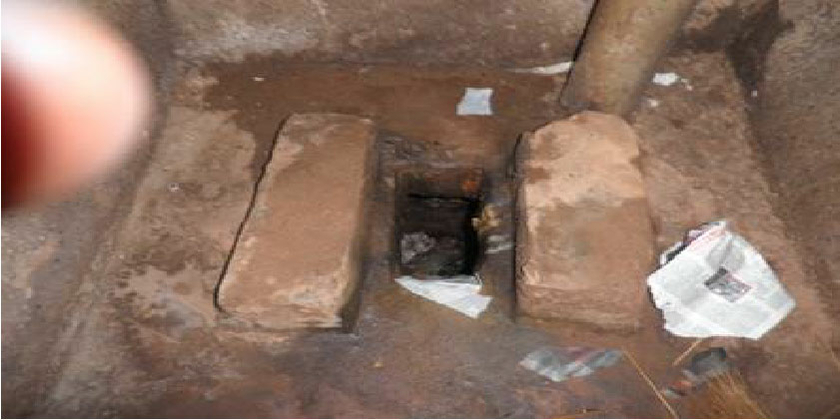

Project description

Access to shared toilets is the most common on-site mode of sanitation in urban informal settlements. However, their maintenance depends on users’ appropriate usage and cleaning behavior. A user-driven sanitation (UDS) project in Kampala’s urban slums aimed to increase shared toilet users’ cleaning behavior. Group discussions between users of a shared toilet were applied in combination with public commitment as a behavior change strategy. The strategy increased cleaning behavior by up to 30%.


Context

In Uganda, around 50 % of the urban population relies on shared sanitation, and this percentage is even higher in Kampala’s slums. However, the management of shared toilets (defined as facilities jointly used by different families, mostly known to each other or sharing a compound house) is poor, and most of these toilets are in an unhygienic condition.


Objectives

The overall goal of this research project was to promote the cleaning of shared toilets among their users to ensure good hygiene. Specific objectives included:

  • assessing the cleanliness of shared toilets and the behavioral and social dilemma factors that influence users’ cleaning behavior, and
  • designing, implementing, and evaluating the effectiveness of behavior change strategies in increasing the cleaning behavior of shared toilet users.

Activities

Step 1 & 2: Identify, measure and determine behavioral factors of shared toilet cleaning

  • A baseline survey on shared toilets’ cleanliness and the psychological and social dilemma factors influencing collective cleaning behavior was conducted between December 2012 and January 2013 in three slums. 
  • The survey revealed that attitudes, norms, ability, and self-regulating factors had to be targeted.

Step 3: Select behavior change techniques (BCTs) and design behavior change strategies to increase shared toilet cleaning 

  • Two BCTs were selected, the prompt to talk to others, delivered through group discussions, and written public commitment. 
  • Interventions targeted respondents with dirty toilets, that is, non-frequent cleaners.

Step 4: Implement and evaluate behavior change strategies of shared toilet cleaning

  • The strategies’ effectiveness was assessed through a before-after control trial.
  • They were implemented by Sustainable Sanitation and Water Renewal Systems (SSWARS). 
  • Half of the intervention households received only the group discussions
  • The other half received the group discussions in combination with the written public commitment. 
  • Additional households served as a control group. 
  • A follow-up survey on cleaning behavior and behavioral factors was conducted between August and September 2013

Findings

  • Cleaning behavior in intervention groups increased by up to 30% compared to 8% in the groups with no discussions.
  • Discussions combined with a written public commitment were most effective in increasing the cleaning behavior of shared toilet users.
  • Discussions effectively changed behavior as they increased a number of behavioral factors: others’ approval of cleaning, personal importance of cleaning, feelings (liking to clean), and reduced barriers to cleaning.

Conclusion

Improved sanitation, even of shared toilets, can be achieved through systematic behavior change strategies, specifically a group discussion supplemented with written public commitment. Applying this strategy at a larger scale would change the sanitation situation in developing countries dramatically.

Publications

Extbase Variable Dump
array(2 items)
   publications => '8408,9143,7813,7570,7083' (24 chars)
   libraryUrl => '' (0 chars)
Extbase Variable Dump
array(5 items)
   0 => Snowflake\Publications\Domain\Model\Publicationprototypepersistent entity (uid=8408, pid=124)
      originalId => protected8408 (integer)
      authors => protected'Tumwebaze, I. K.; Mosler, H.-J.' (46 chars)
      title => protected'Effectiveness of group discussions and commitment in improving cleaning beha
         viour of shared sanitation users in Kampala, Uganda slums
' (133 chars) journal => protected'Social Science and Medicine' (27 chars) year => protected2015 (integer) volume => protected147 (integer) issue => protected'' (0 chars) startpage => protected'72' (2 chars) otherpage => protected'79' (2 chars) categories => protected'cleaning behaviour; commitment; group discussions; RANAS; shared sanitation;
          urban slums; Uganda
' (96 chars) description => protected'<I>Rationale and objective:</I> Access to and use of hygienic shared sanitat
         ion facilities is fundamental in reducing the high risk of diseases such as
         diarrhoea and respiratory infections. We evaluated the effectiveness of grou
         p discussions and commitment in improving the cleaning behaviour of shared s
         anitation users in three urban slums in Kampala, Uganda. The study follows t
         he risk, attitudes, norms, abilities and self-regulation (RANAS) model of be
         haviour change and some factors of the social dilemma theory.<BR/> <I>Method
         s:</I> A pre-versus post-intervention survey was conducted in three slums of
          Kampala, Uganda, between December 2012 and September 2013. From the pre-int
         ervention findings, users of dirty sanitation facilities were randomly assig
         ned to discussions, discussions + commitment and control interventions. Th
         e interventions were implemented for 3 months with the aim of improving clea
         ning behaviour. This paper provides an analysis of 119 respondents who belon
         ged to the intervention discussion-only (<I>n</I> = 38), discussions + c
         ommitment (<I>n</I> = 41) and the control (no intervention, <I>n</I> = 4
         0) groups.<BR/> <I>Results:</I> Compared to the control, discussions and dis
         cussions + commitment significantly improved shared toilet users' cleaning
          behaviour. The rate of improvement was observed through behavioural determi
         nants such as cleaning obligation, cleaning ease, cleaning approval and affe
         ctive beliefs.<BR/> <I>Conclusion:</I> Our study findings show that group di
         scussions and commitment interventions derived from RANAS model of behaviour
          change are effective in improving the shared sanitation users' cleaning beh
         aviour.
' (1679 chars) serialnumber => protected'0277-9536' (9 chars) doi => protected'10.1016/j.socscimed.2015.10.059' (31 chars) uid => protected8408 (integer) _localizedUid => protected8408 (integer)modified _languageUid => protectedNULL _versionedUid => protected8408 (integer)modified pid => protected124 (integer)
1 => Snowflake\Publications\Domain\Model\Publicationprototypepersistent entity (uid=9143, pid=124) originalId => protected9143 (integer) authors => protected'Tumwebaze,&nbsp;I.&nbsp;K.; Mosler,&nbsp;H.-J.' (46 chars) title => protected'Shared toilet users' collective cleaning and determinant factors in Kampala
         slums, Uganda
' (89 chars) journal => protected'BMC Public Health' (17 chars) year => protected2014 (integer) volume => protected14 (integer) issue => protected'' (0 chars) startpage => protected'1260 (19 pp.)' (13 chars) otherpage => protected'' (0 chars) categories => protected'collective cleaning; shared toilets; slums' (42 chars) description => protected'Background: Dirty shared toilets are a health risk to users in urban slum se
         ttlements. For health and non-health benefits among users of shared toilets
         to be guaranteed, their cleanliness is important. The objective of this stud
         y was to investigate the cleanliness situation of shared toilets in Kampala'
         s slums and the psychological and social dilemma factors influencing users'
         cleaning behaviour and commitment by using the risks, attitudes, norms, abil
         ity and self-regulation (RANAS) model and factors derived from the social di
         lemma theory.<br />Methods: We conducted a cross-sectional study in three sl
         ums of Kampala between December 2012 and January 2013. Data were collected f
         rom 424 household respondents that were primarily using shared toilets. Semi
         -structured questionnaires administered through face-to-face interviews were
          used in data collection. Linear regression was done for the multivariate an
         alysis to test for the association between respondent cleaning behaviour and
          a combination of RANAS and social dilemma predictors.<br />Results. Out of
         424 respondents interviewed, 44.3% reported cleaning the shared toilet daily
         , 34.4% cleaned once or several times a week, 1.4% cleaned every second week
         , 5.4% cleaned once or several times a month and 14.4% did not participate i
         n cleaning. The main RANAS factors significantly associated with respondents
         ' cleaning behaviour were: attitudinal affective belief associated with clea
         ning a shared toilet (β = -0.13, P = 0.00) and self-regulating factors, suc
         h as coping planning (β = 0.42, P = 0.00), commitment (β = 0.24, P = 0.00)
         , and remembering (β = 0.10, P = 0.01). For social dilemma factors, only th
         e social motive factor was statistically significant (β = 0.15, P = 0.00).
         The R square for the linear model on factors influencing cleaning behaviour
         was 0.77 and R square for factors influencing cleaning commitment was 0.70.<
         br />Conclusion: The RANAS factors provide a more robust understanding of sh
         ared toilet users' clean...
' (2380 chars) serialnumber => protected'' (0 chars) doi => protected'10.1186/1471-2458-14-1260' (25 chars) uid => protected9143 (integer) _localizedUid => protected9143 (integer)modified _languageUid => protectedNULL _versionedUid => protected9143 (integer)modified pid => protected124 (integer)
2 => Snowflake\Publications\Domain\Model\Publicationprototypepersistent entity (uid=7813, pid=124) originalId => protected7813 (integer) authors => protected'Tumwebaze,&nbsp;I.&nbsp;K.; Mosler,&nbsp;H.-J.' (46 chars) title => protected'Why clean the toilet if others don’t? Using a social dilemma approach to u
         nderstand users of shared toilets’ collective cleaning behaviour in urban
         slums: a review
' (167 chars) journal => protected'Journal of Water, Sanitation and Hygiene for Development' (56 chars) year => protected2014 (integer) volume => protected4 (integer) issue => protected'3' (1 chars) startpage => protected'359' (3 chars) otherpage => protected'370' (3 chars) categories => protected'cleaning; collective action; cooperation; shared toilets; social dilemma; ur
         ban slums
' (85 chars) description => protected'Shared toilets are a common good in urban slums, but need to be maintained a
         nd cleaned for users to positively benefit from having access to them. Colle
         ctive participation of the shared toilet users is required to keep them clea
         n and ensure adequate hygiene. However, users' decisions on whether to parti
         cipate or not in the cleaning of the shared toilets are a social dilemma. If
          each of the shared toilets' users decided not to participate in their clean
         ing, the facilities could end up in a deteriorated unhygienic state and beco
         me a health risk to them and to the community at large. In this paper, we pr
         ovide an overview of the social dilemma approach and highlight how the facto
         rs important in the management of social dilemmas can be relevant to underst
         anding the cleaning behaviour of shared toilet users in urban slums.
' (828 chars) serialnumber => protected'2043-9083' (9 chars) doi => protected'10.2166/washdev.2014.152' (24 chars) uid => protected7813 (integer) _localizedUid => protected7813 (integer)modified _languageUid => protectedNULL _versionedUid => protected7813 (integer)modified pid => protected124 (integer)
3 => Snowflake\Publications\Domain\Model\Publicationprototypepersistent entity (uid=7570, pid=124) originalId => protected7570 (integer) authors => protected'Tumwebaze,&nbsp;I.&nbsp;K.; Niwagaba,&nbsp;C.&nbsp;B.; Günther,&nbsp;I.; Mo
         sler,&nbsp;H.-J.
' (92 chars) title => protected'Determinants of households' cleaning intention for shared toilets: case of 5
         0 slums in Kampala, Uganda
' (102 chars) journal => protected'Habitat International' (21 chars) year => protected2014 (integer) volume => protected41 (integer) issue => protected'' (0 chars) startpage => protected'108' (3 chars) otherpage => protected'113' (3 chars) categories => protected'cleaning intention; households; shared toilets; slums; Uganda' (61 chars) description => protected'Cleaning shared toilets is important if users are to receive the significant
          health, social and economic benefits associated with having access to these
          facilities. However, achieving and maintaining hygienic toilets shared by s
         everal user households in urban slums is usually a challenge. This study ass
         esses determinants of households' cleaning intention for shared toilets in K
         ampala, Uganda. Using a structured questionnaire for the household interview
         s and an observation checklist, data from 1019 users of shared toilets was c
         ollected in 50 randomly selected urban slums. Data analysis showed that most
          of the shared toilets are unhygienic. Less than a quarter of the shared toi
         lets, for instance, were hygienically clean to users' satisfaction. The main
          cleaning intention determinants (<I>p</I>-value <.05) included: importance
         of using a clean toilet, the effort involved in cleaning the toilet, the dis
         gust felt from using a dirty toilet, and cleaning habits. Although it is imp
         ortant to have access to sanitation facilities, emphasis should be placed on
          how to engage users to ensure that the facilities used are appropriately cl
         eaned and maintained.
' (1161 chars) serialnumber => protected'0197-3975' (9 chars) doi => protected'10.1016/j.habitatint.2013.07.008' (32 chars) uid => protected7570 (integer) _localizedUid => protected7570 (integer)modified _languageUid => protectedNULL _versionedUid => protected7570 (integer)modified pid => protected124 (integer)
4 => Snowflake\Publications\Domain\Model\Publicationprototypepersistent entity (uid=7083, pid=124) originalId => protected7083 (integer) authors => protected'Tumwebaze,&nbsp;I.&nbsp;K.; Garimoi Orach,&nbsp;C.; Niwagaba,&nbsp;C.; Lüth
         i,&nbsp;C.; Mosler,&nbsp;H.-J.
' (106 chars) title => protected'Sanitation facilities in Kampala slums, Uganda: users' satisfaction and dete
         rminant factors
' (91 chars) journal => protected'International Journal of Environmental Health Research' (54 chars) year => protected2013 (integer) volume => protected23 (integer) issue => protected'3' (1 chars) startpage => protected'191' (3 chars) otherpage => protected'204' (3 chars) categories => protected'access; sanitation facilities; satisfaction; slums; Uganda' (58 chars) description => protected'Access to improved sanitation is a key preventive measure against sanitary-r
         elated gastro-enteric diseases such as diarrhoea. We assessed the access to
         sanitation facilities and users' satisfaction in 50 randomly selected slums
         of Kampala through a cross-sectional survey conducted in 2010. A total of 15
         00 household respondents were interviewed. Sixty-eight per cent of the respo
         ndents used shared toilets, 20% private, 11% public toilets and less than 1%
          reported using flying toilets or practising open defecation. More than half
          of the respondents (51.7%) were not satisfied with their sanitation facilit
         ies. Determinants for satisfaction with the facilities used included the nat
         ure and type of toilet facilities used, their cleanliness, and the number of
          families sharing them. The study findings showed that slum dwellers had hig
         h access to sanitation facilities. However, most of them were shared and maj
         ority of the respondents were not satisfied with their facilities, primarily
          due to cleanliness and over demand.
' (1024 chars) serialnumber => protected'0960-3123' (9 chars) doi => protected'10.1080/09603123.2012.713095' (28 chars) uid => protected7083 (integer) _localizedUid => protected7083 (integer)modified _languageUid => protectedNULL _versionedUid => protected7083 (integer)modified pid => protected124 (integer)
Tumwebaze, I. K.; Mosler, H.-J. (2015) Effectiveness of group discussions and commitment in improving cleaning behaviour of shared sanitation users in Kampala, Uganda slums, Social Science and Medicine, 147, 72-79, doi:10.1016/j.socscimed.2015.10.059, Institutional Repository
Tumwebaze, I. K.; Mosler, H.-J. (2014) Shared toilet users' collective cleaning and determinant factors in Kampala slums, Uganda, BMC Public Health, 14, 1260 (19 pp.), doi:10.1186/1471-2458-14-1260, Institutional Repository
Tumwebaze, I. K.; Mosler, H.-J. (2014) Why clean the toilet if others don’t? Using a social dilemma approach to understand users of shared toilets’ collective cleaning behaviour in urban slums: a review, Journal of Water, Sanitation and Hygiene for Development, 4(3), 359-370, doi:10.2166/washdev.2014.152, Institutional Repository
Tumwebaze, I. K.; Niwagaba, C. B.; Günther, I.; Mosler, H.-J. (2014) Determinants of households' cleaning intention for shared toilets: case of 50 slums in Kampala, Uganda, Habitat International, 41, 108-113, doi:10.1016/j.habitatint.2013.07.008, Institutional Repository
Tumwebaze, I. K.; Garimoi Orach, C.; Niwagaba, C.; Lüthi, C.; Mosler, H.-J. (2013) Sanitation facilities in Kampala slums, Uganda: users' satisfaction and determinant factors, International Journal of Environmental Health Research, 23(3), 191-204, doi:10.1080/09603123.2012.713095, Institutional Repository