Department Environmental Social Sciences

Future Energy Policy: how to make change happen? Fostering the acceptance of alternative electricity supply
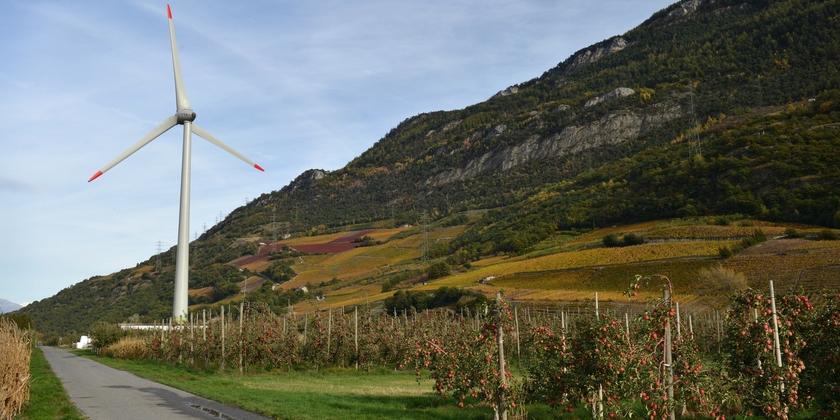
© Solange B 2013

The overarching question in this project is about how effective policy change towards renewable energy can be achieved. In this vein, we start with the idea that effective policy change leading to the realization of regional and local renewable energy projects can be determined by assessing different aspects of “social acceptance”. We argue that – besides technology acceptance by the market – the acceptance of policies and instrument mixes is a crucial pre-condition for project success. So we concentrate on the acceptance of policies and instrument mixes (e.g., regulatory and incentive measures) by (1) the political elite involved in energy policy decision-making (socio-political acceptance) and by (2) citizens as expressed through their vote or other political intervention (community acceptance).

Project team

Prof. Dr. Karin Ingold Group Leader, Group: PEGO Tel. +41 58 765 5676 Send Mail

External team members

Isabelle Stadelmann-Steffen, Universität Bern (Project lead)

Clau Dermont, Universität Bern

Philip Thalmann, EPFL

Stefan Rieder, Interface Politikstudien

Chantal Strotz, Interface Politikstudien

Related Publications

Extbase Variable Dump
array(2 items)
   publications => '13961' (5 chars)
   libraryUrl => '' (0 chars)
Extbase Variable Dump
array(1 item)
   0 => Snowflake\Publications\Domain\Model\Publicationprototypepersistent entity (uid=13961, pid=124)
      originalId => protected13961 (integer)
      authors => protected'Markard, J.; Suter, M.; Ingold, K.' (49 chars)
      title => protected'Socio-technical transitions and policy change – advocacy coalitions in Swi
         ss energy policy
' (92 chars) journal => protected'Environmental Innovation and Societal Transitions' (49 chars) year => protected2016 (integer) volume => protected18 (integer) issue => protected'' (0 chars) startpage => protected'215' (3 chars) otherpage => protected'237' (3 chars) categories => protected'advocacy coalition framework; energy transition; policy change; politics; so
         cio-technical change
' (96 chars) description => protected'Policies and politics are an integral part of socio-technical transitions bu
         t have not received much attention in the transitions literature so far. Dra
         wing on the advocacy coalition framework, our paper addresses this gap with
         a study on actors and coalitions in Swiss energy policy. Our results show th
         at advocacy coalitions in Switzerland have largely remained stable despite t
         he Fukushima shock. However, heterogeneity of beliefs has increased and in 2
         013, even a majority of actors expressed their support for the energy transi
         tion – an indication that major policy change might be ahead. It seems tha
         t in socio-technical transitions, changes in the policy issue and in the act
         or base also work toward policy change, next to changes in core beliefs. We
         make suggestions how the advocacy coalition framework can inform analysis an
         d theory building in transition studies. We also present first ideas about t
         he interplay of socio-technical systems and policy systems.
' (971 chars) serialnumber => protected'2210-4224' (9 chars) doi => protected'10.1016/j.eist.2015.05.003' (26 chars) uid => protected13961 (integer) _localizedUid => protected13961 (integer)modified _languageUid => protectedNULL _versionedUid => protected13961 (integer)modified pid => protected124 (integer)
Markard, J.; Suter, M.; Ingold, K. (2016) Socio-technical transitions and policy change – advocacy coalitions in Swiss energy policy, Environmental Innovation and Societal Transitions, 18, 215-237, doi:10.1016/j.eist.2015.05.003, Institutional Repository