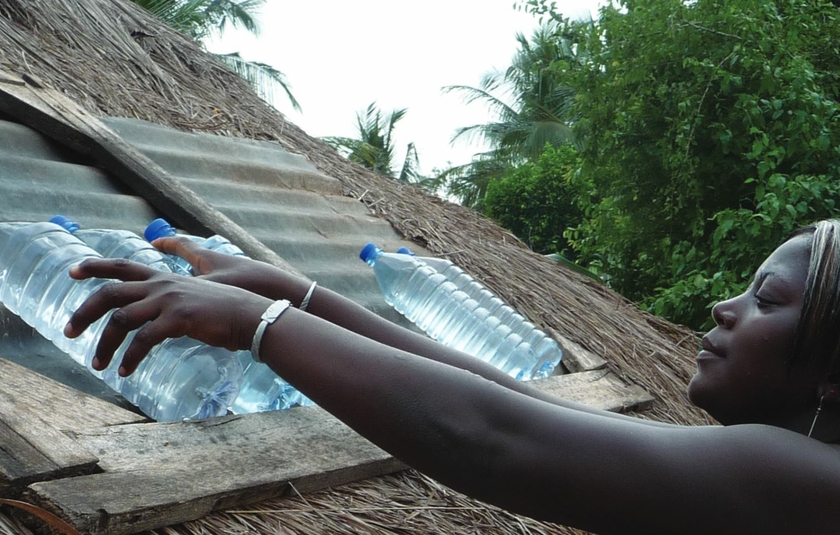
Solar Water Disinfection (SODIS) is a simple water disinfection method, making use of the sun’s energy and using PET bottles. It exploits the germicidal effect of solar radiation – especially UV-A radiation - on diarrhoea causing pathogens.
The principle of water disinfection by solar radiation was first discovered in 1984 by Prof. Aftim Acra of the American University in Beirut. In the 1990s, researchers at Eawag/Sandec launched extensive laboratory studies to evaluate the potential of solar radiation to inactivate bacteria and viruses. Based on the findings of these experiments, they designed a standard procedure – the SODIS method. After successful pilot testing in low-income areas, Eawag initiated a program in 2001 to disseminate the SODIS method through promotion projects in more than 25 low- and middle-income countries to ensure that the SODIS method becomes available to the people most in need.
The SODIS promotion activities were accompanied by various research studies to gain insight into disinfection efficiency during field application, assess the health impact in communities using SODIS for water treatment, evaluate interventions strategies supporting behaviour change for compliant application, test different containers and assess uptake and sustainability of the application.
Today, the SODIS method is recognized as one viable HWTS option. According to monitoring data from projects supported by Eawag, at least 5 million people have started using the method to improve the quality of their drinking water.
Detailed information about SODIS is available on: www.sodis.ch
Training Materials
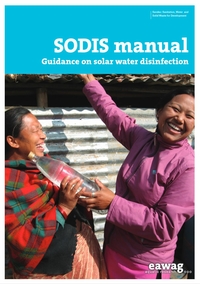
SODIS Manual
The SODIS Manual presents an overview of the SODIS method based on 20 years of research and practice. The first part provides basic facts about solar water disinfection and guidance for application. The second part addresses the technical aspects that influence the efficacy of the SODIS method in removing pathogens from water. The third part reviews specific approaches and tools used to promote the SODIS method to target populations. It aims at supporting experts with the integration of the SODIS method into HWTS, WASH and health projects.
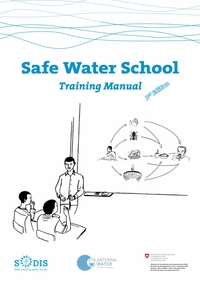
The Safe Water School Manual contains teaching materials to provide school lessons on drinking water treatment, hygiene and sanitation. It combines school lessons with scientific experiments, games and art activities. The lessons are based on the life-skills approach, and are inspired by the participatory teaching and learning methods PHAST and CHAST. These methods were selected be-cause they have been shown to be helpful in empowering school children to improve water, sanitation and hygiene (WASH) practices at school and at home.
array(10 items)0 => Snowflake\Publications\Domain\Model\Publicationprototypepersistent entity (uid=6582, pid=124)originalId => protected6582 (integer)
authors => protected'Bosshard, F.; Riedel, K.; Schneider, T.; Geiser, C.; Buc heli, M.; Egli, T.' (104 chars)
title => protected'Protein oxidation and aggregation in UVA-irradiated <I>Escherichia coli</I> cells as signs of accelerated cellular senescence' (125 chars)
journal => protected'Environmental Microbiology' (26 chars)
year => protected2010 (integer)
volume => protected12 (integer)
issue => protected'11' (2 chars)
startpage => protected'2931' (4 chars)
otherpage => protected'2945' (4 chars)
categories => protected'' (0 chars)
description => protected'Solar disinfection (SODIS) is a simple drinking water treatment method that improves microbiological water quality where other means are unavailable. It makes use of the deleterious effect of solar irradiation on pathogenic micr obes and viruses. A positive impact on health has been documented in several epidemiological studies. However, the molecular mechanisms damaging cells d uring this simple treatment are not yet fully understood. Here we show that protein damage is crucial in the process of inactivation by sunlight. Protei n damages in UVA-irradiated <I>Escherichia coli</I> cells have been evaluate d by an immunoblot method for carbonylated proteins and an aggregation assay based on semi-quantitative proteomics. A wide spectrum of structural and en zymatic proteins within the cell is affected by carbonylation and aggregatio n. Vital cellular functions like the transcription and translation apparatus , transport systems, amino acid synthesis and degradation, respiration, ATP synthesis, glycolysis, the TCA cycle, chaperone functions and catalase are t argeted by UVA irradiation. The protein damage pattern caused by SODIS stron gly resembles the pattern caused by reactive oxygen stress. Hence, sunlight probably accelerates cellular senescence and leads to the inactivation and f inally death of UVA-irradiated cells.' (1329 chars)
serialnumber => protected'1462-2912' (9 chars)
doi => protected'10.1111/j.1462-2920.2010.02268.x' (32 chars)
uid => protected6582 (integer)
_localizedUid => protected6582 (integer)modified_languageUid => protectedNULL
_versionedUid => protected6582 (integer)modifiedpid => protected124 (integer)1 => Snowflake\Publications\Domain\Model\Publicationprototypepersistent entity (uid=6470, pid=124)originalId => protected6470 (integer)
authors => protected'Bosshard, F.; Bucheli, M.; Meur, Y.; Egli, T.' (65 chars)
title => protected'The respiratory chain is the cell's Achilles' heel during UVA inactivation i n <em>Escherichia coli</em>' (103 chars)
journal => protected'Microbiology' (12 chars)
year => protected2010 (integer)
volume => protected156 (integer)
issue => protected'7' (1 chars)
startpage => protected'2006' (4 chars)
otherpage => protected'2015' (4 chars)
categories => protected'' (0 chars)
description => protected'Solar disinfection (SODIS) is used as an effective and inexpensive tool to i mprove the microbiological quality of drinking water in developing countries where no other means are available. Solar UVA light is the agent that inact ivates bacteria during the treatment. Damage to bacterial membranes plays a crucial role in the inactivation process. This study showed that even slight ly irradiated cells (after less than 1 h of simulated sunlight) were strongl y affected in their ability to maintain essential parts of their energy meta bolism, in particular of the respiratory chain (activities of NADH oxidase, succinate oxidase and lactate oxidase were measured). The cells' potential t o generate ATP was also strongly inhibited. Many essential enzymes of carbon metabolism (glucose-6-phosphate dehydrogenase, glyceraldehyde-3-phosphate d ehydrogenase, lactate dehydrogenase and malate dehydrogenase) and defence ag ainst oxidative stress (catalases and glutathione-disulfide reductase) were reduced in their activity during SODIS. The work suggests that damage to mem brane enzymes is a likely cause of membrane dysfunction (loss of membrane po tential and increased membrane permeability) during UVA irradiation. In this study, the first targets on the way to cell death were found to be the resp iratory chain and F<sub>1</sub>F<sub>0</sub> ATPase.' (1344 chars)
serialnumber => protected'1350-0872' (9 chars)
doi => protected'10.1099/mic.0.038471-0' (22 chars)
uid => protected6470 (integer)
_localizedUid => protected6470 (integer)modified_languageUid => protectedNULL
_versionedUid => protected6470 (integer)modifiedpid => protected124 (integer)2 => Snowflake\Publications\Domain\Model\Publicationprototypepersistent entity (uid=6306, pid=124)originalId => protected6306 (integer)
authors => protected'Bosshard, F.; Berney, M.; Scheifele, M.; Weilenmann, H.- U.; Egli, T.' (93 chars)
title => protected'Solar disinfection (SODIS) and subsequent dark storage of <em>Salmonella typ himurium</em> and <em>Shigella flexneri</em> monitored by flow cytometry' (148 chars)
journal => protected'Microbiology' (12 chars)
year => protected2009 (integer)
volume => protected155 (integer)
issue => protected'4' (1 chars)
startpage => protected'1310' (4 chars)
otherpage => protected'1317' (4 chars)
categories => protected'' (0 chars)
description => protected'Pathogenic enteric bacteria are a major cause of drinking water related morb idity and mortality in developing countries. Solar disinfection (SODIS) is a n effective means to fight this problem. In the present study, SODIS of two important enteric pathogens, <em>Shigella flexneri</em> and <em>Salmonella t yphimurium,</em> was investigated with a variety of viability indicators inc luding cellular ATP levels, efflux pump activity, glucose uptake ability, an d polarization and integrity of the cytoplasmic membrane. The respiratory ch ain of enteric bacteria was identified to be a likely target of sunlight and UVA irradiation. Furthermore, during dark storage after irradiation, the ph ysiological state of the bacterial cells continued to deteriorate even in th e absence of irradiation: apparently the cells were unable to repair damage. This strongly suggests that for <em>S. typhimurium</em> and <em>Sh. flexner i</em>, a relatively small light dose is enough to irreversibly damage the c ells and that storage of bottles after irradiation does not allow regrowth o f inactivated bacterial cells. In addition, we show that light dose reciproc ity is an important issue when using simulated sunlight. At high irradiation intensities (>700 W m<sup>–2</sup>) light dose reciprocity failed and resulted in an overestimation of the effect, whereas reciprocity applied wel l around natural sunlight intensity (<400 W m<sup>–2</sup>).' (1433 chars)
serialnumber => protected'1350-0872' (9 chars)
doi => protected'10.1099/mic.0.024794-0' (22 chars)
uid => protected6306 (integer)
_localizedUid => protected6306 (integer)modified_languageUid => protectedNULL
_versionedUid => protected6306 (integer)modifiedpid => protected124 (integer)3 => Snowflake\Publications\Domain\Model\Publicationprototypepersistent entity (uid=5253, pid=124)originalId => protected5253 (integer)
authors => protected'Berney, M.; Weilenmann, H.-U.; Egli, T.' (54 chars)
title => protected'Flow-cytometric study of vital cellular functions in <em>Escherichia coli</e m> during solar disinfection (SODIS)' (112 chars)
journal => protected'Microbiology' (12 chars)
year => protected2006 (integer)
volume => protected152 (integer)
issue => protected'6' (1 chars)
startpage => protected'1719' (4 chars)
otherpage => protected'1729' (4 chars)
categories => protected'' (0 chars)
description => protected'The effectiveness of solar disinfection (SODIS), a low-cost household water treatment method for developing countries, was investigated with flow cytome try and viability stains for the enteric bacterium <em>Escherichia coli</em> . A better understanding of the process of injury or death of <em>E. coli</e m> during SODIS could be gained by investigating six different cellular func tions, namely: efflux pump activity (Syto 9 plus ethidium bromide), membrane potential [bis-(1,3-dibutylbarbituric acid)trimethine oxonol; DiBAC<sub>4</ sub>(3)], membrane integrity (LIVE/DEAD BacLight), glucose uptake activity ( 2-[N-(7-nitrobenz-2-oxa-1,3-diazol-4-yl)amino]-2-deoxy-D-glucose; 2-NBDG), t otal ATP concentration (BacTiter-Glo) and culturability (pour-plate method). These variables were measured in <em>E. coli</em> K-12 MG1655 cells that we re exposed to either sunlight or artificial UVA light. The inactivation patt ern of cellular functions was very similar for both light sources. A UVA lig ht dose (fluence) of <500 kJ m<sup>-2</sup> was enough to lower the proto n motive force, such that efflux pump activity and ATP synthesis decreased s ignificantly. The loss of membrane potential, glucose uptake activity and cu lturability of > 80% of the cells was observed at a fluence of ∼ 1500 k J m<sup>-2</sup>, and the cytoplasmic membrane of bacterial cells became per meable at a fluence of > 2500 kJ m<sup>-2</sup>, Culturable counts of str essed bacteria after anaerobic incubation of sodium pyruvate-supplemented tr yptic soy agar closely correlated with the loss of membrane potential. The r esults strongly suggest that cells exposed to > 1500 kJ m<sup>-2</sup> so lar UVA (corresponding to 530 W m<sup>-2</sup> global sunlight intensity for 6 h) were no longer able to repair the damage and recover. Our study confir ms the lethal effect of SODIS with cultivation-independent methods and gives a detailed picture of the 'agony' of <em>E. coli </em>when it is stressed w ith sunlight.' (1989 chars)
serialnumber => protected'1350-0872' (9 chars)
doi => protected'10.1099/mic.0.28617-0' (21 chars)
uid => protected5253 (integer)
_localizedUid => protected5253 (integer)modified_languageUid => protectedNULL
_versionedUid => protected5253 (integer)modifiedpid => protected124 (integer)4 => Snowflake\Publications\Domain\Model\Publicationprototypepersistent entity (uid=5462, pid=124)originalId => protected5462 (integer)
authors => protected'Berney, M.; Weilenmann, H. -U.; Simonetti, A.; Egli,&nbs p;T.' (80 chars)
title => protected'Efficacy of solar disinfection of <I>Escherichia coli</I>, <I>Shigella flexn eri</I>, <I>Salmonella</I> Typhimurium and <I>Vibrio cholerae</I>' (141 chars)
journal => protected'Journal of Applied Microbiology' (31 chars)
year => protected2006 (integer)
volume => protected101 (integer)
issue => protected'4' (1 chars)
startpage => protected'828' (3 chars)
otherpage => protected'836' (3 chars)
categories => protected'Escherichia coli; mild heat; reciprocity; resistance; Salmonella Typhimurium ; Shigella flexneri; solar disinfection (SODIS); Vibrio cholerae' (140 chars)
description => protected'Aims: To determine the efficacy of solar disinfection (SODIS) for enteric pa thogens and to test applicability of the reciprocity law.<BR/>Methods and Re sults: Resistance to sunlight at 37°C based on <I>F</I><SUB>99</SUB> values was in the following order: <I>Salmonella</I> Typhimurium > <I>Escherichia coli</I> > <I>Shigella flexneri</I> > <I>Vibrio cholerae</I>. While <I>F</I> <SUB>90</SUB> values of <I>Salm. Typhimurium</I> and <I>E. coli</I> were sim ilar, <I>F</I><SUB>99</SUB> values differed by 60% due to different inactiva tion curve shapes. Efficacy seemed not to be dependent on fluence rate for < I>E. coli</I> stationary cells. Sensitivity to mild heat was observed above a temperature of 45°C for <I>E. coli</I>, <I>Salm.</I> Typhimurium and <I>S h. flexneri</I>, while <I>V. cholerae</I> was already susceptible above 40° C.<BR/>Conclusions: <I>Salmonella</I> Typhimurium was the most resistant and <I>V. cholerae</I> the least resistant enteric strain. The reciprocity law is applicable for stationary <I>E. coli</I> cells irradiated with sunlight o r artificial sunlight.<BR/>Significance and Impact of the Study: <I>Escheric hia coli</I> might not be the appropriate indicator bacterium to test the ef ficacy of SODIS on enteric bacteria and the physiological response to SODIS might be different among enteric bacteria. The applicability of the reciproc ity law indicates that fluence rate plays a secondary role in SODIS efficacy . Stating inactivation efficacy with <I>T</I><SUB>90</SUB> or <I>F</I><SUB>9 0</SUB> values without showing original data is inadequate for SODIS studies .' (1597 chars)
serialnumber => protected'1364-5072' (9 chars)
doi => protected'10.1111/j.1365-2672.2006.02983.x' (32 chars)
uid => protected5462 (integer)
_localizedUid => protected5462 (integer)modified_languageUid => protectedNULL
_versionedUid => protected5462 (integer)modifiedpid => protected124 (integer)5 => Snowflake\Publications\Domain\Model\Publicationprototypepersistent entity (uid=5463, pid=124)originalId => protected5463 (integer)
authors => protected'Berney, M.; Weilenmann, H.-U.; Ihssen, J.; Bassin, C.; E gli, T.' (88 chars)
title => protected'Specific growth rate determines the sensitivity of <em>Escherichia coli</em> to Thermal, UVA, and solar disinfection' (116 chars)
journal => protected'Applied and Environmental Microbiology' (38 chars)
year => protected2006 (integer)
volume => protected72 (integer)
issue => protected'4' (1 chars)
startpage => protected'2586' (4 chars)
otherpage => protected'2593' (4 chars)
categories => protected'' (0 chars)
description => protected'Knowledge about the sensitivity of the test organism is essential for the ev aluation of any disinfection method. In this work we show that sensitivity o f <em>Escherichia coli</em> MG1655 to three physical stresses (mild heat, UV A light, and sunlight) that are relevant in the disinfection of drinking wat er with solar radiation is determined by the specific growth rate of the cul ture. Batch- and chemostat-cultivated cells from cultures with similar speci fic growth rates showed similar stress sensitivities. Generally, fast-growin g cells were more sensitive to the stresses than slow-growing cells. For exa mple, slow-growing chemostat-cultivated cells (<em>D</em> = 0.08 h<sup>–1< /sup>) and stationary-phase bacteria from batch culture that were exposed to mild heat had very similar <em>T</em><sub>90</sub> (time until 90% of the p opulation is inactivated) values (<em>T</em><sub>90, chemostat</sub> = 2.66 h; <em>T</em><sub>90, batch</sub> = 2.62 h), whereas <em>T</em><sub>90</sub> for cells growing at a µ of 0.9 h<sup>–1</sup> was 0.2 h. Wepresent evid ence that the stress sensitivity of <em>E. coli</em> is correlated with the intracellular level of the alternative sigma factor RpoS. This is also suppo rted by the fact that <em>E. coli rpoS</em> mutant cells were more stress se nsitive than the parent strain by factors of 4.9 (mild heat), 5.3 (UVA light ), and 4.1 (sunlight). Furthermore, modeling of inactivation curves with GIn aFiT revealed that the shape of inactivation curves changed depending on the specific growth rate. Inactivation curves of cells from fast-growing cultur es (µ = 1.0 h<sup>–1</sup>) that were irradiated with UVA light showed a tailing effect, while for slow-growing cultures (µ = 0.3 h<sup>–1</sup>), inactivation curves with shoulders were obtained. Our findings emphasize th e need for accurate reporting of specific growth rates and detailed culture conditions in disinfection studies to allow comparison of data from differen t studies and laboratori...' (2049 chars)
serialnumber => protected'0099-2240' (9 chars)
doi => protected'10.1128/AEM.72.4.2586-2593.2006' (31 chars)
uid => protected5463 (integer)
_localizedUid => protected5463 (integer)modified_languageUid => protectedNULL
_versionedUid => protected5463 (integer)modifiedpid => protected124 (integer)6 => Snowflake\Publications\Domain\Model\Publicationprototypepersistent entity (uid=16244, pid=124)originalId => protected16244 (integer)
authors => protected'Dejung, S.; Fuentes, I.; Almanza, G.; Jarro, R.; Navarro , L.; Arias, G.; Urquieta, E.; Torrico, A.; Fenandez,&nb sp;W.; Iriarte, M.; Birrer, C.; Stahel, W. A.; Wegelin,& nbsp;M.' (235 chars)
title => protected'Effect of solar water disinfection (SODIS) on model microorganisms under imp roved and field SODIS conditions' (108 chars)
journal => protected'Journal of Water Supply: Research and Technology. Aqua' (54 chars)
year => protected2007 (integer)
volume => protected56 (integer)
issue => protected'4' (1 chars)
startpage => protected'245' (3 chars)
otherpage => protected'256' (3 chars)
categories => protected'home-based; low-budget water purification method; solar water disinfection' (74 chars)
description => protected'SODIS is a solar water disinfection process which works by exposing untreate d water to the sun in plastic bottles. Field experiments were carried out in Cochabamba, Bolivia, to obtain standard UV-A (320–405 nm) dose values req uired to inactivate non-spore forming bacteria, spores of <em>Bacillus subti lis</em>, and wild type coliphages. inactivation kinetics for non-spore form ing bacteria are similar under SODIS conditions, exhibiting dose values rang ing between 15 and 30 Wh m<sup>–2</sup> for 1 log<sub>10</sub> (90%) inact ivation, 45 to 90 Wh m<sup>–2</sup> for 3 log<sub>10</sub> (99.9%), and 90 to 180 Wh m<sup>–2</sup> for 6 log<sub>10</sub> (99.9999%) inactivation. <em>Pseudomonas aeruginosa</em> was found to be the most resistant and <em>S almonella typhi</em>, the most sensitive of the non-sporulating organisms st udied here. Phages and spores serve as model organisms for viruses and paras ite cysts. A UV-A dose of 85 to 210 wh m<sup>–2</sup> accumulated during o ne to two days was enough to inactivate 1 log<sub>10</sub> (90%) of these st rong biological structures. The process of SODIS depended mainly on the radi ation dose [Wh m<sup>–2</sup>] an organism was exposed to. An irradiation intensity exceeding some 12 Wm<sup>–2</sup> did not increase the inactivat ion constant. A synergistic effect of water temperatures below 50 °C was no t observed. Data plotting from various experiments on a single graph proved to be a reliable alternative method for analysis. inactivation rates determi ned by this method were revealed to be within the same range as individual a nalysis.' (1604 chars)
serialnumber => protected'0003-7214' (9 chars)
doi => protected'10.2166/aqua.2007.058' (21 chars)
uid => protected16244 (integer)
_localizedUid => protected16244 (integer)modified_languageUid => protectedNULL
_versionedUid => protected16244 (integer)modifiedpid => protected124 (integer)7 => Snowflake\Publications\Domain\Model\Publicationprototypepersistent entity (uid=13931, pid=124)originalId => protected13931 (integer)
authors => protected'Wegelin, M.; Sommer, B.' (33 chars)
title => protected'Solar Water Disinfection (SODIS) - destined for worldwide use?' (62 chars)
journal => protected'Waterlines' (10 chars)
year => protected1998 (integer)
volume => protected16 (integer)
issue => protected'3' (1 chars)
startpage => protected'30' (2 chars)
otherpage => protected'32' (2 chars)
categories => protected'' (0 chars)
description => protected'Last year's publication of Rob Reed's article 'Sunshine and fresh air: a pra ctical approach to combating water disease' provoked sustained reader intere st in what seems such a simple solution to a major problem. Here we can publ ish the results of extensive field and lab tests.' (277 chars)
serialnumber => protected'0262-8104' (9 chars)
doi => protected'10.3362/0262-8104.1998.013' (26 chars)
uid => protected13931 (integer)
_localizedUid => protected13931 (integer)modified_languageUid => protectedNULL
_versionedUid => protected13931 (integer)modifiedpid => protected124 (integer)8 => Snowflake\Publications\Domain\Model\Publicationprototypepersistent entity (uid=13929, pid=124)originalId => protected13929 (integer)
authors => protected'Sommer, B.; Mariño, A.; Solarte, Y.; Salas, M. L.; Dierolf, C.; Valiente, C.; Mora, D.; Rechsteiner, R.; S etter, P.; Wirojanagud, W.; Ajarmeh, H.; Al-Hassan, A.; Wegelin, M.' (244 chars)
title => protected'SODIS—an emerging water treatment process' (43 chars)
journal => protected'Aqua' (4 chars)
year => protected1997 (integer)
volume => protected46 (integer)
issue => protected'3' (1 chars)
startpage => protected'127' (3 chars)
otherpage => protected'137' (3 chars)
categories => protected'' (0 chars)
description => protected'This article comprises the work of several research teams which analysed the effectiveness of solar water disinfection (SODIS) in various laboratory and field investigations carried out at different test sites over the last five years. SODIS was applied as batch and continuous flow process (SODIS reacto r). The process is most effective with a water temperature of at least 50 ° C. Transparent plastic bags allow a 3-log reduction (99.9%) of faecal colifo rms and <em>Vibrio cholerae</em> through heating and radiation at an UV-A do se of 54 Wh/m<sup>2</sup> over a period of 140 min. The SODIS reactor produc es around 100 L of drinking water per square metre of solar collector and da y.' (686 chars)
serialnumber => protected'0147-3298' (9 chars)
doi => protected'' (0 chars)
uid => protected13929 (integer)
_localizedUid => protected13929 (integer)modified_languageUid => protectedNULL
_versionedUid => protected13929 (integer)modifiedpid => protected124 (integer)9 => Snowflake\Publications\Domain\Model\Publicationprototypepersistent entity (uid=3023, pid=124)originalId => protected3023 (integer)
authors => protected'Wegelin, M.; Canonica, S.; Mechsner, K.; Fleischmann, T. ; Pesaro, F.; Metzler, A.' (111 chars)
title => protected'Solar water disinfection: scope of the process and analysis of radiation exp eriments' (84 chars)
journal => protected'Aqua' (4 chars)
year => protected1994 (integer)
volume => protected43 (integer)
issue => protected'3' (1 chars)
startpage => protected'154' (3 chars)
otherpage => protected'169' (3 chars)
categories => protected'' (0 chars)
description => protected'The exposure of water to sunlight radiation improves the microbiological qua lity of water. This treatment process called solar water disinfection could be used at household level to treat small quantities of water for drinking p urposes. The bactericidal effect of UV-A and violet light and their combined effects assumed as hypothesis by earlier research could be verified by the laboratory tests carried out at EAWAG. A 3-log reduction of <em>E. coli</em> requires a fluence close to 2,000 kJ/m<sup>2</sup> or 555 W·h/m<sup>2</sup > (dose of solar radiation integrated in the 350-450 nm wavelength range), w hich correspond to ~5 h of mid-latitude midday summer sunshine. The same dos e inactivates also the bacteriophage f2 and a rotavirus to a similar order o f magnitude, whereas a picornavirus (encephalomyocarditis virus) was observe d to be twice as resistant. Water temperatures with a threshold of ~50 °C c onsiderably increase the inactivation rate of bacteria induced by solar radi ation whereas the inactivation rate of viruses steadily increases with tempe ratures in the range of 20-50 °C. The recorded synergetic effects of solar radiation and thermal water treatment favour a combined use of these two wat er-treatment processes.' (1239 chars)
serialnumber => protected'0147-3298' (9 chars)
doi => protected'' (0 chars)
uid => protected3023 (integer)
_localizedUid => protected3023 (integer)modified_languageUid => protectedNULL
_versionedUid => protected3023 (integer)modifiedpid => protected124 (integer)
Protein oxidation and aggregation in UVA-irradiated Escherichia coli cells as signs of accelerated cellular senescence
Solar disinfection (SODIS) is a simple drinking water treatment method that improves microbiological water quality where other means are unavailable. It makes use of the deleterious effect of solar irradiation on pathogenic microbes and viruses. A positive impact on health has been documented in several epidemiological studies. However, the molecular mechanisms damaging cells during this simple treatment are not yet fully understood. Here we show that protein damage is crucial in the process of inactivation by sunlight. Protein damages in UVA-irradiated Escherichia coli cells have been evaluated by an immunoblot method for carbonylated proteins and an aggregation assay based on semi-quantitative proteomics. A wide spectrum of structural and enzymatic proteins within the cell is affected by carbonylation and aggregation. Vital cellular functions like the transcription and translation apparatus, transport systems, amino acid synthesis and degradation, respiration, ATP synthesis, glycolysis, the TCA cycle, chaperone functions and catalase are targeted by UVA irradiation. The protein damage pattern caused by SODIS strongly resembles the pattern caused by reactive oxygen stress. Hence, sunlight probably accelerates cellular senescence and leads to the inactivation and finally death of UVA-irradiated cells.
Bosshard, F.; Riedel, K.; Schneider, T.; Geiser, C.; Bucheli, M.; Egli, T. (2010) Protein oxidation and aggregation in UVA-irradiated Escherichia coli cells as signs of accelerated cellular senescence, Environmental Microbiology, 12(11), 2931-2945, doi:10.1111/j.1462-2920.2010.02268.x, Institutional Repository
The respiratory chain is the cell's Achilles' heel during UVA inactivation in Escherichia coli
Solar disinfection (SODIS) is used as an effective and inexpensive tool to improve the microbiological quality of drinking water in developing countries where no other means are available. Solar UVA light is the agent that inactivates bacteria during the treatment. Damage to bacterial membranes plays a crucial role in the inactivation process. This study showed that even slightly irradiated cells (after less than 1 h of simulated sunlight) were strongly affected in their ability to maintain essential parts of their energy metabolism, in particular of the respiratory chain (activities of NADH oxidase, succinate oxidase and lactate oxidase were measured). The cells' potential to generate ATP was also strongly inhibited. Many essential enzymes of carbon metabolism (glucose-6-phosphate dehydrogenase, glyceraldehyde-3-phosphate dehydrogenase, lactate dehydrogenase and malate dehydrogenase) and defence against oxidative stress (catalases and glutathione-disulfide reductase) were reduced in their activity during SODIS. The work suggests that damage to membrane enzymes is a likely cause of membrane dysfunction (loss of membrane potential and increased membrane permeability) during UVA irradiation. In this study, the first targets on the way to cell death were found to be the respiratory chain and F1F0 ATPase.
Bosshard, F.; Bucheli, M.; Meur, Y.; Egli, T. (2010) The respiratory chain is the cell's Achilles' heel during UVA inactivation in Escherichia coli, Microbiology, 156(7), 2006-2015, doi:10.1099/mic.0.038471-0, Institutional Repository
Solar disinfection (SODIS) and subsequent dark storage of Salmonella typhimurium and Shigella flexneri monitored by flow cytometry
Pathogenic enteric bacteria are a major cause of drinking water related morbidity and mortality in developing countries. Solar disinfection (SODIS) is an effective means to fight this problem. In the present study, SODIS of two important enteric pathogens, Shigella flexneri and Salmonella typhimurium, was investigated with a variety of viability indicators including cellular ATP levels, efflux pump activity, glucose uptake ability, and polarization and integrity of the cytoplasmic membrane. The respiratory chain of enteric bacteria was identified to be a likely target of sunlight and UVA irradiation. Furthermore, during dark storage after irradiation, the physiological state of the bacterial cells continued to deteriorate even in the absence of irradiation: apparently the cells were unable to repair damage. This strongly suggests that for S. typhimurium and Sh. flexneri, a relatively small light dose is enough to irreversibly damage the cells and that storage of bottles after irradiation does not allow regrowth of inactivated bacterial cells. In addition, we show that light dose reciprocity is an important issue when using simulated sunlight. At high irradiation intensities (>700 W m–2) light dose reciprocity failed and resulted in an overestimation of the effect, whereas reciprocity applied well around natural sunlight intensity (<400 W m–2).
Bosshard, F.; Berney, M.; Scheifele, M.; Weilenmann, H.-U.; Egli, T. (2009) Solar disinfection (SODIS) and subsequent dark storage of Salmonella typhimurium and Shigella flexneri monitored by flow cytometry, Microbiology, 155(4), 1310-1317, doi:10.1099/mic.0.024794-0, Institutional Repository
Flow-cytometric study of vital cellular functions in Escherichia coli during solar disinfection (SODIS)
The effectiveness of solar disinfection (SODIS), a low-cost household water treatment method for developing countries, was investigated with flow cytometry and viability stains for the enteric bacterium Escherichia coli. A better understanding of the process of injury or death of E. coli during SODIS could be gained by investigating six different cellular functions, namely: efflux pump activity (Syto 9 plus ethidium bromide), membrane potential [bis-(1,3-dibutylbarbituric acid)trimethine oxonol; DiBAC4(3)], membrane integrity (LIVE/DEAD BacLight), glucose uptake activity (2-[N-(7-nitrobenz-2-oxa-1,3-diazol-4-yl)amino]-2-deoxy-D-glucose; 2-NBDG), total ATP concentration (BacTiter-Glo) and culturability (pour-plate method). These variables were measured in E. coli K-12 MG1655 cells that were exposed to either sunlight or artificial UVA light. The inactivation pattern of cellular functions was very similar for both light sources. A UVA light dose (fluence) of <500 kJ m-2 was enough to lower the proton motive force, such that efflux pump activity and ATP synthesis decreased significantly. The loss of membrane potential, glucose uptake activity and culturability of > 80% of the cells was observed at a fluence of ∼ 1500 kJ m-2, and the cytoplasmic membrane of bacterial cells became permeable at a fluence of > 2500 kJ m-2, Culturable counts of stressed bacteria after anaerobic incubation of sodium pyruvate-supplemented tryptic soy agar closely correlated with the loss of membrane potential. The results strongly suggest that cells exposed to > 1500 kJ m-2 solar UVA (corresponding to 530 W m-2 global sunlight intensity for 6 h) were no longer able to repair the damage and recover. Our study confirms the lethal effect of SODIS with cultivation-independent methods and gives a detailed picture of the 'agony' of E. coli when it is stressed with sunlight.
Berney, M.; Weilenmann, H.-U.; Egli, T. (2006) Flow-cytometric study of vital cellular functions in Escherichia coli during solar disinfection (SODIS), Microbiology, 152(6), 1719-1729, doi:10.1099/mic.0.28617-0, Institutional Repository
Efficacy of solar disinfection of Escherichia coli, Shigella flexneri, Salmonella Typhimurium and Vibrio cholerae
Aims: To determine the efficacy of solar disinfection (SODIS) for enteric pathogens and to test applicability of the reciprocity law. Methods and Results: Resistance to sunlight at 37°C based on F99 values was in the following order: Salmonella Typhimurium > Escherichia coli > Shigella flexneri > Vibrio cholerae. While F90 values of Salm. Typhimurium and E. coli were similar, F99 values differed by 60% due to different inactivation curve shapes. Efficacy seemed not to be dependent on fluence rate for E. coli stationary cells. Sensitivity to mild heat was observed above a temperature of 45°C for E. coli, Salm. Typhimurium and Sh. flexneri, while V. cholerae was already susceptible above 40°C. Conclusions: Salmonella Typhimurium was the most resistant and V. cholerae the least resistant enteric strain. The reciprocity law is applicable for stationary E. coli cells irradiated with sunlight or artificial sunlight. Significance and Impact of the Study: Escherichia coli might not be the appropriate indicator bacterium to test the efficacy of SODIS on enteric bacteria and the physiological response to SODIS might be different among enteric bacteria. The applicability of the reciprocity law indicates that fluence rate plays a secondary role in SODIS efficacy. Stating inactivation efficacy with T90 or F90 values without showing original data is inadequate for SODIS studies.
Berney, M.; Weilenmann, H. -U.; Simonetti, A.; Egli, T. (2006) Efficacy of solar disinfection of Escherichia coli, Shigella flexneri, Salmonella Typhimurium and Vibrio cholerae, Journal of Applied Microbiology, 101(4), 828-836, doi:10.1111/j.1365-2672.2006.02983.x, Institutional Repository
Specific growth rate determines the sensitivity of Escherichia coli to Thermal, UVA, and solar disinfection
Knowledge about the sensitivity of the test organism is essential for the evaluation of any disinfection method. In this work we show that sensitivity of Escherichia coli MG1655 to three physical stresses (mild heat, UVA light, and sunlight) that are relevant in the disinfection of drinking water with solar radiation is determined by the specific growth rate of the culture. Batch- and chemostat-cultivated cells from cultures with similar specific growth rates showed similar stress sensitivities. Generally, fast-growing cells were more sensitive to the stresses than slow-growing cells. For example, slow-growing chemostat-cultivated cells (D = 0.08 h–1) and stationary-phase bacteria from batch culture that were exposed to mild heat had very similar T90 (time until 90% of the population is inactivated) values (T90, chemostat = 2.66 h; T90, batch = 2.62 h), whereas T90 for cells growing at a µ of 0.9 h–1 was 0.2 h. Wepresent evidence that the stress sensitivity of E. coli is correlated with the intracellular level of the alternative sigma factor RpoS. This is also supported by the fact that E. coli rpoS mutant cells were more stress sensitive than the parent strain by factors of 4.9 (mild heat), 5.3 (UVA light), and 4.1 (sunlight). Furthermore, modeling of inactivation curves with GInaFiT revealed that the shape of inactivation curves changed depending on the specific growth rate. Inactivation curves of cells from fast-growing cultures (µ = 1.0 h–1) that were irradiated with UVA light showed a tailing effect, while for slow-growing cultures (µ = 0.3 h–1), inactivation curves with shoulders were obtained. Our findings emphasize the need for accurate reporting of specific growth rates and detailed culture conditions in disinfection studies to allow comparison of data from different studies and laboratories and sound interpretation of the data obtained.
Berney, M.; Weilenmann, H.-U.; Ihssen, J.; Bassin, C.; Egli, T. (2006) Specific growth rate determines the sensitivity of Escherichia coli to Thermal, UVA, and solar disinfection, Applied and Environmental Microbiology, 72(4), 2586-2593, doi:10.1128/AEM.72.4.2586-2593.2006, Institutional Repository
Effect of solar water disinfection (SODIS) on model microorganisms under improved and field SODIS conditions
SODIS is a solar water disinfection process which works by exposing untreated water to the sun in plastic bottles. Field experiments were carried out in Cochabamba, Bolivia, to obtain standard UV-A (320–405 nm) dose values required to inactivate non-spore forming bacteria, spores of Bacillus subtilis, and wild type coliphages. inactivation kinetics for non-spore forming bacteria are similar under SODIS conditions, exhibiting dose values ranging between 15 and 30 Wh m–2 for 1 log10 (90%) inactivation, 45 to 90 Wh m–2 for 3 log10 (99.9%), and 90 to 180 Wh m–2 for 6 log10 (99.9999%) inactivation. Pseudomonas aeruginosa was found to be the most resistant and Salmonella typhi, the most sensitive of the non-sporulating organisms studied here. Phages and spores serve as model organisms for viruses and parasite cysts. A UV-A dose of 85 to 210 wh m–2 accumulated during one to two days was enough to inactivate 1 log10 (90%) of these strong biological structures. The process of SODIS depended mainly on the radiation dose [Wh m–2] an organism was exposed to. An irradiation intensity exceeding some 12 Wm–2 did not increase the inactivation constant. A synergistic effect of water temperatures below 50 °C was not observed. Data plotting from various experiments on a single graph proved to be a reliable alternative method for analysis. inactivation rates determined by this method were revealed to be within the same range as individual analysis.
Dejung, S.; Fuentes, I.; Almanza, G.; Jarro, R.; Navarro, L.; Arias, G.; Urquieta, E.; Torrico, A.; Fenandez, W.; Iriarte, M.; Birrer, C.; Stahel, W. A.; Wegelin, M. (2007) Effect of solar water disinfection (SODIS) on model microorganisms under improved and field SODIS conditions, Journal of Water Supply: Research and Technology. Aqua, 56(4), 245-256, doi:10.2166/aqua.2007.058, Institutional Repository
Solar Water Disinfection (SODIS) - destined for worldwide use?
Last year's publication of Rob Reed's article 'Sunshine and fresh air: a practical approach to combating water disease' provoked sustained reader interest in what seems such a simple solution to a major problem. Here we can publish the results of extensive field and lab tests.
This article comprises the work of several research teams which analysed the effectiveness of solar water disinfection (SODIS) in various laboratory and field investigations carried out at different test sites over the last five years. SODIS was applied as batch and continuous flow process (SODIS reactor). The process is most effective with a water temperature of at least 50 °C. Transparent plastic bags allow a 3-log reduction (99.9%) of faecal coliforms and Vibrio cholerae through heating and radiation at an UV-A dose of 54 Wh/m2 over a period of 140 min. The SODIS reactor produces around 100 L of drinking water per square metre of solar collector and day.
Sommer, B.; Mariño, A.; Solarte, Y.; Salas, M. L.; Dierolf, C.; Valiente, C.; Mora, D.; Rechsteiner, R.; Setter, P.; Wirojanagud, W.; Ajarmeh, H.; Al-Hassan, A.; Wegelin, M. (1997) SODIS—an emerging water treatment process, Aqua, 46(3), 127-137, Institutional Repository
Solar water disinfection: scope of the process and analysis of radiation experiments
The exposure of water to sunlight radiation improves the microbiological quality of water. This treatment process called solar water disinfection could be used at household level to treat small quantities of water for drinking purposes. The bactericidal effect of UV-A and violet light and their combined effects assumed as hypothesis by earlier research could be verified by the laboratory tests carried out at EAWAG. A 3-log reduction of E. coli requires a fluence close to 2,000 kJ/m2 or 555 W·h/m2 (dose of solar radiation integrated in the 350-450 nm wavelength range), which correspond to ~5 h of mid-latitude midday summer sunshine. The same dose inactivates also the bacteriophage f2 and a rotavirus to a similar order of magnitude, whereas a picornavirus (encephalomyocarditis virus) was observed to be twice as resistant. Water temperatures with a threshold of ~50 °C considerably increase the inactivation rate of bacteria induced by solar radiation whereas the inactivation rate of viruses steadily increases with temperatures in the range of 20-50 °C. The recorded synergetic effects of solar radiation and thermal water treatment favour a combined use of these two water-treatment processes.
Wegelin, M.; Canonica, S.; Mechsner, K.; Fleischmann, T.; Pesaro, F.; Metzler, A. (1994) Solar water disinfection: scope of the process and analysis of radiation experiments, Aqua, 43(3), 154-169, Institutional Repository
array(2 items)0 => Snowflake\Publications\Domain\Model\Publicationprototypepersistent entity (uid=5939, pid=124)originalId => protected5939 (integer)
authors => protected'Schmid, P.; Kohler, M.; Meierhofer, R.; Luzi, S.; Wegeli n, M.' (86 chars)
title => protected'Does the reuse of PET bottles during solar water disinfection pose a health risk due to the migration of plasticisers and other chemicals into the water ?' (153 chars)
journal => protected'Water Research' (14 chars)
year => protected2008 (integer)
volume => protected42 (integer)
issue => protected'20' (2 chars)
startpage => protected'5054' (4 chars)
otherpage => protected'5060' (4 chars)
categories => protected'solar water disinfection; drinking water; di(2-ethylhexyl)adipate; di(2-ethy lhexyl)phthalate; plasticiser; health risk' (118 chars)
description => protected'Solar water disinfection (SODIS) is a simple, effective and inexpensive wate r treatment procedure suitable for application in developing countries. Micr obially contaminated water is filled into transparent polyethylene terephtha late (PET) plastic bottles and exposed to full sunlight for at least 6 h. So lar radiation and elevated temperature destroy pathogenic germs efficiently. Recently, concerns have been raised insinuating a health risk by chemicals released from the bottle material polyethylene terephthalate (PET). Whereas the safety of PET for food packaging has been assessed in detail, similar in vestigations for PET bottles used under conditions of the SODIS treatment we re lacking until now. In the present study, the transfer of organic substanc es from PET to water was investigated under SODIS conditions using used colo urless transparent beverage bottles of different origin. The bottles were ex posed to sunlight for 17 h at a geographical latitude of 47° N. In a genera l screening of SODIS treated water, only food flavour constituents of previo us bottle contents could be identified above a detection limit of 1 μg/L. Q uantitative determination of plasticisers di(2-ethylhexyl)adipate (DEHA) and di(2-ethylhexyl)phthalate (DEHP) revealed maximum concentrations of 0.046 a nd 0.71 μg/L, respectively, being in the same range as levels of these plas ticisers reported in studies on commercial bottled water. Generally, only mi nor differences in plasticiser concentrations could be observed in different experimental setups. The most decisive factor was the country of origin of bottles, while the impact of storage conditions (sunlight exposure and tempe rature) was less distinct. Toxicological risk assessment of maximum concentr ations revealed a minimum safety factor of 8.5 and a negligible carcinogenic risk of 2.8 × 10<SUP>−7</SUP> for the more critical DEHP. This data demo nstrate that the SODIS procedure is safe with respect to human exposure to D EHA and DEHP.' (1989 chars)
serialnumber => protected'0043-1354' (9 chars)
doi => protected'10.1016/j.watres.2008.09.025' (28 chars)
uid => protected5939 (integer)
_localizedUid => protected5939 (integer)modified_languageUid => protectedNULL
_versionedUid => protected5939 (integer)modifiedpid => protected124 (integer)1 => Snowflake\Publications\Domain\Model\Publicationprototypepersistent entity (uid=5214, pid=124)originalId => protected5214 (integer)
authors => protected'Wegelin, M.; Canonica, S.; Alder, A. C.; Marazuela,  ;D.; Suter, M. J. -F.; Bucheli, T. D.; Haefliger,&n bsp;O. P.; Zenobi, R.; McGuigan, K. G.; Kelly, M.&n bsp;T.; Ibrahim, P.; Larroque, M.' (271 chars)
title => protected'Does sunlight change the material and content of polyethylene terephthalate (PET) bottles?' (90 chars)
journal => protected'Journal of Water Supply: Research and Technology. Aqua' (54 chars)
year => protected2001 (integer)
volume => protected50 (integer)
issue => protected'3' (1 chars)
startpage => protected'125' (3 chars)
otherpage => protected'133' (3 chars)
categories => protected'PET (polyethylene terephthalate); photoproducts; solar radiation; water disi nfection' (84 chars)
description => protected'A simple water treatment process called SODIS (solar water disinfection) con sists of filling polluted water in PET bottles that are exposed to sunlight for 5-6 hours. However, sunlight does not only destroy disease-causing micro organisms found in the water but also transforms the plastic material into p hotoproducts. Laboratory and field tests revealed that these photoproducts a re generated at the outer surface of the bottles. No indication for migratio n of possible photoproducts or additives from PET bottles into water was obs erved with the applied analytical methods.' (574 chars)
serialnumber => protected'0003-7214' (9 chars)
doi => protected'10.2166/aqua.2001.0012' (22 chars)
uid => protected5214 (integer)
_localizedUid => protected5214 (integer)modified_languageUid => protectedNULL
_versionedUid => protected5214 (integer)modifiedpid => protected124 (integer)
Does the reuse of PET bottles during solar water disinfection pose a health risk due to the migration of plasticisers and other chemicals into the water?
Solar water disinfection (SODIS) is a simple, effective and inexpensive water treatment procedure suitable for application in developing countries. Microbially contaminated water is filled into transparent polyethylene terephthalate (PET) plastic bottles and exposed to full sunlight for at least 6 h. Solar radiation and elevated temperature destroy pathogenic germs efficiently. Recently, concerns have been raised insinuating a health risk by chemicals released from the bottle material polyethylene terephthalate (PET). Whereas the safety of PET for food packaging has been assessed in detail, similar investigations for PET bottles used under conditions of the SODIS treatment were lacking until now. In the present study, the transfer of organic substances from PET to water was investigated under SODIS conditions using used colourless transparent beverage bottles of different origin. The bottles were exposed to sunlight for 17 h at a geographical latitude of 47° N. In a general screening of SODIS treated water, only food flavour constituents of previous bottle contents could be identified above a detection limit of 1 μg/L. Quantitative determination of plasticisers di(2-ethylhexyl)adipate (DEHA) and di(2-ethylhexyl)phthalate (DEHP) revealed maximum concentrations of 0.046 and 0.71 μg/L, respectively, being in the same range as levels of these plasticisers reported in studies on commercial bottled water. Generally, only minor differences in plasticiser concentrations could be observed in different experimental setups. The most decisive factor was the country of origin of bottles, while the impact of storage conditions (sunlight exposure and temperature) was less distinct. Toxicological risk assessment of maximum concentrations revealed a minimum safety factor of 8.5 and a negligible carcinogenic risk of 2.8 × 10⁻⁷ for the more critical DEHP. This data demonstrate that the SODIS procedure is safe with respect to human exposure to DEHA and DEHP.
Schmid, P.; Kohler, M.; Meierhofer, R.; Luzi, S.; Wegelin, M. (2008) Does the reuse of PET bottles during solar water disinfection pose a health risk due to the migration of plasticisers and other chemicals into the water?, Water Research, 42(20), 5054-5060, doi:10.1016/j.watres.2008.09.025, Institutional Repository
Does sunlight change the material and content of polyethylene terephthalate (PET) bottles?
A simple water treatment process called SODIS (solar water disinfection) consists of filling polluted water in PET bottles that are exposed to sunlight for 5-6 hours. However, sunlight does not only destroy disease-causing microorganisms found in the water but also transforms the plastic material into photoproducts. Laboratory and field tests revealed that these photoproducts are generated at the outer surface of the bottles. No indication for migration of possible photoproducts or additives from PET bottles into water was observed with the applied analytical methods.
Wegelin, M.; Canonica, S.; Alder, A. C.; Marazuela, D.; Suter, M. J. -F.; Bucheli, T. D.; Haefliger, O. P.; Zenobi, R.; McGuigan, K. G.; Kelly, M. T.; Ibrahim, P.; Larroque, M. (2001) Does sunlight change the material and content of polyethylene terephthalate (PET) bottles?, Journal of Water Supply: Research and Technology. Aqua, 50(3), 125-133, doi:10.2166/aqua.2001.0012, Institutional Repository
array(3 items)0 => Snowflake\Publications\Domain\Model\Publicationprototypepersistent entity (uid=6498, pid=124)originalId => protected6498 (integer)
authors => protected'Graf, J.; Togouet, S. Z.; Kemka, N.; Niyitegeka, D. ; Meierhofer, R.; Pieboji, J. G.' (123 chars)
title => protected'Health gains from solar water disinfection (SODIS): evaluation of a water qu ality intervention in Yaoundé, Cameroon' (116 chars)
journal => protected'Journal of Water and Health' (27 chars)
year => protected2010 (integer)
volume => protected8 (integer)
issue => protected'4' (1 chars)
startpage => protected'779' (3 chars)
otherpage => protected'796' (3 chars)
categories => protected'developing countries; diarrhoea; drinking water; household water treatment; point-of-use; solar water disinfection' (114 chars)
description => protected'In developing countries, the burden of diarrhoea is still enormous. One way to reduce transmission of pathogens is by water quality interventions. Solar water disinfection (SODIS) is a low-cost and simple method to improve drink ing water quality on household level. This paper evaluates the implementatio n of SODIS in slum areas of Yaoundé, Cameroon. Promoters trained 2,911 hous eholds in the use of SODIS. Two surveys with randomly selected households we re conducted before (<em>N</em> = 2,193) and after (<em>N</em> = 783) the in tervention. Using a questionnaire, interviewers collected information on the health status of children under five, on liquid consumption, hygiene and ot her issues. Prior to the intervention, diarrhoea prevalence amounted to 34.3 % among children. After the intervention, it remained stable in the control group (31.8%) but dropped to 22.8% in the intervention group. Households ful ly complying with the intervention exhibited even less diarrhoea prevalence (18.3%) and diarrhoea risk could be reduced by 42.5%. Multivariate analyses revealed that the intervention effects are also observed when other diarrhoe a risk factors, such as hygiene and cleanliness of household surroundings, a re considered. According to the data, adoption of the method was associated with marital status. Findings suggest health benefits from SODIS use. Furthe r promotional activities in low-income settings are recommended.' (1432 chars)
serialnumber => protected'1477-8920' (9 chars)
doi => protected'10.2166/wh.2010.003' (19 chars)
uid => protected6498 (integer)
_localizedUid => protected6498 (integer)modified_languageUid => protectedNULL
_versionedUid => protected6498 (integer)modifiedpid => protected124 (integer)1 => Snowflake\Publications\Domain\Model\Publicationprototypepersistent entity (uid=5825, pid=124)originalId => protected5825 (integer)
authors => protected'Graf, J.; Meierhofer, R.; Wegelin, M.; Mosler, H.-J.' (72 chars)
title => protected'Water disinfection and hygiene behaviour in an urban slum in Kenya: impact o n childhood diarrhoea and influence of beliefs' (122 chars)
journal => protected'International Journal of Environmental Health Research' (54 chars)
year => protected2008 (integer)
volume => protected18 (integer)
issue => protected'5' (1 chars)
startpage => protected'335' (3 chars)
otherpage => protected'355' (3 chars)
categories => protected'solar water disinfection; safe drinking water; hygiene; diarrhoea; health be haviour' (83 chars)
description => protected'In this research project, we studied factors that presumably affect the inci dence of diarrhoea among young children in urban slums in developing countri es: consumption of safe drinks, hygiene behaviour, cleanliness of household surroundings and the quality of raw water. Beliefs concerning the causes of diarrhoea were also related to health-improving behaviour, namely the applic ation of the water-treatment method SODIS (solar water disinfection) and hyg iene behaviour. We conducted a survey in a shanty town in Nairobi, Kenya. Fi eld workers interviewed 500 households. Analysis with regression models reve aled that two out of the four postulated factors were significant: children have a lower risk of contracting diarrhoea when they consume high percentage s of safe drinks and live in households with good hygiene. As regards belief s, we found that biomedical knowledge of children's diarrhoea as well as the perceived social norm for treating water was associated with the use of SOD IS and good hygiene.' (1008 chars)
serialnumber => protected'0960-3123' (9 chars)
doi => protected'10.1080/09603120801966050' (25 chars)
uid => protected5825 (integer)
_localizedUid => protected5825 (integer)modified_languageUid => protectedNULL
_versionedUid => protected5825 (integer)modifiedpid => protected124 (integer)2 => Snowflake\Publications\Domain\Model\Publicationprototypepersistent entity (uid=10182, pid=124)originalId => protected10182 (integer)
authors => protected'Gara, A.; Tobler, M.; Meierhofer, R.' (51 chars)
title => protected'Reducing diarrhoea with SODIS and promoting hygiene in Ng’ombe Slum, Zambi a' (77 chars)
journal => protected'Sandec News' (11 chars)
year => protected2010 (integer)
volume => protected11 (integer)
issue => protected'' (0 chars)
startpage => protected'22' (2 chars)
otherpage => protected'23' (2 chars)
categories => protected'' (0 chars)
description => protected'The positive health effects in the Ng’ombe slum in Lusaka can be attribute d to the consumption of safe water. A health impact survey reveals that irre gular and regular SODIS use reduces diarrhoea incidence among children below five by 59.4 and 54.0 %, respectively compared to the control group. Users with a high consumption of treated water also exhibit improved hygiene behav iour. Trained households, which did not apply SODIS, more often used other h ousehold water treatment methods and had 12.7 % less diarrhoea than untraine d households.' (545 chars)
serialnumber => protected'1420-5572' (9 chars)
doi => protected'' (0 chars)
uid => protected10182 (integer)
_localizedUid => protected10182 (integer)modified_languageUid => protectedNULL
_versionedUid => protected10182 (integer)modifiedpid => protected124 (integer)
Health gains from solar water disinfection (SODIS): evaluation of a water quality intervention in Yaoundé, Cameroon
In developing countries, the burden of diarrhoea is still enormous. One way to reduce transmission of pathogens is by water quality interventions. Solar water disinfection (SODIS) is a low-cost and simple method to improve drinking water quality on household level. This paper evaluates the implementation of SODIS in slum areas of Yaoundé, Cameroon. Promoters trained 2,911 households in the use of SODIS. Two surveys with randomly selected households were conducted before (N = 2,193) and after (N = 783) the intervention. Using a questionnaire, interviewers collected information on the health status of children under five, on liquid consumption, hygiene and other issues. Prior to the intervention, diarrhoea prevalence amounted to 34.3% among children. After the intervention, it remained stable in the control group (31.8%) but dropped to 22.8% in the intervention group. Households fully complying with the intervention exhibited even less diarrhoea prevalence (18.3%) and diarrhoea risk could be reduced by 42.5%. Multivariate analyses revealed that the intervention effects are also observed when other diarrhoea risk factors, such as hygiene and cleanliness of household surroundings, are considered. According to the data, adoption of the method was associated with marital status. Findings suggest health benefits from SODIS use. Further promotional activities in low-income settings are recommended.
Graf, J.; Togouet, S. Z.; Kemka, N.; Niyitegeka, D.; Meierhofer, R.; Pieboji, J. G. (2010) Health gains from solar water disinfection (SODIS): evaluation of a water quality intervention in Yaoundé, Cameroon, Journal of Water and Health, 8(4), 779-796, doi:10.2166/wh.2010.003, Institutional Repository
Water disinfection and hygiene behaviour in an urban slum in Kenya: impact on childhood diarrhoea and influence of beliefs
In this research project, we studied factors that presumably affect the incidence of diarrhoea among young children in urban slums in developing countries: consumption of safe drinks, hygiene behaviour, cleanliness of household surroundings and the quality of raw water. Beliefs concerning the causes of diarrhoea were also related to health-improving behaviour, namely the application of the water-treatment method SODIS (solar water disinfection) and hygiene behaviour. We conducted a survey in a shanty town in Nairobi, Kenya. Field workers interviewed 500 households. Analysis with regression models revealed that two out of the four postulated factors were significant: children have a lower risk of contracting diarrhoea when they consume high percentages of safe drinks and live in households with good hygiene. As regards beliefs, we found that biomedical knowledge of children's diarrhoea as well as the perceived social norm for treating water was associated with the use of SODIS and good hygiene.
Graf, J.; Meierhofer, R.; Wegelin, M.; Mosler, H.-J. (2008) Water disinfection and hygiene behaviour in an urban slum in Kenya: impact on childhood diarrhoea and influence of beliefs, International Journal of Environmental Health Research, 18(5), 335-355, doi:10.1080/09603120801966050, Institutional Repository
Reducing diarrhoea with SODIS and promoting hygiene in Ng’ombe Slum, Zambia
The positive health effects in the Ng’ombe slum in Lusaka can be attributed to the consumption of safe water. A health impact survey reveals that irregular and regular SODIS use reduces diarrhoea incidence among children below five by 59.4 and 54.0 %, respectively compared to the control group. Users with a high consumption of treated water also exhibit improved hygiene behaviour. Trained households, which did not apply SODIS, more often used other household water treatment methods and had 12.7 % less diarrhoea than untrained households.
Gara, A.; Tobler, M.; Meierhofer, R. (2010) Reducing diarrhoea with SODIS and promoting hygiene in Ng’ombe Slum, Zambia, Sandec News, 11, 22-23, Institutional Repository
array(4 items)0 => Snowflake\Publications\Domain\Model\Publicationprototypepersistent entity (uid=8854, pid=124)originalId => protected8854 (integer)
authors => protected'Hering, J. G.; Hoffmann, S.; Meierhofer, R.; Schmid,&nbs p;M.; Peter, A. J.' (104 chars)
title => protected'Assessing the societal benefits of applied research and expert consulting in water science and technology' (105 chars)
journal => protected'GAIA: Ecological Perspectives for Science and Society' (53 chars)
year => protected2012 (integer)
volume => protected21 (integer)
issue => protected'2' (1 chars)
startpage => protected'95' (2 chars)
otherpage => protected'101' (3 chars)
categories => protected'assessment; evaluation of applied research; impact; outcome; output; product ivity' (81 chars)
description => protected'Applied research and expert consulting are conducted at research institution s and universities that are supported by public investment. This is often ju stified on the basis of anticipated societal benefits. Thus it is incumbent on the institutions that conduct these activities to develop a sound basis f or the assessment of their benefits and to be able to communicate these to t he public.' (390 chars)
serialnumber => protected'0940-5550' (9 chars)
doi => protected'10.14512/gaia.21.2.6' (20 chars)
uid => protected8854 (integer)
_localizedUid => protected8854 (integer)modified_languageUid => protectedNULL
_versionedUid => protected8854 (integer)modifiedpid => protected124 (integer)1 => Snowflake\Publications\Domain\Model\Publicationprototypepersistent entity (uid=10147, pid=124)originalId => protected10147 (integer)
authors => protected'Tamas, A.; Wehrle, F.; Wojtalla, K.; Meierhofer, R.' (71 chars)
title => protected'Assessing long-term sustainability of former Eawag HWTS projects' (64 chars)
journal => protected'Sandec News' (11 chars)
year => protected2011 (integer)
volume => protected12 (integer)
issue => protected'' (0 chars)
startpage => protected'8' (1 chars)
otherpage => protected'9' (1 chars)
categories => protected'' (0 chars)
description => protected'Sandec’s commitment to household water treatment projects has a long-stand ing tradition, especially the widely promoted solar water disinfection (SODI S) method. But what are the long-term benefits several years after project c onclusion? A three-country comparison reveals that Household Water Treatment and Safe Storage (HWTS) use is quite widespread; yet, consumption of untrea ted water still persists.' (405 chars)
serialnumber => protected'1420-5572' (9 chars)
doi => protected'' (0 chars)
uid => protected10147 (integer)
_localizedUid => protected10147 (integer)modified_languageUid => protectedNULL
_versionedUid => protected10147 (integer)modifiedpid => protected124 (integer)2 => Snowflake\Publications\Domain\Model\Publicationprototypepersistent entity (uid=6225, pid=124)originalId => protected6225 (integer)
authors => protected'Meierhofer, R.; Landolt, G.' (37 chars)
title => protected'Factors supporting the sustained use of solar water disinfection - experienc es from a global promotion and dissemination programme' (130 chars)
journal => protected'Desalination' (12 chars)
year => protected2009 (integer)
volume => protected248 (integer)
issue => protected'1–3' (5 chars)
startpage => protected'144' (3 chars)
otherpage => protected'151' (3 chars)
categories => protected'solar disinfection; drinking water treatment; health education; behavioural change; sustained use' (97 chars)
description => protected'Every year, 1.8 million people, mainly children under the age of five, die o f diarrhoea. Point-of-use water treatment methods, such as solar water disin fection (SODIS), reveal a great potential to reduce the global diarrhoea bur den. Comprehensive microbiological research demonstrated the effectiveness o f SODIS to destroy diarrhoea-causing pathogens in contaminated drinking wate r. Since the year 2000, SODIS is being promoted in developing countries thro ugh information and awareness campaigns, training and advising of the public sector (government institutions), networking activities, as well as user tr aining at the grassroot level. The method is currently used in 33 countries by more than 2 million people. Several project evaluations and health impact studies reveal that the diarrhoea incidence of SODIS users has dropped by 1 6–57%. One year after project implementation, 20–80%of the trained peopl e used SODIS on a regular basis. This paper looks into factors influencing a cceptance and sustained use of SODIS on grassroot level, i.e. local availabi lity of bottles, repeated promotion and training programmes, motivation and commitment of promoters, educational level of users, social pressure, and in stitutional aspects.' (1236 chars)
serialnumber => protected'0011-9164' (9 chars)
doi => protected'10.1016/j.desal.2008.05.050' (27 chars)
uid => protected6225 (integer)
_localizedUid => protected6225 (integer)modified_languageUid => protectedNULL
_versionedUid => protected6225 (integer)modifiedpid => protected124 (integer)3 => Snowflake\Publications\Domain\Model\Publicationprototypepersistent entity (uid=6001, pid=124)originalId => protected6001 (integer)
authors => protected'Lantagne, D.; Meierhofer, R.; Allgood, G.; McGuigan, K.& nbsp;G.; Quick, R.' (99 chars)
title => protected'Comment on "Point of use household drinking water filtration: a practical, e ffective solution for providing sustained access to safe drinking water in t he developing world"' (172 chars)
journal => protected'Environmental Science and Technology' (36 chars)
year => protected2009 (integer)
volume => protected43 (integer)
issue => protected'3' (1 chars)
startpage => protected'968' (3 chars)
otherpage => protected'969' (3 chars)
categories => protected'' (0 chars)
description => protected'' (0 chars)
serialnumber => protected'0013-936X' (9 chars)
doi => protected'10.1021/es802252c' (17 chars)
uid => protected6001 (integer)
_localizedUid => protected6001 (integer)modified_languageUid => protectedNULL
_versionedUid => protected6001 (integer)modifiedpid => protected124 (integer)
Assessing the societal benefits of applied research and expert consulting in water science and technology
Applied research and expert consulting are conducted at research institutions and universities that are supported by public investment. This is often justified on the basis of anticipated societal benefits. Thus it is incumbent on the institutions that conduct these activities to develop a sound basis for the assessment of their benefits and to be able to communicate these to the public.
Hering, J. G.; Hoffmann, S.; Meierhofer, R.; Schmid, M.; Peter, A. J. (2012) Assessing the societal benefits of applied research and expert consulting in water science and technology, GAIA: Ecological Perspectives for Science and Society, 21(2), 95-101, doi:10.14512/gaia.21.2.6, Institutional Repository
Assessing long-term sustainability of former Eawag HWTS projects
Sandec’s commitment to household water treatment projects has a long-standing tradition, especially the widely promoted solar water disinfection (SODIS) method. But what are the long-term benefits several years after project conclusion? A three-country comparison reveals that Household Water Treatment and Safe Storage (HWTS) use is quite widespread; yet, consumption of untreated water still persists.
Tamas, A.; Wehrle, F.; Wojtalla, K.; Meierhofer, R. (2011) Assessing long-term sustainability of former Eawag HWTS projects, Sandec News, 12, 8-9, Institutional Repository
Factors supporting the sustained use of solar water disinfection - experiences from a global promotion and dissemination programme
Every year, 1.8 million people, mainly children under the age of five, die of diarrhoea. Point-of-use water treatment methods, such as solar water disinfection (SODIS), reveal a great potential to reduce the global diarrhoea burden. Comprehensive microbiological research demonstrated the effectiveness of SODIS to destroy diarrhoea-causing pathogens in contaminated drinking water. Since the year 2000, SODIS is being promoted in developing countries through information and awareness campaigns, training and advising of the public sector (government institutions), networking activities, as well as user training at the grassroot level. The method is currently used in 33 countries by more than 2 million people. Several project evaluations and health impact studies reveal that the diarrhoea incidence of SODIS users has dropped by 16–57%. One year after project implementation, 20–80%of the trained people used SODIS on a regular basis. This paper looks into factors influencing acceptance and sustained use of SODIS on grassroot level, i.e. local availability of bottles, repeated promotion and training programmes, motivation and commitment of promoters, educational level of users, social pressure, and institutional aspects.
Meierhofer, R.; Landolt, G. (2009) Factors supporting the sustained use of solar water disinfection - experiences from a global promotion and dissemination programme, Desalination, 248(1–3), 144-151, doi:10.1016/j.desal.2008.05.050, Institutional Repository
Lantagne, D.; Meierhofer, R.; Allgood, G.; McGuigan, K. G.; Quick, R. (2009) Comment on "Point of use household drinking water filtration: a practical, effective solution for providing sustained access to safe drinking water in the developing world", Environmental Science and Technology, 43(3), 968-969, doi:10.1021/es802252c, Institutional Repository
array(11 items)0 => Snowflake\Publications\Domain\Model\Publicationprototypepersistent entity (uid=7169, pid=124)originalId => protected7169 (integer)
authors => protected'Mosler, H. J.; Kraemer, S. M.; Johnston, R. B.' (76 chars)
title => protected'Achieving long-term use of solar water disinfection in Zimbabwe' (63 chars)
journal => protected'Public Health' (13 chars)
year => protected2013 (integer)
volume => protected127 (integer)
issue => protected'1' (1 chars)
startpage => protected'92' (2 chars)
otherpage => protected'98' (2 chars)
categories => protected'behavioural change; household water treatment and safe storage (HWTS); solar disinfection (SODIS); Zimbabwe' (107 chars)
description => protected'<I>Objectives:</I> To use a psychological theory of behavioural change to me asure and interpret the effectiveness of different promotional strategies fo r achieving long-term usage of a household water treatment and safe storage (HWTS) system in peri-urban Zimbabwe.<BR/><I>Study design:</I> Solar disinfe ction (SODIS) was introduced into five peri-urban communities near Harare, Z imbabwe. Six different interventions were developed and were applied in four communities in different combinations, with the fifth remaining as a contro l area where no interventions were implemented.<BR/><I>Methods:</I> Througho ut the 26 months of the study nine longitudinal panel surveys were conducted in which SODIS usage was estimated using three separate metrics: reported, calculated, and observed. A total of 1551 people were interviewed.<BR/><I>Re sults:</I> The three indicators of SODIS usage broadly agreed with one anoth er. By any measure, the most effective intervention was household visits by trained promoters in combination with persuasion. Households which received household visits maintained SODIS usage rates of 65% or more, even six month s after the cessation of all promotional activities. Households receiving ot her interventions were significantly less effective. Interventions like prom pts or public commitment after the application of household visits were effe ctive at maintaining good practices once these were established.<BR/><I>Conc lusions:</I> Household promotion in combination with persuasion appears more effective than other approaches, especially when followed with intervention s targeting the maintenance of the new behaviour. With this intervention it is possible that around 65% of the households continue to use solar water di sinfection (SODIS) more than two years after the initial promotion, and six months after the end of all interventions' (1865 chars)
serialnumber => protected'0033-3506' (9 chars)
doi => protected'10.1016/j.puhe.2012.09.001' (26 chars)
uid => protected7169 (integer)
_localizedUid => protected7169 (integer)modified_languageUid => protectedNULL
_versionedUid => protected7169 (integer)modifiedpid => protected124 (integer)1 => Snowflake\Publications\Domain\Model\Publicationprototypepersistent entity (uid=7428, pid=124)originalId => protected7428 (integer)
authors => protected'Tamas, A.; Meyer, J.; Mosler, H.-J.' (50 chars)
title => protected'Predictors of treated and untreated water consumption in rural Bolivia' (70 chars)
journal => protected'Journal of Applied Social Psychology' (36 chars)
year => protected2013 (integer)
volume => protected43 (integer)
issue => protected'7' (1 chars)
startpage => protected'1394' (4 chars)
otherpage => protected'1407' (4 chars)
categories => protected'' (0 chars)
description => protected'Household water treatment (HWT) has the potential to reduce waterborne disea ses in developing countries. In this article, factors from social–psycholo gical theories are analyzed in order to design effective interventions that promote HWT. Two treatment behaviors—solar disinfection (SODIS) and boilin g—are compared with untreated-water consumption using data from a SODIS ca mpaign in Bolivia. The main drivers of intention are affective beliefs, heal th beliefs related to untreated water, and descriptive norms. Behavior is pr imarily influenced by the habit related to each water type. Strong interrela tions between beliefs and the habit related to one water type and the intent ion or consumption related to the others exist. Future campaigns should not only promote the <I>target</I> health behavior, but also investigate predict ors of the <I>health-risk</I> behavior in order to prevent it.' (898 chars)
serialnumber => protected'0021-9029' (9 chars)
doi => protected'10.1111/jasp.12096' (18 chars)
uid => protected7428 (integer)
_localizedUid => protected7428 (integer)modified_languageUid => protectedNULL
_versionedUid => protected7428 (integer)modifiedpid => protected124 (integer)2 => Snowflake\Publications\Domain\Model\Publicationprototypepersistent entity (uid=8846, pid=124)originalId => protected8846 (integer)
authors => protected'Kraemer, S. M.; Mosler, H.-J.' (44 chars)
title => protected'Effectiveness and effects of promotion strategies for behaviour change: sola r water disinfection in Zimbabwe' (108 chars)
journal => protected'Applied Psychology' (18 chars)
year => protected2012 (integer)
volume => protected61 (integer)
issue => protected'3' (1 chars)
startpage => protected'392' (3 chars)
otherpage => protected'414' (3 chars)
categories => protected'' (0 chars)
description => protected'Solar water disinfection (SODIS) is a sustainable method of water treatment. Despite the simplicity and many advantages of SODIS, past behaviour change campaigns have seen limited success. This study aims to compare intervention strategies in their efficiency in changing behaviour and to analyse which b ehavioural factors are differentially affected. The following factors were a nalysed in this study: intention, subjective norm, behavioural control, beli efs, habits, frequency of talking, knowledge and tension. The promotion stra tegies used in this intervention study were promoters, a pass-on task, promp ts, public commitment and disseminating knowledge with inducing tension. Inh abitants of high-density areas near Harare, Zimbabwe, were interviewed at di fferent points in time. High SODIS consumption was achieved when the promote r intervention was followed by a memory-aiding technique such as prompts or public commitment. Consequently, this combined-intervention strategy increas ed all behavioural factors and kept them at a high level. A continued pass-o n task alone did not change behaviour and had decreasing effects on several behavioural factors. When the pass-on task was combined with disseminating k nowledge with inducing tension, high SODIS water consumption was also reache d, but several behavioural factors stayed at a low level. More effective int ervention strategies are identified and discussed.' (1418 chars)
serialnumber => protected'0269-994X' (9 chars)
doi => protected'10.1111/j.1464-0597.2011.00475.x' (32 chars)
uid => protected8846 (integer)
_localizedUid => protected8846 (integer)modified_languageUid => protectedNULL
_versionedUid => protected8846 (integer)modifiedpid => protected124 (integer)3 => Snowflake\Publications\Domain\Model\Publicationprototypepersistent entity (uid=6684, pid=124)originalId => protected6684 (integer)
authors => protected'Tamas, A.; Mosler, H.-J.' (34 chars)
title => protected'Why do people stop treating contaminated drinking water with solar water dis infection (SODIS)?' (94 chars)
journal => protected'Health Education and Behavior' (29 chars)
year => protected2011 (integer)
volume => protected38 (integer)
issue => protected'4' (1 chars)
startpage => protected'357' (3 chars)
otherpage => protected'366' (3 chars)
categories => protected'relapse behavior; continuation behavior; Solar Water Disinfection; intervent ion; habit' (86 chars)
description => protected'Solar Water Disinfection (SODIS) is a simple method designed to treat microb iologically contaminated drinking water at household level. This article cha racterizes relapse behavior in comparison with continued SODIS use after a 7 -month nonpromotion period. In addition, different subtypes among relapsers and continuers were assumed to diverge mainly in their intention to use SODI S and their degree of cognition intensity. Data were taken from a longitudin al SODIS promotion study. Cluster analyses were applied to find subtypes amo ng 166 relapsers and 123 continuers. Overall relapsers have lower values for all psychological variables compared to overall continuers. A low-value and a high-value relapser subtype as well as a low-value and a high-value conti nuer subtype were found. Low-value relapsers differ from high-value relapser s in one central belief (taste), in affective connotation, social norms, and dissonance. Interestingly, high-value relapsers have values almost as high as low-value continuers, differing only in their degree of habit. Only high- value continuers seem to be stable and did not show a decrease in critical h abit variables over time. The different subtypes are placed along the behavi or change process, and possible interventions for each type are highlighted.' (1292 chars)
serialnumber => protected'1090-1981' (9 chars)
doi => protected'10.1177/1090198110374702' (24 chars)
uid => protected6684 (integer)
_localizedUid => protected6684 (integer)modified_languageUid => protectedNULL
_versionedUid => protected6684 (integer)modifiedpid => protected124 (integer)4 => Snowflake\Publications\Domain\Model\Publicationprototypepersistent entity (uid=6608, pid=124)originalId => protected6608 (integer)
authors => protected'Kraemer, S. M.; Mosler, H.-J.' (44 chars)
title => protected'Factors from the transtheoretical model differentiating between solar water disinfection (SODIS) user groups' (108 chars)
journal => protected'Journal of Health Psychology' (28 chars)
year => protected2011 (integer)
volume => protected16 (integer)
issue => protected'1' (1 chars)
startpage => protected'126' (3 chars)
otherpage => protected'136' (3 chars)
categories => protected'adoption; attitude; habit; longitudinal study; solar water disinfection; Tra nstheoretical Model of Change; user groups' (118 chars)
description => protected'Solar water disinfection (SODIS) is a sustainable household water treatment technique that could prevent millions of deaths caused by diarrhoea. The beh aviour change process necessary to move from drinking raw water to drinking SODIS is analysed with the Transtheoretical Model of Change (TTM). User grou ps and psychological factors that differentiate between types of users are i dentified. Results of a 1.5 year longitudinal study in Zimbabwe reveal disti nguishing factors between groups, from which it can be deduced that they dri ve the development of user groups. Implications are drawn for campaigns with the aim of bringing all user types to a regular use.' (661 chars)
serialnumber => protected'1359-1053' (9 chars)
doi => protected'10.1177/1359105310370630' (24 chars)
uid => protected6608 (integer)
_localizedUid => protected6608 (integer)modified_languageUid => protectedNULL
_versionedUid => protected6608 (integer)modifiedpid => protected124 (integer)5 => Snowflake\Publications\Domain\Model\Publicationprototypepersistent entity (uid=6288, pid=124)originalId => protected6288 (integer)
authors => protected'Kraemer, S. M.; Mosler, H.-J.' (44 chars)
title => protected'Persuasion factors influencing the decision to use sustainable household wat er treatment' (88 chars)
journal => protected'International Journal of Environmental Health Research' (54 chars)
year => protected2010 (integer)
volume => protected20 (integer)
issue => protected'1' (1 chars)
startpage => protected'61' (2 chars)
otherpage => protected'79' (2 chars)
categories => protected'intervention; solar water disinfection (SODIS); behaviour change; campaign; persuasion; convictions' (99 chars)
description => protected'Solar water disinfection (SODIS) is a sustainable water treatment method. Wi th the help of the sun and plastic bottles, water is treated and illnesses p revented. This paper aims to identify the factors influencing SODIS uptake, that is, why someone may become a SODIS user. This uptake decision can be in fluenced by persuasion. From behaviour theory, variables are recognised whic h have been proven to influence intention and behaviour and simultaneously c an be influenced by persuasion. A total of (<I>n</I> = 878) structured inter views were conducted in a field study in Zimbabwe. Linear and binary logisti c regressions showed that several of the initially proposed persuasion varia bles have significant influence. Persuasion factors have a stronger influenc e on the uptake of SODIS use and on intention to use SODIS in the future tha n on the amount of SODIS water consumed. Ideas are presented for using the e ffective variables in future SODIS campaigns and campaigns in other fields.' (987 chars)
serialnumber => protected'0960-3123' (9 chars)
doi => protected'10.1080/09603120903398301' (25 chars)
uid => protected6288 (integer)
_localizedUid => protected6288 (integer)modified_languageUid => protectedNULL
_versionedUid => protected6288 (integer)modifiedpid => protected124 (integer)6 => Snowflake\Publications\Domain\Model\Publicationprototypepersistent entity (uid=6253, pid=124)originalId => protected6253 (integer)
authors => protected'Tamas, A.; Tobias, R.; Mosler, H.-J.' (51 chars)
title => protected'Promotion of solar water disinfection: comparing the effectiveness of differ ent strategies in a longitudinal field study in Bolivia' (131 chars)
journal => protected'Health Communication' (20 chars)
year => protected2009 (integer)
volume => protected24 (integer)
issue => protected'8' (1 chars)
startpage => protected'711' (3 chars)
otherpage => protected'722' (3 chars)
categories => protected'' (0 chars)
description => protected'Solar water disinfection (SODIS) is a simple method designed to treat microb iologically contaminated drinking water at the household level. This study f ocused on the effective promotion of the SODIS method using various strategi es. In a longitudinal field study, we compared 2 interpersonal strategies (p romoters and opinion leaders) and a centralized strategy (health fair) with a control group. Indicators of effectiveness were SODIS knowledge, SODIS ado ption rate, and potential reach. The results suggest that use of promoters i s the most successful strategy in terms of reaching people and changing thei r behavior toward SODIS use. The opinion leaders - although less effective - show some potential to stimulate communication among people about SODIS. On ly the health fair did not have a big impact on behavior. Further discussion includes the costs of the various promotional activities, limitations, and recommendations for future projects.' (948 chars)
serialnumber => protected'1041-0236' (9 chars)
doi => protected'10.1080/10410230903264022' (25 chars)
uid => protected6253 (integer)
_localizedUid => protected6253 (integer)modified_languageUid => protectedNULL
_versionedUid => protected6253 (integer)modifiedpid => protected124 (integer)7 => Snowflake\Publications\Domain\Model\Publicationprototypepersistent entity (uid=8183, pid=124)originalId => protected8183 (integer)
authors => protected'Murinda, S.; Kraemer, S.' (34 chars)
title => protected'The potential of solar water disinfection as a household water treatment met hod in peri-urban Zimbabwe' (102 chars)
journal => protected'Physics and Chemistry of the Earth' (34 chars)
year => protected2008 (integer)
volume => protected33 (integer)
issue => protected'8–13' (6 chars)
startpage => protected'829' (3 chars)
otherpage => protected'832' (3 chars)
categories => protected'health; SODIS; total coliforms; water quality; water treatment' (62 chars)
description => protected'The potential for reducing diarrhoea morbidity and improving the health stat us of children in developing countries using solar water disinfection (SODIS ) has been demonstrated in past research. A baseline survey was conducted to explore the feasibility and necessity of introducing SODIS in peri-urban co mmunities of Zimbabwe. The survey sought to establish drinking water quality in these areas and to determine the health and hygiene beliefs as well as p ractices related to water handling in the household. Microbiological water q uality tests and personal interviews were carried out in Epworth township an d Hopley farm, two peri-urban areas near the capital of Zimbabwe, Harare. Th ese two areas are among the poorest settlements around Harare with 80% of in habitants being informal settlers. Community meetings were held to introduce solar water disinfection prior to the survey. This was followed by administ ration of questionnaires, which aimed to investigate whether the community h ad ever heard about SODIS, whether they were practicing it, other means that were being used to treat drinking water as well as health and hygiene belie fs and practices. It was found out that most households cannot afford basic water treatment like boiling as firewood is expensive. People generally repo rted that the water was not palatable due to objectionable odour and taste. Microbiological water quality tests proved that drinking water was contamina ted in both areas, which makes the water unsafe for drinking and shows the n ecessity of treatment. Although the majority of people interviewed had not h eard of SODIS prior to the interview, attitudes towards its introduction wer e very positive and the intention to do SODIS in the future was high. Amongs t the ones who had heard about SODIS before the study, usage was high. Plast ic PET bottles, which were used for the SODIS experiments are currently unav ailable and this has been identified as a potential hindrance to the success ful implementation of SO...' (2004 chars)
serialnumber => protected'1474-7065' (9 chars)
doi => protected'10.1016/j.pce.2008.06.025' (25 chars)
uid => protected8183 (integer)
_localizedUid => protected8183 (integer)modified_languageUid => protectedNULL
_versionedUid => protected8183 (integer)modifiedpid => protected124 (integer)8 => Snowflake\Publications\Domain\Model\Publicationprototypepersistent entity (uid=5774, pid=124)originalId => protected5774 (integer)
authors => protected'Moser, S.; Mosler, H.-J.' (34 chars)
title => protected'Differences in influence patterns between groups predicting the adoption of a solar disinfection technology for drinking water in Bolivia' (137 chars)
journal => protected'Social Science and Medicine' (27 chars)
year => protected2008 (integer)
volume => protected67 (integer)
issue => protected'4' (1 chars)
startpage => protected'497' (3 chars)
otherpage => protected'504' (3 chars)
categories => protected'Bolivia; diffusion of innovations; adopter groups; drinking water; health pr omotion' (83 chars)
description => protected'The lack of safe drinking water is one of the major problems faced by develo ping countries. The consequences of contaminated water are diseases such as diarrhea, one of the main causes of infant mortality. Because of its simplic ity, solar water-disinfection technology provides a good way of treating wat er at the household level. Despite its obvious advantages and considerable p romotional activities, this innovation has had rather a slow uptake. We cond ucted a field survey in which 644 households in Bolivia were interviewed in order to gain insights on motivations that resulted in adopting the technolo gy. The aim was to examine possible differences in the predictors for adopti ng this technology during the diffusion process using the theory of innovati on diffusion. Our findings indicate that early adoption was predicted by inc reased involvement in the topic of drinking water and that adoption in the m iddle of the diffusion process was predicted by increased involvement by opi nion leaders and by recognition of a majority who supported the technology. Finally, late adoption was predicted by recognition that a majority had alre ady adopted. Suggestions for future promotional strategies are outlined.' (1212 chars)
serialnumber => protected'0277-9536' (9 chars)
doi => protected'10.1016/j.socscimed.2008.04.002' (31 chars)
uid => protected5774 (integer)
_localizedUid => protected5774 (integer)modified_languageUid => protectedNULL
_versionedUid => protected5774 (integer)modifiedpid => protected124 (integer)9 => Snowflake\Publications\Domain\Model\Publicationprototypepersistent entity (uid=5787, pid=124)originalId => protected5787 (integer)
authors => protected'Heri, S.; Mosler, H.-J.' (33 chars)
title => protected'Factors affecting the diffusion of solar water disinfection: a field study i n Bolivia' (85 chars)
journal => protected'Health Education and Behavior' (29 chars)
year => protected2008 (integer)
volume => protected35 (integer)
issue => protected'4' (1 chars)
startpage => protected'541' (3 chars)
otherpage => protected'560' (3 chars)
categories => protected'diffusion of innovations; dissemination; solar water disinfection; safe drin king water; adoption; health behavior' (113 chars)
description => protected'This study examines a broad array of theory-based factors derived from diffu sion research that affect the current and intended use of solar water disinf ection (SODIS), a simple, low-cost technology for treating drinking water at the household level. The perceived attributes of an innovation, the nature of the social system in which it is diffused, the extent of change agents' p romotional efforts in diffusing it, and the nature of the communication chan nels used were operationalized by 16 variables. The aim of the study is to d etermine the influence of each factor and its predictive power. Eight areas in Bolivia were visited, and 644 families were interviewed on the basis of a structured questionnaire. Simultaneous multiple regression analysis showed that 9 of the 16 factors derived from diffusion research contributed signifi cantly to predicting the current use of SODIS. The implications of the findi ngs for customizing future SODIS diffusion activities are outlined.' (979 chars)
serialnumber => protected'1090-1981' (9 chars)
doi => protected'10.1177/1090198108321248' (24 chars)
uid => protected5787 (integer)
_localizedUid => protected5787 (integer)modified_languageUid => protectedNULL
_versionedUid => protected5787 (integer)modifiedpid => protected124 (integer)10 => Snowflake\Publications\Domain\Model\Publicationprototypepersistent entity (uid=5381, pid=124)originalId => protected5381 (integer)
authors => protected'Altherr, A.-M.; Mosler, H.-J.; Tobias, R.; Butera, F.' (73 chars)
title => protected'Attitudinal and relational factors predicting the use of solar water disinfe ction: a field study in Nicaragua' (109 chars)
journal => protected'Health Education and Behavior' (29 chars)
year => protected2008 (integer)
volume => protected35 (integer)
issue => protected'2' (1 chars)
startpage => protected'1' (1 chars)
otherpage => protected'14' (2 chars)
categories => protected'SODIS; water disinfection; health promotion; diarrhea' (53 chars)
description => protected'Solar water disinfection (SODIS) is an uncomplicated and cheap technology pr oviding individuals with safe drinking water by exposing water-filled plasti c bottles to sunlight for 6 hours to kill waterborne pathogens. Two communit ies were visited, and 81 families (40 SODIS users and 41 nonusers) were inte rviewed. The relationship between several factors and the intention to use S ODIS in the future and actual use were tested. The results showed that inten tion to use and actual use are mainly related to an overall positive attitud e, intention to use is related to the use of SODIS by neighbors, and actual use is related to knowledge about SODIS; SODIS users reported a significantl y lower incidence in diarrhea than SODIS nonusers. These results suggest tha t promotion activities should aim at creating a positive attitude, for examp le, by choosing a promoter that is able to inspire confidence in the new tec hnology.' (920 chars)
serialnumber => protected'1090-1981' (9 chars)
doi => protected'10.1177/1090198106288251' (24 chars)
uid => protected5381 (integer)
_localizedUid => protected5381 (integer)modified_languageUid => protectedNULL
_versionedUid => protected5381 (integer)modifiedpid => protected124 (integer)
Achieving long-term use of solar water disinfection in Zimbabwe
Objectives: To use a psychological theory of behavioural change to measure and interpret the effectiveness of different promotional strategies for achieving long-term usage of a household water treatment and safe storage (HWTS) system in peri-urban Zimbabwe. Study design: Solar disinfection (SODIS) was introduced into five peri-urban communities near Harare, Zimbabwe. Six different interventions were developed and were applied in four communities in different combinations, with the fifth remaining as a control area where no interventions were implemented. Methods: Throughout the 26 months of the study nine longitudinal panel surveys were conducted in which SODIS usage was estimated using three separate metrics: reported, calculated, and observed. A total of 1551 people were interviewed. Results: The three indicators of SODIS usage broadly agreed with one another. By any measure, the most effective intervention was household visits by trained promoters in combination with persuasion. Households which received household visits maintained SODIS usage rates of 65% or more, even six months after the cessation of all promotional activities. Households receiving other interventions were significantly less effective. Interventions like prompts or public commitment after the application of household visits were effective at maintaining good practices once these were established. Conclusions: Household promotion in combination with persuasion appears more effective than other approaches, especially when followed with interventions targeting the maintenance of the new behaviour. With this intervention it is possible that around 65% of the households continue to use solar water disinfection (SODIS) more than two years after the initial promotion, and six months after the end of all interventions
Predictors of treated and untreated water consumption in rural Bolivia
Household water treatment (HWT) has the potential to reduce waterborne diseases in developing countries. In this article, factors from social–psychological theories are analyzed in order to design effective interventions that promote HWT. Two treatment behaviors—solar disinfection (SODIS) and boiling—are compared with untreated-water consumption using data from a SODIS campaign in Bolivia. The main drivers of intention are affective beliefs, health beliefs related to untreated water, and descriptive norms. Behavior is primarily influenced by the habit related to each water type. Strong interrelations between beliefs and the habit related to one water type and the intention or consumption related to the others exist. Future campaigns should not only promote the target health behavior, but also investigate predictors of the health-risk behavior in order to prevent it.
Tamas, A.; Meyer, J.; Mosler, H.-J. (2013) Predictors of treated and untreated water consumption in rural Bolivia, Journal of Applied Social Psychology, 43(7), 1394-1407, doi:10.1111/jasp.12096, Institutional Repository
Effectiveness and effects of promotion strategies for behaviour change: solar water disinfection in Zimbabwe
Solar water disinfection (SODIS) is a sustainable method of water treatment. Despite the simplicity and many advantages of SODIS, past behaviour change campaigns have seen limited success. This study aims to compare intervention strategies in their efficiency in changing behaviour and to analyse which behavioural factors are differentially affected. The following factors were analysed in this study: intention, subjective norm, behavioural control, beliefs, habits, frequency of talking, knowledge and tension. The promotion strategies used in this intervention study were promoters, a pass-on task, prompts, public commitment and disseminating knowledge with inducing tension. Inhabitants of high-density areas near Harare, Zimbabwe, were interviewed at different points in time. High SODIS consumption was achieved when the promoter intervention was followed by a memory-aiding technique such as prompts or public commitment. Consequently, this combined-intervention strategy increased all behavioural factors and kept them at a high level. A continued pass-on task alone did not change behaviour and had decreasing effects on several behavioural factors. When the pass-on task was combined with disseminating knowledge with inducing tension, high SODIS water consumption was also reached, but several behavioural factors stayed at a low level. More effective intervention strategies are identified and discussed.
Kraemer, S. M.; Mosler, H.-J. (2012) Effectiveness and effects of promotion strategies for behaviour change: solar water disinfection in Zimbabwe, Applied Psychology, 61(3), 392-414, doi:10.1111/j.1464-0597.2011.00475.x, Institutional Repository
Why do people stop treating contaminated drinking water with solar water disinfection (SODIS)?
Solar Water Disinfection (SODIS) is a simple method designed to treat microbiologically contaminated drinking water at household level. This article characterizes relapse behavior in comparison with continued SODIS use after a 7-month nonpromotion period. In addition, different subtypes among relapsers and continuers were assumed to diverge mainly in their intention to use SODIS and their degree of cognition intensity. Data were taken from a longitudinal SODIS promotion study. Cluster analyses were applied to find subtypes among 166 relapsers and 123 continuers. Overall relapsers have lower values for all psychological variables compared to overall continuers. A low-value and a high-value relapser subtype as well as a low-value and a high-value continuer subtype were found. Low-value relapsers differ from high-value relapsers in one central belief (taste), in affective connotation, social norms, and dissonance. Interestingly, high-value relapsers have values almost as high as low-value continuers, differing only in their degree of habit. Only high-value continuers seem to be stable and did not show a decrease in critical habit variables over time. The different subtypes are placed along the behavior change process, and possible interventions for each type are highlighted.
Tamas, A.; Mosler, H.-J. (2011) Why do people stop treating contaminated drinking water with solar water disinfection (SODIS)?, Health Education and Behavior, 38(4), 357-366, doi:10.1177/1090198110374702, Institutional Repository
Factors from the transtheoretical model differentiating between solar water disinfection (SODIS) user groups
Solar water disinfection (SODIS) is a sustainable household water treatment technique that could prevent millions of deaths caused by diarrhoea. The behaviour change process necessary to move from drinking raw water to drinking SODIS is analysed with the Transtheoretical Model of Change (TTM). User groups and psychological factors that differentiate between types of users are identified. Results of a 1.5 year longitudinal study in Zimbabwe reveal distinguishing factors between groups, from which it can be deduced that they drive the development of user groups. Implications are drawn for campaigns with the aim of bringing all user types to a regular use.
Kraemer, S. M.; Mosler, H.-J. (2011) Factors from the transtheoretical model differentiating between solar water disinfection (SODIS) user groups, Journal of Health Psychology, 16(1), 126-136, doi:10.1177/1359105310370630, Institutional Repository
Persuasion factors influencing the decision to use sustainable household water treatment
Solar water disinfection (SODIS) is a sustainable water treatment method. With the help of the sun and plastic bottles, water is treated and illnesses prevented. This paper aims to identify the factors influencing SODIS uptake, that is, why someone may become a SODIS user. This uptake decision can be influenced by persuasion. From behaviour theory, variables are recognised which have been proven to influence intention and behaviour and simultaneously can be influenced by persuasion. A total of (n = 878) structured interviews were conducted in a field study in Zimbabwe. Linear and binary logistic regressions showed that several of the initially proposed persuasion variables have significant influence. Persuasion factors have a stronger influence on the uptake of SODIS use and on intention to use SODIS in the future than on the amount of SODIS water consumed. Ideas are presented for using the effective variables in future SODIS campaigns and campaigns in other fields.
Kraemer, S. M.; Mosler, H.-J. (2010) Persuasion factors influencing the decision to use sustainable household water treatment, International Journal of Environmental Health Research, 20(1), 61-79, doi:10.1080/09603120903398301, Institutional Repository
Promotion of solar water disinfection: comparing the effectiveness of different strategies in a longitudinal field study in Bolivia
Solar water disinfection (SODIS) is a simple method designed to treat microbiologically contaminated drinking water at the household level. This study focused on the effective promotion of the SODIS method using various strategies. In a longitudinal field study, we compared 2 interpersonal strategies (promoters and opinion leaders) and a centralized strategy (health fair) with a control group. Indicators of effectiveness were SODIS knowledge, SODIS adoption rate, and potential reach. The results suggest that use of promoters is the most successful strategy in terms of reaching people and changing their behavior toward SODIS use. The opinion leaders - although less effective - show some potential to stimulate communication among people about SODIS. Only the health fair did not have a big impact on behavior. Further discussion includes the costs of the various promotional activities, limitations, and recommendations for future projects.
Tamas, A.; Tobias, R.; Mosler, H.-J. (2009) Promotion of solar water disinfection: comparing the effectiveness of different strategies in a longitudinal field study in Bolivia, Health Communication, 24(8), 711-722, doi:10.1080/10410230903264022, Institutional Repository
The potential of solar water disinfection as a household water treatment method in peri-urban Zimbabwe
The potential for reducing diarrhoea morbidity and improving the health status of children in developing countries using solar water disinfection (SODIS) has been demonstrated in past research. A baseline survey was conducted to explore the feasibility and necessity of introducing SODIS in peri-urban communities of Zimbabwe. The survey sought to establish drinking water quality in these areas and to determine the health and hygiene beliefs as well as practices related to water handling in the household. Microbiological water quality tests and personal interviews were carried out in Epworth township and Hopley farm, two peri-urban areas near the capital of Zimbabwe, Harare. These two areas are among the poorest settlements around Harare with 80% of inhabitants being informal settlers. Community meetings were held to introduce solar water disinfection prior to the survey. This was followed by administration of questionnaires, which aimed to investigate whether the community had ever heard about SODIS, whether they were practicing it, other means that were being used to treat drinking water as well as health and hygiene beliefs and practices. It was found out that most households cannot afford basic water treatment like boiling as firewood is expensive. People generally reported that the water was not palatable due to objectionable odour and taste. Microbiological water quality tests proved that drinking water was contaminated in both areas, which makes the water unsafe for drinking and shows the necessity of treatment. Although the majority of people interviewed had not heard of SODIS prior to the interview, attitudes towards its introduction were very positive and the intention to do SODIS in the future was high. Amongst the ones who had heard about SODIS before the study, usage was high. Plastic PET bottles, which were used for the SODIS experiments are currently unavailable and this has been identified as a potential hindrance to the successful implementation of SODIS.
Murinda, S.; Kraemer, S. (2008) The potential of solar water disinfection as a household water treatment method in peri-urban Zimbabwe, Physics and Chemistry of the Earth, 33(8–13), 829-832, doi:10.1016/j.pce.2008.06.025, Institutional Repository
Differences in influence patterns between groups predicting the adoption of a solar disinfection technology for drinking water in Bolivia
The lack of safe drinking water is one of the major problems faced by developing countries. The consequences of contaminated water are diseases such as diarrhea, one of the main causes of infant mortality. Because of its simplicity, solar water-disinfection technology provides a good way of treating water at the household level. Despite its obvious advantages and considerable promotional activities, this innovation has had rather a slow uptake. We conducted a field survey in which 644 households in Bolivia were interviewed in order to gain insights on motivations that resulted in adopting the technology. The aim was to examine possible differences in the predictors for adopting this technology during the diffusion process using the theory of innovation diffusion. Our findings indicate that early adoption was predicted by increased involvement in the topic of drinking water and that adoption in the middle of the diffusion process was predicted by increased involvement by opinion leaders and by recognition of a majority who supported the technology. Finally, late adoption was predicted by recognition that a majority had already adopted. Suggestions for future promotional strategies are outlined.
Moser, S.; Mosler, H.-J. (2008) Differences in influence patterns between groups predicting the adoption of a solar disinfection technology for drinking water in Bolivia, Social Science and Medicine, 67(4), 497-504, doi:10.1016/j.socscimed.2008.04.002, Institutional Repository
Factors affecting the diffusion of solar water disinfection: a field study in Bolivia
This study examines a broad array of theory-based factors derived from diffusion research that affect the current and intended use of solar water disinfection (SODIS), a simple, low-cost technology for treating drinking water at the household level. The perceived attributes of an innovation, the nature of the social system in which it is diffused, the extent of change agents' promotional efforts in diffusing it, and the nature of the communication channels used were operationalized by 16 variables. The aim of the study is to determine the influence of each factor and its predictive power. Eight areas in Bolivia were visited, and 644 families were interviewed on the basis of a structured questionnaire. Simultaneous multiple regression analysis showed that 9 of the 16 factors derived from diffusion research contributed significantly to predicting the current use of SODIS. The implications of the findings for customizing future SODIS diffusion activities are outlined.
Heri, S.; Mosler, H.-J. (2008) Factors affecting the diffusion of solar water disinfection: a field study in Bolivia, Health Education and Behavior, 35(4), 541-560, doi:10.1177/1090198108321248, Institutional Repository
Attitudinal and relational factors predicting the use of solar water disinfection: a field study in Nicaragua
Solar water disinfection (SODIS) is an uncomplicated and cheap technology providing individuals with safe drinking water by exposing water-filled plastic bottles to sunlight for 6 hours to kill waterborne pathogens. Two communities were visited, and 81 families (40 SODIS users and 41 nonusers) were interviewed. The relationship between several factors and the intention to use SODIS in the future and actual use were tested. The results showed that intention to use and actual use are mainly related to an overall positive attitude, intention to use is related to the use of SODIS by neighbors, and actual use is related to knowledge about SODIS; SODIS users reported a significantly lower incidence in diarrhea than SODIS nonusers. These results suggest that promotion activities should aim at creating a positive attitude, for example, by choosing a promoter that is able to inspire confidence in the new technology.
Altherr, A.-M.; Mosler, H.-J.; Tobias, R.; Butera, F. (2008) Attitudinal and relational factors predicting the use of solar water disinfection: a field study in Nicaragua, Health Education and Behavior, 35(2), 1-14, doi:10.1177/1090198106288251, Institutional Repository