Department Sanitation, Water and Solid Waste for Development

SMALL: Water Supply and Sanitation Service Provision in Small Town at the Urban-Rural Intersection
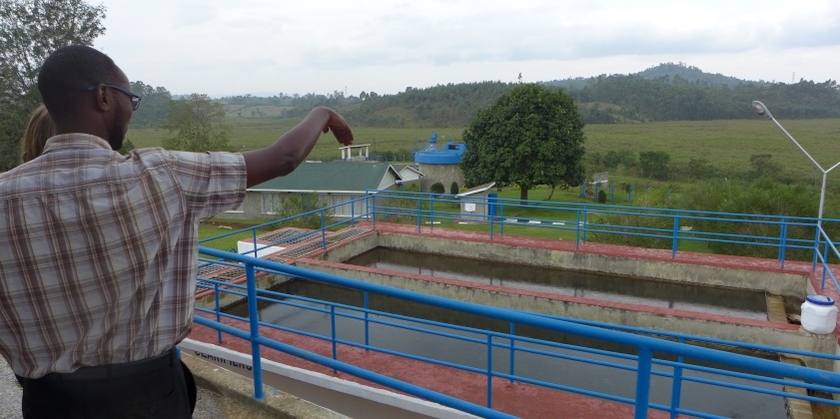
Project SMALL aims to support the development of applicable and sustainable water and sanitation provision models for small towns in Sub-Saharan Africa. Practice and research have traditionally focused either on distinct urban centers or rural communities. However, areas under transition, including small towns throughout Uganda and Mozambique, do not easily fit the definitions used by rural or urban planners. Small towns therefore lack clear guidance on applicable water and sanitation service models and, as a result, suffer from poor progress in expanding access to safely managed water and adequate sanitation. This project aims to identify and account for the specific needs, opportunities and challenges of transition zones in Uganda and Mozambique when devising improved service provision models, focusing on the experiences of the National Water and Sewerage Corporation (NWSC) and the Administração de Infraestruturas de Abastecimento de Água e Saneamento (AIAS).

Project Timeline: 09.2016 - 12.2019

Project Status

An interdisciplinary group of researchers and practitioners is currently assessing existing infrastructural and management models for water and sanitation provision in small towns in Sub-Saharan Africa. The analysis of the models is anchored in understanding local governance structures, integrates a public health protection approach and includes impacts on users and local communities.

Regular updates available on the main project site>> 

Expected Outcomes and Impacts

This three-year project will lead to the development of fit-for-use models for small towns of Uganda and Mozambique incorporating above-mentioned elements in order to inform implementing agencies for future interventions.

Publications

Extbase Variable Dump
array(2 items)
   publications => '20654,21963' (11 chars)
   libraryUrl => '' (0 chars)
Extbase Variable Dump
array(2 items)
   0 => Snowflake\Publications\Domain\Model\Publicationprototypepersistent entity (uid=20654, pid=124)
      originalId => protected20654 (integer)
      authors => protected'Marks, S. J.; Clair-Caliot, G.; Taing, L.; Bamwenda,&nbs
         p;J. T.; Kanyesigye, C.; Ernest Rwendeire, N.; Kemerink-Seyou
         m, J. S.; Kansiime, F.; Batega, D. W.; Ferrero,&nbs
         p;G.
' (232 chars) title => protected'Water supply and sanitation services in small towns in rural-urban transitio
         n zones: the case of Bushenyi-Ishaka Municipality, Uganda
' (133 chars) journal => protected'npj Clean Water' (15 chars) year => protected2020 (integer) volume => protected3 (integer) issue => protected'' (0 chars) startpage => protected'21 (9 pp.)' (10 chars) otherpage => protected'' (0 chars) categories => protected'' (0 chars) description => protected'Small towns lag behind cities in drinking water and sanitation access global
         ly. Closing this gap requires developing service models for areas with both
         urban and rural characteristics. This study assessed Bushenyi-Ishaka, a muni
         cipality in Uganda situated at the rural-urban transition, with a focus on s
         ervice ladder indictors. Data sources included household interviews (<em>n</
         em> = 500) and water quality samples from sources and storage containers
         . Households in more urban (as compared to rural) cells were more likely to
         use improved water sources (including piped water on-premises), make regular
          payments for water, rely on shared sanitation facilities, and make use of m
         anual sludge emptying services. Most households (72%) used an unlined pit la
         trine not intended for emptying and reuse. These findings suggest that small
          town servicing models should prioritize non-sewered sanitation management,
         including incentives for safe excreta containment and disposal opportunities
         . This study also highlights a need for integrated services models to expand
          rural-urban water and sanitation coverage.
' (1107 chars) serialnumber => protected'' (0 chars) doi => protected'10.1038/s41545-020-0068-4' (25 chars) uid => protected20654 (integer) _localizedUid => protected20654 (integer)modified _languageUid => protectedNULL _versionedUid => protected20654 (integer)modified pid => protected124 (integer)
1 => Snowflake\Publications\Domain\Model\Publicationprototypepersistent entity (uid=21963, pid=124) originalId => protected21963 (integer) authors => protected'Daniel,&nbsp;D.; Gaicugi,&nbsp;J.; King,&nbsp;R.; Marks,&nbsp;S.&nbsp;J.; Fe
         rrero,&nbsp;G.
' (90 chars) title => protected'Combining sanitary inspection and water quality data in western Uganda: less
         ons learned from a field trial of original and revised sanitary inspection f
         orms
' (156 chars) journal => protected'Resources' (9 chars) year => protected2020 (integer) volume => protected9 (integer) issue => protected'12' (2 chars) startpage => protected'1' (1 chars) otherpage => protected'19' (2 chars) categories => protected'sanitary inspection; water quality; water safety; risk assessment; Uganda; s
         mall town
' (85 chars) description => protected'Risk assessment for drinking water systems combines sanitary inspections (SI
         ) and water quality testing and is critical for effectively managing the saf
         ety of these systems. SI forms consist of question sets relating to the pres
         ence of potential sources and pathways of contamination specific to differen
         t types of water points, piped distribution systems, and household collectio
         n and storage practices. As part of the revision to the Guidelines for Drink
         ing-water Quality (GDWQ), the World Health Organization (WHO) is updating th
         e suite of SI forms to reflect and include the most recent technical and sci
         entific information available. This paper reports the results from a field p
         ilot of a selection of published and revised SI forms and water quality test
         ing in the municipality of Bushenyi-Ishaka, Uganda. We collected data from 4
         5 springs, 61 taps from piped distribution systems, and 129 household storag
         e containers filled with water from those springs and taps. The median total
          risk scores, according to the revised forms, for spring, tap, and household
          practices were 36, 53, and 33%, respectively, with higher percentages indic
         ating greater risk. The median<em> Escherichia coli </em>concentrations of s
         pring, tap, and household storage systems were 17, &lt;1, and 7 CFU/100 mL,
         respectively. We found that increased questioning in the revised SI forms do
          not necessarily translate to a higher total risk. There is potential for mi
         sinterpretation of terminology in the revised SI forms and occasional redund
         ancy of concepts. For the revised SI form for springs, we suggest specific t
         ext changes to reduce potential bias. We recommend that users of SI forms re
         ceive training in their use and be familiar with their locale. Furthermore,
         the revised SI forms may need to be adapted in accordance with the local con
         text.
' (1829 chars) serialnumber => protected'' (0 chars) doi => protected'10.3390/resources9120150' (24 chars) uid => protected21963 (integer) _localizedUid => protected21963 (integer)modified _languageUid => protectedNULL _versionedUid => protected21963 (integer)modified pid => protected124 (integer)
Marks, S. J.; Clair-Caliot, G.; Taing, L.; Bamwenda, J. T.; Kanyesigye, C.; Ernest Rwendeire, N.; Kemerink-Seyoum, J. S.; Kansiime, F.; Batega, D. W.; Ferrero, G. (2020) Water supply and sanitation services in small towns in rural-urban transition zones: the case of Bushenyi-Ishaka Municipality, Uganda, npj Clean Water, 3, 21 (9 pp.), doi:10.1038/s41545-020-0068-4, Institutional Repository
Daniel, D.; Gaicugi, J.; King, R.; Marks, S. J.; Ferrero, G. (2020) Combining sanitary inspection and water quality data in western Uganda: lessons learned from a field trial of original and revised sanitary inspection forms, Resources, 9(12), 1-19, doi:10.3390/resources9120150, Institutional Repository