Department Surface Waters - Research and Management

Antibiotic resistance as an emerging environmental contaminant

Antibiotic resistance is on the rise, and this represents one of the greatest risks to public health of our time, threatening to result in greater burden of disease, increasing healthcare costs and even increasing mortality. 

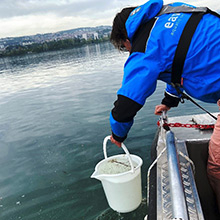
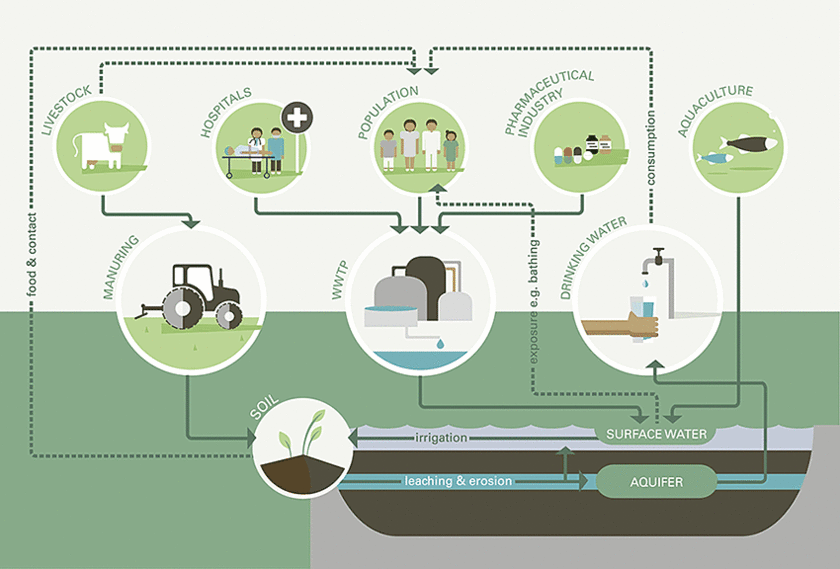
Environmental bacteria are a natural source of resistance genes. However, the environment is also increasingly contaminated by resistant bacteria released with treated or untreated wastewater or from agricultural sources. Both urban and natural aquatic systems are therefore important for understanding – and fighting – antibiotic resistance from a One Health perspective. 

We study how resistant bacteria and their resistance genes spread in the aquatic environment. We study how monitoring AMR in wastewater and the environment can support public health policy and decision-making. We investigate the dynamics of resistance during wastewater treatment and study strategies for an improved elimination of resistant bacteria. 

Selected publications

Extbase Variable Dump
array(2 items)
   publications => '17054,22266,26112,8101' (22 chars)
   libraryUrl => '' (0 chars)
Extbase Variable Dump
array(4 items)
   0 => Snowflake\Publications\Domain\Model\Publicationprototypepersistent entity (uid=17054, pid=124)
      originalId => protected17054 (integer)
      authors => protected'Bürgmann, H.; Frigon, D.; Gaze, W.; Manaia, C.; Pruden,
          A.; Singer, A. C.; Smets, B.; Zhang, T.
' (141 chars) title => protected'Water and sanitation: an essential battlefront in the war on antimicrobial r
         esistance
' (85 chars) journal => protected'FEMS Microbiology Ecology' (25 chars) year => protected2018 (integer) volume => protected94 (integer) issue => protected'9' (1 chars) startpage => protected'fiy101 (14 pp.)' (15 chars) otherpage => protected'' (0 chars) categories => protected'antimicrobial resistance; mitigation; policy; public health; risk assessment
         ; wastewater treatment
' (98 chars) description => protected'Water and sanitation represents a key battlefront in combating the spread of
          antimicrobial resistance (AMR). Basic water sanitation infrastructure is an
          essential first step to protecting public health, thereby limiting the spre
         ad of pathogens and the need for antibiotics. AMR presents unique human heal
         th risks, meriting new risk assessment frameworks specifically adapted to wa
         ter and sanitation-borne AMR. There are numerous exposure routes to AMR orig
         inating from human waste, each of which must be quantified for its relative
         risk to human health. Wastewater treatment plants (WWTPs) play a vital role
         in centralized collection and treatment of human sewage, but there are numer
         ous unresolved questions in terms of the microbial ecological processes occu
         rring within and the extent to which they attenuate or amplify AMR. Research
          is needed to advance understanding of the fate of resistant bacteria and an
         tibiotic resistance genes (ARGs) in various waste management systems, depend
         ing on the local constraints and intended re-use applications. WHO and natio
         nal AMR action plans would benefit from a more holistic 'One Water' understa
         nding. Here we provide a framework for research, policy, practice, and publi
         c engagement aimed at limiting the spread of AMR from water and sanitation i
         n both low-, medium- and high-income countries, alike.
' (1346 chars) serialnumber => protected'0168-6496' (9 chars) doi => protected'10.1093/femsec/fiy101' (21 chars) uid => protected17054 (integer) _localizedUid => protected17054 (integer)modified _languageUid => protectedNULL _versionedUid => protected17054 (integer)modified pid => protected124 (integer)
1 => Snowflake\Publications\Domain\Model\Publicationprototypepersistent entity (uid=22266, pid=124) originalId => protected22266 (integer) authors => protected'Lee, J.; Ju, F.; Maile-Moskowitz, A.; Beck, K.; Maccagna
         n, A.; McArdell, C. S.; Dal Molin, M.; Fenicia, F.;
          Vikesland, P.; Pruden, A.; Stamm, C.; Bürgmann, H.
' (224 chars) title => protected'Unraveling the riverine antibiotic resistome: the downstream fate of anthrop
         ogenic inputs
' (89 chars) journal => protected'Water Research' (14 chars) year => protected2021 (integer) volume => protected197 (integer) issue => protected'' (0 chars) startpage => protected'117050 (12 pp.)' (15 chars) otherpage => protected'' (0 chars) categories => protected'antimicrobial resistance; wastewater; river system; metagenomics; transport;
          degradation
' (88 chars) description => protected'River networks are one of the main routes by which the public could be expos
         ed to environmental sources of antibiotic resistance, that may be introduced
          e.g. via treated wastewater. In this study, we applied a comprehensive inte
         grated analysis encompassing mass-flow concepts, chemistry, bacterial plate
         counts, resistance gene quantification and shotgun metagenomics to track the
          fate of the resistome (collective antibiotic resistance genes (ARGs) in a m
         icrobial community) of treated wastewater in two Swiss rivers at the kilomet
         er scale. The levels of certain ARGs and the class 1 integron integrase gene
          (<em>intI1</em>) commonly associated with anthropogenic sources of ARGs dec
         reased quickly over short distances (2-2.5 km) downstream of wastewater disc
         harge points. Mass-flow analysis based on conservative tracers suggested thi
         s decrease was attributable mainly to dilution but ARG loadings frequently a
         lso decreased (e.g., 55.0-98.5 % for <em>ermB</em> and <em>tetW</em>) over t
         he longest studied distances (6.8 and 13.7 km downstream). Metagenomic analy
         sis confirmed that ARG of wastewater-origin did not persist in rivers after
         5 ∼ 6.8 km downstream distance. <em>sul1</em> and <em>intI1</em> levels an
         d loadings were more variable and even increased sharply at 5 ∼ 6.8 km dow
         nstream distance on one occasion. While input from agriculture and in-situ p
         ositive selection pressure for organisms carrying ARGs cannot be excluded, i
         n-system growth of biomass is a more probable explanation. The potential for
          direct human exposure to the resistome of wastewater-origin thus appeared t
         o typically abate rapidly in the studied rivers. However, the riverine aquat
         ic resistome was also dynamic, as evidenced by the increase of certain gene
         markers downstream, without obvious sources of anthropogenic contamination.
         This study provides new insight into drivers of riverine resistomes and pinp
         oints key monitoring targets indicative of where human sources and exposures
          are likely to be most a...
' (2005 chars) serialnumber => protected'0043-1354' (9 chars) doi => protected'10.1016/j.watres.2021.117050' (28 chars) uid => protected22266 (integer) _localizedUid => protected22266 (integer)modified _languageUid => protectedNULL _versionedUid => protected22266 (integer)modified pid => protected124 (integer)
2 => Snowflake\Publications\Domain\Model\Publicationprototypepersistent entity (uid=26112, pid=124) originalId => protected26112 (integer) authors => protected'Bürgmann,&nbsp;H.; Egli,&nbsp;A.; Endimiani,&nbsp;A.; Stephan,&nbsp;R.; Tsc
         hudin Sutter,&nbsp;S.; Hardt,&nbsp;W.-D.
' (116 chars) title => protected'Routes and reservoirs of AMR-determinants &amp; one health AMR-surveillance.
          Thematic synthesis of the national research programme "Antimicrobial Resist
         ance"
' (157 chars) journal => protected'' (0 chars) year => protected2022 (integer) volume => protected0 (integer) issue => protected'' (0 chars) startpage => protected'53&nbsp;p' (9 chars) otherpage => protected'' (0 chars) categories => protected'' (0 chars) description => protected'New findings enable concrete measures at individual interfaces of AMR spread
         <br /><br />The aim of the synthesis process on this topic was to derive rec
         ommendations from NRP 72 research that promote the implementation of new fin
         dings in practice. The focus of many projects was on the interfaces where an
         timicrobial resistance (AMR) can spread between humans, animals and the envi
         ronment. In this One Health context, many research findings of NRP 72 provid
         e the basis for concrete measures to interrupt or restrict transmission chai
         ns.<br />In addition to these concrete findings, it has also become apparent
          that the methods used in NRP 72 research are of great importance: It is a c
         ommon feature of the projects presented in this thematic synthesis that they
          have applied new gene sequencing methods, such as whole genome sequencing (
         WGS), plasmid sequencing and metagenomics. These methods have developed very
          quickly in the last few years and are a prerequisite for the new insights p
         resented here. [...]
' (1008 chars) serialnumber => protected'' (0 chars) doi => protected'' (0 chars) uid => protected26112 (integer) _localizedUid => protected26112 (integer)modified _languageUid => protectedNULL _versionedUid => protected26112 (integer)modified pid => protected124 (integer)
3 => Snowflake\Publications\Domain\Model\Publicationprototypepersistent entity (uid=8101, pid=124) originalId => protected8101 (integer) authors => protected'Berendonk,&nbsp;T.&nbsp;U.; Manaia,&nbsp;C.&nbsp;M.; Merlin,&nbsp;C.; Fatta-
         Kassinos,&nbsp;D.; Cytryn,&nbsp;E.; Walsh,&nbsp;F.; Bürgmann,&nbsp;H.; Sør
         um,&nbsp;H.; Norström,&nbsp;M.; Pons,&nbsp;M.-N.; Kreuzinger,&nbsp;N.; Huov
         inen,&nbsp;P.; Stefani,&nbsp;S.; Schwartz,&nbsp;T.; Kisand,&nbsp;V.; Baquero
         ,&nbsp;F.; Martinez,&nbsp;J.&nbsp;L.
' (340 chars) title => protected'Tackling antibiotic resistance: the environmental framework' (59 chars) journal => protected'Nature Reviews Microbiology' (27 chars) year => protected2015 (integer) volume => protected13 (integer) issue => protected'5' (1 chars) startpage => protected'310' (3 chars) otherpage => protected'317' (3 chars) categories => protected'' (0 chars) description => protected'Antibiotic resistance is a threat to human and animal health worldwide, and
         key measures are required to reduce the risks posed by antibiotic resistance
          genes that occur in the environment. These measures include the identificat
         ion of critical points of control, the development of reliable surveillance
         and risk assessment procedures, and the implementation of technological solu
         tions that can prevent environmental contamination with antibiotic resistant
          bacteria and genes. In this Opinion article, we discuss the main knowledge
         gaps, the future research needs and the policy and management options that s
         hould be prioritized to tackle antibiotic resistance in the environment.
' (680 chars) serialnumber => protected'1740-1526' (9 chars) doi => protected'10.1038/nrmicro3439' (19 chars) uid => protected8101 (integer) _localizedUid => protected8101 (integer)modified _languageUid => protectedNULL _versionedUid => protected8101 (integer)modified pid => protected124 (integer)
Bürgmann, H.; Frigon, D.; Gaze, W.; Manaia, C.; Pruden, A.; Singer, A. C.; Smets, B.; Zhang, T. (2018) Water and sanitation: an essential battlefront in the war on antimicrobial resistance, FEMS Microbiology Ecology, 94(9), fiy101 (14 pp.), doi:10.1093/femsec/fiy101, Institutional Repository
Lee, J.; Ju, F.; Maile-Moskowitz, A.; Beck, K.; Maccagnan, A.; McArdell, C. S.; Dal Molin, M.; Fenicia, F.; Vikesland, P.; Pruden, A.; Stamm, C.; Bürgmann, H. (2021) Unraveling the riverine antibiotic resistome: the downstream fate of anthropogenic inputs, Water Research, 197, 117050 (12 pp.), doi:10.1016/j.watres.2021.117050, Institutional Repository
Bürgmann, H.; Egli, A.; Endimiani, A.; Stephan, R.; Tschudin Sutter, S.; Hardt, W.-D. (2022) Routes and reservoirs of AMR-determinants & one health AMR-surveillance. Thematic synthesis of the national research programme "Antimicrobial Resistance", 53 p, Institutional Repository
Berendonk, T. U.; Manaia, C. M.; Merlin, C.; Fatta-Kassinos, D.; Cytryn, E.; Walsh, F.; Bürgmann, H.; Sørum, H.; Norström, M.; Pons, M.-N.; Kreuzinger, N.; Huovinen, P.; Stefani, S.; Schwartz, T.; Kisand, V.; Baquero, F.; Martinez, J. L. (2015) Tackling antibiotic resistance: the environmental framework, Nature Reviews Microbiology, 13(5), 310-317, doi:10.1038/nrmicro3439, Institutional Repository

Team & Contacts

Dr. Helmut Bürgmann Group leader Microbial Ecology Tel. +41 58 765 2165 Send Mail
Karin Beck Tel. +41 58 765 2150 Send Mail

Current Projects

Antimicrobial resistance (AMR) is a global health issue. This project develops a new paradigm for studying the fate of urban AMR contamination in lakes.
We study the reserviors, fate and exposure of antibiotic resistance in Swiss rivers and streams that receives wastewater-borne resistance bacteria.
In situ expression patterns and gene exchange of Swiss wastewater resistome revealed by quantitative metatranscriptomics and metagenomics.
We survey the effect of sand filters and other biological post-treatment of ozonated wastewater on the release of antibiotic resistances from wastewater treatment plants in Switzerland.
Healthy, diverse ecosystems are more resilient against invasive species. Is this also true for antibiotic resistant bacteria?

Concluded Projects

Dynamics of antibiotic resistance during oxidative treatment of wastewater
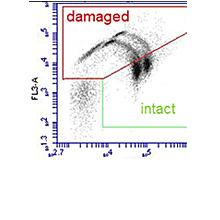
Wastewater treatments plants (WWTP) discharge antibiotic resistant bacteria with the treated wastewater. In this project we quantified the extent to which different WWTP in Switzerland eliminate and discharge resistant bacteria and how this affects the receiving waters.
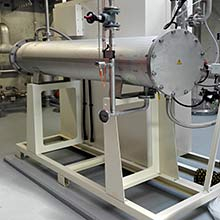
Oxidative wastewater treatment is an important strategy for the removal of micropollutants from wastewater, and is one of the main technologies that will be used for this purpose in Switzerland. In this project we studied how this treatment affects resistant bacteria. Laboratory studies were performed to obtain detailed information on how ozonation damages resistant cells and resistance genes to provide Information about dose dependence and kinetics of the process. Investigations at the first full scale ozonation plant in Switzerland, ARA Neugut, provided data from a real world implementation of this treatment process.

Key results

The project showed that ozonation of wastewater ultimately provides a less complete disinfections and a less effective deactivation of DNA (and thus resistance genes) in wastewater ozonation then simple laboratory experiments may suggest. The interactions with the complex chemistry in the wastewater matrix, microbiological populations that are less sensitive than laboratory strains such as E. coli, and the formation of larger biomass structures (flocs) all interfere. Under process conditions that are optimized for micropollutant reduction most bacterial cells are killed, but a residual population survives, and the genetic material (theoretically capable of being taken up and incorporated into the genome of other bacteria) survives. The full scale plant in Neugut revealed another potential problem – the biological post-treatment of ozonated water, which is necessary to reduce toxic oxidation products, allows resistant bacteria to grow, reducing the overall effectiveness of the process for reducing the load of resistant bacteria with the wastewater stream into rivers and lakes. Further research will be necessary to identify potential improvements to maximize the potential of wastewater ozonation as a barrier to the dissemination of antibiotic resistance into the environment.

Publications

Microbial resistance, exotoxicological impact and risk assessment of micropollutants in a mid-sized lake
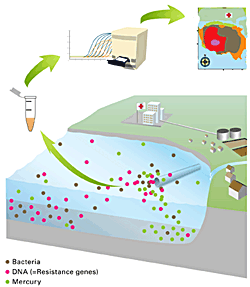

Antibiotics resistance is increasingly seen as an emerging environmental contaminant.  In this project we studied antibiotic resistance in the wastewater stream of Lausanne, and the effect of the discharge of treated wastewater on the water and sediment of Lake Geneva, Switzerland. 

Collaboration

Leman 21 Project

Funding

SNF Prodoc module


Publications

  • Bürgmann H. (2014) Eintrag von Antibiotika und Antibiotikaresistenzen in Wassersysteme der Schweiz. Prävention und Gesundheitsförderung 2014, 9:185–190, doi:10.1007/s11553-014-0444-3

  • Czekalski N., Gascón Díez E., Bürgmann H. (2014) Wastewater as a point source of antibiotic-resistance genes in the sediment of a freshwater lake. The The ISME Journal (2014) 8, 1381–1390, doi:10.1038/ismej.2014.8

  • Cantas L., Shah Syed Q.A., Cavaco L.M., Manaia C.M., Walsh F., Popowska M., Garelick H., Bürgmann H., Sørum H. (2013) A brief multi-disciplinary review on antimicrobial resistance in medicine and its linkage to the global environmental microbiota. Frontiers in Microbiology, May 2013, Vol. 4, Art. 96, 1-14, doi:10.3389/fmicb.2013.00096

  • Czekalski N. (2013) Dissertation: Sources, Spreading and Fate of Antibiotic Resistance Genes and Resistant Bacteria in Vidy Bay, Lake Geneva, Switzerland, doi:10.5075/epfl-thesis-5637

  • Czekalski N., Berthold T., Caucci S., Egli A., Bürgmann B. (2012) Increased levels of multiresistant bacteria and resistance genes after waste water treatment and their dissemination into Lake Geneva, Switzerland. Frontiers in Microbiology, March 2012, Vol. 3, Art. 106, doi:10.3389/fmicb.2012.00106

Antibiotic resistant microorganisms in the drinking water system of Lausanne
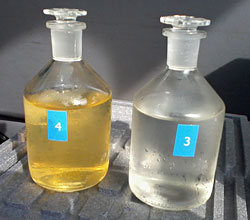
The occurrence of antibiotic resistant bacteria and resistance genes was studied in the drinking water production facilities and distribution network of Lausanne. Raw water, different treatment stages and the distribution network were analyzed over the course of one year.

Financing

Eauservice Lausanne

Elimination of antibiotic resistant microorganisms from wastewater by membrane filtration
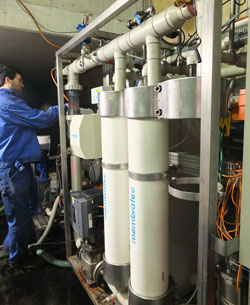
A pilot scale activated carbon powder – Ultrafiltration system was tested by the wastewater treatment plant of Lausanne. We investigated the prevalence of resistance at different stages of the WWTP and it’s temporal variability. The effectiveness of eliminating resistant bacteria by membrane  filtration was determined.

Collaboration

Frederik Hammes, Environmental Microbiology, Eawag

Funding

Service d’Assainissement  Lausanne