Department Environmental Chemistry

Environmental Fate Modeling

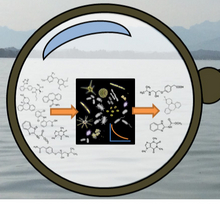
The research group Environmental Fate Modeling investigates microbial biotransformation in natural and engineered systems relevant for water quality. Our aim is to develop predictive models for use in contemporary chemical risk assessment. We combine experimental work and data mining to develop novel tools for the prediction of stable transformation products and chemical persistence.

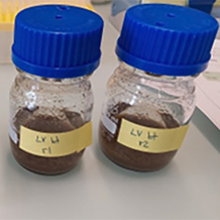
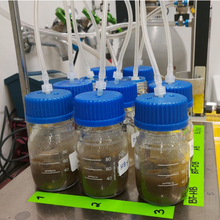
In our experimental work, we investigate the biotransformation of structurally diverse micropollutants in natural communities. We determine rates and products of biotransformation using modern analytical methods and simultaneously characterize the microbial communities in terms of their active functions using molecular biology tools. In our data-driven work, we collect and curate existing biotransformation data (www.eawag-bbd.ch). We then apply methods from Bayesian statistics and cheminformatics to the data to develop improved algorithms for predicting transformation products and biotransformation half-lives in different environmental settings.


Contact

Prof. Dr. Kathrin Fenner Senior scientist / group leader Tel. +41 58 765 5085 Send Mail

External collaborators

Dr. Emanuel Schmid, SIS, ETH Zürich

Team members

Dr. Jasmin Hafner Postdoctoral scientist Tel. +41 58 765 5258 Send Mail
Chiel Kaal PhD student Tel. +41 58 765 5543 Send Mail
Martina Kalt PhD student Tel. +41 58 765 5956 Send Mail
Aaron Nova Master student Tel. +41 58 765 5766 Send Mail
Dr. Sarah Partanen Postdoctoral Scientist Tel. +41 58 765 5336 Send Mail
Micha Wehrli PhD Student Tel. +41 58 765 5480 Send Mail
Janis Odin Anthamatten Master student Tel. +41 58 765 5391 Send Mail
Dr. Sungeun Lim Postdoctoral Scientist Tel. +41 58 765 6811 Send Mail
Flurin Jenny Student Assistant Tel. +41 58 765 5463 Send Mail
Anna Maria Ceccucci Master student Tel. +41 58 765 5926 Send Mail

Ongoing projects

Chemical pollution is a major threat to ecosystems and human health and current regulations seem insufficient to prevent widespread chemical contamination...
Chemicals are released to the environment through a variety of pathways...
Understanding and predicting the fate of synthetic chemicals under different environmental conditions is essential to evaluate their potential risk for humans and ecosystems...
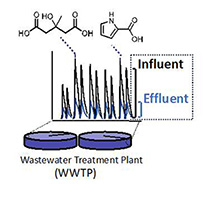
A large number and variety of chemicals used in households, healthcare, industry or agriculture enter our wastewater treatment plants with the domestic and industrial wastewater....
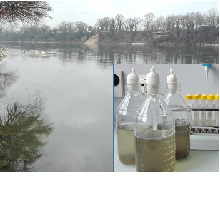
At the Rhine monitoring station, the Basel-Stadt Environment and Energy Office (AUE Basel-Stadt) is measuring water contamination with organic micropollutants on a daily basis…
Pesticides are major environmental pollutants. For this reason, the European Commission (EC) has imposed a stringent pesticide regulatory scheme...
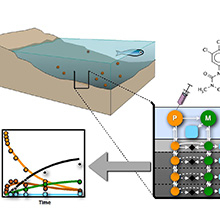
Reading biotransformation half-lives of agrochemicals across different compartments...

Terminated projects

In regulatory hazard and risk assessment chemical persistence is assessed through a tiered system of degradation studies.
Predicting environment-specific biotransformation of chemical contaminants
Biodegradation simulation tests are an essential element of environmental risk assessment in most chemical regulations.
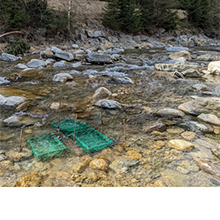
A large variety of micropollutants, from pesticides, pharmaceuticals to personal care products, can reach surface waters through the effluent of wastewater treatments plants or leaching off agricultural soils.