
Department Water Resources and Drinking Water
Real-time MAR & contaminant risk assessment
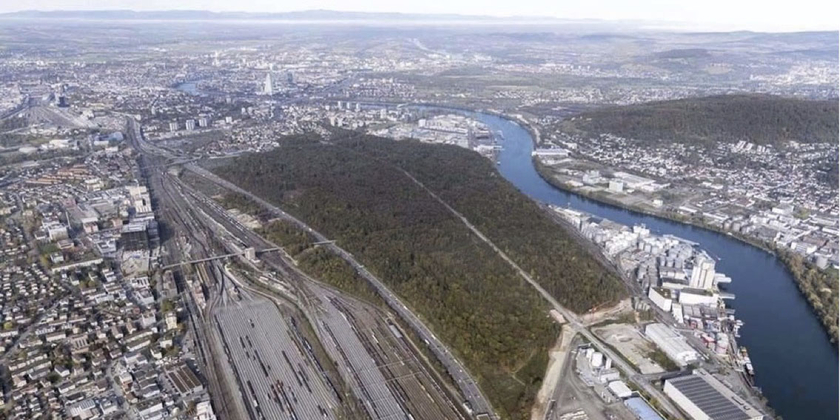
Managed aquifer recharge (MAR) supports drinking water supply but requires robust monitoring and risk assessment. This project develops and applies real-time and scientific methods to evaluate MAR performance and safety. An online, real-time approach assesses artificial recharge and groundwater abstraction during operation. Environmental tracers, including on-site helium and ³H/³He apparent ages, identify flow processes and contaminant transport. Model-based pathway analysis quantifies groundwater pathways under uncertainty using null-space Monte Carlo simulations. Together, these methods link operations, flow dynamics, and contaminant risks at relevant spatial scales. Microplastics research extends the framework to emerging contaminants along the MAR treatment train. Outcomes support evidence-based decisions for utilities and regulators, improving groundwater protection and resilient water supply.


Partners
- Water supply project partner
- Academic partners supporting tracer analytics and modelling
- Adrian Auckenthaler (Canton BL)
- Thomas Gabriel (Hardwasser AG)
Funding
Funded by the local water supplier (water utility).
Publications
- Moeck, C., Popp, A. L., Brennwald, M. S., Kipfer, R., & Schirmer, M. (2021). Combined method of 3H/3He apparent age and on-site helium analysis to identify groundwater flow processes and transport of perchloroethylene (PCE) in an urban area. Journal of contaminant hydrology, 238, 103773.
- Moeck, C., Molson, J., & Schirmer, M. (2020). Pathline density distributions in a null‐space Monte Carlo approach to assess groundwater pathways. Groundwater, 58(2), 189-207.
- la Cecilia, D., Philipp, M., Kaegi, R., Schirmer, M., & Moeck, C. (2024). Microplastics attenuation from surface water to drinking water: impact of treatment and managed aquifer recharge–and identification uncertainties. Science of the Total Environment, 908, 168378.
- Moeck, C., Davies, G., Krause, S., & Schneidewind, U. (2023). Microplastics and nanoplastics in agriculture—A potential source of soil and groundwater contamination?. Grundwasser, 28(1), 23-35.