
Department Water Resources and Drinking Water
Water distribution at catchment scale
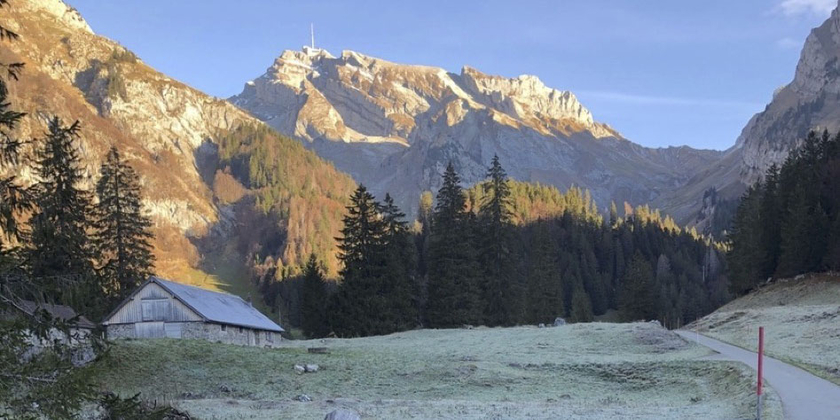
Which measures for river corridor protection, restoration and management are most effective to influence river levels, without compromising the ecological status of a catchment, is still poorly understood. The objective of this project was to investigate how retention areas, river restoration efforts and groundwater systems can be used to help mitigate the effects of floods and drought. We developed indicators on how the measures will affect different functions of groundwater (water use, sustainable eco-/agricultural systems, flood mitigation) and, more generally, how groundwater flow systems modify the response of catchments. The study sites included high altitude groundwater flow systems that play an integral role for drinking water supply and groundwater flow systems in alluvial plains. We focused our studies on the more natural flood-dependent groundwater recharge in restored river reaches within the Thur catchment in comparison to channelized sections. In addition, we will developed guidelines on where to provide retention areas throughout the catchment. Furthermore, we identified areas and river stretches with sufficient groundwater recharge (with regards to flooding, river-groundwater exchange, drinking water production) for sustainable exploitation of drinking water within dry periods.



- Nicole Burri, Water Resources and Drinking Water (W+T)
- Marco Dal Molin, Systems Analysis, Integrated Assessment and Modelling (SIAM)
Partners
Publications
- Burri, N. M., Moeck, C., Schirmer, M. 2021. Groundwater recharge rate estimation using remotely sensed and ground-based data: A method application in the mesoscale Thur catchment. Journal of Hydrology: Regional Studies, 38, 100972.
- Dal Molin, M., Schirmer, M., Zappa, M., Fenicia, F. 2020. Understanding dominant controls on streamflow spatial variability to set up a semi-distributed hydrological model: the case study of the Thur catchment. Hydrology and Earth System Sciences, 24, 1319–1345.
- Burri, N. M., Weatherl, R., Moeck, C., Schirmer, M. 2019. A review of threats to groundwater quality in the Anthropocene. Science of the Total Environment, 684, 136-154.