Archive detail

Continuation of wastewater monitoring secured

February 19, 2026 | Andri Bryner

The Swiss Federal Institute of Aquatic Science and Technology (Eawag) has been newly commissioned by the Federal Office of Public Health as the National Reference Centre for Wastewater Monitoring. This work centres around the collection of health data from municipal wastewater, and particularly that of viruses that are known to be pathogenic. A new national mandate has also been introduced for the analysis of substances related to pharmaceutical and illicit drug use.

“Covid? That’s over now, though, isn’t it?” Researchers at the Swiss Federal Institute of Aquatic Science and Technology (Eawag) hear remarks like this all the time. But Corona is still here, and much has happened since then. That's why the team has expanded, now based in two new laboratories and has an expanded remit.

Not without reason: wastewater-based epidemiology (WBE) gained major momentum with the SARS-CoV-2 pandemic from 2020 onwards. From autumn 2020, Eawag and EPFL, and later numerous laboratories commissioned by the Federal Office of Public Health (FOPH), analysed wastewater samples from over 100 Swiss sewage treatment plants with a view to detecting coronaviruses.

The methodology and technical capabilities were steadily improved and expanded. Soon, the “wastewater portfolio” included flu viruses and the respiratory syncytial virus (RSV), which is particularly dangerous for infants. As Eawag has been detecting pharmaceutical residues and other substances in wastewater for over 20 years, it was an obvious step to integrate this form of substance monitoring into the programmes.
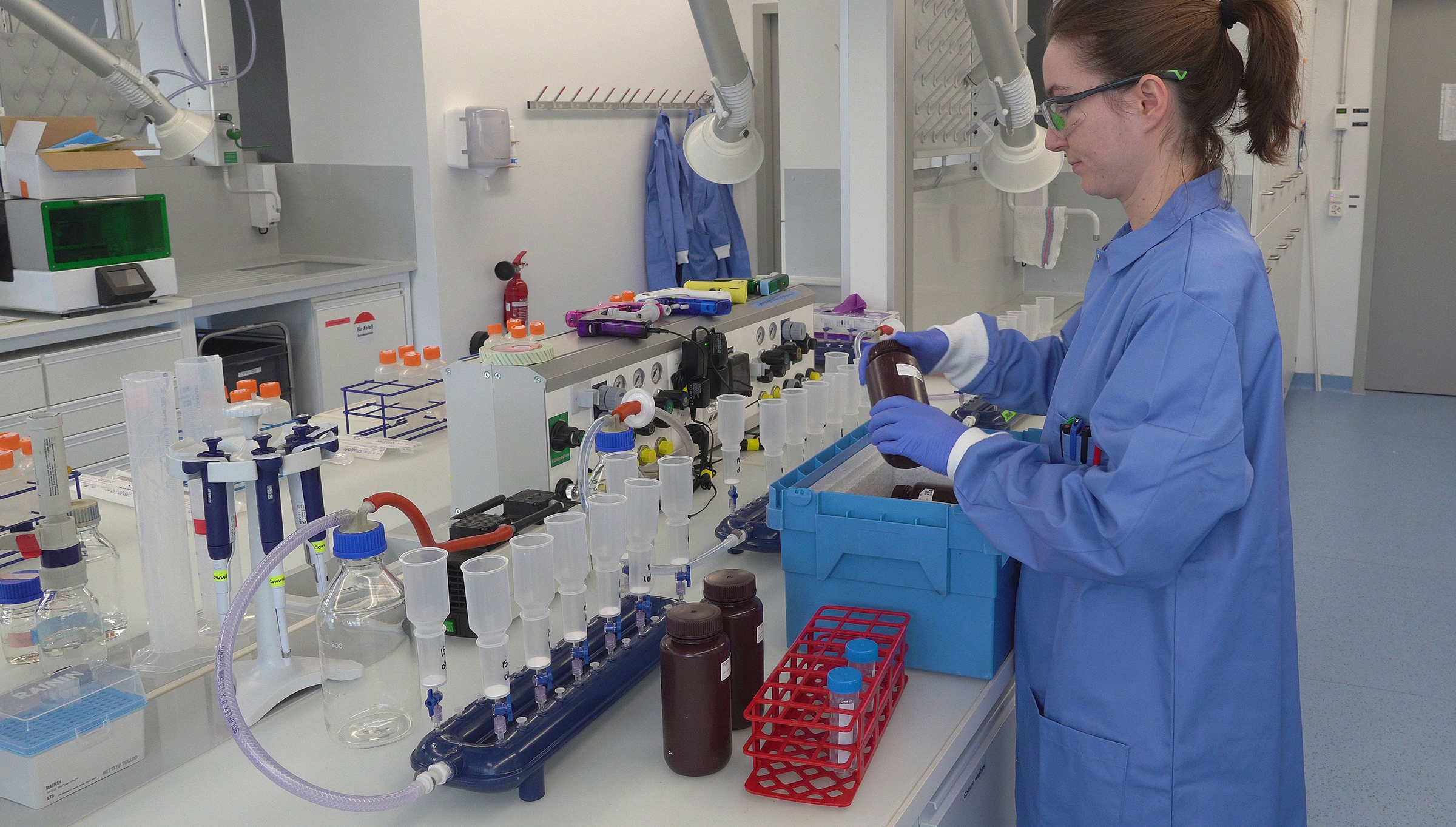
 

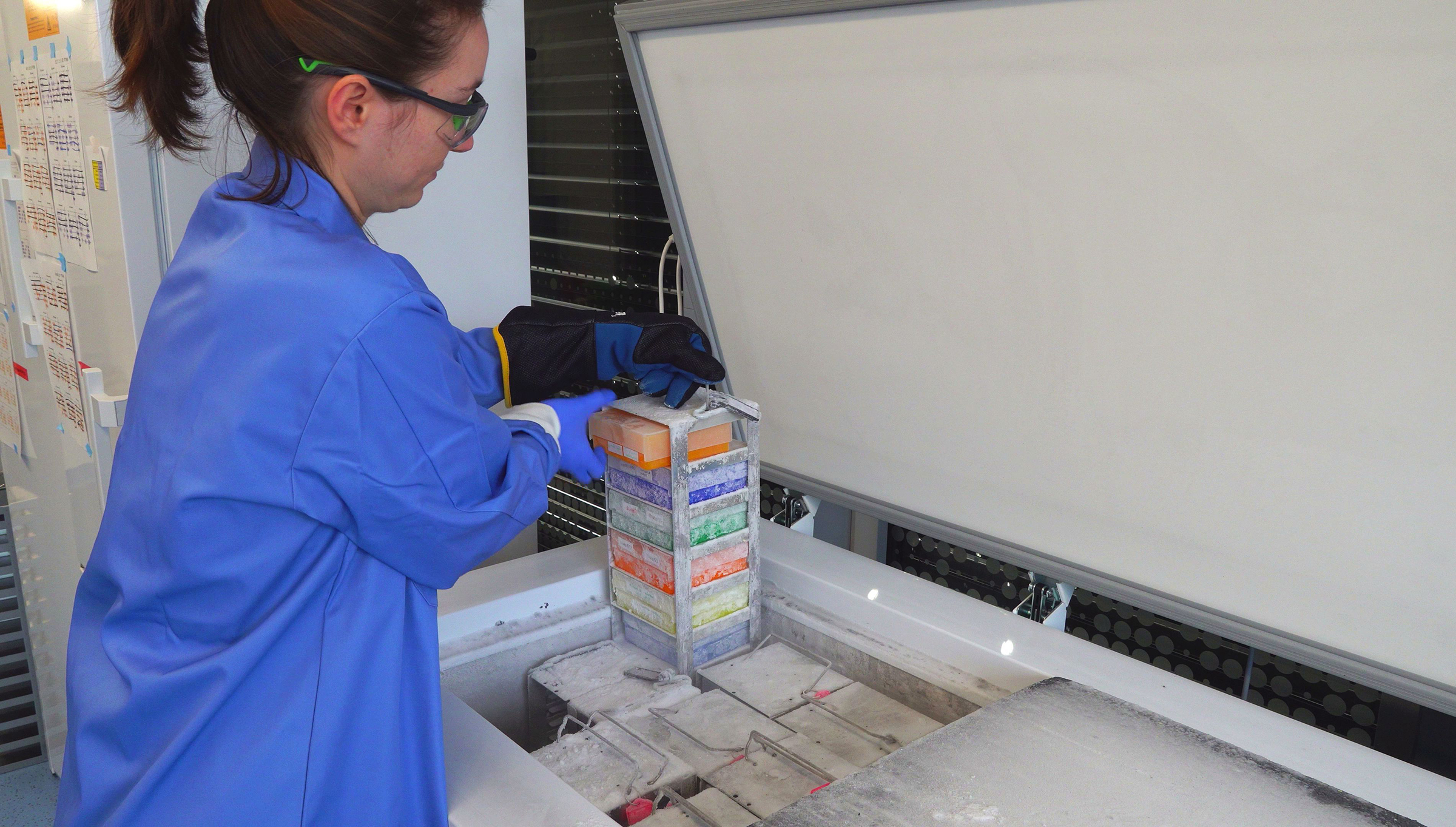
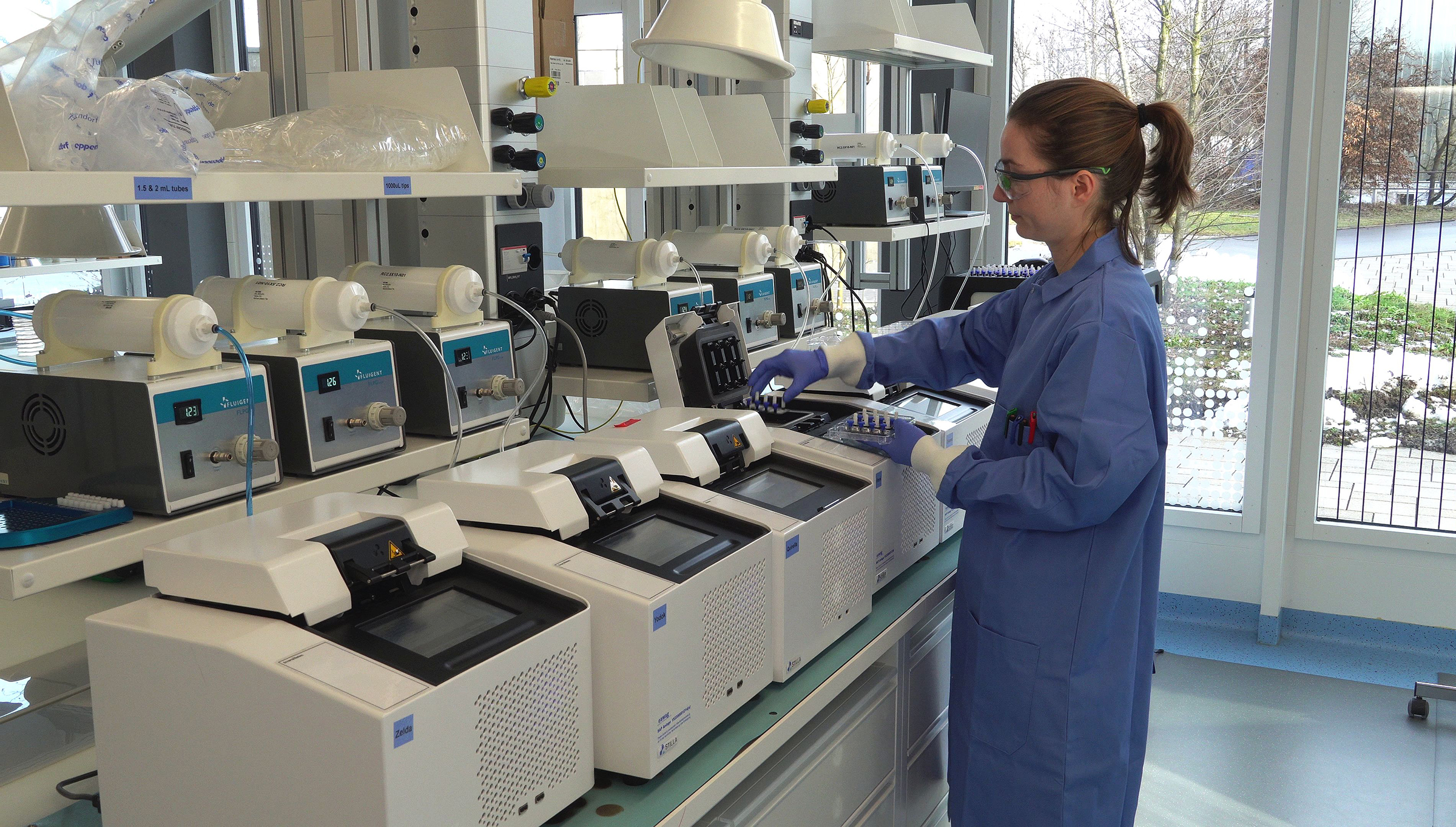
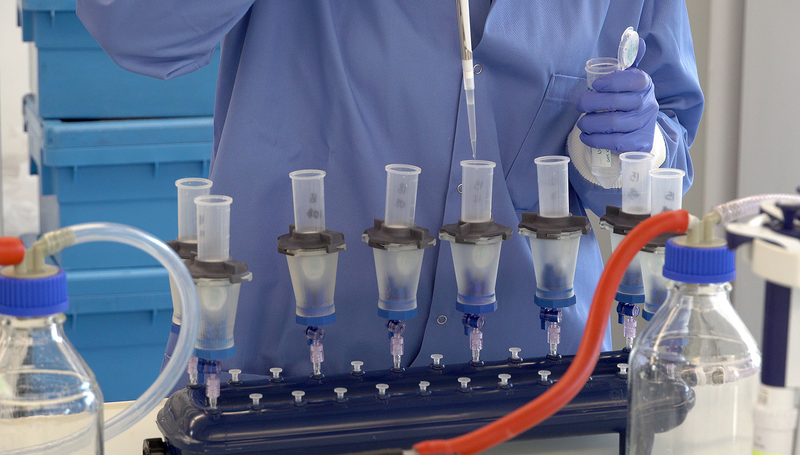
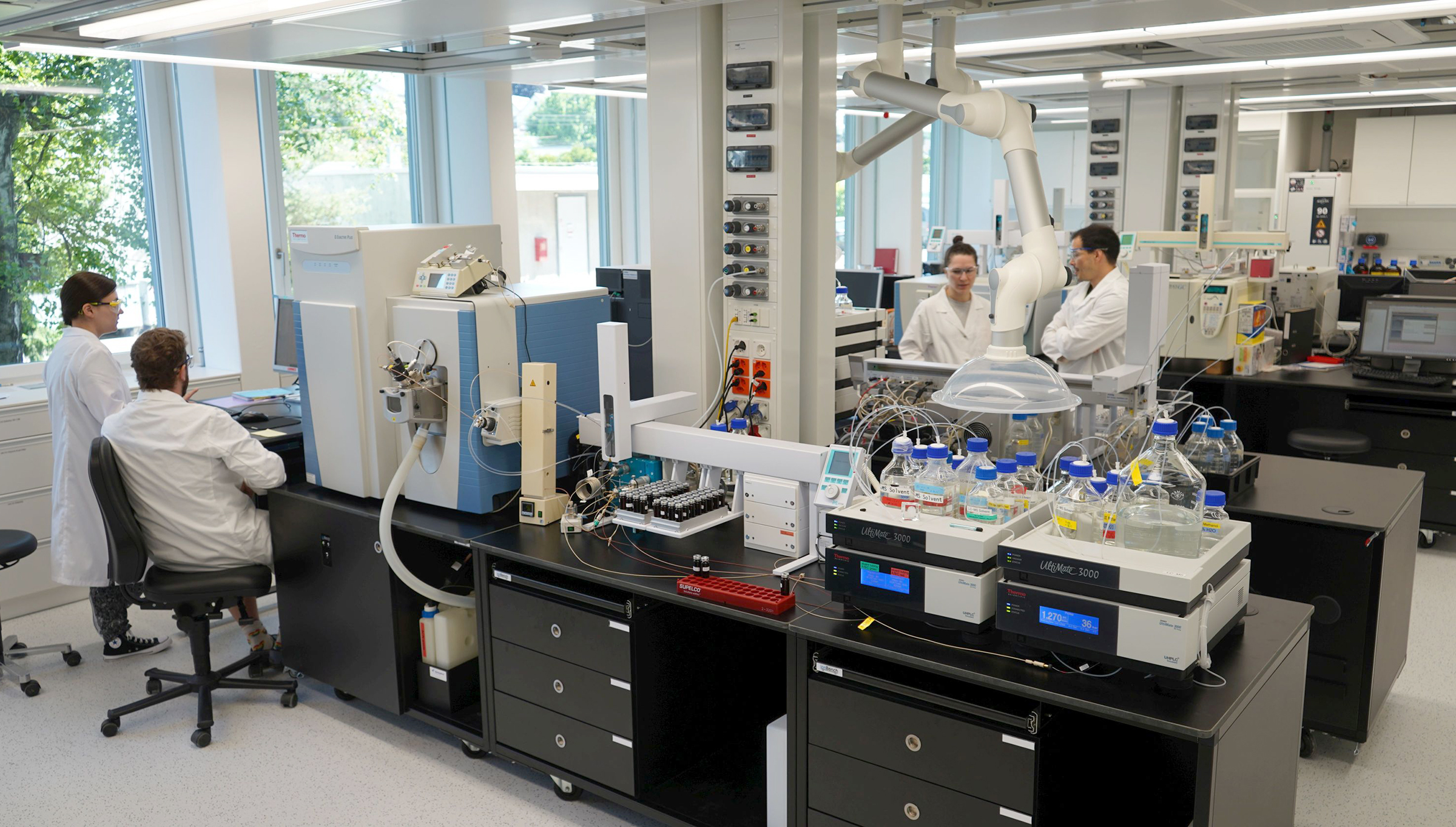
Left: Preparation of wastewater samples. Middle: Samples are stored in a freezer in case analyses have to be repeated or additional questions arise at a later stage. Right: Digital PCR instruments for the detection of viral RNA. (Images: Andri Bryner, Eawag)

Interdisciplinary collaboration

WBE is a highly interdisciplinary field of research. At Eawag, it is primarily experts from the three departments of Urban Water Management, Environmental Microbiology and Environmental Chemistry who are involved. This is complemented by collaboration with other bodies, such as the Computational Biology and Computational Evolution groups at ETH or the Laboratory of Environmental Virology at EPFL.

Since the summer of 2023, the number of wastewater treatment plants where wastewater is tested for pathogens has been reduced, with all wastewater analysis now conducted centrally at Eawag in Dübendorf. At present, ten wastewater treatment plants across Switzerland are included in the programme, from Geneva to St Gallen and from Lugano to Basel. Altogether, this covers the wastewater of almost two million people, or around 20 per cent of the population. Recent advances such as digital PCR instruments for the detection of viral RNA, along with the development of multiplex tests enabling the simultaneous analysis of multiple viruses, have further enhanced the efficiency of the method and improved the comparability of results.

National Reference Centre

As of early 2026, Eawag is now the official National Reference Centre for Wastewater Monitoring (NRAM) as part of a collaboration that is set to run for ten years. As Head of the Department of Urban Water Management, Christoph Ort coordinates the projects together with Tim Julian from the Department of Environmental Microbiology. “This is a big step for us,” says Ort. “By institutionalising the monitoring, we can stay on top of developments and, should another pandemic emerge, be far better prepared and trained than we were in spring 2020.” Moreover, closer collaboration opens up opportunities to work with specialist units to expand the virus portfolio and address emerging questions more rapidly. One example is the sudden outbreak of monkeypox in 2022.

Simon Ming, press spokesperson at the FOPH says: “The collaboration with Eawag is key to establishing and maintaining national wastewater monitoring over the long term. It provides a meaningful complement to our existing systems for pathogen surveillance and the analysis of substances related to pharmaceutical and illicit drug use. With its scientific expertise and strong cross-disciplinary networks, Eawag plays a crucial role in ensuring that wastewater monitoring delivers valuable insights for protecting public health.”

In principle, wastewater monitoring with just a small number of samples can help to reliably track the spatial and temporal circulation of specific viruses, to detect the appearance of new variants at an early stage and to efficiently plan and implement protective measures for the population. Christoph Ort sees another advantage in the fact that Eawag and its partners are now responsible for the programme on a long-term basis: the longer the data time series become, and the more opportunities there are to compare chemical and microbiological data, the greater the insights into relationships that cannot be derived from short measurement campaigns.

National trends for SARS-CoV-2 and influenza A and B
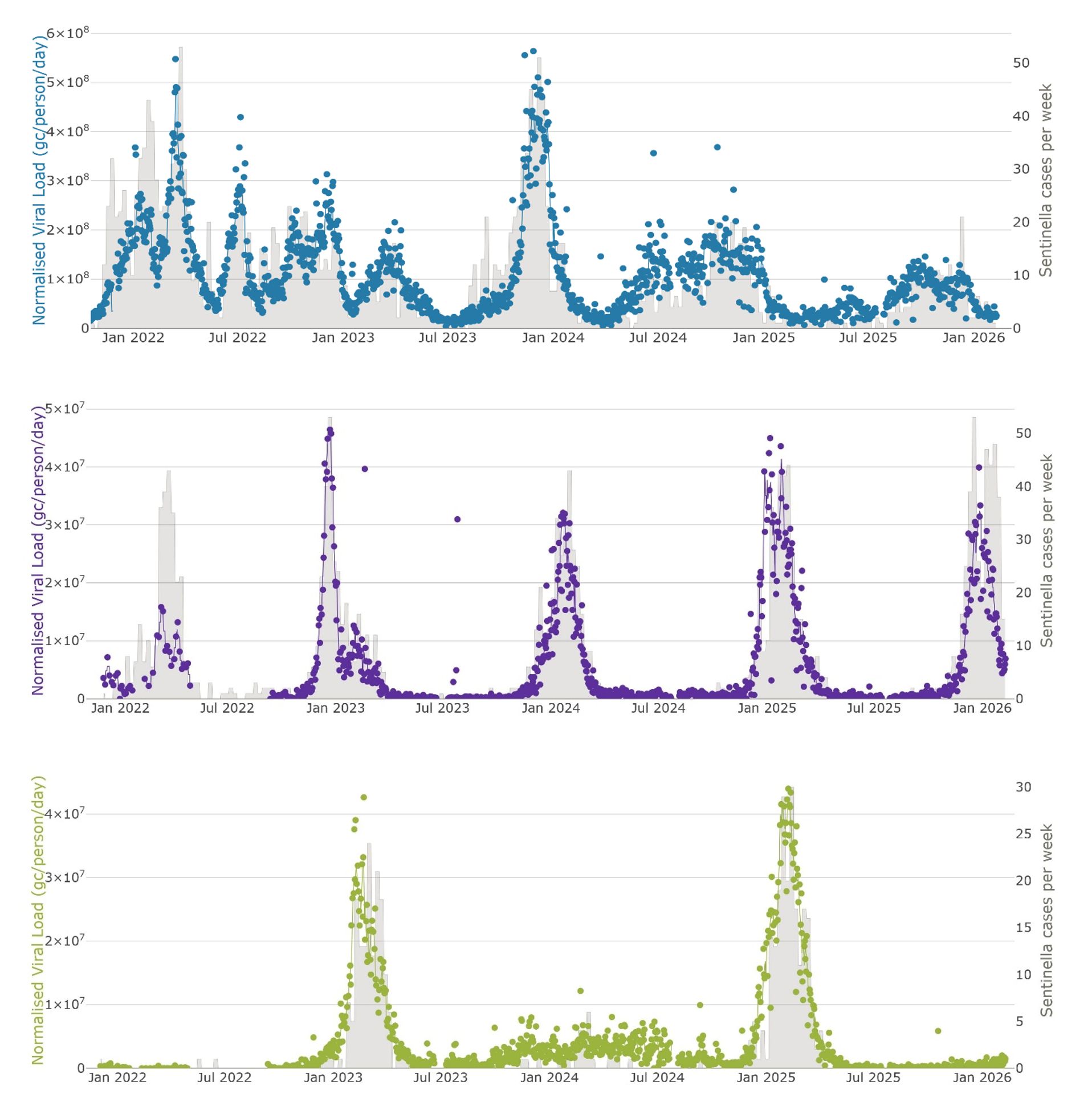
SARS-CoV-2 (top, blue), influenza A (middle, purple) and influenza B (bottom, green). Variation in the quantities of RNA of the respective viruses in Swiss wastewater from around 2 million people. In grey are the cases confirmed by the Sentinella reporting system. One can clearly see the flu waves in winter and that influenza B evidently almost failed to materialise in winter 2024 and winter 2026. Graphs from the data portal https://wise.ethz.ch/ ).
Combining wastewater and substance monitoring opens up new opportunities

Following a successful pilot project, the FOPH and Eawag have signed a contract for the continuation of substance monitoring via wastewater analyses as part of the “Strategy on Addiction and the Prevention of Non-communicable Diseases”. Running until the end of 2029, the investigation of wastewater for substances related to pharmaceutical and illicit drug use is intended to deliver new insights into legal and non-medical substance consumption and the health status of the population. Data published on the DroMedArio data portal includes that for the first two quarters of 2025 from the project “DroMedArio II” – short for “Drugs, Medicaments, Alcohol and Tobacco Residues: Wastewater-based epidemiology in Switzerland” – for the same ten Swiss cities whose wastewater is tested for pathogens. Of particular interest to experts, especially in the field of preventive healthcare, are the graphs of those substances for which no – or only unreliable – sales figures are available. “Wastewater doesn’t lie”: analysing wastewater data makes it possible to identify patterns and detect increases or decreases in consumption across society. Wastewater monitoring thus supports observations from other sources (e.g. the police and the Drug Information Centre) regarding the distribution of individual substances, such as the increase in ketamine. The extent to which this can be attributed to medical use as opposed to substance misuse has to be clarified in more detail using consumption figures and additional data.
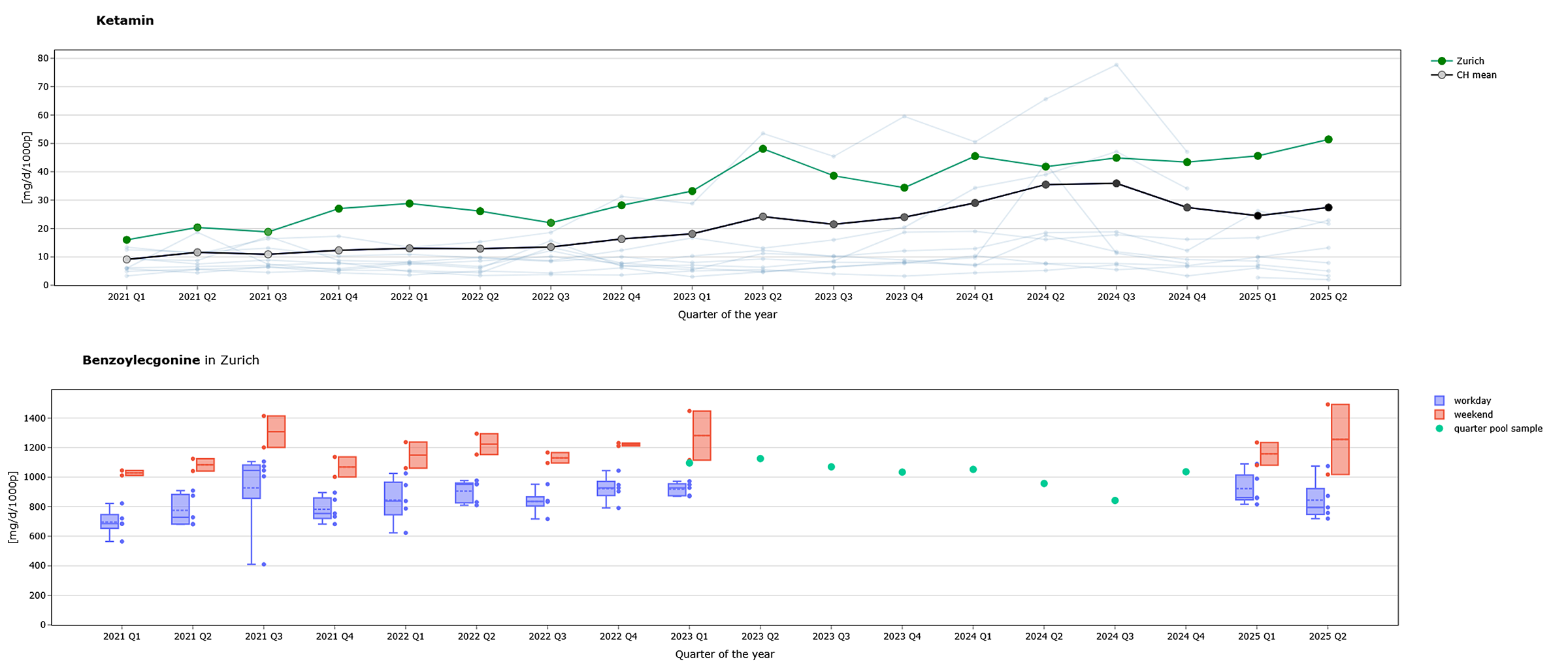
Top: The wastewater shows a rise in ketamine consumption and that Zurich (green) is above average for the ten Swiss cities (black). Bottom: Variation in levels of benzoylecgonine, the main metabolite following consumption of cocaine, in Zurich’s wastewater. The higher values at weekends can be clearly seen. (Graphs from https://dromedario.ch)

The combination of chemical and microbiological analysis of wastewater opens up new opportunities. For example, if a sharp increase in a cough medicine is detected in wastewater, this may indicate an emerging illness and symptoms within the population, even before rising numbers of severe cases are reported by GP practices or hospitals.

Not the wastewater police

Despite institutionalisation and the introduction of certain routine processes, wastewater monitoring at Eawag remains a research project. Indeed, new questions are always being asked — for example, whether it might be possible to develop a technology that would allow analyses of the same quality to be carried out automatically and directly at wastewater treatment plants. Greater visibility has also led to a growing number of enquiries from public authorities and from practitioners, such as medical staff in hospitals. The WBE team assists with these questions as far as possible. “What we are definitely not is the wastewater police,” says Ort. For example, he says that Eawag will not be carrying out measurement campaigns at schools in order to monitor cannabis consumption among pupils.

Cover picture: Preparation of wastewater samples for virus monitoring at Eawag (Eawag, Andri Bryner)

Original article

Extbase Variable Dump
array(3 items)
   publications => '35788,35350,34703,35242' (23 chars)
   libraryUrl => '' (0 chars)
   layout => '0' (1 chars)
Extbase Variable Dump
array(4 items)
   0 => Snowflake\Publications\Domain\Model\Publicationprototypepersistent entity (uid=35788, pid=124)
      originalId => protected35788 (integer)
      authors => protected'Riou, J.; Fesser, A.; Wagner, M.; Schneider, K.; Güdel-
         Krempaska, N.; Ort, C.; Julian, T. R.; Stadler, T.;
          Munday, J. D.
' (176 chars) title => protected'Determinants and spatio-temporal structure of variability in wastewater SARS
         -CoV-2 viral load measurements in Switzerland: key insights for future surve
         illance efforts
' (167 chars) journal => protected'PLoS Water' (10 chars) year => protected2025 (integer) volume => protected4 (integer) issue => protected'11 November' (11 chars) startpage => protected'e0000453 (17 pp.)' (17 chars) otherpage => protected'' (0 chars) categories => protected'' (0 chars) description => protected'<em>Background:</em> Wastewater-based surveillance (WBS) has emerged as a va
         luable tool for monitoring the circulation of infectious pathogens in the po
         pulation, offering a complement to classical surveillance methods. However,
         the interpretation of WBS data is often challenged by substantial variabilit
         y and bias in viral load measurements, which can stem from differences in la
         boratory protocols, population demographics, and in-sewer fate and transport
          processes.<br /><em>Methods and findings:</em> We analysed 23,025 wastewate
         r samples collected between February 2022 and November 2023 from 118 wastewa
         ter treatment plants (WWTPs) across Switzerland. Samples of influent wastewa
         ter were processed by 8 independent laboratories using distinct concentratio
         n, extraction and quantification methods to estimate SARS-CoV-2 concentratio
         ns. Concentrations were converted to daily viral loads using wastewater flow
          rates, and normalized by the size of the population served by the treatment
          plant. To characterise the contributions of different sources of variation,
          we applied a Bayesian modelling framework, incorporating fixed effects and
         spatio–temporal random effects to separate the contributions of laboratory
          protocols, demographic factors, and geographic structure to the observed va
         riability in SARS-CoV-2 viral loads. Our analysis revealed that laboratory-s
         pecific biases were substantial, and that local demographic characteristics
         (particularly the age structure of the catchment population) also influenced
          viral load estimates. Adjusting for these sources of bias improved the reli
         ability of interpretations based on viral loads, as indicated by an increase
         d correlation with regional COVID-19 hospitalization data (from 0.55 for raw
          data to 0.77 for adjusted temporal trends). Dynamic time warping clustering
          of the adjusted temporal trends uncovered distinct geographic clusters, hig
         hlighting persistent spatial structures that evolved over successive epidemi
         c phases.<br /><em>Concl...
' (2682 chars) serialnumber => protected'' (0 chars) doi => protected'10.1371/journal.pwat.0000453' (28 chars) uid => protected35788 (integer) _localizedUid => protected35788 (integer)modified _languageUid => protectedNULL _versionedUid => protected35788 (integer)modified pid => protected124 (integer)
1 => Snowflake\Publications\Domain\Model\Publicationprototypepersistent entity (uid=35350, pid=124) originalId => protected35350 (integer) authors => protected'Pitton,&nbsp;M.; McLeod,&nbsp;R.&nbsp;E.; Caduff,&nbsp;L.; Dauletova,&nbsp;A
         .; de Korne-Elenbaas,&nbsp;J.; Gan,&nbsp;C.; Hablützel,&nbsp;C.; Holschneid
         er,&nbsp;A.; Kang,&nbsp;S.; Loustalot,&nbsp;G.; Schmidhalter,&nbsp;P.; Schne
         ider,&nbsp;L.; Wettlauffer,&nbsp;A.; Yordanova,&nbsp;D.; Julian,&nbsp;T.&nbs
         p;R.; Ort,&nbsp;C.
' (322 chars) title => protected'A six-plex digital PCR assay for monitoring respiratory viruses in wastewate
         r
' (77 chars) journal => protected'Nature Water' (12 chars) year => protected2025 (integer) volume => protected3 (integer) issue => protected'' (0 chars) startpage => protected'1174' (4 chars) otherpage => protected'1186' (4 chars) categories => protected'' (0 chars) description => protected'Wastewater surveillance can track trends in multiple pathogens simultaneousl
         y by leveraging efficient laboratory processing. In Switzerland, wastewater
         surveillance of four respiratory pathogens is conducted at 14 locations repr
         esenting 2.3 million people. Trends in respiratory diseases are tracked usin
         g a six-plex digital PCR assay targeting influenza A, influenza B, respirato
         ry syncytial virus and SARS-CoV-2 N1 and N2 regions and murine hepatitis vir
         us for recovery efficiency control. Wastewater data were integrated with dis
         ease data from two reporting systems, and comparisons from July 2023 to July
          2024 showed strong agreement for most targets. Lower correspondence for inf
         luenza B highlighted challenges in tracking disease dynamics during seasons
         without pronounced outbreaks. Wastewater monitoring further revealed that ta
         rgeting N1 or N2 led to divergent estimates of SARS-CoV-2 loads, highlightin
         g the impact of mutations in assay target regions. The study emphasizes the
         importance of an integrated wastewater monitoring programme as a complementa
         ry tool for public health surveillance, demonstrating clear concordance with
          clinical data.
' (1155 chars) serialnumber => protected'' (0 chars) doi => protected'10.1038/s44221-025-00503-x' (26 chars) uid => protected35350 (integer) _localizedUid => protected35350 (integer)modified _languageUid => protectedNULL _versionedUid => protected35350 (integer)modified pid => protected124 (integer)
2 => Snowflake\Publications\Domain\Model\Publicationprototypepersistent entity (uid=34703, pid=124) originalId => protected34703 (integer) authors => protected'Baumgartner,&nbsp;S.; Salvisberg,&nbsp;M.; Schmidhalter,&nbsp;P.; Julian,&nb
         sp;T.&nbsp;R.; Ort,&nbsp;C.; Singer,&nbsp;H.
' (120 chars) title => protected'Insights into respiratory illness at the population level through parallel a
         nalysis of pharmaceutical and viral markers in wastewater
' (133 chars) journal => protected'Nature Water' (12 chars) year => protected2025 (integer) volume => protected3 (integer) issue => protected'' (0 chars) startpage => protected'580' (3 chars) otherpage => protected'589' (3 chars) categories => protected'' (0 chars) description => protected'Wastewater as a medium contains information on both circulating pathogens an
         d drug consumption at the population level. This study combines tracking of
         respiratory viruses and quantification of pharmaceuticals as untargeted indi
         cators of symptoms related to acute respiratory infections and influenza-lik
         e illnesses such as coughing, fever and pain. From January 2021 to June 2024
         , raw wastewater samples from ten locations covering 23% of the Swiss popula
         tion were analysed. This encompassed 15 pharmaceuticals and four priority re
         spiratory viruses including severe acute respiratory syndrome coronavirus vi
         rus-2 (SARS-CoV-2), respiratory syncytial virus (RSV), influenza A and influ
         enza B viruses. The pharmaceutical compounds dextromethorphan, pheniramine,
         clarithromycin, acetaminophen and codeine showed a strong correlation with r
         espiratory virus loads in wastewater. This enabled the estimation of pathoge
         n-specific and cumulative symptom treatment in the population. In 2021 and 2
         024, notable increases in pharmaceutical loads without corresponding increas
         es in viral loads signalled high community symptoms linked to unsurveilled p
         athogens. This study demonstrates that pharmaceutical surveillance can infor
         m respiratory disease burden and highlights the value of integrated surveill
         ance for assessing emerging public health threats beyond those routinely mon
         itored.
' (1375 chars) serialnumber => protected'' (0 chars) doi => protected'10.1038/s44221-025-00437-4' (26 chars) uid => protected34703 (integer) _localizedUid => protected34703 (integer)modified _languageUid => protectedNULL _versionedUid => protected34703 (integer)modified pid => protected124 (integer)
3 => Snowflake\Publications\Domain\Model\Publicationprototypepersistent entity (uid=35242, pid=124) originalId => protected35242 (integer) authors => protected'Baumgartner,&nbsp;S.; Ceppi,&nbsp;E.; Longrée,&nbsp;P.; Salvisberg,&nbsp;M.
         ; Singer,&nbsp;H.; Ort,&nbsp;C.
' (107 chars) title => protected'Intraday trends of chemical biomarkers in wastewater monitored through autom
         ated real-time surveillance
' (103 chars) journal => protected'Water Research' (14 chars) year => protected2025 (integer) volume => protected287 (integer) issue => protected'' (0 chars) startpage => protected'124337 (12 pp.)' (15 chars) otherpage => protected'' (0 chars) categories => protected'illicit drugs; online monitoring; population markers; signaling data; wastew
         ater-based surveillance
' (99 chars) description => protected'Wastewater-based epidemiology is an established approach for monitoring popu
         lation-level illicit drug use. Standard methods rely on 24-hour composite sa
         mples collected from treatment plant influent. While suitable for assessing
         long-term consumption patterns, composite samples obscure diurnal informatio
         n on daily load dynamics - valuable for understanding substance sources and
         normalization strategies. Currently, the required, high manual effort limits
          the feasibility of diurnal monitoring applications.<br />In this study, we
         deployed a transportable, automated liquid chromatography-mass spectrometry
         system (MS<sup>2</sup>Field) at the influent of the wastewater treatment pla
         nt in Zurich, Switzerland (serving 471,000 people). Over an eight-week perio
         d from July to September 2023 - including school holidays and two major publ
         ic events - samples were analyzed every 36 min (1909 total). Loads of five e
         xogenous population biomarkers, six common illicit drug markers, and the coc
         aine adulterant levamisole were quantified. In parallel, hourly mobile phone
          data were used to estimate <em>de facto</em> population size and demographi
         c composition in the catchment.<br />Automated analysis enabled the detectio
         n of consistent, weekday-specific intraday patterns for individual substance
         s. Population biomarkers exhibited distinct temporal profiles: paraxanthine
         remained stable during working hours, while candesartan declined even at pea
         k population times - highlighting implications for normalization, particular
         ly with day visitors. Mobile phone-based occupancy data aligned with general
          trends but diverged during large events, likely due to mobile toilet use, w
         hereas chemical markers directly reflected the contributing population.<br /
         >During the special events, MDMA, ketamine, and amphetamine loads rose with
         distinct profiles - one event showing a gradual overnight rise, the other a
         morning peak. Daily MDMA loads were 20-fold higher during one event than typ
         ical weekends. Ketamine ...
' (2520 chars) serialnumber => protected'0043-1354' (9 chars) doi => protected'10.1016/j.watres.2025.124337' (28 chars) uid => protected35242 (integer) _localizedUid => protected35242 (integer)modified _languageUid => protectedNULL _versionedUid => protected35242 (integer)modified pid => protected124 (integer)
Riou, J.; Fesser, A.; Wagner, M.; Schneider, K.; Güdel-Krempaska, N.; Ort, C.; Julian, T. R.; Stadler, T.; Munday, J. D. (2025) Determinants and spatio-temporal structure of variability in wastewater SARS-CoV-2 viral load measurements in Switzerland: key insights for future surveillance efforts, PLoS Water, 4(11 November), e0000453 (17 pp.), doi:10.1371/journal.pwat.0000453, Institutional Repository
Pitton, M.; McLeod, R. E.; Caduff, L.; Dauletova, A.; de Korne-Elenbaas, J.; Gan, C.; Hablützel, C.; Holschneider, A.; Kang, S.; Loustalot, G.; Schmidhalter, P.; Schneider, L.; Wettlauffer, A.; Yordanova, D.; Julian, T. R.; Ort, C. (2025) A six-plex digital PCR assay for monitoring respiratory viruses in wastewater, Nature Water, 3, 1174-1186, doi:10.1038/s44221-025-00503-x, Institutional Repository
Baumgartner, S.; Salvisberg, M.; Schmidhalter, P.; Julian, T. R.; Ort, C.; Singer, H. (2025) Insights into respiratory illness at the population level through parallel analysis of pharmaceutical and viral markers in wastewater, Nature Water, 3, 580-589, doi:10.1038/s44221-025-00437-4, Institutional Repository
Baumgartner, S.; Ceppi, E.; Longrée, P.; Salvisberg, M.; Singer, H.; Ort, C. (2025) Intraday trends of chemical biomarkers in wastewater monitored through automated real-time surveillance, Water Research, 287, 124337 (12 pp.), doi:10.1016/j.watres.2025.124337, Institutional Repository

Conforti, S., Pitton, M. et al (2025). Integrated analyses of longitudinal trends of antibiotic-resistant bacteria in wastewater, clinical resistance data, and antibiotic consumption in Switzerland. Preprint on medrxiv: https://www.medrxiv.org/content/10.1101/2025.11.22.25340789v1

further publications wise / publications

Funding and cooperation

Eawag, FOPH, ETH, EPFL; with many thanks also to all participating wastewater treatment plants that provided samples