Archive detail

Mitigating the consequences of heavy rainfall with Blue-Green Infrastructure

October 10, 2024 | Isabel Plana

During heavy rainfall, sewage systems are frequently overloaded, leading to untreated wastewater being discharged into surface waters. Modelling techniques used by Eawag researchers now show that the volume of such combined sewer overflows could more than triple as a result of climate change However, these studies also reveal that this increase could be avoided through the use of Blue-Green Infrastructure, such as infiltration basins, retention ponds, and porous pavements.

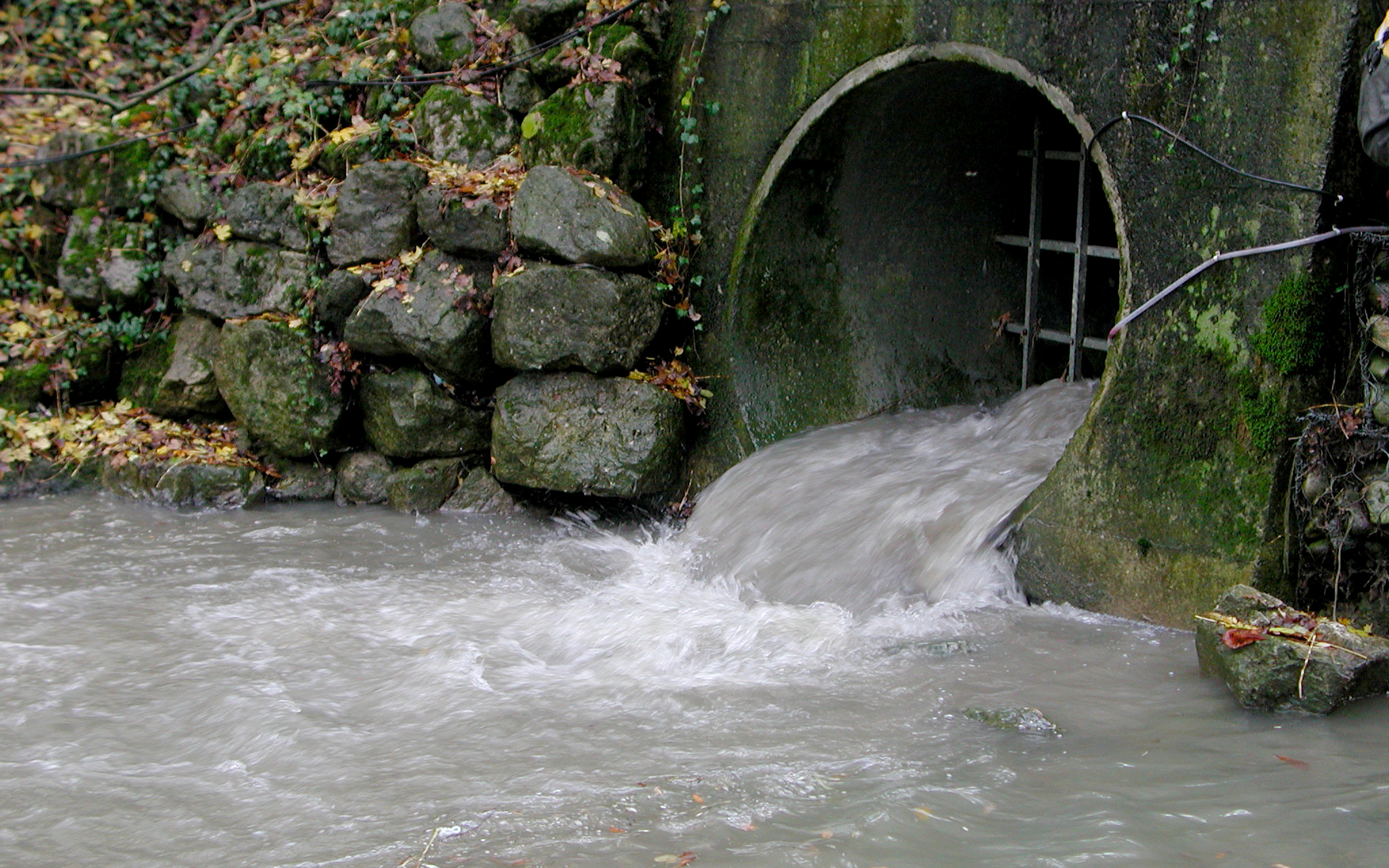
More than half of Switzerland’s sewage network consists of pipes that collect not only wastewater but also rainwater runoff from impervious surfaces like roads and rooftops. This mixture becomes problematic during intense rainfall, as the sewage system and treatment plants reach their capacity limits, resulting in untreated combined wastewater being released into water bodies. This compromises water quality and harms aquatic ecosystems. To prevent this overflow of rainwater and domestic wastewater (Combined Sewer Overflow), it is essential to reduce the amount of rainwater flowing into the sewage system during storm events.

In addition to “grey” infrastructure such as underground tanks, there is a range of Blue-Green Infrastructure (BGI) that ensures rainwater infiltrates into the soil or is temporarily stored, such as green roofs, bioretention cells, porous pavements, or detention ponds. “This potential has been known for some time,” says Lauren Cook, Group Leader at the aquatic research institute Eawag. However, what was unclear until now was how the benefits of BGI would change in a future climate with more frequent heavy rainfall and which combination of BGI elements could most effectively reduce combined sewer overflows under these conditions. She and her team took a closer look at this.
 

More Heavy Rainfall, More Combined Sewer Overflows

In an initial study, the researchers modelled how combined sewer overflows might change in the future for six different climate scenarios in the Zurich municipality of Fehraltorf. “Eawag operates an Urban Water Observatory for wastewater research in Fehraltorf together with ETH Zurich – the sewage network is equipped with over 300 sensors,” explains Giovan Battista Cavadini, PhD student in Lauren Cook’s research group. “Using measurement data that goes back eight years, we were able to calibrate our model and achieve high reliability for future scenarios of combined sewer overflows.” The modelling showed that the volume of combined sewer overflows could increase by about 150 to 250 per cent by the year 2085, depending on the climate scenario. “In another simulation, we were able to demonstrate that the sewage system would be less overloaded if as many green roofs, infiltration basins, or permeable surfaces as possible were present in the catchment area,” says Cavadini. The strongest effect was seen with green roofs, but only if the runoff was directed to a permeable surface.

Combined Blue-Green Infrastructures Could Prevent Volume Increase

Since in practice, it is uncommon to use just one BGI element, the researchers modelled in a second study how 15 different BGI combinations would affect combined sewer overflows in a future climate. In addition to green roofs, bioretention cells, and porous pavements, retention ponds were also considered.

The best results were achieved by combinations of bioretention cells with either porous pavements, retention ponds, or both. These combinations prevented an increase in both the volume and frequency of combined sewer overflows in each of the four climate models examined – even if only a quarter of the potential area was equipped with these elements. The other BGI combinations studied were at least able to mitigate a volume increase.

“Our modelling underscores how important diverse Blue-Green Infrastructure is to prepare wastewater management for climate change,” says Cavadini, co-author of the study. “Each BGI element has its strengths: bioretention cells are good for prolonged, steady rain because they can absorb water over long periods; during intense storms, ponds are helpful as they can quickly accommodate large volumes of water.”

“Our modelling underscores how important diverse Blue-Green Infrastructure is to prepare wastewater management for climate change.”

Giovan Battista Cavadini

More Cost-Effective Than Grey Infrastructure

The researchers were interested not only in the benefits but also in the costs of combined BGI. Considering installation, operational and maintenance costs, they calculated how expensive it would be in a future climate to prevent one cubic meter of combined sewer overflow. One-third of the BGI combinations studied – including those that completely prevented an increase in combined sewer overflows – are more cost-effective than a conventional storage tank. “And that’s not even taking into account the fact that Blue-Green Infrastructure is multifunctional,” Lauren Cook adds. For the same price, it can not only absorb rainwater, but also mitigate heat and promote urban biodiversity.

Modelling as a Decision-Making Tool in Urban Drainage

Although the modelling results are only applicable to Fehraltorf and can only partially be generalised to the entire country, the researchers have laid an important foundation for planning with their methodology. “Our method can serve as a decision-making tool in practice to estimate how much and what types of Blue-Green Infrastructure will be needed in a specific catchment area to reduce combined sewer overflows in the future,” says Cavadini.

Cook adds: “Our research highlights the importance of using climate scenarios rather than current climate data in urban drainage planning. In a future climate with more heavy rainfall, the effect and cost-efficiency of Blue-Green Infrastructure will be much greater than today. It is high time we rethink urban drainage and make more extensive use of Blue-Green Infrastructure.“. Otherwise, more combined wastewater could flow into the water bodies in the future – with negative consequences not only for aquatic ecosystems but in the worst-case scenario also for people taking a bath and for the drinking water quality.
 

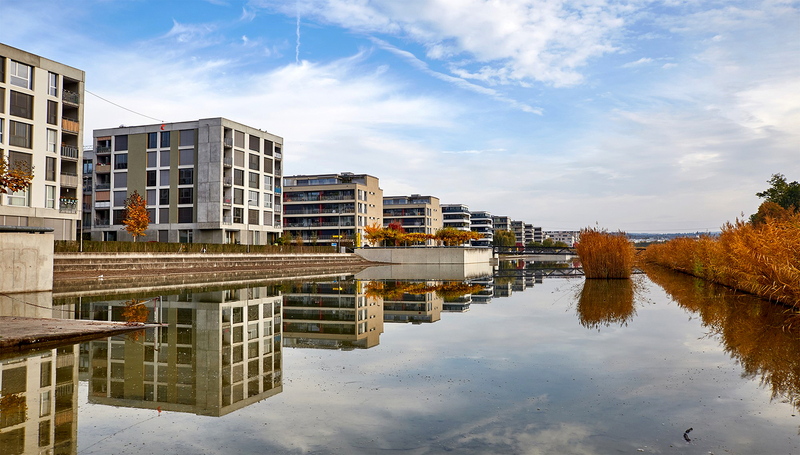
Cover picture: Ponds, as here in Opfikon (ZH), can hold large quantities of water in a short time. This will be important in the future if heavy rainfall becomes more frequent and heavier as a result of climate change (Photo: Eawag, Max Maurer).
 

Original publications

Extbase Variable Dump
array(3 items)
   publications => '33227,32538,33404' (17 chars)
   libraryUrl => '' (0 chars)
   layout => '0' (1 chars)
Extbase Variable Dump
array(3 items)
   0 => Snowflake\Publications\Domain\Model\Publicationprototypepersistent entity (uid=33227, pid=124)
      originalId => protected33227 (integer)
      authors => protected'Cavadini, G. B.; Rodriguez, M.; Nguyen, T.; Cook, L
         . M.
' (85 chars) title => protected'Can blue-green infrastructure counteract the effects of climate change on co
         mbined sewer overflows? Study of a swiss catchment
' (126 chars) journal => protected'Environmental Research Letters' (30 chars) year => protected2024 (integer) volume => protected19 (integer) issue => protected'9' (1 chars) startpage => protected'094025 (12 pp.)' (15 chars) otherpage => protected'' (0 chars) categories => protected'sustainable urban drainage systems; combined sewer systems; climate change a
         daptation; SWMM; stormwater management; climate models; convection-permittin
         g models
' (160 chars) description => protected'Combined sewer overflows (CSOs), the discharge of untreated sewage mixed wit
         h stormwater into surface waters, are expected to increase under climate cha
         nge as a result of more extreme rainfall. Blue-green infrastructure (BGI), s
         uch as bioretention cells and porous pavements, can help to reduce the amoun
         t of stormwater entering combined sewer systems, thus reducing CSO discharge
         . However, our understanding of the potential for BGI to mitigate CSOs in a
         future climate is still lacking, as performance is typically evaluated for i
         ndividual BGI elements with fixed implementation areas under historical clim
         ate conditions or limited future scenarios. In response, this study investig
         ates the performance of 30 combinations of BGI elements and implementation r
         ates to prevent increases in CSOs under a range of future climate scenarios
         in an urban catchment near Zurich, Switzerland. Median total annual rainfall
         , projected to increase by as much as 46%, could double the median annual CS
         O volume and increase median annual CSO frequency by up to 52%. Four BGI com
         binations that include bioretention cells show the most promise to prevent i
         ncreases in CSO volume and frequency in a future climate; and given the dive
         rse responses of BGI elements to distinct rainfall patterns, their combinati
         ons can enhance CSO discharge reduction across varying climate patterns. BGI
          is also likely to become more cost-effective under future climatic conditio
         ns as projected increases in total rainfall led to larger CSO volume reducti
         ons obtained through BGI. However, there is a trade-off between robustness t
         o climate change and cost-effectiveness, since CSO volume reduction capacity
          scales with BGI implementation rate but cost-effectiveness declines. Our st
         udy illustrates the effectiveness of various BGI combinations to prevent inc
         reases in CSOs in a future climate, calling for a range of BGI elements and
         implementation areas to be considered for urban drainage adaptation.
' (1968 chars) serialnumber => protected'1748-9326' (9 chars) doi => protected'10.1088/1748-9326/ad6462' (24 chars) uid => protected33227 (integer) _localizedUid => protected33227 (integer)modified _languageUid => protectedNULL _versionedUid => protected33227 (integer)modified pid => protected124 (integer)
1 => Snowflake\Publications\Domain\Model\Publicationprototypepersistent entity (uid=32538, pid=124) originalId => protected32538 (integer) authors => protected'Rodriguez, M.; Fu, G.; Butler, D.; Yuan, Z.; Cook, 
         L.
' (78 chars) title => protected'The effect of green infrastructure on resilience performance in combined sew
         er systems under climate change
' (107 chars) journal => protected'Journal of Environmental Management' (35 chars) year => protected2024 (integer) volume => protected353 (integer) issue => protected'' (0 chars) startpage => protected'120229 (12 pp.)' (15 chars) otherpage => protected'' (0 chars) categories => protected'climate change; combined sewer overflow; global resilience analysis; resilie
         nce; top-down approach
' (98 chars) description => protected'Climate change is currently reshaping precipitation patterns, intensifying e
         xtremes, and altering runoff dynamics. Particularly susceptible to these imp
         acts are combined sewer systems (CSS), which convey both stormwater and wast
         ewater and can lead to combined sewer overflow (CSO) discharges during heavy
          rainfall. Green infrastructure (GI) can help mitigate these discharges and
         enhance system resilience under historical conditions; however, the quantifi
         cation of its effect on resilience in a future climate remains unknown in th
         e literature. This study employs a modified Global Resilience Analysis (GRA)
          framework for continuous simulation to quantify the impact of climate chang
         e on CSS resilience, particularly CSOs. The study assesses the efficacy of G
         I interventions (green roofs, permeable pavements, and bioretention cells) u
         nder diverse future rainfall scenarios based on EURO-CORDEX regional climate
          models (2085–2099) and three Representative Concentration Pathways (2.6,
         4.5, 8.5 W/m<sup>2</sup>). The findings underscore a general decline in resi
         lience indices across the future rainfall scenarios considered. Notably, the
          total yearly CSO discharge volume increases by a range of 145 % to 256 % in
          response to different rainfall scenarios. While GI proves effective in incr
         easing resilience, it falls short of offsetting the impacts of climate chang
         e. Among the GI options assessed, green roofs routed to pervious areas exhib
         it the highest adaptive capacity, ranging from 9 % to 22 % at a system level
         , followed by permeable pavements with an adaptation capacity between 7 and
         13 %. By linking the effects of future rainfall scenarios on CSO performance
         , this study contributes to understanding GI's potential as a strategic tool
          for enhancing urban resilience.
' (1780 chars) serialnumber => protected'0301-4797' (9 chars) doi => protected'10.1016/j.jenvman.2024.120229' (29 chars) uid => protected32538 (integer) _localizedUid => protected32538 (integer)modified _languageUid => protectedNULL _versionedUid => protected32538 (integer)modified pid => protected124 (integer)
2 => Snowflake\Publications\Domain\Model\Publicationprototypepersistent entity (uid=33404, pid=124) originalId => protected33404 (integer) authors => protected'Cavadini,&nbsp;G.&nbsp;B.; Mutzner,&nbsp;L.; Cook,&nbsp;L.; Rodriguez,&nbsp;
         M.; Poggioli,&nbsp;M.
' (97 chars) title => protected'BGI reduzieren Gewässerbelastung. Modellstudien zu Entlastungen und Wasserq
         ualität sowie Auswirkungen des Klimawandels
' (120 chars) journal => protected'Aqua & Gas' (10 chars) year => protected2024 (integer) volume => protected104 (integer) issue => protected'10' (2 chars) startpage => protected'46' (2 chars) otherpage => protected'52' (2 chars) categories => protected'' (0 chars) description => protected'Indem blau-grüne Infrastrukturen die Mischwasserentlastungen reduzieren, we
         rden auch die Einträge von Mikroverunreinigungen verkleinert. Besonders Ver
         
         
         warten. Blau-grüne Infrastrukturen können daher einen wichtigen Beitrag le
         isten, um unerwünschte Effekte zu vermeiden oder zu reduzieren.
' (444 chars) serialnumber => protected'2235-5197' (9 chars) doi => protected'' (0 chars) uid => protected33404 (integer) _localizedUid => protected33404 (integer)modified _languageUid => protectedNULL _versionedUid => protected33404 (integer)modified pid => protected124 (integer)
Cavadini, G. B.; Rodriguez, M.; Nguyen, T.; Cook, L. M. (2024) Can blue-green infrastructure counteract the effects of climate change on combined sewer overflows? Study of a swiss catchment, Environmental Research Letters, 19(9), 094025 (12 pp.), doi:10.1088/1748-9326/ad6462, Institutional Repository
Rodriguez, M.; Fu, G.; Butler, D.; Yuan, Z.; Cook, L. (2024) The effect of green infrastructure on resilience performance in combined sewer systems under climate change, Journal of Environmental Management, 353, 120229 (12 pp.), doi:10.1016/j.jenvman.2024.120229, Institutional Repository
Cavadini, G. B.; Mutzner, L.; Cook, L.; Rodriguez, M.; Poggioli, M. (2024) BGI reduzieren Gewässerbelastung. Modellstudien zu Entlastungen und Wasserqualität sowie Auswirkungen des Klimawandels, Aqua & Gas, 104(10), 46-52, Institutional Repository

Financing / Cooperations

  • Eawag
  • ETH Zurich
  • Swiss National Supercomputing Centre
  • University of Exeter
  • University of Queensland
  • City University of Hong Kong
  • Swiss National Science Foundation