Archive detail

Promoting the compatibility of hydropower and biodiversity

March 11, 2025 | Bärbel Zierl

Storage hydropower plants play a central role in balancing fluctuations in the electricity grid while remaining carbon neutral. To better reconcile electricity production with the protection of biodiversity in the long term, it is crucial that hydropower management considers not only the ecological consequences of individual hydropeaking events, but also their cumulative effects .

In view of the energy transition, storage hydropower plants are becoming increasingly important as they can compensate for highly fluctuating electricity production from other renewable energy sources such as solar and wind. According to EU forecasts, the demand for flexible electricity production will increase ninefold by 2050. Hydropower therefore contributes to climate-friendly energy generation. However, at the same time, it also exerts considerable pressure on biodiversity.

The frequent switching activation and shutdown of turbines leads to pronounced flow fluctuations in the river reaches downstream of storage hydropower plants; this is known as hydropeaking. Hydropeaking has a significant impact on the ecosystem. During low flow phases, shoreline habitats can dry up rapidly, leaving fish, aquatic insects and other aquatic life living there stranded and at risk of death. When the flow rises, the strong currents not only alter the diverse mosaic of habitats, but also sweep away animals and plants. As a result, both the number of individuals and the diversity of species decline drastically. This highlights a key challenge of the energy transition: reconciling climate-friendly electricity production with effective biodiversity conservation.
 

So far neglected: the frequency of hydropeaking events

For years, research has been investigating how individual hydropeaking events affect the river ecosystems and how negative impacts can be mitigated. Several structural and operational solutions are already being implemented (see box). However, the pronounced frequency of the artificial flow fluctuations is an issue that has been underestimated so far. While rivers with a natural flow regime experience major flow fluctuations only once every two to eleven days on average, hydropeaking typically occurs three to four times a day.
 

Legal framework and the implications of hydropeaking mitigation

The Swiss Waters Protection Act requires operators of hydropower plants with hydropeaking operations to manage their flow in a way that minimises the impact on habitats and the typical species that inhabit them. In line with the principle of proportionality, the objective is to remediate the significant negative ecological impacts by 2030. Newly licensed hydropower plants must also meet these requirements. Mitigation measures, including the restoration of fish passage and bedload transport, play a central role in protecting biodiversity in river ecosystems.

At present, hydropeaking mitigation focuses mainly on managing individual events, for example by constructing compensation basins. The focus mainly is on reducing the rate of increase and decrease in the water level. Alternatively, operational measures or direct discharging into a larger body of water, such as a lake, are conceivable. In the latter case, the hydropeaking section is transformed into a residual flow reach with constant discharge.

Cumulative effect: more than the just the sum of individual events

Researchers at the aquatic research institute Eawag, together with partners from the ETH Zurich, INRAE Lyon, ZHAW and BOKU Vienna, have been studying how frequently occurring hydropeaking events affect habitat dynamics in rivers. “Our studies show that recurring hydropeaking increases habitat dynamics – in other words, their temporal and spatial distribution – by a factor of 26 to 75 compared to the natural flow regime,” says Nico Bätz, a scientist in the river restoration research group at Eawag. Repeated flow fluctuations alter the availability, persistency and connectivity of essential habitats within a river reach, such as spawning grounds or refugia for fish and aquatic insects. The ecosystem may be able to cope with a single event. However, continuous changes to the habitats causes stress and increases the mortality of many species. 

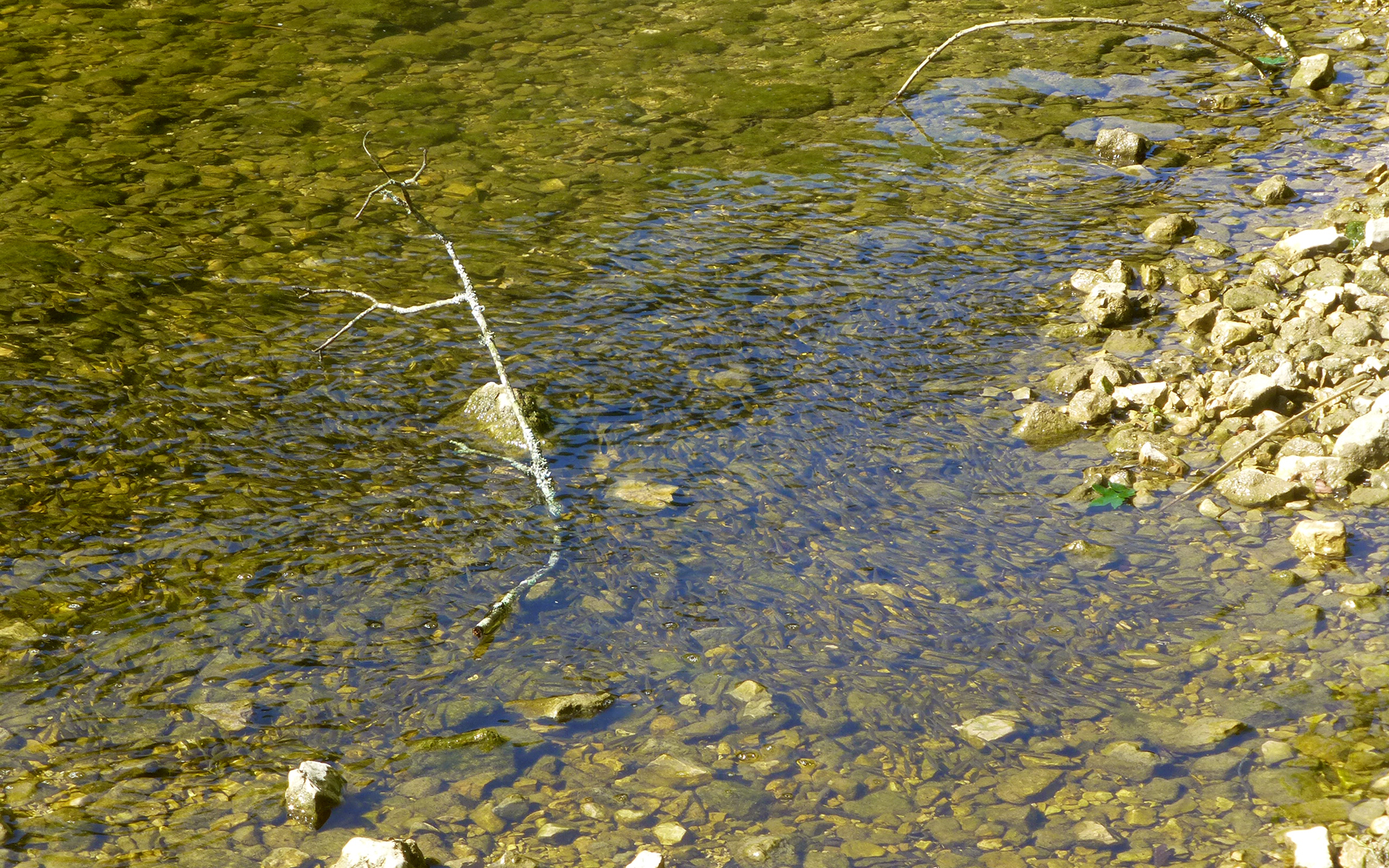
“An impressive example of the far-reaching effects of recurrent flow fluctuations are the new results from BOKU Vienna on the stranding of juvenile fish, which we recently published together”, adds Nico Bätz. A single low flow event is generally not particularly hazardous; the fish population can usually regenerate. However, if the habitats of juvenile fish dry out multiple times per day, the population can decline significantly within a short period of time. Field studies show that the frequency of daily hydropeaking events has a strong influence on the density of juvenile fish.

In river reaches in Austria with less than one flow fluctuation per day, the population density of young brown trout was on average 2.3 times higher, and of young grayling as much as 18 times higher, than in river reaches with more frequent flow fluctuations due to hydropeaking. Computer simulations also indicate that repeated flow fluctuations, depending on the hydropeaking frequency, can significantly affect the juvenile fish population within a few days or months, even if the flow is lowered slowly – a common mitigation practice. “Our research clearly shows that the cumulative effect of multiple hydropeaking events on the ecosystem is greater than the simple sum of individual events,” summarises Nico Bätz.
 

New approaches to quantifying the effects of recurring hydropeaking

To better understand the effects of recurring hydropeaking on habitat dynamics, the researchers developed three new metrics.

Habitat probability: This metric indicates the likelihood that certain habitat types, such as shallow water or areas with low flow velocity, are available. Integrated over time, this metric describes the dominant habitat conditions to which organisms are exposed to due to flow fluctuations. 

Habitat shifts: This metric tracks how often habitat types shift at a specific location. The frequency of changes in habitat conditions is of particular importance for organisms with limited mobility, such as plants and most aquatic insects, which cannot change their habitat or can only do so slowly. Frequent shifts in habitat conditions can severely affect these organisms and reduce their survival.

Spatial shifts of habitats: This metric indicates the extent to which habitats relocate over time. It is of particular relevance for mobile organisms such as adult fish, which must change location in response to flow fluctuations to find a suitable habitat conditions. Frequent relocation increases the risk of stranding, but also affects the energy balance of mobile organisms and can impair their long-term survival.

Making hydropower plants as environmentally friendly as possible

To maintain the long-term resilience and biodiversity of our rivers, hydropower management should consider not only the consequences of individual hydropeaking events, but also their cumulative effects. A stronger integration of this issue can help to better account of the potential impacts that storage hydropower plants may have on biodiversity. “Our metrics can complement existing approaches, such as those proposed in the hydropeaking mitigation guidelines of the Federal Office for the Environment (FOEN), to ensure a balance between hydropower as the backbone of the energy transition and the conservation of biodiversity,” says Nico Bätz. The researchers therefore recommend that the frequency of flow fluctuations caused by hydropeaking be explicitly taken into account in hydropower management. Proposals are currently being developed on how this can be considered in refurbishing, expansion or building new as well as in new concessions.
 

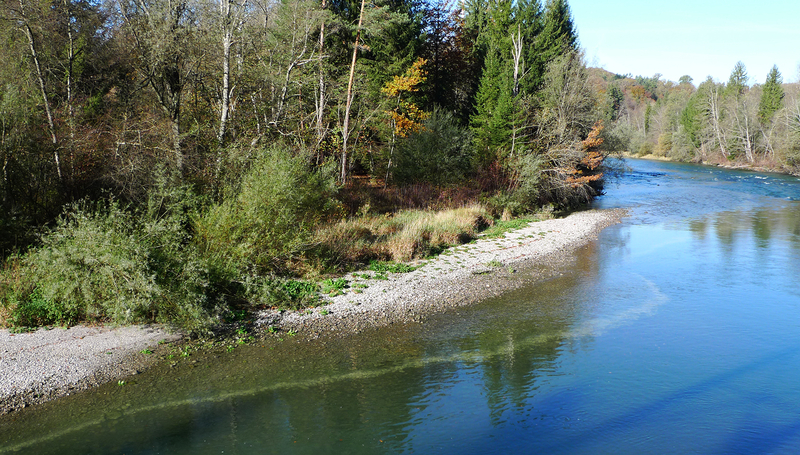
Cover picture: The discharge fluctuations due to hydropeaking are clearly visible along the banks of the River Saane in the Canton of Fribourg. The light line in the water shows the water level during a low-flow phase, while the peak flow maximum is also clearly visible from the wetted part of the gravel bank (Photo: Christine Weber).
 

Original publication

Extbase Variable Dump
array(3 items)
   publications => '33663,33693,25284' (17 chars)
   libraryUrl => '' (0 chars)
   layout => '0' (1 chars)
Extbase Variable Dump
array(3 items)
   0 => Snowflake\Publications\Domain\Model\Publicationprototypepersistent entity (uid=33663, pid=124)
      originalId => protected33663 (integer)
      authors => protected'Bätz, N.; Judes, C.; Vanzo, D.; Lamouroux, N.; Capra,&n
         bsp;H.; Baumgartner, J.; Berger, B.; Weber, C.
' (137 chars) title => protected'Patch-scale habitat dynamics: three metrics to assess ecological impacts of
         frequent hydropeaking
' (97 chars) journal => protected'Journal of Ecohydraulics' (24 chars) year => protected2025 (integer) volume => protected10 (integer) issue => protected'1' (1 chars) startpage => protected'79' (2 chars) otherpage => protected'106' (3 chars) categories => protected'habitat modelling; habitat time-series; invertebrate drift; fish stranding;
         river management; flow regulation
' (109 chars) description => protected'Human activities significantly alter natural river flows, impacting ecosyste
         m functioning and biodiversity worldwide. Hydropeaking, resulting from inter
         mittent on-demand hydropower generation, introduces sub-daily flow fluctuati
         ons exceeding natural variability. While the effects of single hydropeaking
         events are well-studied, the cumulative impacts of frequent hydropeaking req
         uires further exploration. This study aims to develop metrics that captures
         changes in habitat dynamics at the patch scale (i.e. individual micro-habita
         ts within the habitat mosaic) due to reoccurring hydropeaking. Using hydrody
         namic simulations, we introduce three patch-scale metrics to quantify habita
         t dynamics with high spatial (0.5 m) and temporal (10 min) resolution: (M1)
         Habitat probability within patches, assessing spatio-temporal diversity of h
         abitats; (M2) Habitat shifts within patches, evaluating habitat persistence
         for sessile organisms (e.g. vegetation, invertebrates); and (M3) Spatial shi
         fts of habitats, indicating habitat relocation affecting mobile species (e.g
         . adult fish). Using eight hydro-morphological scenarios representing differ
         ent levels of anthropogenic modification of flow and morphology, we demonstr
         ate that these metrics effectively quantify changes in habitat dynamics at p
         atch-scale. The results highlight the ecological relevance of these metrics
         and their potentially utility for river management. By identifying areas sus
         ceptible to ecological impacts, these metrics may serve as tools for hydrope
         aking mitigation, enabling more targeted and spatially explicit habitat mana
         gement and restoration.
' (1619 chars) serialnumber => protected'2470-5357' (9 chars) doi => protected'10.1080/24705357.2024.2426790' (29 chars) uid => protected33663 (integer) _localizedUid => protected33663 (integer)modified _languageUid => protectedNULL _versionedUid => protected33663 (integer)modified pid => protected124 (integer)
1 => Snowflake\Publications\Domain\Model\Publicationprototypepersistent entity (uid=33693, pid=124) originalId => protected33693 (integer) authors => protected'Hayes, D. S.; Bätz, N.; Tonolla, D.; Merl, K.; Aue
         r, S.; Gorla, L.; Weber, C.; Naudascher, R.; Silva,&nbsp
         ;L. G. M.; Schmutz, S.; Unfer, G.; Führer, S.; Zei
         ringer, B.; Greimel, F.
' (261 chars) title => protected'Why hydropeaking frequency matters: effects of recurring stranding on fish' (74 chars) journal => protected'Journal of Ecohydraulics' (24 chars) year => protected2025 (integer) volume => protected10 (integer) issue => protected'3' (1 chars) startpage => protected'302' (3 chars) otherpage => protected'318' (3 chars) categories => protected'hydropower; flow ramping; salmonidae; cyprinidae; alpine river ecosystem; re
         newable energies; river management
' (110 chars) description => protected'Research and management of hydropeaked rivers largely overlook the ecologica
         l impacts of recurring flow fluctuations, such as fish stranding, on ecosyst
         em health. This article synthesizes scientific and grey literature, field st
         udies, and experiments to assess the effects of frequent hydropeaking on fis
         h. Findings show that hydropeaking frequency significantly affects the ecolo
         gical integrity of alpine rivers, with an average of three daily down-rampin
         g events. Despite some evidence of behavioral adaptation of fish to recurren
         t flow fluctuations, this adaptation appears insufficient to counter the cum
         ulative effect of a series of single hydropeaking events. Larval and juvenil
         e fish are particularly vulnerable, with stranding impacts extending to the
         population and community levels. Effective mitigation should prioritize redu
         cing the cumulative impact of recurring hydropeaks while ensuring single-eve
         nt ramping rates and flow amplitudes remain within ecological limits. To eff
         ectively safeguard sensitive habitats, targeted mitigation efforts informed
         by an understanding of habitat dynamics are critical. Furthermore, maintaini
         ng lateral connectivity within river systems is essential for supporting res
         ilient fish populations, especially where hydropeaking mitigation possibilit
         ies are limited. Finally, this study identifies future research directions o
         n hydropeaking frequency and its ecological effects.
' (1420 chars) serialnumber => protected'2470-5357' (9 chars) doi => protected'10.1080/24705357.2024.2426820' (29 chars) uid => protected33693 (integer) _localizedUid => protected33693 (integer)modified _languageUid => protectedNULL _versionedUid => protected33693 (integer)modified pid => protected124 (integer)
2 => Snowflake\Publications\Domain\Model\Publicationprototypepersistent entity (uid=25284, pid=124) originalId => protected25284 (integer) authors => protected'Bätz, N.; Judes, C.; Weber, C.' (46 chars) title => protected'Nervous habitat patches: the effect of hydropeaking on habitat dynamics' (71 chars) journal => protected'River Research and Applications' (31 chars) year => protected2023 (integer) volume => protected39 (integer) issue => protected'3' (1 chars) startpage => protected'349' (3 chars) otherpage => protected'363' (3 chars) categories => protected'benthic invertebrates; disturbance; habitat modeling; fish; flow alteration;
          habitat assessment; habitat mosaic; time-series
' (124 chars) description => protected'Alteration in the river flow regime due to intermittent hydropower productio
         n (i.e., hydropeaking) leads to biodiversity loss and ecosystem degradation
         worldwide. Due to the increasing shear of volatile green energy (i.e., wind
         and solar), hydropeaking frequency is deemed to increase in the coming decad
         es. However, our mechanistic understanding of how the frequency of repeated
         hydropeaking (i.e., series of multiple events) affects ecological processes
         is still limited. Here, we reflect on the impacts of altered flow frequency
         and relative duration on the persistency of aquatic habitats. We focus on th
         e habitats at patch-scale, being this the scale representing what organisms
         perceive when interacting with their environment. With a showcase we explore
          a temporally explicit approach to quantify altered habitat dynamics at patc
         h-scale due to hydropeaking. We then review how changes in habitat dynamics
         and persistency may affect ecological processes. Our findings suggest that (
         i) a time-series approach allows to account for the inherent multi-event nat
         ure of hydropeaking; (ii) hydropeaking can increase the dynamics of single h
         abitat patches by at least one order of magnitude if compared to unregulated
          rivers; (iii) altered habitat dynamics at the patch scale can affect the su
         rvival of more sessile species and life cycle stages (e.g., invertebrates) o
         r the energy budget of mobile species and life cycle stages (e.g., adult fis
         h). However, the ecological significance and potential environmental thresho
         lds of patch-scale dynamics and persistency are still poorly investigated an
         d need further attention. Moreover, methods for the aggregation of habitat d
         ynamics and persistency from the patch to the reach-scale are not available
         yet.
' (1752 chars) serialnumber => protected'1535-1459' (9 chars) doi => protected'10.1002/rra.4021' (16 chars) uid => protected25284 (integer) _localizedUid => protected25284 (integer)modified _languageUid => protectedNULL _versionedUid => protected25284 (integer)modified pid => protected124 (integer)
Bätz, N.; Judes, C.; Vanzo, D.; Lamouroux, N.; Capra, H.; Baumgartner, J.; Berger, B.; Weber, C. (2025) Patch-scale habitat dynamics: three metrics to assess ecological impacts of frequent hydropeaking, Journal of Ecohydraulics, 10(1), 79-106, doi:10.1080/24705357.2024.2426790, Institutional Repository
Hayes, D. S.; Bätz, N.; Tonolla, D.; Merl, K.; Auer, S.; Gorla, L.; Weber, C.; Naudascher, R.; Silva, L. G. M.; Schmutz, S.; Unfer, G.; Führer, S.; Zeiringer, B.; Greimel, F. (2025) Why hydropeaking frequency matters: effects of recurring stranding on fish, Journal of Ecohydraulics, 10(3), 302-318, doi:10.1080/24705357.2024.2426820, Institutional Repository
Bätz, N.; Judes, C.; Weber, C. (2023) Nervous habitat patches: the effect of hydropeaking on habitat dynamics, River Research and Applications, 39(3), 349-363, doi:10.1002/rra.4021, Institutional Repository

Cooperations

  • Wasserforschungsinstitut Eawag
  • Institut für Wasser und Umwelt, Karlsruhe Institut für Technology (KIT)
  • Versuchsanstalt für Wasserbau, Hydrologie und Glaziologie VAW, ETH Zürich
  • Stocker Lab, Departement Bau, Umwelt und Geomatik, ETH Zürich
  • Institut national de recherche pour l'agriculture, l'alimentation et l'environnement, INRAE Lyon
  • Universität für Bodenkultur (BOKU), Wien
  • Institut für Umwelt und Natürliche Ressourcen, Zürcher Hochschule für Angewandte Wissenschaften, ZHAW
  • Bundesamt für Umwelt, BAFU