Archive detail

Remove micropollutants with granular activated carbon?

January 18, 2022 | Karin Stäheli

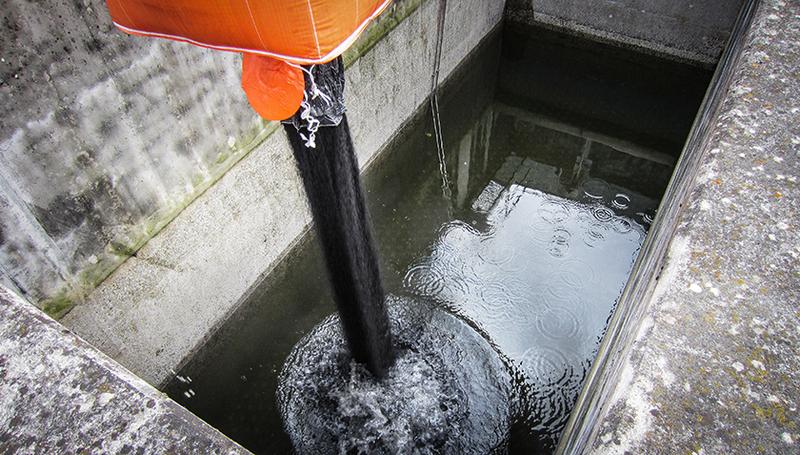
Eawag researchers investigated this question in two extensive pilot studies at the Furt-Bülach and Glarus wastewater treatment plants. The findings: Granular activated carbon filtration efficiently removes micropollutants, is technically feasible and is an equal alternative to other processes.

For the elimination of trace substances at wastewater treatment plants (WWTP), granular activated carbon (GAC) is also available as an alternative treatment option to ozonation and the powdered activated carbon process (PAC).

In contrast to the high energy consumption in ozonation (electrical energy to generate ozone and liquid oxygen), the energy-intensive production and CO2-footprint of carbon (starting raw materials, process energy) have an impact on activated carbon treatment. The main advantage of using activated carbon is that, unlike ozonation, the micropollutants are not oxidised but adsorbed and thus no transformation products are formed. The use of activated carbon can also achieve a significant DOC (dissolved organic carbon) reduction in the effluent of the WWTP, which can be an additional advantage when upgrading or retrofitting the wastewater treatment plant.

Pilot studies show: GAC efficiently removes micropollutants

With two pilot studies now summarised in the current A&G at the Furt-Bülach and Glarus WWTPs, Eawag, in collaboration with many partners, has been able to demonstrate that the process of space filtration with granular activated carbon is suitable for efficiently removing micropollutants from municipal wastewater while complying with statutory requirements. GAC filtration is technically and economically feasible (specific operating costs) and has proven to be practical. “In our tests, GAC filtration has proven to be a very robust and easy-to-handle technology. It is very similar in operation to the established sand filtration at wastewater treatment plants,” explains Marc Böhler from Eawag’s process engineering department. "For individual WWTPs, pre-ozonation can also be a useful addition," adds Böhler.

The elimination performance achieved and the service lives or bed volumes that can be reached also make it clear that the specific activated carbon requirement is comparable to powdered activated carbon (PAC) processes. Böhler: “GAC filtration also has a significantly better CO2 footprint than PAC processes thanks to the possibility of reactivating the activated carbon used.”
 

Cover picture: J. Fleiner
 

Aqua & Gas article, January 2022 edition

Extbase Variable Dump
array(2 items)
   publications => '24197' (5 chars)
   libraryUrl => '' (0 chars)
Extbase Variable Dump
array(1 item)
   0 => Snowflake\Publications\Domain\Model\Publicationprototypepersistent entity (uid=24197, pid=124)
      originalId => protected24197 (integer)
      authors => protected'Böhler, M. A.; Joss, A.; McArdell, C. S.' (66 chars)
      title => protected'GAK-Filter für die Spurenstoffentfernung. Erfahrungen und Betriebsergebniss
         e der Pilotstudien ARA Furt/Bülach und Glarnerland
' (127 chars) journal => protected'Aqua & Gas' (10 chars) year => protected2022 (integer) volume => protected102 (integer) issue => protected'1' (1 chars) startpage => protected'48' (2 chars) otherpage => protected'54' (2 chars) categories => protected'' (0 chars) description => protected'Auf den Kläranlagen Furt/Bülach und Glarnerland des Abwasserverbandes Glar
         nerland (AVG, Bilten) wurden zwischen 2014 und 2019 umfangreiche Untersuchun
         gen zur Elimination von Mikroverunreinigungen mittels granulierter Aktivkohl
         e (GAK) durchgeführt. Ziel war es, unter Schweizer Praxisbedingungen die Ma
         chbarkeit, Effizienz und Wirtschaftlichkeit des Verfahrens zu evaluieren. Fa
         zit beider Forschungsprojekte ist, dass sich die GAK-Filtration zur Spurenst
         offelimination gemäss Schweizer Gesetzgebung eignet. Das Verfahren ist tech
         nisch und wirtschaftlich realisierbar und hat sich als praxistauglich erwies
         en.
' (611 chars) serialnumber => protected'2235-5197' (9 chars) doi => protected'' (0 chars) uid => protected24197 (integer) _localizedUid => protected24197 (integer)modified _languageUid => protectedNULL _versionedUid => protected24197 (integer)modified pid => protected124 (integer)
Böhler, M. A.; Joss, A.; McArdell, C. S. (2022) GAK-Filter für die Spurenstoffentfernung. Erfahrungen und Betriebsergebnisse der Pilotstudien ARA Furt/Bülach und Glarnerland, Aqua & Gas, 102(1), 48-54, Institutional Repository

Project reports

Glarus

Extbase Variable Dump
array(2 items)
   publications => '21543' (5 chars)
   libraryUrl => '' (0 chars)
Extbase Variable Dump
array(1 item)
   0 => Snowflake\Publications\Domain\Model\Publicationprototypepersistent entity (uid=21543, pid=124)
      originalId => protected21543 (integer)
      authors => protected'McArdell, C. S.; Böhler, M.; Hernandez, A.; Oltramare,&
         nbsp;C.; Büeler, A.; Siegrist, H.
' (120 chars) title => protected'Pilotversuche zur erweiterten Abwasser-behandlung mit granulierter Aktivkohl
         e (GAK) und kombiniert mit Teilozonung (O3/GAK) auf der ARA Glarnerland (AVG
         ). Ergänzende Untersuchungen zur PAK-Dosierung in die biologische Stufe mit
          S::Select®-Verfahren in Kom
' (257 chars) journal => protected'' (0 chars) year => protected2020 (integer) volume => protected0 (integer) issue => protected'' (0 chars) startpage => protected'146 p' (10 chars) otherpage => protected'' (0 chars) categories => protected'' (0 chars) description => protected'Auf der Kläranlage Glarnerland wurde im Rahmen des Forschungsprojektes «Pi
         lotversuche zur erweiterten Abwasserbehandlung mit granulierter Aktivkohle (
         GAK) und kombiniert mit Teilozonung (O3/GAK)» die Machbarkeit und Effizienz
          der genannten Verfahrenstechniken zur Spurenstoffelimination untersucht. Im
          weiteren Verlauf der Untersuchungen wurde zudem auch die Option der Dosieru
         ng von Pulveraktivkohle (PAK) in die biologische Stufe, welche mit dem S::Se
         lect®-Verfahren betrieben wird, als Vorstufe zur GAK erprobt.<br /><br /> Z
         iel der Pilotierung war die Erarbeitung von Entscheidungsgrundlagen zur Ausw
         ahl eines optimalen Verfahrens oder einer Verfahrenskombination für die ang
         estrebte Realisierung der Spurenstoffelimination beim Abwasserverband Glarne
         rland. Zudem sollten Langzeiterfahrungen zum Betrieb von GAK-Filtrationen be
         züglich Effizienz, Betrieb und vor allem Standzeiten (erreichte Bettvolumin
         a) von verschiedenen GAK-Typen bei unterschiedlichen Kontaktzeiten bei einem
          Abwasser mit hohem gelöstem organischen Kohlenstoff (DOC) gesammelt werden
         .<br /><br /> Die Pilotanlage Vorozonung/GAK-Filtration ging Ende Januar 201
         7 auf der ARA Glarnerland in Betrieb und wurde im August 2019 ausser Betrieb
          gesetzt. Es wurden vier verschiedene GAK-Produkte untersucht (CSC «HC HK 1
         000», CarboTech «Pool W1-3», Jacobi «Aquasorb 5010», CabotNorit «GAC 1
         
         
         ischen Ozondosis von rund 0.2 gO3/gDOC betrieben. [...]<br />
' (1581 chars) serialnumber => protected'' (0 chars) doi => protected'' (0 chars) uid => protected21543 (integer) _localizedUid => protected21543 (integer)modified _languageUid => protectedNULL _versionedUid => protected21543 (integer)modified pid => protected124 (integer)
McArdell, C. S.; Böhler, M.; Hernandez, A.; Oltramare, C.; Büeler, A.; Siegrist, H. (2020) Pilotversuche zur erweiterten Abwasser-behandlung mit granulierter Aktivkohle (GAK) und kombiniert mit Teilozonung (O3/GAK) auf der ARA Glarnerland (AVG). Ergänzende Untersuchungen zur PAK-Dosierung in die biologische Stufe mit S::Select®-Verfahren in Kom, 146 p, Institutional Repository

Bülach

Extbase Variable Dump
array(2 items)
   publications => '21845' (5 chars)
   libraryUrl => '' (0 chars)
Extbase Variable Dump
array(1 item)
   0 => Snowflake\Publications\Domain\Model\Publicationprototypepersistent entity (uid=21845, pid=124)
      originalId => protected21845 (integer)
      authors => protected'Böhler,&nbsp;M.; Hernandez,&nbsp;A.; McArdell,&nbsp;C.&nbsp;S.; Siegrist,&n
         bsp;H.; Joss,&nbsp;A.; Baggenstos,&nbsp;M.
' (118 chars) title => protected'Elimination von Spurenstoffen durch granulierte Aktivkohle-Filtration (GAK).
          Grosstechnische Untersuchungen auf der ARA Furt, Bülach. Schlussbericht
' (149 chars) journal => protected'' (0 chars) year => protected2020 (integer) volume => protected0 (integer) issue => protected'' (0 chars) startpage => protected'135&nbsp;p' (10 chars) otherpage => protected'' (0 chars) categories => protected'' (0 chars) description => protected'' (0 chars) serialnumber => protected'' (0 chars) doi => protected'' (0 chars) uid => protected21845 (integer) _localizedUid => protected21845 (integer)modified _languageUid => protectedNULL _versionedUid => protected21845 (integer)modified pid => protected124 (integer)
Böhler, M.; Hernandez, A.; McArdell, C. S.; Siegrist, H.; Joss, A.; Baggenstos, M. (2020) Elimination von Spurenstoffen durch granulierte Aktivkohle-Filtration (GAK). Grosstechnische Untersuchungen auf der ARA Furt, Bülach. Schlussbericht, 135 p, Institutional Repository

GAC Consensus papers

Extbase Variable Dump
array(2 items)
   publications => '21003,21022' (11 chars)
   libraryUrl => '' (0 chars)
Extbase Variable Dump
array(2 items)
   0 => Snowflake\Publications\Domain\Model\Publicationprototypepersistent entity (uid=21003, pid=124)
      originalId => protected21003 (integer)
      authors => protected'Böhler,&nbsp;M.; Joss,&nbsp;A.; McArdell,&nbsp;C.; Meier,&nbsp;A.' (66 chars)
      title => protected'Hinweise zur Planung und Auslegung von diskontinuierlich gespülten GAK-Filt
         ern zur Elimination organischer Spurenstoffe aus kommunalem Abwasser. Konsen
         spapier zum Ergebnis des Workshops vom 9.12.2019 an der Eawag
' (213 chars) journal => protected'' (0 chars) year => protected2020 (integer) volume => protected0 (integer) issue => protected'' (0 chars) startpage => protected'5&nbsp;p' (8 chars) otherpage => protected'' (0 chars) categories => protected'' (0 chars) description => protected'' (0 chars) serialnumber => protected'' (0 chars) doi => protected'' (0 chars) uid => protected21003 (integer) _localizedUid => protected21003 (integer)modified _languageUid => protectedNULL _versionedUid => protected21003 (integer)modified pid => protected124 (integer)
1 => Snowflake\Publications\Domain\Model\Publicationprototypepersistent entity (uid=21022, pid=124) originalId => protected21022 (integer) authors => protected'Böhler,&nbsp;M.; Joss,&nbsp;A.; McArdell,&nbsp;C.; Meier,&nbsp;A.' (66 chars) title => protected'Notice explicative pour la planification et le dimensionnement de filtres à
          charbon actif en grains (CAG) rétrolavés discontinuellement pour l'élimi
         nation des composés traces organiques dans les eaux usées communales. Docu
         ment de synthèse suite au worksho
' (262 chars) journal => protected'' (0 chars) year => protected2020 (integer) volume => protected0 (integer) issue => protected'' (0 chars) startpage => protected'5&nbsp;p' (8 chars) otherpage => protected'' (0 chars) categories => protected'' (0 chars) description => protected'' (0 chars) serialnumber => protected'' (0 chars) doi => protected'' (0 chars) uid => protected21022 (integer) _localizedUid => protected21022 (integer)modified _languageUid => protectedNULL _versionedUid => protected21022 (integer)modified pid => protected124 (integer)
Böhler, M.; Joss, A.; McArdell, C.; Meier, A. (2020) Hinweise zur Planung und Auslegung von diskontinuierlich gespülten GAK-Filtern zur Elimination organischer Spurenstoffe aus kommunalem Abwasser. Konsenspapier zum Ergebnis des Workshops vom 9.12.2019 an der Eawag, 5 p, Institutional Repository
Böhler, M.; Joss, A.; McArdell, C.; Meier, A. (2020) Notice explicative pour la planification et le dimensionnement de filtres à charbon actif en grains (CAG) rétrolavés discontinuellement pour l'élimination des composés traces organiques dans les eaux usées communales. Document de synthèse suite au worksho, 5 p, Institutional Repository

Funding / Partnerships

The projects were supported by a variety of institutions such as the Federal Office for the Environment, cantonal agencies, engineering firms, plant constructors and wastewater associations.