Archive News

November 3, 2021

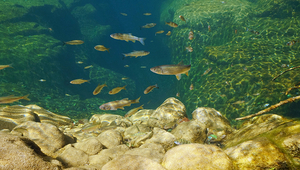
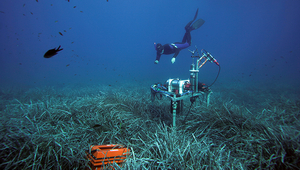
November 3, 2021Like many land plants, seagrasses live in symbiosis with nitrogen-fixing bacteria. Researchers of the Max Planck Institute for Marine Microbiology in Bremen and Eawag now show that seagrass in the Mediterranean Sea lives in symbiosis with bacteria that reside in their roots and provide the nitrogen necessary for growth. Such symbioses were previously only known from land plants. The study was published in the journal Nature.

Read more
November 2, 2021

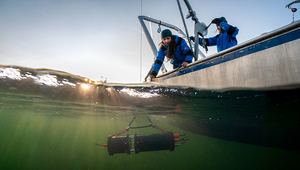
November 2, 2021Our lakes, rivers and streams are teeming with the smallest creatures, plants and bacteria that are barely visible to the naked eye, if at all. An underwater camera makes it possible to observe and identify the species of these creatures in real time.

Read more
October 29, 2021

October 29, 2021Whether a hydroelectric power plant is built, a pesticide is banned or a moor is placed under protection – a wide variety of political decisions have an impact on biodiversity. But does biodiversity play any role at all in such decisions? Researchers at Eawag and WSL have investigated this question and examined Swiss policy over the past 20 years.

Read more
October 26, 2021

October 26, 2021Microplastics, owing to their chemical properties, can carry micropollutants into a fish’s digestive system where they are subsequently released through the action of its gastric and intestinal fluids. Scientists of EPFL and Eawag, working in association with other research institutes, have studied this process by looking specifically at progesterone – often pointed to as an endocrine disrupter.

Read more
October 18, 2021

October 18, 2021The environmental chemist Barbara F. Günthardt and the two environmental engineers Matthew Moy de Vitry and Marius Neamtu are awarded the ETH Medal for their doctoral theses. Plant toxins, urban flooding and complicated flows were the topics. Congratulations!

Read more
October 14, 2021

October 14, 2021Heatwaves and heavy local rainfall will increase with climate change, pushing traditional urban drainage systems to their limits. These problems can be addressed using the blue-green infrastructure approach. With careful planning, solutions of this kind can also increase biodiversity and improve the quality of urban life.

Read more
October 12, 2021

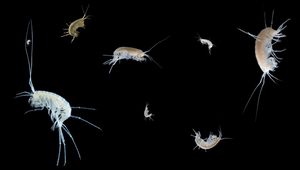
October 12, 2021Europe has relatively low biodiversity compared to most other continents because many species became extinct during the ice ages. In subterranean ecosystems, however, which were shielded from climatic turbulences, a great diversity of ancient species were able to survive. This is the conclusion of a study on the amphipod genus Niphargus.

Read more
October 5, 2021

October 5, 2021Evolution plays a crucial role in ecosystem tipping points, as shown in two recently published studies by Eawag researchers. If this influence is taken into account, ecosystem collapses can be better predicted in the future. At the same time, the studies reveal how the risk of ecosystem collapse can be reduced and the chances of recovery increased.

Read more
October 2, 2021

October 2, 2021At the EPFL’s “Magistrale” graduation ceremony this year, Kristin Schirmer was recognised for her teaching work at the institution. In this interview she explains what this work means to her.

Read more
September 30, 2021

September 30, 2021Although the consequences of climate change are becoming more and more visible and tangible, the transition to climate-friendly energy systems is only proceeding slowly. In a field experiment, Eawag and the University of Groningen (NL) investigated what kind of measures could be used to better promote innovations such as heat pumps.

Read more