
News Detail
Research meets the future: AI for sustainability
January 23, 2026 |
Artificial intelligence (AI) as a driver of sustainability – under this slogan, the ETH Domain invited a host of distinguished guests from the worlds of politics, business and science to the WSL Institute for Snow and Avalanche Research (SLF) in Davos. The visitors included government councillors from four cantons, including Carmelia Maissen, Marcus Caduff and Jon Domenic Parolini from Graubünden. "AI is more than just hype. We'll be showing you some pioneering applications in the environmental sector," said host, SLF Head Jürg Schweizer, in his welcome speech to the assembled guests. At six stations set up in the SLF premises, the visitors gained insights into the work of the six institutions making up the ETH Domain, namely the universities ETH Zurich and EPFL, and the research institutes PSI, WSL, Empa and Eawag.
Useful rather than harmful: predicting environmental risks and chemical toxicity with AI modelling
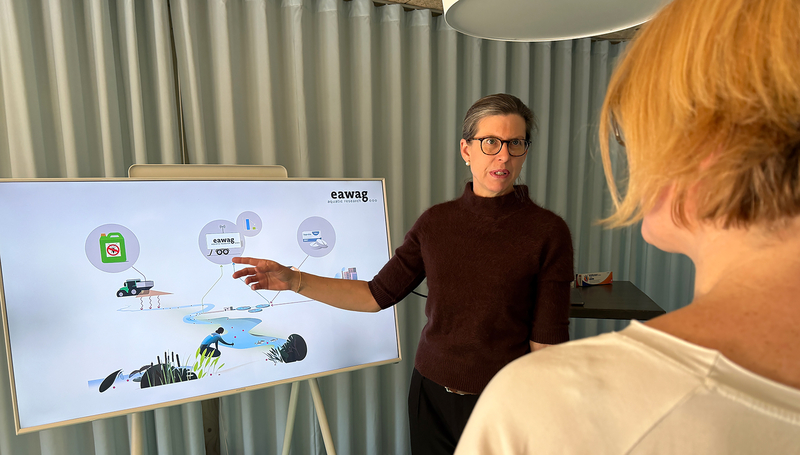
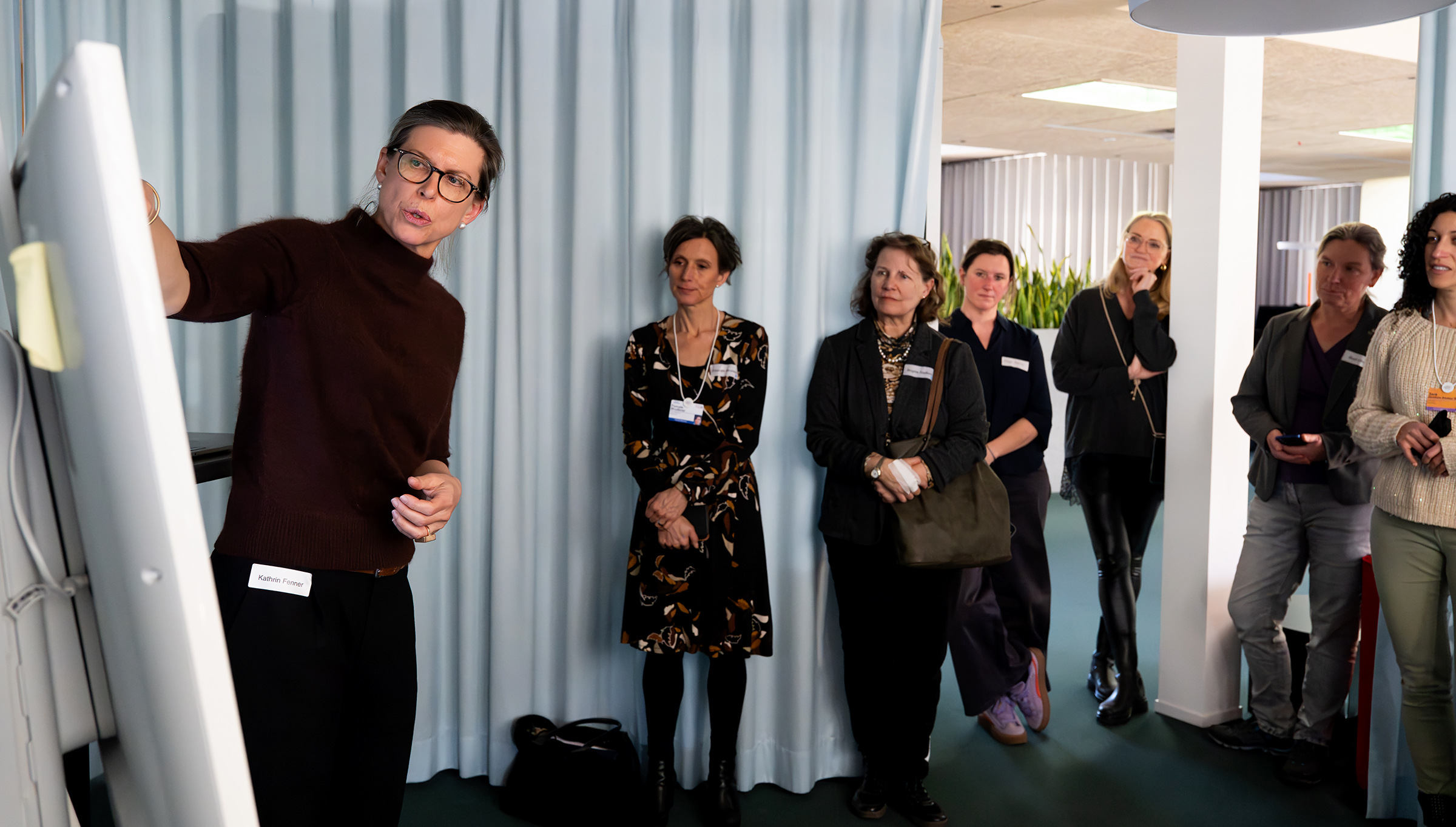
Eawag environmental chemist Kathrin Fenner used two practical examples to show how AI-based models can be developed and used to predict how chemicals behave in sewage treatment plants and in the environment. Chemicals are ubiquitous – in medicines, food and everyday products, she explained to guests. Today, however, it is no longer just a question of whether they work well, but also of whether they are as sustainable and safe as possible.
This is precisely where Eawag's AI models come in, as they can predict, even in the development phase of new chemicals, how they will behave in wastewater treatment plants, for example, or how toxic they are to aquatic life. Their application can thus contribute at an early stage to ensuring that fewer harmful substances are developed and released.
Research for the economy and society
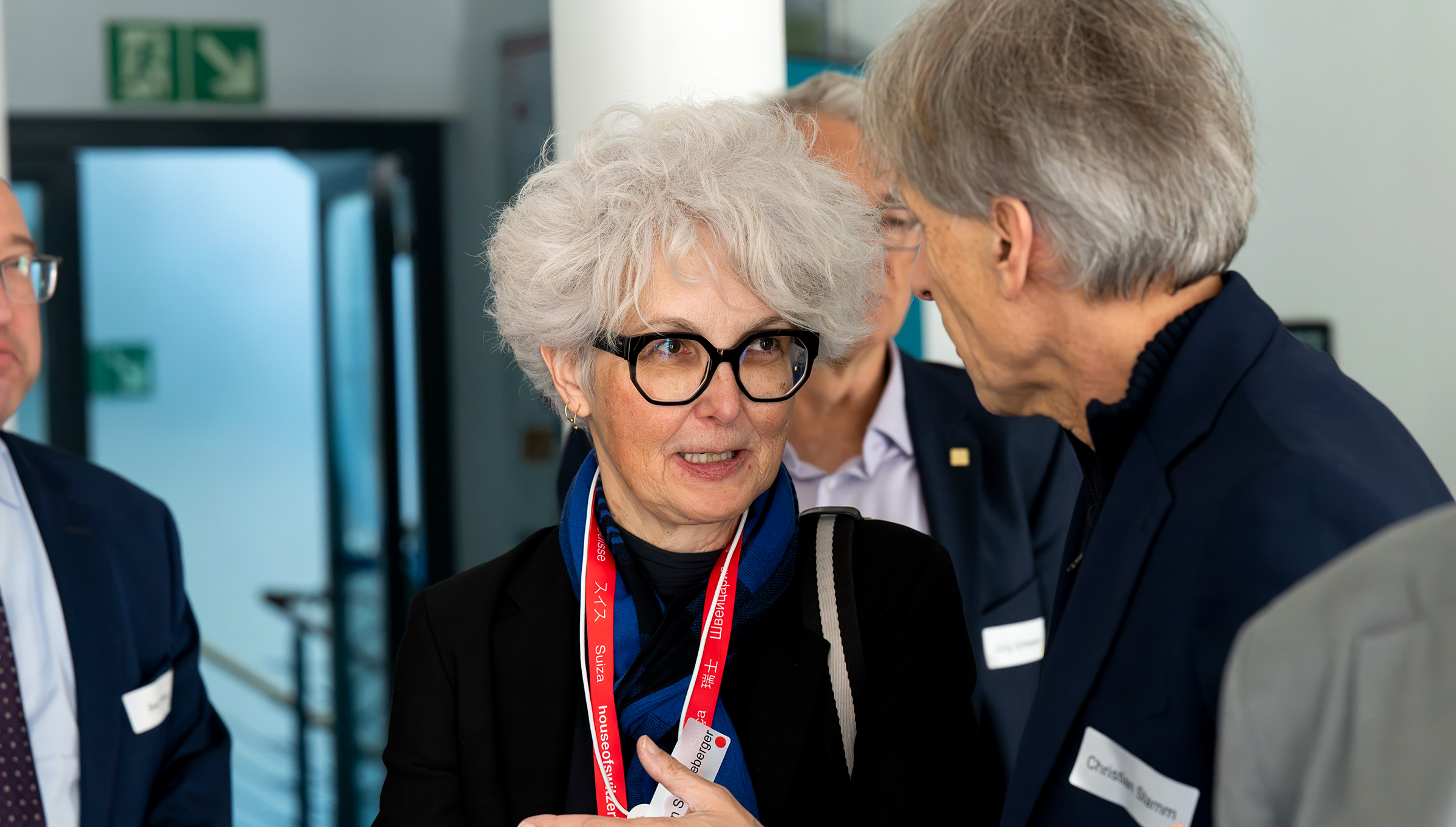
The ETH Domain used this event, coinciding with the World Economic Forum in Davos, to showcase what science can do for the economy and society. "It's important to keep policymakers informed about our work because researchers' findings help politicians make the right decisions for society," said WSL Director Rolf Holderegger.
The ETH Domain is synonymous with cutting-edge research that is also highly regarded internationally – not only within the scientific community but also in the private sector, as attested by numerous collaborations and partnerships. "Our universities ETH Zurich and EPFL and research institutes PSI, WSL, Empa and Eawag make major contributions to research as well as to administration and the Swiss economy," explained Michael Hengartner, President of the ETH Board.
Cover picture: Eawag environmental chemist Kathrin Fenner explained how AI-based models can be developed and used to predict how chemicals behave. (Photo: Luzia Schär)