News Detail

Summer storms wreak havoc in alpine lakes

September 18, 2018 | Stephanie Schnydrig

Clear mountain lakes could change with ever greater frequency into milky soup in the future. Climate change is the guilty agent. This has been shown by a new study led by the University of Lausanne in collaboration with Eawag and the French National Agricultural Research Institute using the example of a French mountain lake.

Weather capers will increase in our latitudes in the future; this is shown by climate models. Summer storms are among these and will probably sweep across the countryside increasingly often. How this will affect the ecosystems of the alpine lakes has been the subject of an investigation by a French-Swiss research team, among them Eawag aquatic physicist Damien Bouffard.

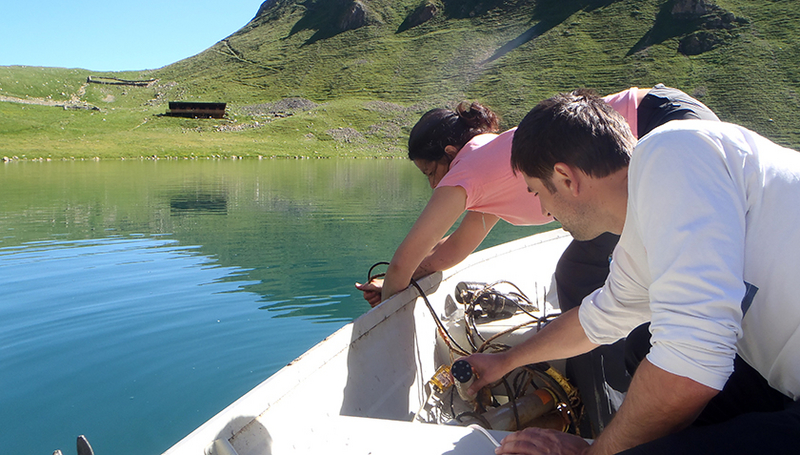
Lac de la Muzelle, a mountain lake in the French Alps, served as the object of research. During the course of three summer seasons, the researchers registered every rainstorm and windstorm. In addition, a weather station recorded the temperature and precipitation data, while special probes in the lake yielded regular temperature and oxygen profiles. The researchers have published the results recently in the professional journal “Global Change Biology”.

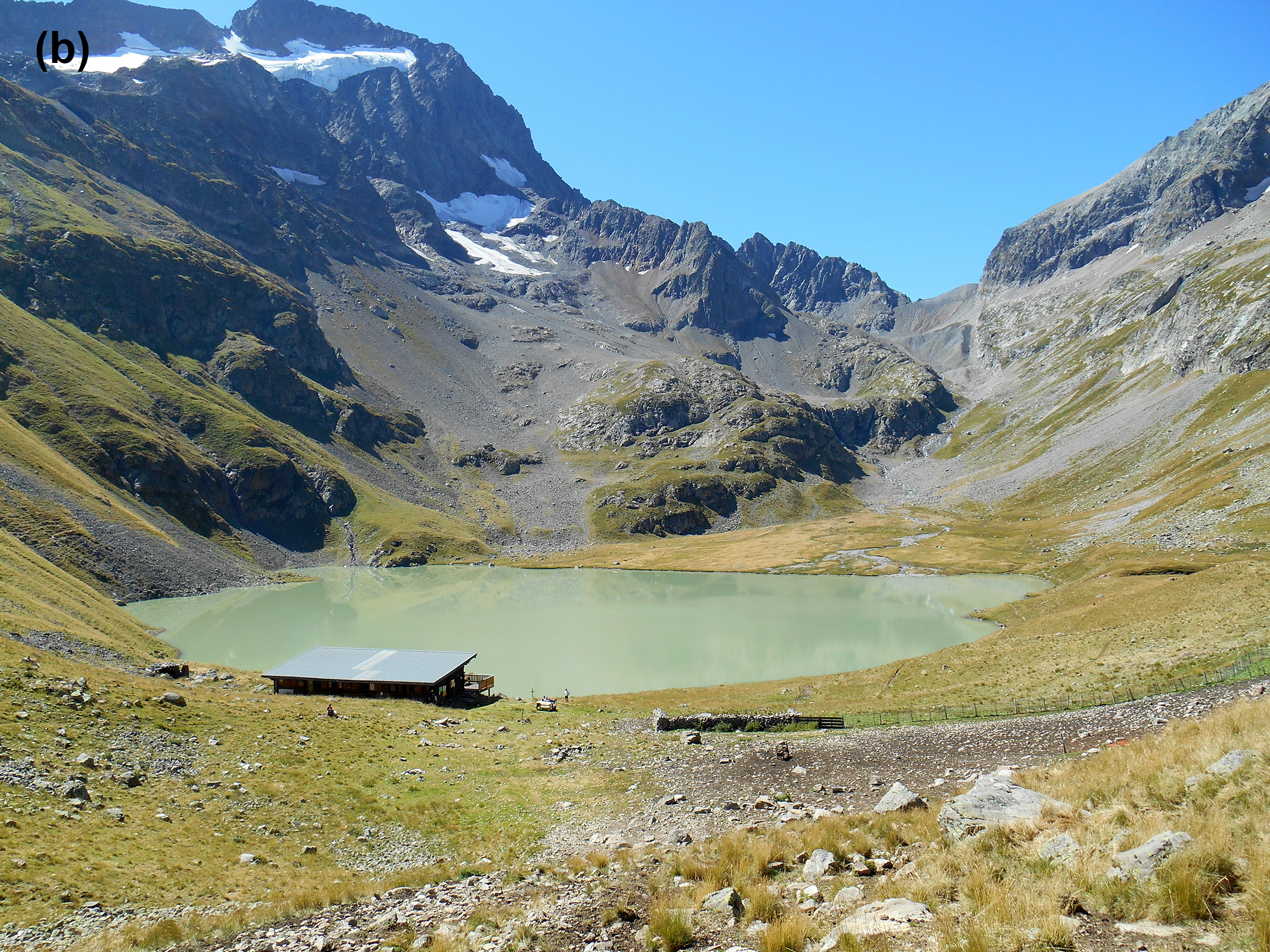
During the period under investigation, ten storms took place. But only two of these turned the Lac de la Muzelle into a cloudy brew. The remaining storms stirred up the surface waters, to be sure, but after a week the lakes returned to their normal condition. On the other hand, during the so-called “turbid storms”, large quantities of suspended particles from the glacial catchment area entered the water.

Light and nourishment are becoming scarce

The suspended particles are responsible for the fact that hardly any light penetrates to the deep waters. The algae lose the basis for photosynthesis and die. This leads to oxygen and nutrient depletion, which eventually harms the fish. ”It was impressive to see how a single storm of a few hours could completely disrupt the ecosystem for the whole rest of the summer,” says Damien Bouffard. It is thus shown that for life in Alpine lakes, long-term global warming is not the only role player; equally important is the frequency of extreme events.

The weather before the storm is decisive

The researchers were also astonished that neither the intensity nor the length of the weather antics determined whether a turbid or clear storm would grow out of them. Rather, “Decisive were the days and weeks before the storm,” says Bouffard. If these are dry and hot, the probability for turbid storms is increased. Given that hot, dry periods will become more frequent as a result of climate change, it can be concluded that a literally murky future awaits the mountain lakes. 
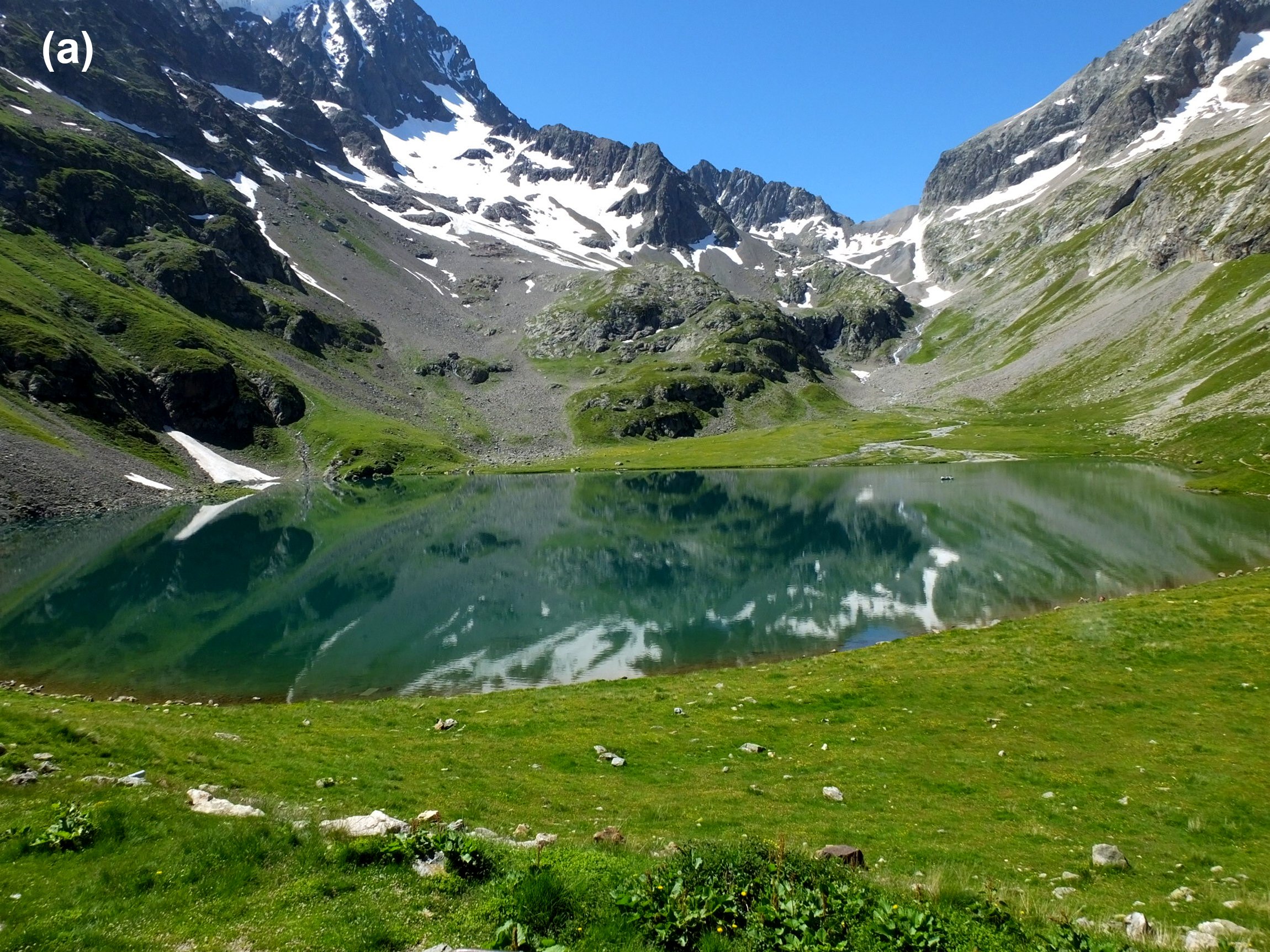
The Lac de la Muzelle lies in the French Alps. In the photo on the left, the lake is clear as glass. Quite a different picture is shown in the right-hand photo, after a storm in summer 2015 had stirred up and clouded the lake.
(Photos: Marie-Elodie Perga und Christine Piot) 

Original publication

Extbase Variable Dump
array(2 items)
   publications => '17284' (5 chars)
   libraryUrl => '' (0 chars)
Extbase Variable Dump
array(1 item)
   0 => Snowflake\Publications\Domain\Model\Publicationprototypepersistent entity (uid=17284, pid=124)
      originalId => protected17284 (integer)
      authors => protected'Perga, M.-E.; Bruel, R.; Rodriguez, L.; Guénand, Y.; Bo
         uffard, D.
' (91 chars) title => protected'Storm impacts on alpine lakes: antecedent weather conditions matter more tha
         n the event intensity
' (97 chars) journal => protected'Global Change Biology' (21 chars) year => protected2018 (integer) volume => protected24 (integer) issue => protected'10' (2 chars) startpage => protected'5004' (4 chars) otherpage => protected'5016' (4 chars) categories => protected'climate change; climate warming; extreme event; frequency; hydrodynamics; la
         ke; metabolism; mountain; oxygen; storm
' (115 chars) description => protected'Extreme weather events may be just as important as gradual trends for the lo
         ng-term trajectories of ecosystems. For alpine lakes, which are exposed to b
         oth exacerbated atmospheric warming and intense episodic weather events, fut
         ure conditions might not be appropriately forecast by only climate change tr
         ends, i.e. warming, if extreme events have the potential to deflect their th
         ermal and metabolic states from their seasonal ranges. We used high‐freque
         ncy monitoring data over three open‐water seasons with a one‐dimensional
          hydrodynamic model of the high‐altitude Lake Muzelle (France) to show tha
         t rainstorms or windstorms, notwithstanding their intensity, did not trigger
          long‐lasting consequences to the lake characteristics when light penetrat
         ion into the lake was not modified. In contrast, storms associated with high
          turbidity input from the watershed ("turbid storms") strongly modified the
         lacustrine hydrodynamics and metabolism for the rest of the open‐water sea
         son through reduced light penetration. The long‐lasting effects of turbid
         storms were related to the inputs and in‐lake persistence of very light gl
         acial suspensoids from the watershed. The occurrence of the observed turbid
         storms was not related to the wind or rain intensities during the events. In
         stead, the turbid storms occurred after dry and atypically warm spells, i.e.
          meteorological conditions expected to be more frequent in this alpine regio
         n in the upcoming decades. Consequently, storm events, notwithstanding their
          intensity, are expected to strongly imprint the future ecological status of
          alpine lakes under climate warming.
' (1632 chars) serialnumber => protected'1354-1013' (9 chars) doi => protected'10.1111/gcb.14384' (17 chars) uid => protected17284 (integer) _localizedUid => protected17284 (integer)modified _languageUid => protectedNULL _versionedUid => protected17284 (integer)modified pid => protected124 (integer)
Perga, M.-E.; Bruel, R.; Rodriguez, L.; Guénand, Y.; Bouffard, D. (2018) Storm impacts on alpine lakes: antecedent weather conditions matter more than the event intensity, Global Change Biology, 24(10), 5004-5016, doi:10.1111/gcb.14384, Institutional Repository