Département Ressources aquatiques et eau potable
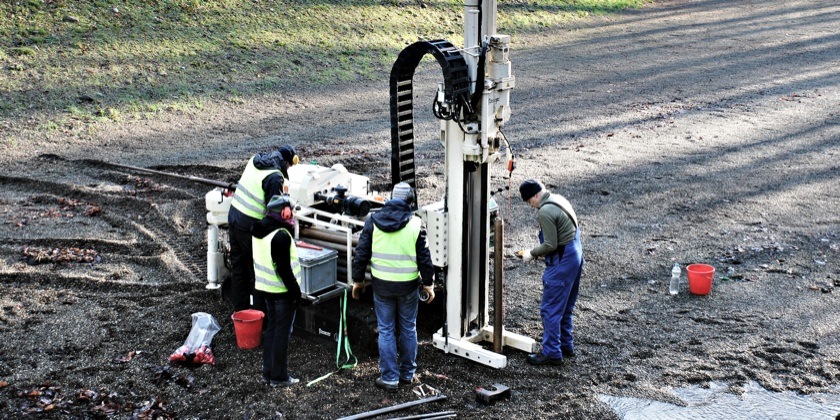
Ressources aquatiques & eau potable
Nous étudions les processus essentiellement physiques et chimiques des eaux souterraines, des eaux de surface et de l’eau potable. Notre recherche fondamentale et nos études appliquées sur les ressources aquatiques, la pollution et le traitement des eaux contribuent notablement à une gestion durable de l’eau dans un contexte national et international.
Publications
Nghiem, A. A., Prommer, H., Mozumder, M. R. H., Siade, A., Jamieson, J., Ahmed, K. M., … Bostick, B. C. (2023). Sulfate reduction accelerates groundwater arsenic contamination even in aquifers with abundant iron oxides. Nature Water, 1(2), 151-165. doi:10.1038/s44221-022-00022-z, Institutional Repository
Lightfoot, A., Brennwald, M. S., Stopelli, E., AdvectAs project members, & Kipfer, R. (2023). The role of (noble)gases in an As contaminated aquifer. In A. van der Wal, A. Ahmad, B. Petrusevski, J. Weijma, D. Savic, P. van der Wens, … R. Naidu (Eds.), Arsenic in the environment. Proceedings. Proceedings of the 8th international congress and exhibition on arsenic in the environment (As2021) (pp. 23-24). doi:10.1201/9781003317395-10, Institutional Repository
Wu, R., Podgorski, J., Berg, M., & Polya, D. A. (2023). Pseudo contour maps from logistic regression modelling: case study of groundwater arsenic distribution in Gujarat state, India. In A. van der Wal, A. Ahmad, B. Petrusevski, J. Weijma, D. Savic, P. van der Wens, … R. Naidu (Eds.), Arsenic in the environment. Proceedings. Proceedings of the 8th international congress and exhibition on arsenic in the environment (As2021) (pp. 95-96). doi:10.1201/9781003317395-40, Institutional Repository
Stopelli, E., Duyen, V. T., Mai, T. T., Trang, P. T. K., Viet, P. H., Lightfoot, A., … Berg, M. (2023). Interplay of As (im)mobilisation processes in groundwater: learning from hydrochemical investigations. In A. van der Wal, A. Ahmad, B. Petrusevski, J. Weijma, D. Savic, P. van der Wens, … R. Naidu (Eds.), Arsenic in the environment. Proceedings. Proceedings of the 8th international congress and exhibition on arsenic in the environment (As2021) (pp. 21-22). doi:10.1201/9781003317395-9, Institutional Repository
Nouvelles
More news