Les cyanobactéries, également appelées algues bleues, font partie des bactéries et des formes de vie productrices d'oxygène les plus anciennes de la planète. Composantes naturelles des écosystèmes aquatiques, elles sont présentes dans presque tous les plans d'eau et dans de nombreux sites humides à travers le monde, y compris en Suisse. Certaines espèces peuvent toutefois produire des toxines (cyanotoxines) dangereuses pour les êtres humains et les animaux. Les chercheur·euse·s de l'Eawag s'efforcent donc de mieux comprendre l'écologie des cyanobactéries toxiques afin de mieux prévoir leur apparition et d'évaluer les risques qu'elles présentent.
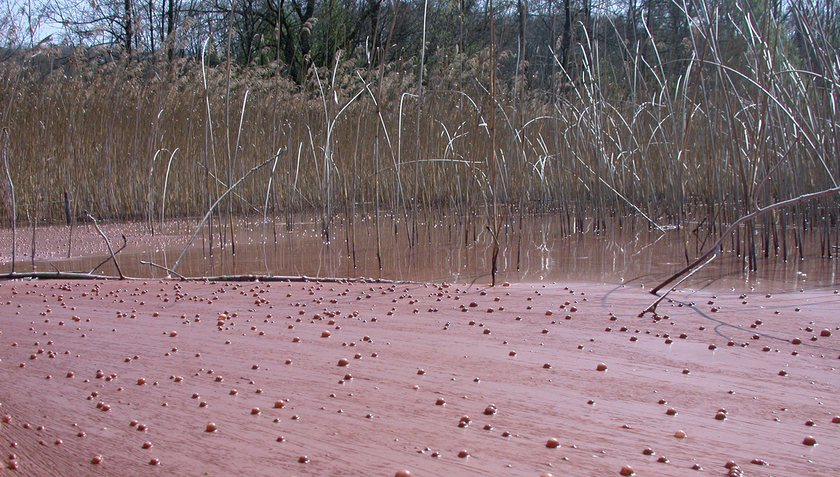
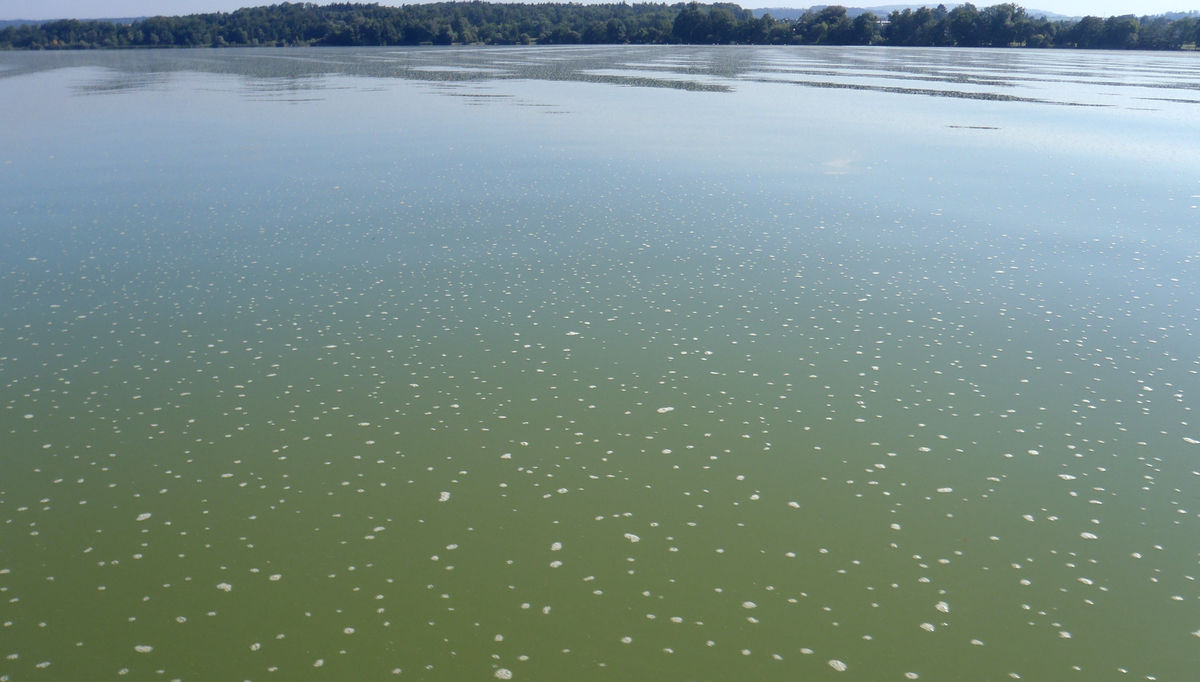
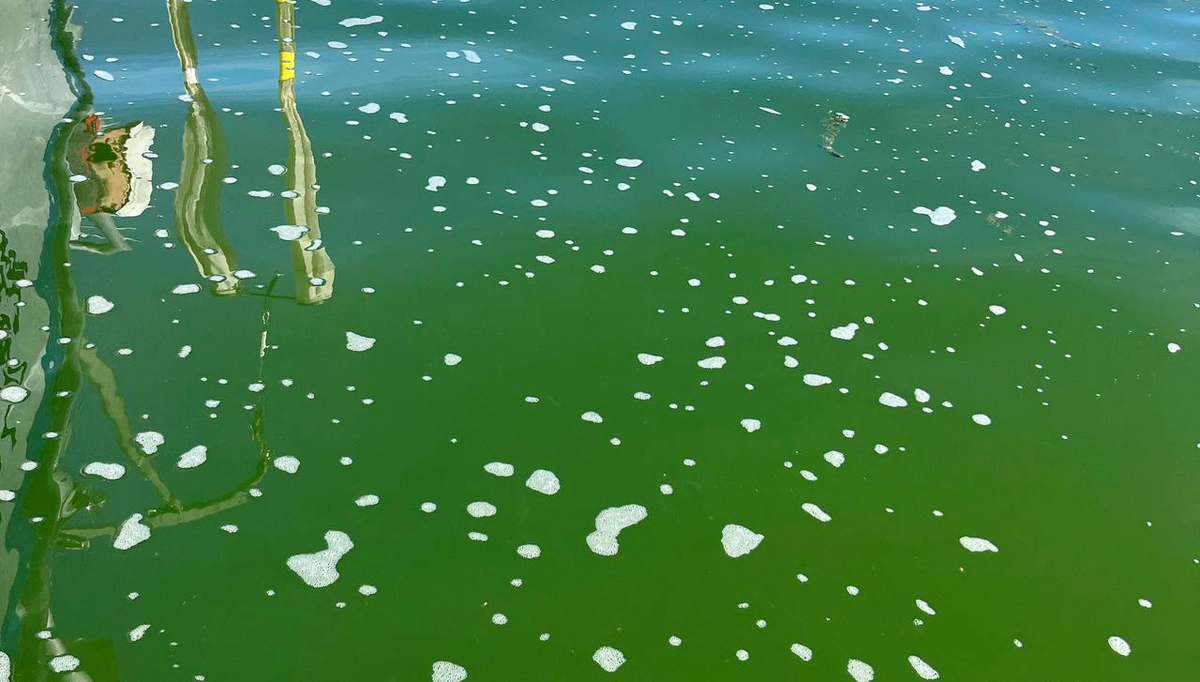
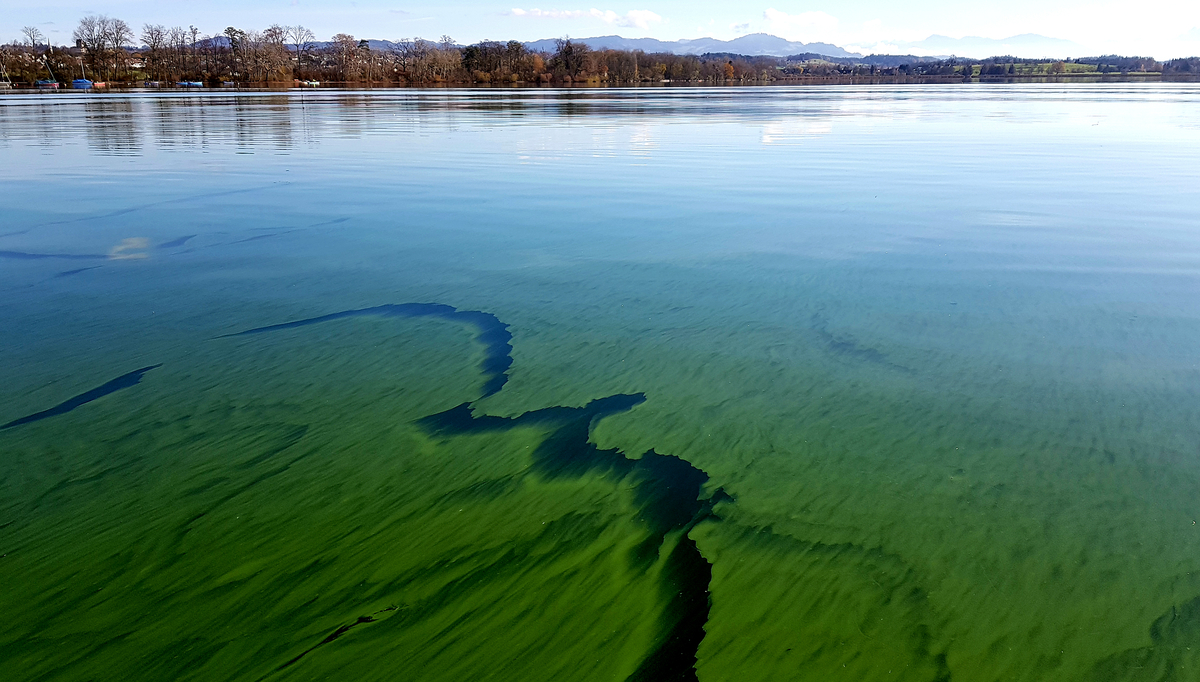
Prolifération de l'algue sang des Bourguignons Planktothrix rubescens, lac de Hallwil (Eawag, Sabine Flury)
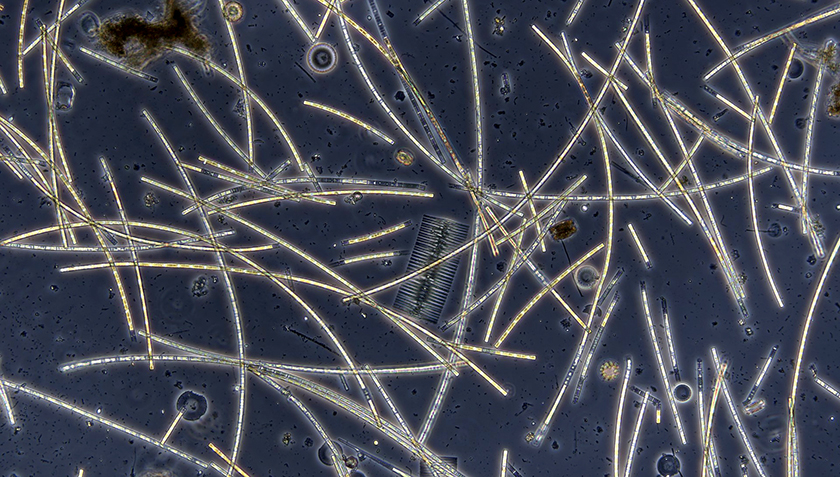
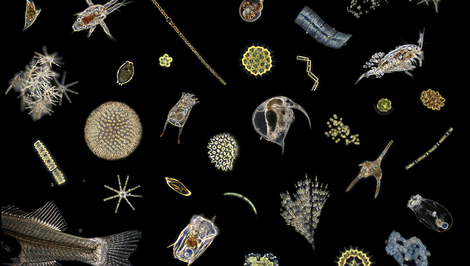
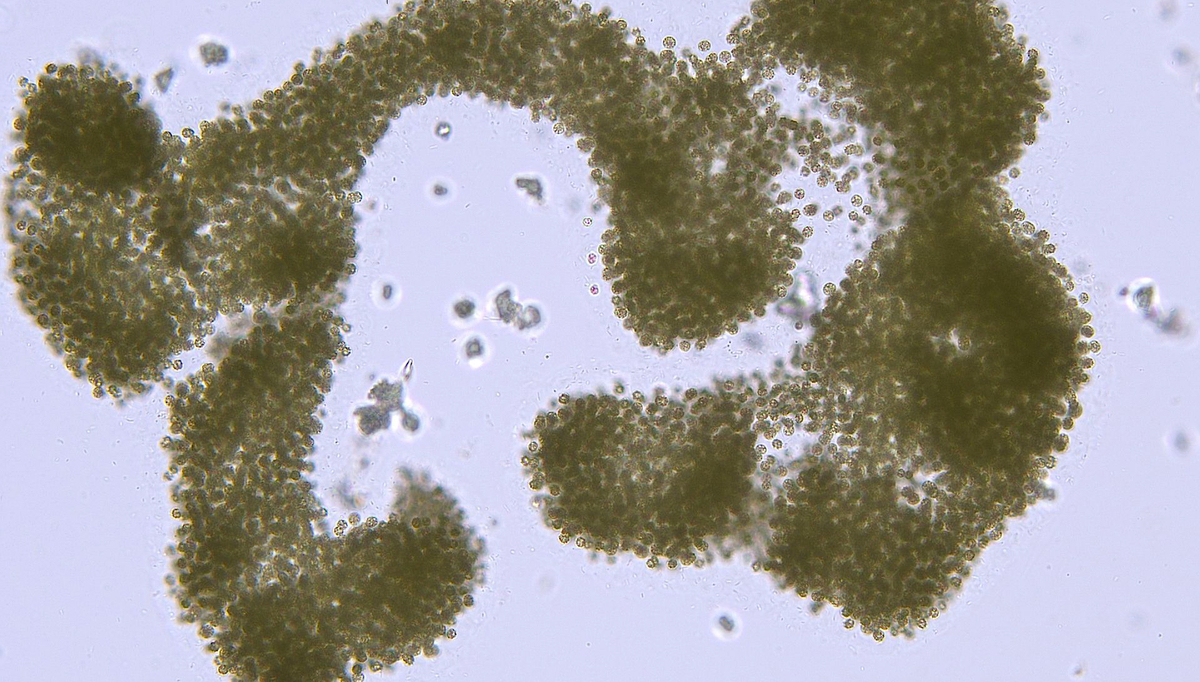
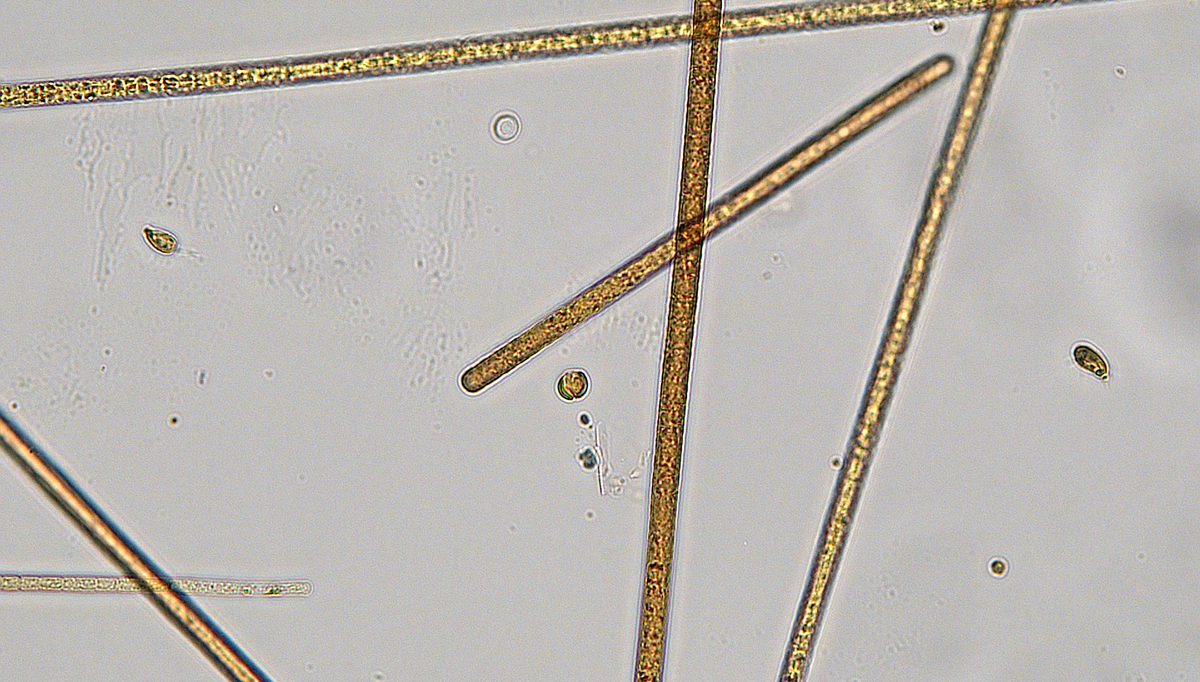
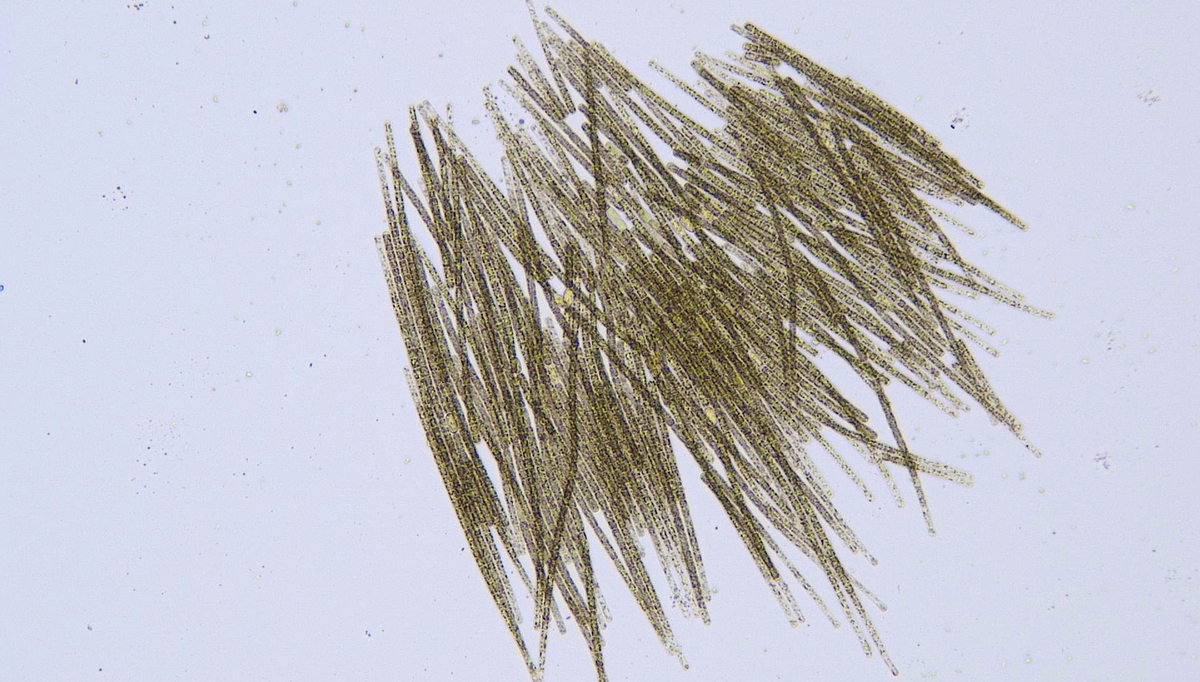
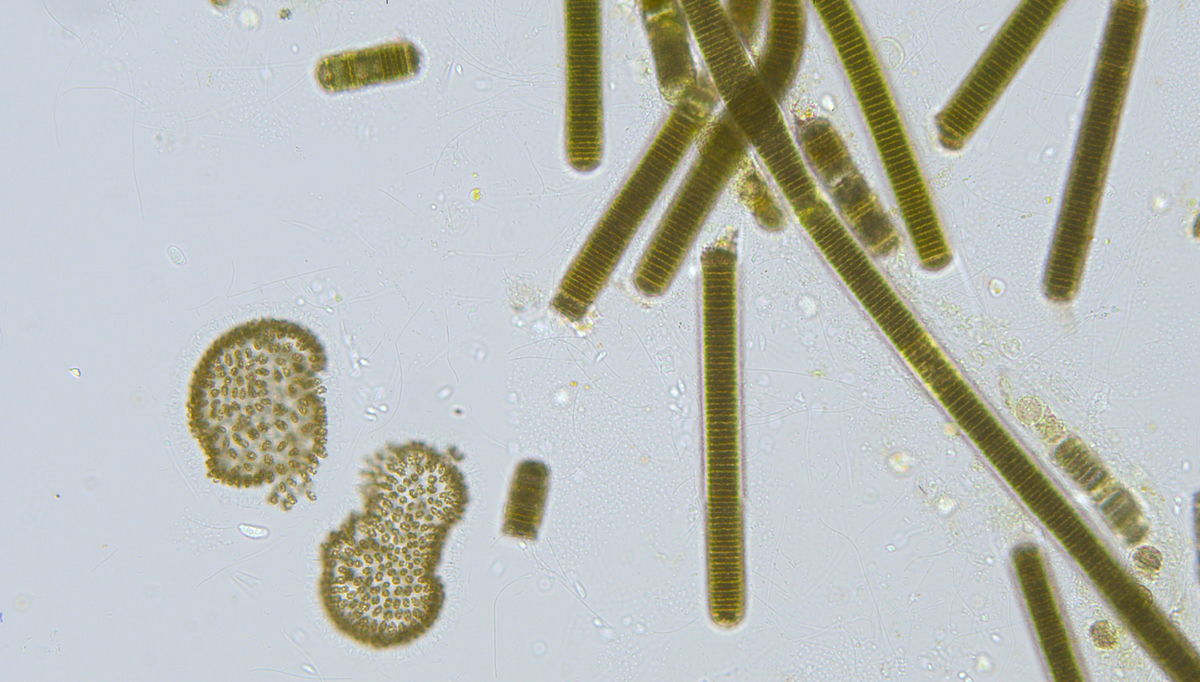
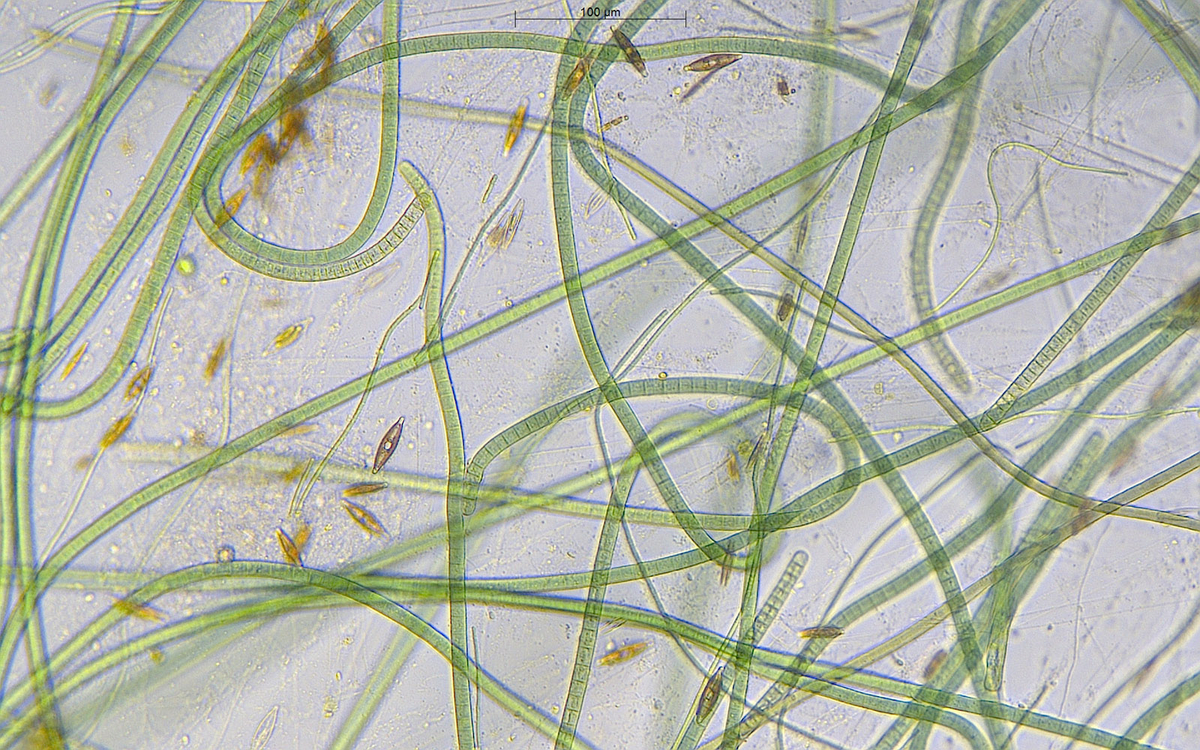
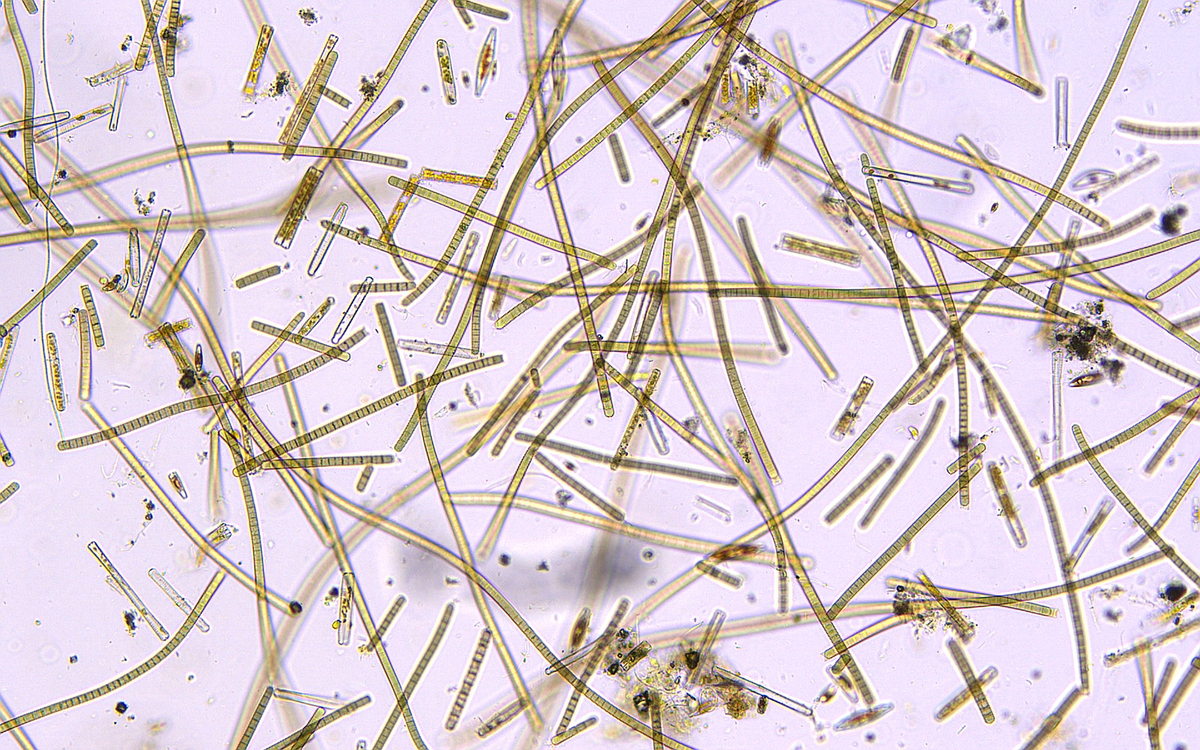
Les cyanobactéries sont souvent appelées algues bleues en raison de leur couleur, qui provient des pigments chlorophylle (vert) et phycocyanine (bleu) utilisés pour la photosynthèse. Selon l'espèce, elles peuvent toutefois également être vertes, jaunes, brunes ou rouges. Longtemps considérées comme des algues, les chercheur·euse·s ont découvert par la suite qu'il s'agissait en réalité de bactéries, d'où leur nom correct de cyanobactéries. Pour identifier les cyanobactéries, les spécialistes utilisent généralement des microscopes.
Les cyanobactéries sont parmi les premiers organismes à avoir pu produire leur énergie par photosynthèse et à avoir ainsi libéré le premier oxygène dans l'atmosphère. Il existe plusieurs milliers d'espèces de cyanobactéries sur Terre, et elles constituent l'un des micro-organismes photosynthétiques les plus courants dans les océans et les eaux douces.
À ce jour, on connaît environ 40 espèces de cyanobactéries qui produisent des métabolites toxiques (cyanotoxines). Le changement climatique favorise de plus en plus la prolifération massive de cyanobactéries, ce qui représente un danger pour les écosystèmes et la santé de la population.
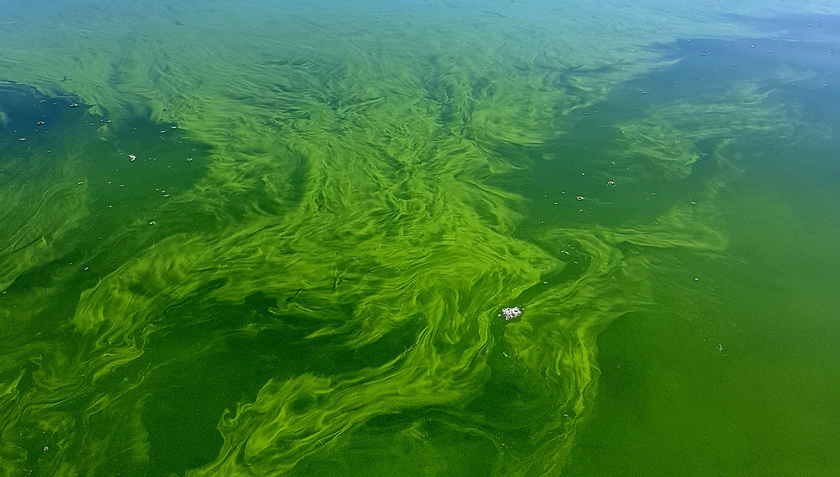
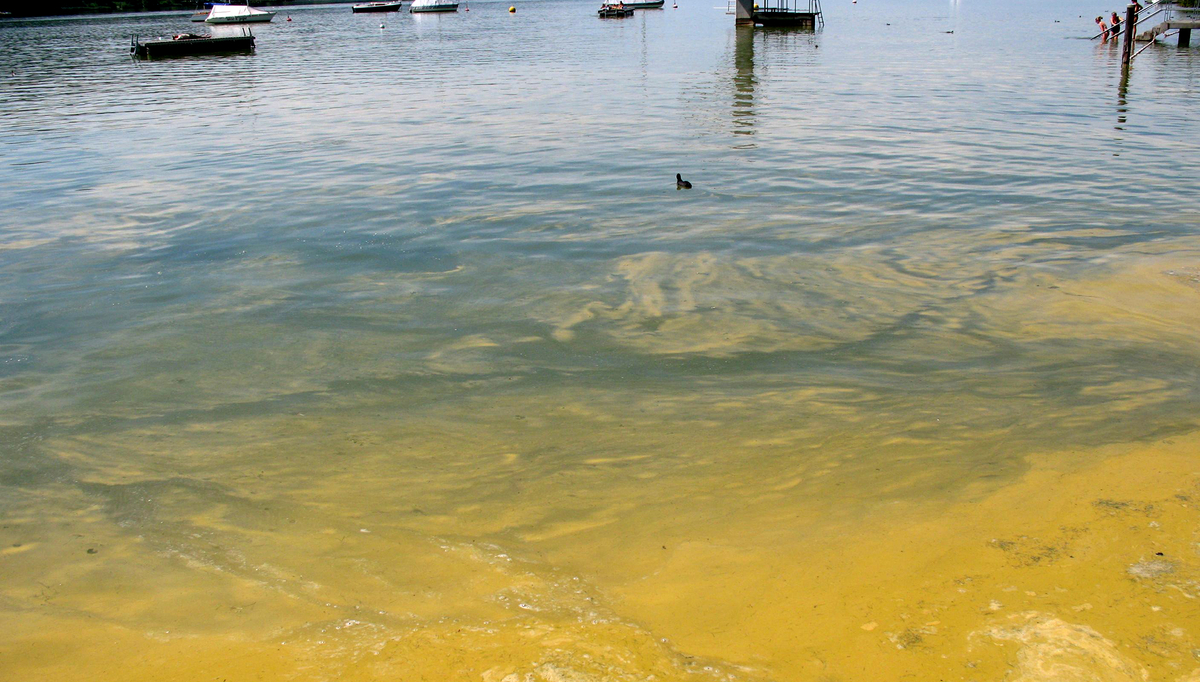
Prolifération de la cyanobactérie pélagique Woronichinia naegeliana, lac de Greifen (Eawag, Francesco Pomati)
Où trouver des cyanobactéries dans l'eau
Selon l'endroit où elles se multiplient dans les eaux de surface, on distingue les cyanobactéries pélagiques et benthiques.
Proliférations pélagiques dans la colonne d'eau
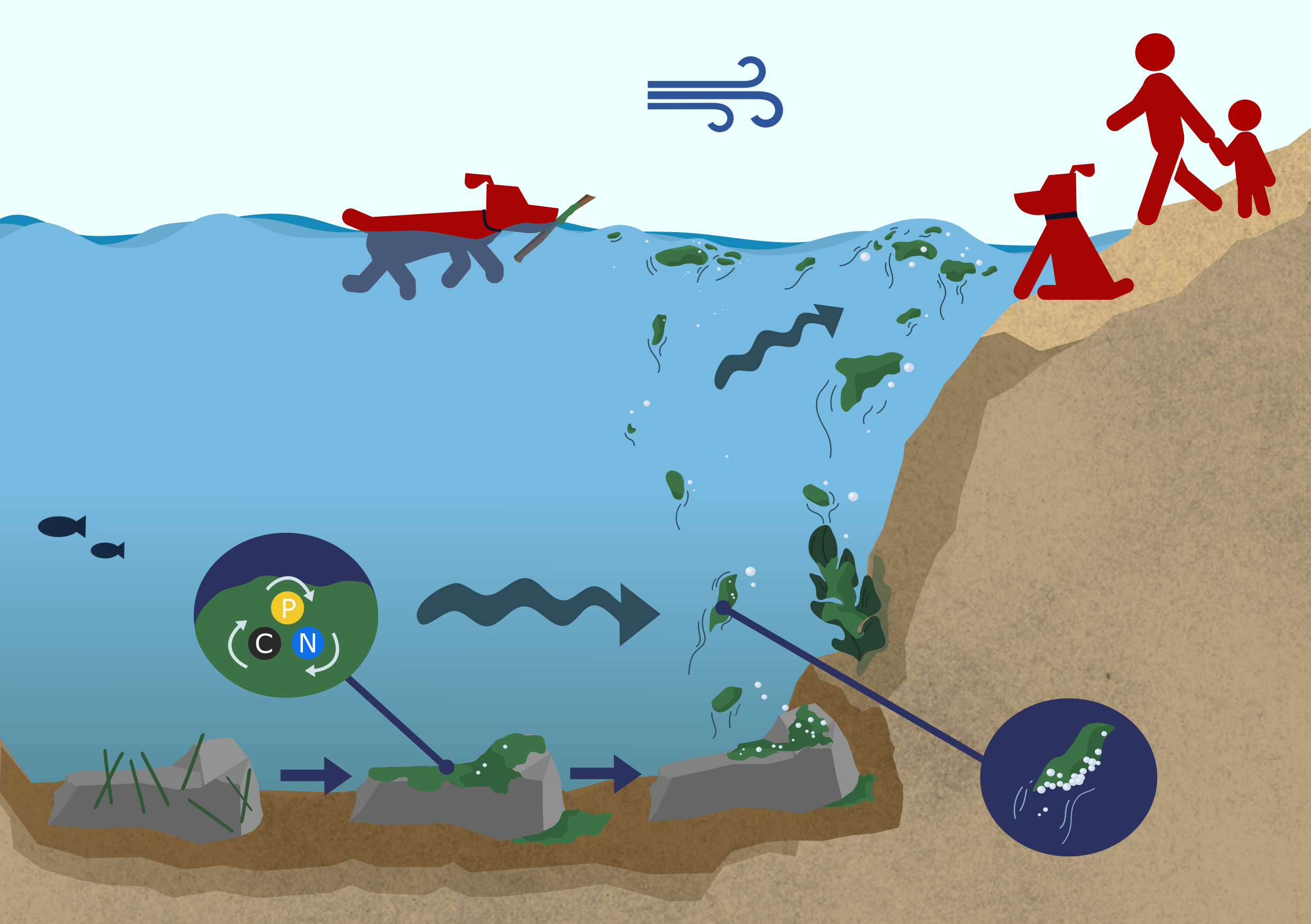
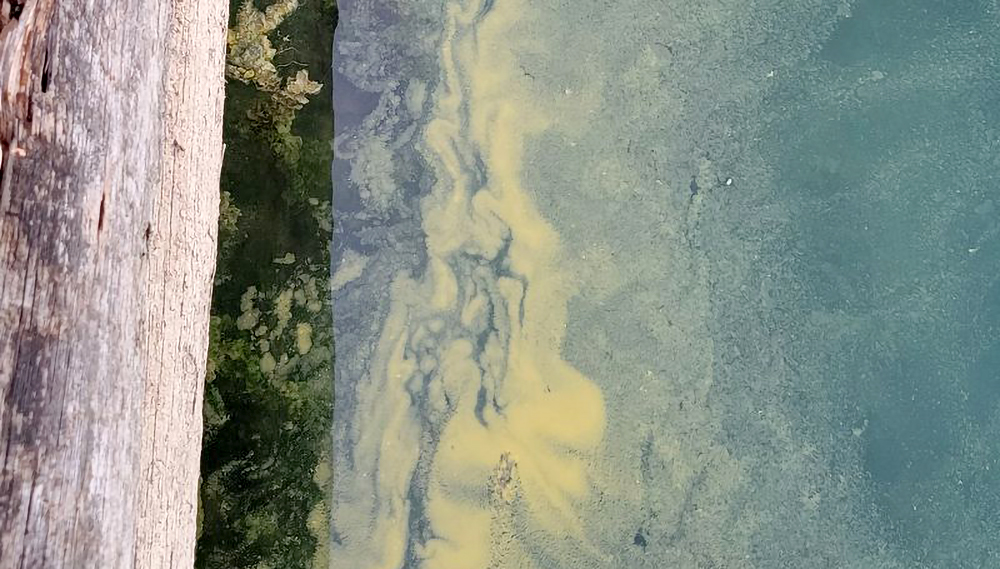
En eau libre, dans la zone pélagique, les cyanobactéries peuvent se multiplier en masse en cas de fort ensoleillement, de chaleur et de nutriments (azote et phosphore) suffisants, entraînant une «prolifération». Ces proliférations flottent à différentes profondeurs dans les lacs et ne sont donc pas toujours immédiatement visibles. Certaines cyanobactéries peuvent remonter activement à la surface. Le mélange saisonnier de l'eau ou des vents forts peuvent également amener passivement les cyanobactéries à la surface de l'eau. Lorsque la biomasse remonte à la surface, les cyanobactéries sont facilement reconnaissables. Il est alors recommandé aux humains et aux animaux de ne pas entrer en contact avec elles.
Apparence : une turbidité ou une coloration bleue, verte, jaune ou rouge de l'eau indique une forte concentration en cyanobactéries. Des stries, des tapis de mousse, des flocons ou des grumeaux peuvent se former.
Occurrence : les proliférations de cyanobactéries dans la colonne d'eau surviennent principalement à la fin de l'été et en automne, mais peuvent également être visibles en hiver/au printemps, selon les espèces.
Toxines : les microcystines, qui agissent comme des toxines hépatiques (hépatotoxines), constituent la classe de substances la plus connue et la mieux étudiée. Ces microcystines sont produites par de nombreuses cyanobactéries pélagiques.
Danger : les jeunes enfants et les chiens courent un risque particulier en cas d'ingestion de biomasse ou de contact prolongé avec de l'eau contenant des concentrations élevées de cyanotoxines. Cela peut entraîner des irritations cutanées, des vomissements ou des difficultés respiratoires.
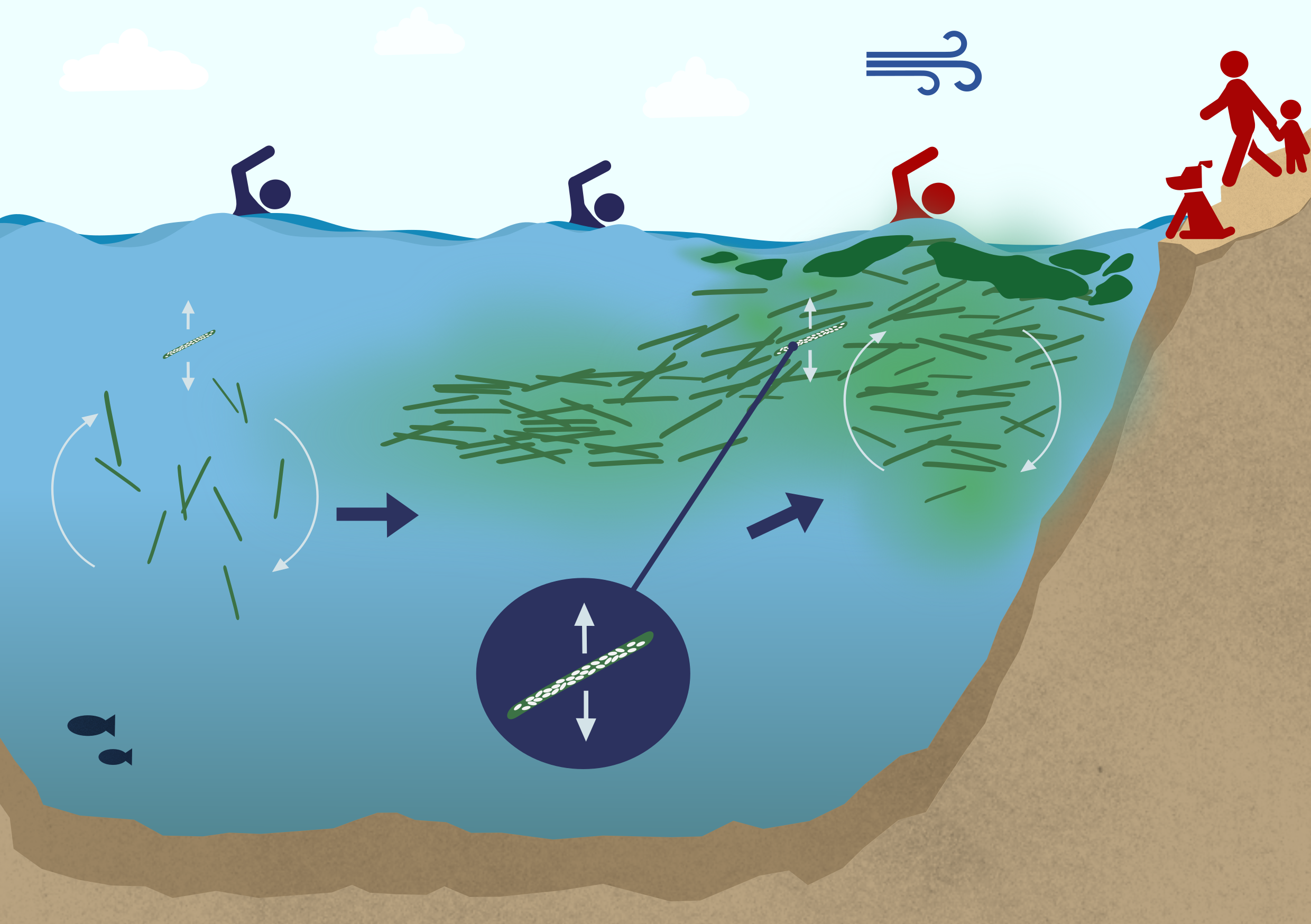
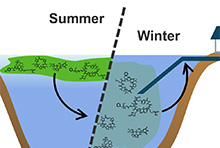
Formation de proliférations de cyanobactéries pélagiques et risques de contact avec les humains et les animaux à la surface de l'eau.
De gauche à droite : une grande partie de la population précédente subsiste. Dans des conditions favorables, une nouvelle population peut se constituer et se développer. Certaines cyanobactéries possèdent des bulles de gaz (cercles blancs à l'intérieur de la cyanobactérie) qui leur permettent de contrôler leur mouvement vertical dans la colonne d'eau. En fonction du profil de température de l'eau, des courants et des conditions de vent, la prolifération peut atteindre la surface et même les berges. Certaines de ces proliférations peuvent libérer des toxines et présenter des risques accrus pour les nageur·euse·s, les jeunes enfants et les chiens (marqués en rouge). (Eawag, Kim Luong)
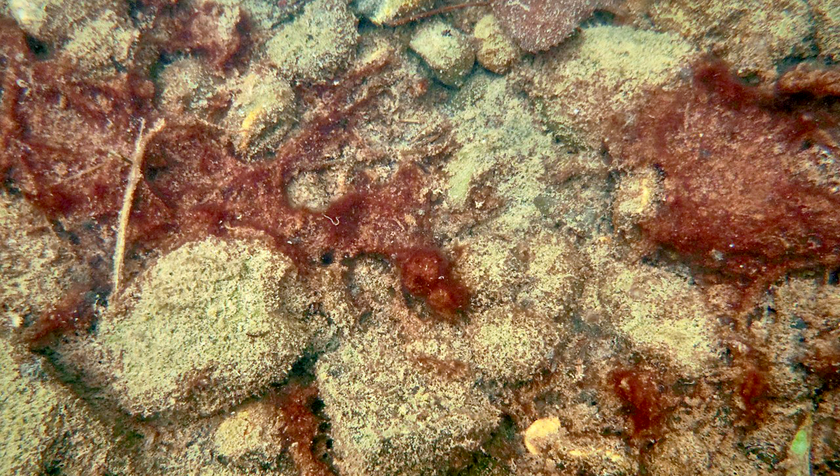
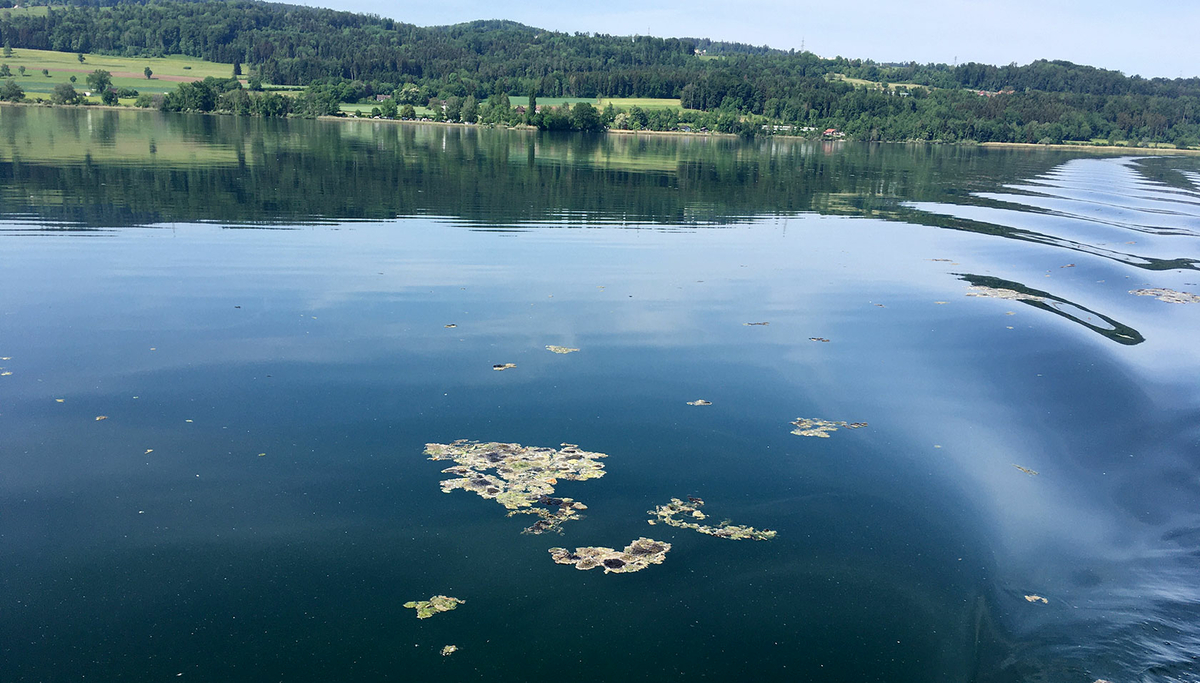
Prolifération de cyanobactéries au fond du lac, Zurich-Obersee (Amt für Wasser und Energie, canton de Saint-Gall, Lukas Taxböck)
Tapis benthiques au fond
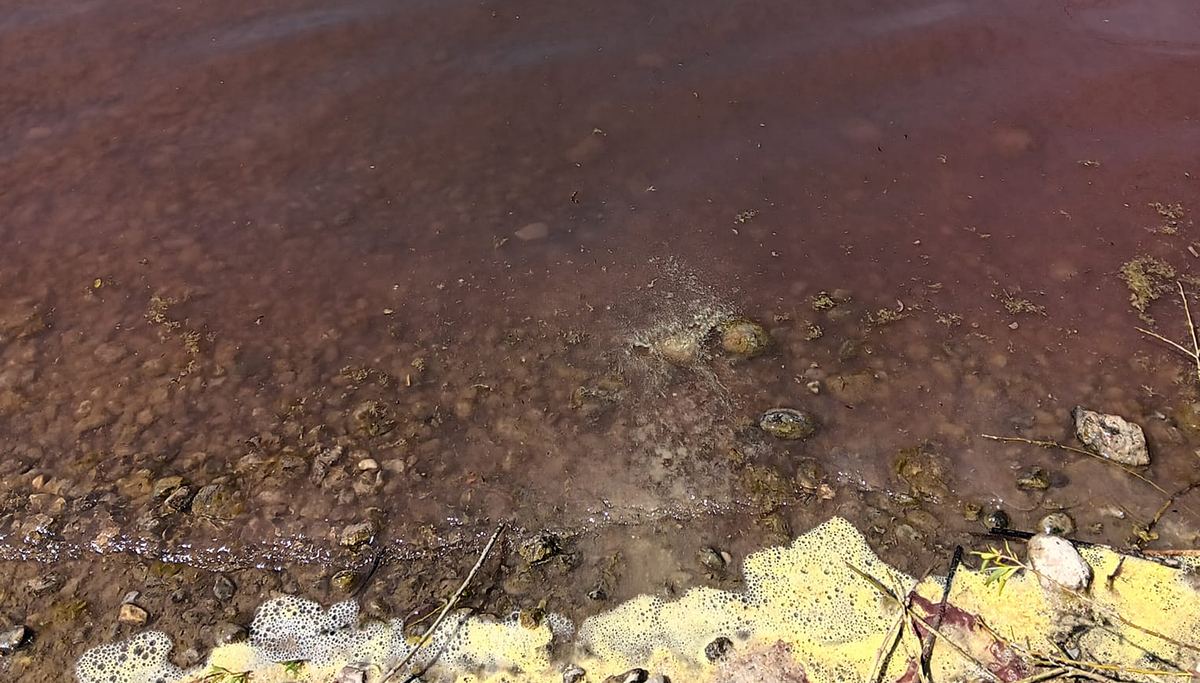
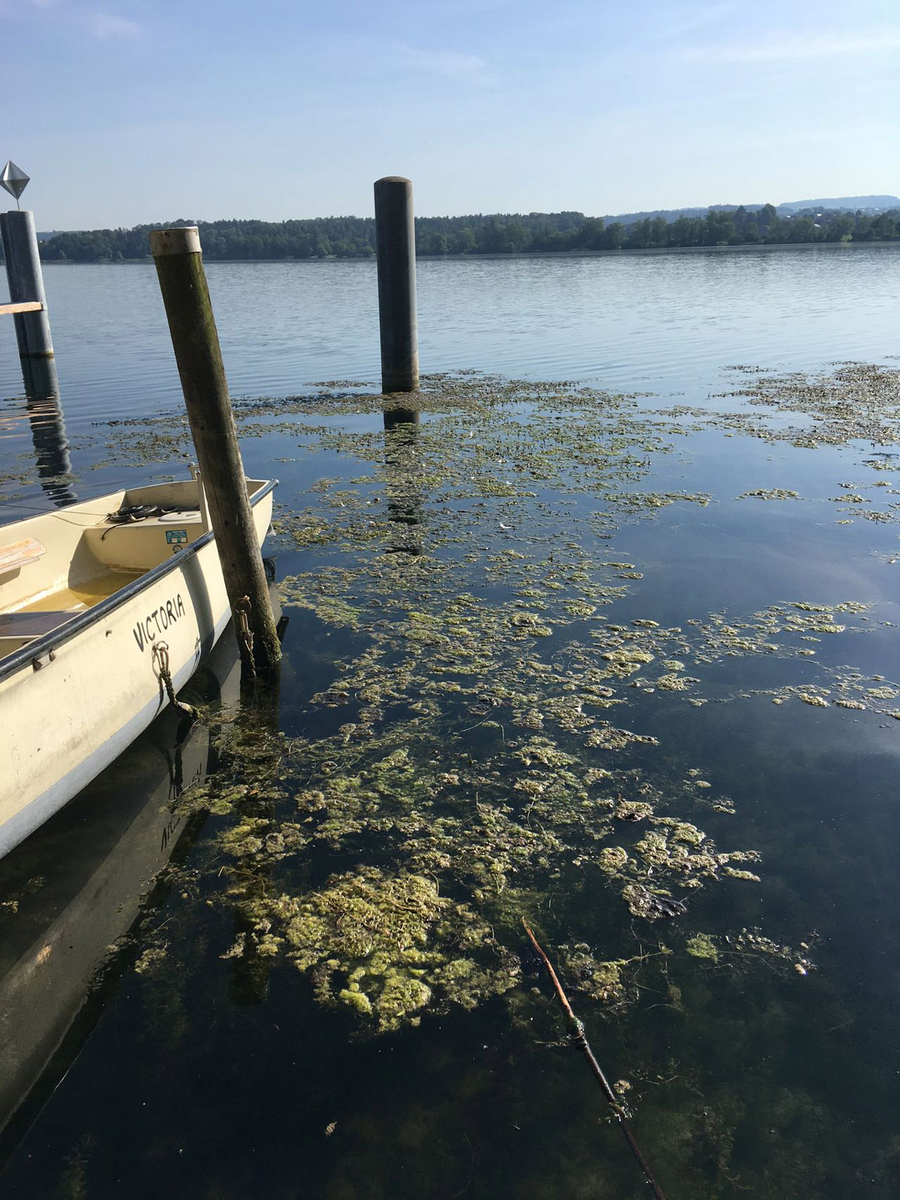
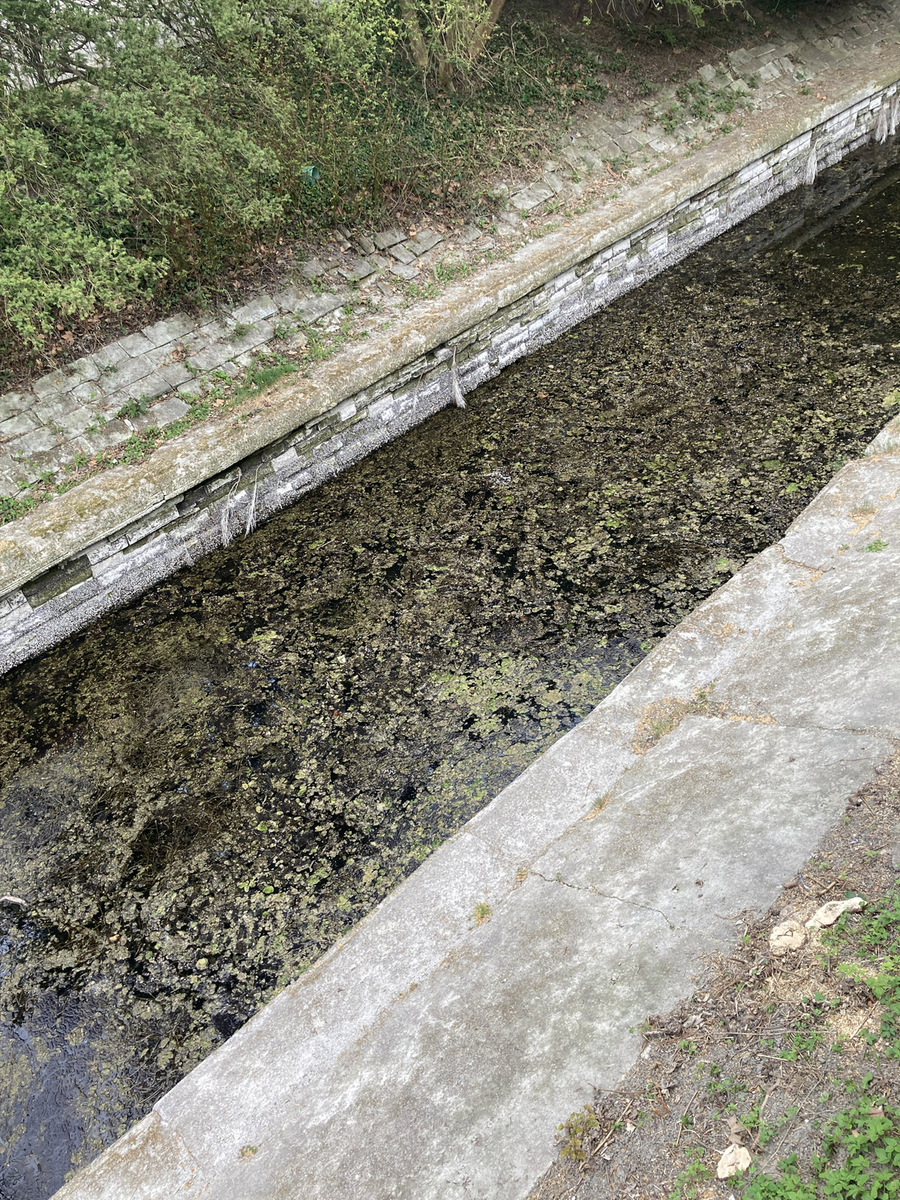
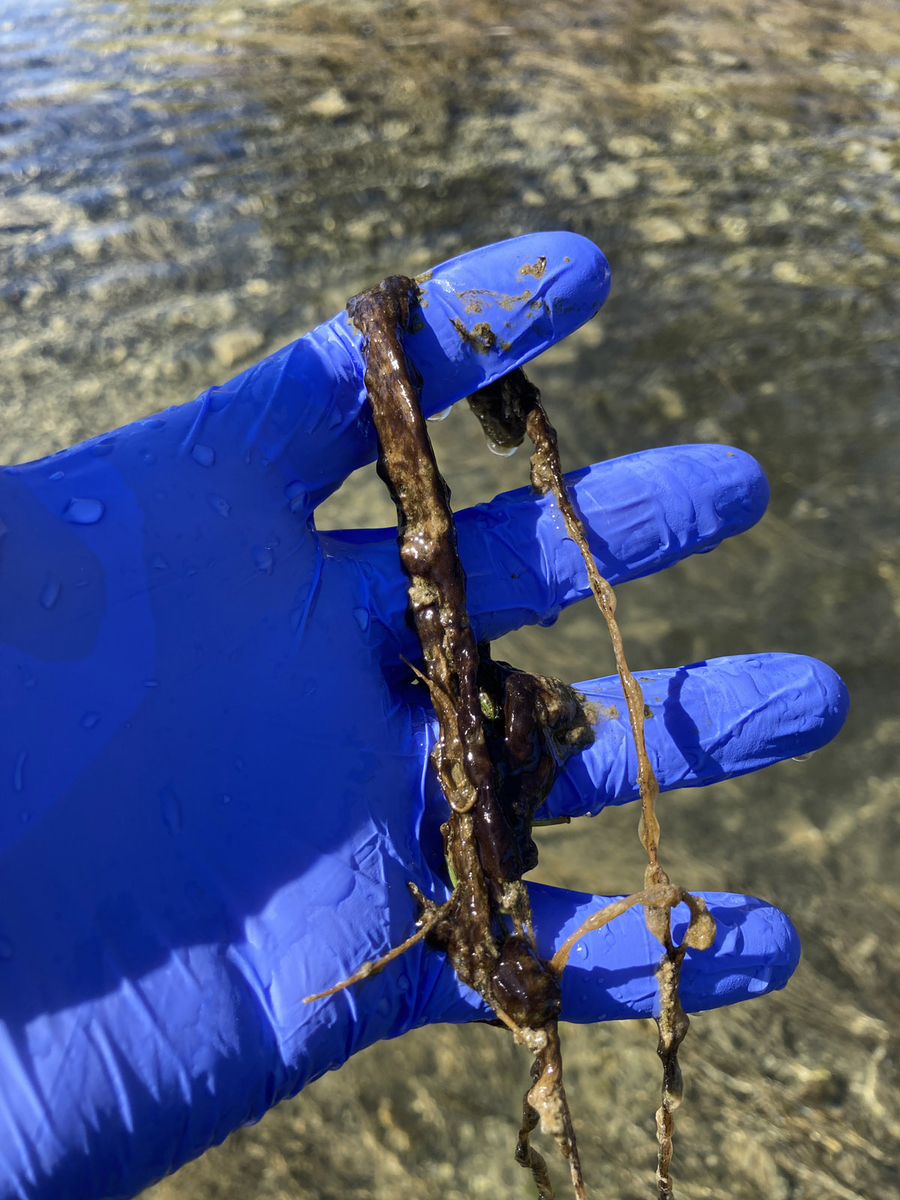
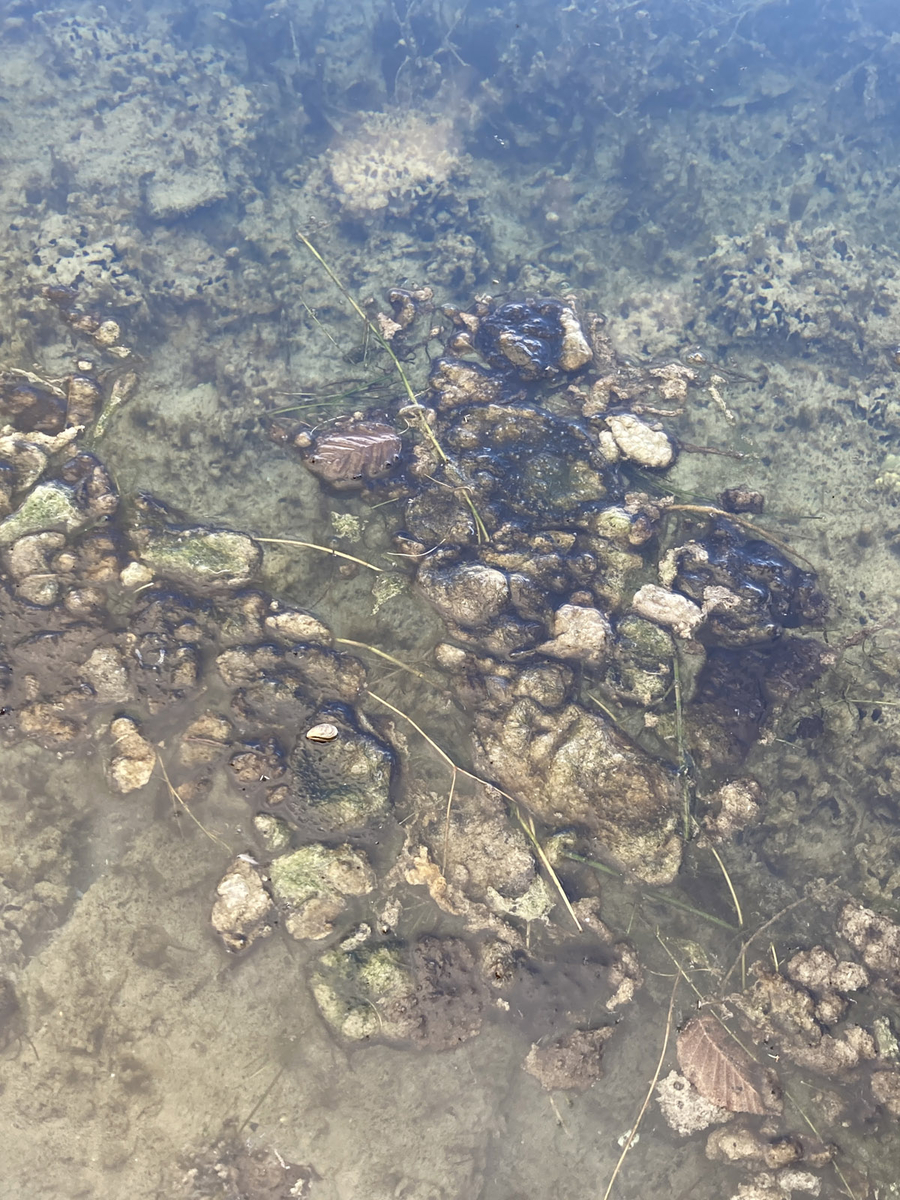
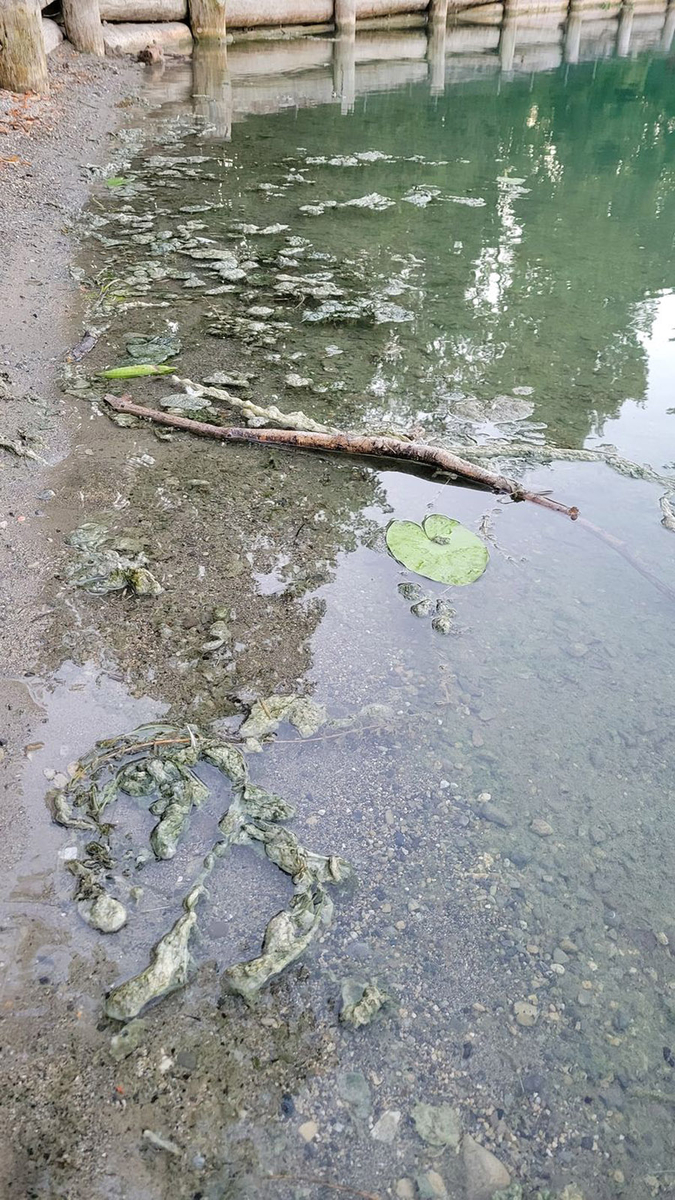
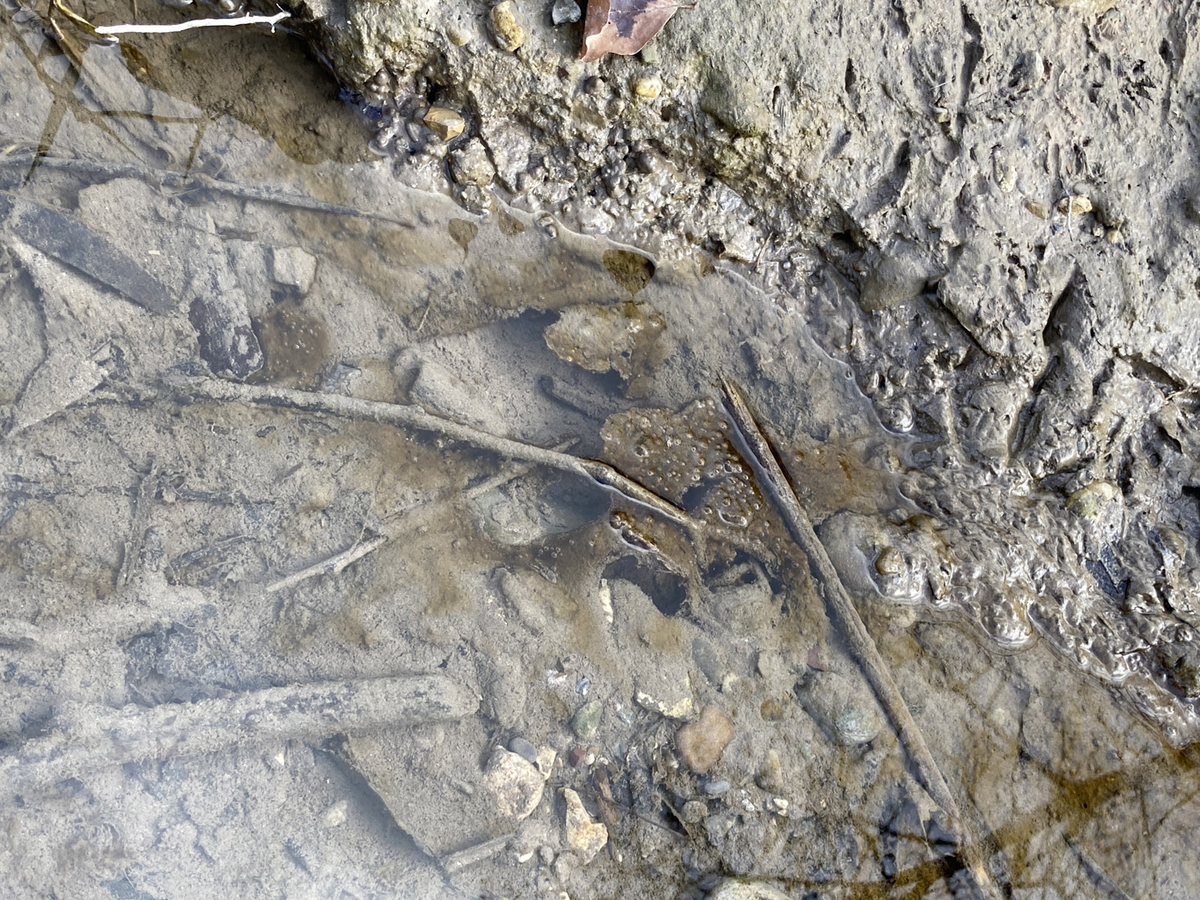
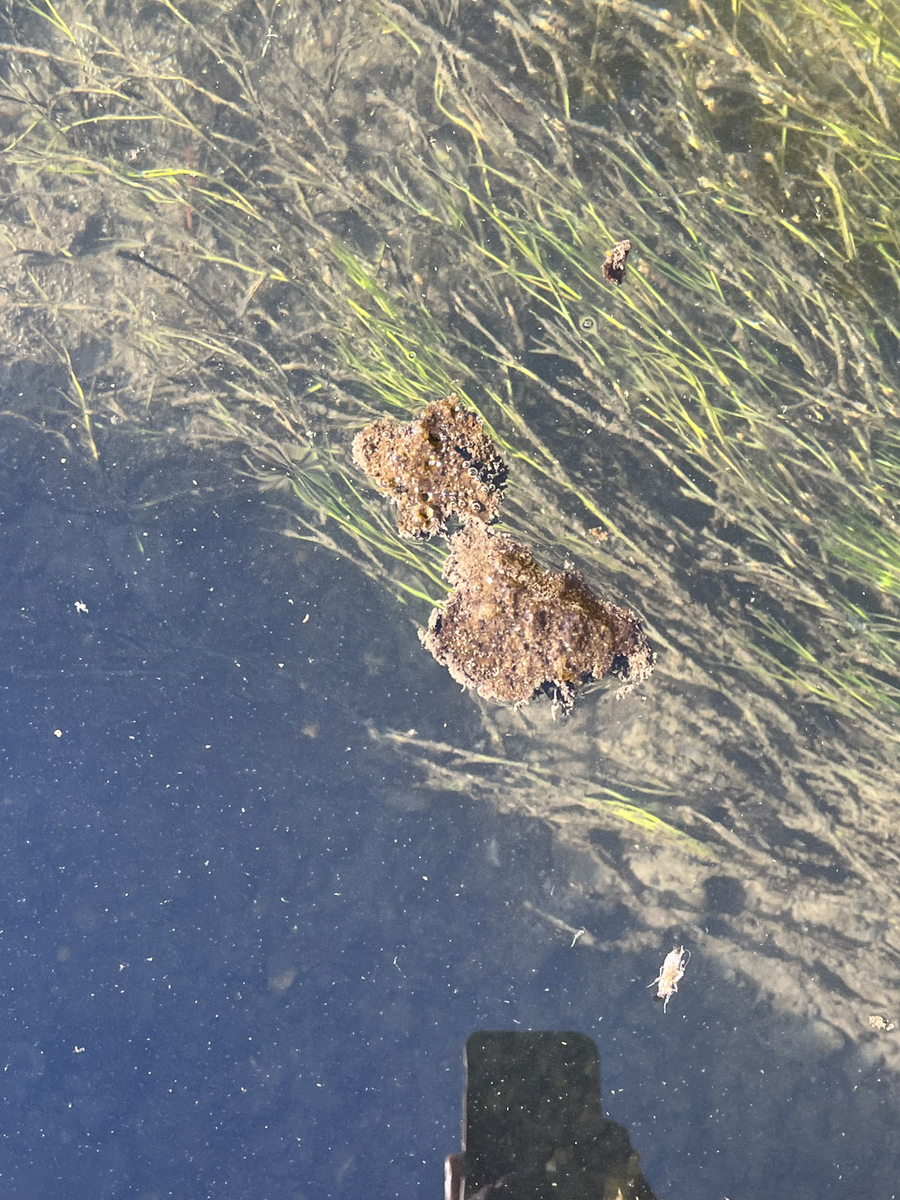
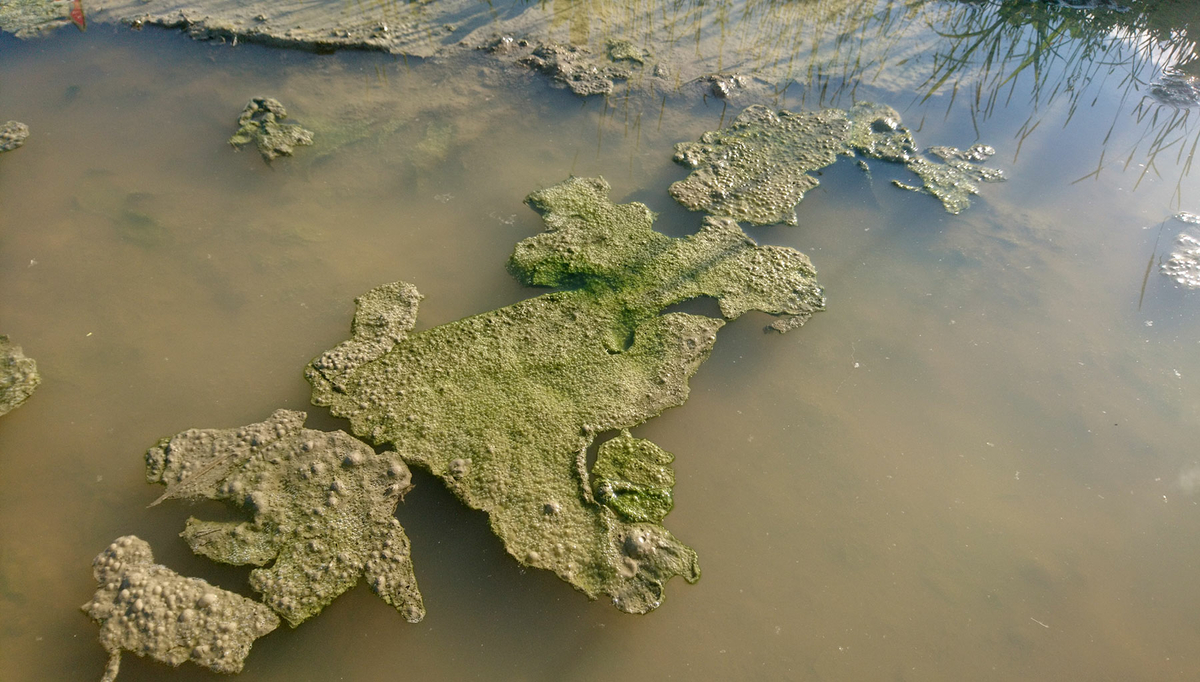
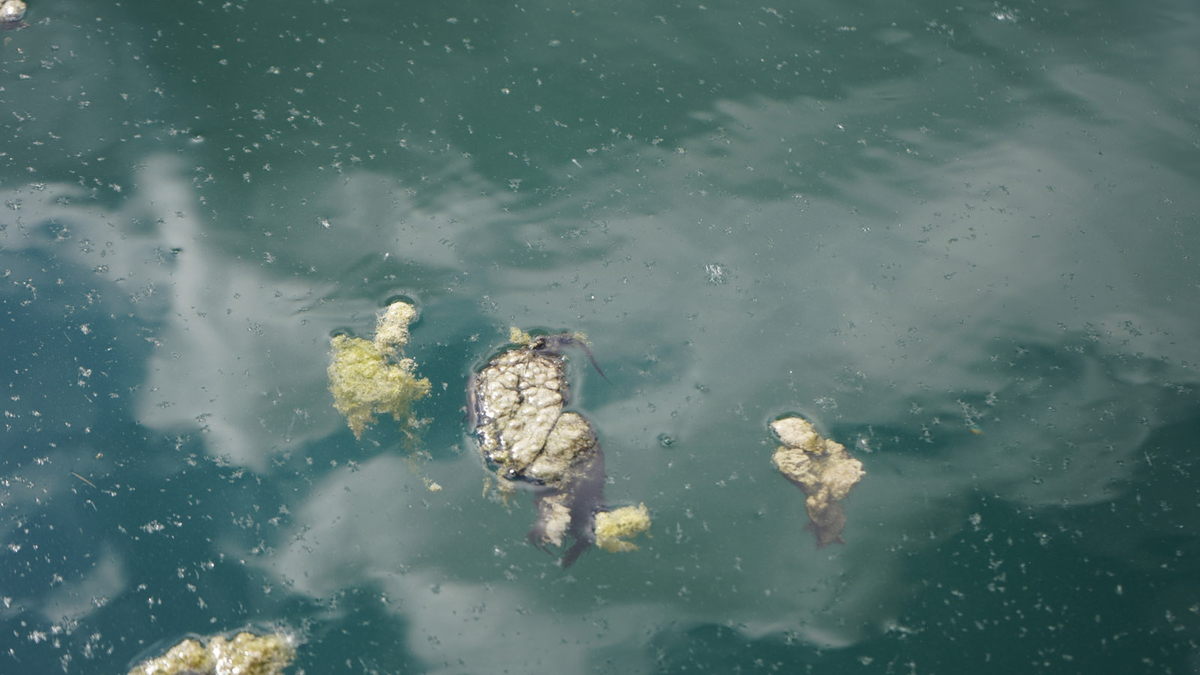
Les cyanobactéries ne se développent pas seulement dans les eaux calmes et ouvertes, mais aussi au fond des cours d'eau, des mares ou des lacs, dans la zone benthique. Elles y forment un biofilm sur les pierres, les morceaux de bois ou les plantes aquatiques, appelées tapis benthiques (également appelés «peaux de crapaud»).
Contrairement aux proliférations dans les eaux ouvertes, les tapis benthiques peuvent également se former dans des eaux pauvres en nutriments, claires ou peu troubles, qui laissent passer la lumière du soleil jusqu'au fond.
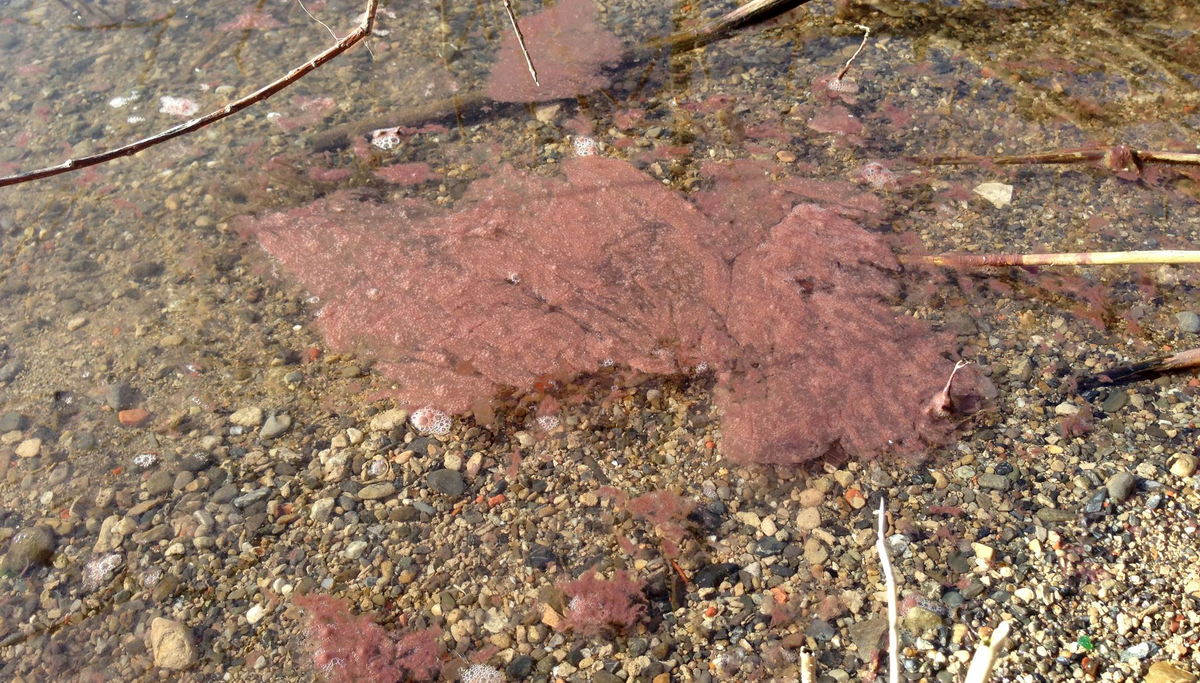
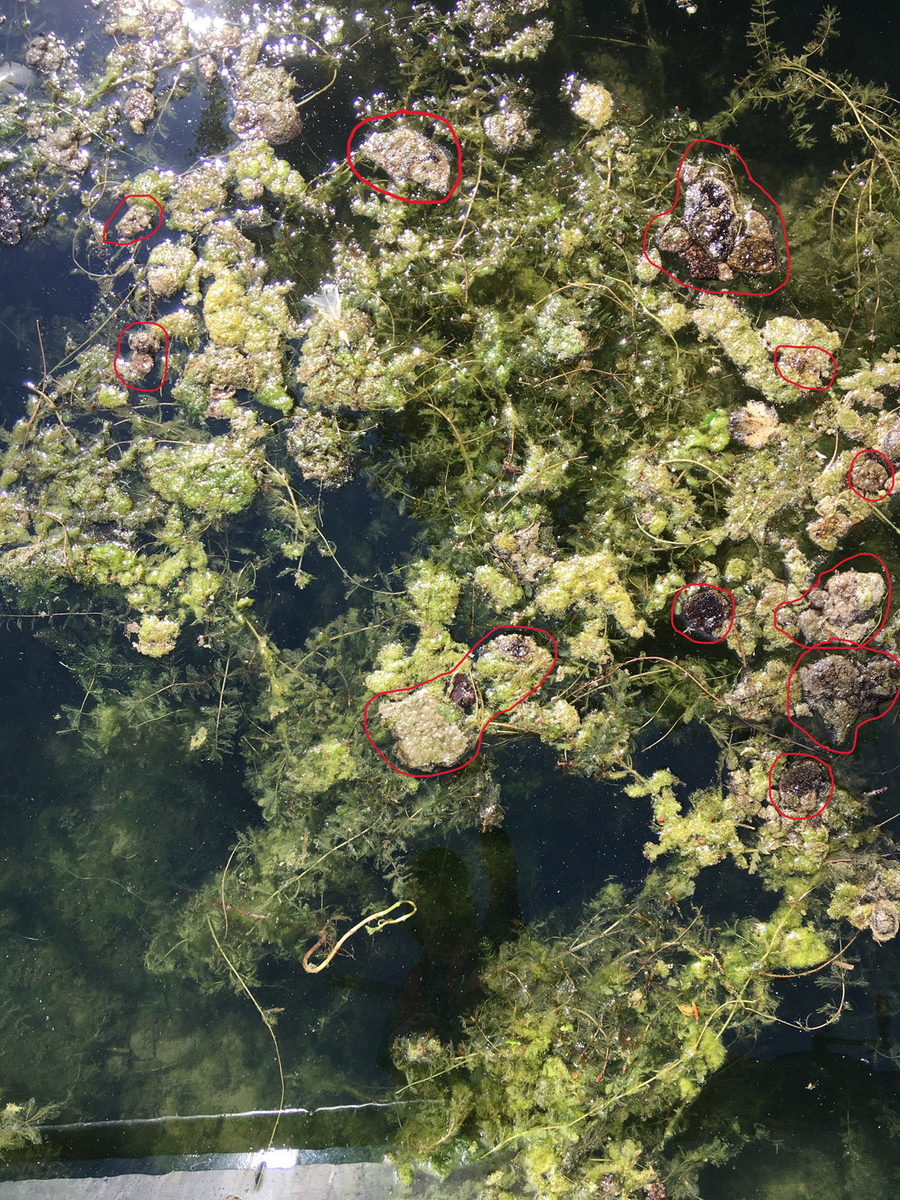
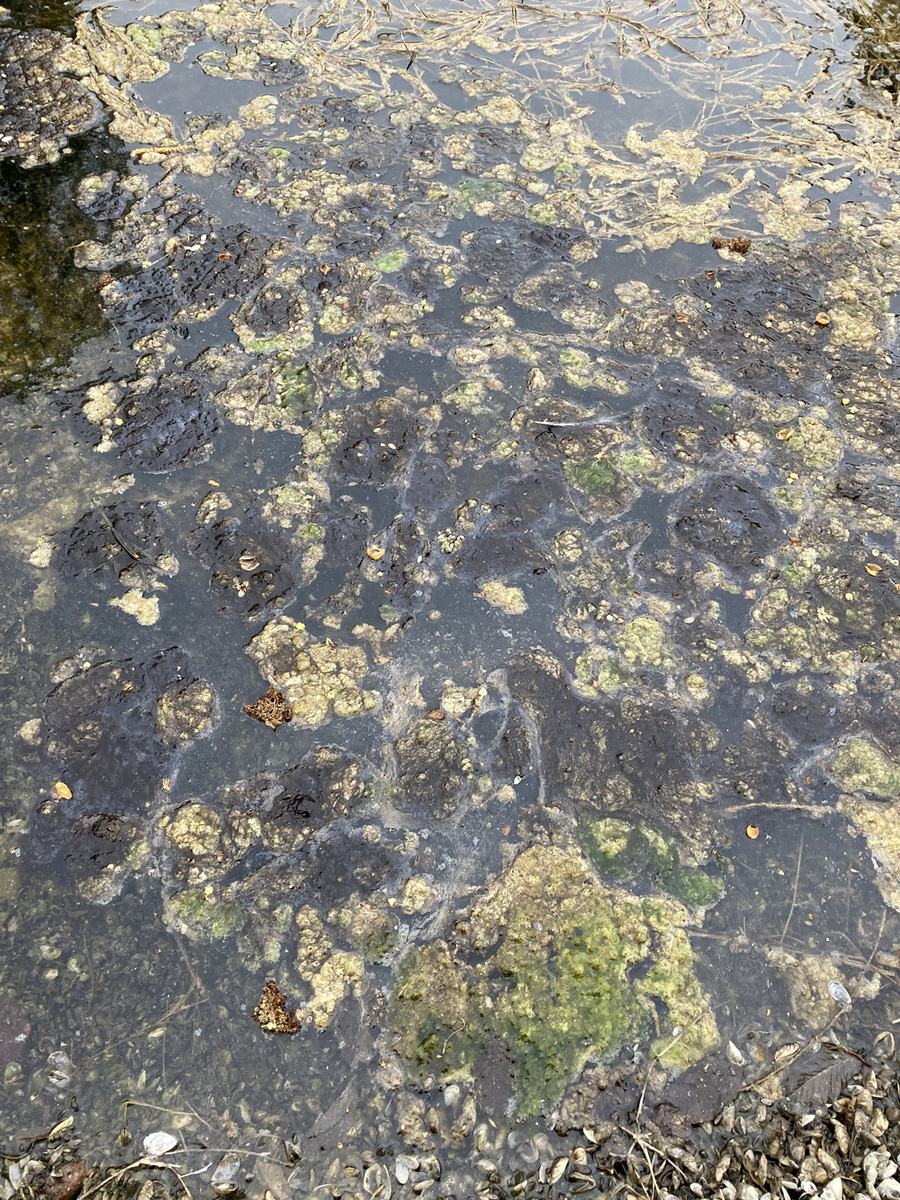
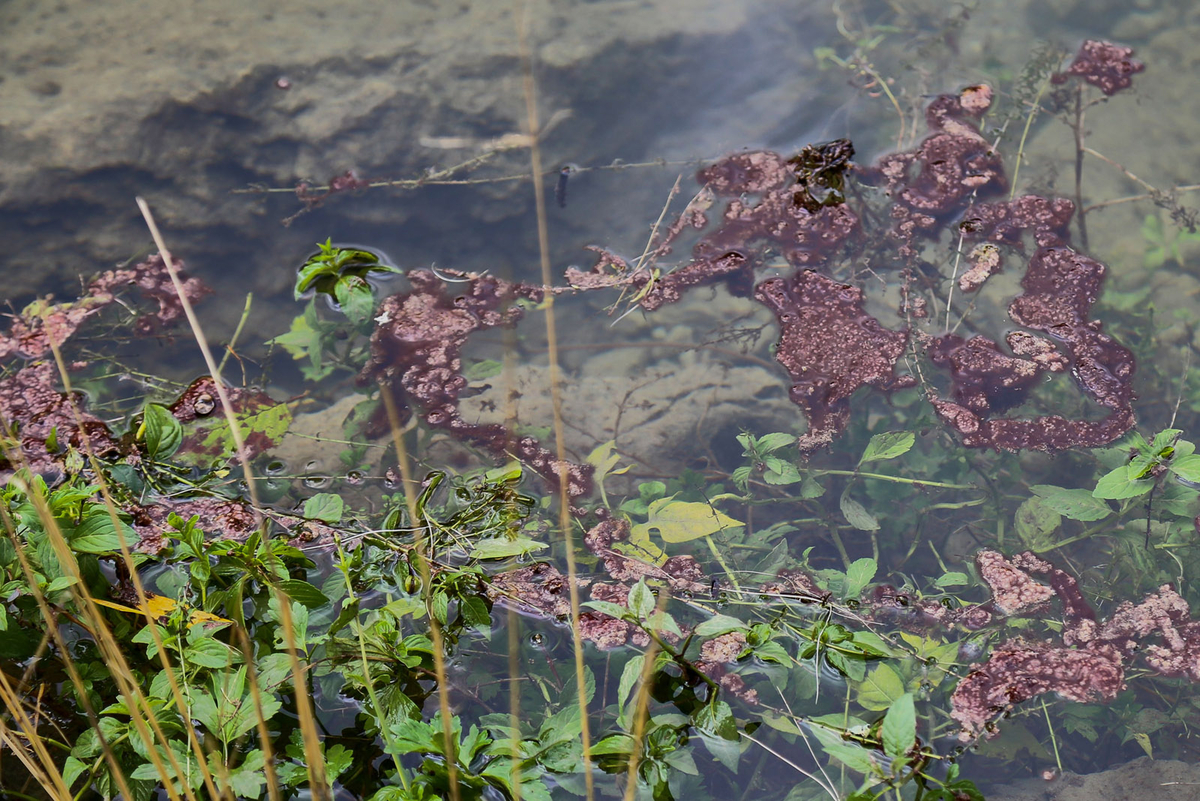
Apparence : ces tapis peuvent avoir une épaisseur de plusieurs millimètres à plusieurs centimètres et se former souvent à l'insu au fond de l'eau. Les tapis benthiques sont de couleur brune, noire, vert foncé ou rouge foncé et présentent parfois des bulles d'air à la surface, qui sont le résultat de la photosynthèse et contribuent à ce que les tapis ou des fragments de ceux-ci se détachent du fond et remontent à la surface. Les morceaux dérivent alors vers la surface de l'eau ou vers la rive. Lorsqu'ils sèchent sur la rive, ils prennent souvent une couleur grise ou brune.
Occurrence : contrairement aux proliférations pélagiques, les tapis benthiques apparaissent également dans les cours d'eau et peuvent poser des problèmes du printemps jusqu’à la fin de l'automne.
Toxines : les cyanobactéries benthiques peuvent parfois produire des neurotoxines très puissantes. Celles-ci appartiennent à la classe des anatoxines. Les anatoxines sont à l'origine de décès soudains chez les chiens en Suisse et dans le monde entier. Danger : les chiens sont attirés par l'odeur putride des tapis et peuvent absorber des toxines lorsqu'ils boivent de l'eau, rongent des morceaux de bois ou se lèchent le pelage. La concentration en neurotoxines peut être très élevée dans les tapis benthiques, même si elle est généralement à peine détectable dans l'eau libre qui les entoure. L'ingestion de faibles quantités peut déjà être mortelle pour les chiens. Les jeunes enfants peuvent également jouer avec les débris sur la rive et les avaler accidentellement.
Formation de tapis de cyanobactéries benthiques et risques associés pour les jeunes enfants et les animaux en contact avec les berges.
De gauche à droite : quelques filaments colonisent une surface et s'y fixent. Dans des conditions de croissance favorables, le tapis s'épaissit et commence à s'étendre. Le tapis peut se détacher soit en raison de la production excessive de bulles d'oxygène, soit en raison de turbulences hydrologiques. Les morceaux de tapis remontent à la surface de l'eau et peuvent être poussés vers la rive par le courant ou le vent.
Les risques accrus pour les chiens et les jeunes enfants sont indiqués en rouge. (Eawag, Kim Luong)
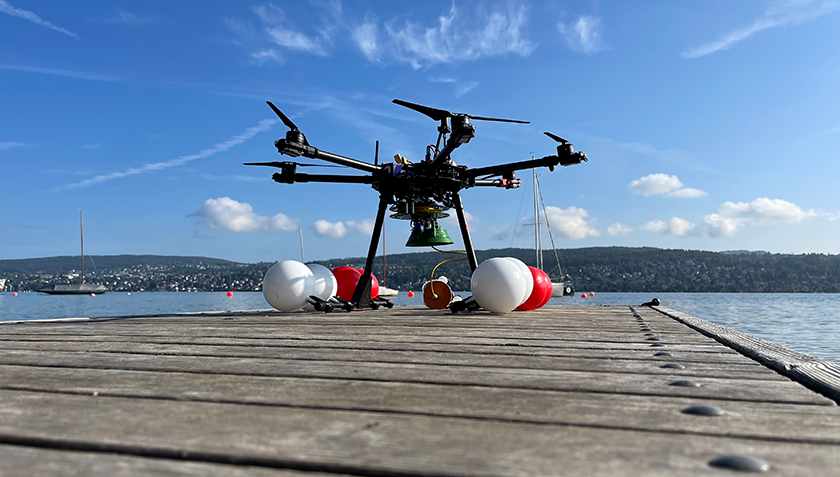
Vidéo: Drone sous-marin pour la détection des cyanobactéries
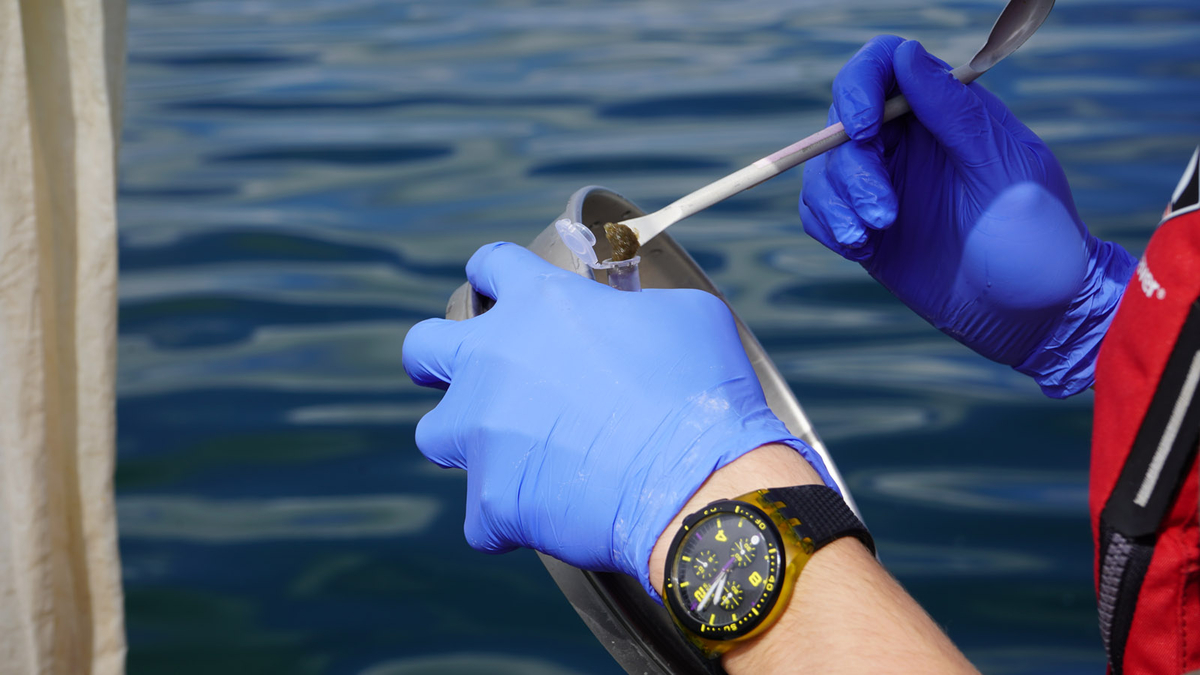
Les chercheur·euse·s de l'Eawag utilisent le BlueROV (Remotely Operated Vehicle) pour détecter les tapis de cyanobactéries et observer leur croissance au cours de l'année. Après la recherche, les échantillons sont envoyés au laboratoire afin d'analyser leur toxicité potentielle.
Aquascope – Images en direct du microscope sous-marin
Le microscope sous-marin adapté à l'eau douce de l'Eawag fournit (actuellement depuis les lacs de Greifen et de Zoug) des images du plancton presque en temps réel. Plongez dans le monde miniature autrement caché des algues (y compris les cyanobactéries), des puces d'eau, des petits crustacés et autres : www.aquascope.ch
Prolifération de Microcystis aeruginosa, lac de Greifen (Eawag, Francesco Pomati)
Prolifération de Microcystis aeruginosa, lac de Greifen (Kantonales Labor ZH, Rene Schittli)
Prolifération de Microcystis aeruginosa, lac de Baldegg (Umwelt und Energie (uwe), canton de Lucerne)
Microcystis sp. au microscope (Eawag)
Microcystis sp. au microscope (Eawag)
Proliférations de Planktothrix sp., lac de Greifen (Marianne Furrer)
Une partie d’une prolifération de Planktothrix sp., lac de Baldegg (Umwelt und Energie (uwe), canton de Lucerne)
Planktothrix sp. au microscope (Eawag)
Planktothrix sp. au microscope (Eawag)
Prolifération d’Aphanizomenon sp., lac de Greifen (Eawag)
Prolifération d’Aphanizomenon sp., lac de Greifen (Eawag)
Aphanizomenon sp. au microscope (Eawag)
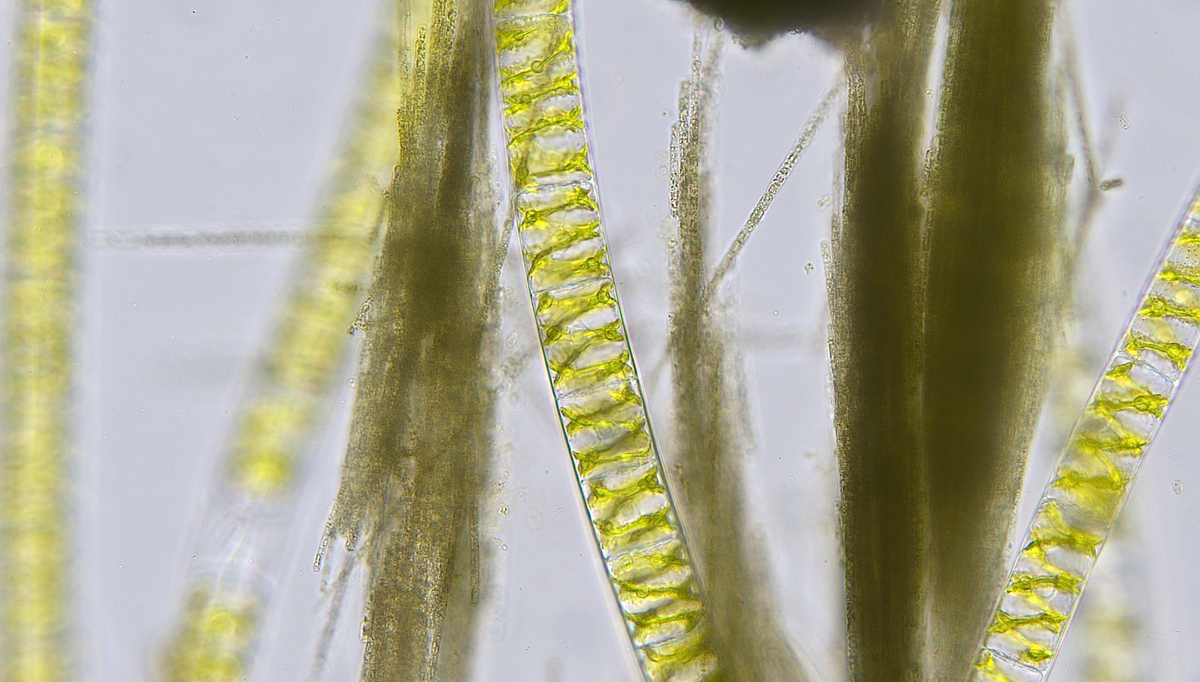
Aphanizomenon sp. (cyanobactérie) et Spirogyra sp. (Zygnématales) au microscope (Eawag)
Proliférations de Woronichinia naegeliana, lac de Greifen (Eawag)
Cyanobactéries Woronichinia sp. (à gauche) et Limnoraphis sp. (à droite) sous le microscope (Eawag)
Tapis de cyanobactéries benthiques
Microcoleus/Tychonema flottants, lac de Greifen (Eawag, Stephanie Eyring)
Tapis flottants composés de Microcoleus / Tychonema sp. (cyanobactéries) et d'algues vertes de l’ordre Zygnématales, lac de Greifen (Eawag, Stefanie Eyring)
Tapis flottants avec Microcoleus / Tychonema sp. (cyanobactéries, en rouge) et algues vertes de l’ordre Zygnématales, lac de Greifen (Eawag, Stefanie Eyring)
Tapis de cyanobactéries Microcoleus / Tychonema sp. (coloration noirâtre) et Spirogyra sp. (Zygnématales), canal de l'île de Constance (Eawag, Simon Grundmüller)
Tapis de cyanobactéries Microcoleus / Tychonema sp. (coloration noirâtre) et Spirogyra sp. (Zygnématales), canal de l'île de Constance (Eawag, Simon Grundmüller)
Microcoleus/Tychonema sp. flottants, Zurich-Obersee (Amt für Wasser und Energie, canton de Saint-Gall, Lukas Taxböck)
Tapis benthiques de Microcoleus/Tychonema sp. sur sédiments et gravier, Rhin (Eawag, Simon Grundmüller)
Plante aquatique envahie par un tapis de cyanobactéries de Microcoleus/Tychonema sp., Rhin (Eawag, Simon Grundmüller)
Filaments de Microcoleus/Tychonema sp. au microscope, Rhin (Eawag, Marta Reyes)
Filaments de Microcoleus/Tychonema sp. au microscope, Rhin (Eawag, Simon Grundmüller)
Tapis d'Oscillatoria sp. (coloration noirâtre), bassin portuaire de Constance (Eawag, Simon Grundmüller)
Oscillatoria limnosa déposée sur la rive, lac de Baldegg (Umwelt und Energie (uwe), canton de Lucerne)
Oscillatoria limnosa déposée sur la rive, lac de Baldegg (Umwelt und Energie (uwe), canton de Lucerne)
Croissance et détachement de cyanobactéries benthiques d’Oscillatoria sp. sur la rive, Glatt (Eawag, Simon Grundmüller)
Cyanobactéries benthiques d’Oscillatoria sp. flottantes, Chriesbach (Eawag, Kim Luong)
Filaments d’Oscillatoria sp. au microscope, Glatt (Eawag, Simon Grundmüller)
Filaments d’Oscillatoria sp. au microscope, Rhin (Eawag, Simon Grundmüller)
Tapis de cyanobactéries Oscillatoires flottantes, Thur (Amt für Wasser und Energie, canton de Saint-Gall, Lukas Taxböck)
Cyanobactéries benthiques flottantes avec bulles d'air visibles, (Eawag, Andri Bryner)
Cyanobactéries benthiques flottantes (coloration noirâtre) et Zygnématales, lac de Greifen (Eawag)
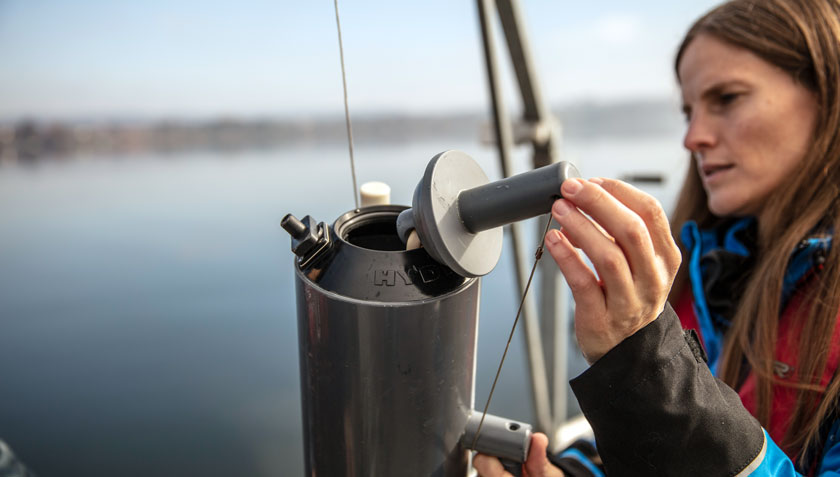
Échantillonnage des cyanobactéries benthiques (Eawag)
array(9 items)0 => Snowflake\Publications\Domain\Model\Publicationprototypepersistent entity (uid=22310, pid=124)originalId => protected22310 (integer)
authors => protected'Jones, M. R.; Pinto, E.; Torres, M. A.; Dörr,  ;F.; Mazur-Marzec, H.; Szubert, K.; Tartaglione, L.; Dell'Ave rsano, C.; Miles, C. O.; Beach, D. G.; McCarron,&nb sp;P.; Sivonen, K.; Fewer, D. P.; Jokela, J.; Janssen,&n bsp;E. M. -L.' (327 chars)
title => protected'CyanoMetDB, a comprehensive public database of secondary metabolites from cy anobacteria' (87 chars)
journal => protected'Water Research' (14 chars)
year => protected2021 (integer)
volume => protected196 (integer)
issue => protected'' (0 chars)
startpage => protected'117017 (12 pp.)' (15 chars)
otherpage => protected'' (0 chars)
categories => protected'cyanobacteria; secondary metabolite; database; toxin; cyanopeptide; CyanoMet DB' (78 chars)
description => protected'Harmful cyanobacterial blooms, which frequently contain toxic secondary meta bolites, are reported in aquatic environments around the world. More than tw o thousand cyanobacterial secondary metabolites have been reported from dive rse sources over the past fifty years. A comprehensive, publically-accessibl e database detailing these secondary metabolites would facilitate research i nto their occurrence, functions and toxicological risks. To address this nee d we created CyanoMetDB, a highly curated, flat-file, openly-accessible data base of cyanobacterial secondary metabolites collated from 850 peer-reviewed articles published between 1967 and 2020. CyanoMetDB contains 2010 cyanobac terial metabolites and 99 structurally related compounds. This has nearly do ubled the number of entries with complete literature metadata and structural composition information compared to previously available open access databa ses. The dataset includes microcytsins, cyanopeptolins, other depsipeptides, anabaenopeptins, microginins, aeruginosins, cyclamides, cryptophycins, saxi toxins, spumigins, microviridins, and anatoxins among other metabolite class es. A comprehensive database dedicated to cyanobacterial secondary metabolit es facilitates: (1) the detection and dereplication of known cyanobacterial toxins and secondary metabolites; (2) the identification of novel natural pr oducts from cyanobacteria; (3) research on biosynthesis of cyanobacterial se condary metabolites, including substructure searches; and (4) the investigat ion of their abundance, persistence, and toxicity in natural environments.' (1594 chars)
serialnumber => protected'0043-1354' (9 chars)
doi => protected'10.1016/j.watres.2021.117017' (28 chars)
uid => protected22310 (integer)
_localizedUid => protected22310 (integer)modified_languageUid => protectedNULL
_versionedUid => protected22310 (integer)modifiedpid => protected124 (integer)1 => Snowflake\Publications\Domain\Model\Publicationprototypepersistent entity (uid=33751, pid=124)originalId => protected33751 (integer)
authors => protected'Pittino, F.; Fink, S.; Oliveira, J.; Janssen, E. M. L.; Scheidegger, C.' (106 chars)
title => protected'Lithic bacterial communities: ecological aspects focusing on <em>Tintenstric h</em> communities' (94 chars)
journal => protected'Frontiers in Microbiology' (25 chars)
year => protected2024 (integer)
volume => protected15 (integer)
issue => protected'' (0 chars)
startpage => protected'1430059 (12 pp.)' (16 chars)
otherpage => protected'' (0 chars)
categories => protected'cyanobacteria; Tintenstrich; lithic bacterial communities; extreme environme nts; lichens' (88 chars)
description => protected'<em>Tintenstrich</em> communities (TCs) mainly comprise Cyanobacteria develo ping on rock substrates and forming physical structures that are strictly co nnected to the rock itself. Endolithic and epilithic bacterial communities a re important because they contribute to nutrient release within run-off wate rs flowing on the rock surface. Despite TCs being ubiquitous, little informa tion about their ecology and main characteristics is available. In this stud y, we characterized the bacterial communities of rock surfaces of TCs in Swi tzerland through Illumina sequencing. We investigated their bacterial commun ity composition on two substrate types (siliceous rocks [SRs] and carbonate rocks [CRs]) through multivariate models. Our results show that Cyanobacteri a and Proteobacteria are the predominant phyla in this environment. Bacteria l <em>α</em>-diversity was higher on CRs than on SRs, and the <em>β</em>-d iversity of SRs varied with changes in rock surface structure. In this study , we provide novel insights into the bacterial community composition of TCs, their differences from other lithic communities, and the effects of the roc k substrate and structure.' (1166 chars)
serialnumber => protected'' (0 chars)
doi => protected'10.3389/fmicb.2024.1430059' (26 chars)
uid => protected33751 (integer)
_localizedUid => protected33751 (integer)modified_languageUid => protectedNULL
_versionedUid => protected33751 (integer)modifiedpid => protected124 (integer)2 => Snowflake\Publications\Domain\Model\Publicationprototypepersistent entity (uid=33024, pid=124)originalId => protected33024 (integer)
authors => protected'Rougé, V.; von Gunten, U.; Janssen, E. M. L.' (70 chars)
title => protected'Reactivity of cyanobacteria metabolites with ozone: multicompound competitio n kinetics' (86 chars)
journal => protected'Environmental Science and Technology' (36 chars)
year => protected2024 (integer)
volume => protected58 (integer)
issue => protected'26' (2 chars)
startpage => protected'11802' (5 chars)
otherpage => protected'11811' (5 chars)
categories => protected'cyanopeptides; planktothrix; microcystis; micropollutant; ozonation; toxins; microcystin' (88 chars)
description => protected'Cyanobacterial blooms occur at increasing frequency and intensity, notably i n freshwater. This leads to the introduction of complex mixtures of their pr oducts, i.e., cyano-metabolites, to drinking water treatment plants. To asse ss the fate of cyano-metabolite mixtures during ozonation, a novel multicomp ound ozone (O<sub>3</sub>) competition kinetics method was developed. Sixtee n competitors with known second-order rate constants for their reaction with
. The apparent second-order rate constants (<em>k</em><sub>app,O3</sub>) at pH 7 were simultaneously determined for 31 cyano-metabolites. <em>k</em><sub >app,O3</sub> for olefin- and phenol-containing cyano-metabolites were consi stent with their expected reactivity (0.4–1.7 × 10<sup>6</sup> M<sup>–1 </sup> s<sup>–1</sup>) while <em>k</em><sub>app,O3</sub> for tryptophan- a nd thioether-containing cyano-metabolites were significantly higher than exp ected (3.4–7.3 × 10<sup>7</sup> M<sup>–1</sup> s<sup>–1</sup>). Cyano -metabolites containing these moieties are predicted to be well abated durin g ozonation. For cyano-metabolites containing heterocycles, <em>k</em><sub>a
tivity of this class of compounds. Due to lower O<sub>3</sub> reactivities, heterocycle- and aliphatic amine-containing cyano-metabolites may be only pa rtially degraded by a direct O<sub>3</sub> reaction near circumneutral pH. H ydroxyl radicals, which are formed during ozonation, may be more important f or their abatement. This novel multicompound kinetic method allows a high-th roughput screening of ozonation kinetics.' (1865 chars)
serialnumber => protected'0013-936X' (9 chars)
doi => protected'10.1021/acs.est.4c02242' (23 chars)
uid => protected33024 (integer)
_localizedUid => protected33024 (integer)modified_languageUid => protectedNULL
_versionedUid => protected33024 (integer)modifiedpid => protected124 (integer)3 => Snowflake\Publications\Domain\Model\Publicationprototypepersistent entity (uid=33003, pid=124)originalId => protected33003 (integer)
authors => protected'Torres, M. de A.; Dax, A.; Grand, I.; vom Berg,&nbs p;C.; Pinto, E.; Janssen, E. M..L.' (127 chars)
title => protected'Lethal and behavioral effects of semi-purified microcystins, Micropeptin and apolar compounds from cyanobacteria on freshwater microcrustacean Thamnocep halus platyurus' (167 chars)
journal => protected'Aquatic Toxicology' (18 chars)
year => protected2024 (integer)
volume => protected273 (integer)
issue => protected'' (0 chars)
startpage => protected'106983 (9 pp.)' (14 chars)
otherpage => protected'' (0 chars)
categories => protected'cyanobacterial metabolites; grazer toxicity; malformation; locomotor behavio ur; cyanopeptolin; microginin' (105 chars)
description => protected'The mass proliferation of cyanobacteria, episodes known as blooms, is a conc ern worldwide. One of the most critical aspects during these blooms is the p roduction of toxic secondary metabolites that are not limited to the four cy anotoxins recognized by the World Health Organization. These metabolites com prise a wide range of structurally diverse compounds that possess bioactive functions. Potential human and ecosystem health risks posed by these metabol ites and co-produced mixtures remain largely unknown. We studied acute letha l and sublethal effects measured as impaired mobility on the freshwater micr ocrustaceans Thamnocephalus platyurus for metabolite mixtures from two cyano bacterial strains, a microcystin (MC) producer and a non-MC producer. Both c yanobacterial extracts, from the MC-producer and non-MC-producer, caused acu te toxicity with LC<sub>50</sub> (24 h) values of 0.50 and 2.55 mg<sub>dw_bi omass</sub>/mL, respectively, and decreased locomotor activity. Evaluating t he contribution of different cyanopeptides revealed that the Micropeptin-K13 9-dominated fraction from the MC-producer extract contributed significantly to mortality and locomotor impairment of the microcrustaceans, with potentia l mixture effect with other cyanopeptolins present in this fraction. In the non-MC-producer extract, compounds present in the apolar fraction contribute d mainly to mortality, locomotor impairment, and morphological changes in th e antennae of the microcrustacean. No lethal or sublethal effects were obser ved in the fractions dominated by other cyanopetides (Cyanopeptolin 959, Nos toginin BN741). Our findings contribute to the growing body of research indi cating that cyanobacterial metabolites beyond traditional cyanotoxins cause detrimental effects. This underscores the importance of toxicological assess ments of such compounds, also at sublethal levels.' (1874 chars)
serialnumber => protected'0166-445X' (9 chars)
doi => protected'10.1016/j.aquatox.2024.106983' (29 chars)
uid => protected33003 (integer)
_localizedUid => protected33003 (integer)modified_languageUid => protectedNULL
_versionedUid => protected33003 (integer)modifiedpid => protected124 (integer)4 => Snowflake\Publications\Domain\Model\Publicationprototypepersistent entity (uid=31895, pid=124)originalId => protected31895 (integer)
authors => protected'de Almeida Torres, M.; Jones, M. R.; vom Berg, C.; Pinto , E.; Janssen, E. M. -L.' (120 chars)
title => protected'Lethal and sublethal effects towards zebrafish larvae of microcystins and ot her cyanopeptides produced by cyanobacteria' (119 chars)
journal => protected'Aquatic Toxicology' (18 chars)
year => protected2023 (integer)
volume => protected263 (integer)
issue => protected'' (0 chars)
startpage => protected'106689 (11 pp.)' (15 chars)
otherpage => protected'' (0 chars)
categories => protected'cyanobacterial metabolites; fish toxicity; cardiotoxicity; locomotor behavio ur; cyanopeptolin; microginin' (105 chars)
description => protected'Cyanobacterial blooms affect aquatic ecosystems across the globe and one maj or concern relates to their toxins such as microcystins (MC). Yet, the ecoto xicological risks, particularly non-lethal effects, associated with other co -produced secondary metabolites remain mostly unknown. Here, we assessed sur vival, morphological alterations, swimming behaviour and cardiovascular func tions of zebrafish (<em>Danio rerio</em>) upon exposure to cyanobacterial ex tracts of two Brazilian <em>Microcystis</em> strains. We verified that only MIRS-04 produced MCs and identified other co-produced cyanopeptides also for the MC non-producer NPCD-01 by LC-HRMS/MS analysis. Both cyanobacterial ext racts, from the MC-producer and non-producer, caused acute toxicity in zebra fish with LC<sub>50</sub> values of 0.49 and 0.98 mg<sub>dw_biomass</sub>/mL , respectively. After exposure to MC-producer extract, additional decreased locomotor activity was observed. The cyanopeptolin (micropeptin K139) contri buted 52% of the overall mortality and caused oedemas of the pericardial reg ion. Oedemas of the pericardial area and prevented hatching were also observ ed upon exposure to the fraction with high abundance of a microginin (Nostog inin BN741) in the extract of the MC non-producer. Our results further add t o the yet sparse understanding of lethal and sublethal effects caused by cya nobacterial metabolites other than MCs and the need to better understand the underlying mechanisms of the toxicity. We emphasize the importance of consi dering mixture toxicity of co-produced metabolites in the ecotoxicological r isk assessment of cyanobacterial bloom events, given the importance for pred icting adverse outcomes in fish and other organisms.' (1724 chars)
serialnumber => protected'0166-445X' (9 chars)
doi => protected'10.1016/j.aquatox.2023.106689' (29 chars)
uid => protected31895 (integer)
_localizedUid => protected31895 (integer)modified_languageUid => protectedNULL
_versionedUid => protected31895 (integer)modifiedpid => protected124 (integer)5 => Snowflake\Publications\Domain\Model\Publicationprototypepersistent entity (uid=33271, pid=124)originalId => protected33271 (integer)
authors => protected'Wang, X.; Wullschleger, S.; Jones, M.; Reyes, M.; Bossar t, R.; Pomati, F.; Janssen, E. M. -L.' (138 chars)
title => protected'Tracking extensive portfolio of cyanotoxins in five-year lake survey and ide ntifying indicator metabolites of cyanobacterial taxa' (129 chars)
journal => protected'Environmental Science and Technology' (36 chars)
year => protected2024 (integer)
volume => protected58 (integer)
issue => protected'37' (2 chars)
startpage => protected'16560' (5 chars)
otherpage => protected'16569' (5 chars)
categories => protected'microcystin; suspect screening; monitoring; cyanopepetides; harmful algal bl oom' (79 chars)
description => protected'Cyanobacterial blooms require monitoring, as they pose a threat to ecosystem s and human health, especially by the release of toxins. Along with widely r eported microcystins, cyanobacteria coproduce other bioactive metabolites; h owever, information about their dynamics in surface waters is sparse. We inv estigated dynamics across full bloom successions throughout a five-year lake monitoring campaign (Greifensee, Switzerland) spanning 150 sampling dates. We conducted extensive suspect screening of cyanobacterial metabolites using the database CyanoMetDB. Across all 850 samples, 35 metabolites regularly c o-occurred. Microcystins were present in 70% of samples, with [d-Asp<sup>3</ sup>,(<em>E</em>)-Dhb<sup>7</sup>]MC-RR reaching concentrations of 70 ng/L. Anabaenopeptins, meanwhile, were detected in 95% of all samples with concent rations of Oscillamide Y up to 100-fold higher than microcystins. Based on L C-MS response and frequency, we identified indicator metabolites exclusively produced by one of three cyanobacteria isolated from the lake, these being [d-Asp<sup>3</sup>,(<em>E</em>)-Dhb<sup>7</sup>]MC-RR from <em>Planktothrix< /em> sp. G2020, Microginin 761B from <em>Microcystis</em> sp. G2011, and Fer intoic acid B from <em>Microcystis</em> sp. G2020. These indicators showed d istinct temporal trends and peaking seasons that reflect the variance in eit her the abundance of the producing cyanobacteria or their toxin production d ynamics. Our approach demonstrates that selecting high LC-MS response and fr equent and species-specific indicator metabolites can be advantageous for cy anobacterial monitoring.' (1620 chars)
serialnumber => protected'0013-936X' (9 chars)
doi => protected'10.1021/acs.est.4c04813' (23 chars)
uid => protected33271 (integer)
_localizedUid => protected33271 (integer)modified_languageUid => protectedNULL
_versionedUid => protected33271 (integer)modifiedpid => protected124 (integer)6 => Snowflake\Publications\Domain\Model\Publicationprototypepersistent entity (uid=34638, pid=124)originalId => protected34638 (integer)
authors => protected'Eyring, S.; Reyes, M.; Merz, E.; Baity-Jesi, M.; Ntetsik a, P.; Ebi, C.; Dennis, S.; Pomati, F.' (134 chars)
title => protected'Five years of high-frequency data of phytoplankton zooplankton and limnology from a temperate eutrophic lake' (108 chars)
journal => protected'Scientific Data' (15 chars)
year => protected2025 (integer)
volume => protected12 (integer)
issue => protected'1' (1 chars)
startpage => protected'653 (13 pp.)' (12 chars)
otherpage => protected'' (0 chars)
categories => protected'' (0 chars)
description => protected'This study presents a comprehensive dataset from Lake Greifen, Switzerland, collected between April 2018 and June 2023, using high-frequency automated m onitoring systems. The dataset integrates meteorological data, nutrient chem istry, water column profiles for water physics, and plankton underwater imag ing, offering insights into the lake's physical and biological processes. A dual-magnification dark field underwater microscope captured hourly plankton dynamics at 3 m depth, providing size, shape, and taxonomic information. A profiler with a multiparametric probe monitored water temperature, oxygen, and other key parameters from 1 to 17 m depth, while weekly nutrient samp ling complemented the measurements. Data processing involved rigorous cleani ng protocols to remove technical artefacts, ensuring data quality. Our datas et showcases the utility of integrating different approaches for high-freque ncy monitoring to detect lake temporal processes, from phytoplankton blooms to zooplankton vertical migration and seasonal shifts in water column stabil ity. This dataset provides a unique resource for studying limnology and plan kton community ecology. All data and related processing codes are publicly a vailable for further research, supporting interdisciplinary studies.' (1284 chars)
serialnumber => protected'' (0 chars)
doi => protected'10.1038/s41597-025-04988-9' (26 chars)
uid => protected34638 (integer)
_localizedUid => protected34638 (integer)modified_languageUid => protectedNULL
_versionedUid => protected34638 (integer)modifiedpid => protected124 (integer)7 => Snowflake\Publications\Domain\Model\Publicationprototypepersistent entity (uid=18207, pid=124)originalId => protected18207 (integer)
authors => protected'Janssen, E. M. -L.' (33 chars)
title => protected'Cyanobacterial peptides beyond microcystins – a review on co-occurrence, t oxicity, and challenges for risk assessment' (119 chars)
journal => protected'Water Research' (14 chars)
year => protected2019 (integer)
volume => protected151 (integer)
issue => protected'' (0 chars)
startpage => protected'488' (3 chars)
otherpage => protected'499' (3 chars)
categories => protected'harmful algal bloom; cyanobacteria; toxin; risk assessment; ecotoxicology; h uman health' (87 chars)
description => protected'Cyanobacterial bloom events that produce natural toxins occur in freshwaters across the globe, yet the potential risk of many cyanobacterial metabolites remains mostly unknown. Only microcystins, one class of cyanopeptides, have been studied intensively and the wealth of evidence regarding exposure conc entrations and toxicity led to their inclusion in risk management frameworks for water quality. However, cyanobacteria produce an incredible diversity o f hundreds of cyanopeptides beyond the class of microcystins. The question a rises, whether the other cyanopeptides are in fact of no human and ecologica l concern or whether these compounds merely received (too) little attention thus far. Current observations suggest that an assessment of their (eco)toxi cological risk is indeed relevant: First, other cyanopeptides, including cya nopeptolins and anabaenopeptins, can occur just as frequently and at similar nanomolar concentrations as microcystins in surface waters. Second, cyanope ptolins, anabaenopeptins, aeruginosins and microginins inhibit proteases in the nanomolar range, in contrast to protein phosphatase inhibition by microc ystins. Cyanopeptolins, aeruginosins, and aerucyclamide also show toxicity a gainst grazers in the micromolar range comparable to microcystins. The key c hallenge for a comprehensive risk assessment of cyanopeptides remains their large structural diversity, lack of reference standards, and high analytical requirements for identification and quantification. One way forward would b e a prevalence study to identify the priority candidates of tentatively abun dant, persistent, and toxic cyanopeptides to make comprehensive risk assessm ents more manageable.' (1693 chars)
serialnumber => protected'0043-1354' (9 chars)
doi => protected'10.1016/j.watres.2018.12.048' (28 chars)
uid => protected18207 (integer)
_localizedUid => protected18207 (integer)modified_languageUid => protectedNULL
_versionedUid => protected18207 (integer)modifiedpid => protected124 (integer)8 => Snowflake\Publications\Domain\Model\Publicationprototypepersistent entity (uid=23610, pid=124)originalId => protected23610 (integer)
authors => protected'Kakouei, K.; Kraemer, B. M.; Anneville, O.; Carvalho,&nb sp;L.; Feuchtmayr, H.; Graham, J. L.; Higgins, S.; Pomat i, F.; Rudstam, L. G.; Stockwell, J. D.; Thackeray, S. J.; Vanni, M. J.; Adrian, R.' (285 chars)
title => protected'Phytoplankton and cyanobacteria abundances in mid-21st century lakes depend strongly on future land use and climate projections' (127 chars)
journal => protected'Global Change Biology' (21 chars)
year => protected2021 (integer)
volume => protected27 (integer)
issue => protected'24' (2 chars)
startpage => protected'6409' (4 chars)
otherpage => protected'6422' (4 chars)
categories => protected'climate change; forecast; freshwater lakes; land use change; machine learnin g; phytoplankton; cyanobacteria' (107 chars)
description => protected'Land use and climate change are anticipated to affect phytoplankton of lakes worldwide. The effects will depend on the magnitude of projected land use a nd climate changes and lake sensitivity to these factors. We used random for ests fit with long-term (1971–2016) phytoplankton and cyanobacteria abunda nce time series, climate observations (1971–2016), and upstream catchment land use (global Clumondo models for the year 2000) data from 14 European an d 15 North American lakes basins. We projected future phytoplankton and cya nobacteria abundance in the 29 focal lake basins and 1567 lakes across foca l regions based on three land use (sustainability, middle of the road, and r egional rivalry) and two climate (RCP 2.6 and 8.5) scenarios to mid-21st cen tury. On average, lakes are expected to have higher phytoplankton and cyanob acteria due to increases in both urban land use and temperature, and decreas es in forest habitat. However, the relative importance of land use and clima te effects varied substantially among regions and lakes. Accounting for land use and climate changes in a combined way based on extensive data allowed u s to identify urbanization as the major driver of phytoplankton development in lakes located in urban areas, and climate as major driver in lakes locate d in remote areas where past and future land use changes were minimal. For a pproximately one-third of the studied lakes, both drivers were relatively im portant. The results of this large scale study suggest the best approaches f or mitigating the effects of human activity on lake phytoplankton and cyanob acteria will depend strongly on lake sensitivity to long-term change and the magnitude of projected land use and climate changes at a given location. Ou r quantitative analyses suggest local management measures should focus on re taining nutrients in urban landscapes to prevent nutrient pollution from exa cerbating ongoing changes to lake ecosystems from climate change.' (1965 chars)
serialnumber => protected'1354-1013' (9 chars)
doi => protected'10.1111/gcb.15866' (17 chars)
uid => protected23610 (integer)
_localizedUid => protected23610 (integer)modified_languageUid => protectedNULL
_versionedUid => protected23610 (integer)modifiedpid => protected124 (integer)
CyanoMetDB, a comprehensive public database of secondary metabolites from cyanobacteria
Harmful cyanobacterial blooms, which frequently contain toxic secondary metabolites, are reported in aquatic environments around the world. More than two thousand cyanobacterial secondary metabolites have been reported from diverse sources over the past fifty years. A comprehensive, publically-accessible database detailing these secondary metabolites would facilitate research into their occurrence, functions and toxicological risks. To address this need we created CyanoMetDB, a highly curated, flat-file, openly-accessible database of cyanobacterial secondary metabolites collated from 850 peer-reviewed articles published between 1967 and 2020. CyanoMetDB contains 2010 cyanobacterial metabolites and 99 structurally related compounds. This has nearly doubled the number of entries with complete literature metadata and structural composition information compared to previously available open access databases. The dataset includes microcytsins, cyanopeptolins, other depsipeptides, anabaenopeptins, microginins, aeruginosins, cyclamides, cryptophycins, saxitoxins, spumigins, microviridins, and anatoxins among other metabolite classes. A comprehensive database dedicated to cyanobacterial secondary metabolites facilitates: (1) the detection and dereplication of known cyanobacterial toxins and secondary metabolites; (2) the identification of novel natural products from cyanobacteria; (3) research on biosynthesis of cyanobacterial secondary metabolites, including substructure searches; and (4) the investigation of their abundance, persistence, and toxicity in natural environments.
Jones, M. R.; Pinto, E.; Torres, M. A.; Dörr, F.; Mazur-Marzec, H.; Szubert, K.; Tartaglione, L.; Dell'Aversano, C.; Miles, C. O.; Beach, D. G.; McCarron, P.; Sivonen, K.; Fewer, D. P.; Jokela, J.; Janssen, E. M. -L. (2021) CyanoMetDB, a comprehensive public database of secondary metabolites from cyanobacteria, Water Research, 196, 117017 (12 pp.), doi:10.1016/j.watres.2021.117017, Institutional Repository
Lithic bacterial communities: ecological aspects focusing on Tintenstrich communities
Tintenstrich communities (TCs) mainly comprise Cyanobacteria developing on rock substrates and forming physical structures that are strictly connected to the rock itself. Endolithic and epilithic bacterial communities are important because they contribute to nutrient release within run-off waters flowing on the rock surface. Despite TCs being ubiquitous, little information about their ecology and main characteristics is available. In this study, we characterized the bacterial communities of rock surfaces of TCs in Switzerland through Illumina sequencing. We investigated their bacterial community composition on two substrate types (siliceous rocks [SRs] and carbonate rocks [CRs]) through multivariate models. Our results show that Cyanobacteria and Proteobacteria are the predominant phyla in this environment. Bacterial α-diversity was higher on CRs than on SRs, and the β-diversity of SRs varied with changes in rock surface structure. In this study, we provide novel insights into the bacterial community composition of TCs, their differences from other lithic communities, and the effects of the rock substrate and structure.
Pittino, F.; Fink, S.; Oliveira, J.; Janssen, E. M. L.; Scheidegger, C. (2024) Lithic bacterial communities: ecological aspects focusing on Tintenstrich communities, Frontiers in Microbiology, 15, 1430059 (12 pp.), doi:10.3389/fmicb.2024.1430059, Institutional Repository
Reactivity of cyanobacteria metabolites with ozone: multicompound competition kinetics
Cyanobacterial blooms occur at increasing frequency and intensity, notably in freshwater. This leads to the introduction of complex mixtures of their products, i.e., cyano-metabolites, to drinking water treatment plants. To assess the fate of cyano-metabolite mixtures during ozonation, a novel multicompound ozone (O3) competition kinetics method was developed. Sixteen competitors with known second-order rate constants for their reaction with O3 ranging between 1 and 108 M–1 s–1 were applied to cover a wide range of the O3 reactivity. The apparent second-order rate constants (kapp,O3) at pH 7 were simultaneously determined for 31 cyano-metabolites. kapp,O3 for olefin- and phenol-containing cyano-metabolites were consistent with their expected reactivity (0.4–1.7 × 10⁶ M–1 s–1) while kapp,O3 for tryptophan- and thioether-containing cyano-metabolites were significantly higher than expected (3.4–7.3 × 10⁷ M–1 s–1). Cyano-metabolites containing these moieties are predicted to be well abated during ozonation. For cyano-metabolites containing heterocycles, kapp,O3 varied from <102 to 5.0 × 10³ M–1 s–1, giving first insights into the O3 reactivity of this class of compounds. Due to lower O3 reactivities, heterocycle- and aliphatic amine-containing cyano-metabolites may be only partially degraded by a direct O3 reaction near circumneutral pH. Hydroxyl radicals, which are formed during ozonation, may be more important for their abatement. This novel multicompound kinetic method allows a high-throughput screening of ozonation kinetics.
Rougé, V.; von Gunten, U.; Janssen, E. M. L. (2024) Reactivity of cyanobacteria metabolites with ozone: multicompound competition kinetics, Environmental Science and Technology, 58(26), 11802-11811, doi:10.1021/acs.est.4c02242, Institutional Repository
Lethal and behavioral effects of semi-purified microcystins, Micropeptin and apolar compounds from cyanobacteria on freshwater microcrustacean Thamnocephalus platyurus
The mass proliferation of cyanobacteria, episodes known as blooms, is a concern worldwide. One of the most critical aspects during these blooms is the production of toxic secondary metabolites that are not limited to the four cyanotoxins recognized by the World Health Organization. These metabolites comprise a wide range of structurally diverse compounds that possess bioactive functions. Potential human and ecosystem health risks posed by these metabolites and co-produced mixtures remain largely unknown. We studied acute lethal and sublethal effects measured as impaired mobility on the freshwater microcrustaceans Thamnocephalus platyurus for metabolite mixtures from two cyanobacterial strains, a microcystin (MC) producer and a non-MC producer. Both cyanobacterial extracts, from the MC-producer and non-MC-producer, caused acute toxicity with LC50 (24 h) values of 0.50 and 2.55 mgdw_biomass/mL, respectively, and decreased locomotor activity. Evaluating the contribution of different cyanopeptides revealed that the Micropeptin-K139-dominated fraction from the MC-producer extract contributed significantly to mortality and locomotor impairment of the microcrustaceans, with potential mixture effect with other cyanopeptolins present in this fraction. In the non-MC-producer extract, compounds present in the apolar fraction contributed mainly to mortality, locomotor impairment, and morphological changes in the antennae of the microcrustacean. No lethal or sublethal effects were observed in the fractions dominated by other cyanopetides (Cyanopeptolin 959, Nostoginin BN741). Our findings contribute to the growing body of research indicating that cyanobacterial metabolites beyond traditional cyanotoxins cause detrimental effects. This underscores the importance of toxicological assessments of such compounds, also at sublethal levels.
Torres, M. de A.; Dax, A.; Grand, I.; vom Berg, C.; Pinto, E.; Janssen, E. M..L. (2024) Lethal and behavioral effects of semi-purified microcystins, Micropeptin and apolar compounds from cyanobacteria on freshwater microcrustacean Thamnocephalus platyurus, Aquatic Toxicology, 273, 106983 (9 pp.), doi:10.1016/j.aquatox.2024.106983, Institutional Repository
Lethal and sublethal effects towards zebrafish larvae of microcystins and other cyanopeptides produced by cyanobacteria
Cyanobacterial blooms affect aquatic ecosystems across the globe and one major concern relates to their toxins such as microcystins (MC). Yet, the ecotoxicological risks, particularly non-lethal effects, associated with other co-produced secondary metabolites remain mostly unknown. Here, we assessed survival, morphological alterations, swimming behaviour and cardiovascular functions of zebrafish (Danio rerio) upon exposure to cyanobacterial extracts of two Brazilian Microcystis strains. We verified that only MIRS-04 produced MCs and identified other co-produced cyanopeptides also for the MC non-producer NPCD-01 by LC-HRMS/MS analysis. Both cyanobacterial extracts, from the MC-producer and non-producer, caused acute toxicity in zebrafish with LC50 values of 0.49 and 0.98 mgdw_biomass/mL, respectively. After exposure to MC-producer extract, additional decreased locomotor activity was observed. The cyanopeptolin (micropeptin K139) contributed 52% of the overall mortality and caused oedemas of the pericardial region. Oedemas of the pericardial area and prevented hatching were also observed upon exposure to the fraction with high abundance of a microginin (Nostoginin BN741) in the extract of the MC non-producer. Our results further add to the yet sparse understanding of lethal and sublethal effects caused by cyanobacterial metabolites other than MCs and the need to better understand the underlying mechanisms of the toxicity. We emphasize the importance of considering mixture toxicity of co-produced metabolites in the ecotoxicological risk assessment of cyanobacterial bloom events, given the importance for predicting adverse outcomes in fish and other organisms.
de Almeida Torres, M.; Jones, M. R.; vom Berg, C.; Pinto, E.; Janssen, E. M. -L. (2023) Lethal and sublethal effects towards zebrafish larvae of microcystins and other cyanopeptides produced by cyanobacteria, Aquatic Toxicology, 263, 106689 (11 pp.), doi:10.1016/j.aquatox.2023.106689, Institutional Repository
Tracking extensive portfolio of cyanotoxins in five-year lake survey and identifying indicator metabolites of cyanobacterial taxa
Cyanobacterial blooms require monitoring, as they pose a threat to ecosystems and human health, especially by the release of toxins. Along with widely reported microcystins, cyanobacteria coproduce other bioactive metabolites; however, information about their dynamics in surface waters is sparse. We investigated dynamics across full bloom successions throughout a five-year lake monitoring campaign (Greifensee, Switzerland) spanning 150 sampling dates. We conducted extensive suspect screening of cyanobacterial metabolites using the database CyanoMetDB. Across all 850 samples, 35 metabolites regularly co-occurred. Microcystins were present in 70% of samples, with [d-Asp3,(E)-Dhb7]MC-RR reaching concentrations of 70 ng/L. Anabaenopeptins, meanwhile, were detected in 95% of all samples with concentrations of Oscillamide Y up to 100-fold higher than microcystins. Based on LC-MS response and frequency, we identified indicator metabolites exclusively produced by one of three cyanobacteria isolated from the lake, these being [d-Asp3,(E)-Dhb7]MC-RR from Planktothrix sp. G2020, Microginin 761B from Microcystis sp. G2011, and Ferintoic acid B from Microcystis sp. G2020. These indicators showed distinct temporal trends and peaking seasons that reflect the variance in either the abundance of the producing cyanobacteria or their toxin production dynamics. Our approach demonstrates that selecting high LC-MS response and frequent and species-specific indicator metabolites can be advantageous for cyanobacterial monitoring.
Wang, X.; Wullschleger, S.; Jones, M.; Reyes, M.; Bossart, R.; Pomati, F.; Janssen, E. M. -L. (2024) Tracking extensive portfolio of cyanotoxins in five-year lake survey and identifying indicator metabolites of cyanobacterial taxa, Environmental Science and Technology, 58(37), 16560-16569, doi:10.1021/acs.est.4c04813, Institutional Repository
Five years of high-frequency data of phytoplankton zooplankton and limnology from a temperate eutrophic lake
This study presents a comprehensive dataset from Lake Greifen, Switzerland, collected between April 2018 and June 2023, using high-frequency automated monitoring systems. The dataset integrates meteorological data, nutrient chemistry, water column profiles for water physics, and plankton underwater imaging, offering insights into the lake's physical and biological processes. A dual-magnification dark field underwater microscope captured hourly plankton dynamics at 3 m depth, providing size, shape, and taxonomic information. A profiler with a multiparametric probe monitored water temperature, oxygen, and other key parameters from 1 to 17 m depth, while weekly nutrient sampling complemented the measurements. Data processing involved rigorous cleaning protocols to remove technical artefacts, ensuring data quality. Our dataset showcases the utility of integrating different approaches for high-frequency monitoring to detect lake temporal processes, from phytoplankton blooms to zooplankton vertical migration and seasonal shifts in water column stability. This dataset provides a unique resource for studying limnology and plankton community ecology. All data and related processing codes are publicly available for further research, supporting interdisciplinary studies.
Eyring, S.; Reyes, M.; Merz, E.; Baity-Jesi, M.; Ntetsika, P.; Ebi, C.; Dennis, S.; Pomati, F. (2025) Five years of high-frequency data of phytoplankton zooplankton and limnology from a temperate eutrophic lake, Scientific Data, 12(1), 653 (13 pp.), doi:10.1038/s41597-025-04988-9, Institutional Repository
Cyanobacterial peptides beyond microcystins – a review on co-occurrence, toxicity, and challenges for risk assessment
Cyanobacterial bloom events that produce natural toxins occur in freshwaters across the globe, yet the potential risk of many cyanobacterial metabolites remains mostly unknown. Only microcystins, one class of cyanopeptides, have been studied intensively and the wealth of evidence regarding exposure concentrations and toxicity led to their inclusion in risk management frameworks for water quality. However, cyanobacteria produce an incredible diversity of hundreds of cyanopeptides beyond the class of microcystins. The question arises, whether the other cyanopeptides are in fact of no human and ecological concern or whether these compounds merely received (too) little attention thus far. Current observations suggest that an assessment of their (eco)toxicological risk is indeed relevant: First, other cyanopeptides, including cyanopeptolins and anabaenopeptins, can occur just as frequently and at similar nanomolar concentrations as microcystins in surface waters. Second, cyanopeptolins, anabaenopeptins, aeruginosins and microginins inhibit proteases in the nanomolar range, in contrast to protein phosphatase inhibition by microcystins. Cyanopeptolins, aeruginosins, and aerucyclamide also show toxicity against grazers in the micromolar range comparable to microcystins. The key challenge for a comprehensive risk assessment of cyanopeptides remains their large structural diversity, lack of reference standards, and high analytical requirements for identification and quantification. One way forward would be a prevalence study to identify the priority candidates of tentatively abundant, persistent, and toxic cyanopeptides to make comprehensive risk assessments more manageable.
Janssen, E. M. -L. (2019) Cyanobacterial peptides beyond microcystins – a review on co-occurrence, toxicity, and challenges for risk assessment, Water Research, 151, 488-499, doi:10.1016/j.watres.2018.12.048, Institutional Repository
Phytoplankton and cyanobacteria abundances in mid-21st century lakes depend strongly on future land use and climate projections
Land use and climate change are anticipated to affect phytoplankton of lakes worldwide. The effects will depend on the magnitude of projected land use and climate changes and lake sensitivity to these factors. We used random forests fit with long-term (1971–2016) phytoplankton and cyanobacteria abundance time series, climate observations (1971–2016), and upstream catchment land use (global Clumondo models for the year 2000) data from 14 European and 15 North American lakes basins. We projected future phytoplankton and cyanobacteria abundance in the 29 focal lake basins and 1567 lakes across focal regions based on three land use (sustainability, middle of the road, and regional rivalry) and two climate (RCP 2.6 and 8.5) scenarios to mid-21st century. On average, lakes are expected to have higher phytoplankton and cyanobacteria due to increases in both urban land use and temperature, and decreases in forest habitat. However, the relative importance of land use and climate effects varied substantially among regions and lakes. Accounting for land use and climate changes in a combined way based on extensive data allowed us to identify urbanization as the major driver of phytoplankton development in lakes located in urban areas, and climate as major driver in lakes located in remote areas where past and future land use changes were minimal. For approximately one-third of the studied lakes, both drivers were relatively important. The results of this large scale study suggest the best approaches for mitigating the effects of human activity on lake phytoplankton and cyanobacteria will depend strongly on lake sensitivity to long-term change and the magnitude of projected land use and climate changes at a given location. Our quantitative analyses suggest local management measures should focus on retaining nutrients in urban landscapes to prevent nutrient pollution from exacerbating ongoing changes to lake ecosystems from climate change.
Kakouei, K.; Kraemer, B. M.; Anneville, O.; Carvalho, L.; Feuchtmayr, H.; Graham, J. L.; Higgins, S.; Pomati, F.; Rudstam, L. G.; Stockwell, J. D.; Thackeray, S. J.; Vanni, M. J.; Adrian, R. (2021) Phytoplankton and cyanobacteria abundances in mid-21st century lakes depend strongly on future land use and climate projections, Global Change Biology, 27(24), 6409-6422, doi:10.1111/gcb.15866, Institutional Repository
Photo de couverture: Bloom ou prolifération de cyanobactéries pélagiques Microcystis sp., lac de Constance (Amt für Wasser und Energie, Saint-Gall, Lukas Taxböck)