Department Environmental Social Sciences

Changing handwashing behavior in southern Ethiopia through infrastructural and commitment interventions
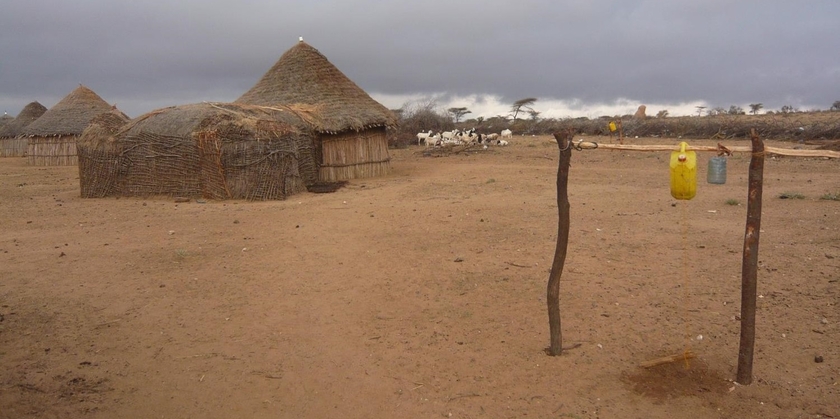

Regular handwashing is the single most effective prevention against diarrheal disease. However, handwashing rates are low in many developing countries, including Ethiopia. A handwashing promotion project in the Borena Zone of southern Ethiopia aimed to increase handwashing rates in communities through systematic behavior change strategies. The strategies applied, and especially the tippy tap promotion, proved to be more effective than a standard educational approach: 95% of intervention households were successfully motivated to construct a tippy tap. Three months after the intervention had ended, water and soap were present at the tippy tap in 50% - 80% of the households.

Project details

Context

Handwashing with soap efficiently prevents diarrhea, one of the leading causes of disease burden globally. As in many other developing countries, handwashing rates are low in Ethiopia. Increased handwashing rates are thus the goal of many hygiene projects run by governmental and non-governmental organizations. However, the effectiveness of these projects has seldom been verified. It is expected that systematic behavior change strategies are more effective than standard approaches, which have often been limited to awareness-raising and knowledge transfer.


Objectives

The main goal of this project was to promote handwashing with soap at key times in a rural area in southern Ethiopia by means of systematic behavior change strategies. Specific objectives were:

  • To assess current handwashing practices and the behavioral factors determining these practices.
  • To design, implement, and evaluate systematic behavior change strategies to promote handwashing.


Activities

Step 1 & 2: Identify, measure, and determine behavioral factors of handwashing:

  • Qualitative research was conducted to identify potential behavioral factors.
  • A baseline survey on handwashing practices and behavioral determinants of handwashing was conducted in 462 households in February and March 2012.
  • The behavioral factors influencing handwashing were specified by means of regression analyses. These were others’ behavior and others’ approval, confidence in performance, continuation and recovering, and impediments. In addition, observations suggested that a lack of handwashing infrastructure and forgetting to wash hands were major constraints on regular handwashing. 


Step 3: Select behavior change techniques (BCTs) and design behavior change strategies to promote handwashing:

  • Three BCTs expected to promote the key factors of handwashing were selected. These were (1) using memory aids and environmental prompts, (2) providing infrastructure, and (3) prompting public commitment. 
  • The BCTs were combined in two behavior change strategies, a tippy tap promotion and a public commitment session, and implemented in combination with a standard education approach.


Step 4: Implement and evaluate behavior change strategies:

  • The strategies’ effectiveness was assessed through a before-after control trial.
  • The behavior change strategies were implemented in three intervention villages by the local non-governmental organization, the Gayo Pastoral Development Initiative.
  • The strategies were compared to a control village that only received the standard education approach (an f-diagram exercise).
  • A follow-up survey on handwashing practices, behavioral determinants and the strategies’ evaluation was conducted in 514 households in February and March 2013.


Findings and conclusion

  • 95% of intervention households were successfully motivated to construct a tippy tap.
  • Three months after the intervention had ended, water and soap were present at the tippy tap in 50% - 80% of the households.
  • The systematic behavior change strategies, and especially the tippy tap promotion, changed behavior more successfully than the standard education approach.
  • This was because they successfully changed the critical behavioral factors of handwashing, especially others’ behavior, impediments, and remembering.

To increase effectiveness, handwashing interventions should be based on theory and driven by data.

Related publications

Extbase Variable Dump
array(2 items)
   publications => '7849,8225,8153' (14 chars)
   libraryUrl => '' (0 chars)
Extbase Variable Dump
array(3 items)
   0 => Snowflake\Publications\Domain\Model\Publicationprototypepersistent entity (uid=7849, pid=124)
      originalId => protected7849 (integer)
      authors => protected'Contzen, N.; Meili, I. H.; Mosler, H.-J.' (60 chars)
      title => protected'Changing handwashing behaviour in southern Ethiopia: a longitudinal study on
          infrastructural and commitment interventions
' (121 chars) journal => protected'Social Science and Medicine' (27 chars) year => protected2015 (integer) volume => protected124 (integer) issue => protected'' (0 chars) startpage => protected'103' (3 chars) otherpage => protected'114' (3 chars) categories => protected'handwashing; diarrhoea; respiratory diseases; theory-based interventions; ev
         idence-based interventions; population-tailored interventions; RANAS model;
         Ethiopia
' (160 chars) description => protected'Improved hand hygiene efficiently prevents the major killers of children und
         er the age of five years in Ethiopia and globally, namely diarrhoeal and res
         piratory diseases. Effective handwashing interventions are thus in great dem
         and. Evidence- and theory-based interventions, especially when matched to th
         e target population's needs, are expected to perform better than common prac
         tice. To test this hypothesis, we selected two interventions drawing on a ba
         seline questionnaire-study that applied the RANAS (Risk, Attitudes, Norms, A
         bilities, Self-regulation) approach and focused on the primary caregivers of
          households in four rural, water-scarce kebeles (smallest administrative uni
         ts of Ethiopia) in southern Ethiopia (<I>N</I>=462). The two interventions w
         ere tested in combination with a standard education intervention in a quasi-
         experiment, as follows: kebele 1, education intervention, namely an f-diagra
         m exercise, (<I>n</I>=23); kebele 2, education intervention and public-commi
         tment (<I>n</I>=122); kebele 3, education intervention and tippy-tap-promoti
         on (i.e. handwashing-station-promotion; <I>n</I>=150); kebele 4, education i
         ntervention, public-commitment and tippy-tap-promotion (<I>n</I>=113). In ke
         beles 3 and 4, nearly 100% of the households followed the promotion and inve
         sted material and time to construct for themselves a tippy-tap. Three months
          after intervention termination, the tippy-taps were in use with water and s
         oap being present in up to 83% of the households (kebele 4). Pre-post data a
         nalysis on self-reported handwashing revealed that the population-tailored i
         nterventions, and especially the tippy-tap-promotion, performed better than
         the standard education intervention. Tendencies in observed behaviour and a
         recently developed implicit self-measure pointed to similar results. Changin
         g people's hand hygiene is known to be a challenging task, especially in a w
         ater-scarce environment. The present project suggests not only to apply theo
         ry and evidence to impro...
' (2131 chars) serialnumber => protected'0277-9536' (9 chars) doi => protected'10.1016/j.socscimed.2014.11.006' (31 chars) uid => protected7849 (integer) _localizedUid => protected7849 (integer)modified _languageUid => protectedNULL _versionedUid => protected7849 (integer)modified pid => protected124 (integer)
1 => Snowflake\Publications\Domain\Model\Publicationprototypepersistent entity (uid=8225, pid=124) originalId => protected8225 (integer) authors => protected'Contzen,&nbsp;N.; Inauen,&nbsp;J.' (33 chars) title => protected'Social-cognitive factors mediating intervention effects on handwashing: a lo
         ngitudinal study
' (92 chars) journal => protected'Journal of Behavioral Medicine' (30 chars) year => protected2015 (integer) volume => protected38 (integer) issue => protected'6' (1 chars) startpage => protected'956' (3 chars) otherpage => protected'969' (3 chars) categories => protected'handwashing interventions; diarrhoea; social-cognitive factors; behaviour ch
         ange; mediation analysis; RANAS approach
' (116 chars) description => protected'Handwashing with soap effectively prevents diarrhoea, a leading cause of dea
         th in infants. Theory-based interventions are expected to promote handwashin
         g more successfully than standard approaches. The present article investigat
         es the underlying change processes of theory-based handwashing interventions
         . A nonrandomised field study compared a standard approach to two theory-bas
         ed interventions that were tailored to the target population, the inhabitant
         s of four villages in southern Ethiopia (<em>N</em> = 408). Data were coll
         ected before and after interventions by structured interviews and analysed b
         y mediation analysis. In comparison to the standard approach (i.e., educatio
         n only), education with public commitment and reminder was slightly more eff
         ective in changing social-cognitive factors and handwashing. Education with
         an infrastructure promotion and reminder was most effective in promoting han
         dwashing through enhancing social-cognitive factors. The results confirm the
          relevance of testing interventions' underlying change processes.
' (1053 chars) serialnumber => protected'0160-7715' (9 chars) doi => protected'10.1007/s10865-015-9661-2' (25 chars) uid => protected8225 (integer) _localizedUid => protected8225 (integer)modified _languageUid => protectedNULL _versionedUid => protected8225 (integer)modified pid => protected124 (integer)
2 => Snowflake\Publications\Domain\Model\Publicationprototypepersistent entity (uid=8153, pid=124) originalId => protected8153 (integer) authors => protected'Contzen,&nbsp;N.; Mosler,&nbsp;H.-J.' (36 chars) title => protected'Identifying the psychological determinants of handwashing: results from two
         cross-sectional questionnaire studies in Haiti and Ethiopia
' (135 chars) journal => protected'American Journal of Infection Control' (37 chars) year => protected2015 (integer) volume => protected43 (integer) issue => protected'8' (1 chars) startpage => protected'826' (3 chars) otherpage => protected'832' (3 chars) categories => protected'diarrheal disease; cholera; psychological predictors; regression analysis' (73 chars) description => protected'<em>Background:</em> Diarrheal disease kills around 760,000 infants every ye
         ar. Many of these deaths could have been prevented by handwashing with soap.
          However, the whole range of psychological factors encouraging handwashing i
         s not yet identified and handwashing campaigns are often limited to awarenes
         s-raising and education. The purpose of this article was to identify the psy
         chological determinants of handwashing in Haiti (study 1) and Ethiopia (stud
         y 2).<br /><em>Methods:</em> Data were collected cross-sectionally by admini
         stering face-to-face interviews with the primary caregiver in a participatin
         g household (N<sub>Haiti</sub> = 811; N<sub>Ethiopia</sub> = 463). Hiera
         rchical multiple regression analyses were performed on self-reported handwas
         hing.<br /><em>Results:</em> In both countries, risk factors—meaning aware
         ness and health knowledge—accounted for only 11%-19% of variance in handwa
         shing and were not consistently associated with handwashing. The inclusion o
         f additional factor-groups, namely attitude, norm, ability, and self-regulat
         ion factors, led to significant increases in explained variance (P ≤ .01),
          accounting for 25%-44% of additionally explained variance. The attitude fac
         tor disgust, the norm factor, the ability factors motivational self-efficacy
          and perceived impediments, and the self-regulation factors coping planning
         and commitment emerged as especially relevant.<br /><em>Conclusions:</em> Ha
         ndwashing campaigns should focus especially on attitudes and norms and not o
         nly on risk.
' (1532 chars) serialnumber => protected'0196-6553' (9 chars) doi => protected'10.1016/j.ajic.2015.04.186' (26 chars) uid => protected8153 (integer) _localizedUid => protected8153 (integer)modified _languageUid => protectedNULL _versionedUid => protected8153 (integer)modified pid => protected124 (integer)
Contzen, N.; Meili, I. H.; Mosler, H.-J. (2015) Changing handwashing behaviour in southern Ethiopia: a longitudinal study on infrastructural and commitment interventions, Social Science and Medicine, 124, 103-114, doi:10.1016/j.socscimed.2014.11.006, Institutional Repository
Contzen, N.; Inauen, J. (2015) Social-cognitive factors mediating intervention effects on handwashing: a longitudinal study, Journal of Behavioral Medicine, 38(6), 956-969, doi:10.1007/s10865-015-9661-2, Institutional Repository
Contzen, N.; Mosler, H.-J. (2015) Identifying the psychological determinants of handwashing: results from two cross-sectional questionnaire studies in Haiti and Ethiopia, American Journal of Infection Control, 43(8), 826-832, doi:10.1016/j.ajic.2015.04.186, Institutional Repository

Contact

Dr. Nadja Contzen Group leader, Group: EHP Tel. +41 58 765 6892 Send Mail

Project data

Duration: January 2012 to September 2013
 

Partners

  • Oxfam America (OA)
  • Gayo Pastoral Development Initiative  (GPDI)


Funding: Oxfam America