Department Environmental Social Sciences

How to handle hospital wastewater
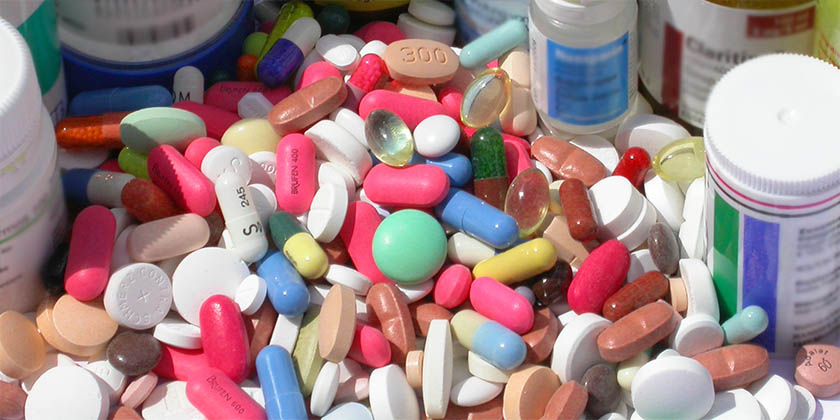
Micropollutants  (e.g. pharmaceuticals) are increasingly detected in water bodies: their elimination in conventional wastewater treatment plants is incomplete. Pharmaceuticals can be removed already at the source by implementing technical measures in hospitals, or by collecting separate waste streams. Such options can substantially reduce the load of micropollutants. This project focused on two exemplary cantonal hospitals in Switzerland, a general hospital and a psychiatric clinic. Multi-Criteria Decision Analysis (MCDA) was used to include 26 stakeholders in the decision making process. The results indicate that acceptance of point source measures in hospitals is potentially high if there is a reasonable trade-off between pharmaceutical removal and costs.

Publications

MCDA for Hospital Wastewater

Extbase Variable Dump
array(2 items)
   publications => '6652,6914' (9 chars)
   libraryUrl => '' (0 chars)
Extbase Variable Dump
array(2 items)
   0 => Snowflake\Publications\Domain\Model\Publicationprototypepersistent entity (uid=6652, pid=124)
      originalId => protected6652 (integer)
      authors => protected'Lienert, J.; Koller, M.; Konrad, J.; McArdell, C. S
         .; Schuwirth, N.
' (97 chars) title => protected'Multiple-criteria decision analysis reveals high stakeholder preference to r
         emove pharmaceuticals from hospital wastewater
' (122 chars) journal => protected'Environmental Science and Technology' (36 chars) year => protected2011 (integer) volume => protected45 (integer) issue => protected'9' (1 chars) startpage => protected'3848' (4 chars) otherpage => protected'3857' (4 chars) categories => protected'' (0 chars) description => protected'Point-source measures have been suggested to decrease pharmaceuticals in wat
         er bodies. We analyzed 68 and 50 alternatives, respectively, for a typical S
         wiss general and psychiatric hospital to decrease pharmaceutical discharge.
         Technical alternatives included reverse osmosis, ozonation, and activated ca
         rbon; organizational alternatives included urine separation. To handle this
         complex decision, we used Multiple-Criteria Decision Analysis (MCDA) and com
         bined expert predictions (e.g., costs, pharmaceutical mass flows, ecotoxicol
         ogical risk, pathogen removal) with subjective preference-valuations from 26
          stakeholders (authorities, hospital-internal actors, experts). The general
         hospital contributed ca. 38% to the total pharmaceutical load at the wastewa
         ter treatment plant, the psychiatry contributed 5%. For the general hospital
         , alternatives removing all pharmaceuticals (especially reverse osmosis, or
         vacuum-toilets and incineration), performed systematically better than the s
         tatus quo or urine separation, despite higher costs. They now require closer
          scrutiny. To remove X-ray contrast agents, introducing roadbags is promisin
         g. For the psychiatry with a lower pharmaceutical load, costs were more crit
         ical. Stakeholder feedback concerning MCDA was very positive, especially bec
         ause the results were robust across different stakeholder-types. Our MCDA re
         sults provide insight into an important water protection issue: implementing
          measures to decrease pharmaceuticals will likely meet acceptance. Hospital
         point-sources merit consideration if the trade-off between costs and pharmac
         eutical removal is reasonable.
' (1626 chars) serialnumber => protected'0013-936X' (9 chars) doi => protected'10.1021/es1031294' (17 chars) uid => protected6652 (integer) _localizedUid => protected6652 (integer)modified _languageUid => protectedNULL _versionedUid => protected6652 (integer)modified pid => protected124 (integer)
1 => Snowflake\Publications\Domain\Model\Publicationprototypepersistent entity (uid=6914, pid=124) originalId => protected6914 (integer) authors => protected'Schuwirth, N.; Reichert, P.; Lienert, J.' (55 chars) title => protected'Methodological aspects of multi-criteria decision analysis for policy suppor
         t: a case study on pharmaceutical removal from hospital wastewater
' (142 chars) journal => protected'European Journal of Operational Research' (40 chars) year => protected2012 (integer) volume => protected220 (integer) issue => protected'2' (1 chars) startpage => protected'472' (3 chars) otherpage => protected'483' (3 chars) categories => protected'decision analysis; multi-attribute utility theory; elicitation; uncertainty
         modeling; sensitivity analysis; source control
' (122 chars) description => protected'Decision making in public and political contexts can be complex. Multi-attri
         bute value/utility theory (MAVT/MAUT) can support such decision processes by
          providing a transparent framework that helps focusing on objectives and cor
         responding degrees of achievement by different alternatives.<BR/> Eliciting
         preferences with MAVT/MAUT can be time consuming and cognitively challenging
         . Therefore, it might not be feasible to elicit full preference functions wi
         th standard methods. To deal with this problem, we suggest a simplified elic
         itation procedure that combines (a) the elicitation of values instead of uti
         lities at lower-levels of the objectives hierarchy and conversion to utiliti
         es to consider risk attitudes at appropriate higher levels, (b) the use of l
         inear value functions for sub-objectives with minor effects on the overall v
         alue, and (c) sensitivity analyses to check the robustness of results regard
         ing these assumptions and the elicitation process in general. Furthermore, w
         e developed a modified Swing procedure ("Reversed Swing2) to elicit weights
         for cases in which the hypothetical alternatives of the conventional Swing t
         echnique are unrealistic.<BR/> We applied this procedure to a case study on
         pharmaceutical removal from wastewater of a typical Swiss hospital involving
          13 stakeholders. Aim of the interdisciplinary research group was to assess
         a large bundle of combinations of novel point source measures. The ultimate
         policy objective was to develop consensus solutions which are acceptable to
         all important stakeholder groups. We hope that the suggested simplified proc
         edure stimulates the application of transparent and conceptually satisfying
         decision support methods in environmental management, which is needed to jus
         tify policy decisions to the public.
' (1784 chars) serialnumber => protected'0377-2217' (9 chars) doi => protected'10.1016/j.ejor.2012.01.055' (26 chars) uid => protected6914 (integer) _localizedUid => protected6914 (integer)modified _languageUid => protectedNULL _versionedUid => protected6914 (integer)modified pid => protected124 (integer)
Lienert, J.; Koller, M.; Konrad, J.; McArdell, C. S.; Schuwirth, N. (2011) Multiple-criteria decision analysis reveals high stakeholder preference to remove pharmaceuticals from hospital wastewater, Environmental Science and Technology, 45(9), 3848-3857, doi:10.1021/es1031294, Institutional Repository
Schuwirth, N.; Reichert, P.; Lienert, J. (2012) Methodological aspects of multi-criteria decision analysis for policy support: a case study on pharmaceutical removal from hospital wastewater, European Journal of Operational Research, 220(2), 472-483, doi:10.1016/j.ejor.2012.01.055, Institutional Repository

Background

Micropollutants (e.g. pharmaceuticals) are increasingly detected in water bodies: their elimination in conventional wastewater treatment plants (WWTP) is incomplete. Mostly, we are facing considerable uncertainty about aquatic ecosystem effects, with some exceptions. For instance, negative effects on fish reproduction have been linked to the exposure of estrogens (female hormones). In such a complex decision situation with high uncertainty and many stakeholders involved, decisions cannot be made by scientists alone, but participatory and multidisciplinary approaches are needed. For instance, technologies to eliminate micropollutants at WWTP are expensive, and society will have to decide, whether potential risks justify the high costs.

Micropollutants can be reduced by new technologies at WWTP or source control. Hospitals that are important point sources could be one target of measures. Options include treating all hospital wastewater or partial treatment (e.g. oncology wards to remove cytostatics (anti-cancer drugs)). Moreover, only the urine could be collected and treated separately, since the urine contains ca. 60–70% of the medicals that are excreted by humans. Urine source separation has been intensively researched in the project Novaquatis. At European level, the reduction of pharmaceutical residues from wastewater has been researched in the projects PILLS and noPILLS.

This project focused on a relevant, well-defined decision situation with two exemplary Swiss case studies: a cantonal hospital and a cantonal psychiatric clinic. MCDA was used to combine expert predictions (e.g., costs, pharmaceutical mass flows, ecotoxicological risk, pathogen removal) with the subjective preferences of 26 stakeholders. The example also served to study more general research questions related to the practical application of MCDA in environmental decision problems.

Approach

In the cantonal hospital, 68 technical and organizational options were analyzed, and 50 in the psychiatric clinic. The organizational alternatives included the separate collection of urine, the technical measures e.g. treatment of the wastewater with activated carbon, ozonation, or reverse osmosis. Expert predictions were used to estimate the performance of each alternative, e.g. concerning pathogen removal, reduction of the pharmaceutical load and ecotoxicological risk as well as the associated costs. The predictions also included estimates of the effort for nurses and patients, and public perception.

Interviews with 26 stakeholders from the hospital and with representatives of the authorities were carried out. They were asked to state their preferences and give valuations concerning important trade-offs in this decision. The standard method to elicit weights was modified by introducing a ‘Reversed-Swing Method’ that seemed more realistic for this case. The MCDA procedure was a compromise between time demand and elaborateness; which was tested with careful sensitivity analyses.

Main results

While the general hospital contributed substantially to the total load of pharmaceuticals that arrives at the communal wastewater treatment plant, the contribution from the psychiatric clinic was relatively small. This indicates that careful analysis of each specific case is required. The Top-100 most heavily used pharmaceuticals also strongly differed between the two hospitals, with only 37 overlapping pharmaceuticals. Moreover, only a part of the Top-100 pharmaceuticals actually contributed to the environmental risk of the emitted mixture of pharmaceuticals; specifically four pharmaceuticals (amiodarone, ritonavir, clotrimazole, and diclofenac) contributed most strongly to this risk. The load, i.e. the amount of consumed pharmaceuticals is thus insufficient to predict the environmental risk.

When comparing the different options for pharmaceutical removal with MCDA in the general hospital, those technical options that remove the total load of pharmaceuticals performed systematically better than cheaper options, which can only partially removal the load of pharmaceuticals. The outcome was less clear for the psychiatric clinic. The results concerning the best-performing options were very stable across stakeholders, even though individual people did have different preferences. Stakeholder involvement with MCDA proved promising, and the feedback of our interview partners was generally very positive. The results indicate that the protection of water resources is of high importance. Point source options at hospitals can be very well accepted if there is a reasonable trade-off between pharmaceutical removal and costs.


Team

PD Dr. Judit Lienert Group Leader, Group: DA Tel. +41 58 765 5574 Send Mail
Dr. Christa McArdell Senior scientist / group leader Tel. +41 58 765 5483 Send Mail

Prof. Dr. Beate Escher
Helmholtz Zentrum für Umweltforschung UFZ
Send Mail

Dr. Nele Schuwirth Head of Department and Group Leader (she/her) Tel. +41 58 765 5528 Send Mail