Department Sanitation, Water and Solid Waste for Development
Sanitation, Water and Solid Waste Management in Humanitarian Contexts
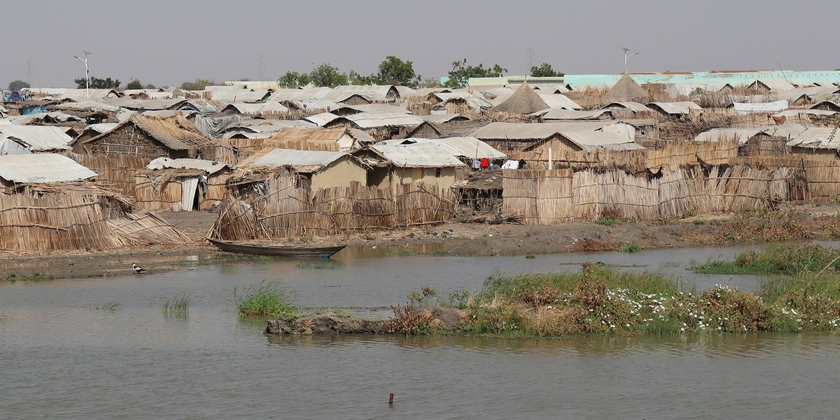
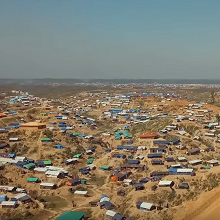
The number of humanitarian and protracted crises, primarily driven by conflict and climate change, has steadily increased in recent years. It is vital to provide adequate sanitation, water and solid waste services throughout a crisis, from its onset to long-term recovery, in order to meet essential needs and protect dignity as well as human and environmental health. Sandec leads applied research and capacity strengthening projects along the humanitarian-development nexus in the areas of sanitation, water and solid waste management. Our global, long-standing partnerships with key humanitarian institutions and initiatives, such as the Swiss Humanitarian Aid (SDC-HA), the UNHCR (via the Geneva Technical Hub), the Global WASH Cluster, the Global Task Force on Cholera Control (GTFCC) and Sanihub, help ensure that progress towards protecting human and environmental health in humanitarian settings is informed by new knowledge.
Sandec’s work in humanitarian contexts focuses on the areas of sanitation, solid waste management and drinking water services. Relevant links and resources can be found in the following drop-down menus.
Sanitation
Sandec is contributing to the evidence-based planning, design and delivery of safe, resilient and inclusive sanitation solutions in humanitarian contexts with practice-oriented resources such as the Compendium of Sanitation Technologies in Emergencies and Sanihub. To learn more, please check the two following pages:
Key practice-oriented resources include:
- Compendium of sanitation technologies in emergencies
- Guideline on Lime treatment of faecal sludge for humanitarian contexts
- Guideline on Soak pit design in emergencies
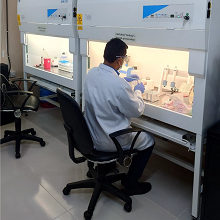
- User manual for the Faecal Sludge Field Laboratory
Drinking Water Services
Sandec research on drinking water services is primarily focused on development settings. However, some low-cost innovations may be useful to deliver safe drinking water in humanitarian contexts as well. For further details and specific project examples, please check the following project pages:
Solid Waste
Solid waste management is a critical yet often overlooked component of humanitarian response. Sandec research and outputs such as the Humanitarian Aid Solid Waste Assessment and Improvement (HAWAI) Guidelines and the Compendium of solid waste management in humanitarian contexts can help design effective, environmentally friendly solid waste management systems in crisis and development settings. For further details, check the dedicated page: Solid waste management in humanitarian contexts.
Key resources include:
- Compendium of solid waste management in humanitarian contexts
- Humanitarian Aid Solid Waste Assessment and Improvement (HAWAI) Guidelines
- Guidelines for the Safe Disposal of Solid Waste in Humanitarian Contexts
- Is biogas a feasible option?
- Anaerobic Digestion (AD) rapid assessment tool for biogas production potential
The Massive Open Online Course (MOOC) on municipal solid waste management in developing countries also includes modules that may be applicable to humanitarian or recovery settings: https://www.coursera.org/learn/solid-waste-management/. The specific module can also be accessed on YouTube here: https://www.youtube.com/watch?v=bg7NJflzMl4



Partners