The latest news from Eawag

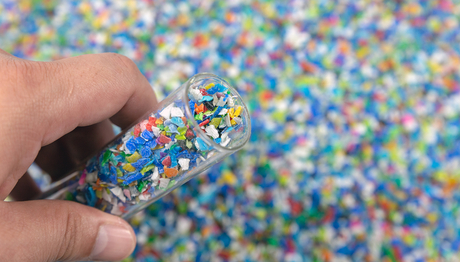
As evidence mounted that excessive manganese intake can damage the nervous system, particularly in children and infants, the WHO lowered the guideline value in 2021. (Photo: iStock)
News
Manganese risk in groundwater affects 200 million people ...
July 8, 2026

Eawag researchers have produced a global risk map for manganese in groundwater, which can cause health problems in excessive concentrations.

The Hagneck power station, just before Lake Biel, has been regarded as exemplary in minimising the ecological impact of hydropower since it was re-licensed and attracts many visitors. Elsewhere, however, this modernisation is stalling. (Image: Tourism Biel Seeland, S. Weber)
News
A look back at water policy in 2025
July 6, 2026

The current heatwave makes it easy to forget that the first half of 2025 was already marked by severe drought and that snow reserves from the winter were low. A review of water policy developments in 2025 shows that, rather than the availability of water, the Federal Parliament once again focused on the use of hydropower. On the subject of water quality, discussions centred on setting limit values for PFAS and calls for a simplified authorisation process for pesticides.

Groundwater is a resource that is mostly invisible – except when, as here, it comes to the surface in a well chamber. This is probably one of the reasons why its protection is often given too little consideration. (Photo: Eawag)
News
Groundwater requires more than just specialist ...
July 2, 2026

Groundwater, our most important source of drinking water, faces a wide range of threats. A survey of experts shows that: the challenges are well known. However, effective protection requires better cooperation, more rigorous implementation of existing measures and long-term political commitment.

Green roofs, like the one on the Ethnographic Museum in Budapest, are havens of biodiversity and contribute positively to the urban climate. (Photo: Kilian Perrelet)
News
Designing cities with and for biodiversity
June 29, 2026

When planning blue-green infrastructure, greater emphasis must be placed on biological aspects. Systems with higher biodiversity function more effectively.

Fishermen at Shaying river in China. Understanding the diversity and composition of fish communities, and the human impacts on them, is not only relevant from a scientific perspective, but also of economic/cultural relevancy, as in many riverine systems, fish and fisheries is economically important. (Photo © Florian Altermatt/UZH/Eawag)
News
Environmental DNA Reveals Impact of Climate and Humans ...
June 24, 2026

A global analysis of fish biodiversity using environmental DNA (eDNA) reveals how human activity and climate influence biodiversity patterns in river ecosystems. An international research team led by the University of Zurich, Eawag and Yunnan University has found that in warmer climates biodiversity accumulation is more pronounced as river catchment size increases, while human activities weaken this relationship.

Bengaluru, India – a city on the cusp of a sustainable water future. (Photo: Christian Binz)
News
Rethinking wastewater management
June 8, 2026

An Eawag project in Bengaluru, India, is opening up new ways to respond to droughts and water scarcity. The focus is on the decentralised reuse of treated wastewater. Technological solutions alone cannot resolve the complex water challenges. Social aspects must be considered, as well.

Copyright: Jess MacArthur, Eawag
News
Supply of safe drinking water services reduces risk of ...
June 3, 2026

Access to safe drinking water, as defined by the SDGs, modestly protects children from diarrheal diseases. An Eawag study shows which service elements matter most.

Mission of Switzerland to the EU
LinkedIn
Successful Event in Brussels
June 1, 2026

Together with SwissCore and the Mission of Switzerland to the EU, Eawag co-hosted the Swiss Science Briefing “Eyes on Water: Space, Science and Resilience to Water” to discuss the central topic of water and water resilience with European partners.

Photo: Alessandro Della Bella, Eawag
News
Martin Ackermann reappointed
May 28, 2026

The Federal Council reappoints Martin Ackermann as Eawag director for another term.

Restoring wetland forests promotes biodiversity and benefits both mankind and wildlife. (Photo: Christoph Vorburger, Eawag)
News
Greater biodiversity through the restoration of wetland ...
May 12, 2026

A guide helps project leaders restore wetland forests to promote biodiversity and combat climate change.

Workshop ‘Drawing out tensions: how cartoons can change Science–Policy dialogues’. (Foto: Peter Penicka)
When art and science reframe questions together
May 8, 2026

The Beyond Communication symposium held on 5 May at Eawag demonstrated how art and science challenge and enrich one another, and how they work together to develop new questions – providing impetus for dialogue between research, society and politics.

LinkedIn
Astrid Stubbusch discovers hunting bacteria
April 28, 2026

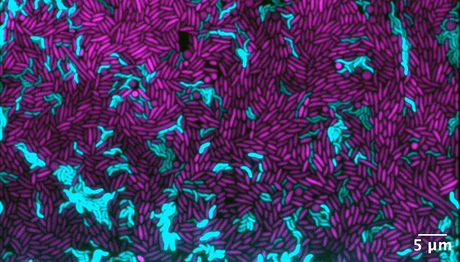
From a very young age, Astrid Stubbusch wanted to thoroughly explore life in all its forms. In her thesis she showed the astounding strategies that bacteria develop to find food. She has now been awarded the Prix Schläfli for Biology for this work.

Photo: Aquatis Aquarium-Vivarium de Lausanne
LinkedIn
Many European freshwater fish are threatened
April 16, 2026

Nearly six in ten native European freshwater fish species are now of elevated conservation concern. This is revealed in the Red List published by the International Union for Conservation of Nature (IUCN).

The study is based, among other things, on measurements taken in the Hardwald area near Basel, where the groundwater is replenished by pre-treated water from the Rhine and around 15 million cubic metres of drinking water are extracted annually for the entire region. (Photo: Hardwasser Ltd)
News
New method for monitoring groundwater recharge
April 14, 2026

Artificial groundwater recharge is one way of preparing for increasingly frequent dry spells. The length of time the water spends in the ground between infiltration and extraction is crucial to its quality. A study shows that environmental tracers, which enter rivers via the cooling water from nuclear power stations, can be used to determine this residence time.

Satellite image of Govind Ballabh Pant Sagar, India’s largest artificial lake. (Image: European Earth observation programme Copernicus Global Land Service)
News
Coronavirus lockdowns: lakes became clearer worldwide
April 9, 2026

During the COVID-19 pandemic, the world came to a standstill – and many lakes became measurably clearer. A global study shows that lockdowns caused water turbidity in lakes worldwide to drop sharply, particularly in lakeshore regions and river mouths, as a result of reduced industry, traffic and leisure activities.