
News Detail
How local materials and climate shape optimal vermifilter design
March 30, 2026 |
Vermifiltration is a non-sewered sanitation technology that uses a symbiotic relationship between earthworms, often Eisenia fetida, and microorganisms, to treat wastewater. The earthworms not only break down organic matter, which is then more easily available to the microorganisms, but they also aerate the vermifilter via their burrowing activity and this stimulates bacterial productivity. This technology has various advantages: it is low-cost and robust, requires minimal to no energy use and can be built with local, easily available materials (compost, biochar, gravels, sand, etc.). Additionally, treated wastewater can be used to close water and resource loops.
Comparison of vermifilters in India and Switzerland
“To understand how local context influences vermifilter design and to compare findings with those observed in Switzerland, I visited vermifilter facilities in India”, says Kayla Coppens, PhD student at Eawag’s department of Sanitation, Water and Solid Waste for Development (Sandec) and the University of Geneva.
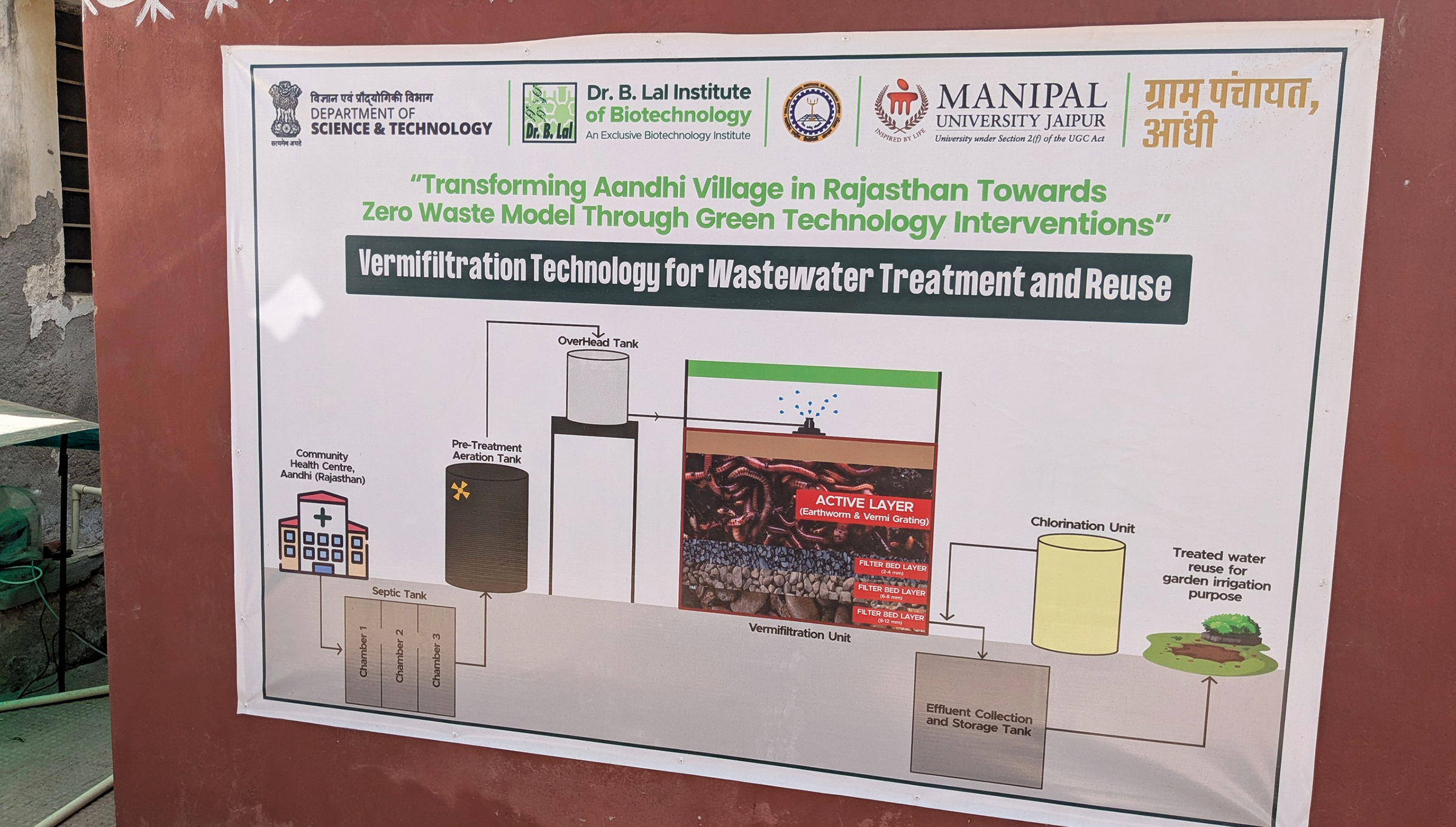
Because vermifiltration systems use locally available materials, different filter media are used at the facilities in Geneva, Switzerland, and in Jaipur and Pune, India. The Geneva and Jaipur systems use vermicompost as the bedding material, while in Pune, the bedding layer utilises coconut chips. In Jaipur, tests combining coconut biochar and vermicompost as the filter media have also been implemented.
The three vermifilters also differed in pre-treatment approaches. In Geneva, the vermifilter was installed without additional pre-treatment, while the one in Jaipur uses settling tanks to decrease solid loads, and the vermifilter in Pune uses grit chambers for this. Solid load variations influenced dispersion system choices. In Jaipur and Pune, low solid loading allowed for sprinkler systems, whereas in Geneva, higher solid loads required a shredding pump and 10 mm plumbing tubes.
The differences in filter materials, climate conditions, and pre-treatment approaches required adjustments to operational parameters. For example, the significantly higher temperatures in Jaipur and Pune compared to Geneva influenced how much wastewater could be applied to the filters. Despite these variations, all three systems achieved comparable treatment performance, demonstrating that vermifiltration can be successfully adapted to different local contexts.
No “one size fits all” vermifilter design
“My key takeaway is that using local resources and expertise is crucial to the development of vermifilters, and that there is no single optimal vermifilter configuration”, explains Coppens. Climate, for example, heavily influences the vermifilter design. The facilities in India have to take the high temperatures and humidity of the local climate into consideration, while in Switzerland the challenge is keeping the cold out. Future research should identify effective design and operational configurations for specific contexts.
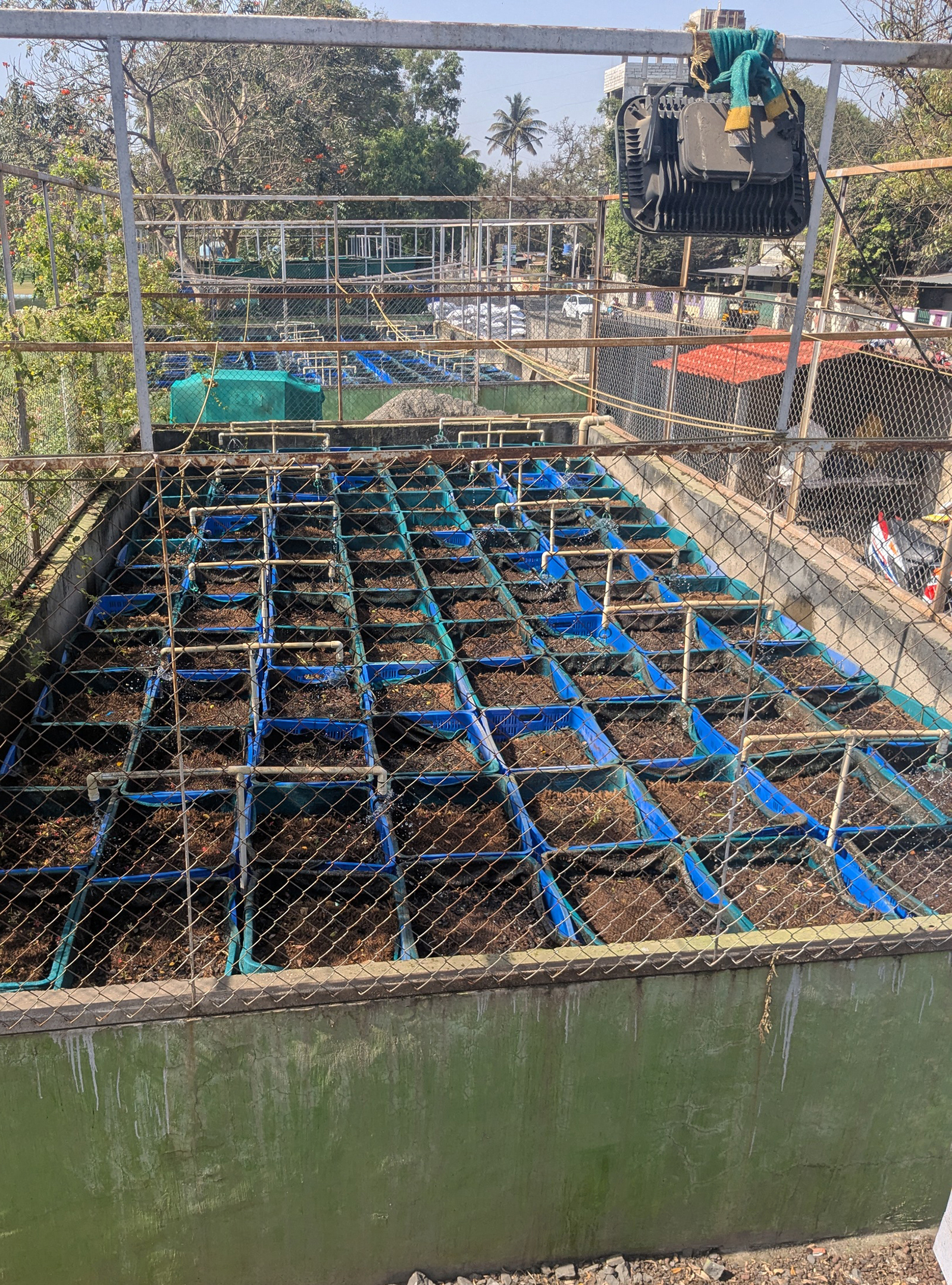
Vermifilter installation in Pune, India (Photo: Kayla Coppens, Eawag).
Funding / Partnerships
Eawag (This study was funded also by UniGE and the SACAD (Société Académique de Genève).
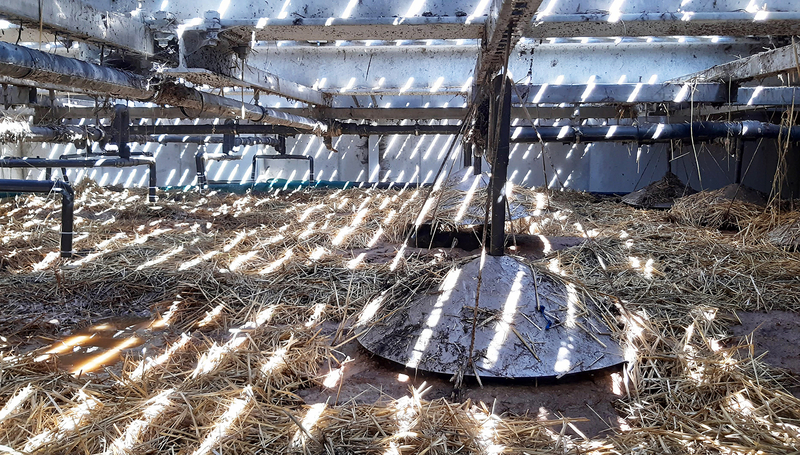
Cover picture: Vermifilter in Geneva, Switzerland (photo: Kayla Coppens, Eawag)
Original publication
Documents
Arora, S. and S. Saraswat, Vermifiltration as a natural, sustainable and green technology for environmental remediation: A new paradigm for wastewater treatment process. Current Research in Green and Sustainable Chemistry, 2021. 4.
https://doi.org/10.1016/j.crgsc.2021.100061
Coppens, K., Wackernagel, I., Stoll, S., & Strande, L. (2026). Worms in the city: can vermifiltration scale for treatment of domestic wastewater in urban contexts? [Manuscript submited for publication].
Coppens, K., & Strande, L. (2025). Optimal Vermifilter Design: Insights From Three Full-scale Installations. Sandec News, 26, 22.
Coppens, K., Stoll, S., & Strande, L. (2024). Nitrogen Removal in a Vermifilter Treating Urban Domestic Wastewater. Sandec News, 25, 26-27.