News Detail

Six million euros for smarter cities with clean water

August 27, 2025 | Andri Bryner

The water research institute Eawag and the University of Applied Sciences and Arts Northwestern Switzerland are part of the new EU project UrbanM2O. It is led by the Danish Technical University DTU in Copenhagen. The aim of the six-million-euro project is to develop monitoring and modelling-based solutions to combat water pollution in cities – an issue that is becoming increasingly important with the expansion of sponge cities.

"First you need to know when, where, how much water is flowing and, above all, what its quality is," says environmental engineer Lena Mutzner, head of the group “stormwater quality and reuse” at Eawag. This requires new sensors, intelligent data management and adaptable digital twins. Only then, according to Mutzner, can cities plan risk-based water quality management and ultimately protect public health and the environment by implementing these plans. If, for example, road runoff is simply discharged into the nearest body of water or seeps into the groundwater without being monitored, it can contribute to pollution there, explains Mutzner's colleague Miriam Langer from the University of Applied Sciences and Arts Northwestern Switzerland and Eawag. "In this way, a well-intentioned solution such as the sponge city suddenly creates new problems. We want to avoid that," says the ecotoxicologist.
Pioneering work but also practical guidance

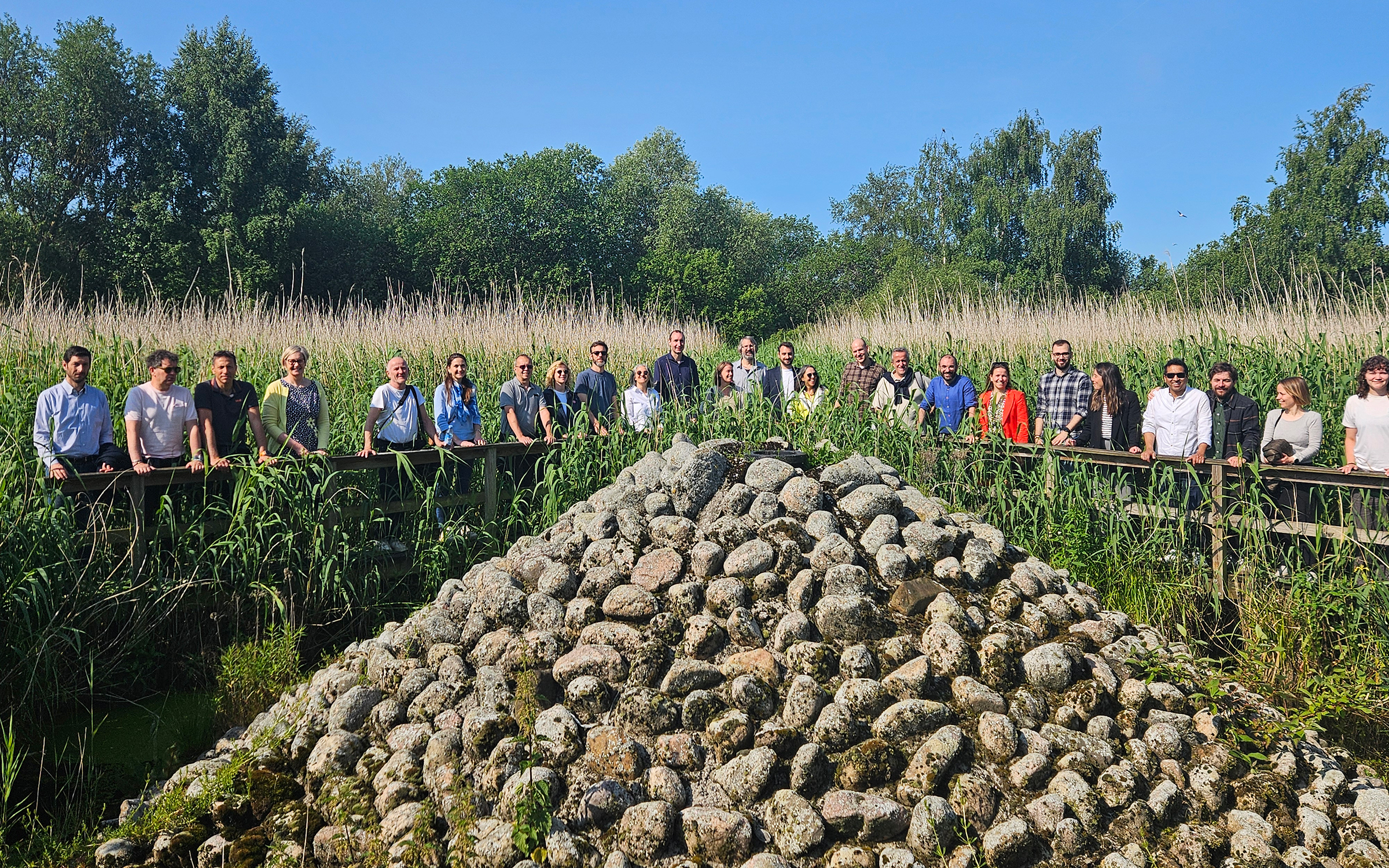
"Pioneering Zero-Pollution Water Systems for Healthier Cities" is the motto of the UrbanM2O consortium, which has 20 partners from 10 countries. These include not only research institutions, but also municipalities, water authorities, and companies. In Switzerland, for example, the City of Zurich's Department of Waste Management and Recycling (ERZ) and the Swiss Water and Wastewater Professionals Association (VSA) are on board as practical partners. The participants want to develop intelligent sensors that use AI to improve water quality monitoring. This involves setting up data exchange systems and processing the data in flexible models known as "Digital twins" – virtual versions of urban water systems. These twins will help identify pollution problems and plan solutions, especially in light of climate change. "We also want to support the authorities with practical guidelines on how to better monitor and maintain their existing systems," says project coordinator Luca Vezzaro from DTU.

UrbanM2O is funded by the EU with five million euros through the Horizon Europe program. In addition, the Swiss State Secretariat for Education, Research, and Innovation (SERI) is contributing one million euros. A project website is currently under construction. A kick-off workshop took place in Copenhagen in June: UrbanM20: New Horizon Europe Project - Water Europe
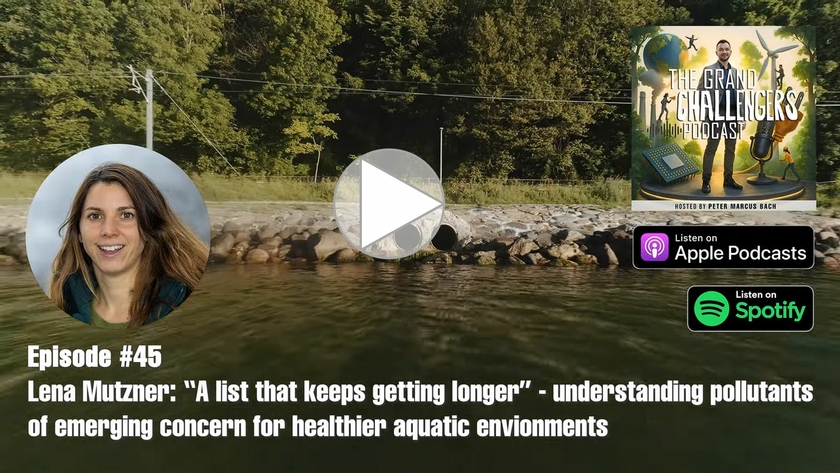
Podcast (7/2025 in English) on the quality of rainwater with Peter Marcus Bach (formerly Eawag) and Lena Mutzner on LinkedIn: "There is always something new to monitor, but the list of pollutants of concern is getting longer and longer! How on earth can we deal with this?" Full length on Spotify, Apple Podcasts or here.

Technical article

Extbase Variable Dump
array(3 items)
   publications => '31280' (5 chars)
   libraryUrl => '' (0 chars)
   layout => '0' (1 chars)
Extbase Variable Dump
array(1 item)
   0 => Snowflake\Publications\Domain\Model\Publicationprototypepersistent entity (uid=31280, pid=124)
      originalId => protected31280 (integer)
      authors => protected'Mutzner, L.; Zhang, K.; Luthy, R. G.; Arp, H. 
         P. H.; Spahr, S.
' (102 chars) title => protected'Urban stormwater capture for water supply: look out for persistent, mobile a
         nd toxic substances
' (95 chars) journal => protected'Environmental Science: Water Research and Technology' (52 chars) year => protected2023 (integer) volume => protected9 (integer) issue => protected'' (0 chars) startpage => protected'3094' (4 chars) otherpage => protected'3102' (4 chars) categories => protected'' (0 chars) description => protected'Urban stormwater was traditionally managed for flood control and property pr
         otection. But this view is changing as urban stormwater is increasingly reco
         gnized as an underused water resource. As cities implement stormwater captur
         e, treatment, and use practices, there is a growing need to address water qu
         ality criteria beyond traditional pollutants such as nutrients, total suspen
         ded solids, pathogens, and metals. Current use practice and regulations are
         lacking on the occurrence of persistent, mobile and toxic (PMT) and very per
         sistent, very mobile (vPvM) organic substances. These substances are poorly
         removed in conventional stormwater treatment systems, <em>e.g.</em>, urban b
         lue-green infrastructure, and, thus, may pose a risk when urban runoff is us
         ed to augment drinking water sources or discharged to surface waters. We rev
         iewed 97 stormwater monitoring studies and identified 49 PMT/vPvM substances
          detected in urban stormwater. Although detection does not equate with risk,
          this highlights the potential importance of urban stormwater as a source of
          PMT/vPvM substances released to water resources. There is a lack of surveil
         lance data on PMT/vPvM substances in urban stormwater and their fate in stor
         mwater control measures, which hinders reliable risk assessments of stormwat
         er capture. Unified guidelines are needed to (i) monitor PMT/vPvM substances
          in urban stormwater runoff, (ii) assess the human and environmental risks P
         MT/vPvM substances may pose for urban stormwater capture and use, and (iii)
         establish improved stormwater management and use criteria to ensure safe sto
         rmwater capture for water supply.
' (1629 chars) serialnumber => protected'2053-1400' (9 chars) doi => protected'10.1039/D3EW00160A' (18 chars) uid => protected31280 (integer) _localizedUid => protected31280 (integer)modified _languageUid => protectedNULL _versionedUid => protected31280 (integer)modified pid => protected124 (integer)
Mutzner, L.; Zhang, K.; Luthy, R. G.; Arp, H. P. H.; Spahr, S. (2023) Urban stormwater capture for water supply: look out for persistent, mobile and toxic substances, Environmental Science: Water Research and Technology, 9, 3094-3102, doi:10.1039/D3EW00160A, Institutional Repository

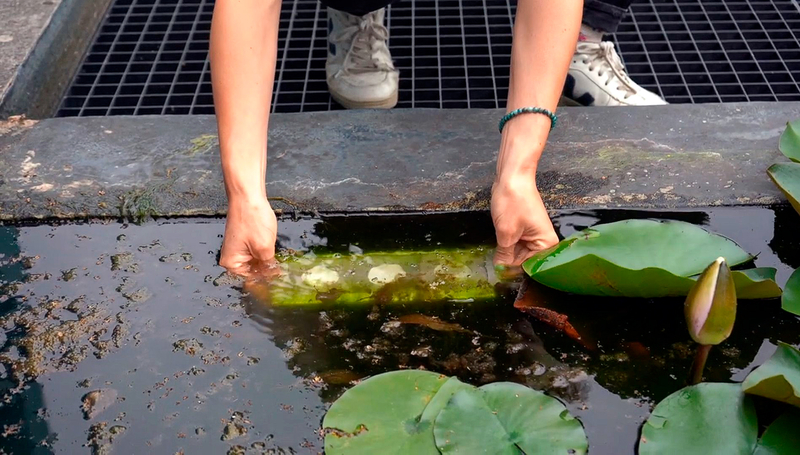
Cover picture: Passive samplers can provide valuable data for certain water monitoring applications at low cost. (photo: Andri Bryner, Eawag)