The latest news from Eawag

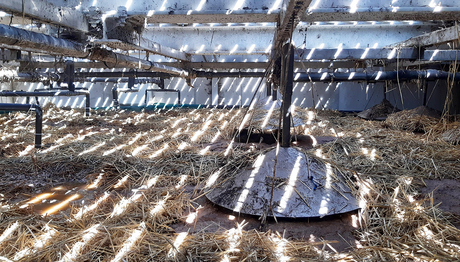
Vermifilter in Geneva, Switzerland (Photo: Kayla Coppens, Eawag)
News
How local materials and climate shape optimal ...
March 30, 2026

The sanitation objective of Sustainable Development Goal 6, sanitation for all, is off-track and far from being completed by 2030. Vermifiltration could help address this gap: The nature-based sanitation management system shows increasing promise globally because of its low cost. Researchers at Eawag’s Sandec department visited vermifilter installations in India and Switzerland to examine how local differences influence their optimal design.

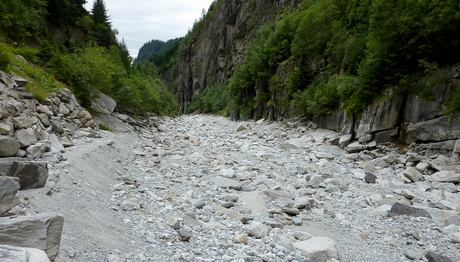
Below dams that were licensed before 1992, there is still hardly any residual water flowing in many places. (zvg)
News
Data-driven modelling of residual flows
February 24, 2026

Estimates as to how much more electricity could be generated from hydropower in the absence of residual flow requirements vary widely, and they have previously been based on inadequate data. A team of researchers from WSL, the University of Bern and Eawag has now used a new database and simulations to show that, between now and 2050, the additional decrease in production due to residual flow requirements – amounting to barely 2% – is likely to be much lower than feared.

ETH Zurich presents Lisa Deutsch with the ETH Medal for her doctoral thesis, which she wrote at Eawag and ETH Zurich.(Photo: Sabine Hoffmann)
Institutional
ETH Medal for Lisa Deutsch
January 26, 2026

Sociologist and political scientist Lisa Deutsch was awarded the ETH Medal for her doctoral thesis written at Eawag and ETH Zurich. Her research demonstrated how interdisciplinary and transdisciplinary research can be successful and how theory and practice can be effectively combined in research.

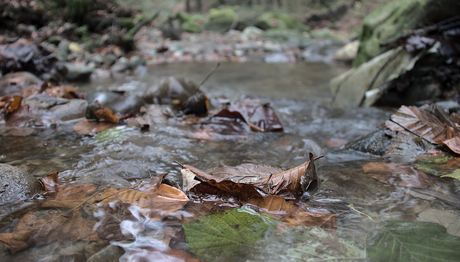
Leaves are the main food source for amphipods and play a key role in the functioning of the ecosystem. (Photo: Florian Altermatt, Eawag)
News
Temporal changes in leaf fall have consequences for ...
January 23, 2026

Aquatic ecosystems are fragile. But just how fragile they are has been revealed in a new study by the Swiss Federal Institute of Aquatic Science and Technology (Eawag) and the University of Zurich. Researchers investigated how climate change is affecting amphipods by shifting the timing of leaf fall in autumn. These creatures feed on leaves and, as the base of the food chain, have an impact on the entire ecosystem.