L’eau est notre bien le plus précieux. L’approvisionnement en eau, en quantité et en qualité suffisantes, est par conséquent un droit humain. L’Eawag s’engage pour que ce droit soit garanti, en Suisse comme dans les régions moins privilégiées. Un immense défi compte tenu de la croissance de la population, du changement climatique et des apports de polluants.
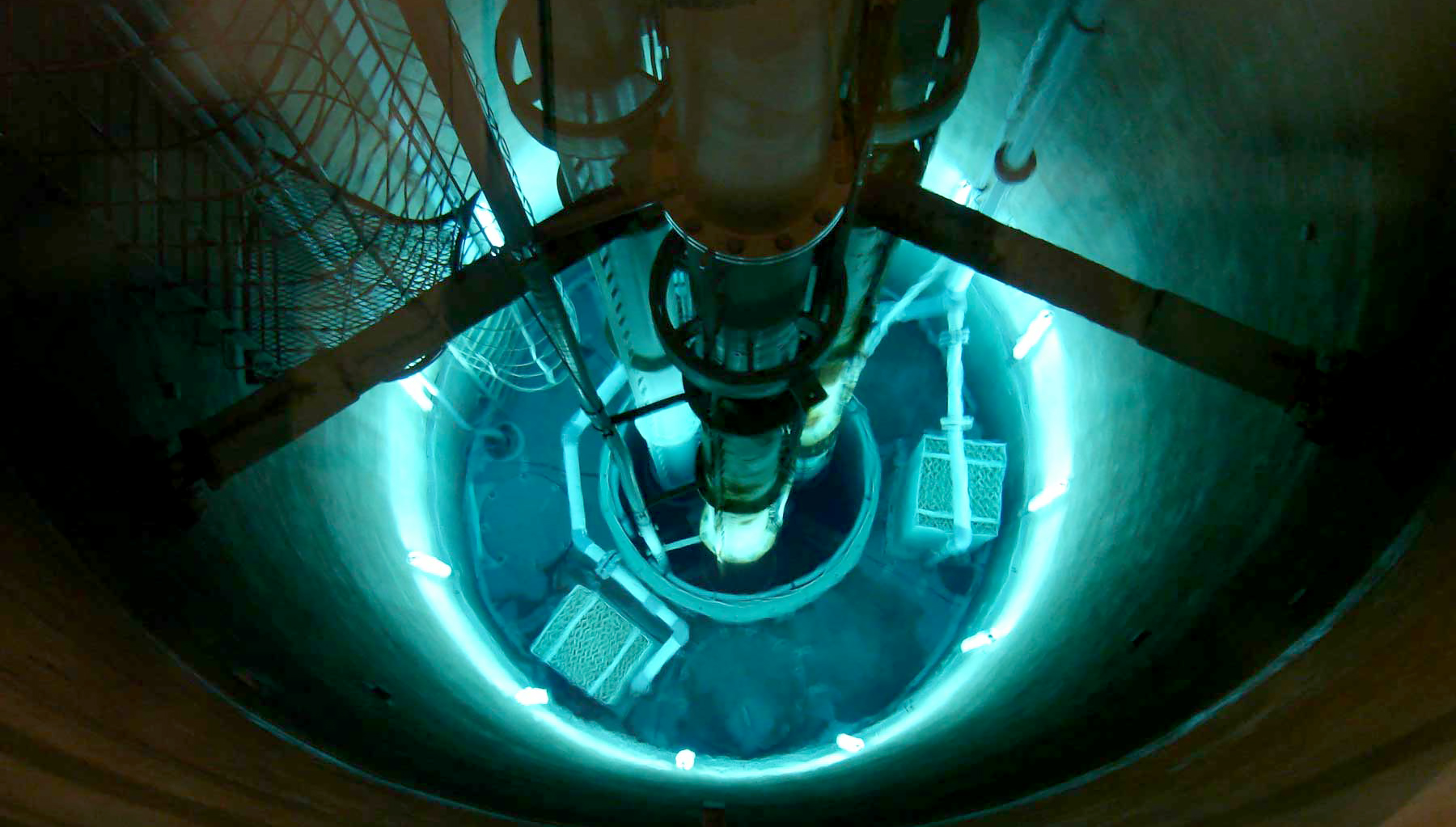
De plus en plus de fournisseurs en eau doivent la traiter, voire arrêter certains captages (Photo: iStock).
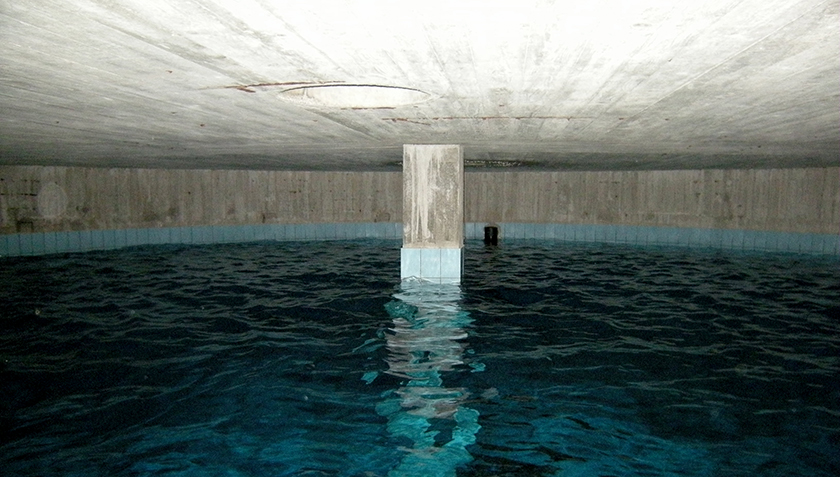
Des fissures dans le château d’eau
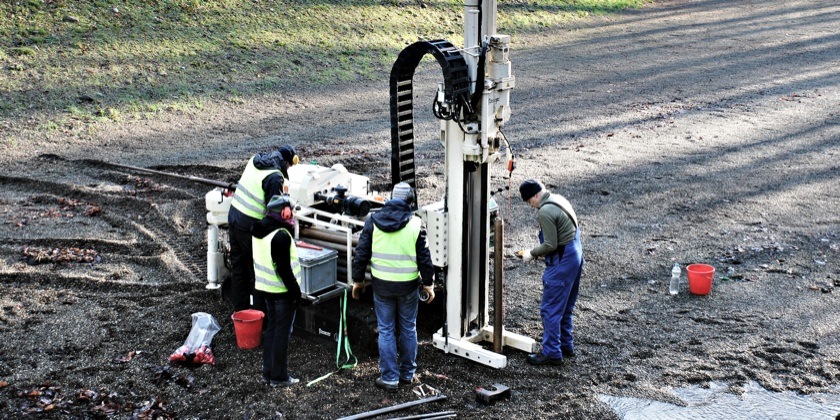
En Suisse, chaque personne utilise à domicile presque 150 litres d’eau potable par jour. 80 pour cent de cette eau provient des nappes phréatiques, le reste des lacs. Tandis que l’eau lacustre doit en règle générale subir un traitement à plusieurs niveaux, l’eau souterraine peut généralement être utilisée comme eau potable sans traitement ou après un traitement simple. Mais l’approvisionnement en eau potable, en qualité et quantité suffisantes, n’est plus une évidence, même dans le château d’eau qu’est la Suisse.
Déceler et réduire les apports en polluants
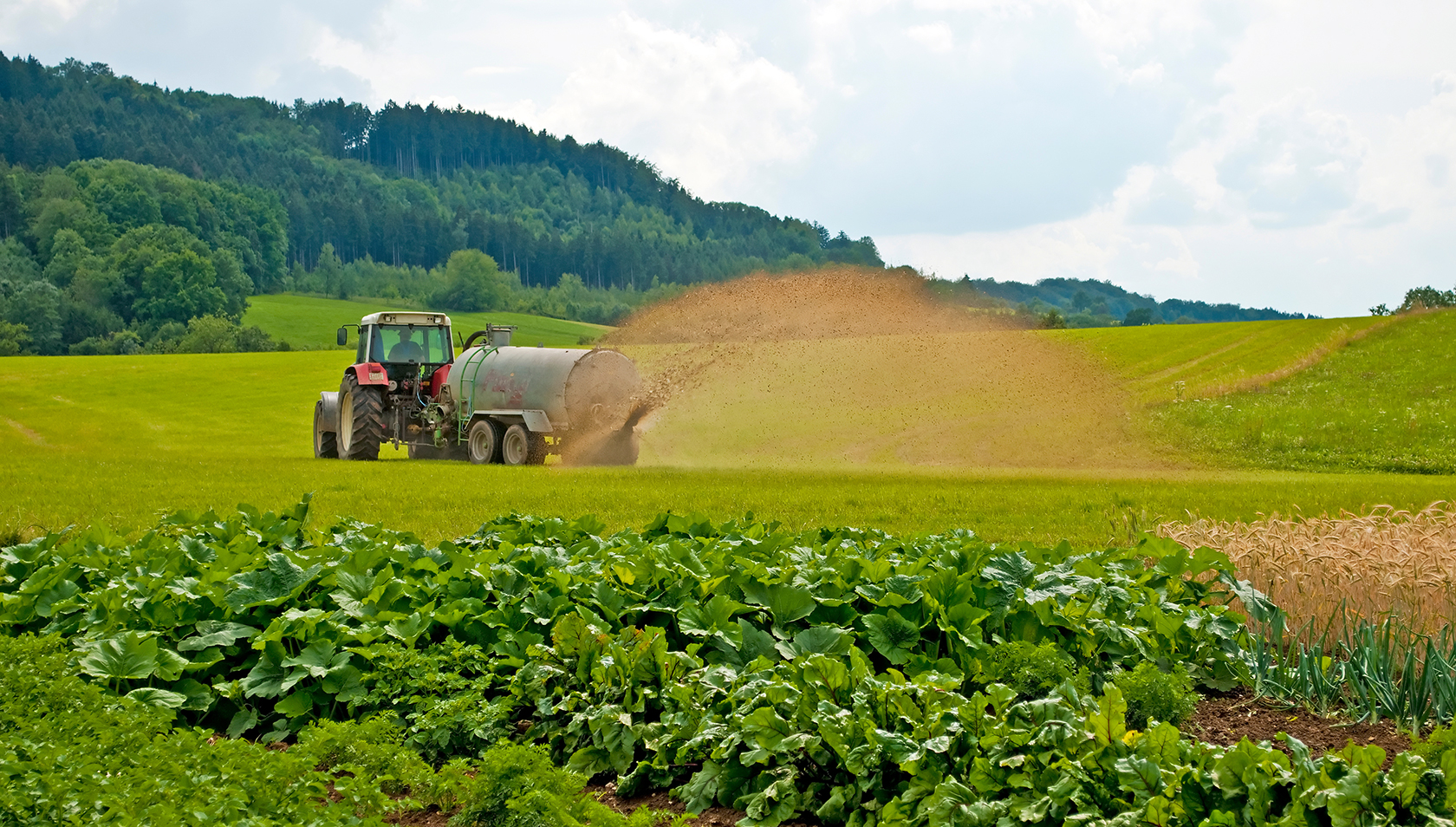
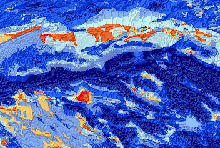
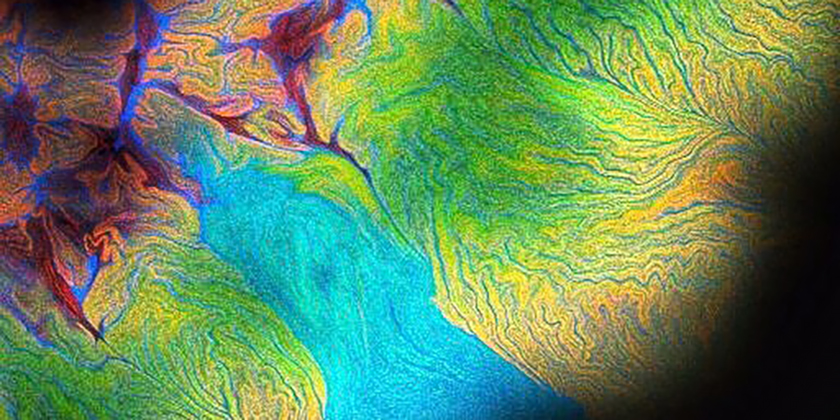
Dans les régions soumises à l’agriculture intensive, les nitrates et les résidus de pesticides pénètrent dans les cours d’eau et les nappes phréatiques. Cela pose de gros problèmes aux fournisseurs d’eau potable. Grâce à ses recherches, l’Eawag contribue à révéler l’ampleur de la pollution et à développer des propositions pour améliorer la situation.
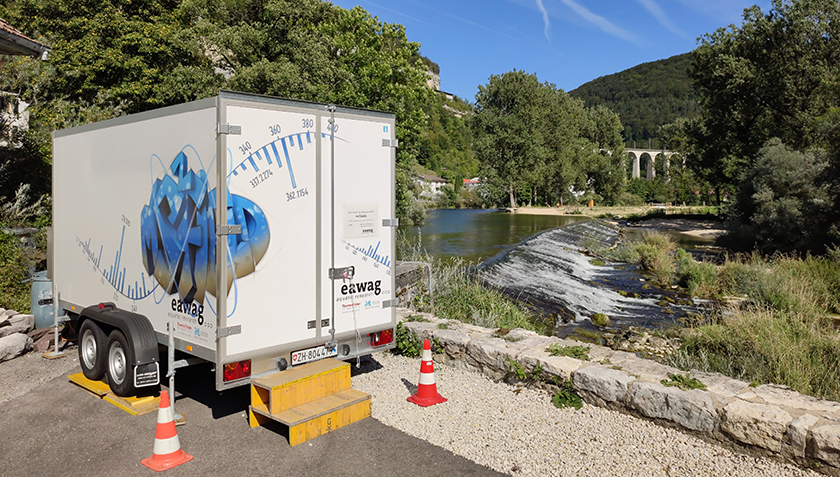
Pour encourager le dialogue entre recherche, pratique et autorités sur ces thèmes, l’Eawag exploite, en collaboration avec l’Association suisse des professionnels de la protection des eaux (VSA) et l’Office fédéral de l’environnement (OFEV), la plateforme Qualité de l’eau et a lancé le réseau suisse d’eau souterraine CH-GNet.
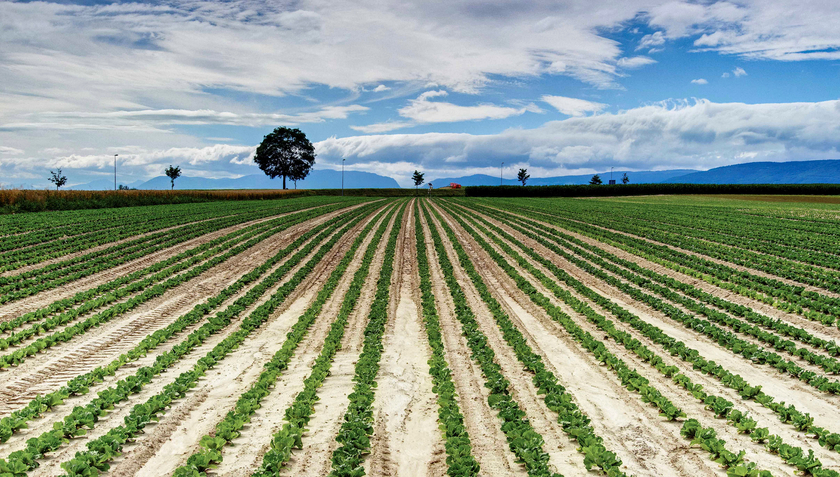
L’extension de l’espace urbain et l’agriculture intensive ont un impact négatif sur la qualité de l’eau (Photo: Markus Bolliger/BAFU).
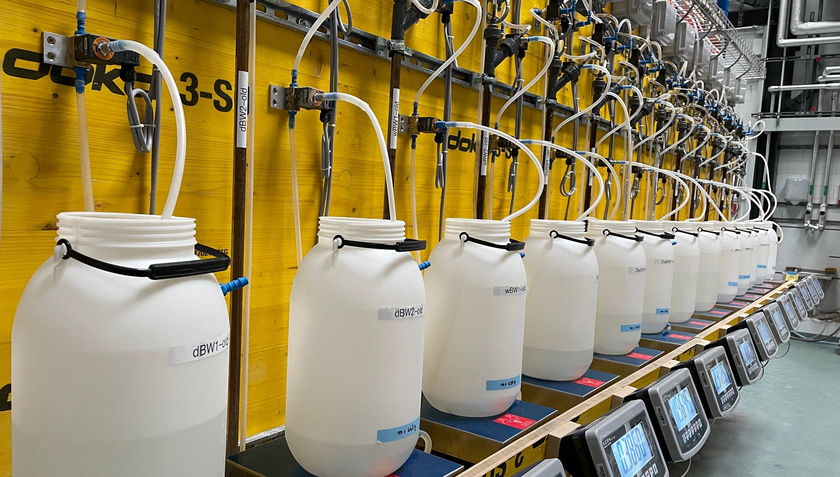
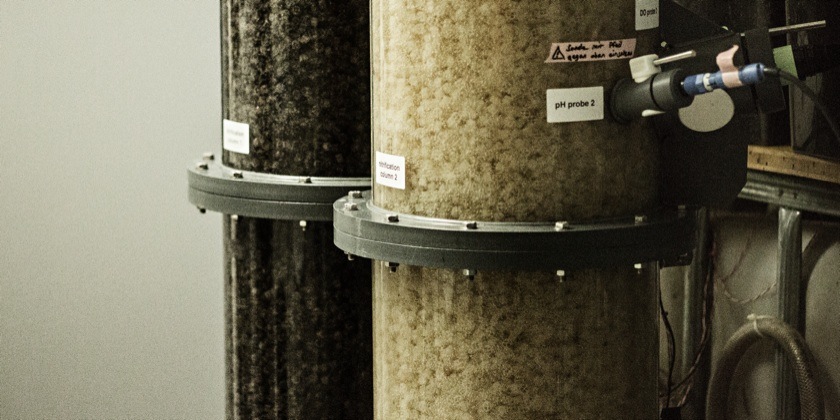
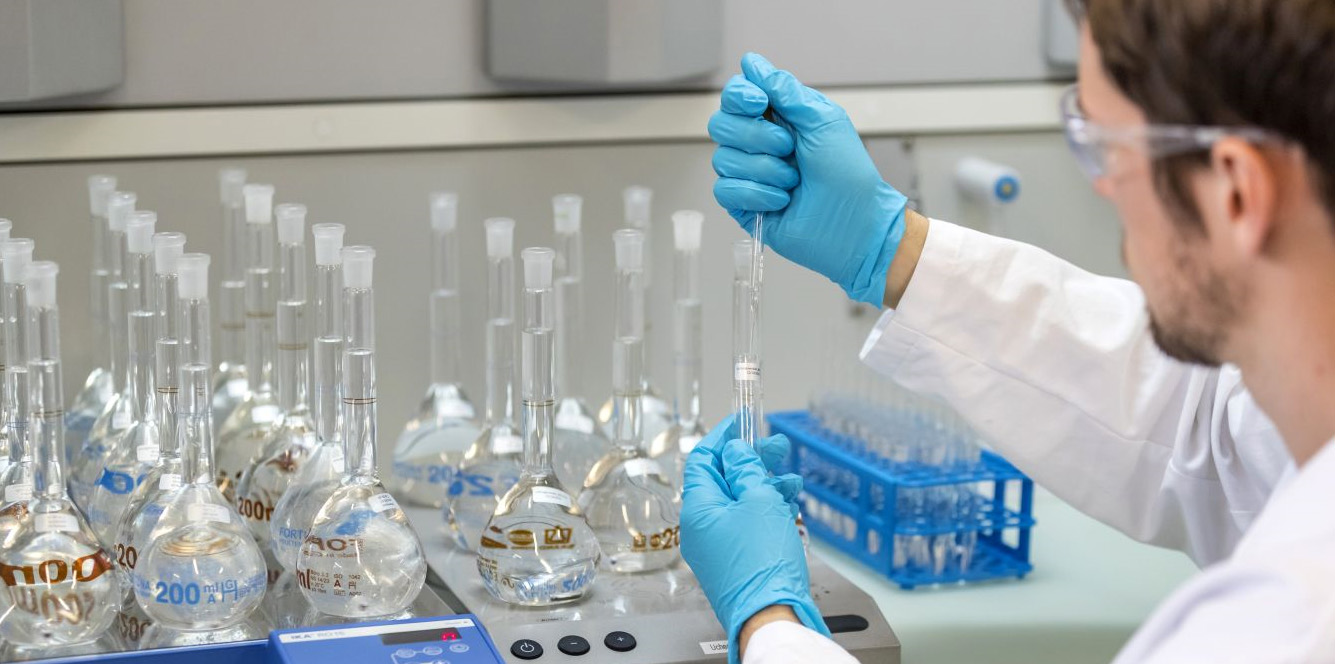
L’Eawag étudie plusieurs méthodes de traitement de l’eau potable, ici la filtration sur membrane (Photo: Eawag).
Optimiser le traitement de l’eau
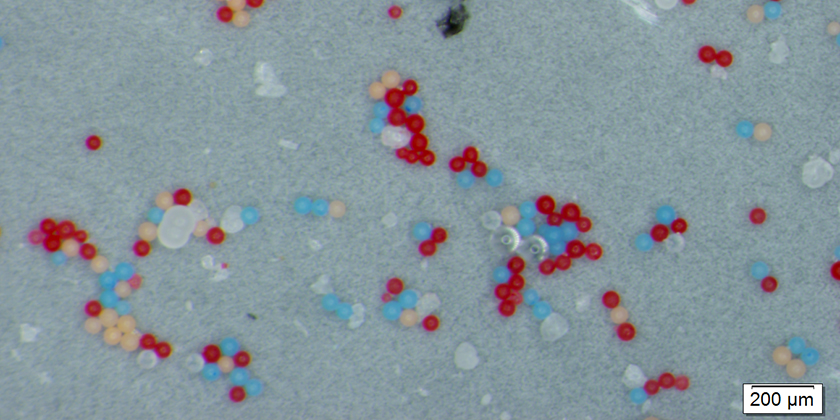
En plus des recherches sur la réduction des apports en polluants dans les cours d’eau, l’Eawag travaille aussi sur le traitement de l’eau afin d’éliminer aussi efficacement que possible les polluants présents malgré tout. Il s’agit en l’occurrence d’optimiser les technologies de traitement existantes et d’en développer de nouvelles, mais aussi d’étudier de nouveaux polluants potentiels tels que les nanoplastiques.
Même si une eau potable irréprochable arrive chez les consommatrices et les consommateurs, les installations des bâtiments comportent elles aussi de nouveaux risques. En effet, si l’eau se réchauffe, des légionelles peuvent se développer. Ces bactéries peuvent provoquer de graves inflammations pulmonaires appelées légionellose. Sous la direction de l’Eawag, une équipe de recherche multidisciplinaire étudie dans le projet «LeCo» comment contenir ce risque.
Réutiliser l’eau
Avec des étés de plus en plus chauds et secs à cause du changement climatique, le château d’eau qu’est la Suisse connaîtra lui aussi des pénuries d’approvisionnement. C’est pourquoi l’Eawag travaille sur la réutilisation de l’eau grise, c’est-à-dire les eaux usées des douches, lave-linge ou lave-vaisselle, qu’il est possible de traiter et d’utiliser pour les chasses d’eau ou l’arrosage. Il n’est en effet pas nécessaire d’utiliser partout de l’eau potable comme nous le faisons aujourd’hui.
array(3 items)0 => Snowflake\Publications\Domain\Model\Publicationprototypepersistent entity (uid=34849, pid=124)originalId => protected34849 (integer)
authors => protected'Hammes, F.; Gabrielli, M.; Cavallaro, A.; Eichelberg, A. ; Barigelli, S.; Bigler, M.; Faucher, S. P.; Füchslin,& nbsp;H. P.; Gaia, V.; Gomez-Valero, L.; Grimard-Conea, M .; Haas, C. N.; Hamilton, K. A.; Healy, H. G.; Héchard, Y.; Julian, T.; Kieper, L.; Lauper, U.; Lefeb vre, X.; Mäusezahl, D.; Ortiz, C.; Pereira, A.; Prevost , M.; Quon, H.; Roy, S.; Silva, A. R.; Sylvestre,&n bsp;É.; Tang, L.; Reyes, E. V.; Van Der Wielen, P.  ;W. J. J.; Waak, M.' (642 chars)
title => protected'Foresight 2035: a perspective on the next decade of research on the manageme nt of <em>Legionella </em>spp. in engineered aquatic environments' (141 chars)
journal => protected'FEMS Microbiology Reviews' (25 chars)
year => protected2025 (integer)
volume => protected49 (integer)
issue => protected'2025' (4 chars)
startpage => protected'fuaf022 (18 pp.)' (16 chars)
otherpage => protected'' (0 chars)
categories => protected'legionella; Legionnaires' disease; legionellosis; building plumbing; opportu nistic pathogens; waterborne disease' (112 chars)
description => protected'The disease burden from <em>Legionella </em>spp. infections has been increas ing in many industrialized countries and, despite decades of scientific adva nces, ranks amongst the highest for waterborne diseases. We review here seve ral key research areas from a multidisciplinary perspective and list critica l research needs to address some of the challenges of <em>Legionella </em>sp p. management in engineered environments. These include: (i) a consideration of Legionella species diversity and cooccurrence, beyond <em>Legionella pne umophila</em> only; (ii) an assessment of their environmental prevalence and clinical relevance, and how that may affect legislation, management, and in tervention prioritization; (iii) a consideration of <em>Legionella </em>spp. sources, their definition and prioritization; (iv) the factors affecting Le gionnaires' disease seasonality, how they link to sources, <em>Legionella </ em>spp. proliferation and ecology, and how these may be affected by climate change; (v) the challenge of saving energy in buildings while controlling <e m>Legionella </em>spp. with high water temperatures and chemical disinfectio n; and (vi) the ecological interactions of <em>Legionella </em>spp. with oth er microbes, and their potential as a biological control strategy. Ultimatel y, we call for increased interdisciplinary collaboration between multiple re search domains, as well as transdisciplinary engagement and collaboration ac ross government, industry, and science as the way toward controlling and red ucing <em>Legionella</em>-derived infections.' (1565 chars)
serialnumber => protected'0168-6445' (9 chars)
doi => protected'10.1093/femsre/fuaf022' (22 chars)
uid => protected34849 (integer)
_localizedUid => protected34849 (integer)modified_languageUid => protectedNULL
_versionedUid => protected34849 (integer)modifiedpid => protected124 (integer)1 => Snowflake\Publications\Domain\Model\Publicationprototypepersistent entity (uid=34275, pid=124)originalId => protected34275 (integer)
authors => protected'Lin, Z.; Ruan, C.; Xia, R.; Liao, J.; Zhu, L.; Wang , D.; Alvarez, P. J. J.; Yu, P.' (132 chars)
title => protected'Bacterium-phage interactions enhance biofilm resilience during membrane filt ration biofouling under oxidative and hydraulic stresses' (132 chars)
journal => protected'Environmental Science and Technology' (36 chars)
year => protected2025 (integer)
volume => protected59 (integer)
issue => protected'17' (2 chars)
startpage => protected'8614' (4 chars)
otherpage => protected'8628' (4 chars)
categories => protected'membrane biofouling; oxidative stress; microbial adaptation; phage-host inte ractions; auxiliary metabolic genes; quorum sensing' (127 chars)
description => protected'Microbial interactions on membrane surfaces can facilitate biofilm formation and biofouling, which poses a significant challenge for pressure-driven mem brane filtration systems. This multiomics study investigates the adaptive re sponses of bacterium-phage interactions under varying oxidative and hydrauli c stress during membrane backwashing and their biological contributions to b iofouling. Oxidative and hydraulic stress distinctly shaped bacteria and pha ge diversity and community composition. Under moderate oxidative backwashing (300 ppm of NaClO), diversity was maintained, with increased antioxidant en zyme activities, extracellular polymeric substance (EPS) production, and quo rum sensing (QS) signaling, promoting bacterial resilience and biofilm forma tion. In contrast, excessive oxidative stress (600 ppm of NaClO) reduced bac teria and phage diversity, disrupted antioxidant responses, and increased mi crobial sensitivity. Hydraulic stress predominantly influenced viral diversi ty and co-occurrence network topology, favoring the expansion of broad host- range phages and lysogenic lifestyles under combined stresses. Phage-bacteri um interaction analyses highlighted phages' adaptive preferences for hosts w ith high network centrality and broad ecological niches, which enhanced micr obial interactions and resilience. Transcriptomic profiling demonstrated the early enrichment of genes associated with energy metabolism, ROS detoxifica tion, and biofilm formation, followed by stabilization as biofilms matured. Phage-encoded auxiliary metabolic genes were involved in DNA repair, QS, and EPS biosynthesis, contributing to microbial adaptation through oxidative st ress resistance and biofilm stabilization. Overall, these findings provide m echanistic insights into biofouling dynamics and highlight the need to optim ize chlorine dosing to prevent suboptimal levels of microbial adaptation and biofouling.' (1912 chars)
serialnumber => protected'0013-936X' (9 chars)
doi => protected'10.1021/acs.est.5c00490' (23 chars)
uid => protected34275 (integer)
_localizedUid => protected34275 (integer)modified_languageUid => protectedNULL
_versionedUid => protected34275 (integer)modifiedpid => protected124 (integer)2 => Snowflake\Publications\Domain\Model\Publicationprototypepersistent entity (uid=34871, pid=124)originalId => protected34871 (integer)
authors => protected'Ra, J.; Huang, K.; Mohn, J.; Hofstetter, T. B.; Muc k, E.; von Gunten, U.' (107 chars)
title => protected'Characterization of organic nitrogen by chlorination, ozonation, and stable isotope analysis of nitrate' (103 chars)
journal => protected'Environmental Science and Technology' (36 chars)
year => protected2025 (integer)
volume => protected59 (integer)
issue => protected'26' (2 chars)
startpage => protected'13481' (5 chars)
otherpage => protected'13493' (5 chars)
categories => protected'dissolved organic matter; amines; ozonation; chlorination; nitrate; nitrogen isotopes' (85 chars)
description => protected'During oxidation, nitrogenous species in dissolved organic matter (DOM) are critical in the formation of nitrogenous, potentially toxic disinfection byp roducts, but their chemical identity remains poorly understood. Here, we dev eloped three complementary approaches to identify and quantify reactive amin es in model compounds and DOM, including aliphatic primary and secondary ami nes, aryl-type primary amines, amino acids, and terminal peptidic amino grou ps. With the chloramine formation assay, the total reactive amines were quan tified for the main subgroups. An assay with continuous ozonation quantified three types of reactive amines based on nitrate formation rate constants (k <sub>NO<sub>3</sub>-</sub>): k<sub>NO<sub>3</sub>-</sub> < 0.1 M<sup>-1</ sup> s<sup>-1</sup> for secondary and aliphatic primary amines; k<sub>NO<sub >3</sub>-</sub> = 0.9-1.9 M<sup>-1</sup> s<sup>-1</sup> for aryl-type primar y amines; k<sub>NO<sub>3</sub>-</sub> = 15-110 M<sup>-1</sup> s<sup>-1</sup> for amino acids and peptidic amino groups. The analysis of <sup>15</sup>N/< sup>14</sup>N ratios of nitrate helped to distinguish reactive amines based on <sup>15</sup>N enrichment factors (ϵ<sub>N</sub>): aliphatic (or aryl-ty pe) primary amines (ϵ<sub>N</sub>:-9 to -3‰), and amino acids and peptidi c amino groups (ϵ<sub>N</sub>:-28 to -19‰). Overall, 23-27% of the organi c nitrogen in DOM isolates comprises oxidant-reactive amines, with 5-6% seco ndary amines, 10-14% aliphatic primary amines, 4% aryl-type primary amines, 1-4% amino acids, and 0-2% peptidic amino groups. Based on the quantitative characterization of amine moieties in DOM, which are possible precursors of N-DBPs, the formation potential of N-DBPs upon oxidative water treatment was estimated.' (1759 chars)
serialnumber => protected'0013-936X' (9 chars)
doi => protected'10.1021/acs.est.5c01034' (23 chars)
uid => protected34871 (integer)
_localizedUid => protected34871 (integer)modified_languageUid => protectedNULL
_versionedUid => protected34871 (integer)modifiedpid => protected124 (integer)
Foresight 2035: a perspective on the next decade of research on the management of Legionella spp. in engineered aquatic environments
The disease burden from Legionella spp. infections has been increasing in many industrialized countries and, despite decades of scientific advances, ranks amongst the highest for waterborne diseases. We review here several key research areas from a multidisciplinary perspective and list critical research needs to address some of the challenges of Legionella spp. management in engineered environments. These include: (i) a consideration of Legionella species diversity and cooccurrence, beyond Legionella pneumophila only; (ii) an assessment of their environmental prevalence and clinical relevance, and how that may affect legislation, management, and intervention prioritization; (iii) a consideration of Legionella spp. sources, their definition and prioritization; (iv) the factors affecting Legionnaires' disease seasonality, how they link to sources, Legionella spp. proliferation and ecology, and how these may be affected by climate change; (v) the challenge of saving energy in buildings while controlling Legionella spp. with high water temperatures and chemical disinfection; and (vi) the ecological interactions of Legionella spp. with other microbes, and their potential as a biological control strategy. Ultimately, we call for increased interdisciplinary collaboration between multiple research domains, as well as transdisciplinary engagement and collaboration across government, industry, and science as the way toward controlling and reducing Legionella-derived infections.
Hammes, F.; Gabrielli, M.; Cavallaro, A.; Eichelberg, A.; Barigelli, S.; Bigler, M.; Faucher, S. P.; Füchslin, H. P.; Gaia, V.; Gomez-Valero, L.; Grimard-Conea, M.; Haas, C. N.; Hamilton, K. A.; Healy, H. G.; Héchard, Y.; Julian, T.; Kieper, L.; Lauper, U.; Lefebvre, X.; Mäusezahl, D.; Ortiz, C.; Pereira, A.; Prevost, M.; Quon, H.; Roy, S.; Silva, A. R.; Sylvestre, É.; Tang, L.; Reyes, E. V.; Van Der Wielen, P. W. J. J.; Waak, M. (2025) Foresight 2035: a perspective on the next decade of research on the management of Legionella spp. in engineered aquatic environments, FEMS Microbiology Reviews, 49(2025), fuaf022 (18 pp.), doi:10.1093/femsre/fuaf022, Institutional Repository
Bacterium-phage interactions enhance biofilm resilience during membrane filtration biofouling under oxidative and hydraulic stresses
Microbial interactions on membrane surfaces can facilitate biofilm formation and biofouling, which poses a significant challenge for pressure-driven membrane filtration systems. This multiomics study investigates the adaptive responses of bacterium-phage interactions under varying oxidative and hydraulic stress during membrane backwashing and their biological contributions to biofouling. Oxidative and hydraulic stress distinctly shaped bacteria and phage diversity and community composition. Under moderate oxidative backwashing (300 ppm of NaClO), diversity was maintained, with increased antioxidant enzyme activities, extracellular polymeric substance (EPS) production, and quorum sensing (QS) signaling, promoting bacterial resilience and biofilm formation. In contrast, excessive oxidative stress (600 ppm of NaClO) reduced bacteria and phage diversity, disrupted antioxidant responses, and increased microbial sensitivity. Hydraulic stress predominantly influenced viral diversity and co-occurrence network topology, favoring the expansion of broad host-range phages and lysogenic lifestyles under combined stresses. Phage-bacterium interaction analyses highlighted phages' adaptive preferences for hosts with high network centrality and broad ecological niches, which enhanced microbial interactions and resilience. Transcriptomic profiling demonstrated the early enrichment of genes associated with energy metabolism, ROS detoxification, and biofilm formation, followed by stabilization as biofilms matured. Phage-encoded auxiliary metabolic genes were involved in DNA repair, QS, and EPS biosynthesis, contributing to microbial adaptation through oxidative stress resistance and biofilm stabilization. Overall, these findings provide mechanistic insights into biofouling dynamics and highlight the need to optimize chlorine dosing to prevent suboptimal levels of microbial adaptation and biofouling.
Lin, Z.; Ruan, C.; Xia, R.; Liao, J.; Zhu, L.; Wang, D.; Alvarez, P. J. J.; Yu, P. (2025) Bacterium-phage interactions enhance biofilm resilience during membrane filtration biofouling under oxidative and hydraulic stresses, Environmental Science and Technology, 59(17), 8614-8628, doi:10.1021/acs.est.5c00490, Institutional Repository
Characterization of organic nitrogen by chlorination, ozonation, and stable isotope analysis of nitrate
During oxidation, nitrogenous species in dissolved organic matter (DOM) are critical in the formation of nitrogenous, potentially toxic disinfection byproducts, but their chemical identity remains poorly understood. Here, we developed three complementary approaches to identify and quantify reactive amines in model compounds and DOM, including aliphatic primary and secondary amines, aryl-type primary amines, amino acids, and terminal peptidic amino groups. With the chloramine formation assay, the total reactive amines were quantified for the main subgroups. An assay with continuous ozonation quantified three types of reactive amines based on nitrate formation rate constants (kNO3-): kNO3- < 0.1 M-1 s-1 for secondary and aliphatic primary amines; kNO3- = 0.9-1.9 M-1 s-1 for aryl-type primary amines; kNO3- = 15-110 M-1 s-1 for amino acids and peptidic amino groups. The analysis of 15N/14N ratios of nitrate helped to distinguish reactive amines based on 15N enrichment factors (ϵN): aliphatic (or aryl-type) primary amines (ϵN:-9 to -3‰), and amino acids and peptidic amino groups (ϵN:-28 to -19‰). Overall, 23-27% of the organic nitrogen in DOM isolates comprises oxidant-reactive amines, with 5-6% secondary amines, 10-14% aliphatic primary amines, 4% aryl-type primary amines, 1-4% amino acids, and 0-2% peptidic amino groups. Based on the quantitative characterization of amine moieties in DOM, which are possible precursors of N-DBPs, the formation potential of N-DBPs upon oxidative water treatment was estimated.
Ra, J.; Huang, K.; Mohn, J.; Hofstetter, T. B.; Muck, E.; von Gunten, U. (2025) Characterization of organic nitrogen by chlorination, ozonation, and stable isotope analysis of nitrate, Environmental Science and Technology, 59(26), 13481-13493, doi:10.1021/acs.est.5c01034, Institutional Repository