Entscheidungsfindung beim Übergang von zentralen zu alternativen Systemen in der Abwasserentsorgung
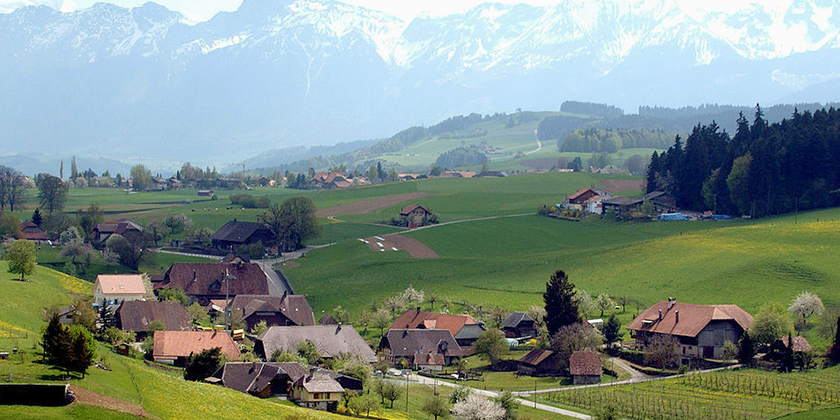
Netzgebundene Systeme in der Siedlungswasserwirtschaft altern und ihr Ersatzzeitpunkt rückt näher. Die Frage ist, wie geht es danach weiter: Erneuerung oder Einsatz alternativer Technologien? Nachteile wie bspw. geringe Flexibilität durch lange Planungshorizonte und hohe (Investitions-)Kosten wirken sich v. a. unter dynamischen Randbedingungen und in ländlichen, dünn besiedelten Regionen aus. Demgegenüber haben neue, insbesondere dezentrale Systeme in den letzten Jahren wachsende Aufmerksamkeit erhalten, unter anderem weil ihr Einsatz höhere Flexibilität verspricht. In Ländern wie der Schweiz existieren bereits flächendeckend zentrale Systeme. Zu klären bleibt, ob dezentrale Systeme unter gewissen Bedingungen tatsächlich vorteilhaft sein könnten – und falls ja, welche Entscheidungen wann und wie getroffen werden müssen, damit ein Umbau und Übergang (engl.: transition) hin zu dezentralen Systemen und den damit verbundenen Vorteilen gelingen kann. Unklar ist gegenwärtig auch, wie lokale und kantonale Akteure in den langfristigen Entscheidungsprozess einbezogen werden können. Im Rahmen des Projekts werden alternative Abwassersysteme identifiziert, die mit weniger Netzinfrastruktur auskommen. Vor dem Hintergrund zukünftiger Unsicherheiten (z. B. Klimawandel, Bevölkerungsmigration, Technologieentwicklung) sowie der Erwartungen von Akteuren an das zentrale, aber auch an alternative Systeme werden Vor- und Nachteile der alternativen Systeme untersucht. Im Projektverlauf wird mindestens eine ländliche Gemeinde im Kanton Solothurn als Fallstudie konkret begleitet. Das Projekt ist ein gemeinsames Vorhaben der Eawag-Abteilungen Umweltsozialwissenschaften (ESS) sowie Siedlungswasserwirtschaft (SWW) und läuft in enger Zusammenarbeit mit dem Amt für Umwelt des Kantons Solothurn (AfU SO). Es ist eingebettet im strategischen Programm Wings („Water and sanitation innovations for non-grid solutions“) der Eawag.
array(8 items)0 => Snowflake\Publications\Domain\Model\Publicationprototypepersistent entity (uid=33194, pid=124)originalId => protected33194 (integer)
authors => protected'Beutler, P.; Larsen, T. A.; Maurer, M.; Staufer, P. ; Lienert, J.' (94 chars)
title => protected'A participatory multi-criteria decision analysis framework reveals transitio n potential towards non-grid wastewater management' (126 chars)
journal => protected'Journal of Environmental Management' (35 chars)
year => protected2024 (integer)
volume => protected367 (integer)
issue => protected'' (0 chars)
startpage => protected'121962 (15 pp.)' (15 chars)
otherpage => protected'' (0 chars)
categories => protected'decentralized wastewater infrastructure; mcda; participatory decision analys is; stakeholder preferences; uncertainty; wicked problems' (133 chars)
description => protected'Many public environmental decisions are wicked problems due to high complexi ty and uncertainty. We test a participatory value-based framework based on m ulti-criteria decision analysis (MCDA) to tackle such problems. Our framewor k addresses two important gaps identified in reviews of MCDA applications to environmental problems: including stakeholders and treating uncertainty. We applied our framework in two complex real-world cases concerning a paradigm shift in the wastewater sector; the transition from centralized wastewater systems to decentralized non-grid systems. Non-grid systems may solve some p roblems of centralized systems by reducing costs, increasing flexibility, an d addressing growing demands on environmental issues, especially in rural ar eas. But non-grid systems have rarely been implemented in OECD countries, be cause it is unclear whether a transition is recommendable, and whether stake holders would accept this shift. This problem allows addressing several fund amental research questions. As theoretical contribution, we found that stake holder participation in MCDA is necessary, because different preferences of stakeholders can lead to different best-performing options in the assessment s. Compared to the typical integrated assessment (IA) approach that excludes stakeholders' preferences, the MCDA process led to clearer outcomes. Result s indicate that including the uncertainty of predicted consequences of optio ns with Monte Carlo simulation helped discriminate between options and ident ify best-performing options. Challenging the uncertainty of elicited stakeho lder preferences with sensitivity analyses, we found that best-performing op tions were especially sensitive to the MCDA aggregation model. Despite the h igh uncertainty, it was possible to suggest robust consensus options that wo uld perform reasonably well for all stakeholders. As practical contribution, results indicated that a transition from the centralized to decentralized n on-grid systems seems fe...' (2629 chars)
serialnumber => protected'0301-4797' (9 chars)
doi => protected'10.1016/j.jenvman.2024.121962' (29 chars)
uid => protected33194 (integer)
_localizedUid => protected33194 (integer)modified_languageUid => protectedNULL
_versionedUid => protected33194 (integer)modifiedpid => protected124 (integer)1 => Snowflake\Publications\Domain\Model\Publicationprototypepersistent entity (uid=25775, pid=124)originalId => protected25775 (integer)
authors => protected'Aubert, A. H.; Schmid, S.; Beutler, P.; Lienert, J.' (76 chars)
title => protected'Innovative online survey about sustainable wastewater management: what young Swiss citizens know and value' (106 chars)
journal => protected'Environmental Science and Policy' (32 chars)
year => protected2022 (integer)
volume => protected137 (integer)
issue => protected'' (0 chars)
startpage => protected'323' (3 chars)
otherpage => protected'335' (3 chars)
categories => protected'environmental decision; citizen participation; Multi-Criteria Decision Analy sis (MCDA); policy analytics; learning; preference construction' (139 chars)
description => protected'Investigating wastewater management matters: in many OECD countries, the con ventional centralized system is reaching its limits. Alternative decentraliz ed options exist. Some directly affect citizens with in-house wastewater tre atment. Involving citizens in decision processes would legitimate the outcom e and facilitate implementation. However, citizen participation is challengi ng because they are numerous, and need to learn about the topic and construc t their opinion. To include citizens, we propose an innovative online survey based on Multi-Attribute Value Theory (MAVT). Citizens receive value-focuse d information, and can communicate their preferences, captured as weights as signed to objectives. We collected quantitative and qualitative data, and el icited preferences from 184 young Swiss citizens, who will have to live with the decision outcome. In addition to reporting on insights for wastewater m anagement, we assessed our survey, i.e. whether respondents learnt about the topic, constructed preferences, and understood the requirement to think in terms of objectives. Water quality and health protection mattered the most. The objectives directly concerning the respondents (time demand, attractiven ess) were the least important. The best-ranked option in the subsequent Mult i-Criteria Decision Analysis was a decentralized source separating system wi th dry toilets. Respondents were unaware that such decentralized options exi st, indicating that learning about the topic occurred. Preferences were most ly newly constructed from no opinion, or pre-existing ones were reinforced. Our value-focused online survey helped citizens to understand the complex de cision and construct their preferences. Swiss decision-makers, and beyond, s hould not be scared of a paradigm shift in wastewater management: the young generation seems ready to decentralize.' (1863 chars)
serialnumber => protected'1462-9011' (9 chars)
doi => protected'10.1016/j.envsci.2022.08.018' (28 chars)
uid => protected25775 (integer)
_localizedUid => protected25775 (integer)modified_languageUid => protectedNULL
_versionedUid => protected25775 (integer)modifiedpid => protected124 (integer)2 => Snowflake\Publications\Domain\Model\Publicationprototypepersistent entity (uid=30231, pid=124)originalId => protected30231 (integer)
authors => protected'Kuller, M.; Beutler, P.; Lienert, J.' (51 chars)
title => protected'Preference change in stakeholder group-decision processes in the public sect or: extent, causes and implications' (111 chars)
journal => protected'European Journal of Operational Research' (40 chars)
year => protected2023 (integer)
volume => protected308 (integer)
issue => protected'' (0 chars)
startpage => protected'1268' (4 chars)
otherpage => protected'1285' (4 chars)
categories => protected'behavioural operational research (OR); preference change; multi-criteria dec ision analysis; group decision-making; public policy' (128 chars)
description => protected'Public decisions are typically related to large investments leaving long leg acies. We should therefore strive for wide societal agreement regarding such decisions, which meet the diversity of preferences between stakeholders and over time. But if, how and why do stakeholder preferences change over time? In decision analysis, these questions received little attention. We explore d them using three real-world public decision processes, based on Multi-Crit eria Decision Analysis (MCDA). We used repeatedly elicited ranking of object ives over time. These were obtained during three to five moderated workshops we organised several months apart (total N = 200 questionnaires, and 100 st akeholders). We analysed individual and aggregated (group) preferences, thei r changes and potential drivers including demographic and experience variabl es. We also analysed the effect of preference evolution on the performance o f decision-alternatives with MCDA over time. We found that stakeholder prefe rences often changed over time, both on an individual and group level. These changes did not systematically diminish over time, but some convergence of preferences was observed for stakeholders who repeatedly participated in wor kshops. High-ranking objectives were relatively stable and similar between s takeholders. While preference changes could not be explained by demographics and personal experiences, repeated interaction with the decision problem mi ght play a role. Neither the observed disagreement between stakeholders, nor the preference changes over time affected the best and worst performing alt ernatives in our decision problems. Thus, despite changing stakeholder prefe rences over time, public decision-makers can contrive robust solutions to co mplex public decision problems in the present.' (1794 chars)
serialnumber => protected'0377-2217' (9 chars)
doi => protected'10.1016/j.ejor.2022.12.001' (26 chars)
uid => protected30231 (integer)
_localizedUid => protected30231 (integer)modified_languageUid => protectedNULL
_versionedUid => protected30231 (integer)modifiedpid => protected124 (integer)3 => Snowflake\Publications\Domain\Model\Publicationprototypepersistent entity (uid=21892, pid=124)originalId => protected21892 (integer)
authors => protected'Beutler, P.; Larsen, T. A.; Maurer, M.; Staufer, P. ; Lienert, J.' (94 chars)
title => protected'Potenzial dezentraler Abwassersysteme' (37 chars)
journal => protected'Aqua & Gas' (10 chars)
year => protected2021 (integer)
volume => protected101 (integer)
issue => protected'1' (1 chars)
startpage => protected'66' (2 chars)
otherpage => protected'75' (2 chars)
categories => protected'' (0 chars)
description => protected'Werterhalt und Bewirtschaftung von Kanalisation und ARA können kleine Gemei nden vor Herausforderungen stellen. Es gibt Alternativen, aber lohnen sich d iese? Zwei Gemeinden wurden bei der strategischen Planung für ihr neues Abw assersystem unterstützt. Viele Ziele wurden als entscheidungsrelevant ident ifiziert, insbesondere Umweltschutzziele. Es zeigte sich, dass dezentrale Te chnologien mit Stoffstromseparierung die Anforderungen häufig besser erfül len können als konventionelle Abwassersysteme.' (503 chars)
serialnumber => protected'2235-5197' (9 chars)
doi => protected'' (0 chars)
uid => protected21892 (integer)
_localizedUid => protected21892 (integer)modified_languageUid => protectedNULL
_versionedUid => protected21892 (integer)modifiedpid => protected124 (integer)4 => Snowflake\Publications\Domain\Model\Publicationprototypepersistent entity (uid=21730, pid=124)originalId => protected21730 (integer)
authors => protected'Beutler, P.; Lienert, J.' (34 chars)
title => protected'Zukünftige Abwasserentsorgung im ländlichen Raum - <em>Synthese zur Entsch eidungsunterstützung in den Fallstudien im Solothurner Jura</em>. <em>Absch lussbericht</em>' (168 chars)
journal => protected'' (0 chars)
year => protected2020 (integer)
volume => protected0 (integer)
issue => protected'' (0 chars)
startpage => protected'65 p' (9 chars)
otherpage => protected'' (0 chars)
categories => protected'' (0 chars)
description => protected'' (0 chars)
serialnumber => protected'' (0 chars)
doi => protected'' (0 chars)
uid => protected21730 (integer)
_localizedUid => protected21730 (integer)modified_languageUid => protectedNULL
_versionedUid => protected21730 (integer)modifiedpid => protected124 (integer)5 => Snowflake\Publications\Domain\Model\Publicationprototypepersistent entity (uid=19949, pid=124)originalId => protected19949 (integer)
authors => protected'Beutler, P.; Lienert, J.' (34 chars)
title => protected'Zukünftige Abwasserentsorgung im ländlichen Raum - Fallstudie 2. Abschluss bericht für die Gemeinde' (101 chars)
journal => protected'' (0 chars)
year => protected2020 (integer)
volume => protected0 (integer)
issue => protected'' (0 chars)
startpage => protected'145 p' (10 chars)
otherpage => protected'' (0 chars)
categories => protected'' (0 chars)
description => protected'Wie kann die Abwasserentsorgung in einer ländlichen Gemeinde in der Schweiz in Zukunft gewährleistet werden? Welche Bedürfnisse der lokalen Nutzer/-i nnen muss ein modernes Abwassersystem erfüllen? Das Wasserforschungsinstitu t Eawag und das Amt für Umwelt Solothurn (AfU) sind diesen Fragen gemeinsam nachgegangen und zeigen die Ergebnisse in der vorliegenden Studie auf.<br / > In der Schweiz ist die überwiegende Mehrheit aller Einwohner/-innen an ei n zentrales, netzgebundenes Abwassersystem angeschlossen. Auch im Kanton Sol othurn besitzen alle ländlichen Gemeinden ein solches System aus Kanalisati on und Abwasserreinigungsanlage (ARA). Diese Systeme wurden ursprünglich mi t Subventionen vom Kanton und vom Bund realisiert. Langfristig müssen diese nach dem Verursacherprinzip durch Gebühren finanziert werden.<br /><br /> How to ensure future wastewater disposal in rural communities in Switzerland ? What needs of local stakeholders should a modern wastewater system meet? E awag, the Swiss Federal Institute of Aquatic Science and Technology, and the Office for the Environment Solothurn (AfU) have jointly investigated these questions and present the results in this study.<br /> In Switzerland, the v ast majority of inhabitants are connected to a centralized, grid-based sewer system. In the canton of Solothurn, all rural municipalities make use of su ch a system consisting of a sewer network and a wastewater treatment plant ( WWTP). From the 1960s to the early 1990s, communities initially implemented these systems with subsidies from the cantonal and the federal government. T o finance these systems in the long term, legal regulations prescribe fees t o be charged according to the polluter-pays-principle.' (1726 chars)
serialnumber => protected'' (0 chars)
doi => protected'' (0 chars)
uid => protected19949 (integer)
_localizedUid => protected19949 (integer)modified_languageUid => protectedNULL
_versionedUid => protected19949 (integer)modifiedpid => protected124 (integer)6 => Snowflake\Publications\Domain\Model\Publicationprototypepersistent entity (uid=19287, pid=124)originalId => protected19287 (integer)
authors => protected'Beutler, P.; Lienert, J.' (34 chars)
title => protected'Zukünftige Abwasserentsorgung im ländlichen Raum - Fallstudie 1. <em>Techn ischer Bericht zur Entscheidungsunterstützung für die Gemeinde</em>' (145 chars)
journal => protected'' (0 chars)
year => protected2020 (integer)
volume => protected0 (integer)
issue => protected'' (0 chars)
startpage => protected'247 p' (10 chars)
otherpage => protected'' (0 chars)
categories => protected'' (0 chars)
description => protected'' (0 chars)
serialnumber => protected'' (0 chars)
doi => protected'' (0 chars)
uid => protected19287 (integer)
_localizedUid => protected19287 (integer)modified_languageUid => protectedNULL
_versionedUid => protected19287 (integer)modifiedpid => protected124 (integer)7 => Snowflake\Publications\Domain\Model\Publicationprototypepersistent entity (uid=19289, pid=124)originalId => protected19289 (integer)
authors => protected'Beutler, P.; Lienert, J.' (34 chars)
title => protected'Zukünftige Abwasserentsorgung im ländlichen Raum - Fallstudie 1. <em>Absc hlussbericht für die Gemeinde</em>' (111 chars)
journal => protected'' (0 chars)
year => protected2020 (integer)
volume => protected0 (integer)
issue => protected'' (0 chars)
startpage => protected'28 p' (9 chars)
otherpage => protected'' (0 chars)
categories => protected'' (0 chars)
description => protected'' (0 chars)
serialnumber => protected'' (0 chars)
doi => protected'' (0 chars)
uid => protected19289 (integer)
_localizedUid => protected19289 (integer)modified_languageUid => protectedNULL
_versionedUid => protected19289 (integer)modifiedpid => protected124 (integer)
A participatory multi-criteria decision analysis framework reveals transition potential towards non-grid wastewater management
Many public environmental decisions are wicked problems due to high complexity and uncertainty. We test a participatory value-based framework based on multi-criteria decision analysis (MCDA) to tackle such problems. Our framework addresses two important gaps identified in reviews of MCDA applications to environmental problems: including stakeholders and treating uncertainty. We applied our framework in two complex real-world cases concerning a paradigm shift in the wastewater sector; the transition from centralized wastewater systems to decentralized non-grid systems. Non-grid systems may solve some problems of centralized systems by reducing costs, increasing flexibility, and addressing growing demands on environmental issues, especially in rural areas. But non-grid systems have rarely been implemented in OECD countries, because it is unclear whether a transition is recommendable, and whether stakeholders would accept this shift. This problem allows addressing several fundamental research questions. As theoretical contribution, we found that stakeholder participation in MCDA is necessary, because different preferences of stakeholders can lead to different best-performing options in the assessments. Compared to the typical integrated assessment (IA) approach that excludes stakeholders' preferences, the MCDA process led to clearer outcomes. Results indicate that including the uncertainty of predicted consequences of options with Monte Carlo simulation helped discriminate between options and identify best-performing options. Challenging the uncertainty of elicited stakeholder preferences with sensitivity analyses, we found that best-performing options were especially sensitive to the MCDA aggregation model. Despite the high uncertainty, it was possible to suggest robust consensus options that would perform reasonably well for all stakeholders. As practical contribution, results indicated that a transition from the centralized to decentralized non-grid systems seems feasible. Most stakeholders assigned highest weights to environmental protection objectives in decision-making workshops. These stakeholder preferences implemented in MCDA led to a generally better assessment of innovative non-grid systems, especially when including urine source separation. Stakeholders perceived the MCDA process as beneficial and found results plausible. We conclude that the proposed participatory value-based framework is rigorous, but still feasible in practice. The framework is certainly transferable to any context and is open to testing and refinement in various applications to wicked decision problems.
Beutler, P.; Larsen, T. A.; Maurer, M.; Staufer, P.; Lienert, J. (2024) A participatory multi-criteria decision analysis framework reveals transition potential towards non-grid wastewater management, Journal of Environmental Management, 367, 121962 (15 pp.), doi:10.1016/j.jenvman.2024.121962, Institutional Repository
Innovative online survey about sustainable wastewater management: what young Swiss citizens know and value
Investigating wastewater management matters: in many OECD countries, the conventional centralized system is reaching its limits. Alternative decentralized options exist. Some directly affect citizens with in-house wastewater treatment. Involving citizens in decision processes would legitimate the outcome and facilitate implementation. However, citizen participation is challenging because they are numerous, and need to learn about the topic and construct their opinion. To include citizens, we propose an innovative online survey based on Multi-Attribute Value Theory (MAVT). Citizens receive value-focused information, and can communicate their preferences, captured as weights assigned to objectives. We collected quantitative and qualitative data, and elicited preferences from 184 young Swiss citizens, who will have to live with the decision outcome. In addition to reporting on insights for wastewater management, we assessed our survey, i.e. whether respondents learnt about the topic, constructed preferences, and understood the requirement to think in terms of objectives. Water quality and health protection mattered the most. The objectives directly concerning the respondents (time demand, attractiveness) were the least important. The best-ranked option in the subsequent Multi-Criteria Decision Analysis was a decentralized source separating system with dry toilets. Respondents were unaware that such decentralized options exist, indicating that learning about the topic occurred. Preferences were mostly newly constructed from no opinion, or pre-existing ones were reinforced. Our value-focused online survey helped citizens to understand the complex decision and construct their preferences. Swiss decision-makers, and beyond, should not be scared of a paradigm shift in wastewater management: the young generation seems ready to decentralize.
Aubert, A. H.; Schmid, S.; Beutler, P.; Lienert, J. (2022) Innovative online survey about sustainable wastewater management: what young Swiss citizens know and value, Environmental Science and Policy, 137, 323-335, doi:10.1016/j.envsci.2022.08.018, Institutional Repository
Preference change in stakeholder group-decision processes in the public sector: extent, causes and implications
Public decisions are typically related to large investments leaving long legacies. We should therefore strive for wide societal agreement regarding such decisions, which meet the diversity of preferences between stakeholders and over time. But if, how and why do stakeholder preferences change over time? In decision analysis, these questions received little attention. We explored them using three real-world public decision processes, based on Multi-Criteria Decision Analysis (MCDA). We used repeatedly elicited ranking of objectives over time. These were obtained during three to five moderated workshops we organised several months apart (total N = 200 questionnaires, and 100 stakeholders). We analysed individual and aggregated (group) preferences, their changes and potential drivers including demographic and experience variables. We also analysed the effect of preference evolution on the performance of decision-alternatives with MCDA over time. We found that stakeholder preferences often changed over time, both on an individual and group level. These changes did not systematically diminish over time, but some convergence of preferences was observed for stakeholders who repeatedly participated in workshops. High-ranking objectives were relatively stable and similar between stakeholders. While preference changes could not be explained by demographics and personal experiences, repeated interaction with the decision problem might play a role. Neither the observed disagreement between stakeholders, nor the preference changes over time affected the best and worst performing alternatives in our decision problems. Thus, despite changing stakeholder preferences over time, public decision-makers can contrive robust solutions to complex public decision problems in the present.
Kuller, M.; Beutler, P.; Lienert, J. (2023) Preference change in stakeholder group-decision processes in the public sector: extent, causes and implications, European Journal of Operational Research, 308, 1268-1285, doi:10.1016/j.ejor.2022.12.001, Institutional Repository
Potenzial dezentraler Abwassersysteme
Werterhalt und Bewirtschaftung von Kanalisation und ARA können kleine Gemeinden vor Herausforderungen stellen. Es gibt Alternativen, aber lohnen sich diese? Zwei Gemeinden wurden bei der strategischen Planung für ihr neues Abwassersystem unterstützt. Viele Ziele wurden als entscheidungsrelevant identifiziert, insbesondere Umweltschutzziele. Es zeigte sich, dass dezentrale Technologien mit Stoffstromseparierung die Anforderungen häufig besser erfüllen können als konventionelle Abwassersysteme.
Beutler, P.; Larsen, T. A.; Maurer, M.; Staufer, P.; Lienert, J. (2021) Potenzial dezentraler Abwassersysteme, Aqua & Gas, 101(1), 66-75, Institutional Repository
Beutler, P.; Lienert, J. (2020) Zukünftige Abwasserentsorgung im ländlichen Raum - Synthese zur Entscheidungsunterstützung in den Fallstudien im Solothurner Jura. Abschlussbericht, 65 p, Institutional Repository
Zukünftige Abwasserentsorgung im ländlichen Raum - Fallstudie 2. Abschlussbericht für die Gemeinde
Wie kann die Abwasserentsorgung in einer ländlichen Gemeinde in der Schweiz in Zukunft gewährleistet werden? Welche Bedürfnisse der lokalen Nutzer/-innen muss ein modernes Abwassersystem erfüllen? Das Wasserforschungsinstitut Eawag und das Amt für Umwelt Solothurn (AfU) sind diesen Fragen gemeinsam nachgegangen und zeigen die Ergebnisse in der vorliegenden Studie auf. In der Schweiz ist die überwiegende Mehrheit aller Einwohner/-innen an ein zentrales, netzgebundenes Abwassersystem angeschlossen. Auch im Kanton Solothurn besitzen alle ländlichen Gemeinden ein solches System aus Kanalisation und Abwasserreinigungsanlage (ARA). Diese Systeme wurden ursprünglich mit Subventionen vom Kanton und vom Bund realisiert. Langfristig müssen diese nach dem Verursacherprinzip durch Gebühren finanziert werden.
How to ensure future wastewater disposal in rural communities in Switzerland? What needs of local stakeholders should a modern wastewater system meet? Eawag, the Swiss Federal Institute of Aquatic Science and Technology, and the Office for the Environment Solothurn (AfU) have jointly investigated these questions and present the results in this study. In Switzerland, the vast majority of inhabitants are connected to a centralized, grid-based sewer system. In the canton of Solothurn, all rural municipalities make use of such a system consisting of a sewer network and a wastewater treatment plant (WWTP). From the 1960s to the early 1990s, communities initially implemented these systems with subsidies from the cantonal and the federal government. To finance these systems in the long term, legal regulations prescribe fees to be charged according to the polluter-pays-principle.
Beutler, P.; Lienert, J. (2020) Zukünftige Abwasserentsorgung im ländlichen Raum - Fallstudie 2. Abschlussbericht für die Gemeinde, 145 p, Institutional Repository
Beutler, P.; Lienert, J. (2020) Zukünftige Abwasserentsorgung im ländlichen Raum - Fallstudie 1. Technischer Bericht zur Entscheidungsunterstützung für die Gemeinde, 247 p, Institutional Repository
Beutler, P.; Lienert, J. (2020) Zukünftige Abwasserentsorgung im ländlichen Raum - Fallstudie 1. Abschlussbericht für die Gemeinde, 28 p, Institutional Repository