Abteilung Oberflächengewässer

Mikrobielle Ökologie

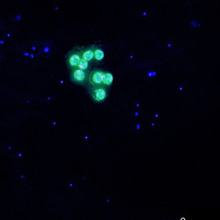
Aquatische Mikroorganismen spielen eine zentrale Rolle für das Funktionieren von aquatischen Ökosystemen wie zum Beispiel Seen und Flüssen. Sie tragen wesentlich zu den biogeochemischen Prozessen in den verschiedenen Nährstoffkreisläufen bei. Die Forschungsgruppe Mikrobielle Ökologie trägt die mikrobiologische Perspektive zum interdisziplinären Ansatz des Departements Oberflächengewässer bei. Wir erforschen, wie die Umweltbedingungen in aquatischen Systemen die Zusammensetzung und Funktion der Mikrobengemeinschaften steuert, und wie diese wiederum die Prozesse und Stoffflüsse im Ökosystem beeinflussen.
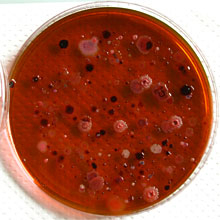
Aber nicht alle Mikroben habe eine positive Rolle in der Umwelt: Ein weiterer Fokus der Forschungsgruppe ist die Untersuchung der Rolle der Oberflächengewässer und des Urbanen Wasserkreislaufs bei der Verbreitung von antibiotikaresistenten Bakterien.
Unsere Ziele:

  • Erforschung der Mikroorganismen, die entscheidende Rollen bei wichtigen biogeochemischen Prozessen in aquatischen Ökosystemen übernehmen, z.B. bei der Methanoxidation, dem Abbau von organischer Substanz, oder im Stickstoffkreislauf
  • Ein besseres Verständnis der Rolle der mikrobiellen Biodiversität und der Struktur von mikrobiellen Gemeinschaften für die Stabilität von Ökosystemprozessen
  • Erforschung der Dynamik mikrobieller Gemeinschaften in einer dynamischen Umwelt. Resistenz und Resilienz von Struktur und Funktion.
  • Information über mikrobielle Populationen in Bezug zur Funktion setzten:  Von der Black Box zu populationsbasierten Prozessmodellen
  • Erforschung der Rolle aquatischer Systeme für die Verbreitung, Selektion, und Evolution antibiotikaresistenter Bakterien.

Ein besseres Verständnis der mikrobiellen Ökologie aquatischer Systeme leistet einen unverzichtbaren Beitrag für ein nachhaltiges Management unserer Wasser-Ressourcen.

Kontakt

Dr. Helmut Bürgmann Gruppenleiter Mikrobielle Öklologie Tel. +41 58 765 2165 Inviare e-mail

Team

Dr. Helmut Bürgmann Gruppenleiter Mikrobielle Öklologie Tel. +41 58 765 2165 Inviare e-mail
Madeline Deck PhD Student Tel. +41 58 765 2268 Inviare e-mail
Ramona Blattner Master Thesis Student Tel. +41 58 765 2158 Inviare e-mail

Aktuelle Projekte

Abwasser ist mit antibiotikaresistenten Bakterien belastet. Wir untersuchen ihre Ausbreitung in die Umwelt und Gegenmassnahmen.
Die ökologischen Nischen und Eigenschaften von Methanotrophen Bakterien: Von der Populationsanalyse zu Prozessmodellen.
Wir untersuchen die mikrobielle Gemeinschaft in Seen, deren Hauptakteure und ihre Aktivität bei verschiedenen Stickstoff-Transformationsprozessen.
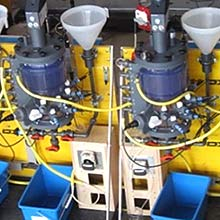
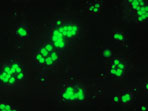
Wir untersuchen die ökologische Stabilität von Anammox-Biofilmen, die für die autotrophe Stickstoff Eliminierung in gemischten Nitritation-Anammox Systemen verantwortlich sind.

Vorherige Projekte

Methanzyklus des Kivu Sees
Lake Kivu (Rwanda / R. o. t. Kongo) is a large Lake in central Africa distinguished by an enormous accumulation of dissolved CO2 and methane in its Hypolimnion. We studied and modeled the processes of methane cycling and the distributions of potential methanotrophs populations in the Lake.

Zusammenarbeit

Kivusee Projekt-Team


Publikation

Extbase Variable Dump
array(2 items)
   publications => '6670' (4 chars)
   libraryUrl => '' (0 chars)
Extbase Variable Dump
array(1 item)
   0 => Snowflake\Publications\Domain\Model\Publicationprototypepersistent entity (uid=6670, pid=124)
      originalId => protected6670 (integer)
      authors => protected'Pasche, N.; Schmid, M.; Vazquez, F.; Schubert, C. J
         .; Wüest, A.; Kessler, J. D.; Pack, M. A.; Reeburg
         h, W. S.; Bürgmann, H.
' (190 chars) title => protected'Methane sources and sinks in Lake Kivu' (38 chars) journal => protected'Journal of Geophysical Research: Biogeosciences' (47 chars) year => protected2011 (integer) volume => protected116 (integer) issue => protected'G3' (2 chars) startpage => protected'G03006 (16 pp.)' (15 chars) otherpage => protected'' (0 chars) categories => protected'' (0 chars) description => protected'Unique worldwide, Lake Kivu stores enormous amounts of CH<sub>4</sub> and CO
         <sub>2</sub>. A recent study reported that CH<sub>4</sub> concentrations in
         the lake have increased by up to 15% in the last 30 years and that accumulat
         ion at this rate could lead to catastrophic outgassing by ∼2100. This stud
         y investigates the present-day CH<sub>4</sub> formation and oxidation in Lak
         e Kivu. Analyses of <sup>14</sup>C and <sup>13</sup>C in CH<sub>4</sub> and
         potential carbon sources revealed that below 260 m, an unusually high ∼65%
          of the CH<sub>4</sub> originates either from reduction of geogenic CO<sub>2
         </sub> with mostly geogenic H<sub>2</sub> or from direct inflows of geogenic
          CH<sub>4</sub>. Aerobic CH<sub>4</sub> oxidation, performed by close relati
         ves of type X CH<sub>4</sub>-oxidizing bacteria, is the main process prevent
         ing CH<sub>4</sub> from escaping to the atmosphere. Anaerobic CH<sub>4</sub>
          oxidation, carried out by CH<sub>4</sub>-oxidizing archaea in the SO<sub>4<
         /sub><sup>2−</sup>-reducing zone, was also detected but is limited by the
         availability of sulfate. Changes in <sup>14</sup>C<sub>CH4</sub> and <sup>13
         </sup>C<sub>CH4</sub> since the 1970s suggest that the amount of CH<sub>4</s
         ub> produced from degrading organic material has increased due to higher acc
         umulation of organic matter. This, as well as the sudden onset of carbonates
          in the 1960s, has previously been explained by three environmental changes:
          (1) introduction of nonnative fish, (2) amplified subaquatic inflows follow
         ing hydrological changes, and (3) increased external inputs due to the fast
         growing population. The resulting enhancement of primary production and orga
         nic matter sedimentation likely caused CH<sub>4</sub> to increase. However,
         given the large proportion of old CH<sub>4</sub> carbon, we cannot exclude a
         n increased inflow of geogenic H<sub>2</sub> or CH<sub>4</sub>.
' (1887 chars) serialnumber => protected'2169-8953' (9 chars) doi => protected'10.1029/2011JG001690' (20 chars) uid => protected6670 (integer) _localizedUid => protected6670 (integer)modified _languageUid => protectedNULL _versionedUid => protected6670 (integer)modified pid => protected124 (integer)
Pasche, N.; Schmid, M.; Vazquez, F.; Schubert, C. J.; Wüest, A.; Kessler, J. D.; Pack, M. A.; Reeburgh, W. S.; Bürgmann, H. (2011) Methane sources and sinks in Lake Kivu, Journal of Geophysical Research: Biogeosciences, 116(G3), G03006 (16 pp.), doi:10.1029/2011JG001690, Institutional Repository

Archaea in Sedimenten des Kivu Sees

In diesem Projekt analysierten wir die Population von Archaea, zu denen auch methanogene Organismen zählen. Die Sedimente werden lokal stark durch verschiedene Unterwasser-Quellen beeinflusst, und auch die Mikrobiellen Gemeinschaften werden dadurch stark beeinflusst.

Zusammenarbeit

Kivusee Projekt-Team

Publikation

Extbase Variable Dump
array(2 items)
   publications => '6912' (4 chars)
   libraryUrl => '' (0 chars)
Extbase Variable Dump
array(1 item)
   0 => Snowflake\Publications\Domain\Model\Publicationprototypepersistent entity (uid=6912, pid=124)
      originalId => protected6912 (integer)
      authors => protected'Bhattarai,&nbsp;S.; Ross,&nbsp;K.&nbsp;A.; Schmid,&nbsp;M.; Anselmetti,&nbsp
         ;F.&nbsp;S.; Bürgmann,&nbsp;H.
' (107 chars) title => protected'Local conditions structure unique archaeal communities in the anoxic sedimen
         ts of meromictic Lake Kivu
' (102 chars) journal => protected'Microbial Ecology' (17 chars) year => protected2012 (integer) volume => protected64 (integer) issue => protected'2' (1 chars) startpage => protected'291' (3 chars) otherpage => protected'310' (3 chars) categories => protected'' (0 chars) description => protected'Meromictic Lake Kivu is renowned for its enormous quantity of methane dissol
         ved in the hypolimnion. The methane is primarily of biological origin, and i
         ts concentration has been increasing in the past half-century. Insight into
         the origin of methane production in Lake Kivu has become relevant with the r
         ecent commercial extraction of methane from the hypolimnion. This study prov
         ides the first culture-independent approach to identifying the archaeal comm
         unities present in Lake Kivu sediments at the sediment-water interface. Term
         inal restriction fragment length polymorphism analysis suggests considerable
          heterogeneity in the archaeal community composition at varying sample locat
         ions. This diversity reflects changes in the geochemical conditions in the s
         ediment and the overlying water, which are an effect of local groundwater in
         flows. A more in-depth look at the archaeal community composition by clone l
         ibrary analysis revealed diverse phylogenies of <I>Euryarchaeota</I> and <I>
         Crenarachaeota</I>. Many of the sequences in the clone libraries belonged to
          globally distributed archaeal clades such as the rice cluster V and Lake Da
         gow sediment environmental clusters. Several of the determined clades were p
         reviously thought to be rare among freshwater sediment Archaea (e.g., sequen
         ces related to the SAGMEG-1 clade). Surprisingly, there was no observed rela
         tion of clones to known hydrogentrophic methanogens and less than 2 % of clo
         nes were related to acetoclastic methanogens. The local variability, diversi
         ty, and novelty of the archaeal community structure in Lake Kivu should be c
         onsidered when making assumptions on the biogeochemical functioning of its s
         ediments.
' (1681 chars) serialnumber => protected'0095-3628' (9 chars) doi => protected'10.1007/s00248-012-0034-x' (25 chars) uid => protected6912 (integer) _localizedUid => protected6912 (integer)modified _languageUid => protectedNULL _versionedUid => protected6912 (integer)modified pid => protected124 (integer)
Bhattarai, S.; Ross, K. A.; Schmid, M.; Anselmetti, F. S.; Bürgmann, H. (2012) Local conditions structure unique archaeal communities in the anoxic sediments of meromictic Lake Kivu, Microbial Ecology, 64(2), 291-310, doi:10.1007/s00248-012-0034-x, Institutional Repository

Fotogallerie