Department Environmental Social Sciences

How to explain instrument selection in complex policy processes - A comparative network approach of micropollution regulation in the Rhine River Basin
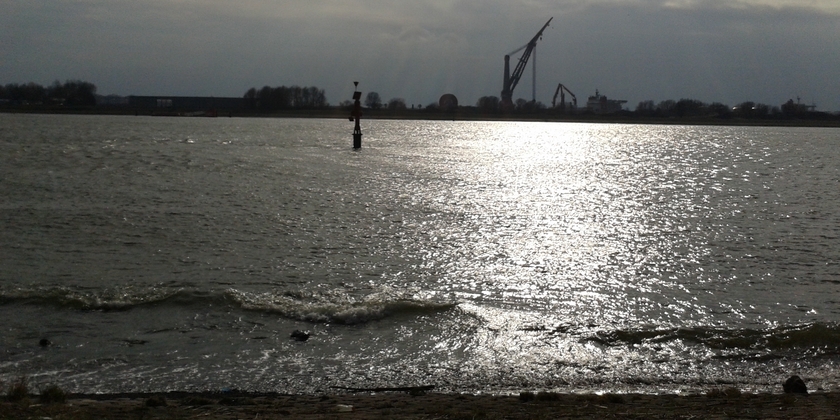

This research project addresses the question of which factors explain governments’ choice of instrument selection. To answer this question, we concentrate on the emerging policy discussion and the formulation processes about micropollution regulation within the Rhine river basin and compare policy options of four riparian countries: Switzerland, Germany, France and the Netherlands.

Results

This project shows that network structures have indeed a crucial impact upon the instruments and instrument mixes. The most comprehensive instrument mix towards micropolluntants’ regulation and water quality control was adopted in countries where a certain degree of collaboration, or brokerage and entrepreneurship is apparent. 

Main applicant

Prof. Dr. Karin Ingold Group Leader, Group: PEGO Tel. +41 58 765 5676 Send Mail

Project team

Florence Metz, University of Berne

H. Bresser, UTwente

M. Lubeli, UDavis

F. Varone, UGeneva

Related Publications

Extbase Variable Dump
array(2 items)
   publications => '9059' (4 chars)
   libraryUrl => '' (0 chars)
Extbase Variable Dump
array(1 item)
   0 => Snowflake\Publications\Domain\Model\Publicationprototypepersistent entity (uid=9059, pid=124)
      originalId => protected9059 (integer)
      authors => protected'Metz, F.; Ingold, K.' (30 chars)
      title => protected'Sustainable wastewater management: is it possible to regulate micropollution
          in the future by learning from the Past? A policy analysis
' (135 chars) journal => protected'Sustainability' (14 chars) year => protected2014 (integer) volume => protected6 (integer) issue => protected'4' (1 chars) startpage => protected'1992' (4 chars) otherpage => protected'2012' (4 chars) categories => protected'micropollution regulation; water quality; policy analysis; policy instrument
         s
' (77 chars) description => protected'This paper applies a policy analysis approach to the question of how to effe
         ctively regulate micropollution in a sustainable manner. Micropollution is a
          complex policy problem characterized by a huge number and diversity of chem
         ical substances, as well as various entry paths into the aquatic environment
         . It challenges traditional water quality management by calling for new tech
         nologies in wastewater treatment and behavioral changes in industry, agricul
         ture and civil society. In light of such challenges, the question arises as
         to how to regulate such a complex phenomenon to ensure water quality is main
         tained in the future? What can we learn from past experiences in water quali
         ty regulation? To answer these questions, policy analysis strongly focuses o
         n the design and choice of policy instruments and the mix of such measures.
         In this paper, we review instruments commonly used in past water quality reg
         ulation. We evaluate their ability to respond to the characteristics of a mo
         re recent water quality problem, <I>i.e.</I>, micropollution, in a sustainab
         le way. This way, we develop a new framework that integrates both the proble
         m dimension (<I>i.e.</I>, causes and effects of a problem) as well as the su
         stainability dimension (e.g., long-term, cross-sectoral and multi-level) to
         assess which policy instruments are best suited to regulate micropollution.
         We thus conclude that sustainability criteria help to identify an appropriat
         e instrument mix of end-of-pipe and source-directed measures to reduce aquat
         ic micropollution.
' (1538 chars) serialnumber => protected'' (0 chars) doi => protected'10.3390/su6041992' (17 chars) uid => protected9059 (integer) _localizedUid => protected9059 (integer)modified _languageUid => protectedNULL _versionedUid => protected9059 (integer)modified pid => protected124 (integer)
Metz, F.; Ingold, K. (2014) Sustainable wastewater management: is it possible to regulate micropollution in the future by learning from the Past? A policy analysis, Sustainability, 6(4), 1992-2012, doi:10.3390/su6041992, Institutional Repository