Department Sanitation, Water and Solid Waste for Development
Emergency and Humanitarian Contexts
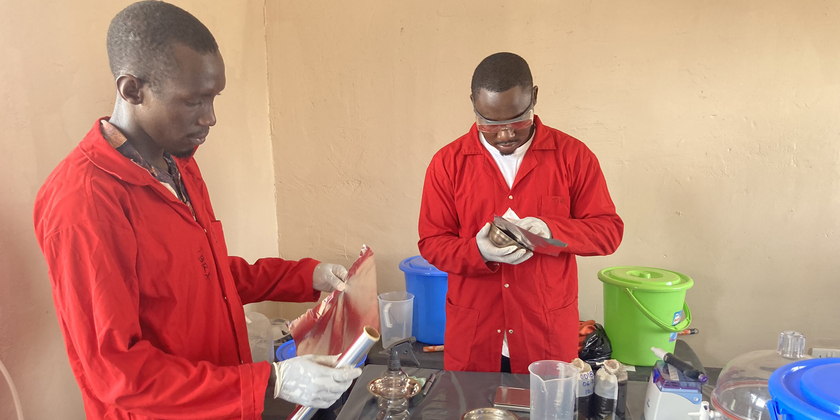
Emergencies, be they natural or man-made disasters, and protracted crises have increased worldwide in the recent past. The provision of adequate sanitation at every step of a crisis, from the first emergency to rehabilitation and long-term development, and along every step in the service chain, is crucial in order to protect human and environmental health. The Management of Excreta, Wastewater, and Sludge (MEWS) group is providing technical backstopping support to humanitarian aid projects, developing technical guidelines and factsheets for the design of management and technology solutions, and working on further refining methods for analysis and monitoring.
Current activities include
- MEWS is applying their expertise in laboratory research to further refine existing methods, and develop and integrate new methods. Examples include the Volaser and the Sludge Snap App.
- MEWS is adapting previous applied research for scaling-up technologies, together with the books Faecal Sludge Management: Highlights and Exercises and Methods for Faecal Sludge Analysis, to develop detailed engineering design recommendations.
-
MEWS is doing on-demand backstopping for Swiss Humanitarian Aid (SHA) and the Geneva Technical Hub.
Available resources include
Project partner
- SHA
Current funding
- SHA