Department Sanitation, Water and Solid Waste for Development
Solid Waste Management in Humanitarian Contexts
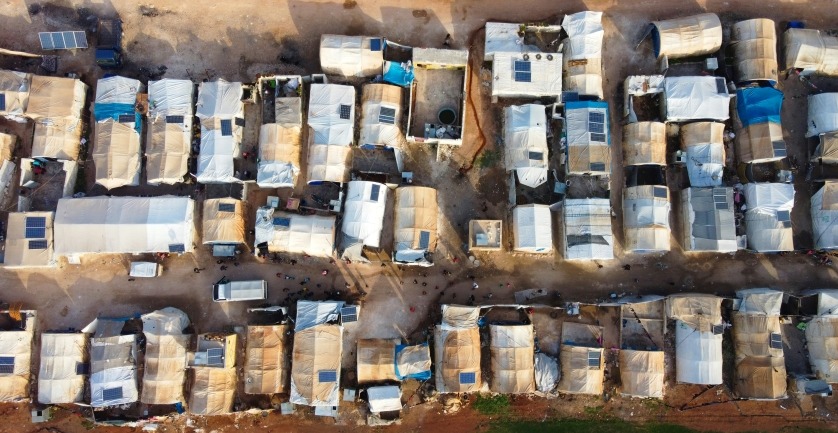
Solid Waste Management (SWM) plays a critical role in protecting public health and the environment in humanitarian settings but is often overlooked. The solid waste research group at Sandec works in close collaboration with the Swiss Agency for Development and Cooperation (SDC/HA) and supports the UNHCR through the Geneva Technical Hub (GTH). Projects and activities address the development of comprehensive technical guidance and tools, respond to field requests, and develop capacity.
Resources
The Compendium of Solid Waste Management in Humanitarian Contexts provides a structured and comprehensive overview of SWM approaches and technologies tailored to humanitarian needs. This resource equips practitioners with the tools to plan, implement, and adapt context-specific SWM interventions across emergency, stabilisation, and recovery phases. Crucially, it also serves as a bridge to post-emergency recovery and development efforts, promoting continuity and resilience in the affected communities.
The Humanitarian Aid Solid Waste Assessment and Improvement (HAWAI) Guidelines are designed to support field practitioners in evaluating and improving Solid Waste Management (SWM) systems in humanitarian contexts. Complementing the Compendium, they provide practical tools for identifying hotspots and prioritising both short- and long-term actions. They focus on assessing and improving key elements of the SWM service chain—such as waste storage, collection, transport, disposal, organic waste management, recycling, and self-management. These guidelines emphasise the importance of reliable baseline data as the foundation for planning and implementing improvements. They offer step-by-step recommendations for assessing and improving existing systems, as well as for planning and designing new SWM systems.
Is Biogas a Feasible Option? Assessing anaerobic digestion in humanitarian contexts is a guidance package that outlines all aspects to consider when evaluating the feasibility of anaerobic digestion in humanitarian contexts. It includes an introduction to the basics of biogas waste treatment, how to conduct an assessment and evaluation of the local context, and an Excel-based tool to evaluate biogas (TET-Biogas Excel) as a potential technology.
The Guidelines for the Safe Disposal of Solid Waste in Humanitarian Contexts support practitioners in making decisions regarding the sound disposal of domestic solid waste in a humanitarian context. It proposes several mitigation measures that can be implemented at existing sites or be considered in the planning and design of new sites to reduce negative impacts. A tool is provided for estimating the required disposal area (landfill area estimation tool).
The Massive Open Online Course (MOOC) on municipal solid waste management in low- and middle-income countries is also relevant for humanitarian contexts. The course includes a specific module for humanitarian contexts directly accessible here.