
News Detail
Gaining time in the fight against the quagga mussel
April 8, 2025 |
The recently published report “Quagga mussel: monitoring concept and recommendations for prevention and protective measures” is the result of a collaboration between researchers from the aquatic research institute Eawag and experts from Cercle Exotique, a working group of the Conference of Cantonal Environmental Agencies (KVU). The combination of research findings and practical experience will provide specific proposals for dealing with the quagga mussel in Swiss waters to authorities and suppliers of water, heating and cooling, together with other decision-makers.
Fast and comprehensive action
“Every year that no quagga mussels are found in a Swiss lake is a year gained,” emphasises Piet Spaak, a biologist and quagga mussel expert at Eawag. The time gained can be used to prepare infrastructure with water pipes that carry lake water for when the quagga mussel eventually spreads to the lake in question. Filters and heat exchangers, for example, can protect sensitive equipment parts from mussels adhering to them, thus preventing irreversible damage to buildings and installations. This sometimes requires very expensive conversion and new buildings, which have to be planned well in advance. Spaak: “We are talking about costs that are likely to amount to hundreds of millions of francs for the whole of Switzerland.”
The authors of the report provide specific recommendations for containing the spread of the quagga mussel. “For the best effect, these measures should be implemented as quickly and extensively as possible,” explains Spaak.
Unaffected lakes should be tested at least once a year using environmental DNA analysis. This allows any quagga mussel colonisation to be detected at an early stage. This enables the relevant authorities to respond quickly and also to check whether the protective measures taken are sufficient. The authors consider reports from the public to be an important additional element.
Containment for the protection of water bodies
The report shows that the quagga mussel is spreading in Switzerland mainly due to transport of leisure boats. This is where the authors therefore see the greatest leverage: to prevent the quagga mussel from gaining a foothold in previously unaffected bodies of water, wide-ranging measures are best, such as mandatory ship reporting and cleaning requirements. Such requirements have already been introduced around Lake Lucerne, in the Canton of Bern and in a similar way in the canton of Aargau on Lake Hallwil. The cantons of St. Gallen, Graubünden and Zurich have joined in as of April 2025; other cantons, such as the canton of Glarus, will follow.
In addition, a mandatory ship reporting and cleaning requirement helps to prevent the introduction and spread of other invasive species, such as the narrow-leaved water reed, a fast-growing underwater plant, and the black-mouthed goby, an invasive fish species. The authors also identify gaps in knowledge of how to carry out ship cleaning. Detailed, tested cleaning methods and instructions, additional cleaning centres and research tailored to practical methods could be helpful here.

Research for clear future scenarios
In order to understand the long-term consequences for the ecosystems, research is currently based on experience with the North American lakes, where the quagga mussel was imported 20 years earlier than in Europe. However, there is a strong public need for a specific impact assessment for Swiss water bodies. To answer that, further research is necessary. The authors suggest that the lakes already affected should be monitored annually on a standardised basis. Selected lakes that have already been studied in detail by research institutes in the past should be monitored in more detail, with samples taken at different sites and depths every one to two years. This detailed data could then be used in the planning of preventive measures.
New advisory centre
A new quagga mussel centre at Eawag has been available to advise those in relevant positions of responsibility since 1 April 2025. It is financially supported by the Federal Office for the Environment (FOEN) and Eawag. It will provide information and expertise to stakeholders from public authorities and professional practice. The aim is also to work together with the international commissions for the protection of Lake Geneva, Lake Constance, Lake Lugano and Lake Maggiore.
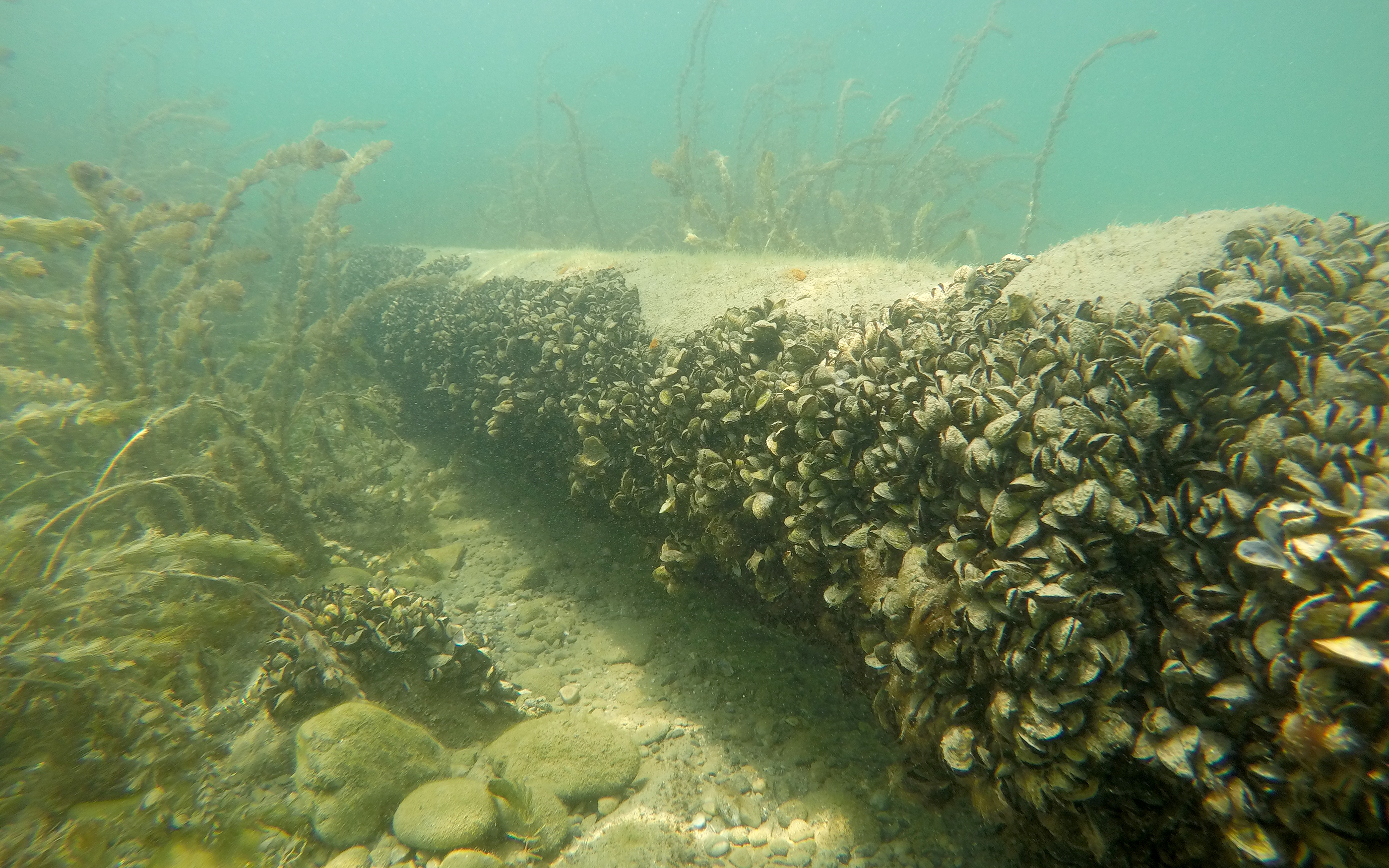
The quagga mussel (Dreissena rostriformis) is an invasive alien species: it originally comes from the Black Sea region, but is now widespread in parts of Europe and North America. It is found in lakes, slow-flowing rivers and estuaries. The invasive mussel is a particular problem in lakes that are deep and deficient in nutrients.The larvae can spread naturally by floating in the current and thus being carried downstream.
The larvae are also unintentionally transported over long distances by humans in waters from the bilge, the engine cooling system or ballast of large cargo ships. The adult mussels also adhere to boats and other objects and are thus spread, for example, by leisure boats used in different bodies of water.
The presence of the mussel fundamentally changes ecosystems. It affects both the light conditions in the water and the food web, which, among other things, means that fish find less food. In addition, the quagga mussel interferes with human water use. The biggest problem is the blockage of pipes in water supply or cooling water systems. Maintenance and renewal costs are tremendous.
Once the quagga mussel has settled in a body of water, it cannot be eliminated. In affected Swiss lakes, the biomass of quagga mussels per square metre is likely to increase by a factor of nine to 20 over the next 20 to 30 years. There are currently no control measures that are practical for Switzerland.
Collapsing lakes and millions of francs in damage
In December 2024, Swiss television reported on Eawag’s research into quagga mussels in the Einstein programme (in German).
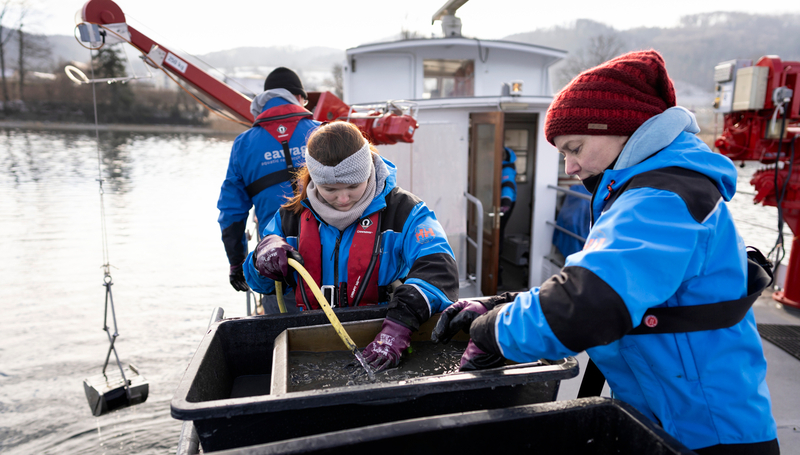
Cover picture: Filters and heat exchangers can protect infrastructures from clogging by mussels (Photo: Eawag, Linda Haltiner).
Original publications
Funding / Partnerships
- Eawag
- Federal Office for the Environment (FOEN), Water department
- Swiss Expert Committee for Biosafety (SECB)
- Cercle Exotique, “Aquatic alien species” working group
- M|u|t environmental office
Protective measures
for Lake Lucerne, Lake Hallwil, the canton of Bern, the canton of Zurich, the canton of St. Gallen and the canton of Graubünden.