Pesticides in water

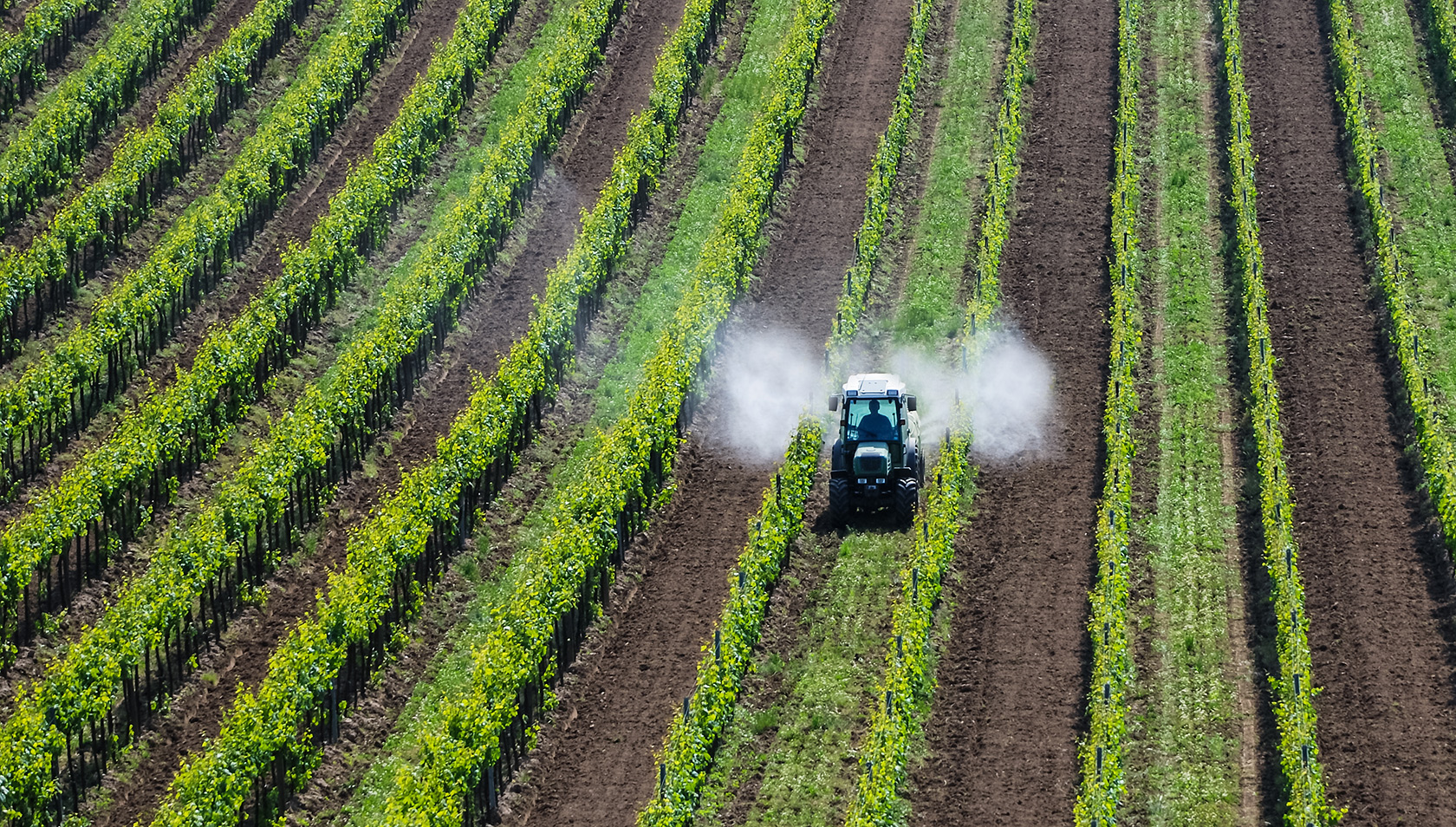
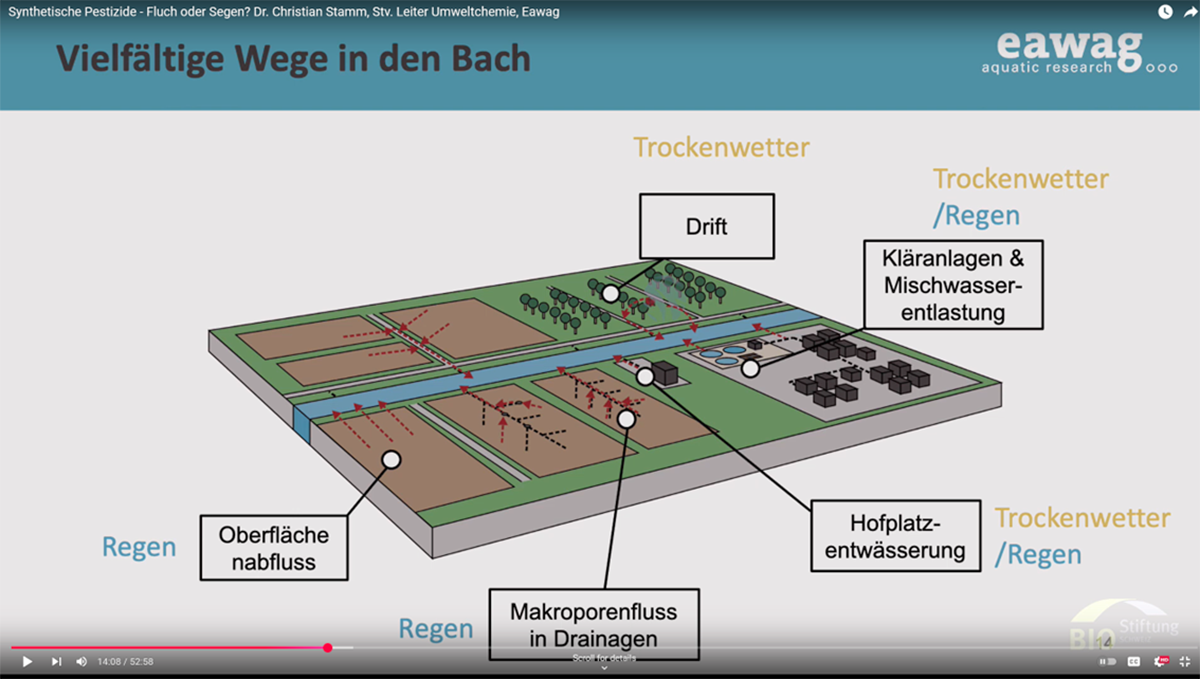
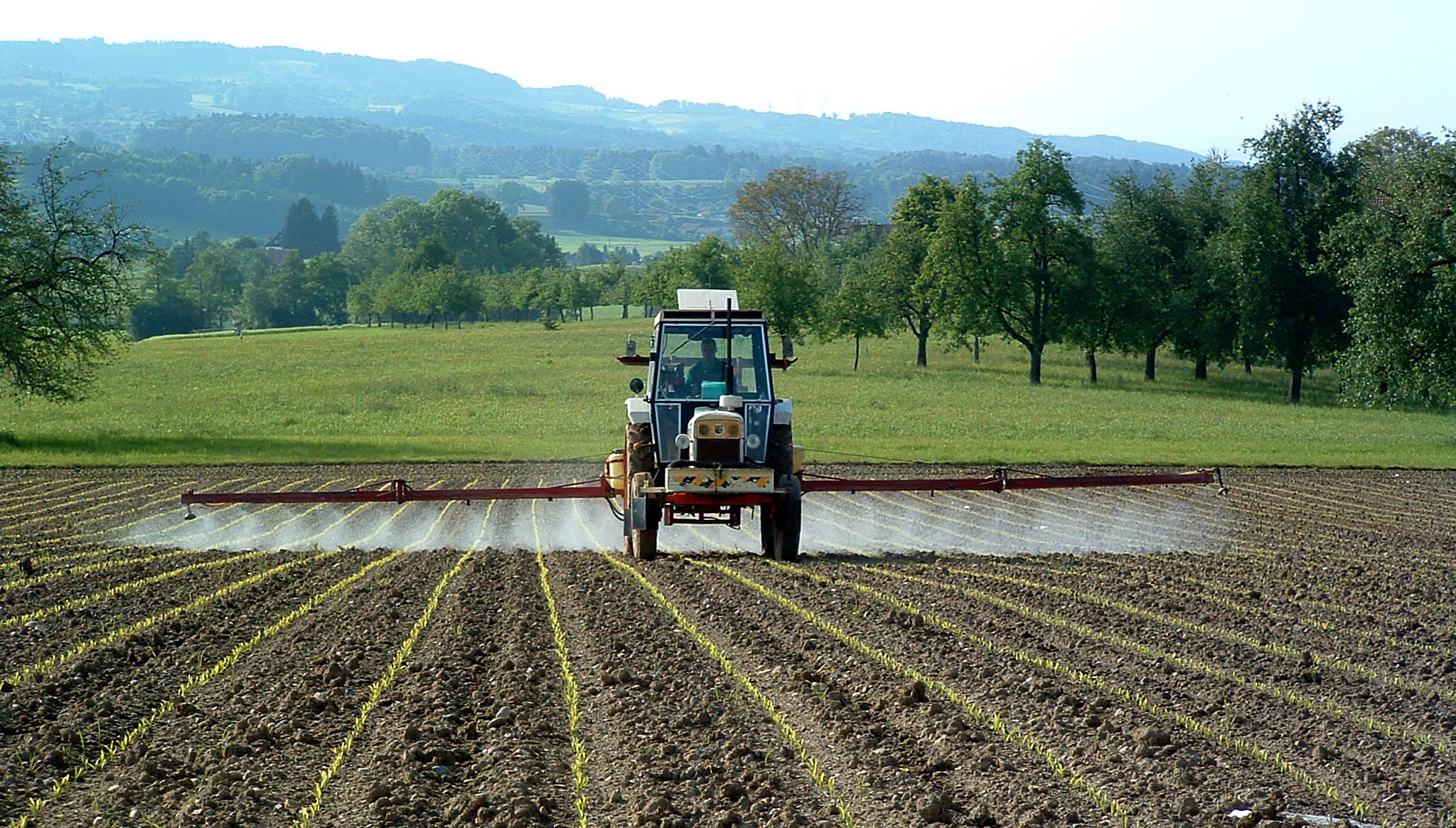
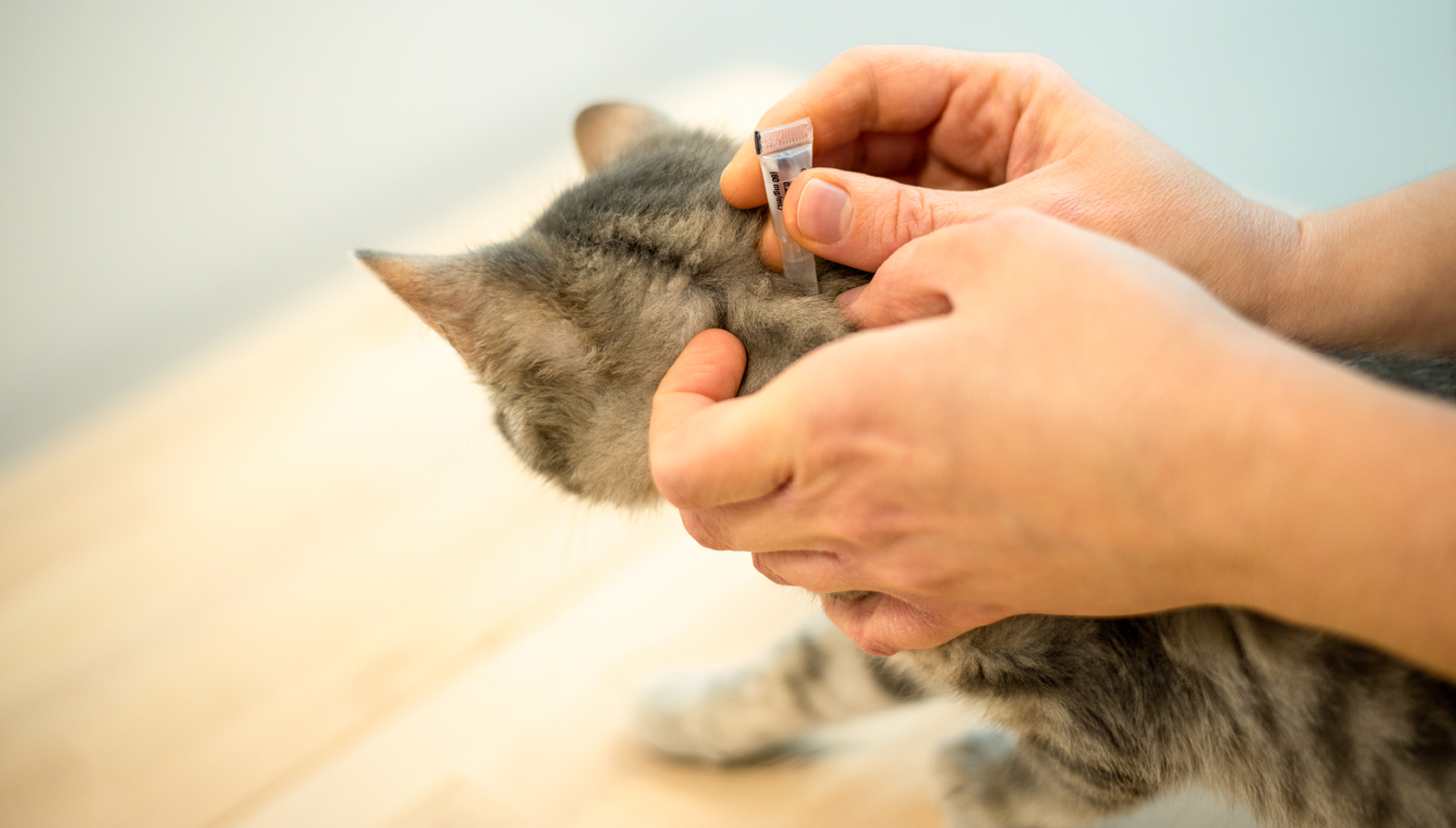
Pesticide is a collective term for biologically active substances used to combat unwanted organisms. In agriculture, including horticulture, they are used against weeds (herbicides), fungi (fungicides) and insects (insecticides). In households or, for example, in building materials, paints or plasters, the term biocides is more commonly used. Many active substances eventually end up in water. They can endanger drinking water resources or harm aquatic organisms.
Events

There are currently no events on this topic. In our agenda you will find other events of Eawag

Experts

Heinz Singer
  • chromatography
  • mass spectrometry
  • organic pollutants
  • surface water
Prof. Dr. Juliane Hollender
  • Computational methods
  • biological degradation
  • bioaccumulation
  • groundwater
  • mass spectrometry
Dr. Christian Stamm
  • wastewater
  • agriculture
  • water quality
Dr. Marion Junghans
  • algae
  • aquatic ecotoxicology
  • micropollutants
  • ecotoxicology

Scientific publications

Extbase Variable Dump
array(3 items)
   publications => '33214' (5 chars)
   libraryUrl => '' (0 chars)
   layout => '1' (1 chars)
Extbase Variable Dump
array(1 item)
   0 => Snowflake\Publications\Domain\Model\Publicationprototypepersistent entity (uid=33214, pid=124)
      originalId => protected33214 (integer)
      authors => protected'Thomas, P. K.; Arn, F. J.; Freiermuth, M.; Narwani,
          A.
' (84 chars) title => protected'<em>Botryococcus braunii</em> reduces algal grazing losses to <em>Daphnia </
         em>and <em>Poterioochromonas </em>through both chemical and physical interfe
         rence
' (157 chars) journal => protected'Journal of Applied Phycology' (28 chars) year => protected2024 (integer) volume => protected36 (integer) issue => protected'' (0 chars) startpage => protected'3221' (4 chars) otherpage => protected'3230' (4 chars) categories => protected'chemical ecology; pest management; synthetic ecology; algal bioproducts; alg
         ae milking; alleopathy
' (98 chars) description => protected'Crop protection from algal grazers is a key area of concern, as grazing zoop
         lankton and flagellates can decimate microalgae crops and impede economic vi
         ability of cultivation for biofuels and bioproducts. Inhibition of grazing b
         y chemical and physical interference is one promising solution; however, the
         re have been few empirical tests of this approach that use defense traits in
         nate to algal crop species. <em>Botryococcus braunii</em> is of particular i
         nterest because a) it excretes high levels of hydrocarbons and exopolysaccha
         rides and b) forms colonies and possesses chemical defenses. Here we conduct
          a controlled laboratory experiment to test whether <em>B. braunii</em> can
         mitigate losses to grazing by two distinct grazers, <em>Daphnia magna</em> a
         nd <em>Poterioochromonas malhamensis</em>, due to both chemical inhibition a
         nd physical interference linked to large/inedible colonies. We show that che
         mical and physical defenses interactively reduce the total effect of grazing
         , thus significantly increasing the biomass and growth rates of cultures of
         <em>B. braunii</em> and <em>Nannochloropsis limnetica</em> when either graze
         r is present. We also find that <em>B. braunii</em> medium enhances the grow
         th of <em>N. limnetica</em>. Our study demonstrates how community engineerin
         g can identify synergies arising from algal co-cultivation (e.g., by using i
         ndustrially relevant strains for crop protection). While our lab study serve
         s as a proof-of-concept, future research should test this strategy at pilot
         scale; if successful, such ecological discoveries may help to reduce the cos
         ts of large-scale deployment of algal cultivation for sustainable foods, fue
         ls, bioproducts (e.g., bioplastics), and carbon capture.
' (1728 chars) serialnumber => protected'0921-8971' (9 chars) doi => protected'10.1007/s10811-024-03330-x' (26 chars) uid => protected33214 (integer) _localizedUid => protected33214 (integer)modified _languageUid => protectedNULL _versionedUid => protected33214 (integer)modified pid => protected124 (integer)
Thomas, P. K.; Arn, F. J.; Freiermuth, M.; Narwani, A. (2024) Botryococcus braunii reduces algal grazing losses to Daphnia and Poterioochromonas through both chemical and physical interference, Journal of Applied Phycology, 36, 3221-3230, doi:10.1007/s10811-024-03330-x, Institutional Repository

Cover picture: Source: Eawag.