MEWS conducts applied research to push technologies from innovative and transferring, to technologies that are field-ready for implementation.
The research group Management of Excreta, Wastewater, and Sludge (MEWS) conducts applied research to push technologies from the developing stage to technologies that are field-ready for implementation, in order to fulfill the huge demand from practitioners and industry. This includes developing innovative technologies, transferring technologies from other applications, and bringing them to the level of established technologies that are field-ready for implementation (WHO 2018). Examples of our applied research for scaling-up treatment technologies include:
Faecal Sludge Treatment Technologies: MEWS has led several laboratory- and pilot-scale research projects in low- and middle-income countries to develop and optimize affordable faecal sludge treatment technologies for dense, urban areas, including settling-thickening tanks, planted and unplanted drying beds, geotextiles, conditioners, pelletizing, bio-char, animal fodder, and other forms of resource recovery from endproducts. For more information see publication list, and the books Faecal Sludge Management: Highlights and Exercises and Methods for Faecal Sludge Analysis.
Off-grid solutions: MEWS is leading research in the Water Hub at NEST on the dewatering of blackwater. We are currently investigating sensors for real-time monitoring in order to optimize automatic conditioner dosing, based on what we have learned in our research into the fundamental mechanisms that control dewaterability.
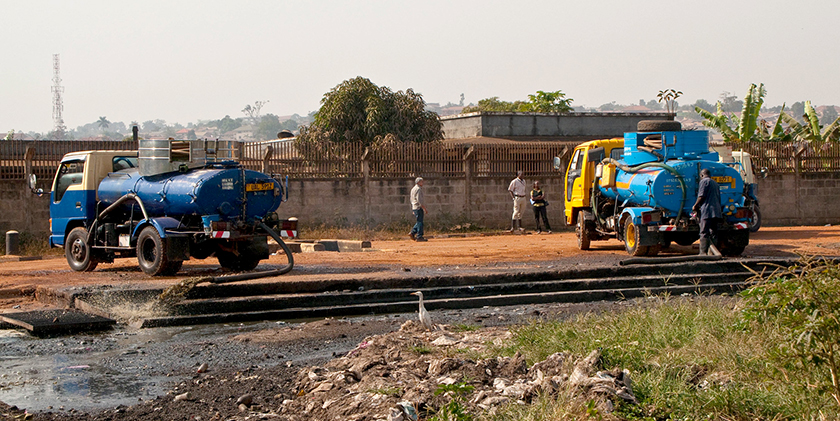
Startups: we are currently working with CubeX in Lebanon to scale up their mobile dewatering truck for humanitarian and low-income contexts.
Sludge Snap App: An app to predict characteristics of faecal sludge based on pictures taken with a smartphone
Volaser: A laser measuring device operated with a smartphone app, to measure in situ volumes of faecal sludge and containment size
Collaborators
University of Zambia (UNZA), Lusaka Zambia
Makerere University
Sanivation, Naivasha, Kenya
Sanergy, Nairobi, Kenya
Delvic, Dakar, Senegal
Goal, Freetown, Sierra Leone
CubeX, Beirut, Lebanon
Current funding
Swiss Agency for Development and Cooperation (SDC), Eawag discretionary funding, Repic
array(8 items)0 => Snowflake\Publications\Domain\Model\Publicationprototypepersistent entity (uid=18906, pid=124)originalId => protected18906 (integer)
authors => protected'Andriessen, N.; Ward, B. J.; Strande, L.' (60 chars)
title => protected'To char or not to char? Review of technologies to produce solid fuels for re source recovery from faecal sludge' (110 chars)
journal => protected'Journal of Water, Sanitation and Hygiene for Development' (56 chars)
year => protected2019 (integer)
volume => protected9 (integer)
issue => protected'2' (1 chars)
startpage => protected'210' (3 chars)
otherpage => protected'224' (3 chars)
categories => protected'carbonization; energy recovery; faecal sludge; fecal sludge; onsite sanitati on; pyrolysis' (89 chars)
description => protected'Resource recovery from faecal sludge can take many forms, including as a fue l, soil amendment, building material, protein, animal fodder, and water for irrigation. Resource recovery as a solid fuel has been found to have high ma rket potential in Sub-Saharan Africa. Laboratory- and pilot-scale research o n faecal sludge solid fuel production exists, but it is unclear which techno logy option is most suitable in which conditions. This review offers an over view and critical analysis of the current state of technologies that can pro duce a dried or carbonized solid fuel, including drying, pelletizing, hydrot hermal carbonization, and slow-pyrolysis. Carbonization alters fuel properti es, and in faecal sludge, it concentrates the ash content and decreases the calorific value. Overall, a non-carbonized faecal sludge fuel is recommended , unless a carbonized product is specifically required by the combustion tec hnology or end user. Carbonized and non-carbonized fuels have distinct chara cteristics, and deciding whether to char or not to char is a key judgement i n determining the optimal solid fuel technology option. Based on the existin g evidence, this review provides a decision-making structure for selecting t he optimal technology to produce a faecal sludge solid fuel and identifies t he top research needs prior to full-scale implementation.' (1349 chars)
serialnumber => protected'2043-9083' (9 chars)
doi => protected'10.2166/washdev.2019.184' (24 chars)
uid => protected18906 (integer)
_localizedUid => protected18906 (integer)modified_languageUid => protectedNULL
_versionedUid => protected18906 (integer)modifiedpid => protected124 (integer)1 => Snowflake\Publications\Domain\Model\Publicationprototypepersistent entity (uid=17656, pid=124)originalId => protected17656 (integer)
authors => protected'Gold, M.; Cunningham, M.; Arnheiter, R.; Schönborn, A.; Niwagaba, C.; Strande, L.' (112 chars)
title => protected'Operating parameters for three resource recovery options from slow-pyrolysis of faecal sludge' (93 chars)
journal => protected'Journal of Water, Sanitation and Hygiene for Development' (56 chars)
year => protected2018 (integer)
volume => protected8 (integer)
issue => protected'4' (1 chars)
startpage => protected'707' (3 chars)
otherpage => protected'717' (3 chars)
categories => protected'char; pyrolysis; sanitation; treatment; Uganda; wastewater' (58 chars)
description => protected'Slow-pyrolysis is a treatment technology that is being explored for treatmen t of faecal sludge (FS) from onsite sanitation technologies. Next to pathoge n inactivation, the technology produces treatment products. Revenues from th ese products could offset treatment costs and contribute to financially viab le sanitation. In comparison to lignocellulosic biomass and other biowastes, little information is available on operating parameters for FS pyrolysis to produce char for different resource recovery options. In Kampala, Uganda, t his bench-scale study investigated the influence of two major operating para meters, hold time (10, 20 and 40 minutes) and pyrolysis temperature (350, 45 0 and 600 °C) for pyrolysis of FS into char for solid fuel production, soil enhancement and carbon sequestration. <em>Hold time</em>: 10 min was the mo st suitable hold time for all resource recovery options as char characterist ics had only minor variations between hold times. <em>Temperature</em>: Char characteristics identified 350 °C as the most suitable for fuel production and 450 or 600 °C for carbon sequestration. FS char had characteristics fo r soil enhancement comparable to biowaste and lignocellulosic biomass chars, with heavy metal concentration exceeding guideline concentrations. The most suitable temperature needs to be selected based on plant and soil type, and legal regulations.' (1387 chars)
serialnumber => protected'2043-9083' (9 chars)
doi => protected'10.2166/washdev.2018.009' (24 chars)
uid => protected17656 (integer)
_localizedUid => protected17656 (integer)modified_languageUid => protectedNULL
_versionedUid => protected17656 (integer)modifiedpid => protected124 (integer)2 => Snowflake\Publications\Domain\Model\Publicationprototypepersistent entity (uid=17658, pid=124)originalId => protected17658 (integer)
authors => protected'Moto, N.; Esanju, M.; Andriessen, N.; Kimwaga, R.; Stran de, L.' (87 chars)
title => protected'Use of chitosan and <em>Moringa oleifera</em> as conditioners for improved d ewatering of faecal sludge' (102 chars)
journal => protected'' (0 chars)
year => protected2018 (integer)
volume => protected0 (integer)
issue => protected'' (0 chars)
startpage => protected'(6 pp.)' (7 chars)
otherpage => protected'' (0 chars)
categories => protected'' (0 chars)
description => protected'A pilot-scale dewatering research facility was built in Dar es Salaam, Tanza nia, and was used to test chitosan and Moringa oleifera as conditioners to i mprove the dewatering of faecal sludge. Laboratory-scale jar tests were firs t conducted to determine optimal dosages for the conditioners in faecal slud ge samples with varying total solids concentrations. The results for chitosa n were 0.5-0.6 mL/gTS, and for Moringa oleifera 5-15mL/gTS. Based on these r esults, pilot-scale tests were conducted with chitosan, but the use of Morin ga was ruled out as it was too resource intensive. Three loading cycles were conducted, and an average of 15.3% reduction in dewatering time was achieve d. Based on the laboratory and pilot-scale tests, chitosan is recommended as a conditioner for improved FS dewatering performance. It could be employed at full-scale, but still requires jar tests to determine optimal dosing.' (908 chars)
serialnumber => protected'' (0 chars)
doi => protected'' (0 chars)
uid => protected17658 (integer)
_localizedUid => protected17658 (integer)modified_languageUid => protectedNULL
_versionedUid => protected17658 (integer)modifiedpid => protected124 (integer)3 => Snowflake\Publications\Domain\Model\Publicationprototypepersistent entity (uid=15049, pid=124)originalId => protected15049 (integer)
authors => protected'Gold, M.; Ddiba, D. I. W.; Seck, A.; Sekigongo,&nbs p;P.; Diene, A.; Diaw, S.; Niang, S.; Niwagaba, C.; Stra nde, L.' (164 chars)
title => protected'Faecal sludge as a solid industrial fuel: a pilot-scale study' (61 chars)
journal => protected'Journal of Water, Sanitation and Hygiene for Development' (56 chars)
year => protected2017 (integer)
volume => protected7 (integer)
issue => protected'2' (1 chars)
startpage => protected'243' (3 chars)
otherpage => protected'251' (3 chars)
categories => protected'co-combustion; fecal sludge management; heavy metals; resource recovery; san itation; waste-to-energy' (100 chars)
description => protected'Revenues from faecal sludge (FS) treatment end products could offset treatme nt costs and contribute to financially viable sanitation. In urban sub-Sahar an Africa, energy-producing resource recovery has the potential to generate greater revenue than use as soil conditioner. In contrast with wastewater sl udge, the technical feasibility of using dried FS as solid fuel in industrie s has not been investigated. This study evaluated it through characterizatio n of dried FS from drying beds and by assessing the combustion performance i n two pilot-scale kilns, in Kampala and Dakar. Results from the fuel charact erization demonstrate that dried FS had comparable fuel characteristics as w astewater sludge considering calorific value and ash content. The calorific values and ash contents were 10.9–13.4 MJ/kg dry matter (DM) and 47.0–58 .7%, respectively. Results from pilot-scale experiments suggest that dried F S can be effective in providing energy for industries. Temperatures in pilot -scale kilns fueled by FS were 800W C, sufficient for curing of clay bricks, and 437W C, sufficient for waste oil regeneration. In Kampala and Dakar, an estimated 20,000 tons of FS DM per year accumulate. Tapping the industrial fuel market and financial benefits could be realized through optimization of onsite sanitation and treatment technologies.' (1338 chars)
serialnumber => protected'2043-9083' (9 chars)
doi => protected'10.2166/washdev.2017.089' (24 chars)
uid => protected15049 (integer)
_localizedUid => protected15049 (integer)modified_languageUid => protectedNULL
_versionedUid => protected15049 (integer)modifiedpid => protected124 (integer)4 => Snowflake\Publications\Domain\Model\Publicationprototypepersistent entity (uid=14040, pid=124)originalId => protected14040 (integer)
authors => protected'Gueye, A.; Mbéguéré, M.; Niang, S.; Diop, C.; Strande , L.' (85 chars)
title => protected'Novel plant species for faecal sludge drying beds: survival, biomass respons e and forage quality' (96 chars)
journal => protected'Ecological Engineering' (22 chars)
year => protected2016 (integer)
volume => protected94 (integer)
issue => protected'' (0 chars)
startpage => protected'617' (3 chars)
otherpage => protected'621' (3 chars)
categories => protected'planted drying bed; resource recovery; fodder; sub-Saharan Africa; wastewate r' (77 chars)
description => protected'This study investigated the ability of forage plant species that have not pr eviously been used in the treatment of faecal sludge to grow in planted dryi ng beds. Experiments were conducted in 11 L and 25 L pots with layers of san d and gravel to replicate drying beds, and three loading rates (100, 200, 30 0 kg TS/m<SUP>2</SUP>*year). Plant density with faecal sludge was increased for <I>Echinocloa colona, Echinochloa crus-galli, Echinochloa pyramidalis, P aspalidium geminatum,</I> and <I>Paspalum vaginatum</I> (196, 64, 171, 170 a nd 98% respectively), whereas <I>Eleusine indica</I> and <I>Imperata cylindr ica</I> had reduced growth with faecal sludge (−21, −80%, respectively). Protein, minerals, nutrients and fibers as metrics of forage quality all in dicated that the species in these trials improved with growth in faecal slud ge drying bed conditions. Different species should be selected based on trea tment objectives, for example <I>E. crus-galli</I> had optimal forage produc tion characteristics at 200 and 300 kg TS/m<SUP>2</SUP>*year loading rates, whereas <I>P. geminatum</I> and <I>P. vaginatum</I> at 100 and 200 kg TS/m<S UP>2</SUP>*year. This study suggested that in addition to <I>E. pyramidalis – E. crus-galli, P. geminatum,</I> and <I>P. vaginatum</I> are also good c andidates for treatment of faecal sludge with simultaneous forage production to offset treatment costs.' (1395 chars)
serialnumber => protected'0925-8574' (9 chars)
doi => protected'10.1016/j.ecoleng.2016.05.027' (29 chars)
uid => protected14040 (integer)
_localizedUid => protected14040 (integer)modified_languageUid => protectedNULL
_versionedUid => protected14040 (integer)modifiedpid => protected124 (integer)5 => Snowflake\Publications\Domain\Model\Publicationprototypepersistent entity (uid=10427, pid=124)originalId => protected10427 (integer)
authors => protected'Gold, M.; Dayer, P.; Faye, M. C. A. S.; Clair, G.; Seck, A.; Niang, S.; Morgenroth, E.; Strande, L.' (154 chars)
title => protected'Locally produced natural conditioners for dewatering of faecal sludge' (69 chars)
journal => protected'Environmental Technology' (24 chars)
year => protected2016 (integer)
volume => protected37 (integer)
issue => protected'21' (2 chars)
startpage => protected'1' (1 chars)
otherpage => protected'13' (2 chars)
categories => protected'sanitation; developing country; dewatering; coagulation; chitosan' (65 chars)
description => protected'In urban areas of low-income countries, treatment of faecal sludge (FS) is i nsufficient or non-existent. This results in large amounts of FS being dumpe d into the environment. Existing treatment technologies for FS, such as sett ling-thickening tanks and drying beds, are land intensive which is limiting in urban areas. Enhanced settling and dewatering by conditioning was evaluat ed in order to reduce the treatment footprint (or increase treatment capacit y). Conventional wastewater conditioners, such as commercially available lim e and polymers, are expensive, and commonly rely on complex supply chains fo r use in low-income countries. Therefore, the treatment performance of five conditioners which could be produced locally was evaluated: <I>Moringa oleif era</I> seeds and press cake, <I>Jatropha curcas</I> seeds, <I>Jatropha Calo tropis</I> leaves and chitosan. <I>M. oleifera</I> seeds and press cake, and chitosan improved settling and dewatering and had a similar performance com pared to lime and polymers. Optimal dosages were 400–500 kg <I>M. oleifera </I>/t TS, 300–800 kg lime/t TS and 25–50 kg polymer solution/t TS. In c omparison, chitosan required 1.5–3.75 kg/t TS. These dosages are comparabl e to those recommended for wastewater (sludge). The results indicate that co nditioning of FS can reduce total suspended solids (TSS) in the effluent of settling-thickening tanks by 22–81% and reduce dewatering time with drying beds by 59–97%. This means that the area of drying beds could be reduced by 59–97% with end-use as soil conditioner, or 9–26% as solid fuel. Leas t expensive options and availability will depend on the local context. In Da kar, Senegal, chitosan produced from shrimp waste appears to be most promisi ng.' (1751 chars)
serialnumber => protected'0959-3330' (9 chars)
doi => protected'10.1080/09593330.2016.1165293' (29 chars)
uid => protected10427 (integer)
_localizedUid => protected10427 (integer)modified_languageUid => protectedNULL
_versionedUid => protected10427 (integer)modifiedpid => protected124 (integer)6 => Snowflake\Publications\Domain\Model\Publicationprototypepersistent entity (uid=8194, pid=124)originalId => protected8194 (integer)
authors => protected'Seck, A.; Gold, M.; Niang, S.; Mbéguéré, M.; Diop,&nb sp;C.; Strande, L.' (99 chars)
title => protected'Faecal sludge drying beds: increasing drying rates for fuel resource recover y in Sub-Saharan Africa' (99 chars)
journal => protected'Journal of Water, Sanitation and Hygiene for Development' (56 chars)
year => protected2015 (integer)
volume => protected5 (integer)
issue => protected'1' (1 chars)
startpage => protected'72' (2 chars)
otherpage => protected'80' (2 chars)
categories => protected'developing countries; faecal sludge management; sanitation; solar drying; wa ste to energy' (89 chars)
description => protected'In urban Sub-Saharan Africa, the collection and transport of faecal sludge ( FS) typically ends up with FS directly dumped into the urban environment, as safe treatment and disposal options are too expensive or non-existent. Reso urce recovery from FS treatment, such as dried FS as an industrial fuel, cou ld provide a financial incentive to increase access to FS management service s. In Dakar, Senegal, enhanced drying to reduce the footprint of drying beds for fuel production was evaluated. Greenhouses did not increase drying rate s over uncovered beds, however, daily mixing of FS on the surface of the bed s resulted in a 6 day reduction to achieve 90% total solids (TS). FS was dri ed to 90% TS in 2 weeks for loading rates of 100 kg TS/m<sup>2</sup>*year, a nd 3 weeks for 150 kg TS/m<sup>2</sup>*year. The results indicate that with simple but innovative adaptations, footprints of treatment plants could be r educed and/or treatment capacities increased by 20%. FS can be adequately dr ied in Dakar to produce fuel, meaning 8.25 tons of dried FS could currently be produced daily, contributing 31,403 GJ/year fuel to industries. In additi on, this financial incentive could reduce FS that is currently discharged un treated to the environment, and provide an additional 116,705 GJ/year.' (1286 chars)
serialnumber => protected'2043-9083' (9 chars)
doi => protected'10.2166/washdev.2014.213' (24 chars)
uid => protected8194 (integer)
_localizedUid => protected8194 (integer)modified_languageUid => protectedNULL
_versionedUid => protected8194 (integer)modifiedpid => protected124 (integer)7 => Snowflake\Publications\Domain\Model\Publicationprototypepersistent entity (uid=8240, pid=124)originalId => protected8240 (integer)
authors => protected'Bischel, H. N.; Özel Duygan, B. D.; Strande, L.; M cArdell, C. S.; Udert, K. M.; Kohn, T.' (139 chars)
title => protected'Pathogens and pharmaceuticals in source-separated urine in eThekwini, South Africa' (82 chars)
journal => protected'Water Research' (14 chars)
year => protected2015 (integer)
volume => protected85 (integer)
issue => protected'' (0 chars)
startpage => protected'57' (2 chars)
otherpage => protected'65' (2 chars)
categories => protected'urine nutrient recovery; health hazards; risk; sustainable sanitation' (69 chars)
description => protected'In eThekwini, South Africa, the production of agricultural fertilizers from human urine collected from urine-diverting dry toilets is being evaluated at a municipality scale as a way to help finance a decentralized, dry sanitati on system. The present study aimed to assess a range of human and environmen tal health hazards in source-separated urine, which was presumed to be conta minated with feces, by evaluating the presence of human pathogens, pharmaceu ticals, and an antibiotic resistance gene. Composite urine samples from hous eholds enrolled in a urine collection trial were obtained from urine storage tanks installed in three regions of eThekwini. Polymerase chain reaction (P CR) assays targeted 9 viral and 10 bacterial human pathogens transmitted by the fecal–oral route. The most frequently detected viral pathogens were JC polyomavirus, rotavirus, and human adenovirus in 100%, 34% and 31% of sampl es, respectively. <I>Aeromonas</I> spp. and <I>Shigella</I> spp. were freque ntly detected gram negative bacteria, in 94% and 61% of samples, respectivel y. The gram positive bacterium, <I>Clostridium perfringens</I>, which is kno wn to survive for extended times in urine, was found in 72% of samples. A sc reening of 41 trace organic compounds in the urine facilitated selection of 12 priority pharmaceuticals for further evaluation. The antibiotics sulfamet hoxazole and trimethoprim, which are frequently prescribed as prophylaxis fo r HIV-positive patients, were detected in 95% and 85% of samples, reaching m aximum concentrations of 6800 μg/L and 1280 μg/L, respectively. The anti retroviral drug emtricitabine was also detected in 40% of urine samples. A s ulfonamide antibiotic resistance gene (<I>sul1</I>) was detected in 100% of urine samples. By coupling analysis of pathogens and pharmaceuticals in geog raphically dispersed samples in eThekwini, this study reveals a range of hum an and environmental health hazards in urine intended for fertilizer product ion. Collection of urine...' (2323 chars)
serialnumber => protected'0043-1354' (9 chars)
doi => protected'10.1016/j.watres.2015.08.022' (28 chars)
uid => protected8240 (integer)
_localizedUid => protected8240 (integer)modified_languageUid => protectedNULL
_versionedUid => protected8240 (integer)modifiedpid => protected124 (integer)
To char or not to char? Review of technologies to produce solid fuels for resource recovery from faecal sludge
Resource recovery from faecal sludge can take many forms, including as a fuel, soil amendment, building material, protein, animal fodder, and water for irrigation. Resource recovery as a solid fuel has been found to have high market potential in Sub-Saharan Africa. Laboratory- and pilot-scale research on faecal sludge solid fuel production exists, but it is unclear which technology option is most suitable in which conditions. This review offers an overview and critical analysis of the current state of technologies that can produce a dried or carbonized solid fuel, including drying, pelletizing, hydrothermal carbonization, and slow-pyrolysis. Carbonization alters fuel properties, and in faecal sludge, it concentrates the ash content and decreases the calorific value. Overall, a non-carbonized faecal sludge fuel is recommended, unless a carbonized product is specifically required by the combustion technology or end user. Carbonized and non-carbonized fuels have distinct characteristics, and deciding whether to char or not to char is a key judgement in determining the optimal solid fuel technology option. Based on the existing evidence, this review provides a decision-making structure for selecting the optimal technology to produce a faecal sludge solid fuel and identifies the top research needs prior to full-scale implementation.
Andriessen, N.; Ward, B. J.; Strande, L. (2019) To char or not to char? Review of technologies to produce solid fuels for resource recovery from faecal sludge, Journal of Water, Sanitation and Hygiene for Development, 9(2), 210-224, doi:10.2166/washdev.2019.184, Institutional Repository
Operating parameters for three resource recovery options from slow-pyrolysis of faecal sludge
Slow-pyrolysis is a treatment technology that is being explored for treatment of faecal sludge (FS) from onsite sanitation technologies. Next to pathogen inactivation, the technology produces treatment products. Revenues from these products could offset treatment costs and contribute to financially viable sanitation. In comparison to lignocellulosic biomass and other biowastes, little information is available on operating parameters for FS pyrolysis to produce char for different resource recovery options. In Kampala, Uganda, this bench-scale study investigated the influence of two major operating parameters, hold time (10, 20 and 40 minutes) and pyrolysis temperature (350, 450 and 600 °C) for pyrolysis of FS into char for solid fuel production, soil enhancement and carbon sequestration. Hold time: 10 min was the most suitable hold time for all resource recovery options as char characteristics had only minor variations between hold times. Temperature: Char characteristics identified 350 °C as the most suitable for fuel production and 450 or 600 °C for carbon sequestration. FS char had characteristics for soil enhancement comparable to biowaste and lignocellulosic biomass chars, with heavy metal concentration exceeding guideline concentrations. The most suitable temperature needs to be selected based on plant and soil type, and legal regulations.
Gold, M.; Cunningham, M.; Arnheiter, R.; Schönborn, A.; Niwagaba, C.; Strande, L. (2018) Operating parameters for three resource recovery options from slow-pyrolysis of faecal sludge, Journal of Water, Sanitation and Hygiene for Development, 8(4), 707-717, doi:10.2166/washdev.2018.009, Institutional Repository
Use of chitosan and Moringa oleifera as conditioners for improved dewatering of faecal sludge
A pilot-scale dewatering research facility was built in Dar es Salaam, Tanzania, and was used to test chitosan and Moringa oleifera as conditioners to improve the dewatering of faecal sludge. Laboratory-scale jar tests were first conducted to determine optimal dosages for the conditioners in faecal sludge samples with varying total solids concentrations. The results for chitosan were 0.5-0.6 mL/gTS, and for Moringa oleifera 5-15mL/gTS. Based on these results, pilot-scale tests were conducted with chitosan, but the use of Moringa was ruled out as it was too resource intensive. Three loading cycles were conducted, and an average of 15.3% reduction in dewatering time was achieved. Based on the laboratory and pilot-scale tests, chitosan is recommended as a conditioner for improved FS dewatering performance. It could be employed at full-scale, but still requires jar tests to determine optimal dosing.
Moto, N.; Esanju, M.; Andriessen, N.; Kimwaga, R.; Strande, L. (2018) Use of chitosan and Moringa oleifera as conditioners for improved dewatering of faecal sludge, (6 pp.), Institutional Repository
Faecal sludge as a solid industrial fuel: a pilot-scale study
Revenues from faecal sludge (FS) treatment end products could offset treatment costs and contribute to financially viable sanitation. In urban sub-Saharan Africa, energy-producing resource recovery has the potential to generate greater revenue than use as soil conditioner. In contrast with wastewater sludge, the technical feasibility of using dried FS as solid fuel in industries has not been investigated. This study evaluated it through characterization of dried FS from drying beds and by assessing the combustion performance in two pilot-scale kilns, in Kampala and Dakar. Results from the fuel characterization demonstrate that dried FS had comparable fuel characteristics as wastewater sludge considering calorific value and ash content. The calorific values and ash contents were 10.9–13.4 MJ/kg dry matter (DM) and 47.0–58.7%, respectively. Results from pilot-scale experiments suggest that dried FS can be effective in providing energy for industries. Temperatures in pilot-scale kilns fueled by FS were 800W C, sufficient for curing of clay bricks, and 437W C, sufficient for waste oil regeneration. In Kampala and Dakar, an estimated 20,000 tons of FS DM per year accumulate. Tapping the industrial fuel market and financial benefits could be realized through optimization of onsite sanitation and treatment technologies.
Gold, M.; Ddiba, D. I. W.; Seck, A.; Sekigongo, P.; Diene, A.; Diaw, S.; Niang, S.; Niwagaba, C.; Strande, L. (2017) Faecal sludge as a solid industrial fuel: a pilot-scale study, Journal of Water, Sanitation and Hygiene for Development, 7(2), 243-251, doi:10.2166/washdev.2017.089, Institutional Repository
Novel plant species for faecal sludge drying beds: survival, biomass response and forage quality
This study investigated the ability of forage plant species that have not previously been used in the treatment of faecal sludge to grow in planted drying beds. Experiments were conducted in 11 L and 25 L pots with layers of sand and gravel to replicate drying beds, and three loading rates (100, 200, 300 kg TS/m2*year). Plant density with faecal sludge was increased for Echinocloa colona, Echinochloa crus-galli, Echinochloa pyramidalis, Paspalidium geminatum, and Paspalum vaginatum (196, 64, 171, 170 and 98% respectively), whereas Eleusine indica and Imperata cylindrica had reduced growth with faecal sludge (−21, −80%, respectively). Protein, minerals, nutrients and fibers as metrics of forage quality all indicated that the species in these trials improved with growth in faecal sludge drying bed conditions. Different species should be selected based on treatment objectives, for example E. crus-galli had optimal forage production characteristics at 200 and 300 kg TS/m2*year loading rates, whereas P. geminatum and P. vaginatum at 100 and 200 kg TS/m2*year. This study suggested that in addition to E. pyramidalis – E. crus-galli, P. geminatum, and P. vaginatum are also good candidates for treatment of faecal sludge with simultaneous forage production to offset treatment costs.
Gueye, A.; Mbéguéré, M.; Niang, S.; Diop, C.; Strande, L. (2016) Novel plant species for faecal sludge drying beds: survival, biomass response and forage quality, Ecological Engineering, 94, 617-621, doi:10.1016/j.ecoleng.2016.05.027, Institutional Repository
Locally produced natural conditioners for dewatering of faecal sludge
In urban areas of low-income countries, treatment of faecal sludge (FS) is insufficient or non-existent. This results in large amounts of FS being dumped into the environment. Existing treatment technologies for FS, such as settling-thickening tanks and drying beds, are land intensive which is limiting in urban areas. Enhanced settling and dewatering by conditioning was evaluated in order to reduce the treatment footprint (or increase treatment capacity). Conventional wastewater conditioners, such as commercially available lime and polymers, are expensive, and commonly rely on complex supply chains for use in low-income countries. Therefore, the treatment performance of five conditioners which could be produced locally was evaluated: Moringa oleifera seeds and press cake, Jatropha curcas seeds, Jatropha Calotropis leaves and chitosan. M. oleifera seeds and press cake, and chitosan improved settling and dewatering and had a similar performance compared to lime and polymers. Optimal dosages were 400–500 kg M. oleifera/t TS, 300–800 kg lime/t TS and 25–50 kg polymer solution/t TS. In comparison, chitosan required 1.5–3.75 kg/t TS. These dosages are comparable to those recommended for wastewater (sludge). The results indicate that conditioning of FS can reduce total suspended solids (TSS) in the effluent of settling-thickening tanks by 22–81% and reduce dewatering time with drying beds by 59–97%. This means that the area of drying beds could be reduced by 59–97% with end-use as soil conditioner, or 9–26% as solid fuel. Least expensive options and availability will depend on the local context. In Dakar, Senegal, chitosan produced from shrimp waste appears to be most promising.
Gold, M.; Dayer, P.; Faye, M. C. A. S.; Clair, G.; Seck, A.; Niang, S.; Morgenroth, E.; Strande, L. (2016) Locally produced natural conditioners for dewatering of faecal sludge, Environmental Technology, 37(21), 1-13, doi:10.1080/09593330.2016.1165293, Institutional Repository
Faecal sludge drying beds: increasing drying rates for fuel resource recovery in Sub-Saharan Africa
In urban Sub-Saharan Africa, the collection and transport of faecal sludge (FS) typically ends up with FS directly dumped into the urban environment, as safe treatment and disposal options are too expensive or non-existent. Resource recovery from FS treatment, such as dried FS as an industrial fuel, could provide a financial incentive to increase access to FS management services. In Dakar, Senegal, enhanced drying to reduce the footprint of drying beds for fuel production was evaluated. Greenhouses did not increase drying rates over uncovered beds, however, daily mixing of FS on the surface of the beds resulted in a 6 day reduction to achieve 90% total solids (TS). FS was dried to 90% TS in 2 weeks for loading rates of 100 kg TS/m2*year, and 3 weeks for 150 kg TS/m2*year. The results indicate that with simple but innovative adaptations, footprints of treatment plants could be reduced and/or treatment capacities increased by 20%. FS can be adequately dried in Dakar to produce fuel, meaning 8.25 tons of dried FS could currently be produced daily, contributing 31,403 GJ/year fuel to industries. In addition, this financial incentive could reduce FS that is currently discharged untreated to the environment, and provide an additional 116,705 GJ/year.
Seck, A.; Gold, M.; Niang, S.; Mbéguéré, M.; Diop, C.; Strande, L. (2015) Faecal sludge drying beds: increasing drying rates for fuel resource recovery in Sub-Saharan Africa, Journal of Water, Sanitation and Hygiene for Development, 5(1), 72-80, doi:10.2166/washdev.2014.213, Institutional Repository
Pathogens and pharmaceuticals in source-separated urine in eThekwini, South Africa
In eThekwini, South Africa, the production of agricultural fertilizers from human urine collected from urine-diverting dry toilets is being evaluated at a municipality scale as a way to help finance a decentralized, dry sanitation system. The present study aimed to assess a range of human and environmental health hazards in source-separated urine, which was presumed to be contaminated with feces, by evaluating the presence of human pathogens, pharmaceuticals, and an antibiotic resistance gene. Composite urine samples from households enrolled in a urine collection trial were obtained from urine storage tanks installed in three regions of eThekwini. Polymerase chain reaction (PCR) assays targeted 9 viral and 10 bacterial human pathogens transmitted by the fecal–oral route. The most frequently detected viral pathogens were JC polyomavirus, rotavirus, and human adenovirus in 100%, 34% and 31% of samples, respectively. Aeromonas spp. and Shigella spp. were frequently detected gram negative bacteria, in 94% and 61% of samples, respectively. The gram positive bacterium, Clostridium perfringens, which is known to survive for extended times in urine, was found in 72% of samples. A screening of 41 trace organic compounds in the urine facilitated selection of 12 priority pharmaceuticals for further evaluation. The antibiotics sulfamethoxazole and trimethoprim, which are frequently prescribed as prophylaxis for HIV-positive patients, were detected in 95% and 85% of samples, reaching maximum concentrations of 6800 μg/L and 1280 μg/L, respectively. The antiretroviral drug emtricitabine was also detected in 40% of urine samples. A sulfonamide antibiotic resistance gene (sul1) was detected in 100% of urine samples. By coupling analysis of pathogens and pharmaceuticals in geographically dispersed samples in eThekwini, this study reveals a range of human and environmental health hazards in urine intended for fertilizer production. Collection of urine offers the benefit of sequestering contaminants from environmental release and allows for targeted treatment of potential health hazards prior to agricultural application. The efficacy of pathogen and pharmaceutical inactivation, transformation or removal during urine nutrient recovery processes is thus briefly reviewed.
Bischel, H. N.; Özel Duygan, B. D.; Strande, L.; McArdell, C. S.; Udert, K. M.; Kohn, T. (2015) Pathogens and pharmaceuticals in source-separated urine in eThekwini, South Africa, Water Research, 85, 57-65, doi:10.1016/j.watres.2015.08.022, Institutional Repository
Sludge Snap: A machine learning approach to fecal sludge characterization in the field. Ward, B.J., Allen, J., Escamilla, A., Sivick, D., Sun, B., Yu, K., Dahlberg, R., Niu, R., Ward, B.C., Strande, L.. 42nd WEDC International Conference, Online, 2021