Gewässer sind für den Menschen viel mehr als nur Trinkwasserlieferanten. Sie kühlen unsere Städte und schützen vor Hochwasser, dienen der Energieproduktion, der Fischerei und der Schifffahrt und sind uns ein wertvoller Erholungsraum. Für die Natur sind sie von ebenso grosser Bedeutung. Unsere Aktivitäten setzen Flüsse, Seen und Grundwasser jedoch unter Druck. Die Eawag trägt mit ihrer Forschung zu einem besseren Verständnis, einem nachhaltigen Management und einem besseren Schutz von Wasserökosystemen bei.
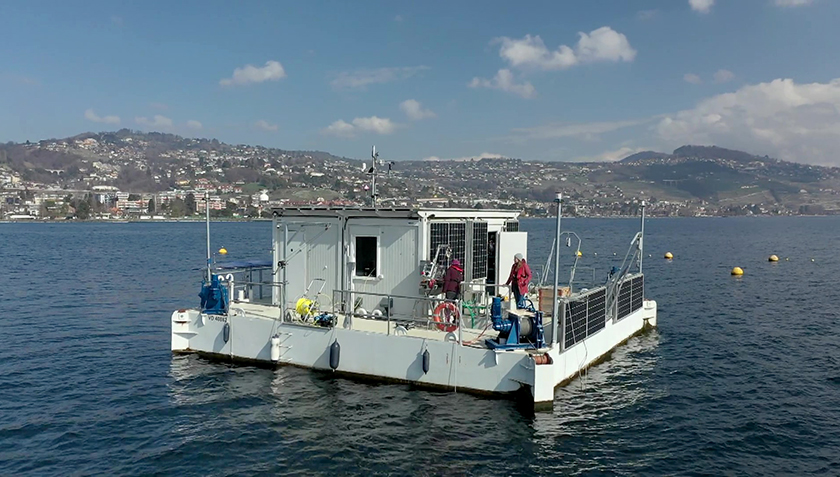
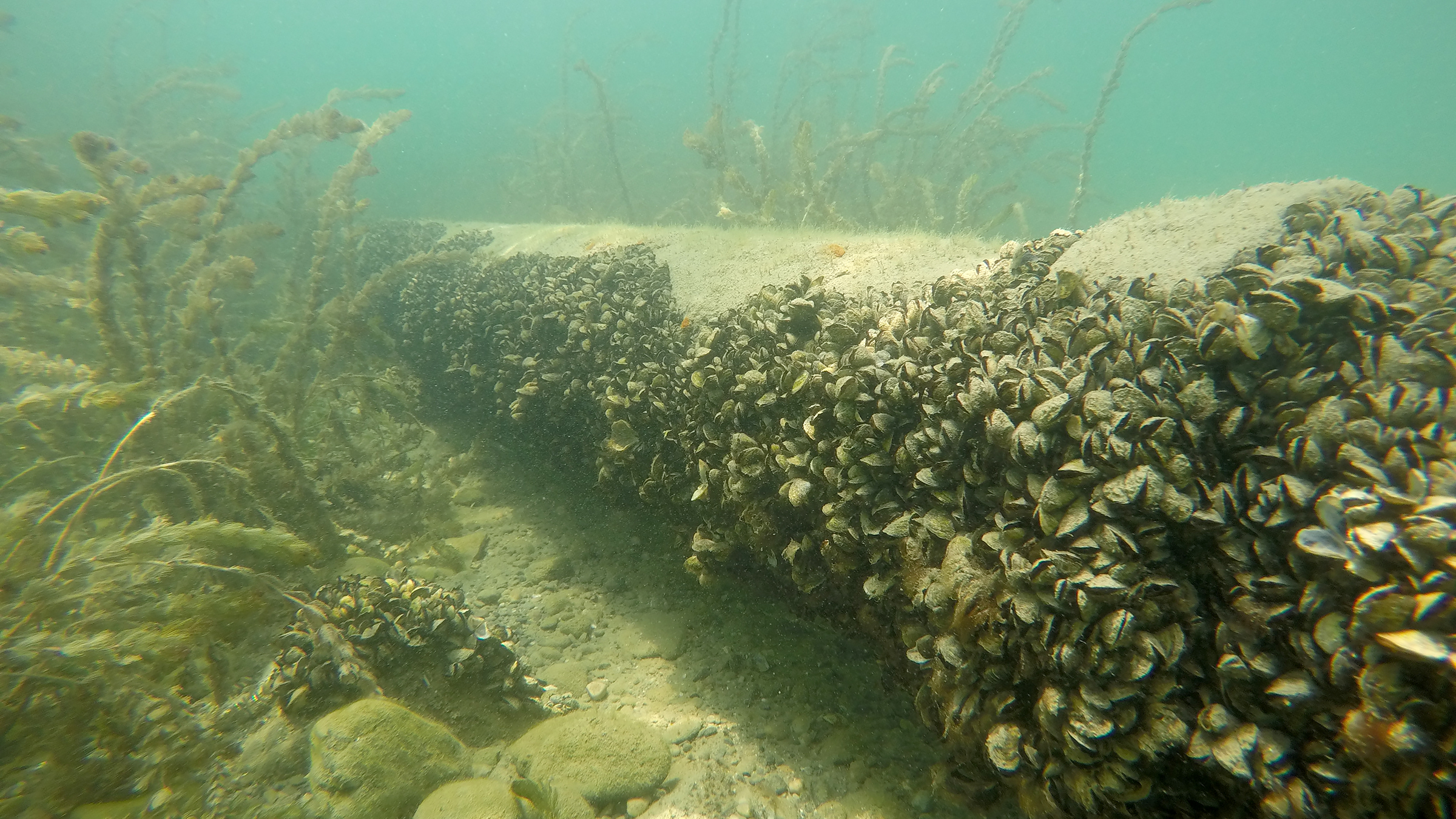
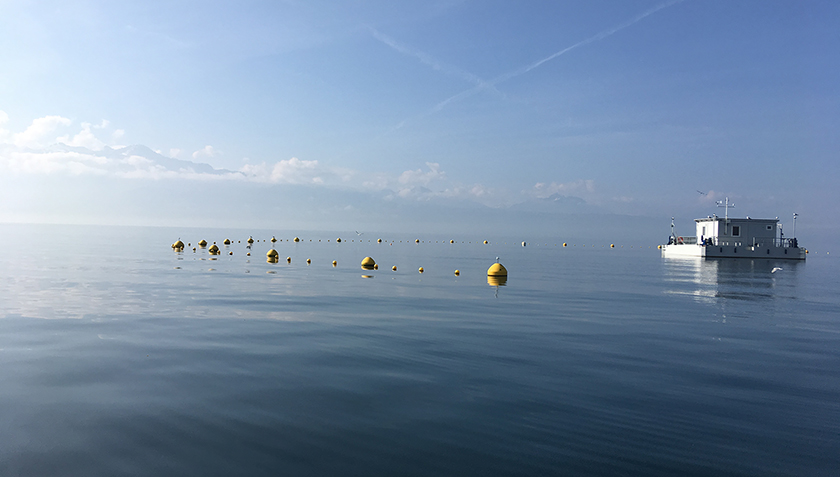
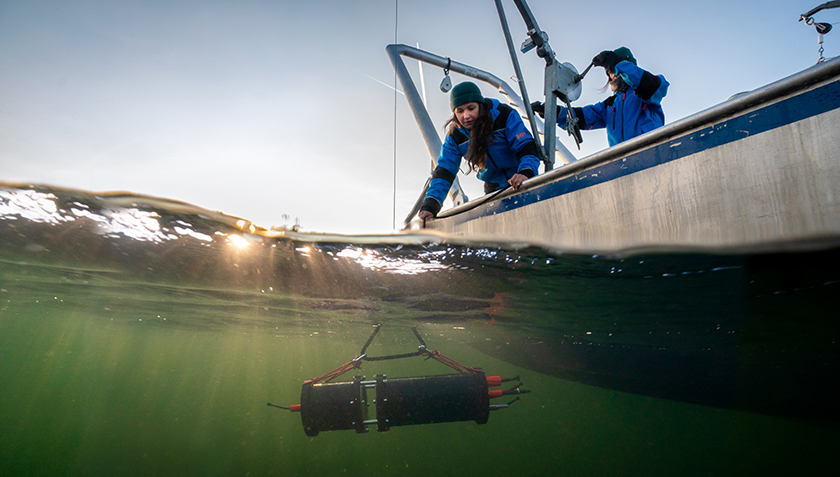
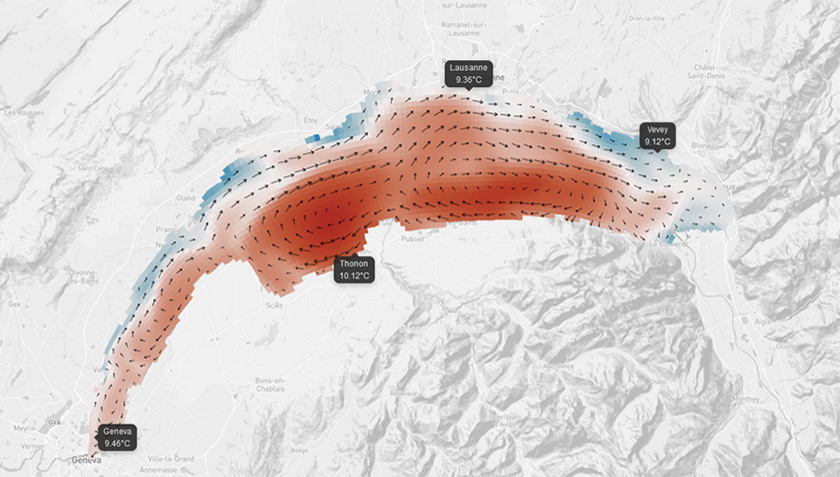
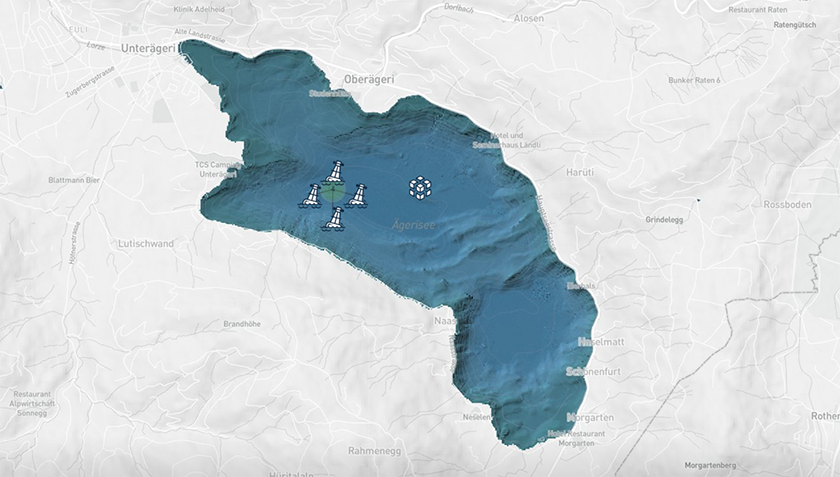
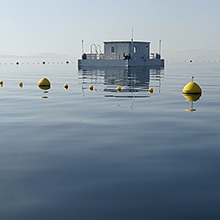
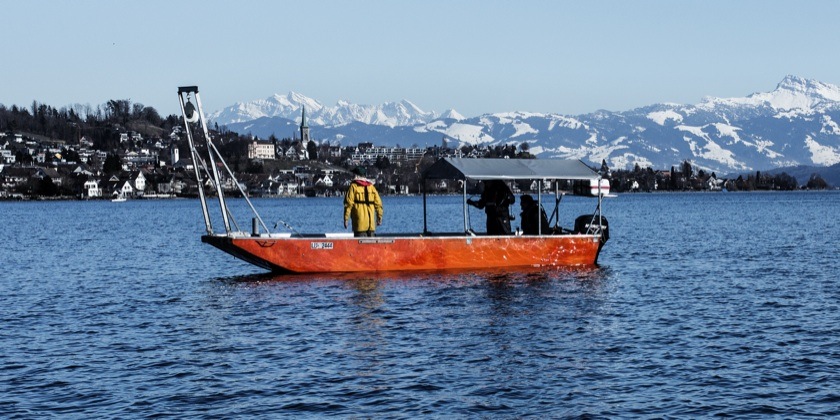
Das schwimmende Labor LéXPLORE auf dem Genfersee verbessert unser Verständnis von Seeökosystemen (Foto: Natacha Tofield-Pasche, EPFL).
Komplexer Lebensraum
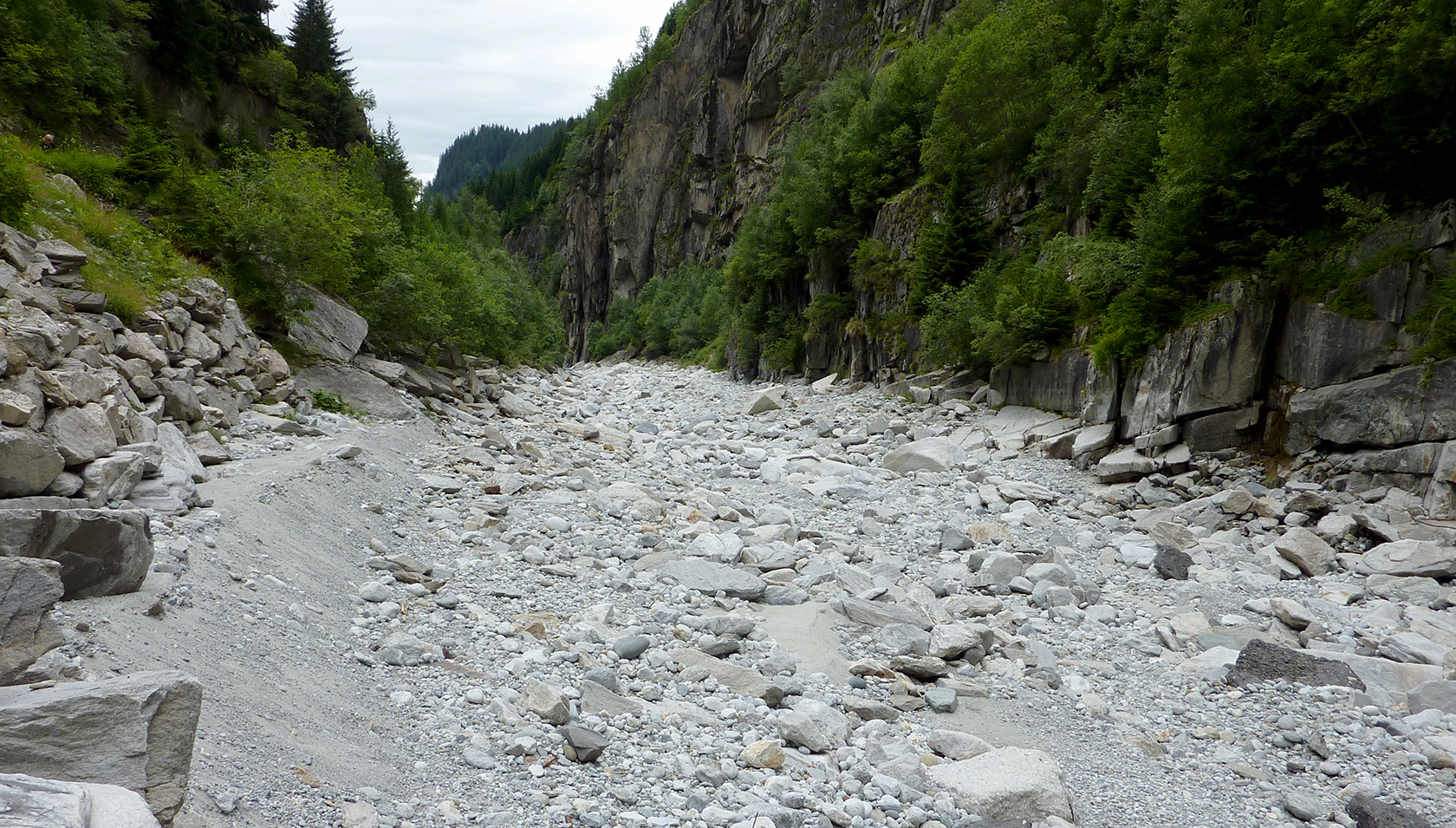
Wasserökosysteme sind durch bestimmte chemische und physikalische Eigenschaften geprägt. Ein komplexes Zusammenspiel verschiedener Faktoren wie Wassertemperatur, Strömungsverhältnisse, Sauerstoff- und Nährstoffgehalt oder pH beeinflussen die Prozesse und das Leben im Gewässer. Die Eawag untersucht die Folgen von Schadstoffeinträgen, verstärkter Wasserkraftnutzung, Verbauungen und menschengemachtem Klimawandel auf die natürlichen Verhältnisse und Kreisläufe in Gewässerökosystemen.
Verstehen, wie Lebensgemeinschaften reagieren
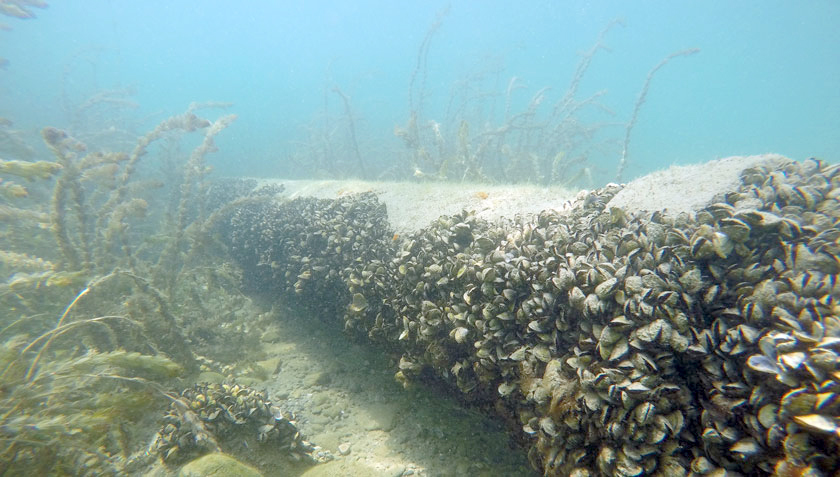
Nicht nur Fische, Krebse und Muscheln sind in Gewässern zuhause. Auch viele Vögel, einige Säugetiere und zahlreiche Insekten, die das Larvenstadium im Wasser verbringen, besiedeln diesen Lebensraum. Sie sind Teil eines Nahrungsnetzes, das weit über das Gewässer hinausgeht. Die Biodiversität in Gewässerökosystemen ist daher von grosser Bedeutung – und sie ist gefährdet. Die Eawag erforscht, welchen Einfluss invasive Arten wie die Quaggamuschel, Schadstoffe wie Pestizide oder Medikamente und andere Umwelt-Stressoren auf die Lebensgemeinschaften am und im Wasser haben.
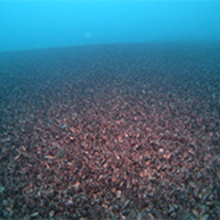
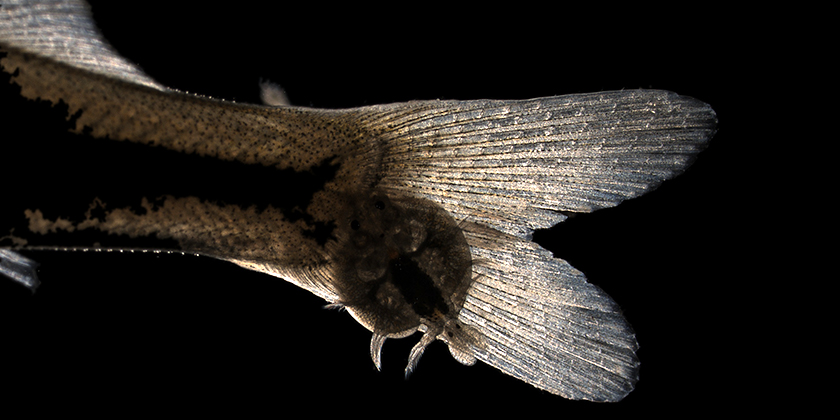
Die gebietsfremde Quaggamuschel breitet sich in der Schweiz aus und beeinflusst die Seeökosysteme (Foto: Eawag, Linda Haltiner).
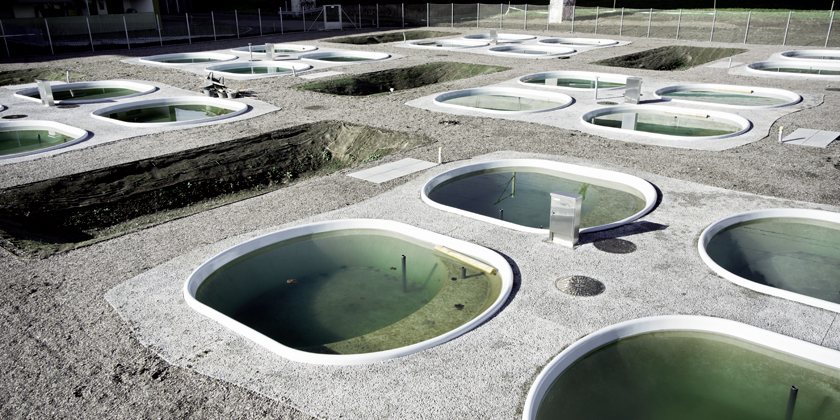
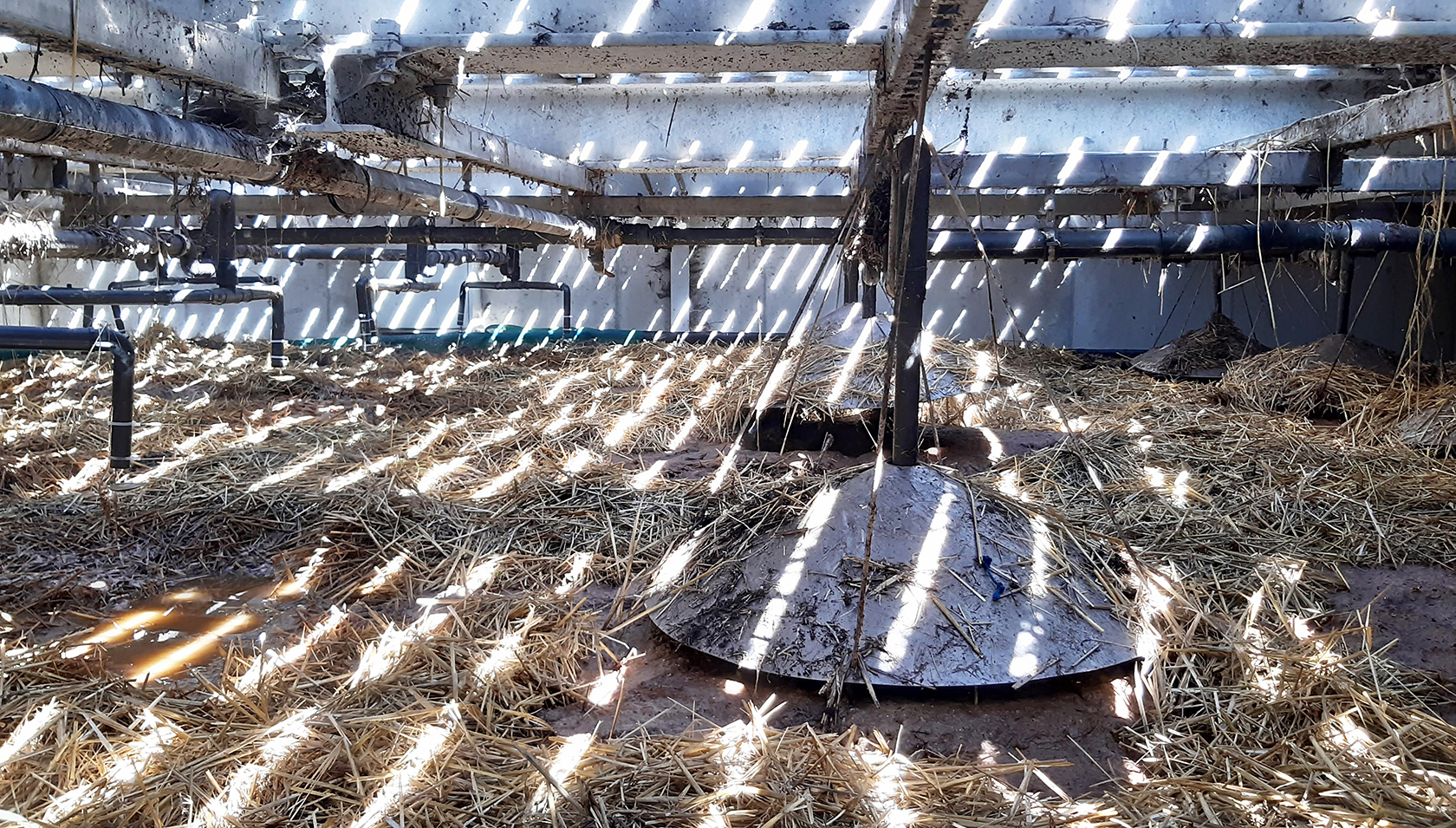
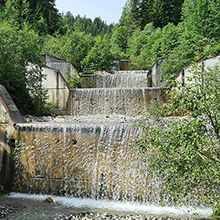
In der Versuchsteichanlage können Forschende kleine Ökosysteme unter natürlichen Witterungsbedingungen untersuchen (Foto: Eawag).
Von der Messung bis zur Wirkungskontrolle
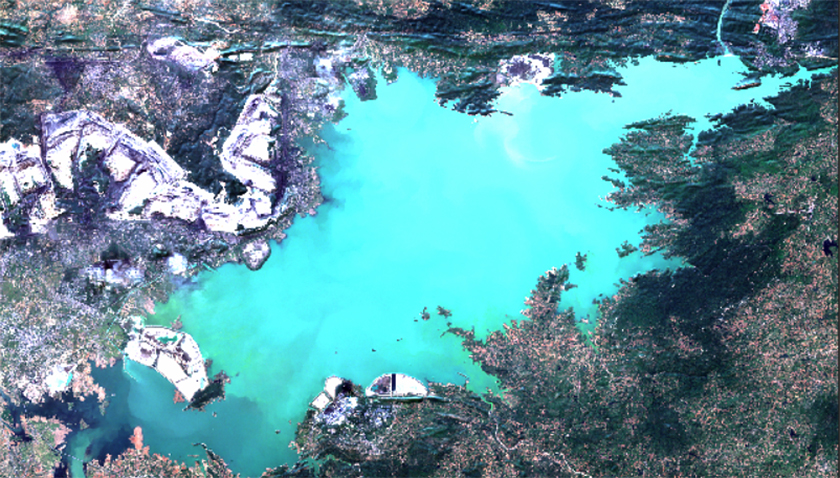
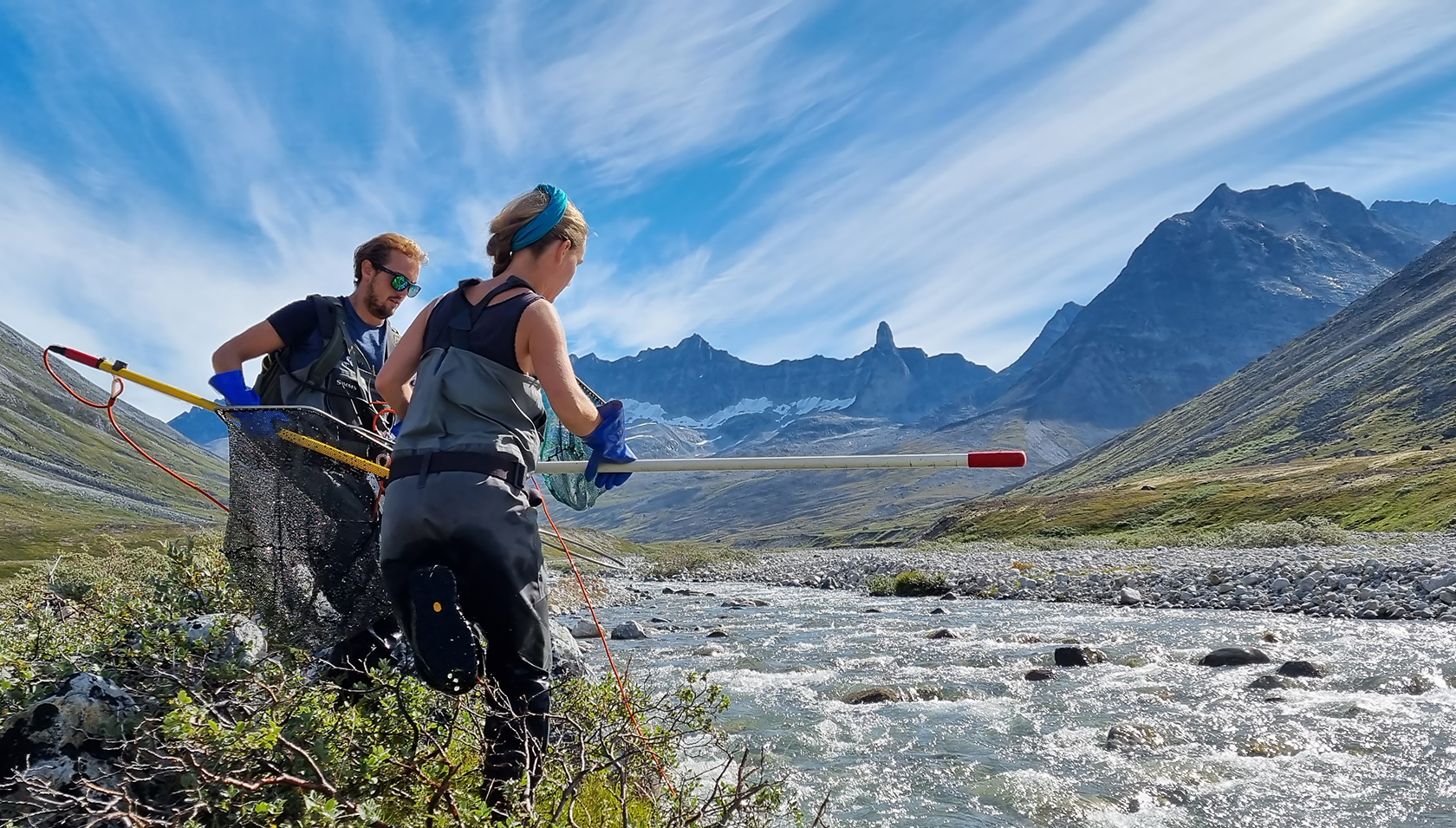
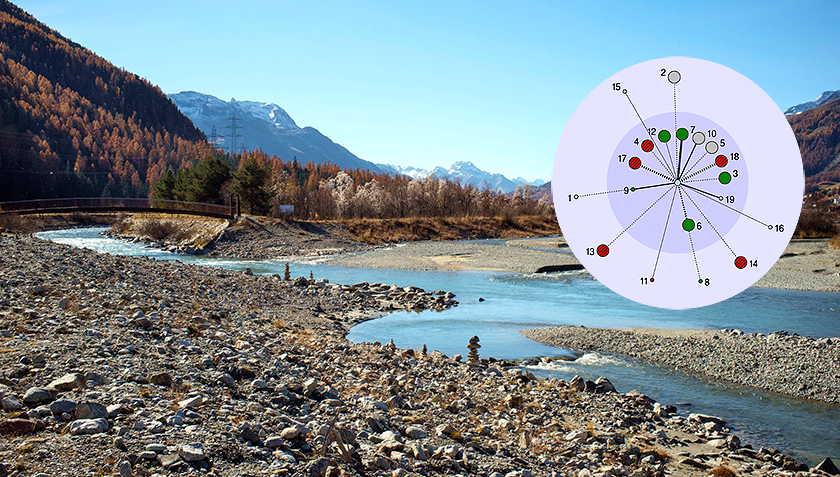
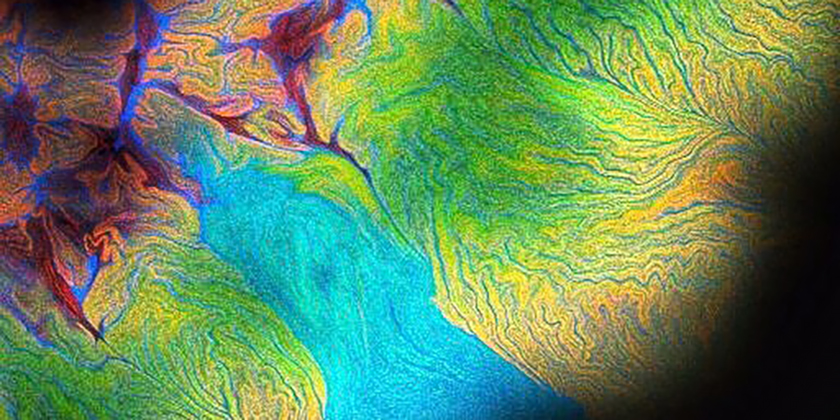
Um sie besser schützen zu können, braucht es in erster Linie zuverlässige Daten zu Wasserökosystemen. Die Eawag entwickelt und erprobt verschiedene Methoden zur Erhebung des Gewässerzustands und des Lebens in Gewässern. Dabei kommen etwa Satellitendaten, Umwelt-DNA, eine Versuchsteichanlage und diverse Messinstrumenten zum Einsatz. Die Messdaten dienen als Grundlage für Modelle, mit denen die künftige Entwicklung von Wasserökosystemen abgeschätzt werden kann. Die Erkenntnisse fliessen in Konzepte für die nachhaltige Gewässerbewirtschaftung oder Flussrevitalisierungen ein und dienen darüberhinaus der Wirkungskontrolle bestehender Massnahmen.
Monitoring-Studien mit aquatischen Invertebraten zeigen, dass die Gewebekonzentrationen vieler Schadstoffe wesentlich höher sind als anhand von Modellen...
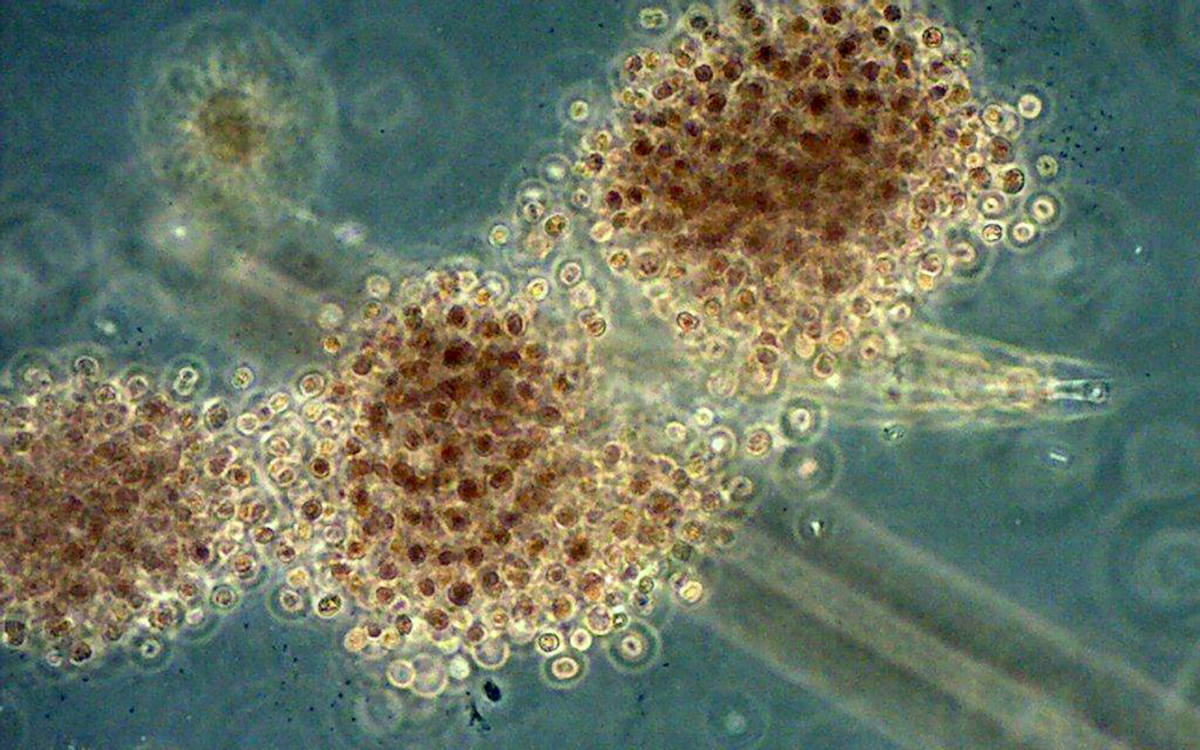
Es ist ein grosses Ziel, besser zu verstehen, wie mikrobielle Gemeinschaften funktionieren, wie Mikroben miteinander interagieren und wie diese Interaktionen die Funktionen der Gemeinschaft bestimmen.
Das Forschungsprojekt konzentriert sich auf die Bewirtschaftung von Wassereinzugsgebieten in schweizer Berggebieten und zielt darauf ab, die Resilienz von Bergökosystemen zu erhöhen.
array(3 items)0 => Snowflake\Publications\Domain\Model\Publicationprototypepersistent entity (uid=34793, pid=124)originalId => protected34793 (integer)
authors => protected'Stubbusch, A. K. M.; Peaudecerf, F. J.; Lee, K . S.; Paoli, L.; Schwartzman, J.; Stocker, R.; Basler,&n bsp;M.; Schubert, O. T.; Ackermann, M.; Magnabosco, C.; D’Souza, G. G.' (254 chars)
title => protected'Antagonism as a foraging strategy in microbial communities' (58 chars)
journal => protected'Science' (7 chars)
year => protected2025 (integer)
volume => protected388 (integer)
issue => protected'6752' (4 chars)
startpage => protected'1214' (4 chars)
otherpage => protected'1217' (4 chars)
categories => protected'' (0 chars)
description => protected'In natural habitats, nutrient availability limits bacterial growth. We disco vered that bacteria can overcome this limitation by acquiring nutrients by l ysing neighboring cells through contact-dependent antagonism. Using single-c ell live imaging and isotopic markers, we found that during starvation, the type VI secretion system (T6SS) lysed neighboring cells and thus provided nu trients from lysing cells for growth. Genomic adaptations in antagonists, ch aracterized by a reduced metabolic gene repertoire, and the previously unexp lored distribution of the T6SS across bacterial taxa in natural environments suggest that bacterial antagonism may contribute to nutrient transfer withi n microbial communities in many ecosystems.' (727 chars)
serialnumber => protected'0036-8075' (9 chars)
doi => protected'10.1126/science.adr8286' (23 chars)
uid => protected34793 (integer)
_localizedUid => protected34793 (integer)modified_languageUid => protectedNULL
_versionedUid => protected34793 (integer)modifiedpid => protected124 (integer)1 => Snowflake\Publications\Domain\Model\Publicationprototypepersistent entity (uid=35074, pid=124)originalId => protected35074 (integer)
authors => protected'Baeyens, W.; Gao, Y.; Janssen, D. J.; Bowie, A.&nbs p;R.; Zhou, C.; Fan, G.' (109 chars)
title => protected'Prevalence of multi-micronutrient limitation of phytoplankton growth in the Southern Ocean' (90 chars)
journal => protected'One Earth' (9 chars)
year => protected2025 (integer)
volume => protected8 (integer)
issue => protected'9' (1 chars)
startpage => protected'101354 (10 pp.)' (15 chars)
otherpage => protected'' (0 chars)
categories => protected'' (0 chars)
description => protected'Ongoing global warming caused by a steady increase in carbon dioxide in the atmosphere urgently needs to be mitigated. This is possible if phytoplankton biomass is increased in the ocean, as this will remove additional atmospher ic CO<sub>2</sub>. In the Southern Ocean, Fe is a well-known growth-limiting element, but the role of the other micronutrients remains very unclear. Our aim is to describe the evolution of each nutrient in the Southern Ocean thr oughout the year and to identify nutrients that limit phytoplankton growth. Therefore, we created a model that calculates nutrient consumption rates and available nutrient pools, fueled by deep winter mixing and diapycnal supply . Annual consumed nutrient amounts are smaller than their labile dissolved p ools, but this is not true for limiting elements Fe and Co (from the sub-Ant arctic zone [SAZ] to the Antarctic zone [AZ]) and Zn and Si (only in the SAZ ). Since we found several limiting elements, fertilization with multiple nut rients would be required to promote large-scale carbon capture.' (1051 chars)
serialnumber => protected'2590-3330' (9 chars)
doi => protected'10.1016/j.oneear.2025.101354' (28 chars)
uid => protected35074 (integer)
_localizedUid => protected35074 (integer)modified_languageUid => protectedNULL
_versionedUid => protected35074 (integer)modifiedpid => protected124 (integer)2 => Snowflake\Publications\Domain\Model\Publicationprototypepersistent entity (uid=35142, pid=124)originalId => protected35142 (integer)
authors => protected'Oester, R.; Keck, F.; Moretti, M. S.; Altermatt, F. ; Bruder, A.; Ferreira, V.' (112 chars)
title => protected'A global synthesis on land-cover changes in watersheds shaping freshwater de trital food webs' (92 chars)
journal => protected'Global Change Biology' (21 chars)
year => protected2025 (integer)
volume => protected31 (integer)
issue => protected'8' (1 chars)
startpage => protected'e70380 (21 pp.)' (15 chars)
otherpage => protected'' (0 chars)
categories => protected'allochthonous matter processing; aquatic-terrestrial linkages; decomposers; decomposition; deforestation; detritivores; detritus; meta-analysis; shredde rs; stream biodiversity' (175 chars)
description => protected'Anthropogenic land-cover changes are among the most pressing global threats to both aquatic and terrestrial ecosystems, jeopardizing biodiversity and th e critical connections between these systems. Resource flows and trophic int eractions intricately link aquatic and terrestrial ecosystems, with terrestr ial-derived detritus playing a fundamental role in supporting aquatic food w ebs. These detrital inputs form essential cross-ecosystem linkages, underpin ning key ecological processes and providing vital resources for aquatic comm unities. Yet, little research has focused on how land-cover changes cascade across this linkage. To better understand how land-cover changes in the wate rshed influence freshwater detrital food webs, we conducted a meta-analysis of field studies reporting the effects of vegetation changes on freshwater d etrital consumers and organic matter decomposition. The results from 144 stu dies, reporting 1235 comparisons, showed that, overall, land-cover changes i n the watershed vegetation, especially through harvest and land-use conversi on, have negative effects on aquatic biodiversity and ecosystem processes. T hese vegetation changes reduced diversity, abundance, and biomass across mul tiple trophic levels in freshwater detrital food webs. Studies examining mul tiple organism groups most often observed negative responses across multiple trophic levels, suggesting that these land-cover changes negatively affecte d multiple detrital food-web components simultaneously. Our results also sho w that outcomes of restoration of watershed vegetation were context-dependen t, and no clear trend of improvement was visible. Therefore, conservation of natural riparian and catchment vegetation is key to maintaining freshwater ecosystem processes and aquatic biodiversity worldwide, and more efficient a nd evidence-based restoration measures are urgently needed. As our global sy nthesis shows that direct human-induced alterations of vegetation in watersh eds have significant neg...' (2177 chars)
serialnumber => protected'1354-1013' (9 chars)
doi => protected'10.1111/gcb.70380' (17 chars)
uid => protected35142 (integer)
_localizedUid => protected35142 (integer)modified_languageUid => protectedNULL
_versionedUid => protected35142 (integer)modifiedpid => protected124 (integer)
Antagonism as a foraging strategy in microbial communities
In natural habitats, nutrient availability limits bacterial growth. We discovered that bacteria can overcome this limitation by acquiring nutrients by lysing neighboring cells through contact-dependent antagonism. Using single-cell live imaging and isotopic markers, we found that during starvation, the type VI secretion system (T6SS) lysed neighboring cells and thus provided nutrients from lysing cells for growth. Genomic adaptations in antagonists, characterized by a reduced metabolic gene repertoire, and the previously unexplored distribution of the T6SS across bacterial taxa in natural environments suggest that bacterial antagonism may contribute to nutrient transfer within microbial communities in many ecosystems.
Stubbusch, A. K. M.; Peaudecerf, F. J.; Lee, K. S.; Paoli, L.; Schwartzman, J.; Stocker, R.; Basler, M.; Schubert, O. T.; Ackermann, M.; Magnabosco, C.; D’Souza, G. G. (2025) Antagonism as a foraging strategy in microbial communities, Science, 388(6752), 1214-1217, doi:10.1126/science.adr8286, Institutional Repository
Prevalence of multi-micronutrient limitation of phytoplankton growth in the Southern Ocean
Ongoing global warming caused by a steady increase in carbon dioxide in the atmosphere urgently needs to be mitigated. This is possible if phytoplankton biomass is increased in the ocean, as this will remove additional atmospheric CO2. In the Southern Ocean, Fe is a well-known growth-limiting element, but the role of the other micronutrients remains very unclear. Our aim is to describe the evolution of each nutrient in the Southern Ocean throughout the year and to identify nutrients that limit phytoplankton growth. Therefore, we created a model that calculates nutrient consumption rates and available nutrient pools, fueled by deep winter mixing and diapycnal supply. Annual consumed nutrient amounts are smaller than their labile dissolved pools, but this is not true for limiting elements Fe and Co (from the sub-Antarctic zone [SAZ] to the Antarctic zone [AZ]) and Zn and Si (only in the SAZ). Since we found several limiting elements, fertilization with multiple nutrients would be required to promote large-scale carbon capture.
Baeyens, W.; Gao, Y.; Janssen, D. J.; Bowie, A. R.; Zhou, C.; Fan, G. (2025) Prevalence of multi-micronutrient limitation of phytoplankton growth in the Southern Ocean, One Earth, 8(9), 101354 (10 pp.), doi:10.1016/j.oneear.2025.101354, Institutional Repository
A global synthesis on land-cover changes in watersheds shaping freshwater detrital food webs
Anthropogenic land-cover changes are among the most pressing global threats to both aquatic and terrestrial ecosystems, jeopardizing biodiversity and the critical connections between these systems. Resource flows and trophic interactions intricately link aquatic and terrestrial ecosystems, with terrestrial-derived detritus playing a fundamental role in supporting aquatic food webs. These detrital inputs form essential cross-ecosystem linkages, underpinning key ecological processes and providing vital resources for aquatic communities. Yet, little research has focused on how land-cover changes cascade across this linkage. To better understand how land-cover changes in the watershed influence freshwater detrital food webs, we conducted a meta-analysis of field studies reporting the effects of vegetation changes on freshwater detrital consumers and organic matter decomposition. The results from 144 studies, reporting 1235 comparisons, showed that, overall, land-cover changes in the watershed vegetation, especially through harvest and land-use conversion, have negative effects on aquatic biodiversity and ecosystem processes. These vegetation changes reduced diversity, abundance, and biomass across multiple trophic levels in freshwater detrital food webs. Studies examining multiple organism groups most often observed negative responses across multiple trophic levels, suggesting that these land-cover changes negatively affected multiple detrital food-web components simultaneously. Our results also show that outcomes of restoration of watershed vegetation were context-dependent, and no clear trend of improvement was visible. Therefore, conservation of natural riparian and catchment vegetation is key to maintaining freshwater ecosystem processes and aquatic biodiversity worldwide, and more efficient and evidence-based restoration measures are urgently needed. As our global synthesis shows that direct human-induced alterations of vegetation in watersheds have significant negative effects on freshwater detrital food webs, there is a pressing need to consider cross-ecosystem consequences of land-cover changes in conservation and ecosystem management.
Oester, R.; Keck, F.; Moretti, M. S.; Altermatt, F.; Bruder, A.; Ferreira, V. (2025) A global synthesis on land-cover changes in watersheds shaping freshwater detrital food webs, Global Change Biology, 31(8), e70380 (21 pp.), doi:10.1111/gcb.70380, Institutional Repository
Titelbild: Eawag-Forscherinnen Anita Narwani, Marta Reyes and Joey Bernhardt entnehmen Wasserproben aus einem der Teiche der Versuchsteichanlage der Eawag (Foto: Thomas Klaper).